

United States Positron Emission Tomography (PET) Scanner’s Market Size & Forecast:
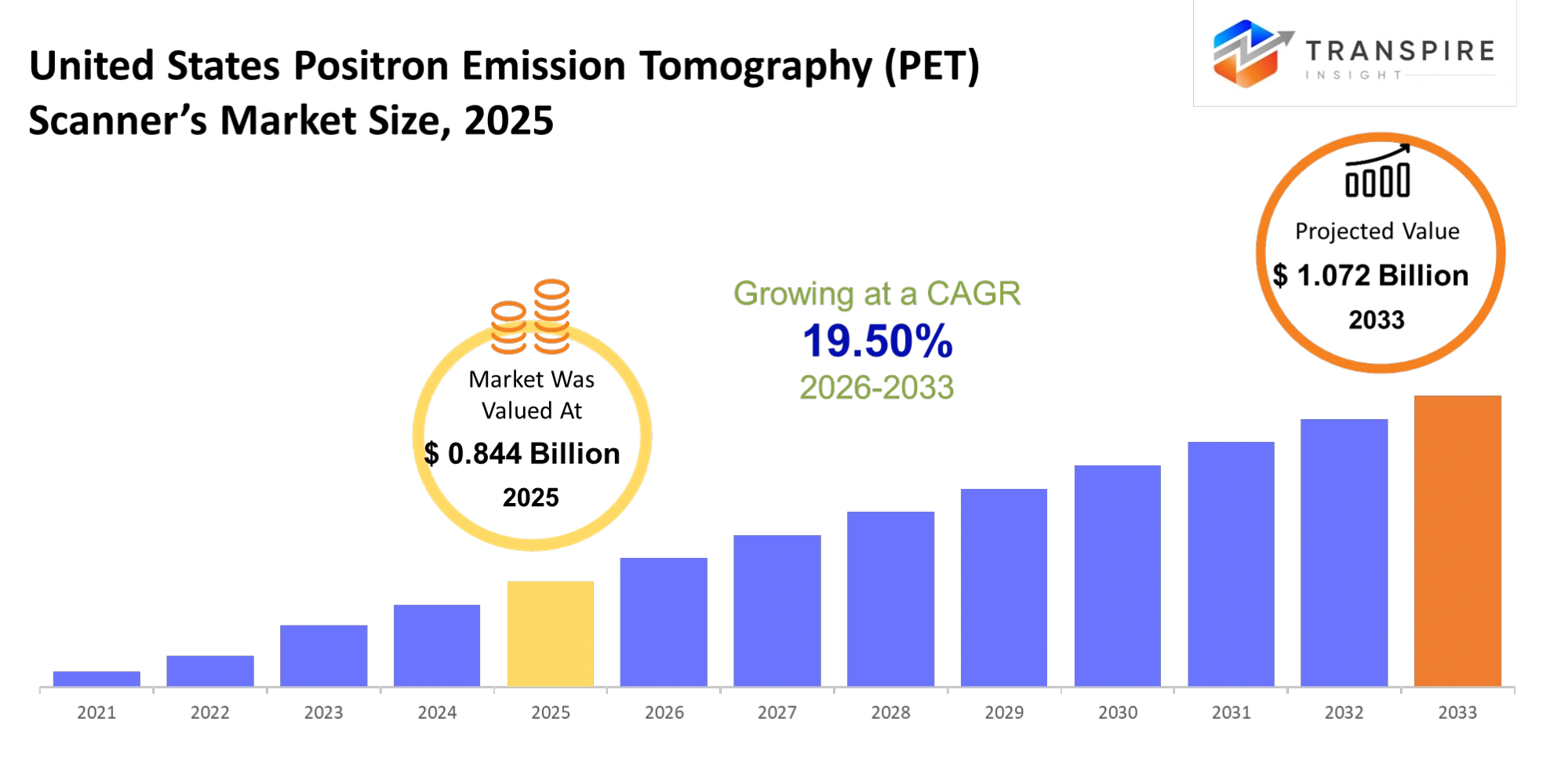
- United States Positron Emission Tomography (PET) Scanner’s Market Size 2025: USD 0.844 Billion
- United States Positron Emission Tomography (PET) Scanner’s Market Size 2033: USD 1.072 Billion
- United States Positron Emission Tomography (PET) Scanner’s Market CAGR: 3.04%
- United States Positron Emission Tomography (PET) Scanner’s Market Segments:By Type (Standalone PET Systems, PET-CT Systems, PET-MRI Systems), By End User (Hospitals, Diagnostic Imaging Centers).
To learn more about this report,  Download Free Sample Report
United States Positron Emission Tomography (PET) Scanner’s Market Summary:
The United States Positron Emission Tomography (PET) Scanner’s market size is estimated at USD 0.844 billion in 2025 and is anticipated to reach USD 1.072 billion by 2033, growing at a CAGR of 3.04% from 2026 to 2033. The United States Positron Emission Tomography (PET) scanner market experiences continuous growth because the healthcare industry needs advanced diagnostic imaging equipment for oncology and cardiology and neurology applications. The development of hybrid PET/CT systems together with increasing public understanding about early disease detection has improved clinical results. Healthcare providers are increasingly investing in precision imaging solutions to improve patient care. The market growth remains strong because of reimbursement policies and research initiatives which make PET scanners essential for modern diagnostic systems used throughout the United States.
Key Market Trends & Insights:
- PET scanners have become essential tools for early disease detection because they can identify both cancer and neurological disorders before symptoms appear. Hospitals and diagnostic centres experience permanent demand for their services because preventive healthcare has become the primary focus of current health services.
- The healthcare sector witnesses growing adoption of PET/CT and PET/MRI systems because these technologies deliver superior accuracy and complete imaging capabilities. The hybrid systems enable doctors to make precise diagnoses while decreasing the necessity for multiple imaging procedures.
- Oncology remains the largest application area, with PET imaging serving as the essential method for tumour detection and staging, which includes treatment monitoring, in cancer treatment. The rising number of cancer cases in the United States strengthens this market segment.
- AI-based image analysis and better detector sensitivity create better scanning accuracy and operational performance improvements. The new technologies enable medical professionals to reach treatment decisions more quickly and use better information.
- To maintain their market position and fulfil patient needs, hospitals and diagnostic centres are acquiring contemporary imaging technology. The trend appears most strongly in the healthcare facilities which serve urban populations throughout the United States.
- The healthcare system observes a trend that moves patients away from emergency department treatment toward dedicated outpatient imaging facilities. Patients can access these centres because they provide multiple diagnostic services that require less time to complete and cost less than other options.
United States Positron Emission Tomography (PET) Scanner’s Market Segmentation
By Type
- Standalone PET Systems: Standalone PET systems maintain their operational value in particular medical environments which need their capability to achieve targeted functional imaging. Research institutions and smaller facilities prefer these systems because they cost less than hybrid models. The usage of these systems is decreasing because integrated imaging technologies now offer superior performance.
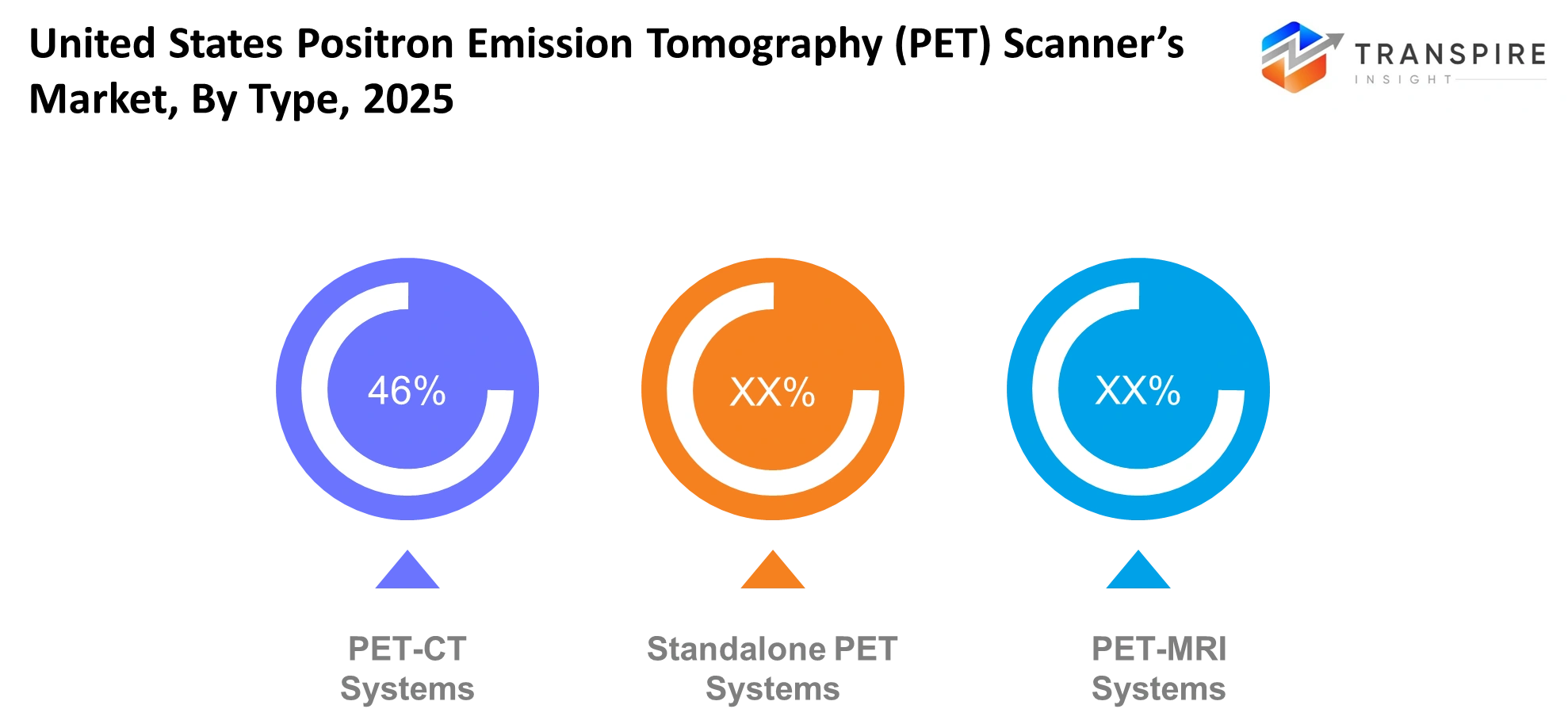
- PET-CT Systems: The market is dominated by PET-CT systems because they enable simultaneous metabolic and anatomical imaging through one scanning procedure. The integration of these two imaging techniques results in better diagnostic performance for oncology and cardiology cases. Hospitals use PET-CT scanners because they provide operational efficiency while delivering speedy results which help with treatment planning and disease tracking.
- PET-MRI Systems: PET-MRI systems represent an expanding market segment which provides exceptional soft tissue contrast together with functional imaging capabilities. The systems provide critical support for both neurological and paediatric medical needs. The expensive systems are beginning to see use in advanced healthcare facilities and research centres because they decrease radiation exposure while providing multiple imaging methods.
To learn more about this report, Download Free Sample Report
By End User
- Hospitals: Hospitals use PET scanners at high rates because their advanced facilities enable them to conduct difficult diagnostic tests. The organisations spend substantial amounts on new imaging equipment which they need to provide complete care across multiple medical specialities. Hospitals use PET technology because skilled staff operates the systems and patient traffic to hospitals increases.
- Diagnostic Imaging Centers: The growing need for economical and accessible diagnostic services has made diagnostic imaging centres become important end users. The centres work to provide fast results while creating the best possible experience for patients. The centres are starting to expand their services to urban and suburban areas, which will create new opportunities for PET imaging access outside traditional hospital environments.
Country Insights
The United States Positron Emission Tomography (PET) scanner market exists as a mature market which experiences ongoing growth because of rising clinical requirements and new technological developments. The country operates a comprehensive system of hospitals together with research facilities and diagnostic centres which implement advanced imaging methods. The public maintains high knowledge about early disease diagnosis, especially for cancer and neurological disorders, which results in extensive use of PET scans.
The establishment of major medical technology firms, together with their research and development activities, enables the development of advanced imaging technologies which deliver superior performance. The combination of favourable reimbursement systems with government assistance programmes creates financial incentives which drive healthcare facilities to implement new technologies. The majority of urban areas experience higher technology usage because they possess superior infrastructure, while organisations are making progress to deliver services to remote communities. The United States serves as a major force in developing international PET scanner technology through its commitment to innovative testing methods and creating accessible patient evaluation methods.
Recent Development News
FDA Approves New Prostate Cancer PET Imaging Agent: A major advancement in PET diagnostics is improving prostate cancer detection across the U.S.
PET Scan Demand Surges Across U.S. Facilities: Growing patient volumes are putting pressure on imaging infrastructure nationwide.
|
Report Metrics |
Details |
|
Market size value in 2025 |
USD 0.844 Billion |
|
Market size value in 2026 |
USD 0.869 Billion |
|
Revenue forecast in 2033 |
USD 1.072 Billion |
|
Growth rate |
CAGR of 3.04% from 2026 to 2033 |
|
Base year |
2025 |
|
Historical data |
2021 – 2024 |
|
Forecast period |
2026 – 2033 |
|
Report coverage |
Revenue forecast, competitive landscape, growth factors, and trends |
|
Country scope |
United States |
|
Key company profiled |
Siemens Healthineers AG, GE HealthCare Technologies Inc., Philips Healthcare, Canon Medical Systems Corporation, Hitachi Medical Systems, United Imaging Healthcare Co. Ltd., Neusoft Medical Systems Co. Ltd., Mediso Ltd., Cubresa Inc., Spectrum Dynamics Medical Inc., Shimadzu Corporation, Yangzhou Kindsway Biotech Co. Ltd., Oncovision Inc., Carestream Health Inc., Brain Biosciences Inc. |
|
Customization scope |
Free report customization (country, regional & segment scope). Avail customized purchase options to meet your exact research needs. |
|
Report Segmentation |
By Type (Standalone PET Systems, PET-CT Systems, PET-MRI Systems), By End User (Hospitals, Diagnostic Imaging Centers). |
Key United States Positron Emission Tomography (PET) Scanner’s Company Insights
The United States Positron Emission Tomography (PET) scanner market is highly competitive because leading companies use their innovative products and strategic partnerships to increase their market share. The essential companies are developing new imaging systems which combine artificial intelligence technologies with traditional medical equipment to achieve better clinical results. The companies are extending their service areas while creating tailored solutions to fulfil various medical requirements. The companies maintain their competitive advantage through ongoing research and product development and healthcare provider partnerships while concentrating on better patient results and operational efficiency.
Company List
- Siemens Healthineers AG
- GE HealthCare Technologies Inc.
- Philips Healthcare
- Canon Medical Systems Corporation
- Hitachi Medical Systems
- United Imaging Healthcare Co. Ltd.
- Neusoft Medical Systems Co. Ltd.
- Mediso Ltd.
- Cubresa Inc.
- Spectrum Dynamics Medical Inc.
- Shimadzu Corporation
- Yangzhou Kindsway Biotech Co. Ltd.
- Oncovision Inc.
- Carestream Health Inc.
- Brain Biosciences Inc.
United States Positron Emission Tomography (PET) Scanner’s Market Report Segmentation
By Type
- Standalone PET Systems
- PET-CT Systems
- PET-MRI Systems
By End User
- Hospitals
- Diagnostic Imaging Centers
Frequently Asked Questions
Find quick answers to common questions.
The Approximate United States Positron Emission Tomography (PET) Scanner’s Market size for the Market will be USD 1.072 billion in 2033.
The key Segments of the United States Positron Emission Tomography (PET) Scanner’s Market are By Type (Standalone PET Systems, PET-CT Systems, PET-MRI Systems), By End User (Hospitals, Diagnostic Imaging Centers).
Major Players in the United States Positron Emission Tomography (PET) Scanner’s Market are Siemens Healthineers AG, GE HealthCare Technologies Inc., Philips Healthcare, Canon Medical Systems Corporation, Hitachi Medical Systems, United Imaging Healthcare Co. Ltd., Neusoft Medical Systems Co. Ltd., Mediso Ltd., Cubresa Inc., Spectrum Dynamics Medical Inc., Shimadzu Corporation, Yangzhou Kindsway Biotech Co. Ltd., Oncovision Inc., Carestream Health Inc., Brain Biosciences Inc.
The Current Market size of the United States Positron Emission Tomography (PET) Scanner’s Market is USD 0.844 billion in 2025.
The United States Positron Emission Tomography (PET) Scanner’s Market CAGR is 3.04%.
- Siemens Healthineers AG
- GE HealthCare Technologies Inc.
- Philips Healthcare
- Canon Medical Systems Corporation
- Hitachi Medical Systems
- United Imaging Healthcare Co. Ltd.
- Neusoft Medical Systems Co. Ltd.
- Mediso Ltd.
- Cubresa Inc.
- Spectrum Dynamics Medical Inc.
- Shimadzu Corporation
- Yangzhou Kindsway Biotech Co. Ltd.
- Oncovision Inc.
- Carestream Health Inc.
- Brain Biosciences Inc.
Recently Published Reports
-
Apr 2026
Biosimilars Market
Biosimilars Market By Product Type (Monoclonal Antibodies, Recombinant Hormones, Erythropoietin, G-CSF, Others), By Indication (Oncology, Autoimmune Diseases, Blood Disorders, Diabetes, Others), By Manufacturing Type (In-House Manufacturing, Contract Manufacturing), By Distribution Channel (Hospital Pharmacies, Retail Pharmacies, Online Pharmacies), By Industry Analysis, Size, Share, Growth, Trends, and Forecasts 2021-2033
-
Apr 2026
Gastrointestinal Endoscopy Market
Gastrointestinal Endoscopy Market By Type (Rigid Gastrointestinal Endoscope, Flexible Gastrointestinal Endoscopes, Disposable Gastrointestinal Endoscope), By Procedure Type (Colonoscopy, Gastroscopy, Duodenoscopy, Enteroscopy, Flexible Sigmoidoscopy, Others), By Application (Diagnosis, Treatment), By End-Users (Hospitals, Ambulatory Surgical Centers, Specialty Clinics, Laboratories, Others), By Industry Analysis, Size, Share, Growth, Trends, and Forecasts 2021-2033
-
Apr 2026
Rare Inherited Metabolic Disorder Drug Market
Rare Inherited Metabolic Disorder Drug Market By Drug Class (Enzyme Replacement Drugs, Gene Therapy Drugs, Substrate Reduction Drugs, Small Module Drugs, Protein Drugs), By Route of Administration(Parenteral, Oral, Intrathecal), By Clinical Development (Marketed Drugs, Late Stage Clinical Phase III, Early Stage Clinical Phase I-II, Preclinical Candidates), By Indication (Lysosomal Storage Disorders, Urea Cycle Disorders, Amino Acid Metabolic Disorders, organic Acidemias, Peroximal Disorders), By Industry Analysis, Size, Share, Growth, Trends, and Forecasts 2021-2033
-
Jan 2026
Pharmaceutical Cleanroom Technology Market
Pharmaceutical Cleanroom Technology Market By Product (Equipment, Consumables, Services); By Cleanroom Type (Standard Cleanrooms, Modular Cleanrooms); By End Use (Pharmaceutical Companies, Biotechnology Companies), By Industry Analysis, Size, Share, Growth, Trends, and Forecasts 2021-2033