

United States Natural Food Preservatives Market Size & Forecast:
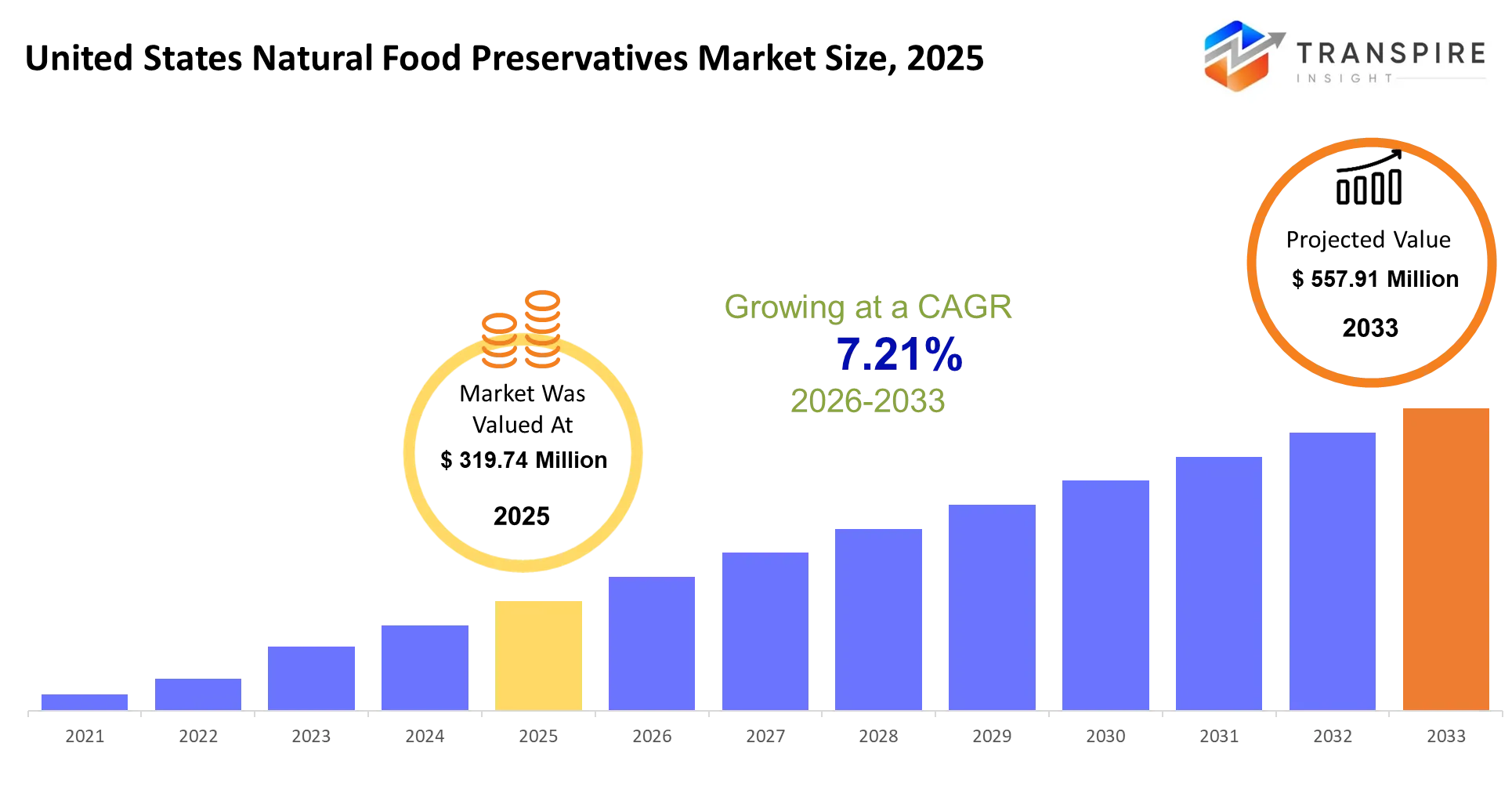
- United States Natural Food Preservatives Market Size 2025: USD 319.74 Million
- United States Natural Food Preservatives Market Size 2033: USD 557.91 Million
- United States Natural Food Preservatives Market CAGR: 7.21%
- United States Natural Food Preservatives Market Segments: By Type (Salt, Sugar, Vinegar, Rosemary Extract, Natamycin, Nisin, Others), By Source (Plant-based, Animal-based, Microbial-based, Mineral-based, Others), By Application (Bakery Products, Dairy Products, Meat & Poultry, Beverages, Snacks, Others), By Form (Powder, Liquid, Granules, Spray-dried, Others).
To learn more about this report,  Download Free Sample Report
United States Natural Food Preservatives Market Summary:
The United States Natural Food Preservatives Market size is estimated at USD 319.74 Million in 2025 and is anticipated to reach USD 557.91 Million by 2033, growing at a CAGR of 7.21% from 2026 to 2033.
The United States natural food preservatives market kind of sits at the overlap of food safety, shelf-life control, and clean-label product design. In practice, food manufacturers lean on natural preservatives like rosemary extract, cultured dextrose, vinegar, and citrus-derived antimicrobial agents to slow down spoilage, hold up packaged foods during those long distribution runs, and cut down on synthetic additives without really hurting retail shelf quality. It’s been especially relevant for refrigerated meals, processed meats, dairy alternatives, bakery items, and ready-to-eat snacks that move through complicated national supply routes, where timing and stability matter a lot more than people think.
In the last five years, the market has moved beyond small-scale ingredient swaps and into broader formulation changes across many facilities. Big food brands are kind of reworking recipes with a stronger emphasis on ingredient clarity, because retailers and shoppers are more and more pushing back on “artificial” preservatives that end up on labels. The COVID-19 supply chain disruption sort of sped up the whole shift, since it made obvious how fragile older sourcing models could be, in particular for chemical additives and imported inputs that don’t always stay consistent . Because of that, manufacturers started investing in plant based preservation systems and fermentation derived antimicrobials, which usually bring both label friendly attractiveness and steadier sourcing choices. Overall, this change is spreading through mainstream packaged food categories too, and it’s making space for suppliers of multi functional natural ingredients to step into higher margin formulation collaborations. Instead of only chasing commodity pricing, they’re getting pulled into design work earlier in the process , so yeah it’s not just a last minute thing anymore.
Key Market Insights
- In 2025, the Midwest kind of dominated the United States Natural Food Preservatives Market , holding nearly 34% market share, mainly because food processing infrastructure was more concentrated there .
- The Western United States looks set to move fastest through 2032, with growth backed by premium organic food manufacturing expansion , that sort of thing.
- From 2023 to 2025 , Southern states showed meaningful demand increases tied to meat processing and packaged convenience food production .
- California stays a strategic innovation hub , for clean-label ingredient development and natural preservation technology commercialization , overall.
- Plant-based preservatives were the biggest revenue driver in 2025 , bringing in roughly 46% of the United States Natural Food Preservatives Market revenue share .
- Rosemary extract held onto the second-largest market share, mostly due to strong antioxidant functionality across processed meat and snack uses .
- Fermentation-derived preservatives are forecasted to grow the quickest through 2032, since they offer better microbial stability and a more label-friendly positioning.
- Natural antimicrobials are seeing solid adoption in ready-to-eat meals , because manufacturers want longer refrigerated shelf life without synthetic chemicals .
- Essential oil-based preservatives are starting to gain traction in premium bakery and dairy formulations , during the 2024 to 2026 forecast window.
- When it comes to application , processed and packaged foods led the demand picture , with almost 41% share in 2025, largely due to nationwide distribution needs .
- Meat, poultry and seafood applications captured a notable industry size because natural preservatives reduce oxidation and also lower bacterial contamination risks.
- Dairy alternatives represent the fastest-growing application segment through 2032 as brands prioritize clean-label shelf stability solutions, more and more brands are pushing that angle.
What are the Key Drivers, Restraints, and Opportunities in the United States Natural Food Preservatives Market?
The strongest force driving the United States Natural Food Preservatives Market is basically the big, large-scale rework of packaged foods by major manufacturers and big retailers. This shift sort of picked up speed after the large grocery chains and foodservice companies tightened their clean-label ingredient expectations between 2020 and 2024. Synthetic preservatives increasingly started to cause product rejection risks in the more premium retail spaces, so manufacturers had to lean on rosemary extract, cultured dextrose, vinegar blends, and antimicrobials that come from fermentation—things like that. Because of that, ingredient suppliers stopped thinking only of commodity sales and moved toward higher-margin formulation partnerships, especially within refrigerated meals , processed meat , and dairy alternatives where shelf life stability really decides distribution economics and how quickly products turn over in stores.
The biggest structural barrier still is the performance gap between natural and synthetic preservation approaches in higher-moisture foods and those that need long shelf-life. Natural preservatives often end up needing higher concentrations, more ingredient- stacking, or some form of cold-chain support just to get the same microbial control. That ends up raising formulation costs and also makes it harder to distribute nationally for mass-market packaged foods. The issue feels structural because it’s tied to food chemistry, process compatibility, and supply consistency , not only to how big the production is. Many mid-sized producers keep postponing reformulation programs too, since a failed shelf-life validation can spiral into recalls, inventory losses, and retailer penalties , sometimes all at once.
Fermentation based bio preservation feels like the next big growth chance. Folks are investing more and more in precision fermentation, and also in cultured antimicrobial ingredients, and that momentum is really ramping up across the United States, especially California and parts of the Midwest. Right now companies that build multifunctional preservation systems, that keep microbes stable, protect flavor , and still support label transparency… well they seem kind of ready to win premium contracts. These are the ones coming from ready to eat meal producers , and plant based food manufacturers too.
What Has the Impact of Artificial Intelligence Been on the United States Natural Food Preservatives Market?
Artificial intelligence, plus advanced digital technologies, are kinda reshaping the United States natural food preservatives industry. The change is mostly coming from better formulation accuracy, faster production efficiency and more reliable shelf life prediction, you know. Food manufacturers are using AI based quality-control setups more and more, so they can track microbial activity, oxidation levels, and ingredient steadiness in real time while food is actually being processed and later during storage. Then there are these automated sensor platforms, tied to machine learning models, that can flag contamination threats earlier than the older, conventional batch testing approach. That lets processors cut down spoilage losses and keep output steadier across packaged foods, dairy alternatives and those ready-to-eat meals.
At the same time, predictive analytics is shifting preservative formulation tactics. Many companies now run machine learning algorithms that basically simulate how natural antimicrobials—like rosemary extract, cultured sugar, and vinegar blend combinations—will act under different temperature, humidity, and packaging settings. In practice, these models help shorten the product development timeline and raise shelf-life forecasting reliability, which in turn reduces reformulation expenses and speeds up product launches. A few big food processors have even said they saw real reductions in waste and inventory rejection rates once they rolled out AI enabled monitoring systems across cold-chain distribution corridors.
Still, AI adoption has a major constraint, mainly because natural preservative effectiveness does not stay uniform. It can vary a lot across food matrices, plus it’s influenced by regional supply conditions. A lot of machine learning systems also don’t have standardized historical datasets that are solid enough, so predictive accuracy can end up uneven, especially for smaller manufacturers and more complicated multi ingredient recipes.
Key Market Trends
- Since 2022, major retailers expanded clean label ingredient standards , which kind of forced packaged food suppliers to swap out synthetic preservatives across their premium product lines.
- Food manufacturers started leaning harder on rosemary extract and cultured dextrose after the pandemic-era supply hiccups showed how overly dependent they were on imported synthetic additives , not to mention the delays.
- Between 2021 and 2025, fermentation based preservation methods picked up serious momentum in ready to eat meals because they helped refrigerated shelf stability , stay more consistent.
- Companies like Kerry Group and Corbion also expanded U.S. production capacity , aiming to shrink ingredient lead times and reduce logistics volatility, in practice it really mattered.
- Private-label grocery brands moved fast toward natural preservation approaches after consumer rejection rates rose for snacks and bakery items that still used chemically preserved systems.
- Since 2023, AI enabled quality monitoring has reduced spoilage losses , mainly by sharpening microbial detection during food processing and cold chain storage.
- Meat processors increasingly adopted vinegar based antimicrobial blends , especially after stricter retailer shelf life requirements made rejection risks higher for short life refrigerated products.
- Natural preservative suppliers have shifted away from plain commodity ingredient selling, more toward customized formulation partnerships with dairy alternative and functional food manufacturers.
- In the Western U.S., food manufacturers accelerated investment in citrus derived antimicrobials as organic packaged food production grew between 2022 and 2025 , kinda steadily.
- Smaller food producers kept postponing reformulation initiatives , because natural preservation systems still often come with higher validation costs , and those shelf life testing procedures can be pretty complex.
United States Natural Food Preservatives Market Segmentation
By Type
The type segment keeps leaning toward vinegar, rosemary extract, natamycin, nisin, salt, and sugar because each one seems to cover slightly different preservation needs across packaged foods, and refrigerated products too. Vinegar and rosemary extract end up holding the top spots, mostly because they work well with meat, snacks and ready-to-eat uses, not just one category. Natamycin and nisin also picked up serious commercial momentum in dairy and processed food production, since their microbial inhibition results match the clean-label reformulation direction. Salt and sugar still matter, especially for bakery products and other processed items, though many manufacturers start to rein them in, due to sodium and sugar reduction targets.
Overall, demand is shifting toward multifunctional ingredients, that kind of combine oxidation control, antimicrobial steadiness, and flavor safeguarding, all in the same system. Looking ahead, more money will probably go into fermentation-derived preservation know-how and custom made ingredient blends that help extend shelf life, without ruining texture or taste . Suppliers able to provide scalable, application specific preservation systems are expected to secure even more solid, long term arrangements with big food processors.
By Source
Plant based sources kind of dominate that whole source segment, because food manufacturers keep trying to push label transparency and that botanical ingredient familiarity across retail items, you know. Rosemary extract, citrus extracts, green tea compounds, and vinegar based systems still keep pretty solid adoption in processed foods, and beverages too, mainly because stores like having ingredients that sound recognizable on the declaration. Microbial based preservatives—like natamycin and nisin, show up as the fastest-growing pocket, since they deliver superior antimicrobial efficiency in dairy, meat processing, and those refrigerated meals.
Animal based sources stay limited but pretty steady for specialized dairy and protein applications, while mineral based preservatives carry on doing traditional preservation tasks in selected processed food categories, even if it’s not the main trend.At the same time, supply chain reliability and agricultural input volatility remain kind of key constraints for plant derived ingredients, since crop quality directly influences extract consistency and pricing. In the future, market direction seems to point toward precision fermentation, biotechnology assisted extraction, and hybrid preservation systems that blend plant and microbial ingredients, so they can reach stronger performance while keeping formulation complexity lower, kinda less messy to manage.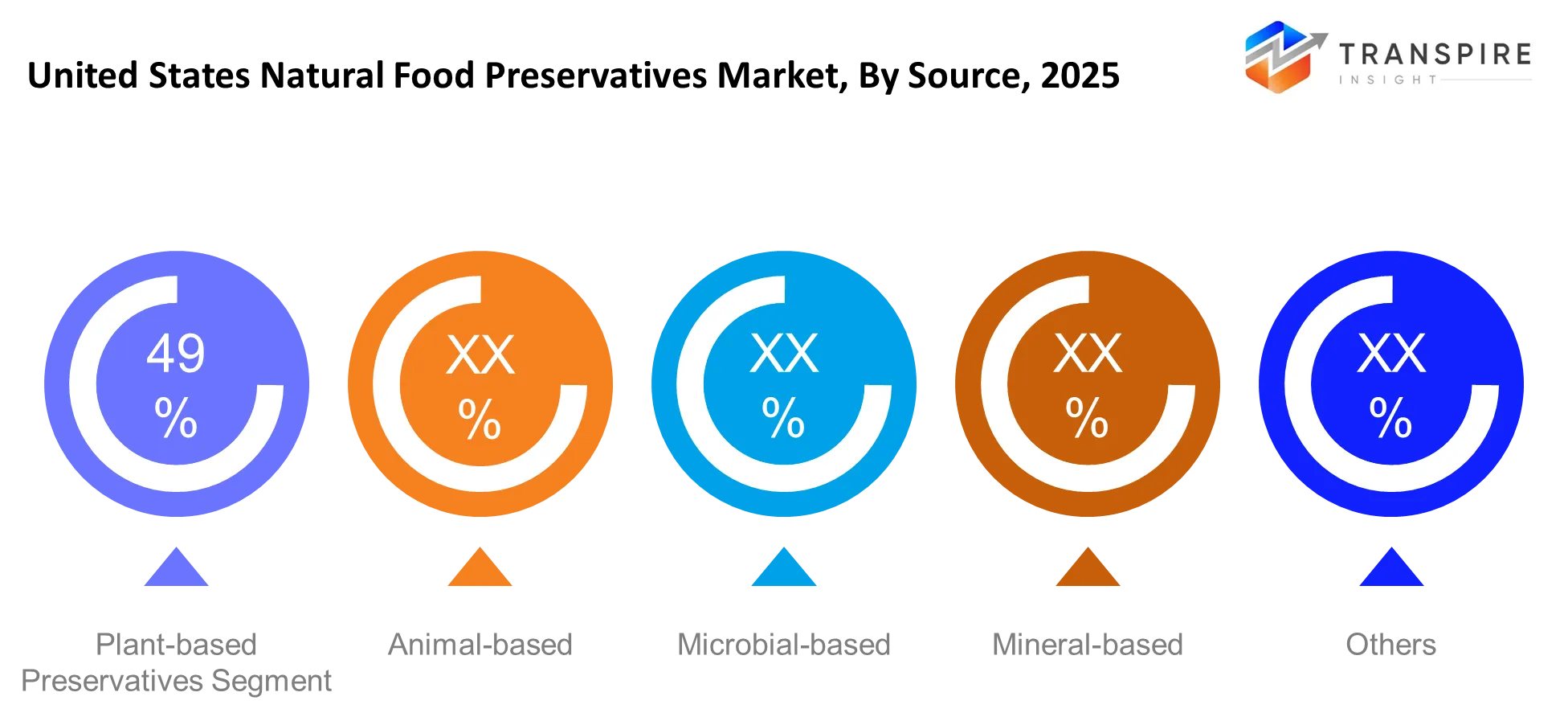
To learn more about this report, Download Free Sample Report
By Application
Bakery products, dairy products, meat and poultry, beverages ,snacks and other packaged food categories keep pushing application demand across the preservation industry. It’s mostly meat and poultry that still has the biggest market position, since refrigerated protein products need tight microbial control plus oxidation management across the whole national distribution network. Dairy products also keep a strong pull for natamycin and nisin, because longer shelf life really messes with inventory handling and retail profitability in a good way. Meanwhile bakery manufacturers use natural preservatives more often to curb mold growth while trying to stay in that clean-label posture for bread and snack packaging.
Beverage producers, kind of leaned harder into citrus-derived antimicrobials and fermentation based systems after synthetic additives got more scrutiny, especially in premium and functional drink lines. Snacks and ready-to-eat meals are becoming fast movers too, largely due to the convenience food appetite and the fact that cold-chain distribution can stretch farther. Looking ahead, growth seems headed toward multifunctional preservation systems that can support texture retention, flavor stability, and microbial protection all at once, for several packaged food uses.
By Form
Powder formulations basically dominate the form segment, because powdered preservatives offer longer shelf life , easier transportation, and a sort of simplified blending during industrial food processing. Food manufacturers tend to go for powder formats in bakery, snack, and dry mix uses, since storage stability cuts down handling risks and helps reduce formulation losses. Liquid preservatives still hold strong demand in beverage production, meat processing, and dairy manufacturing, where fast dispersion and a more even application help operational efficiency. Granules, as well as spray-dried forms, keep gaining traction because companies want better dosing accuracy and controlled ingredient release when they’re working with more complex food systems. Spray-dried preservation systems also back heat-sensitive applications, by boosting stability through processing and packaging operations, not only in theory but in day to day plants.
Operational flexibility is increasingly the deciding factor in purchasing, as food processors ask for preservation ingredients that play well with automated production lines and large-scale manufacturing systems. Looking ahead, future investment is likely to push further in encapsulation technology, spark more spray-drying innovation, and expand customized delivery formats that improve ingredient performance. This also aims to lower production waste and reformulation costs for big food manufacturers, in a more measurable way than before.
What are the Key Use Cases Driving the United States Natural Food Preservatives Market?
Processed meat and ready to eat food manufacturing still stay as the main use cases for natural preservatives, because refrigerated distribution basically needs strong microbial stability and pretty tight oxidation control. Meat processors tend to reach for vinegar blends, rosemary extract, and cultured antimicrobial systems, in order to stretch shelf life, and also to stay aligned with retailer clean label ideas.
On the other hand dairy alternatives and packaged bakery items are growing fast in big scale food manufacturing and also in private label retail. Plant based yogurt, oat drinks, and packaged bread manufacturers are more often leaning into fermentation derived preservatives, to lower spoilage risk when products move across the country through cold chain routes, and when they sit longer on retail shelves.
More emerging situations show up in functional beverages, protein snacks, and minimally processed frozen meals, these are aimed at consumers who want something premium and health focused. Meanwhile food technology firms are experimenting with bio preservation systems and encapsulated natural antimicrobials, especially for high moisture products where conventional natural preservatives still don’t always perform as well as hoped.
|
Report Metrics |
Details |
|
Market size value in 2025 |
USD 319.74 Million |
|
Market size value in 2026 |
USD 342.79 Million |
|
Revenue forecast in 2033 |
USD 557.91 Million |
|
Growth rate |
CAGR of 7.21% from 2026 to 2033 |
|
Base year |
2025 |
|
Historical data |
2021 - 2024 |
|
Forecast period |
2026 - 2033 |
|
Report coverage |
Revenue forecast, competitive landscape, growth factors, and trends |
|
Geographic scope |
United States of America |
|
Key company profiled |
Cargill, Kerry Group, BASF, Corbion, DSM, Kemin Industries, Galactic, DuPont, Jungbunzlauer, Archer Daniels Midland, Tate & Lyle, Ingredion, Chr. Hansen, Naturex, Givaudan |
|
Customization scope |
Free report customization (country, regional & segment scope). Avail customized purchase options to meet your exact research needs. |
|
Report Segmentation |
By Type (Salt, Sugar, Vinegar, Rosemary Extract, Natamycin, Nisin, Others), By Source (Plant-based, Animal-based, Microbial-based, Mineral-based, Others), By Application (Bakery Products, Dairy Products, Meat & Poultry, Beverages, Snacks, Others), By Form (Powder, Liquid, Granules, Spray-dried, Others) |
Which Regions are Driving the United States Natural Food Preservatives Market Growth?
The Midwest still kind of remains the main region in the United States natural food preservatives industry, because it manages to blend huge food processing capacity with a pretty tight agricultural supply integration. States like Illinois, Wisconsin, and Minnesota have dense networks of meat processors, dairy makers, and packaged food producers that need reliable preservation systems, for distribution all over the country. This regional strength also rides on established cold-chain infrastructure, ingredient manufacturing clusters, and the easy closeness to grain dairy, and botanical raw material suppliers. Big ingredient firms and contract food manufacturers keep putting money into fermentation technology and clean-label reformulation facilities across the Midwest, which sort of locks in production leadership for the long run.
Meanwhile the Northeast comes in as the second-largest regional contributor, even if the growth story feels a bit different than the Midwest, which is way more production-driven. There, demand mostly comes from premium packaged foods, organic retail brands, and functional drink makers that cater to heavily populated urban markets. With ongoing regulatory scrutiny on ingredient labeling, along with retailer-led quality expectations, there’s been a steady grab of plant-based preservatives across bakery products, dairy alternative lines and refrigerated meal segments, so yeah it keeps moving. There’s also economic stability, advanced food research institutions, and long-term relationships between niche ingredient suppliers and branded food companies, all of which help maintain consistent regional revenue generation.
The Western United States is kind of emerging as the fastest-growing region, driven by accelerating investment in organic packaged foods, plant based nutrition, and biotechnology assisted food preservation systems. California, Washington, and Colorado saw rapid expansion in clean-label product manufacturing after 2022, as retailers ramped up shelf space for minimally processed food categories, and yeah that matters. Venture capital funding for precision fermentation and natural antimicrobial innovation also expanded quite a lot across food technology hubs in California. Overall this momentum is expected to create strong chances for ingredient developers, fermentation startups and specialized preservation technology providers between 2026 and 2033, especially as premium food production scales out even more across the region.
Who are the Key Players in the United States Natural Food Preservatives Market and How Do They Compete?
The Midwest still kind of remains the main region in the United States natural food preservatives industry, because it manages to blend huge food processing capacity with a pretty tight agricultural supply integration. States like Illinois, Wisconsin, and Minnesota have dense networks of meat processors, dairy makers, and packaged food producers that need reliable preservation systems, for distribution all over the country. This regional strength also rides on established cold-chain infrastructure, ingredient manufacturing clusters, and the easy closeness to grain dairy, and botanical raw material suppliers. Big ingredient firms and contract food manufacturers keep putting money into fermentation technology and clean-label reformulation facilities across the Midwest, which sort of locks in production leadership for the long run.
Meanwhile the Northeast comes in as the second-largest regional contributor, even if the growth story feels a bit different than the Midwest, which is way more production-driven. There, demand mostly comes from premium packaged foods, organic retail brands, and functional drink makers that cater to heavily populated urban markets. With ongoing regulatory scrutiny on ingredient labeling, along with retailer-led quality expectations, there’s been a steady grab of plant-based preservatives across bakery products, dairy alternative lines and refrigerated meal segments, so yeah it keeps moving. There’s also economic stability, advanced food research institutions, and long-term relationships between niche ingredient suppliers and branded food companies, all of which help maintain consistent regional revenue generation.
The Western United States is kinda emerging as the fastest growing region, because investment is accelerating in organic packaged foods, plant based nutrition, and biotechnology assisted food preservation systems. California, Washington, and Colorado saw rapid expansion in clean label product manufacturing after 2022, as retailers began giving more shelf space— for minimally processed food categories. Also venture capital funding for precision fermentation and natural antimicrobial innovation moved up sharply across a few food technology hubs in California. This whole momentum is expected to unlock strong opportunities for ingredient developers, fermentation startups, and specialized preservation technology providers between 2026 and 2033, as premium food production scales further in the region.
Company List
- Cargill
- Kerry Group
- BASF
- Corbion
- DSM
- Kemin Industries
- Galactic
- DuPont
- Jungbunzlauer
- Archer Daniels Midland
- Tate & Lyle
- Ingredion
- Chr. Hansen
- Naturex
- Givaudan
Recent Development News
In May 2026, Kraft Heinz Launched “Jell-O Simply” With Natural Ingredients in the U.S.: Kraft Heinz introduced “Jell-O Simply,” a new gelatin line made without artificial dyes or synthetic sweeteners. The launch reflects the company’s broader clean-label strategy and increasing demand for naturally preserved and minimally processed food products in the U.S. market. The company also confirmed plans to expand the range later in 2026.
Source: https://apnews.com
In February 2026, U.S. FDA Begins Safety Review of BHA Food Preservative: The U.S. FDA launched a major safety review of Butylated Hydroxyanisole (BHA), a synthetic preservative widely used in packaged foods. The regulatory action is prompting food companies to accelerate transitions toward natural preservative alternatives and clean-label preservation technologies across the U.S. food industry.
Source: https://www.reuters.com
What Strategic Insights Define the Future of the United States Natural Food Preservatives Market?
The United States natural food preservatives industry, is kinda structurally drifting toward more integrated bio preservation platforms, that sort of mash together antimicrobial defense, shelf life analytics, and formulation customization, into one single solution architecture. Now it’s not just consumer preference doing all the heavy lifting, it’s also retailer inventory economics, the expansion of refrigerated distribution, and those tighter private label ingredient standards. Over the next five to seven years, ingredient suppliers who can provide multifunctional preservation systems with validated performance evidence are probably going to grab outsized pricing strength, and then lock in long term manufacturing contracts.
One risk that seems a little undernoticed is raw material concentration, plus climate-linked agricultural volatility, especially around rosemary citrus and various botanical extracts. If supply hiccups happen, margins can get squeezed, and food manufacturers may see reformulation costs go up, especially those leaning heavily on plant derived preservation systems. At the same time, precision fermentation and encapsulated antimicrobial technologies, are starting to show up from California and Midwest food technology hubs, and that could be a big future opening, especially for high moisture ready meals and dairy alternatives. Market participants should probably move early on vertically aligned sourcing partnerships and AI supported shelf-life validation tools, so supply resilience gets stronger and commercial adoption happens faster.
United States Natural Food Preservatives Market Report Segmentation
By Type
- Salt
- Sugar
- Vinegar
- Rosemary Extract
- Natamycin
- Nisin
- Others
By Source
- Plant-based
- Animal-based
- Microbial-based
- Mineral-based
- Others
By Application
- Bakery Products
- Dairy Products
- Meat & Poultry
- Beverages
- Snacks
- Others
By Form
- Powder
- Liquid
- Granules
- Spray-dried
- Others
Frequently Asked Questions
Find quick answers to common questions.
The Approximate United States Natural Food Preservatives Market size for the Market will be USD 557.91 Million in 2033.
The key segments of the United States Natural Food Preservatives Market are By Type (Salt, Sugar, Vinegar, Rosemary Extract, Natamycin, Nisin, Others), By Source (Plant-based, Animal-based, Microbial-based, Mineral-based, Others), By Application (Bakery Products, Dairy Products, Meat & Poultry, Beverages, Snacks, Others), By Form (Powder, Liquid, Granules, Spray-dried, Others).
Major Players in the United States Natural Food Preservatives Market are Cargill, Kerry Group, BASF, Corbion, DSM, Kemin Industries, Galactic, DuPont, Jungbunzlauer, Archer Daniels Midland, Tate & Lyle, Ingredion, Chr. Hansen, Naturex, Givaudan.
The Current Market size of the United States Natural Food Preservatives Market is USD 319.74 Million in 2025.
The United States Natural Food Preservatives Market CAGR is 7.21%.
- Cargill
- Kerry Group
- BASF
- Corbion
- DSM
- Kemin Industries
- Galactic
- DuPont
- Jungbunzlauer
- Archer Daniels Midland
- Tate & Lyle
- Ingredion
- Chr. Hansen
- Naturex
- Givaudan
Recently Published Reports
-
Apr 2026
Baby Infant Formula Market
Baby Infant Formula Market Size, Share & Analysis Report By ype (Infant Milk, Follow On Milk, Specialty Baby Milk, Growing-Up Milk), By Ingredient (Carbohydrate, Fat, Protein, Minerals, Vitamins, and Others), By Product Form (Powder, Liquid, and Ready-to-feed), By Distribution Channels (Supermarket/Hypermarket, Specialty Store, Pharmacies, Online Retail, and Others), and Geography (North America, Europe, Asia-Pacific, Middle East and Africa, South and Central America), 2021 - 2031
-
Apr 2026
Edible Insects for Animal Feed Market
Edible Insects for Animal Feed Market Size, Share & Analysis Report By Type (Insect Powder, Insect Meal, Insect Bar, Insect Paste, Insect Oil, and Others), By Insect Type (Beetles, Cricket, Caterpillar, Hymenoptera, Orthoptera, Tree Bugs, and Others), By Application (Livestock, Pet Food, and Aquaculture), By Livestock Type (Poultry, Swine, and Others), and Geography (North America, Europe, Asia-Pacific, Middle East and Africa, South and Central America), 2021 - 2031
-
Apr 2026
Food Industry Disinfection and Bacterial Control Market
Food Industry Disinfection and Bacterial Control Market Size, Share & Analysis Report By Type (Chemical Disinfectants, Physical Disinfectants, and Biocides and Antimicrobials), By Application (Food Processing Equipment Surface Disinfection, Food Preparation Areas Surface Disinfection, Storage Areas Surface Disinfection, Anti-microbial Coatings Food Preservation, and Preservative Solutions Food Preservation), By End User (Meat and Poultry Processing, Dairy Processing, Seafood Processing, Bakery and Confectionery, Restaurants and Commercial Kitchens, and Food Service Providers), By Sales Channel (Online, Offline), and Geography (North America, Europe, Asia-Pacific, Middle East and Africa, South and Central America), 2021 - 2031
-
Apr 2026
Freeze Dried Food Market
Freeze Dried Food Market Size, Share & Analysis Report By Product Type (Fruits, Vegetables, Freeze-Dried Dairy Products, Freeze-Dried Meat and Seafood, Freeze-Dried Pet Food, and Prepared Meal), By Nature (Organic, and Conventional), By Form (Powdered, Granules, and Diced), By End Use (Breakfast Cereals, Dairy Products, Bakery & Confectionery, Nutritional Bars & Supplements, Powdered Beverages, Snacks, and Retail (Household)), and Geography (North America, Europe, Asia-Pacific, Middle East and Africa, South and Central America), 2021 - 2031