

United States Hydraulic Workover Unit Market Size & Forecast:
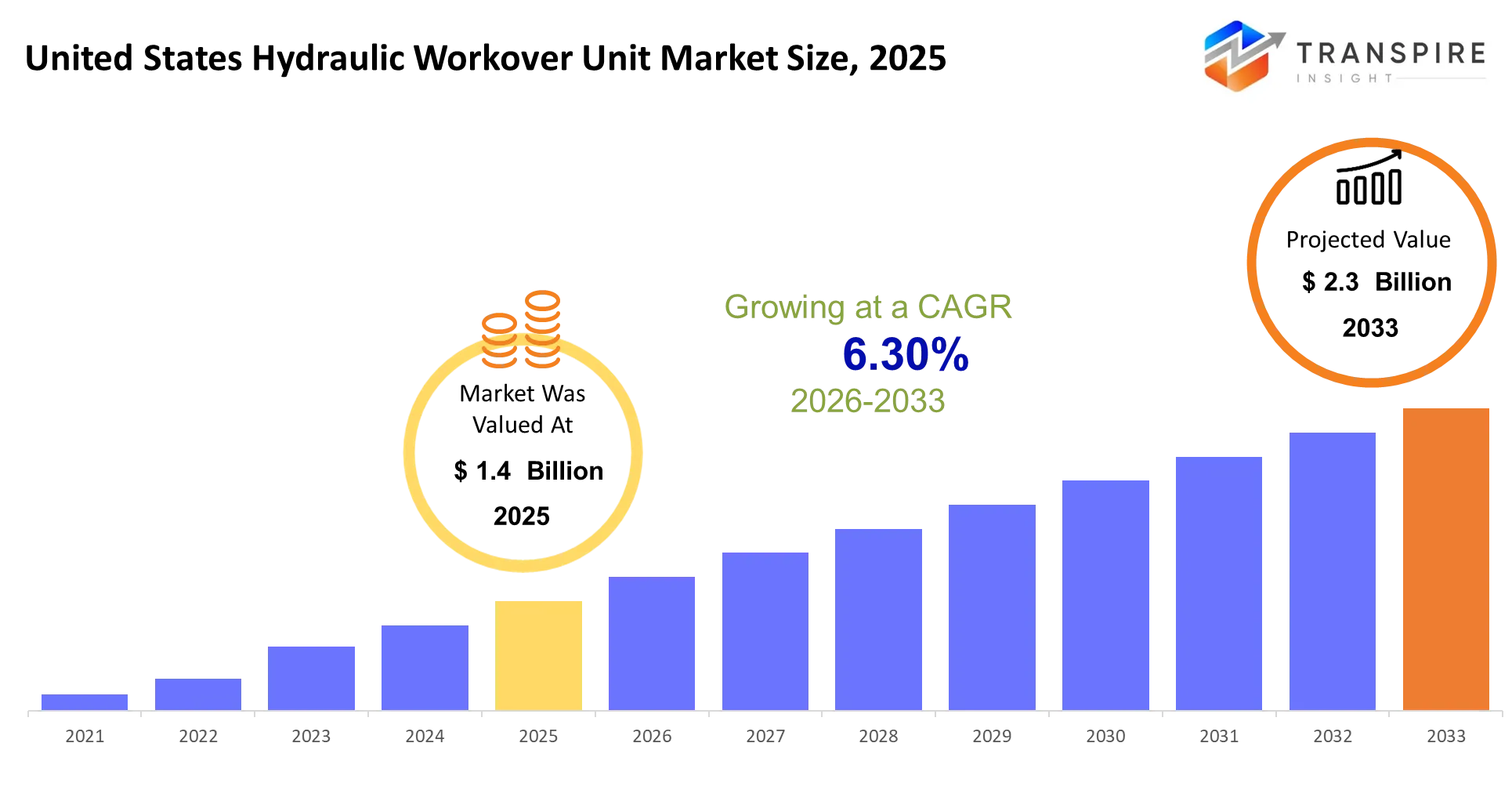
- United States Hydraulic Workover Unit Market Size 2025: USD 1.4 Billion
- United States Hydraulic Workover Unit Market Size 2033: USD 2.3 Billion
- United States Hydraulic Workover Unit Market CAGR: 6.30%
- United States Hydraulic Workover Unit Market Segments: By Unit Type (Trailer-mounted Units, Skid-mounted Units, Mobile Units, Snubbing Units, Others); By Application (Onshore Operations, Offshore Operations, Well Intervention, Well Completion, Well Maintenance, Others); By Capacity (Light-duty Units, Medium-duty Units, Heavy-duty Units, Ultra-heavy Units, Others); By End User (Oil & Gas Companies, Drilling Contractors, Well Service Companies, Others)
To learn more about this report,  Download Free Sample Report
United States Hydraulic Workover Unit Market Summary
The United States Hydraulic Workover Unit Market was valued at USD 1.4 Billion in 2025. It is forecast to reach USD 2.3 Billion by 2033. That is a CAGR of 6.30% over the period.
Hydraulic workover units keep aging oil and gas wells going , without having to haul in a full drilling rig. In the United States, operators rely on these setups to fix tubing, swap out downhole gear, restore pressure control, and stretch the productive span of mature onshore and offshore wells, all while trying to keep downtime low, plus operating cost not ballooning. Over the last five years the market kind of bent toward higher capacity hydraulic units , with automated controls and more careful pressure-management tools, mostly because shale operators now want quicker intervention cycles and reduced crew exposure in tricky well situations.
The sharp rebound in U.S. energy activity after the pandemic, then the supply volatility that came with the Russia-Ukraine conflict, basically pushed producers to wring more output from what they already have, rather than leaning only on brand new drilling programs. That shift also lifted spending on well maintenance and intervention services. So as operators turn their attention to asset longevity, production efficiency , and cutting out non-productive time, hydraulic workover contractors are landing lengthier service agreements and better equipment utilization rates.
Key Market Insights
- Texas kind of dominated the United States Hydraulic Workover Unit Market, holding around 38% market share in 2025, mainly because of heavy shale well intervention activity, it’s kinda constant.
- Then the Gulf Coast area also grew a lot in share, since offshore operators pushed more spending into well restoration, pressure control stuff, and related operations that tend to need quick turnaround.
- Meanwhile the Permian Basin is still the fastest growing regional market all the way through 2030, because operators keep stretching the productive life of those matured horizontal wells, even when conditions get a bit tricky.
- Up in the Rocky Mountain states there’s emerging demand too, for these hydraulic workover services, driven by renewed investment in unconventional oil recovery projects, so the pace is starting to pick up.
- And trailer-mounted hydraulic workover units made up about 46% of industry size in 2025, mostly due to mobility, plus lower deployment costs compared with larger setups.
- Automated hydraulic workover units are projected as the fastest-growing side during the forecast period, mostly because crew safety gets better and day to day operations feel more efficient, in a kinda practical way.
- High-pressure intervention systems actually gained notable market share, since many operators keep focusing on deeper and more technically complex shale formations, with less hesitation.
- Well maintenance and tubing replacement held the largest slice of application demand, they took over 41% market share in 2025 across mature U.S. oilfields, which is pretty significant.
- Pressure-control operations showed up as the fastest-growing application segment, because older wells often need advanced intervention and production stabilization services, to stay steady.
- Enhanced oil recovery support applications keep expanding too, tied to higher crude recovery targets from already producing wells, where incremental gains matter.
What are the Key Drivers, Restraints, and Opportunities in the United States Hydraulic Workover Unit Market?
The main thing driving the United States Hydraulic Workover Unit Market is really the fast aging of shale and conventional wells across big producing regions like the Permian Basin and Eagle Ford. Operators feel pushed, to keep production levels steady without jumping into the higher capital cost of fresh drilling programs. Then, with crude price swings and supply disruptions after the Russia-Ukraine conflict, producers started redirecting budgets toward making existing wells last longer. Hydraulic workover units got really important here, because they enable quicker tubing replacement, pressure-control activities, and well recompletions, often with lower day-to-day operating cost versus standard rigs. As a result, this change is pushing up equipment utilization rates and it also helps contractors lock in long term service contract revenue for intervention work.
The market’s biggest pause or restraint is the shortage of experienced field personnel along with a lack of high-capacity intervention equipment. Hydraulic workover tasks need specialized crews trained on pressure-control systems, offshore servicing, and higher risk well intervention procedures. Training takes a long time, and staff turnover got worse after the pandemic slump in oilfield jobs. That labor gap, in a structural way, makes it harder for operators to expand fleets, it slows down project timing, and it reduces service availability exactly when the drilling cycles hit their peak, and yeah it becomes pretty noticeable.
Something big is kinda emerging here, via digitalized hydraulic workover systems that are tied into real-time monitoring,plus predictive maintenance software. In Texas and around the Gulf of Mexico, operators are increasingly putting money into automated intervention units, these not only cut down crew exposure ,they also boost operational accuracy in high-pressure wells. And as offshore redevelopment activity keeps building speed, the contractors with more advanced automated fleets are set up to win premium-margin jobs, and they can also stretch those long-term service agreements out for longer.
What Has the Impact of Artificial Intelligence Been on the United States Hydraulic Workover Unit Market?
Artificial intelligence, along with newer digital systems, is slowly shifting how hydraulic workover operations get planned, watched, and pushed through in U.S. oilfields. A lot of service providers now rely on AI enabled control platforms to handle pressure monitoring, load balancing, and fluid circulation, kinda automatically during intervention work. These platforms keep scanning downhole plus surface signals to tweak hydraulic pressure as things happen in real time, so the chance of equipment overload drops and sudden, unplanned shutdowns don’t hit as often. At the same time fleet operators are putting centralized digital dashboards in place that follow unit utilization, maintenance calendars, fuel usage, and safety compliance across several well sites.
Machine learning models are also being used more often for predictive care of pumps, power units and pressure control hardware. Instead of waiting for problems, operators look at vibration readings, temperature trends, and old failure records, then they can spot wear conditions early, before the mechanical breakdown shows up. In practice this has helped equipment stay online longer, cut down emergency repair expenses, and reduce nonproductive time during those high value intervention jobs. A few contractors even say they’ve seen measurable dips in fuel consumption and maintenance spending after folding automated performance optimization tools into their fleet routines.
Still, AI adoption has a big snag, because many legacy hydraulic workover units were not built in the first place for full digital integration. Updating older fleets with sensors, telemetry packages, and cloud connectivity takes real capital, and on top of that, patchy field data quality can mess with how accurate predictive models stay in remote, harsh operating areas.
Key Market Trends
- Since 2021, Permian Basin operators have kinda redirected more capital into well intervention programs rather than the big aggressive new drilling expansion thing, yeah.
- Automated hydraulic workover units saw stronger adoption after 2023 as labor shortages added pressure to cut back on manual intervention tasks.
- In the Gulf of Mexico, offshore operators restarted delayed maintenance campaigns somewhere between 2022 and 2025, which helped lift demand for high capacity intervention fleets.
- Companies like Halliburton and Schlumberger also expanded digital monitoring capabilities so pressure-control accuracy got better and the odds of unplanned shutdowns went down.
- Predictive maintenance software started popping up more often after pandemic-era supply disruptions, because those issues showed how expensive unexpected equipment failures can be, especially when replacement delays keep dragging.
- Trailer mounted hydraulic workover systems ended up replacing older stationary units across several shale regions since operators leaned into mobility and faster deployment times more and more.
- In 2022, higher steel prices, hydraulic component costs, and fuel expenses pushed contractors toward longer term service agreements with fixed operational pricing.
- Independent shale producers increasingly used high-pressure intervention technologies, as horizontal wells turned deeper and mechanically more complex after 2020.
- Real-time telemetry and remote diagnostics gained momentum too, because operators wanted measurable reductions in non-productive time across those multi-well intervention programs.
United States Hydraulic Workover Unit Market Segmentation
By Unit Type:
Trailer-mounted units keep on helping with flexible on-site travel across shale-producing regions, where operators want a quick move between pads, and sometimes it has to be done fast before the schedule slips. The demand for these systems stays tied to cost discipline and quicker well servicing timing , so crews can stay on track. Skid-mounted units are still used steadily in places where transport access is limited, since staying fixed in position tends to support more controlled operations in tougher drilling conditions.
Mobile units also get a lot of attention from operators running short-duration intervention tasks where rapid set up lowers downtime. Then there’s snubbing units; they remain a key choice for high-pressure well activities, because pressure governance and safer handling are still crucial while work happens on live wells . Other categories of units continue to line up with the customized operational needs across mature and unconventional oilfields throughout the United States, within the Hydraulic Workover Unit Market.
By Application:
Onshore operations keep a solid level of demand , mostly because the aging wells across the main production basins need ongoing fiddling and restoration types of work. Hydraulic workover units matter since they help stretch well productivity, and in the process limit the need for full drilling replacement, not every time anyway. Offshore operations still show targeted demand too, where operators stay focused on keeping output from existing offshore assets, and they do it while sticking to tight operational timelines.
Well intervention applications still count a lot, because operators want usable ways to rebalance pressure, fix compromised intervals, and improve the production flow. Well completion work also keeps unit utilization steady during the final preparation phase for production, so the equipment isn’t just sitting idle. Well maintenance operations continue climbing as companies try to push out the operational life of mature wells while simultaneously cutting down on surprise shutdown risks across producing regions.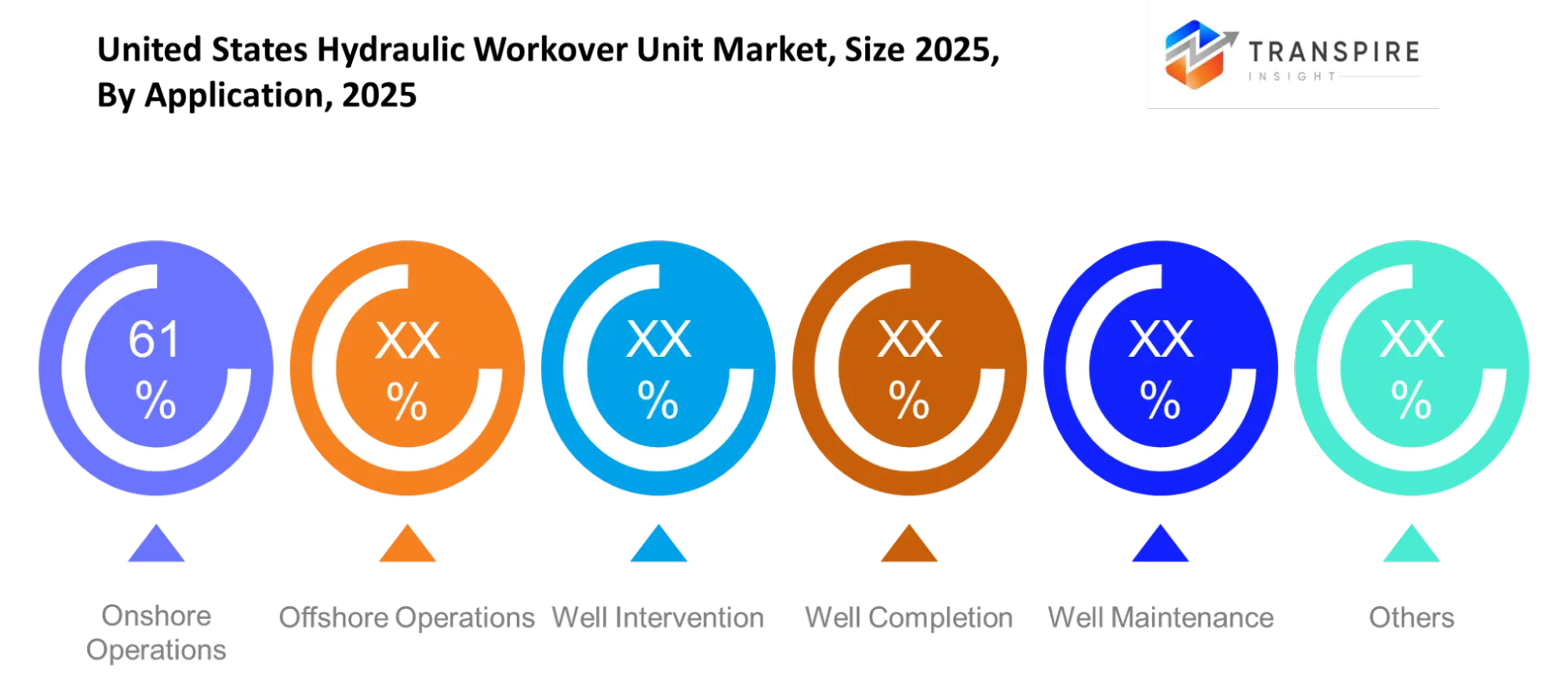
To learn more about this report, Download Free Sample Report
By Capacity:
Light-duty units help with smaller intervention activities, especially when shallow wells and limited operational loads mean you don’t really need something huge. They stay preferred for cost-sensitive projects, because they can move around more easily and they help keep efficient servicing timetables. Medium-duty units keep a broad adoption too , mostly due to that more even lifting capacity plus operational flexibility that works well for many standard well servicing needs.
Heavy-duty units still keep rising, particularly for deeper wells where stronger pulling force and more advanced handling capabilities matter a lot for tough jobsite conditions. Ultra-heavy units remain basically essential when projects are technically difficult, like in high-pressure surroundings and with large-scale intervention tasks. And then there are other capacity categories that cover niche operational requirements, depending on well depth, field maturity, and the regional production conditions across the United States Hydraulic Workover Unit Market.
By End User:
Oil and gas firms keep putting money into hydraulic workover services, in order to boost production output from existing wells, while also trying to keep the day to day operational spending in check. A lot of the biggest players tend to maintain steady flow from mature fields, rather than leaning only on new drilling programs. Because of that, the demand they generate helps sustain long term service agreements, and keeps equipment usage consistent across multiple active production areas, even when conditions get a bit changeable.
Meanwhile drilling contractors still show solid engagement. They say integrated field services make things smoother, especially when they are dealing with intervention , and the later completion phases. On the other side, well service companies are also growing their hydraulic workover capabilities, mainly to handle the rising repair and maintenance load coming from older wells and unconventional resource plays. Service providers then also emphasize operational safety, work crew efficiency, and quicker project turnaround, so they can strengthen their position in the United States Hydraulic Workover Unit Market.
What are the Key Use Cases Driving the United States Hydraulic Workover Unit Market?
So the main thing that really drives adoption of hydraulic workover units in the United States, is about well maintenance and bringing production back, pretty much across those mature shale areas in Texas, New Mexico, and North Dakota. In practice operators tend to lean on hydraulic units for stuff like tubing replacement, pressure control activities, and artificial lift repairs. The reason is pretty straightforward, these services can bring production back without having to send out those pricey drilling rigs, it’s kind of a “do the work faster” tradeoff.
Beyond that, the secondary use cases keep widening too, especially for offshore intervention and for enhanced oil recovery efforts. Gulf of Mexico operators are using higher capacity hydraulic setups more and more for subsea well servicing and recompletion tasks. Meanwhile independent producers on land use them to keep output steady from older horizontal wells, especially when the operating budgets are tighter than before, and everyone is watching every dollar.
Then there are the emerging use cases that sound a bit more next-gen. These include digitally controlled intervention systems that are tied into predictive maintenance software, plus remote diagnostics platforms, all linked together in a more connected way. Contractors are also experimenting with automated hydraulic workover technologies for high-pressure geothermal wells and even carbon storage infrastructure. In those cases the safety requirements, and the constant pressure monitoring, are getting more strict over the forecast period.
|
Report Metrics |
Details |
|
Market size value in 2025 |
USD 1.4 Billion |
|
Market size value in 2026 |
USD 1.5 Billion |
|
Revenue forecast in 2033 |
USD 2.3 Billion |
|
Growth rate |
CAGR of 6.30% from 2026 to 2033 |
|
Base year |
2025 |
|
Historical data |
2021 - 2024 |
|
Forecast period |
2026 - 2033 |
|
Report coverage |
Revenue forecast, competitive landscape, growth factors, and trends |
|
Geographic scope |
United States of America |
|
Key company profiled |
Schlumberger, Halliburton, NOV Inc., Superior Energy Services, Archer Limited, Precision Drilling, Nabors Industries, Basic Energy Services, Weatherford International, Cudd Energy Services, KCA Deutag, Velesto Energy, Key Energy Services, Expro Group, Altus Intervention |
|
Customization scope |
Free report customization (country, regional & segment scope). Avail customized purchase options to meet your exact research needs. |
|
Report Segmentation |
By Unit Type (Trailer-mounted Units, Skid-mounted Units, Mobile Units, Snubbing Units, Others); By Application (Onshore Operations, Offshore Operations, Well Intervention, Well Completion, Well Maintenance, Others); By Capacity (Light-duty Units, Medium-duty Units, Heavy-duty Units, Ultra-heavy Units, Others); By End User (Oil & Gas Companies, Drilling Contractors, Well Service Companies, Others) |
Which Regions are Driving the United States Hydraulic Workover Unit Market Growth?
Texas, and in general the broader Permian Basin, still reads as the dominant spot in the United States Hydraulic Workover Unit Market , largely because that area holds the country’s highest mix of aging shale wells which need sort of ongoing intervention, like not just once but repeatedly. West Texas operators tend to push for hydraulic workover services to keep output levels steady , lower the time wells sit idle , and steer away from the heavier capital load that comes with new drilling programs. On top of that, the region has a dense oilfield services community—equipment manufacturers, pressure-control specialists , logistics providers, and intervention crews that have done this for years. Add strong pipeline infrastructure, long standing service networks, and dependable upstream investment, and you get a pretty clear reason the region stays in the lead.
Meanwhile the Gulf Coast region plays second but the way it grows isn’t the same thing as Permian driven momentum. Here, demand is less about shale tuning and more about long-cycle offshore asset handling and keeping production continuous. Offshore operators usually keep their well servicing budgets more stable, partly because offshore wells can be expensive to replace, and because risk controls are tighter from an operational standpoint. As a result hydraulic workover contractors can see a more consistent revenue stream , with help from mature port infrastructure, offshore engineering know-how, and longer maintenance agreements.
The Rocky Mountain region is coming up as the quickest growing market, mostly because there is renewed investment in unconventional resource recovery and more extensive horizontal well development. Since 2023, the more steady crude price situation made it easier for independent producers to restart a bunch of paused intervention work across Wyoming , Colorado, and North Dakota. At the same time operators are leaning into automated hydraulic systems that can manage higher pressure well conditions and also remote operating circumstances. That movement is now opening up good chances for equipment sellers and digital service providers looking to scale up between 2026 and 2033, specifically in advanced fleet automation plus predictive care technologies.
Who are the Key Players in the United States Hydraulic Workover Unit Market and How Do They Compete?
The United States Hydraulic Workover Unit Market is still sort of moderately fragmented , and the fight between players seems to get shaped by things like how easy it is to access a local fleet , plus pressure-control know-how, and whether a firm can handle thorny shale and offshore well situations. Big oilfield service groups keep pushing to hold market share by bundling intervention services into more complete packages, while the smaller regional contractors often go at it faster on response time , and they lean hard into very localized operational support. At the same time, technology feels like it’s becoming the main differentiator , because operators are moving toward automated hydraulic setups, predictive upkeep tools, and real-time monitoring rather than relying only on older style service models. Firms that manage to cut down non-productive time , and that in turn improve well recovery economics, tend to lock in longer term arrangements with shale operators and offshore teams.
Halliburton is leaning into technology first hydraulic intervention services , tied into digital well monitoring platforms and upgraded pressure-control systems. Its edge, in simple terms , comes from putting hydraulic workover execution together with wider well lifecycle support, so operators can reduce those annoying coordination delays across drilling, completion, and later maintenance activities. They also keep expanding automation capabilities in the Permian Basin, where quick intervention turnaround has turned into a standard contract expectation. Schlumberger, meanwhile, differentiates through data-heavy well diagnostics and predictive maintenance software, which helps sharpen intervention planning for complex offshore locations as well as unconventional plays. It also has a solid Gulf of Mexico footprint , plus continued investment in AI enabled operational analytics, which supports that more premium service positioning.
NOV Inc. competes by pushing specialized hydraulics equipment engineering, plus high-capacity intervention systems meant for deeper, higher pressure wells. The company has been expanding partnerships with shale operators, looking for automated fleet upgrades, which apparently help with safety compliance and also cut down the labor dependence. At the same time, Superior Energy Services holds a fairly strong niche in offshore intervention and pressure control operations, where reliability and faster mobilization stay critical purchasing factors. Meanwhile Basic Energy Services wins mostly via regional service density and cost efficient operations across mature onshore oilfields, helping independent producers keep those aging wells running while budgets get tighter .
Company List
- Schlumberger
- Halliburton
- NOV Inc.
- Superior Energy Services
- Archer Limited
- Precision Drilling
- Nabors Industries
- Basic Energy Services
- Weatherford International
- Cudd Energy Services
- KCA Deutag
- Velesto Energy
- Key Energy Services
- Expro Group
- Altus Intervention
Recent Development News
In April 2026, Halliburton launched the Volta™ all-electric control system. The launch advanced intelligent completions technology and strengthened automation capabilities for well intervention and hydraulic workover operations in the United States energy sector.\
Source https://www.halliburton.com/
In April 2025, Cairn Oil & Gas entered a partnership with Parker Wellbore, recently acquired by Nabors Industries. The agreement deployed a high-performance automated drilling rig with advanced monitoring systems, supporting safer and more efficient well servicing and intervention activities linked to the broader hydraulic workover and drilling services market.\
Source https://www.vedantaoilandgas.com/
What Strategic Insights Define the Future of the United States Hydraulic Workover Unit Market?
The United States Hydraulic Workover Unit Market is drifting, sort of, toward a more technology heavy and automation centered operating style over the next five to seven years. The whole idea is that aging shale infrastructure, deeper horizontal wells , and the rising need for pressure control are making operators care more about intervention efficiency instead of just pushing more drilling activity. In practical terms, this change tends to reward contractors who can blend digital diagnostics, automated hydraulic equipment, and predictive upkeep platforms into big scale field workflows. And as production companies try to extend asset life while cutting down on non productive time, intervention services could end up taking a larger slice of upstream operating money.
There’s also a risk that people don’t always talk about enough. Ownership of advanced hydraulic fleets is becoming more concentrated among a small group of big service providers. Smaller contractors might find it hard to bankroll automation upgrades, so you could see pricing pressure increase, plus less competitive wiggle room when commodity markets soften. But at the same time, an opportunity is beginning to show up around geothermal well work and carbon storage infrastructure, especially in Texas and across the Rocky Mountain area, where high pressure servicing knows how to line up with newer energy transition efforts. For firms thinking about entry, it probably makes sense to put money into digitally connected fleets, and also into specialized workforce training, early on, so they can lock in longer term agreements before the market feels crowded.
United States Hydraulic Workover Unit Market Report Segmentation
By Unit Type
- Trailer-mounted Units
- Skid-mounted Units
- Mobile Units
- Snubbing Units
By Application
- Onshore Operations
- Offshore Operations
- Well Intervention
- Well Completion
- Well Maintenance
By Capacity
- Light-duty Units
- Medium-duty Units
- Heavy-duty Units
- Ultra-heavy Units
By End User
- Oil & Gas Companies
- Drilling Contractors
- Well Service Companies
Frequently Asked Questions
Find quick answers to common questions.
The United States Hydraulic Workover Unit Market Size is USD 2.3 Billion in 2033.
Key Segments for the United States Hydraulic Workover Unit Market are By Unit Type (Trailer-mounted Units, Skid-mounted Units, Mobile Units, Snubbing Units, Others); By Application (Onshore Operations, Offshore Operations, Well Intervention, Well Completion, Well Maintenance, Others); By Capacity (Light-duty Units, Medium-duty Units, Heavy-duty Units, Ultra-heavy Units, Others); By End User (Oil & Gas Companies, Drilling Contractors, Well Service Companies, Others).
Major United States Hydraulic Workover Unit Market Players are Schlumberger, Halliburton, NOV Inc., Superior Energy Services, Archer Limited, Precision Drilling, Nabors Industries, Basic Energy Services, Weatherford International, Cudd Energy Services, KCA Deutag, Velesto Energy, Key Energy Services, Expro Group, Altus Intervention.
The Current United States Hydraulic Workover Unit Market size is USD 1.4 Billion in 2025.
The United States Hydraulic Workover Unit Market CAGR is 6.30% from 2026 to 2033.
- Schlumberger
- Halliburton
- NOV Inc.
- Superior Energy Services
- Archer Limited
- Precision Drilling
- Nabors Industries
- Basic Energy Services
- Weatherford International
- Cudd Energy Services
- KCA Deutag
- Velesto Energy
- Key Energy Services
- Expro Group
- Altus Intervention
Recently Published Reports
-
Apr 2026
Active Power Filter Market
Active Power Filter Market Size, Share & Analysis Report By Type (Shunt Active Power Filters, Series Active Power Filter, Hybrid Active Power Filter), By Application (Harmonics Mitigation, Reactive Power Compensation, Voltage Regulation, Power Factor Correction), By Phase (Single Phase, Three Phase), By End-User Industry (Manufacturing, Healthcare, Commercial, Automotive, Oil and Gas, Others), and Geography (North America, Europe, Asia-Pacific, Middle East and Africa, South and Central America), 2021 - 2031
-
Apr 2026
Electrical Transformer Market
Electrical Transformer Market Size, Share & Analysis Report By Core (Closed, Shell, and Berry), By Insulation (Gas, Oil, Solid, Air, and Other), By Phase (Single, and Three), By Rating (100 MVA to 500 MVA, 501 MVA to 800 MVA, and 801 MVA to 1200 MVA), and Geography (North America, Europe, Asia-Pacific, Middle East and Africa, South and Central America), 2021 – 2031
-
Apr 2026
Hydraulic Piston Pumps Market
Hydraulic Piston Pumps Market Size, Share & Analysis Report By Type (Axial Piston Pumps, Radial Piston Pumps), By Operating Pressure (Low Pressure, Medium Pressure, High Pressure), By Application (Construction, Mining, Agriculture, Automotive, Oil & Gas, Industrial Machinery, Others), By End-User (OEMs, Aftermarket), and Geography (North America, Europe, Asia-Pacific, Middle East and Africa, South and Central America), 2021 – 2031
-
Apr 2026
Laboratory Gas Generators Market
Laboratory Gas Generators Market Size, Share & Analysis Report By Product (Nitrogen Gas Generator, Hydrogen Gas Generator, Zero Air Gas Generator, Purge Gas Generator, TOC Gas Generators, Others), By Application (Gas Chromatography, Liquid Chromatography-mass Spectrometry (LC-MS), Gas Analyzers, Others), By End-user (Life Science, Chemical & Petrochemical, Food & Beverage, Others), and Geography (North America, Europe, Asia-Pacific, Middle East and Africa, South and Central America), 2021 – 2031