
United States Digital Transformation in the Spending Market Summary
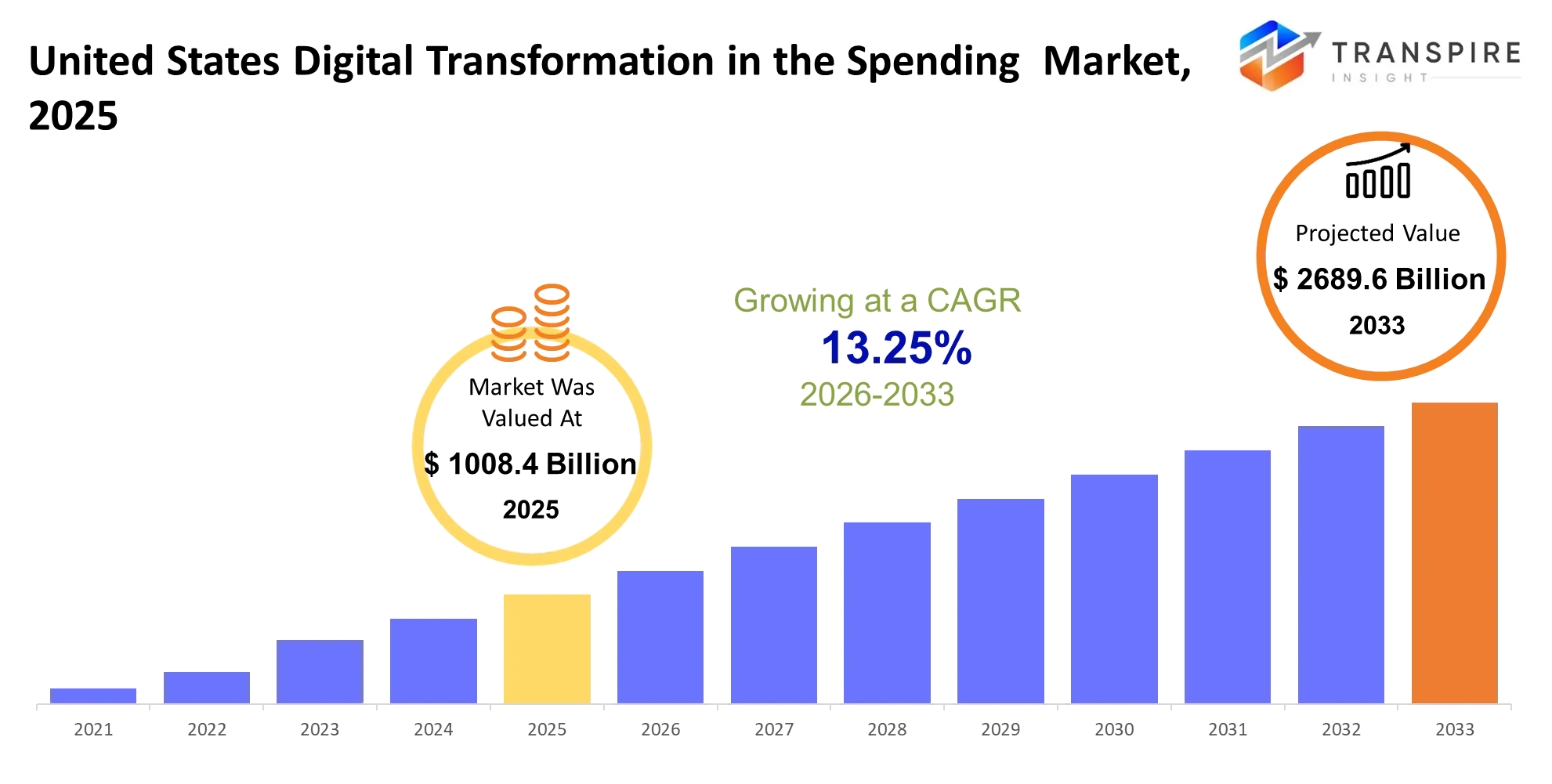
As per Transpire Insight, the United States Digital Transformation in the Spending Market size is estimated at USD 1008.4 Billion in 2025 and is anticipated to reach USD 2689.6 Billion by 2033, growing at a CAGR of 13.25% from 2026 to 2033.
The United States Digital Transformation in the Spending Market, helps organizations keep purchasing in order , manage supplier dealings, invoice flow, and even employee expenses, by using connected digital workflows. In real life, companies tend to swap out scattered spreadsheets, hand-run approvals, repeat invoices , and separated procurement systems, for automated source-to-pay routines. Over the last three to five years, the market has really shifted away from plain cloud procurement tools toward AI-enabled spend management, near real-time analytics, and ERP workflows that are actually integrated. The COVID-19 supply chain disruption sped all this up, because it showed weak spots in manual purchasing, plus limited supplier visibility, and then inflation along with tougher cost checks made finance teams dig into every spending category. Right now , much of the growth comes from the clear money-side outcome of automation: quicker invoice processing, stronger contract compliance, less leakage, and a better way to choose suppliers. As firms link procurement, finance, and supplier information, these digital spending platforms are slowly moving from back-office support tools toward something closer to strategic cost-management infrastructure.
United States Digital Transformation in the Spending Market Size & Forecast:
- United States Digital Transformation in the Spending Market Size 2025: USD 1008.4 Billion
- Expected Market Value 2033: USD 2689.6 Billion
- Forecast CAGR: 13.25%
- Key Profile: SAP SE, Oracle Corporation, Coupa Software, Ivalua, Jaggaer, GEP Worldwide, Microsoft Corporation, IBM Corporation, Workday Inc., Basware Corporation, Tipalti Inc., Airbase, Procurify, ZipHQ, ServiceNow Inc.
Key Market Insights
- Market size: the United States digital transformation within the spending market pulled in about USD 1,008.4 billion during 2025, and that basically sets up a big enterprise tech chance, not just a small slice.
- Growth outlook: the market value is expected to climb to around USD 2,689.6 billion by 2033. That looks like steady spending, especially for procurement upgrades, plus financial automation, in other words.
- Regional leadership: the Western and Southern U.S. areas still act as big adoption pockets, because technology-heavy companies, along with large corporate purchasing teams, push platform deployment forward, fairly quickly.
- Fastest regional growth: the Southern United States seems set for faster expansion. manufacturing, logistics, healthcare, and technology investments are rising, and with that the digital procurement needs are going up too.
- Solution leadership: spend analytics and procurement software get lots of attention from enterprises, since unified purchasing information helps with cost control, supplier review, and sourcing decisions.
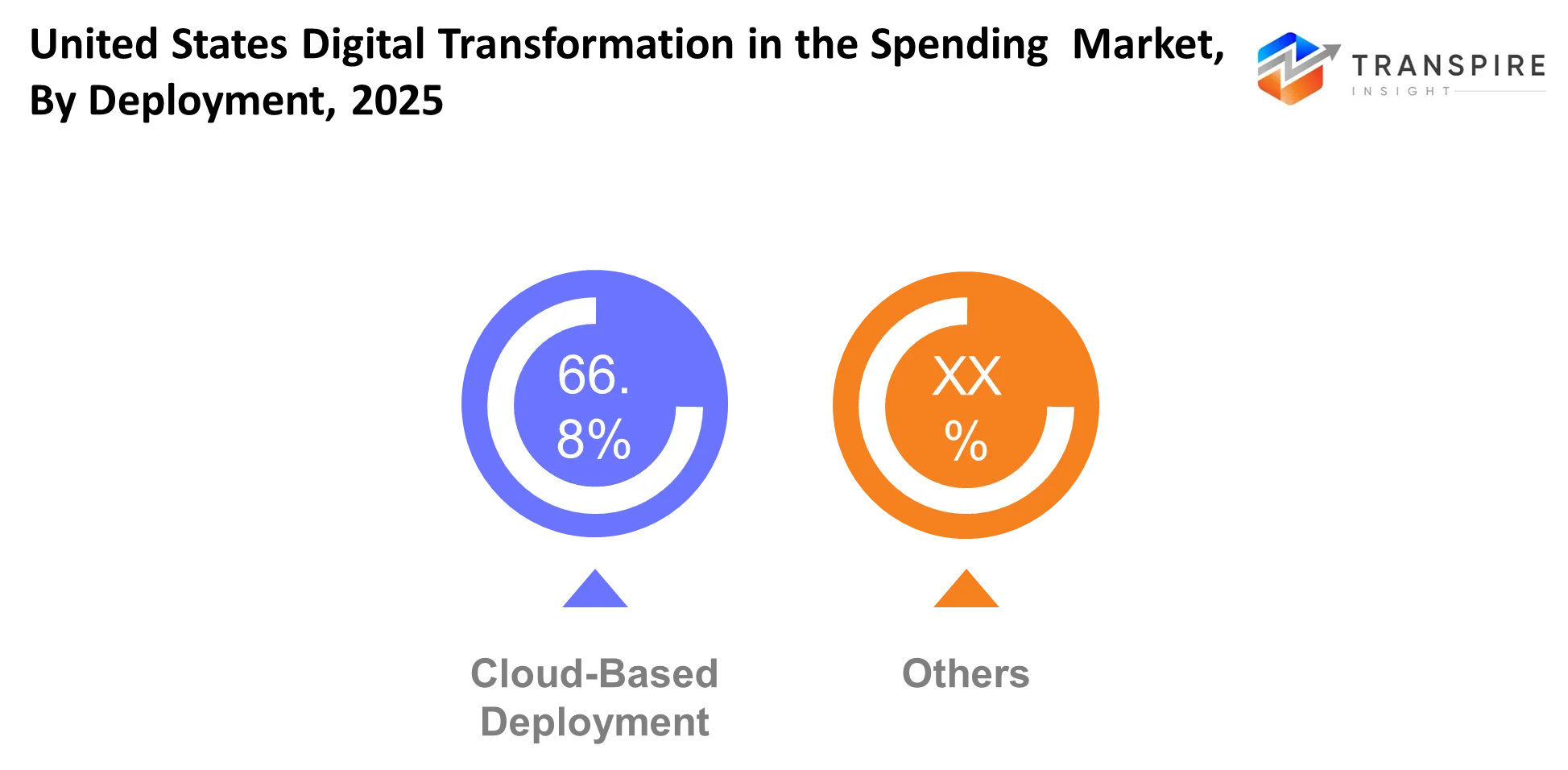
- Deployment trend: cloud based and SaaS procurement platforms keep getting preferred. organizations want quicker rollout, more scalable workflows, plus less hassle on the infrastructure side, overall.
- Enterprise adoption: large enterprises still dominate usage, mostly because complicated supplier networks need integrated purchasing together with contracts invoices compliance and expense management—at the same time , i guess.
- Application shift: cost optimization plus procurement automation are turning into strategic targets. finance leaders are linking buying decisions with budgeting forecasting and day to day operational results, kind of as one stream.
- AI transformation: SAP and Oracle are widening AI-enabled procurement assistants. these tools automate requisitions , suggest suppliers , handle invoice processing monitor contracts and even provide procurement policy guidance step by step.
What are the Key Drivers, Restraints, and Opportunities in the United States Digital Transformation in the Spending Market?
Driver: The strongest growth driver is basically the shift from fragmented procurement processes toward more connected cloud-based source to pay systems. Inflation , supply-chain disruption, and tighter corporate cost controls have been pushing finance and procurement teams to look for spending leakage, consolidate suppliers, automate approvals, and also improve contract compliance. AI makes the argument even stronger because platforms can classify spending, recommend suppliers, handle automated requisitions , and spot off contract purchasing. SAP reports AI-enabled spend-management capabilities for supplier recommendations, catalog management, and spend leakage detection, which shows how automation is kind of moving past basic workflow digitization, and into something more.
Restraint: The main structural barrier still looks like legacy-system integration. Big organizations often run multiple ERP instances , procurement databases, supplier portals, payment systems, and even customized workflows, so data standardization turns expensive , and time consuming too. Delays in migration can stretch implementation cycles and then lower short-term returns, especially when a company has very customized finance environments. On top of that , security, governance, and procurement-policy requirements make it harder to deploy autonomous AI functions quickly.
Opportunity: Agentic AI feels like the next-stage opportunity that really stands out. These new procurement assistants can interpret purchase requests, suggest suppliers, track contracts, and route transactions through compliant workflows. SAP’s newer AI capabilities point in that direction through automated requisition guidance, supplier recommendations, contract monitoring, and category-management help. Oracle is doing something similar as well by supporting AI-driven invoice extraction, validation, and workflow automation.
What Has the Impact of Artificial Intelligence Been on the United States Digital Transformation in the Spending Market?
Artificial intelligence is shifting spending management by moving procurement from rule-based, workflow automation toward recommendation ,and more decision support like stuff. AI models can classify huge amounts of purchasing records, point out duplicate or odd transactions, and also spot off-contract buying. They may even recommend suppliers, and nudge employees toward the approved purchasing paths. In SAPs current AI procurement offerings for example , they analyze purchase history, supplier performance, pricing trends and contract details to suggest suppliers and highlight spending leakage. Oracle is doing something similar too, using AI for invoice extraction ,validation, exception handling and accounts payable workflows, and in one Oracle reference architecture document they mention manual effort reductions of as much as 80% for an AI-enabled AP process.
Machine learning also helps with forecasting by uncovering procurement patterns, price movement ,supplier risk signals, and those category-level anomalies. Meanwhile, AI aided contract management systems can kind of keep watch on clauses , duties, renewals , price points and even how suppliers are doing, so procurement teams can step in before value leakage starts showing up, or at least shows up too late. With these features onboard, organizations will often see procurement cycles get shorter, fewer manual tasks, improved compliance, and more clear financial sight.Still, the main snag is data quality, and integration ,like, when supplier records, contract documents, purchasing histories, and ERP data remain fragmented, or not standardized enough, then AI recommendations get way less reliable.
Key Market Trends
- Since 2022, procurement platforms have been kind of shifting from workflow automation into AI assisted sourcing, supplier recommendations, and even more autonomous purchasing.
- Since 2023, inflation pressures have pushed finance teams to link procurement analytics straight with budgeting plus cost control choices and that kind of thing.
- Cloud adoption keeps getting faster too, because enterprises swap fragmented on-premise buying systems for scalable source-to-pay platforms which feel more “connected”.
- Since 2024, AI assistants have moved beyond chat style interfaces, now they also help with requisition creation, supplier selection, contract monitoring, and invoice processing, all in the same flow… sort of.
- Large enterprises, more and more, consolidate supplier data because scattered records before used to limit spend visibility and that then weakens negotiating leverage, pretty directly.
- Procurement teams increasingly prioritize off contract spend detection, because companies want measurable savings without cutting back essential purchasing volumes or whatever is considered necessary.
- Since 2025, vendors have expanded agentic AI capabilities that can recommend actions instead of only displaying procurement analytics which is a difference, actually.
- Supplier risk management has crept closer to procurement workflows as businesses connect financial exposure, contract obligations, and supplier performance data, together.
- Mobile purchasing plus self service buying continue expanding as employees expect quicker requisition, approvals, expense handling, and payment experiences, overall.
United States Digital Transformation in the Spending Market Segmentation
By Solution:
Spend Analytics helps organizations gather procurement information from various departments , vendors , and business units all in one system. These tools basically sort transactions , follow category- level outlay, flag oddball buys, and back cost control choices. On the procurement side, teams can compare supplier prices, watch contract spend, and spot places where savings is possible, really quickly.
Procurement Software handles requisitions, approvals, purchase orders, sourcing work, and supplier touchpoints via digital workflows, sort of streamlined. Expense Management Software assists with employee spending , receipt upload, reimbursement, and checks for adherence to the rules. Accounts Payable Automation cuts down the manual invoice chores by doing automated validation, matching, approvals, and then payments. E-Procurement Platforms create online buying paths for catalog selection, supplier ordering, and transaction oversight.
Contract Management Software supports making contracts, getting them approved, storing them, tracking renewals, and keeping an eye on obligations. Supplier Management Software keeps vendor records organized, including onboarding, qualification, performance reviews, and compliance files. Invoice Automation collects invoice information, aligns it with purchasing records , and sends exceptions for approval when needed. AI Spend Optimization Platforms inspect purchasing patterns, supplier details , price signals, and contractual terms to surface savings opportunities, while other solutions include sourcing tools, payment modules, purchasing-card utilities, and procurement intake systems.
By Deployment:
Cloud-Based deployment gives teams access to procurement and spending applications via remotely managed systems, like it’s all handled in the back end. On-Premise deployment, though, keeps the software + data inside the organization infrastructure and supports companies that really need stricter control, with less outside exposure. Hybrid Cloud mixes both worlds by linking internal systems to external cloud services and lets you modernize in steps, instead of doing everything at once. SaaS is subscription based access with continuous updates , and it reduces the hassle of infrastructure upkeep.
Private Cloud is usually dedicated infrastructure , so the organization gets stronger steering over security settings, configuration, and how data is handled. Public Cloud runs on shared infrastructure and still provides scalable computing, storage, analytics, and application access for whoever needs it. Multi-Cloud connects services from multiple cloud providers, and this may lower reliance on a single environment, even when one provider changes. Mobile Platforms help with approvals, expense submissions, purchase requests, and financial observation through phone-based workflows. As for Others , that’s where you’ll find more specialized hosted and managed deployment models that don’t really fit neatly into the same bucket.
By Enterprise Size:
Large enterprises deal with huge transaction volumes , lots of suppliers, tangled approval pathways, and operations spread across regions. SMEs usually need tools that are not too expensive yet can still grow with them , because replacing spreadsheets and manual purchasing is often the first pain. Government organizations lean on digital spending systems so they can strengthen procurement controls, make things more auditable, improve transparency, and keep policy compliance in check. Public sector enterprises also need well defined purchasing workflows across broad operational networks, plus supplier relationships that are regulated and consistent.
Startups often pick flexible cloud platforms, because small teams want automated finance plus purchasing workflows without building a large technology department. Mid sized enterprises adopt digital spending tools when purchasing activity starts getting too intricate for plain, manual setups. Global enterprises need help for multiple currencies, different countries, varied suppliers, tax structures, and regulatory requirements, all at once. Private organizations tend to focus on cost discipline, supplier governance, and financial oversight, while the “Others” group covers nonprofits, partnerships, cooperatives, and specialized institutions.
By End User:
BFSI organizations use digital spend platforms for controlled procurement, vendor stewardship, expense processing, and audit obligations , kind of all tied together. Manufacturing organizations rely on procurement technology to handle suppliers, equipment buying, raw materials, and production related expenditure, in a more operational way. Retail organizations manage purchasing across merchandise , logistics, facilities, technology, and marketing categories, sometimes it feels like everything is interconnected. Healthcare organizations use digital workflows for medical supplies, equipment procurement, pharmaceuticals, facilities support, and administrative buying , so the whole compliance side stays smoother.
Government organizations use spending platforms to somewhat boost purchasing controls , get approval visibility in a clearer way, track expenditure monitoring more tightly and make the audit processes a bit more solid. In the same vein, IT & Telecom organizations manage software, hardware, cloud services, network equipment , consulting and technology suppliers, usually with digital procurement systems. For Energy & Utilities , supplier management is often needed , for infrastructure, equipment, maintenance services and those everyday operational purchases too. Meanwhile Transportation & Logistics organizations lean on digital procurement for fleet related buying, facilities, technology, and third party services.
Education organizations tend to manage spending across technology, facilities, supplies, services, and those administrative needs that keep popping up. Then there are others , like hospitality, construction, professional services, media, and nonprofit organizations where the procurement structure can vary quite a lot, some are simple, some are not. Digital spending tools help with approval management, supplier coordination, expense control, invoice processing , and also overall purchasing visibility across these different industries. How much they adopt usually depends on transaction volume, supplier complexity, organizational size, and technology budgets.
By Application:
Cost Optimization leans on purchasing data to spot unnecessary outgoings, supplier price gaps, duplicate buying, and contract leakage stuff that kind of slips through. Financial Planning ties procurement signals to budgets, forward looking estimates, and financial targets, so it’s not just numbers floating around. Procurement Automation turns requisitions, approvals, purchase orders, sourcing moves, and supplier communication into digital workflows, which sounds simple but it actually reduces the back and forth, a lot.
Budget Management follows what was planned versus what really happened, then flags budget variances between departments. Supplier Collaboration brings buyers and suppliers together using shared details for orders, contracts, invoices, and transactions—no constant copy/paste loops. Compliance Management backs purchasing policies, approval rules, contract terms, and audit needs, so things stay in line, even when it’s messy. Risk Management keeps an eye on supplier performance, financial exposure, contractual responsibilities, and any strange or unusual purchasing activity that pops up.
Digital Payments take over payment approvals, supplier transactions, reconciliation, and payment tracing. Meanwhile Strategic Sourcing uses supplier data, market signals, contract information, and spending patterns to help decide on supplier selection and negotiation paths. Others include procurement intake, travel spending, purchasing-card management, workforce spending, and supplier onboarding applications.
What are the Key Use Cases Driving the United States Digital Transformation in the Spending Market?
Cost optimization stays as the strongest use case, because procurement teams can, kind of directly link spending analytics with supplier talks , contract compliance, and purchasing controls. Having centralized spend data, really reveals price differences, duplicate suppliers , off-contract buying, and category-level leakage. AI tools more and more turn those discoveries into supplier recommendations and into purchasing decisions you can actually do, not just look at.
Procurement automation along with accounts payable automation is picking up steam across manufacturing, BFSI , healthcare, and IT orgs. Things like automated requisitions, purchase orders, invoice capture, matching, and approvals cut down on the repetitive finance load. At the same time they raise transaction visibility, and that matters. Oracle enables automated purchase-order creation and AI-based invoice workflows, while SAP uses AI assistants for compliant purchasing guidance and supplier recommendations.
Some emerging use cases look like agentic sourcing , autonomous contract monitoring, predictive supplier-risk analysis, and natural language procurement intelligence. AI systems increasingly interpret business requests, figure out suitable suppliers, keep watch over contractual obligations, and suggest next steps. Over time, these capabilities should help enterprises make more autonomous spending decisions, assuming enterprise data quality, governance frameworks , and ERP integration keep improving.
|
Report Metrics |
Details |
|
Market size value in 2025 |
USD 1008.4 Billion |
|
Market size value in 2026 |
USD 1125.7 Billion |
|
Revenue forecast in 2033 |
USD 2689.6 Billion |
|
Growth rate |
CAGR of 13.25% from 2026 to 2033 |
|
Base year |
2025 |
|
Historical data |
2021 - 2024 |
|
Forecast period |
2026 - 2033 |
|
Report coverage |
Revenue forecast, competitive landscape, growth factors, and trends |
|
Regional scope |
United States |
|
Key company profiled |
SAP SE, Oracle Corporation, Coupa Software, Ivalua, Jaggaer, GEP Worldwide, Microsoft Corporation, IBM Corporation, Workday Inc., Basware Corporation, Tipalti Inc., Airbase, Procurify, ZipHQ, ServiceNow Inc. |
|
Customization scope |
Free report customization (country, regional & segment scope). Avail customized purchase options to meet your exact research needs. |
|
Report Segmentation |
By Solution (Spend Analytics, Procurement Software, Expense Management Software, Accounts Payable Automation, E-Procurement Platforms, Contract Management Software, Supplier Management Software, Invoice Automation, AI Spend Optimization Platforms, Others); By Deployment (Cloud-Based, On-Premise, Hybrid Cloud, SaaS, Private Cloud, Public Cloud, Multi-Cloud, Mobile Platforms, Others); By Enterprise Size (Large Enterprises, SMEs, Government Organizations, Public Sector Enterprises, Startups, Mid-Sized Enterprises, Global Enterprises, Private Organizations, Others); By End User (BFSI, Manufacturing, Retail, Healthcare, Government, IT & Telecom, Energy & Utilities, Transportation & Logistics, Education, Others); By Application (Cost Optimization, Financial Planning, Procurement Automation, Budget Management, Supplier Collaboration, Compliance Management, Risk Management, Digital Payments, Strategic Sourcing, Others) |
Which Regions are Driving the United States Digital Transformation in the Spending Market Growth?
The Western United States keeps being the main place for digital spending transformation, mostly because there a dense concentration of tech companies, big enterprises, venture backed businesses, and cloud infrastructure providers. California and Washington especially, have really strong technology ecosystems where procurement, ERP, expense, and AI platforms can get up and running quickly across digitally mature organizations. The region also gains from heavy concentrations of software, healthcare, aerospace, retail, and professional-services buyers that have to run complicated supplier networks. solid technology investment, plus early adoption of AI enabled enterprise applications, keeps reinforcing that regional leadership.
The Northeastern United States is still a steady second contributor, with growth supported by financial services, healthcare, insurance, professional services, and large corporate headquarters. Compared with the West, this region depends less on a pure technology-sector concentration, and more on long established enterprises with complicated compliance, supplier, and financial control expectations. Dense business networks across New York, Massachusetts, New Jersey and Pennsylvania create consistent demand for procurement automation, expense management, contract management, and accounts payable systems. Ongoing modernization of legacy enterprise systems also keeps a reliable revenue base going through 2033.
The Southern United States is positioned as the fastest-growing regional market, because corporate relocations, manufacturing investment, logistics expansion , and technology development are all increasing the enterprise software needs.
Who are the Key Players in the United States Digital Transformation in the Spending Market and How Do They Compete?
Competition in the United States spending-transformation arena is being shaped more and more by how ERP platforms, procurement suites, AI automation, and specialized orchestration tools start to overlap, instead of by software price alone. SAP SE and Oracle Corporation lean hard on deep ERP integration to keep enterprise accounts locked in, while Coupa Software plays offense with business spend management, community-style data, and procurement workflows that stay connected end to end. Ivalua and GEP Worldwide go after the trickier enterprise procurement setups using unified source-to-pay, plus supplier intelligence, and automation that is driven by AI. Meanwhile newer specialists, like ZipHQ, are sort of challenging the old-school suites by leaning into procurement orchestration and intake-oriented technology, kinda like a different entry point for buyers.
SAP is sharpening its edge with AI-powered spend management that links procurement, finance, supplier data, and autonomous style workflows across its wider enterprise platform. Oracle is moving in a similar tech-led direction adding AI-powered purchasing category recommendations to Fusion Cloud Procurement 26A, and then placing that intelligence right inside the buying flows. GEP is focused on agentic AI for source-to-pay automation, whereas Ivalua keeps pushing unified supplier collaboration and cross-functional spend control, keeping everything stitched together across teams.
Company List
- SAP SE
- Oracle Corporation
- Coupa Software
- Ivalua
- JAGGAER
- GEP Worldwide
- Microsoft Corporation
- IBM Corporation
- Workday Inc.
- Basware Corporation
- Tipalti Inc.
- Airbase
- Procurify
- ZipHQ
- ServiceNow Inc.
Recent Development News
- "In January 2026, Oracle launched Fusion Cloud Procurement 26A. The release introduced AI-powered purchasing category suggestions that recommend purchasing categories from natural-language descriptions, strengthening automated procurement and simplifying enterprise buying workflows.https://blogs.oracle.com/scm/smarter-and-faster-top-5-enhancements-in-oracle-fusion-cloud-procurement-26a (Oracle)."
- "In January 2026, ServiceNow enhanced its global Partner Program to accelerate AI agent innovation. The redesigned Build Program expanded access for ISVs, developers, and technology partners to build, test, certify, and distribute AI agents through the ServiceNow platform, widening the ecosystem supporting automated enterprise workflows.https://investor.servicenow.com/news/news-details/2026/ServiceNow-enhances-global-Partner-Program-to-accelerate-AI-agent-innovation/default.aspx (ServiceNow)."
- "In February 2026, Basware launched Agentic AI for accounts payable. The technology targets autonomous invoice and AP processes, strengthening the shift toward AI-driven financial automation and increasing competition in intelligent spend-management software.https://news.basware.com/en/archive/2026/02 (Basware)."
What Strategic Insights Define the Future of the United States Digital Transformation in the Spending Market?
Over the next five to seven years, spend transformation will shift from basic workflow digitization toward more intelligent orchestration, and AI agents will connect procurement, finance, supplier management, contracts and payments more and more. The main push, frankly, is the economic value in turning fragmented company data into automated decisions. Especially now since many organizations are asking for measurable savings, not just software modernization, like ok cool we get it but show the numbers.
A risk that is a bit less obvious is vendor concentration. If ERP platforms integrate deeper with native AI agents, switching costs can become pretty high, and then the specialized procurement providers get squeezed out of major accounts. At the same time, agentic procurement orchestration is also a real opening, because companies still run their operations across multiple ERP, sourcing, AP, and supplier systems, even when they say they want “one stack”
So market participants should put priority on interoperable AI architectures, solid data governance, and integration partnerships, not isolated automation features that don’t talk to anything else. Vendors that can connect different and awkward systems while keeping human approval controls in place should be in a better spot to win enterprise spending transformation budgets through 2033.
United States Digital Transformation in the Spending Market Report Segmentation
By Solution
- Spend Analytics
- Procurement Software
- Expense Management Software
- Accounts Payable Automation
- E-Procurement Platforms
- Contract Management Software
- Supplier Management Software
- Invoice Automation
- AI Spend Optimization Platforms
- Others
By Deployment
- Cloud-Based
- On-Premise
- Hybrid Cloud
- SaaS
- Private Cloud
- Public Cloud
- Multi-Cloud
- Mobile Platforms
- Others
By Enterprise Size
- Large Enterprises
- SMEs
- Government Organizations
- Public Sector Enterprises
- Startups
- Mid-Sized Enterprises
- Global Enterprises
- Private Organizations
- Others
By End User
- BFSI
- Manufacturing
- Retail
- Healthcare
- Government
- IT & Telecom
- Energy & Utilities
- Transportation & Logistics
- Education
- Others
By Application
- Cost Optimization
- Financial Planning
- Procurement Automation
- Budget Management
- Supplier Collaboration
- Compliance Management
- Risk Management
- Digital Payments
- Strategic Sourcing
- Others
Frequently Asked Questions
Find quick answers to common questions.
The expected United States Digital Transformation in the Spending Market size for the market will be USD 2689.6 Billion in 2033.
Key segments for the United States Digital Transformation in the Spending Market are By Solution (Spend Analytics, Procurement Software, Expense Management Software, Accounts Payable Automation, E-Procurement Platforms, Contract Management Software, Supplier Management Software, Invoice Automation, AI Spend Optimization Platforms, Others); By Deployment (Cloud-Based, On-Premise, Hybrid Cloud, SaaS, Private Cloud, Public Cloud, Multi-Cloud, Mobile Platforms, Others); By Enterprise Size (Large Enterprises, SMEs, Government Organizations, Public Sector Enterprises, Startups, Mid-Sized Enterprises, Global Enterprises, Private Organizations, Others); By End User (BFSI, Manufacturing, Retail, Healthcare, Government, IT & Telecom, Energy & Utilities, Transportation & Logistics, Education, Others); By Application (Cost Optimization, Financial Planning, Procurement Automation, Budget Management, Supplier Collaboration, Compliance Management, Risk Management, Digital Payments, Strategic Sourcing, Others).
Major United States Digital Transformation in the Spending Market players are SAP SE, Oracle Corporation, Coupa Software, Ivalua, Jaggaer, GEP Worldwide, Microsoft Corporation, IBM Corporation, Workday Inc., Basware Corporation, Tipalti Inc., Airbase, Procurify, ZipHQ, ServiceNow Inc.
The United States Digital Transformation in the Spending Market size is USD 1008.4 Billion in 2025.
The United States Digital Transformation in the Spending Market CAGR is 13.25%from 2026 to 2033.
- SAP SE
- Oracle Corporation
- Coupa Software
- Ivalua
- JAGGAER
- GEP Worldwide
- Microsoft Corporation
- IBM Corporation
- Workday Inc.
- Basware Corporation
- Tipalti Inc.
- Airbase
- Procurify
- ZipHQ
- ServiceNow Inc.
About the Authors

Mayur Shinde
I am Mayur Shinde, a Senior Research Analyst at Transpire Insight, specializing in the Automotive & Transportation and Information & Communication Technology (ICT) Industry. My work focuses on analyzing emerging market trends, technological advancements, competitive landscapes, and industry developments to deliver accurate, data-driven insights. I am passionate about transforming complex market information into clear, actionable content that helps businesses, professionals, and decision-makers stay informed and make confident strategic decisions.

Chakradhar Khansole
Chakradhar serves as the Research Director at Transpire Insight, bringing over 8 years of experience in technology, innovation, and strategic market intelligence. He specializes in transforming complex market data into actionable business insights that enable organizations to make informed, growth-oriented decisions. Recognized for his strategic vision and analytical expertise, Chakradhar leads high-impact research initiatives, delivering comprehensive market assessments, competitive intelligence, and forward-looking industry analysis.
Recently Published Reports
-
Apr 2026
3D Optical Profiler Market
3D Optical Profiler Market Size, Share & Analysis Report By Type (Desktop 3D Optical Profiler, and Portable 3D Optical Profiler), By Technology (Confocal Technology, and White Light Interference), By End-Use Industry (Manufacturing, Research Institutions, Automotive, Aerospace and Defense, Medical Devices, and Other), and Geography (North America, Europe, Asia-Pacific, Middle East and Africa, South and Central America), 2021 - 2031
-
Apr 2026
Depth Sensor Market
Depth Sensor Market Size, Share & Analysis Report By Type (Infrared Depth Sensors, Time-of-Flight (ToF) Sensors, Stereo Vision Sensors, Structured Light Sensors, Ultrasonic Depth Sensors), By Application (Automotive, Robotics, Gaming, Consumer Electronics, Industrial Automation, Healthcare, Security & Surveillance, Others), By End Users (Automotive Manufacturers, Consumer Electronics Companies, Healthcare Providers, Industrial Companies, Security Agencies, Gaming Companies, Robotics Companies, Others), and Geography (North America, Europe, Asia-Pacific, Middle East and Africa, South and Central America), 2021 – 2031
-
Apr 2026
Digital Manufacturing Market
Digital Manufacturing Market Size, Share & Analysis Report By Component (Hardware, Software, and Services), By Technology (Robotics, 3D Printing, Internet of Things (IoT), and Others), By Application (Automotive and Transportation, Aerospace and Defense, Consumer Electronics, Industrial Machinery, and Others), By Process Type (Computer-Based Designing, Computer-Based Simulation, Computer 3D Visualization, Analytics, and Others), and Geography (North America, Europe, Asia-Pacific, Middle East and Africa, South and Central America), 2021 – 2031
-
Apr 2026
Digital Visa Services Market
Digital Visa Services Market Size, Share & Analysis Report By Type (Individual Travelers, Group Travelers), By Application (Tourism, Business Travel, Others), and Geography (North America, Europe, Asia-Pacific, Middle East and Africa, South and Central America), 2021 – 2031