
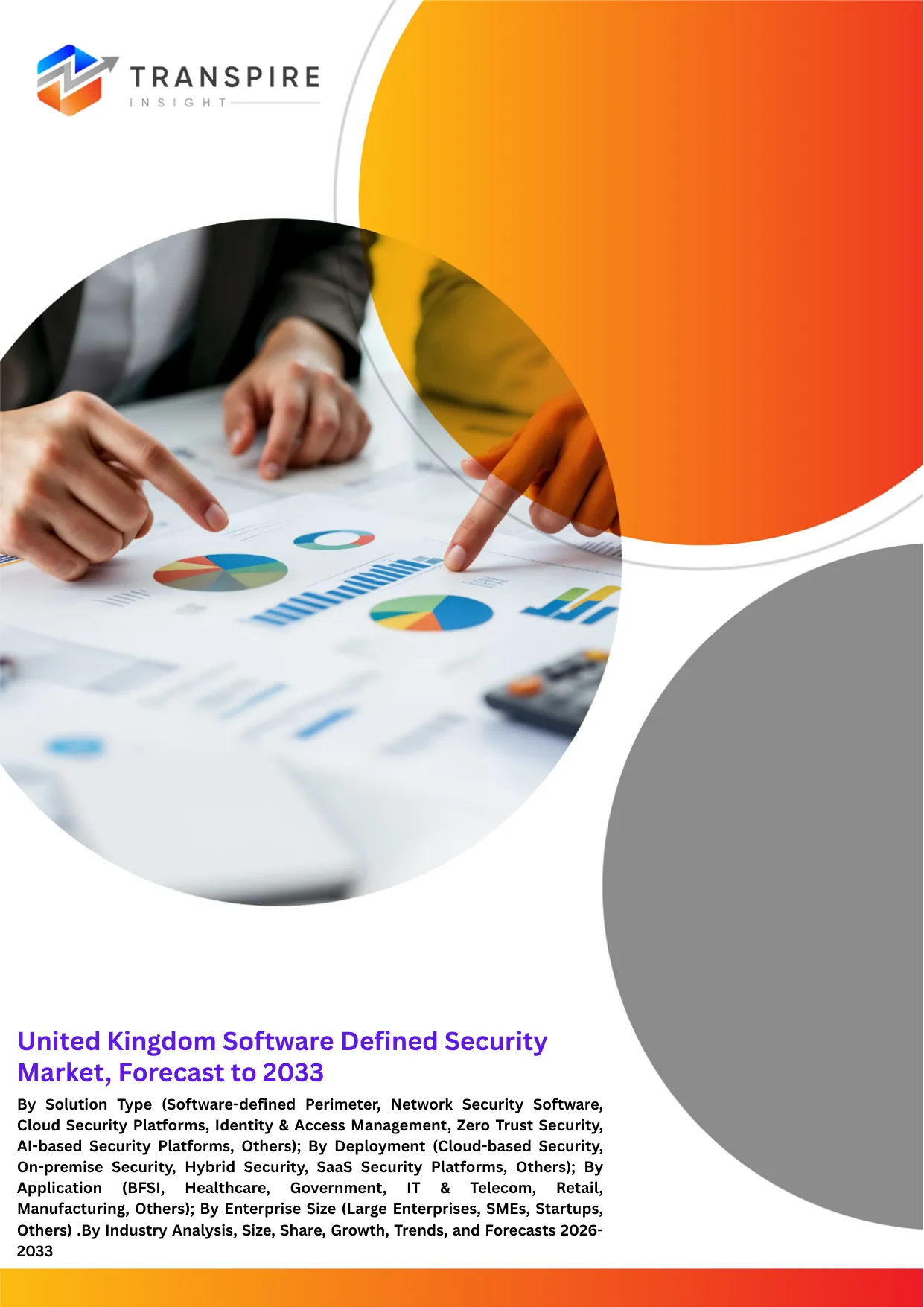
United Kingdom Software Defined Security Market Size & Forecast:
- United Kingdom Software Defined Security Market Size 2025: USD 2.81 Billion
- United Kingdom Software Defined Security Market Size 2033: USD 5.31 Billion
- United Kingdom Software Defined Security Market CAGR: 8.29%
- United Kingdom Software Defined Security Market Segments: By Solution Type (Software-defined Perimeter, Network Security Software, Cloud Security Platforms, Identity & Access Management, Zero Trust Security, AI-based Security Platforms, Others); By Deployment (Cloud-based Security, On-premise Security, Hybrid Security, SaaS Security Platforms, Others); By Application (BFSI, Healthcare, Government, IT & Telecom, Retail, Manufacturing, Others); By Enterprise Size (Large Enterprises, SMEs, Startups, Others)
To learn more about this report,  Download Free Sample Report
United Kingdom Software Defined Security Market Summary
The United Kingdom Software Defined Security Market was valued at USD 2.81 Billion in 2025. It is forecast to reach USD 5.31 Billion by 2033. That is a CAGR of 8.29% over the period.
The United Kingdom Software Defined Security Market was roughly valued at USD 2.81 billion in 2025, and it is still expanding. A lot of enterprises are moving away from hardware centered security designs, toward software driven platforms that can guard cloud workloads, remote users, branch networks, and basically hybrid IT setups, all from one centralized control layer. In real terms, software defined security lets organizations enforce steady security policies across scattered digital environments, but without leaning on a bunch of separate standalone appliances or “one purpose” devices.
In the last five years, the market also began to drift away from perimeter-only network defense and toward more blended strategies like Secure Access Service Edge, SASE, Zero Trust, and cloud native security frameworks. This change picked up speed after remote work got adopted at scale, and also when ransomware incidents surged, especially at critical infrastructure, financial services, and public sector organizations. At the same time, more multi-cloud deployments have altered security expectations. That’s pushing enterprises toward policy led, automated protection models. And when companies relocate applications and data into cloud spaces, security teams end up needing scalable platforms that cut down operational hassle, while boosting visibility. So this shift is showing up as stronger budgets for software defined firewalls, network segmentation, security orchestration, and AI enabled threat detection platforms across the United Kingdom, pretty directly.
Key Market Insights
- In 2025, the United Kingdom Software Defined Security Market, basically topped USD 2.8 billion, it was pushed forward by cloud migration, the rollout of Zero Trust, and the day to day need for hybrid workforce protection, which is kind of a big deal.
- England made up around 72% of UK cybersecurity spending in 2025, mostly because it has a heavy concentration of financial services plus enterprise data centers, there.
- London is still the main regional hub, and it keeps getting momentum from demand in banking, insurance, public sector, and technology enterprises all together, yes.
- Scotland is showing one of the quicker growth paths, supported by investments into digital transformation across energy, utilities, and public infrastructure, broadly speaking.
- In 2025, SASE and cloud based security platforms took in nearly 38% of fresh enterprise security deployments, as organizations tried to consolidate networking along with security functions, without too much hassle.
- Software-defined firewalls are staying the biggest product slice, with more than 30% market share across enterprise security deployments, generally speaking.
- AI powered threat detection platforms are forecast to become the fastest growing segment through 2033, mainly because of automated incident response capabilities and that whole efficiency angle.
- For revenue, BFSI contributed about 27% of the total market in 2025 because of strict compliance obligations and cyber resilience needs, clearly.
- Meanwhile, public sector adoption picked up speed after several government-led digital security initiatives that concentrated on critical infrastructure protection and related safeguards.
What are the Key Drivers, Restraints, and Opportunities in the United Kingdom Software Defined Security Market?
Market growth is mostly driven by a fast shift toward hybrid cloud infrastructure and these distributed work settings that keep showing up everywhere. When enterprises start moving important applications away from on-premise setups into public and private clouds, the old perimeter-focused security approach just doesn’t hold up as well. At the same time regulatory pressure, like data protection rules and cyber resilience expectations, has basically nudged organizations toward Zero Trust architectures, SASE platforms and software-defined segmentation techniques. In the end this move tends to raise recurring costs for software subscriptions, more spending on managed security services, plus stronger platform led security investments.
Still, the biggest restraint is the overall difficulty of tying software-defined security tools into older enterprise infrastructure. A lot of large organizations run several security products from different vendors, and that leads to interoperability headaches, along with real migration risks. Also, swapping out well established security frameworks calls for major capital, specialist know-how and some operational rework. So deployment timelines stretch out, and a fair number of mid-sized organizations end up unable to fully modernize their security environments.
A strong opportunity is showing up through AI-driven autonomous security operations. More and more enterprises are looking for platforms that can connect or correlate security events across cloud, endpoint, identity, and network layers. With AI powered Security Operations Centers, automated threat hunting, and behavioral analytics becoming more common there’s a clear new growth direction. Companies that invest in these unified AI enabled security platforms are expected to keep seeing strong demand across most of the 2026–2033 forecast period.
What Has the Impact of Artificial Intelligence Been on the United Kingdom Software Defined Security Market?
Artificial intelligence has, somehow, turned into a central piece of modern software-defined security deployments across the United Kingdom. Enterprises now more and more rely on AI engines to automate threat identification, policy enforcement, user conduct analytics and even network segmentation administration. In practice, security groups deploy machine learning models that read through millions of network events, basically in real time, so the software-defined platforms can notice oddities and react to threats before they drift, and spread across cloud and on-premise spaces.
Predictive analytics has noticeably helped day to day efficiency. AI models look back at past attack habits, endpoint activity, identity patterns, and network traffic, then try to forecast potential security incidents while also sorting out which remediation should come first. A lot of organizations mention quicker incident response, fewer false-positive triggers, and better compliance observation thanks to automated security orchestration platforms. Some advanced setups also streamline the rollout of security policies across distributed networks, cutting down on manual configuration labor and reducing operational downtime.
More recent deployments show results you can actually measure. The UK’s Ministry of Justice reported around a 400% lift in security incidents that got resolved automatically after adopting AI-enabled security technologies. Still, AI adoption remains a bit constrained. The usual blockers show up—high integration costs, fragmented legacy infrastructure, data cleanliness problems, and a shortage of qualified cybersecurity professionals—so rollouts stay slower for many organizations, especially small and mid-sized ones.
Key Market Trends
- Starting in 2022, a lot of enterprises kinda moved their security budgets away from isolated standalone appliances and more toward combined SASE platforms, you know, the ones that stitch together networking with Zero Trust type controls and cloud security all at once.
- It’s not just a small shift either—now over 60% of big UK organizations are judging security platforms mainly by automation abilities, instead of old-school hardware performance numbers, if that makes sense.
- Also, AI-assisted threat detection adoption really sped up in 2024–2026 because ransomware threats got more sophisticated, and frankly way harder to pin down through manual reviews alone.
- In 2025, Palo Alto Networks even shared that they saw a 400% jump in automatically resolved incidents inside a major UK public sector rollout, which is pretty significant.
- And then there’s multi-cloud security orchestration, that became a top focus after companies pushed more workloads across AWS, Azure and Google Cloud, spreading everything out.
- Around 2025 too, Cisco increased investment in secure AI infrastructure, suggesting enterprises are demanding stronger protection for AI workloads, not only regular apps anymore.
- On the partnership side, Vodafone Business, together with Fortinet broadened their collaboration in 2025, aiming to provide converged networking plus security services across multiple markets.
- Meanwhile financial institutions have been leaning into software-defined micro-segmentation, mostly to improve resilience against lateral cyberattacks, rather than waiting until something is already compromised.
- More and more security vendors are also dropping generative AI copilots straight into SOC processes, which helps reduce alert fatigue and speed up investigation workflows that used to drag on.
- Finally, organizations appear to prefer platform consolidation strategies, meaning they use fewer security vendors overall while trying to improve visibility across hybrid environments, all at the same time.
United Kingdom Software Defined Security Market Segmentation
By Solution Type
Software-defined Perimeter still has the dominant spot, even as enterprises slowly lean more into perimeter-less security approaches for cloud, and also remote access, environments. Network Security Software tracks right behind it, mostly because it plays a key part in defending enterprise infrastructure from cyber threats, plus unwanted or unauthorized access. Cloud Security Platforms keep climbing, since organizations push more workloads into multi-cloud setups and they need centralized protection across those spaces . Identity & Access Management also stays highly relevant, because companies are trying to govern who can access what, and lower identity based risks across spread out systems.
Zero Trust Security is forecasted to grow quickly, as firms move away from older trust-leaning designs, and replace them with constant verification frameworks. AI-based Security Platforms should also see strong growth, largely because automation keeps improving how threats get detected, how fast teams respond, and how accurate security monitoring turns out to be. The other solutions still help with narrower needs, like for legacy systems, or for those specialized enterprise situations. And the ongoing modernization of enterprise IT systems should keep overall demand steady across all segments, or at least that’s the general direction.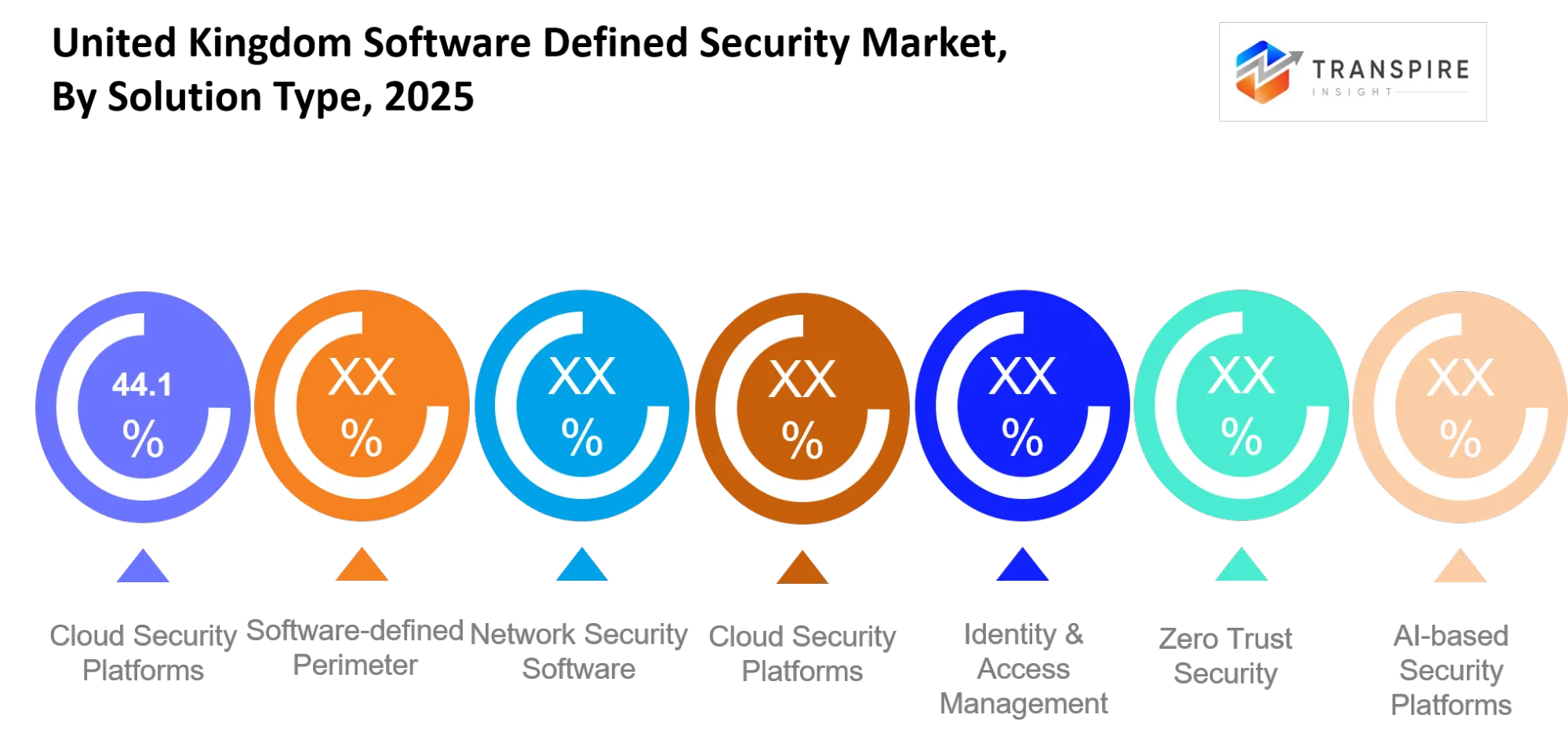
To learn more about this report, Download Free Sample Report
By Deployment
Cloud-based Security kinda holds the dominant position, because enterprises are moving their security operations into scalable cloud environments more and more. On-premise Security is still relevant too, especially when organizations have strict data control, compliance needs, and well, legacy infrastructure that can’t just be swapped out. Hybrid Security is widely adopted as people try to balance cloud flexibility with on-premise control requirements, especially across distributed IT systems. SaaS Security Platforms are also growing, mainly because subscription-based models feel easier, and deployment tends to be more straightforward.
Cloud-based Security is expected to stay on top, driven by the ongoing cloud migration and the larger digital transformation push across enterprises. SaaS Security Platforms are projected to show the quickest growth, since many organizations like security solutions that are flexible and cost-efficient, kind of like it’s simpler to adopt without adding too much overhead. Hybrid Security will likely keep a stable role as enterprises deal with complex IT setups across more than one infrastructure, so it makes sense. And then other deployment models will still exist to support specialized needs, like in regulated industries and in those legacy system environments where change happens slowly.
By Application
BFSI is still in the top, mostly because it has a heavy dependence on secure digital transfers, protecting customer records, and meeting tough regulatory compliance rules which are never really relaxed. Healthcare sits in the second spot, as hospitals plus other providers keep investing in careful patient data handling and in digital health systems that do not cut corners. Government institutions take up a meaningful share, since they’re driven by national cybersecurity initiatives, plus they need strong protections for critical infrastructure and that sort of things. IT & Telecom keeps moving ahead pretty strongly too, because big network infrastructure programs are rolling out and cloud service expansion is happening at a steady pace.
Retail should grow in a measured way, fueled by the rise of online commerce and the ongoing demand for secure payment workflows along with customer data safeguards. Manufacturing is projected to show solid growth as industrial systems get more connected and, honestly, more exposed to cyber threats. BFSI will remain the leader, due to constant regulatory pressure and the need to safeguard high-value information. The other sectors will gradually catch up, supported by wider digital adoption and increasing enterprise security spending.
By Enterprise Size
Large Enterprises hold the most dominant position because they have this extensive IT infrastructure, bigger cybersecurity budgets, and security requirements that are pretty complex across global operations. Meanwhile, SMEs keep a solid share too, especially as digital adoption keeps moving forward and cybersecurity awareness improves in mid-sized organizations. Startups are still a smaller slice but they are growing, mainly because new digital businesses are now prioritizing security from early development stages. The other enterprise categories also matter, sort of contributing in their own way through specialized operational needs and sector specific security demands.
Large Enterprises are expected to stay in the lead as they keep investing in advanced, integrated security platforms and AI driven protection systems. SMEs are likely to show the quickest growth since affordable cloud based and SaaS security solutions are becoming easier to reach and deploy. Startups should expand more gradually, as cybersecurity turns into a core requirement inside digital business models. Other segments will keep supporting the overall market expansion through targeted and specialized security deployments.
What are the Key Use Cases Driving the United Kingdom Software Defined Security Market?
The biggest use case stays enterprise network protection, across hybrid cloud contexts, kinda. Financial institutions, telecom operators, and government agencies roll out software-defined security platforms so they can enforce uniform security policies across data centers, cloud workloads, branch locations, and even remote users. This application tends to drive the most spending because it tackles both cybersecurity risk and that day to day operational complexity.
Then there are the secondary applications, which keep widening across manufacturing, healthcare, and retail. Teams use software-defined segmentation to separate mission critical operational systems and keep connected devices from moving laterally toward other areas in a cyber sense. In healthcare especially, providers are increasingly adopting Zero Trust frameworks, to protect patient data and cloud hosted applications without a lot of assumptions.
Newer use cases are showing up too, like AI workload protection and sort of autonomous security operations. When enterprises move toward generative AI applications, plus edge computing infrastructure, these software-defined security platforms are getting adapted to watch machine-to-machine traffic, protect AI models, and automate policy enforcement across very scattered environments.
|
Report Metrics |
Details |
|
Market size value in 2025 |
USD 2.81 Billion |
|
Market size value in 2026 |
USD 3.04 Billion |
|
Revenue forecast in 2033 |
USD 5.31 Billion |
|
Growth rate |
CAGR of 8.29% from 2026 to 2033 |
|
Base year |
2025 |
|
Historical data |
2021 - 2024 |
|
Forecast period |
2026 - 2033 |
|
Report coverage |
Revenue forecast, competitive landscape, growth factors, and trends |
|
Regional scope |
United Kingdom |
|
Key company profiled |
Palo Alto Networks, Cisco Systems, VMware, Fortinet, Check Point Software, Zscaler, Juniper Networks, IBM, Broadcom, Microsoft, Trend Micro, Sophos, Okta, CrowdStrike, Netskope |
|
Customization scope |
Free report customization (country, regional & segment scope). Avail customized purchase options to meet your exact research needs. |
|
Report Segmentation |
By Solution Type (Software-defined Perimeter, Network Security Software, Cloud Security Platforms, Identity & Access Management, Zero Trust Security, AI-based Security Platforms, Others); By Deployment (Cloud-based Security, On-premise Security, Hybrid Security, SaaS Security Platforms, Others); By Application (BFSI, Healthcare, Government, IT & Telecom, Retail, Manufacturing, Others); By Enterprise Size (Large Enterprises, SMEs, Startups, Others) |
Which Regions are Driving the United Kingdom Software Defined Security Market Growth?
England is still sort of the dominant region in the United Kingdom Software Defined Security Market, well at least that’s how it reads overall. London has a big concentration of financial institutions, cloud service providers, cybersecurity vendors and digital infrastructure operators. With strong regulatory oversight from financial regulators and data protection authorities, companies keep putting money into more advanced cybersecurity technologies. Also there’s this mature mix of managed security providers, cloud operators and enterprise software firms, which just kind of keeps the regional leadership steady.
Scotland is the second-largest contributor to market revenue, although the demand story feels different from London. Instead of being mostly finance driven, Scotland gets momentum from energy, utilities, public services and industrial infrastructure tied to cybersecurity investments. In those areas, organizations lean hard into operational resilience and the protection of essential, critical infrastructure. That means stable demand for software-defined security platforms. Plus the government-backed digital modernization programs keep showing up, supporting long-term market expansion
Wales looks like it’s growing the fastest. Recent investments in digital public services, smart infrastructure projects and technology-focused business parks have bumped up cybersecurity spending. Local organizations are increasingly using cloud-first operating models, which then creates fresh demand for software-defined network protection and Zero Trust security frameworks. From an investor or solution provider angle, Wales is a pretty appealing growth path through 2033, largely because adoption rates are still lower than in the more mature regions across the UK.
Who are the Key Players in the United Kingdom Software Defined Security Market and How Do They Compete?
The competitive landscape is still pretty moderately consolidated, but the way global cybersecurity vendors go after customers is pretty much the same, platform breadth, AI features, cloud integrations, and managed security services… that kind of thing. Lately, it feels like competition has moved away from selling standalone security products, and more toward unified security ecosystems, where networking, identity protection, endpoint security, and cloud defense live together in one architecture. And you can see vendors pushing harder on automation and operational efficiency, not just raw hardware performance.
Cisco, though, stands out by building security straight into networking infrastructure plus hybrid cloud environments. Also their recent attention on secure AI infrastructure, and those sovereign digital infrastructure solutions kinda reinforces the whole positioning with government accounts and bigger enterprises, even when budgets get tight.
Palo Alto Networks competes with AI-driven security operations, Prisma SASE, and the Cortex automation platforms. They’ve also got partnerships with UK government entities and cloud providers, and that helps them expand adoption in regulated industries, where buyers tend to be a little cautious.
Fortinet leans into converged networking and security, mostly through its Security Fabric architecture. It’s more like, strategic collaboration with telecommunications providers and managed service partners, and that extends their footprint across distributed enterprise environments, especially where branch locations are everywhere and teams are short staffed.
Then there’s VMware by Broadcom, which leans on private cloud security and software-defined infrastructure strengths. Their ecosystem approach is centered on secure workload mobility and integrated cloud security across hybrid setups. It’s less about one single tool, more about keeping everything connected, which sounds obvious but many vendors still don’t do it cleanly.
Company List
- Palo Alto Networks
- Cisco Systems
- VMware
- Fortinet
- Check Point Software
- Zscaler
- Juniper Networks
- IBM
- Broadcom
- Microsoft
- Trend Micro
- Sophos
- Okta
- CrowdStrike
- Netskope
Recent Development News
In May 2026, Westcon-Comstor entered a partnership with Palo Alto Networks to launch SASEvolution. The initiative bundles Prisma SASE with managed services, enabling UK enterprises to accelerate adoption of software-defined security and Zero Trust architectures through simplified deployment models.http://www.westconcomstor.com
In February 2026, Palo Alto Networks completed its acquisition of CyberArk Software. The deal strengthened identity-centric security capabilities within unified software-defined security platforms, improving Zero Trust enforcement for enterprises operating across hybrid cloud environments in the UK.http://www.facebook.com
In January 2026, NEC Software Solutions acquired Meganexus. The acquisition expanded NEC’s digital government and justice-sector security software portfolio, reinforcing demand for software-defined security solutions in UK public sector infrastructure.http://www.prolificnorth.co.uk
What Strategic Insights Define the Future of the United Kingdom Software Defined Security Market?
The United Kingdom Software Defined Security Market is moving toward these pretty highly automated, AI enabled security ecosystems where networking, identity, cloud protection, and threat response sort of operate through one unified software platform. That shift is being pushed by enterprise cloud migration, cyberattack complexity that keeps climbing, and this also need to safeguard AI enabled digital infrastructure. But one risk that gets glossed over, is platform concentration. When organizations end up consolidating around a smaller set of integrated vendors, it can lead to operational weak points because they’re depending on limited ecosystems, and also it tends to reduce procurement flexibility.
At the same time there’s an opportunity that’s starting to show up more clearly, like AI security governance platforms that can monitor, validate, and protect enterprise AI models as well as autonomous agents. This segment is still in its early stage, but it’s likely to turn strategically important as AI rollouts expand. For market players, the sensible move is to emphasize interoperable architectures, and open integration frameworks too, so they can adjust as security requirements keep changing, rather than getting stuck inside only one technology ecosystem.
United Kingdom Software Defined Security Market Report Segmentation
By Solution Type
- Software-defined Perimeter
- Network Security Software
- Cloud Security Platforms
- Identity & Access Management
- Zero Trust Security
- AI-based Security Platforms
- Others
By Deployment
- Cloud-based Security
- On-premise Security
- Hybrid Security
- SaaS Security Platforms
- Others
By Application
- BFSI
- Healthcare
- Government
- IT & Telecom
- Retail
- Manufacturing
- Others
By Enterprise Size
- Large Enterprises
- SMEs
- Startups
- Others
Frequently Asked Questions
Find quick answers to common questions.
The Expected United Kingdom Software Defined Security Market size for the Market will be USD 5.31 Billion in 2033.
Key Segments for the United Kingdom Software Defined Security Market are By Solution Type (Software-defined Perimeter, Network Security Software, Cloud Security Platforms, Identity & Access Management, Zero Trust Security, AI-based Security Platforms, Others); By Deployment (Cloud-based Security, On-premise Security, Hybrid Security, SaaS Security Platforms, Others); By Application (BFSI, Healthcare, Government, IT & Telecom, Retail, Manufacturing, Others); By Enterprise Size (Large Enterprises, SMEs, Startups, Others).
Major United Kingdom Software Defined Security Market players are Palo Alto Networks, Cisco Systems, VMware, Fortinet, Check Point Software, Zscaler, Juniper Networks, IBM, Broadcom, Microsoft, Trend Micro, Sophos, Okta, CrowdStrike, Netskope.
The Current United Kingdom Software Defined Security Market size is USD 2.81 Billion in 2025.
The United Kingdom Software Defined Security Market CAGR is 8.29% from 2026 to 2033.
- Palo Alto Networks
- Cisco Systems
- VMware
- Fortinet
- Check Point Software
- Zscaler
- Juniper Networks
- IBM
- Broadcom
- Microsoft
- Trend Micro
- Sophos
- Okta
- CrowdStrike
- Netskope
About the Authors

Mayur Shinde
I am Mayur Shinde, a Senior Research Analyst at Transpire Insight, specializing in the Automotive & Transportation and Information & Communication Technology (ICT) Industry. My work focuses on analyzing emerging market trends, technological advancements, competitive landscapes, and industry developments to deliver accurate, data-driven insights. I am passionate about transforming complex market information into clear, actionable content that helps businesses, professionals, and decision-makers stay informed and make confident strategic decisions.

Chakradhar Khansole
Chakradhar serves as the Research Director at Transpire Insight, bringing over 8 years of experience in technology, innovation, and strategic market intelligence. He specializes in transforming complex market data into actionable business insights that enable organizations to make informed, growth-oriented decisions. Recognized for his strategic vision and analytical expertise, Chakradhar leads high-impact research initiatives, delivering comprehensive market assessments, competitive intelligence, and forward-looking industry analysis.
Recently Published Reports
-
Apr 2026
3D Optical Profiler Market
3D Optical Profiler Market Size, Share & Analysis Report By Type (Desktop 3D Optical Profiler, and Portable 3D Optical Profiler), By Technology (Confocal Technology, and White Light Interference), By End-Use Industry (Manufacturing, Research Institutions, Automotive, Aerospace and Defense, Medical Devices, and Other), and Geography (North America, Europe, Asia-Pacific, Middle East and Africa, South and Central America), 2021 - 2031
-
Apr 2026
Depth Sensor Market
Depth Sensor Market Size, Share & Analysis Report By Type (Infrared Depth Sensors, Time-of-Flight (ToF) Sensors, Stereo Vision Sensors, Structured Light Sensors, Ultrasonic Depth Sensors), By Application (Automotive, Robotics, Gaming, Consumer Electronics, Industrial Automation, Healthcare, Security & Surveillance, Others), By End Users (Automotive Manufacturers, Consumer Electronics Companies, Healthcare Providers, Industrial Companies, Security Agencies, Gaming Companies, Robotics Companies, Others), and Geography (North America, Europe, Asia-Pacific, Middle East and Africa, South and Central America), 2021 – 2031
-
Apr 2026
Digital Manufacturing Market
Digital Manufacturing Market Size, Share & Analysis Report By Component (Hardware, Software, and Services), By Technology (Robotics, 3D Printing, Internet of Things (IoT), and Others), By Application (Automotive and Transportation, Aerospace and Defense, Consumer Electronics, Industrial Machinery, and Others), By Process Type (Computer-Based Designing, Computer-Based Simulation, Computer 3D Visualization, Analytics, and Others), and Geography (North America, Europe, Asia-Pacific, Middle East and Africa, South and Central America), 2021 – 2031
-
Apr 2026
Digital Visa Services Market
Digital Visa Services Market Size, Share & Analysis Report By Type (Individual Travelers, Group Travelers), By Application (Tourism, Business Travel, Others), and Geography (North America, Europe, Asia-Pacific, Middle East and Africa, South and Central America), 2021 – 2031