

United Kingdom Methanol-to-Gasoline Technology Market Size & Forecast:
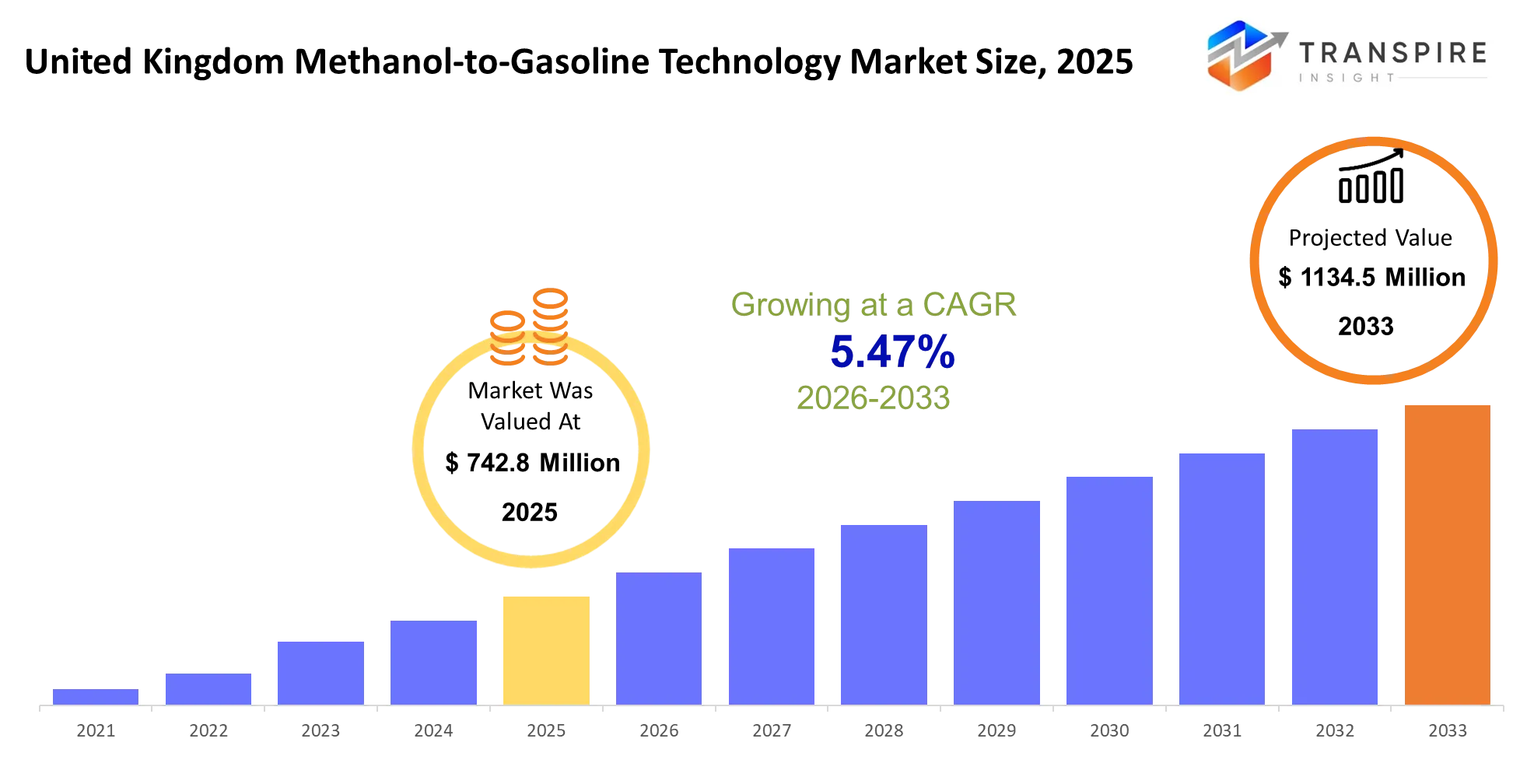
- United Kingdom Methanol-to-Gasoline Technology Market Size 2025: USD 742.8 Million
- United Kingdom Methanol-to-Gasoline Technology Market Size 2033: USD 1134.5 Million
- United Kingdom Methanol-to-Gasoline Technology Market CAGR: 5.47%
- United Kingdom Methanol-to-Gasoline Technology Market Segments: By Technology (Fixed Bed Technology, Fluidized Bed Technology, Direct Conversion Technology, Indirect Conversion Technology, Catalytic Conversion, Others); By Feedstock (Coal-based Methanol, Natural Gas-based Methanol, Biomass-based Methanol, Renewable Methanol, Others); By Application (Transportation Fuel, Chemical Feedstock, Industrial Fuel, Marine Fuel, Power Generation, Others); By End User (Oil & Gas Companies, Chemical Manufacturers, Refineries, Energy Utilities, Transportation Sector, Others)
To learn more about this report,  Download Free Sample Report
United Kingdom Methanol-to-Gasoline Technology Market Summary
The United Kingdom Methanol-to-Gasoline Technology Market was valued at USD 742.8 Million in 2025. It is forecast to reach USD 1134.5 Million by 2033. That is a CAGR of 5.47% over the period.
The United Kingdom Methanol-to-Gasoline Technology Market is getting more attention lately, because refiners, shipping operators, and industrial fuel suppliers are basically hunting for workable ways to turn methanol into transport-grade gasoline and more clean-burning liquid fuels. In real life, the technology tends to help cut reliance on standard crude-derived fuels while also making room for a route to low-carbon methanol, stuff that can be made from natural gas , biomass, or even captured carbon. So, MTG systems are now talked about as part of the broader transition plan for those hard-to-electrify areas, especially maritime logistics, and industrial energy supply chains.
In the past few years the market has, kind of moved, from pilot-scale curiosity to more actual commercial rollouts tied to low-emission fuel targets. The UK’s tightening decarbonization rules and the tougher maritime emission requirements pushed fuel producers to look at alternative synthesis routes, with reduced lifecycle emissions. Then energy price swings after the Russia-Ukraine conflict highlighted how risky import dependence can be, and that nudged investment toward domestic fuel diversification. After fuel security and carbon compliance started to feel financially connected, adoption went beyond simple testing, giving more stable revenue prospects for tech developers, catalyst suppliers , and the integrated fuel producers too.
Key Market Insights
- England sort of dominated the United Kingdom Methanol-to-Gasoline Technology Market, taking about nearly 68% market share in 2025 because of refinery infrastructure concentration.
- Meanwhile Scotland came up as the fastest-growing regional market through 2032, backed by green methanol investments and port-based clean fuel programs which is a bit of a different story, but still related.
- Coastal industrial hubs also saw notable demand growth, since maritime operators started using alternative liquid fuels to stay in line with emission reduction targets and all that.
- In Northern UK energy clusters, the pace of tech deployment sped up too, with carbon capture integration and synthetic fuel commercialization initiatives acting like the main engines.
- On the feedstock side, conventional natural gas-based methanol held more than 57% industry share in 2025, mostly due to established supply chain economics and existing processing capacity.
- Biomass-derived methanol kind of showed up as the second-largest slice, largely backed by waste-to-fuel conversion projects and those renewable fuel policy incentives that keep getting mentioned a lot.
- Green methanol production is expected to be the fastest-growing segment over the forecast window, mainly because carbon-neutral fuel transition strategies are getting priority and, well, pushed harder.
- For marine fuel blending, it grabbed nearly 42% of the market share in 2025 ,since shipping firms kept working toward compliance with tighter emission regulations.
- Industrial transport fuel production stayed a major application area because fuel diversification requirements are still strongly needed across logistics and heavy-duty transportation.
- And for 2026 through 2032, sustainable aviation fuel integration is emerging as the fastest-growing application segment ,overall.
What are the Key Drivers, Restraints, and Opportunities in the United Kingdom Methanol-to-Gasoline Technology Market?
Ok so the main thing that seems to be shaping the United Kingdom Methanol-to-Gasoline Technology Market is a sort of tightening regulatory pressure on carbon emissions across maritime transport and also industrial fuel supply chains. The UK is still pushing the net-zero targets, but then the stricter International Maritime Organization emission rules hit harder, so refiners and shipping operators started looking again at fuel pathways that fit into the existing infrastructure, and yes , they also want lower lifecycle emissions. Methanol-to-gasoline picked up momentum because it helps producers convert lower-carbon methanol into transport-grade liquid fuels without forcing a full redo of storage and distribution systems. In practice this kind of approach lowers the transition risk for fuel suppliers, and it makes commercial investment move faster especially around port-linked industrial clusters.
The big restraint , though, is the high capital intensity when you are talking about commercial-scale MTG facilities, plus green methanol production infrastructure. This is kind of structural because MTG depends on long project development cycles, large catalyst systems, hydrogen availability, and then reliable carbon capture integration. So all of those needs stack up into financing risks that smaller energy developers cannot really absorb. Because of that, quite a few pilot projects are still stuck in feasibility stages, and it keeps delaying wider commercialization, which then limits near-term revenue expansion.
But there is also a major opportunity that is coming into view via green methanol production tied to offshore wind and carbon capture projects in Scotland and northern England. If integrated synthetic fuel hubs can be built, combining renewable hydrogen, captured CO2, and advanced catalytic conversion, they could end up creating a scalable domestic fuel ecosystem over the next ten years or so.
What Has the Impact of Artificial Intelligence Been on the United Kingdom Methanol-to-Gasoline Technology Market?
Artificial intelligence and advanced digital technologies are starting to nudge the United Kingdom Methanol-to-Gasoline Technology Market, kinda reshaping things by boosting plant efficiency and fuel conversion accuracy, also keeping emissions compliance in check across industrial fuel operations. Refiners and synthetic fuel developers are rolling out AI-based process control systems that automate catalyst temperature handling, pressure balancing and methanol feed tuning during gasoline conversion. These setups continuously read operational data from sensors plus digital twins, and that means facilities can cut energy losses a bit and keep fuel output quality steady in real time, even when conditions shift.
Along the way, machine learning models are strengthening predictive maintenance across reactor systems, compressors, and heat exchangers. Operators lean on predictive analytics to catch catalyst degradation, and equipment stress before it turns into a problem. This helps reduce those unplanned shutdowns and generally raises facility uptime. In a few pilot-scale synthetic fuel efforts, digital monitoring has been linked to reduced maintenance costs and noticeable efficiency improvements, mainly by trimming fuel waste and fine tuning conversion cycles. On top of that, AI-enabled emissions forecasting tools support producers in staying compliant with tightening UK carbon reporting rules, by simulating lifecycle emission intensity under different feedstock conditions, so they can make better choices earlier.
Still, AI adoption has a big snag because many MTG facilities are running with fragmented historical datasets and legacy industrial infrastructure. Turning on real time analytics inside older processing systems, requires serious capital spending and specialized engineering talent, which slows rollout for smaller operators that don’t have as much room to maneuver.
Key Market Trends
- Since 2022, UK fuel producers started moving capital toward green methanol integration after natural gas swings show how much they rely on imported fossil fuel supply chains, kind of exposing everything.
- Maritime operators also kept picking methanol friendly fuel strategies, after the International Maritime Organization tightened sulfur and carbon emission rules, and those were introduced 2020-ish, so compliance became a big deal.
- Between 2021 and 2025, refinery operators expanded their carbon capture partnerships, to boost lifecycle emission performance for facilities making synthetic gasoline.
- Johnson Matthey then ramped up investments in catalyst efficiency technologies since industrial buyers leaned harder on lower conversion losses and better fuel yield optimization.
- Scottish clean energy clusters showed up more clearly as strategic investment zones after offshore wind expansion helped renewable hydrogen become more available for synthetic fuel projects.
- In 2023, industrial buyers lost patience for standalone pilot plants and preferred more integrated fuel hubs instead, where methanol synthesis, carbon capture, and refining operations kind of run together.
- UK port infrastructure developers hurried alternative fuel storage upgrades because shipping companies were getting ready for stricter maritime decarbonization reporting obligations by 2030.
- Advanced AI based process monitoring systems gained traction after operators reported measurable reductions in unplanned shutdowns and those annoying catalyst performance inconsistencies.
- Competitive behavior also shifted, toward longer term supply agreements as refiners tried to secure dependable renewable methanol sourcing, mainly to cut feedstock price exposure, for real.
United Kingdom Methanol-to-Gasoline Technology Market Segmentation
By Technology:
Fixed bed technology kind of holds a strong place in fuel conversion operations, mainly due to stable catalytic activity and a processing performance that stays dependable. In many industrial settings this approach is preferred, for long operating cycles and more controlled temperature management. Fluidized bed technology, on the other hand, supports improved heat transfer and quicker reaction efficiency in bigger processing environments, where continuous production is still the point.
Direct conversion technology also gets attention because it removes extra processing stages and helps fuel transformation from methanol into gasoline products feel faster. Indirect conversion technology can offer more process flexibility, by separating reaction stages so fuel quality control can be tighter. Catalytic conversion systems keep gaining traction because better catalysts support higher fuel yields, reduced energy loss, and smoother operational consistency across large scale facilities.
By Feedstock:
Natural gas-based methanol stays widely used, largely because existing infrastructure and feedstock availability keep production costs lower and supply stays fairly consistent for industry. Coal-based methanol still shows up in select industrial applications, especially where domestic coal resources are economically practical. Renewable methanol production keeps expanding too, since energy companies are putting more emphasis on lower-emission fuel pathways and carbon reduction goals.
Biomass-based methanol also gets interest from industrial producers who want alternative feedstock sources, like agricultural residues and organic waste materials. Renewable methanol development may increase further, because carbon capture projects, along with renewable hydrogen investments, support cleaner synthetic fuel production. And feedstock diversification, it helps reduce exposure to global fossil fuel price swings, and it lowers risk from long term supply disruptions.
By Application:
Transportation fuel uses still take up a large piece of methanol-to-gasoline activities because liquid fuel need is kind of staying important, especially in logistics, and industrial mobility. On top of that, industrial fuel uses keep getting solid demand, mostly due to fuel flexibility and how well it matches the existing energy setup. Chemical feedstock uses back up fuel conversion systems too, where refinery work and chemical operations sort of run together in one rhythm.
Marine fuel applications keep moving forward, since stricter emission rules push operators toward cleaner fuel alternatives across global transport. Power generation roles will slowly rise as synthetic fuel technologies get better at storage practicality, and they also help with energy security support. A handful of industrial operators additionally run these converted fuels for backup power situations and energy intensive production.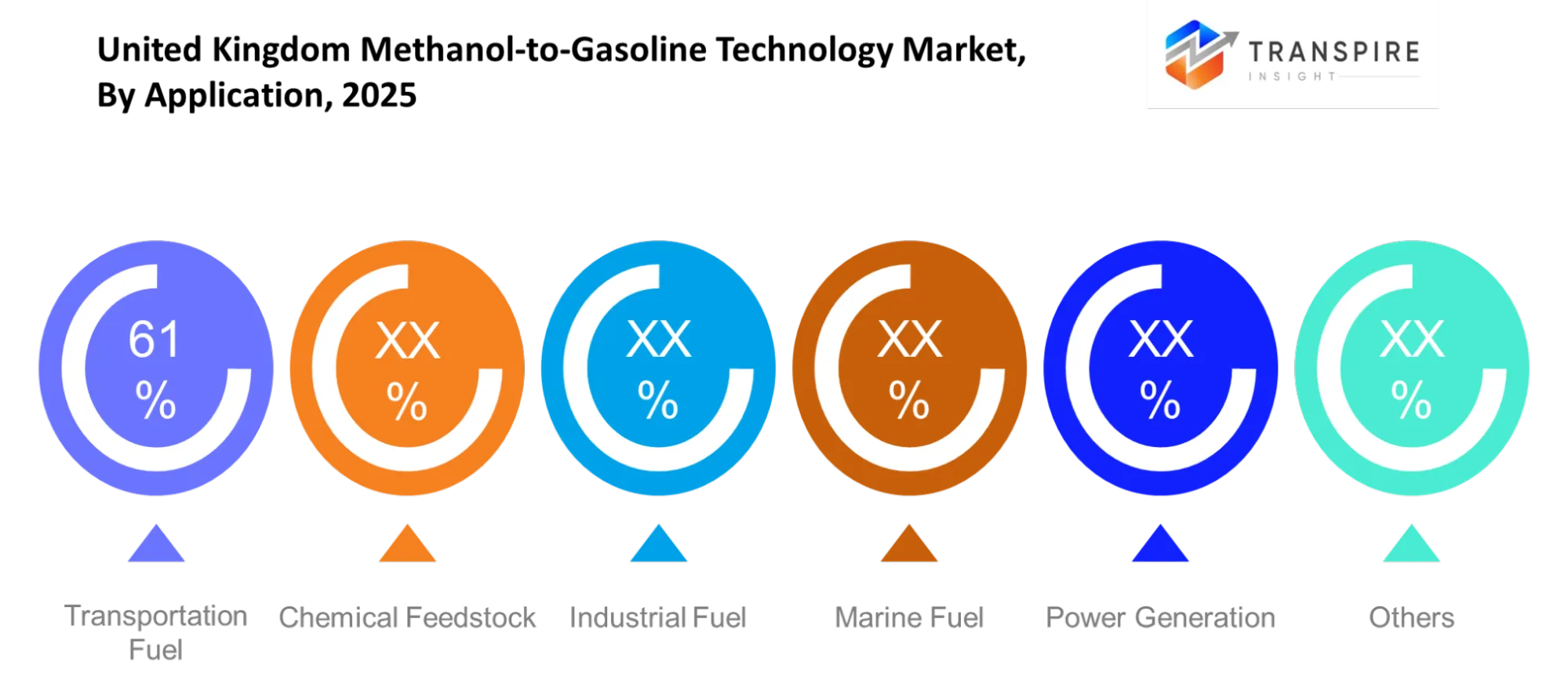
To learn more about this report, Download Free Sample Report
By End User:
Oil and gas companies remain major end users, because the refining assets already in place plus fuel distribution networks let new technology land faster. Refineries are still putting money into synthetic fuel conversion systems, aiming for broader fuel diversification and reduced lifecycle emissions. Chemical manufacturers also show up in an active way, since methanol conversion supports integrated industrial output and feedstock optimization approaches.
Energy utilities keep checking synthetic fuel technology as part of longer horizon transition planning, and for backup fuel scenarios. The transportation sector keeps adopting more, because fuel suppliers want reasonable alternatives that fit the existing infrastructure systems. Industrial growth, together with low carbon fuel strategies, will likely bring in more participation from multiple commercial fuel consumers during the next few years.
What are the Key Use Cases Driving the United Kingdom Methanol-to-Gasoline Technology Market?
In the UK , transportation fuel production is still the main reason methanol to gasoline technology gets taken up. Refiners and fuel suppliers run this method to turn methanol into fuels that work with gasoline standards, while still matching current storage, pipeline, and distribution systems. This is where the demand feels most solid , because industrial transport operators want lower emission options , but they don’t really want to rip and replace the existing infrastructure or workflows.
On top of that, industrial fuel uses and marine fuel usage are picking up momentum across manufacturing areas and in port centered energy activities. Chemical manufacturers, plus refinery operators , are using synthetic gasoline blends more often. They do it to stay on track with emission compliance goals and to strengthen fuel diversification approaches. For maritime, the interest has also grown, mainly after tougher International Maritime Organization rules raised the stakes for adopting cleaner fuels.
Newer use cases are starting to surface too, like sustainable aviation fuel blending, and backup power for industrial energy facilities. A number of UK clean energy initiatives are looking at synthetic fuel hubs , tied with renewable hydrogen and carbon capture systems. That setup may open long term pathways for lower carbon fuel production , not just inside traditional refinery operations.
|
Report Metrics |
Details |
|
Market size value in 2025 |
USD 742.8 Million |
|
Market size value in 2026 |
USD 781.7 Million |
|
Revenue forecast in 2033 |
USD 1134.5 Million |
|
Growth rate |
CAGR of 5.47% from 2026 to 2033 |
|
Base year |
2025 |
|
Historical data |
2021 - 2024 |
|
Forecast period |
2026 - 2033 |
|
Report coverage |
Revenue forecast, competitive landscape, growth factors, and trends |
|
Regional scope |
Middle East and Africa (Saudi Arabia, United Arab Emirates, South Africa, Rest of Middle East and Africa) |
|
Key company profiled |
ExxonMobil, Shell, Johnson Matthey, Topsoe, Sasol, Air Liquide, BP, Linde, Chevron, BASF, Clariant, Honeywell UOP, Carbon Recycling International, Velocys, Synfuels International |
|
Customization scope |
Free report customization (country, regional & segment scope). Avail customized purchase options to meet your exact research needs. |
|
Report Segmentation |
By Technology (Fixed Bed Technology, Fluidized Bed Technology, Direct Conversion Technology, Indirect Conversion Technology, Catalytic Conversion, Others); By Feedstock (Coal-based Methanol, Natural Gas-based Methanol, Biomass-based Methanol, Renewable Methanol, Others); By Application (Transportation Fuel, Chemical Feedstock, Industrial Fuel, Marine Fuel, Power Generation, Others); By End User (Oil & Gas Companies, Chemical Manufacturers, Refineries, Energy Utilities, Transportation Sector, Others) |
Which Regions are Driving the United Kingdom Methanol-to-Gasoline Technology Market Growth?
England still feels like the number one region in the United Kingdom Methanol to Gasoline Technology Market, since a lot of the major refinery infrastructure, fuel distribution systems, and port operations are basically there. There was also a strong match between the rules and national decarbonization goals, so refiners and fuel suppliers were more willing to put money into synthetic fuel conversion setups earlier than many other areas did. On top of that, big industrial neighborhoods around the Humber and Teesside keep pushing carbon capture initiatives, hydrogen development, and more bundled fuel processing facilities. So, with policy backing, practical technical know-how, and a well used energy network already in place, England can hold on to a solid commercial edge when it comes to big scale methanol to gasoline rollout.
Scotland comes in as the second largest regional contributor, but the whole market shape is kind of different from England. In Scotland, the momentum is driven less by older refining capacity and more by renewable energy integration and long term clean fuel planning. Offshore wind growth and carbon storage groundwork gave a pretty firm base for renewable methanol, and for synthetic fuel projects too, especially across coastal industrial zones. Also, the government supported energy transition programs, plus private companies joining in, keep things moving at a steady pace. Even if Scotland works with a smaller industrial footprint, it still ends up being a dependable contributor to total market revenue.
Wales is sort of emerging as the fastest growing region, mainly because of new investment going into industrial decarbonization infrastructure and also port modernization programs. Over the last couple years, several regional energy initiatives launched after 2023, they have been centering on low-carbon fuel processing, hydrogen transport, and reducing industrial emissions, all together. Port operators and fuel suppliers now seem to look at Wales as a key strategic spot for future synthetic fuel distribution… mainly due to solid maritime connections and the fact that there is usable industrial land. With that momentum building, people expect it to turn into interesting opportunities for technology providers, catalyst makers, and infrastructure investors roughly between 2026 and 2033, as commercial-scale projects start shifting from planning toward actual execution.
Who are the Key Players in the United Kingdom Methanol-to-Gasoline Technology Market and How Do They Compete?
The competitive landscape of the United Kingdom Methanol-to-Gasoline Technology Market stays moderately consolidated, mostly because major energy companies , catalyst developers and industrial technology providers run the bulk of commercial scale projects. In practice, competition is really about catalyst efficiency, the ability to cut carbon , and how well the process plugs into existing refinery infrastructure—not just about raw production capacity. Long established energy firms keep defending their market place via integrated fuel supply chains and long term industrial partnerships, while newer technology focused entrants tend to aim for narrower, specialized low carbon fuel initiatives. Also, project financing reach and access to renewable methanol feedstock matter a lot, since large scale synthetic fuel setups need serious infrastructure spend and quite long development timelines.
Johnson Matthey plays the game mainly through catalyst innovation and process optimization technologies, built to lift methanol conversion efficiency and lower operational energy loss. The firm differentiates via improved catalyst engineering , plus a practical integration skill set with existing refinery systems. Their growth direction is shifting toward partnerships tied to hydrogen generation and carbon capture projects, especially around industrial energy clusters in northern England and Scotland.
Topsoe leans into integrated clean fuel processing solutions, combining methanol synthesis , catalytic conversion , and emissions reduction technologies inside one operating framework. This style gives industrial operators better process effectiveness and also a more straightforward path for project rollout. Shell and bp rely on their refining networks and fuel distribution systems, and they pair that with renewable energy investments to strengthen synthetic fu
Company List
- ExxonMobil
- Shell
- Johnson Matthey
- Topsoe
- Sasol
- Air Liquide
- BP
- Linde
- Chevron
- BASF
- Clariant
- Honeywell UOP
- Carbon Recycling International
- Velocys
- Synfuels International
Recent Development News
In March 2026, BP announced progress on its Trinidad natural gas supply project supporting downstream fuel and methanol-linked operations. The company confirmed that new gas flows scheduled for April 2026 would improve feedstock availability for downstream chemical and fuel production value chains, indirectly supporting methanol conversion pathways in integrated fuel systems. Source https://www.argusmedia.com/
In Mar–Apr 2026, global methanol market intelligence reports reiterated ongoing growth projections but did not disclose any UK-specific MTG technology company announcements.”
Source https://uk.finance.yahoo.com/
What Strategic Insights Define the Future of the United Kingdom Methanol-to-Gasoline Technology Market?
Over the next five to seven years the United Kingdom Methanol-to-Gasoline Technology Market is starting to lean more toward integrated low-carbon fuel ecosystems than just standalone conversion factories, you know. The biggest driver in practice is going to be industrial decarbonization policy mixed with energy security planning, and it’s increasingly pointing toward synthetic fuels made at home that are tied to renewable hydrogen and carbon capture, kind of all in the same package. So in the future competition won’t be only about how big you can build, but also about whether you can lock in steady green methanol supply chains, handle carbon management without headaches, and keep long-term industrial partnerships that actually last.
There is also a less obvious risk though, like technology substitution when electrification, hydrogen fuel systems, and sustainable aviation fuel routes start competing for the same public budgets and infrastructure backing. That could, in turn slow commercial investment in methanol-to-gasoline projects if government attention shifts toward direct electrification rather than synthetic liquid fuels, even if those fuels are still useful.
At the same time an emerging opportunity is showing up around regional industrial fuel hubs in Scotland and northern England, where offshore wind, carbon storage, and hydrogen infrastructure seem to be converging. Market players will likely gain the most if they invest early in integrated collaborations that connect feedstock sourcing,catalyst know-how, and emissions management all within a single working network.
United Kingdom Methanol-to-Gasoline Technology Market Report Segmentation
By Technology
- Fixed Bed Technology
- Fluidized Bed Technology
- Direct Conversion Technology
- Indirect Conversion Technology
- Catalytic Conversion
By Feedstock
- Coal-based Methanol
- Natural Gas-based Methanol
- Biomass-based Methanol
- Renewable Methanol
By Application
- Transportation Fuel
- Chemical Feedstock
- Industrial Fuel
- Marine Fuel
- Power Generation
By End User
- Oil & Gas Companies
- Chemical Manufacturers
- Refineries
- Energy Utilities
- Transportation Sector
Frequently Asked Questions
Find quick answers to common questions.
The United Kingdom Methanol-to-Gasoline Technology Market size is USD 1134.5 Million in 2033.
Key Segments for the United Kingdom Methanol-to-Gasoline Technology Market are By Technology (Fixed Bed Technology, Fluidized Bed Technology, Direct Conversion Technology, Indirect Conversion Technology, Catalytic Conversion, Others); By Feedstock (Coal-based Methanol, Natural Gas-based Methanol, Biomass-based Methanol, Renewable Methanol, Others); By Application (Transportation Fuel, Chemical Feedstock, Industrial Fuel, Marine Fuel, Power Generation, Others); By End User (Oil & Gas Companies, Chemical Manufacturers, Refineries, Energy Utilities, Transportation Sector, Others).
Major United Kingdom Methanol-to-Gasoline Technology Market Players are ExxonMobil, Shell, Johnson Matthey, Topsoe, Sasol, Air Liquide, BP, Linde, Chevron, BASF, Clariant, Honeywell UOP, Carbon Recycling International, Velocys, Synfuels International.
The Current United Kingdom Methanol-to-Gasoline Technology Market size is USD 742.8 Million in 2025.
The United Kingdom Methanol-to-Gasoline Technology Market CAGR is 5.47% from 2026 to 2033.
- ExxonMobil
- Shell
- Johnson Matthey
- Topsoe
- Sasol
- Air Liquide
- BP
- Linde
- Chevron
- BASF
- Clariant
- Honeywell UOP
- Carbon Recycling International
- Velocys
- Synfuels International
Recently Published Reports
-
Apr 2026
Active Power Filter Market
Active Power Filter Market Size, Share & Analysis Report By Type (Shunt Active Power Filters, Series Active Power Filter, Hybrid Active Power Filter), By Application (Harmonics Mitigation, Reactive Power Compensation, Voltage Regulation, Power Factor Correction), By Phase (Single Phase, Three Phase), By End-User Industry (Manufacturing, Healthcare, Commercial, Automotive, Oil and Gas, Others), and Geography (North America, Europe, Asia-Pacific, Middle East and Africa, South and Central America), 2021 - 2031
-
Apr 2026
Electrical Transformer Market
Electrical Transformer Market Size, Share & Analysis Report By Core (Closed, Shell, and Berry), By Insulation (Gas, Oil, Solid, Air, and Other), By Phase (Single, and Three), By Rating (100 MVA to 500 MVA, 501 MVA to 800 MVA, and 801 MVA to 1200 MVA), and Geography (North America, Europe, Asia-Pacific, Middle East and Africa, South and Central America), 2021 – 2031
-
Apr 2026
Hydraulic Piston Pumps Market
Hydraulic Piston Pumps Market Size, Share & Analysis Report By Type (Axial Piston Pumps, Radial Piston Pumps), By Operating Pressure (Low Pressure, Medium Pressure, High Pressure), By Application (Construction, Mining, Agriculture, Automotive, Oil & Gas, Industrial Machinery, Others), By End-User (OEMs, Aftermarket), and Geography (North America, Europe, Asia-Pacific, Middle East and Africa, South and Central America), 2021 – 2031
-
Apr 2026
Laboratory Gas Generators Market
Laboratory Gas Generators Market Size, Share & Analysis Report By Product (Nitrogen Gas Generator, Hydrogen Gas Generator, Zero Air Gas Generator, Purge Gas Generator, TOC Gas Generators, Others), By Application (Gas Chromatography, Liquid Chromatography-mass Spectrometry (LC-MS), Gas Analyzers, Others), By End-user (Life Science, Chemical & Petrochemical, Food & Beverage, Others), and Geography (North America, Europe, Asia-Pacific, Middle East and Africa, South and Central America), 2021 – 2031