

United Kingdom Low GI Rice Market Summary
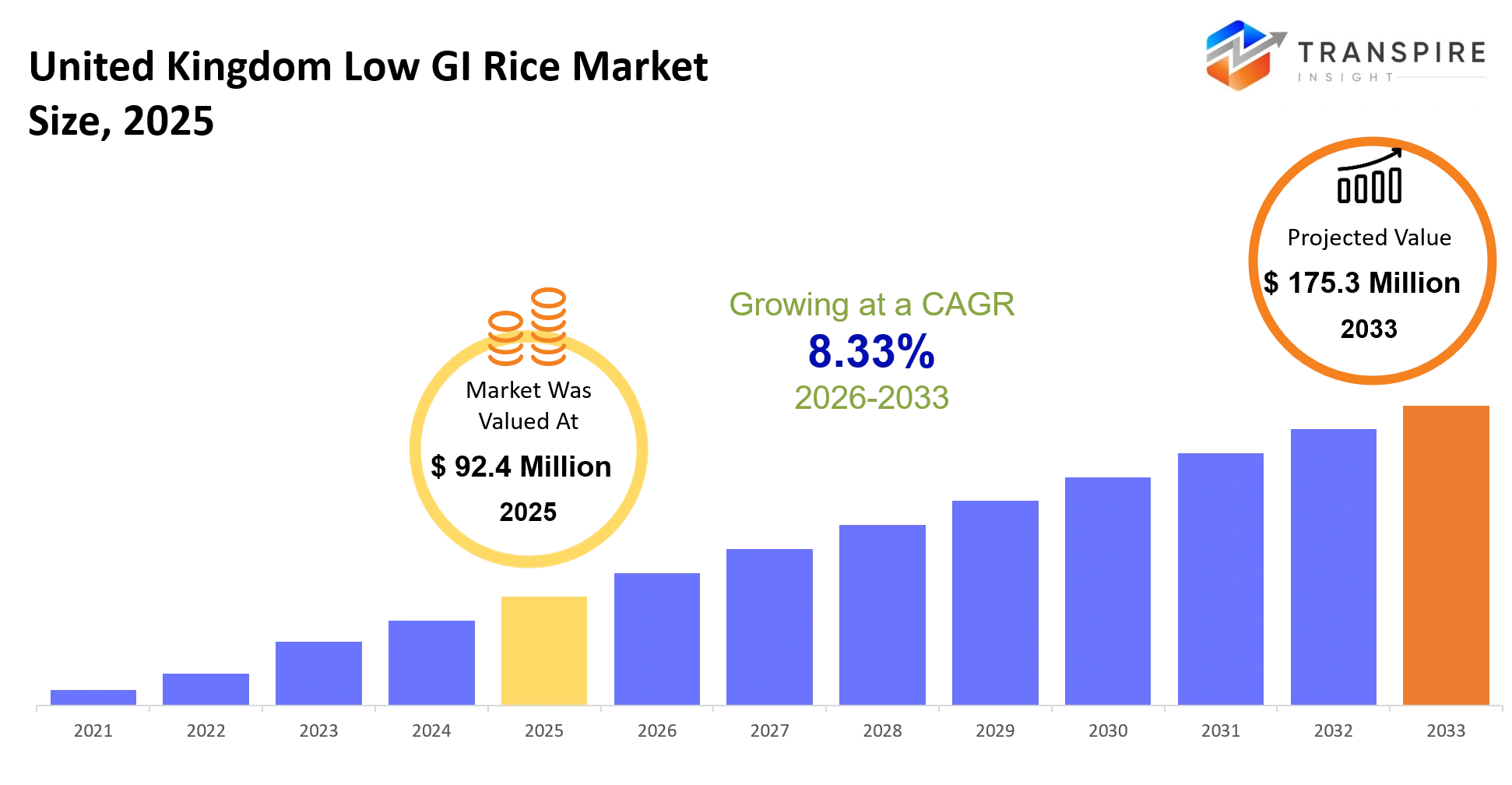
As per Transpire Insight Analysis the United Kingdom Low GI Rice Market size is estimated at USD 92.4 Million in 2025 and is anticipated to reach USD 175.3 Million by 2033, growing at a CAGR of 8.33% from 2026 to 2033.
The United Kingdom Low GI Rice Market basically serves consumers, plus food businesses who are looking for carbohydrate options that can help moderate post meal blood glucose levels without needing huge dietary adjustments. It’s used by retailers, healthcare focused food brands, restaurants, and even institutional kitchens, mostly to broaden meal selections that feel a bit more “health oriented” while still fitting nutrition goals tied to diabetes management, weight control, and steadier energy intake.
In the past three to five years , the market has shifted a lot, like it went from a somewhat niche wellness audience to sitting inside mainstream health focused food portfolios. This move is backed by better retail availability, and also stronger product positioning.The change really sped up after the pandemic, because preventive health, and metabolic wellness started showing up more often as buying reasons , kind of as a noticeable factor.
Then, once consumers began judging food by measurable nutritional outcomes, manufacturers leaned harder into product innovation, more explicit labeling , and a more premium positioning.So overall, commercial adoption has grown across different sales channels, brand differentiation got more noticeable, and sales value increased, instead of the whole thing depending only on more volume consumption.
United Kingdom Low GI Rice Market Size & Forecast:
- United Kingdom Low GI Rice Market Size 2025: USD 92.4 Million
- Expected Market Value 2033: USD 175.3 Million
- Forecast CAGR: 8.33%
- Leading region in 2025: England
- Fastest Growing region: Scotland
- Key Profile: Tilda, LT Foods, KRBL, SunRice, Ebro Foods, Lundberg Family Farms, Amira Nature Foods, Riviana Foods, Daawat, Waitrose, Tesco, Sainsbury's, ASDA, Ocado, Whole Foods Market
Key Market Insights
- England basically dominated the United Kingdom Low GI Rice Market, sitting at around 71% market share in 2025. This was mostly backed by bigger retail networks, plus a more solid premium food consumption trend going on.
- Scotland meanwhile is expected to pop up as the fastest-growing regional market during 2025–2032, mainly because health-forward grocery portfolios are expanding, and specialty food retailers seem to be multiplying, kind of steadily.
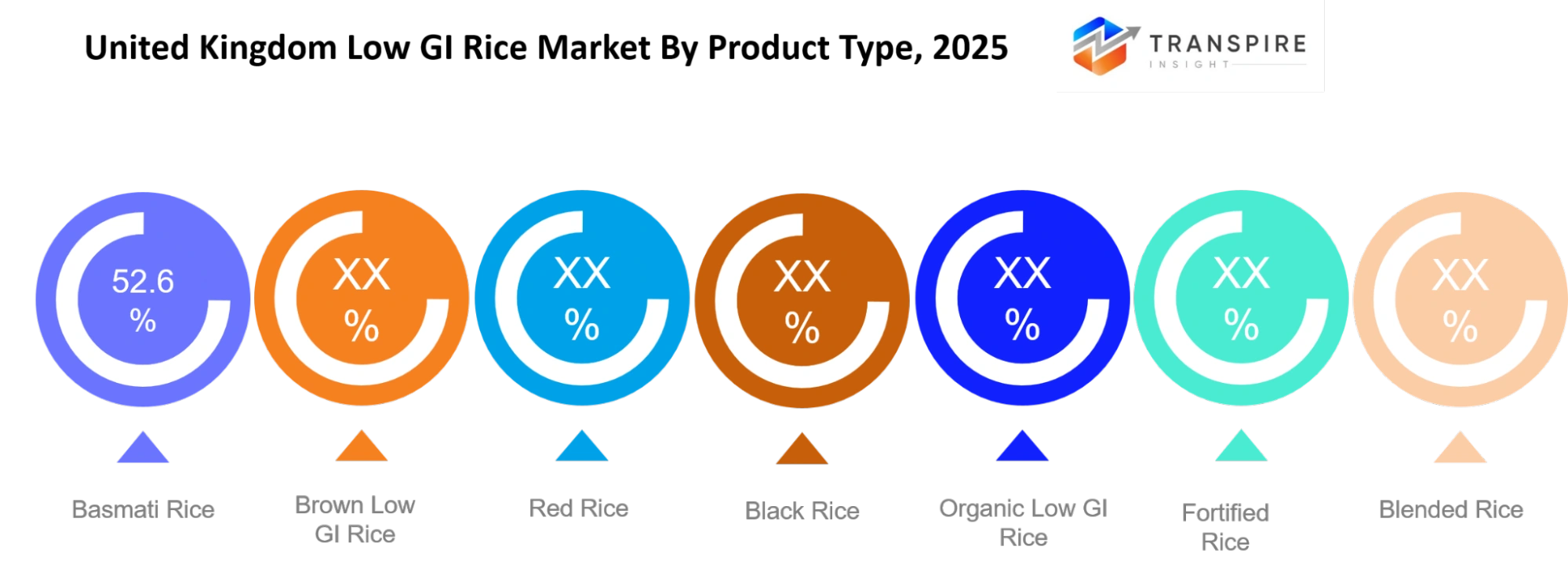
- Among product types, Brown Low GI Rice took the lead with close to 48% market share in 2025. That really hints at a strong preference for whole grain nutritional benefits, plus continued retail penetration.
- Basmati Low GI Rice is sitting as the second-largest segment, and the reason is fairly straightforward too—premium ethnic cuisine interest, alongside healthier carbohydrate choices, kept encouraging households to buy more.
- For growth momentum, Fortified Low GI Rice is forecast to grow the quickest through 2032. This is tied to functional nutrition momentum and also more value-added product development, at least that's the direction.
- When it comes to applications, household retail consumption basically led the board with roughly 62 % market share in 2025, and it seemed to ride the wave of supermarket expansion, plus a quiet pivot toward more wholesome meal planning.
- On the other hand, foodservice is expected to become the fastest-growing application category all the way through 2032, because restaurants are branching out into healthier menu items, while institutional catering standards keep evolving, step by step.
- If we talk about end-users, retail consumers made up the major segment with nearly 66% share in 2025, aided by supermarket access and premium packaged food sales.
- Finally, healthcare institutions plus wellness-centered catering services are projected to become the fastest-growing end-user segment across the forecast period.
What are the Key Drivers, Restraints, and Opportunities in the United Kingdom Low GI Rice Market?
The main thing pushing market expansion is, honestly, the stronger focus on metabolic health across the United Kingdom. New nutritional guidance, more diabetes prevention programs, and retailer spending on healthier private label portfolios have nudged shoppers toward lower glycemic carbohydrate alternatives, bit by bit. Food manufacturers then answered by growing their premium rice range, using clearer nutritional claims and getting that product onto more supermarket shelves. In practice this has made the products easier to notice, increased repeat buying , and also helped sustain higher average selling prices. So, revenue growth has been getting a boost in both retail and foodservice channels, more or less at the same time.
Still, the biggest structural obstacle is limited domestic production, plus a reliance on imported specialty rice varieties. That import dependence basically puts suppliers in the path of freight cost swings , exchange-rate volatility, and climate related production risks in exporting regions. And it’s not something that can be fixed quickly because building comparable supply networks means long term agricultural partnerships along with processing investments. From the Transpire Insight review of regional procurement announcements and launch calendars, it looks like supply chain concentration is the key execution risk. The fallout shows up as delayed product availability, a thinner retail assortment, and lost revenue opportunities whenever supply disruptions happen, even if everything else is going fine.
One big opening is in mixing a low GI rice approach with more functional nutrition, using fortified add-ons, careful processing technologies, and those premium “grab and go” formats that people actually pick up. Putting money into digital traceability as well as nutritional certification, can really help convince shoppers, and at the same time back up export-grade standards. Retailers are also quietly giving more shelf space to foods that are clinically positioned, which sets up good conditions for brands that are clearly differentiated. Overall, these shifts could unlock wider commercial take up across supermarkets , healthcare catering services, and higher-end meal solutions.
What Has the Impact of Artificial Intelligence Been on the United Kingdom Low GI Rice Market?
Artificial intelligence and digital technologies are, in a way, boosting efficiency all across the United Kingdom low glycemic rice sector by making procurement, production, and inventory management run smoother. Food processors increasingly use AI enabled quality check systems to watch grain texture consistency, moisture levels, and even packaging accuracy, so there’s less need for hand work, and it also helps them keep up with food safety rules. At the same time , machine learning models start look-ing at retail sales , seasonal consumption habits, and what promotions are actually doing in the market, to forecast demand more accurately. That kind of insight in turn helps manufacturers and distributors plan their production runs and spread inventory in a more intelligent way, not just relying on guesswork or gut feeling , every time.
These digital abilities can cut down stock shortages, make warehouse space work better, and reduce waste linked to overstock. AI assisted supply planning also helps importers spot potential logistics disruptions early, then tweak purchasing approaches before transportation slowdowns turn into real product unavailability. Automated analytics further back up pricing choices by tracking commodity movements and consumer buying behavior across multiple retail channels. Put together, the effect is clearer operational efficiency, stronger supply reliability, and fewer distribution expenses that could have been avoided.
Still, bigger rollout is held back, mainly, by steep integration costs and the fact that data is fragmented between suppliers, processors, retailers, and logistics providers. Smaller brands often don’t have consistent digital infrastructure, so their ability to scale advanced AI models ends up being limited for specialty rice operations, and the results stay less reliable.
Key Market Trends
- Since 2022, supermarkets have been giving functional rice products more shelf space, which made premium categories look more “there” on the aisle, and it also seems to push people toward healthier carbs faster.
- In 2023–2025, premium packaged low GI rice captured a bigger slice of retail sales, mostly thanks to clearer nutritional labels and that clean ingredient, sort of “no drama” placement strategy.
- After 2023, foodservice operators started folding in healthier rice alternatives more often, and you could see menu diversification showing up across restaurants, healthcare catering, and corporate dining, not just one segment.
- During 2024, companies put more money into digital traceability, so suppliers could verify sourcing better, gain stronger inventory visibility, and frankly increase retailer confidence , a lot.
- Between 2023 and 2025, fortified low GI rice formulations began to pick up real commercial traction, pulled by functional nutrition trends plus premium pricing tactics that worked on purpose.
- After the recent logistics disruptions, importers diversified sourcing partnerships, which reduced how reliant they were on single origin suppliers and improved overall supply resilience .
- Tilda expanded its healthier product range, while LT Foods strengthened its premium branded lineup, both trying to match the shift in what nutrition focused consumers are actually choosing.
- In 2024, private-label retailers rolled out additional low glycemic rice lines, making competition fiercer, but also improving category accessibility across supermarkets .
- After 2023, AI driven demand forecasting became more common, and that helped suppliers fine tune procurement decisions, while reducing inventory imbalances across distribution networks, in a quieter but consistent way.
United Kingdom Low GI Rice Market Segmentation
By Product Type :
Brown Low GI Rice keeps a pretty solid standing because, whole grain nutrition plus that fiber content and a stable energy release kind of line up with most day to day health goals. Even with everything going on, people keep buying it, across households too, for carbohydrate options that feel balanced and can support long-term dietary habits. Basmati Rice stays in demand too, because it has naturally lower glycemic characteristics, which kind of match the old school cooking styles without making anyone really have to swap out their usual recipe. And then there is the whole premium quality side , plus a consistent flavor profile that just helps it get accepted in more places, from retail shelves to foodservice menus.
Red Rice and Black Rice, on the other hand , tend to bring in shoppers who are after natural antioxidants and a slightly more distinctive nutritional profile. Organic Low GI Rice is also pretty popular, mainly because certified growing and production standards line up with what a lot of buyers describe as clean-label foods. Fortified Rice then adds vitamins and minerals , so it creates extra openings for targeted nutrition programs in both retail and institutional settings. Blended Rice and Others bring even more variety, mixing nutrition, flavor and affordability in a way that suits different consumer preferences, sometimes people just want options that feel easy to live with.
By Application :
Household Consumption is still the biggest portion, mostly because healthier meal preparation has slowly become a normal thing people do while they are already doing regular grocery shopping. People keep buying more often, across different income groups, since stable blood sugar management and balanced nutrition help with that repeated routine. Food Service keeps getting wider too—restaurants, cafés, and catering businesses are rolling out healthier menu options that seem to match what customers want now. Ready-to-Eat Meals, meanwhile, also rides along on the idea that convenience matters, but not at the cost of nutritional quality.
Clinical Nutrition backs specialized meal planning for patients who need controlled carbohydrate intake, under medical guidance. Sports Nutrition opens new chances by focusing on steady energy support before and after workouts. Dietary Programs are more like ready-made low glycemic meal plans, aimed at weight management and metabolic health targets. Institutional Catering and Others also push the market outward by supplying schools, workplaces, healthcare facilities, and community organizations with healthier rice choices.
By Distribution Channel :
Supermarkets & Hypermarkets stay at the top as distribution channels , mostly because you get broad product availability and competitive pricing that basically nudges people into buying more often. Good shelf visibility also helps , so premium brands plus value brands can reach a wide customer group pretty easily. Online Retail keeps growing too , since digital grocery platforms make it simpler to compare items , offer subscription services, and deliver to your doorstep with less hassle. Health Food Stores pull in shoppers who are looking for specialized nutritional products, and they tend to trust the knowledgeable staff there.
Specialty Stores lean into premium and imported rice varieties , tailored toward specific dietary preferences. Wholesale Suppliers support restaurants, hospitals, hotels, and institutional kitchens by providing consistent bulk deliveries that don’t really miss. Convenience Stores make things easier for people in city areas, with smaller pack sizes and quick purchases. Direct Sales and Others still add more options through corporate supply agreements and specialized distribution networks.
By End User :
Retail consumers take the lead in market share because healthier eating habits, kind of guide those day-to-day grocery picks. Premium packaged rice is still getting more spotlight, mainly due to nutritional labeling and the variety of options available. Meanwhile, restaurants keep widening their healthier menu options to kind of match what people actually ask for, for well-rounded meals, but still trying to keep the regular cooking style familiar. In hospitals, they usually lean toward controlled carb foods so they can properly map out the diets for patients with very particular nutritional needs.
On the other side, fitness centers often suggest better carbohydrate selections as part of structured nutrition programs for active routines. Nutrition clinics add low glycemic rice into personalized meal plans that aim at metabolic health and weight management. Hotels, in turn, improve healthy dining by placing nutritious rice dishes into breakfast, lunch and dinner menus, without much fuss. Then food manufacturers and others continue developing packaged foods and value-added products, which helps meet wider commercial demand too.
By Packaging Type :
Bags still seem like the go to packaging, mostly because cost efficiency and storage convenience fit both retailers and consumers pretty well. Meanwhile pouches add portability and also make shelf presentation look better, they even help with premium product positioning. Vacuum packs are used for preserving freshness, keeping grain quality in good shape, and stretching shelf life during transport and storage, sort of like a buffer. Bulk packaging tends to serve restaurants, institutional kitchens and food manufacturers that want larger purchase volumes, so it makes sense.
Family packs support households with frequent consumption by giving a better value per purchase, not just “more stuff”. Single serve packs appeal to busy consumers who want portion control, and a convenient meal prep routine. Eco friendly packaging keeps getting attention as recyclable and sustainable materials show up more often across food packaging strategies. Other options include innovative packaging formats, designed to improve handling, protect the product and also support retail presentation, even if the goal is sometimes kinda subtle.
What are the Key Use Cases Driving the United Kingdom Low GI Rice Market?
Retail grocery is still the main use case, largely because health conscious households pretty often buy low GI rice for day to day meal planning. Supermarkets and hypermarkets end up driving the top sales, mostly by stacking different pack sizes, plus a bunch of premium product choices. When families keep buying consistently especially those tracking blood glucose levels and trying to stay on balanced nutrition it turns into steadier commercial demand, more or less.
Healthcare catering and foodservice use is also growing, you see it in hospitals , nutrition clinics, and restaurants. In clinical meal planning they need carbohydrate options that are controlled, so they can stick to the relevant dietary protocols. Restaurants meanwhile are adding healthier rice options to match how customers expect food to be now. On top of that, ready to eat meal manufacturers are blending low GI rice into higher end convenience products, since people seem to want faster meals but without the usual tradeoffs.
Sports nutrition and specialized wellness programs are becoming another real opening, with solid long term upside. Fitness centers and performance nutrition brands are checking low GI rice as a sustained energy meal solution. Corporate wellness catering and preventive healthcare efforts could also create fresh institutional demand, especially if nutrition standards keep moving forward across the United Kingdom.
|
Report Metrics |
Details |
|
Market size value in 2025 |
USD 92.4 Million |
|
Market size value in 2026 |
USD 100.1 Million |
|
Revenue forecast in 2033 |
USD 175.3 Million |
|
Growth rate |
CAGR of 8.33% from 2026 to 2033 |
|
Base year |
2025 |
|
Historical data |
2021 - 2024 |
|
Forecast period |
2026 - 2033 |
|
Report coverage |
Revenue forecast, competitive landscape, growth factors, and trends |
|
Regional scope |
United Kingdom (England, Scotland, Wales, Northern Ireland) |
|
Key company profiled |
Tilda, LT Foods, KRBL, SunRice, Ebro Foods, Lundberg Family Farms, Amira Nature Foods, Riviana Foods, Daawat, Waitrose, Tesco, Sainsbury's, ASDA, Ocado, Whole Foods Market . |
|
Customization scope |
Free report customization (country, regional & segment scope). Avail customized purchase options to meet your exact research needs. |
|
Report Segmentation |
By Product Type (Brown Low GI Rice, Basmati Rice, Red Rice, Black Rice, Organic Low GI Rice, Fortified Rice, Blended Rice, Others); By Application (Household Consumption, Food Service, Ready-to-Eat Meals, Clinical Nutrition, Sports Nutrition, Dietary Programs, Institutional Catering, Others); By Distribution Channel (Supermarkets & Hypermarkets, Online Retail, Health Food Stores, Specialty Stores, Wholesale Suppliers, Convenience Stores, Direct Sales, Others); By End User (Retail Consumers, Restaurants, Hospitals, Fitness Centers, Nutrition Clinics, Hotels, Food Manufacturers, Others); By Packaging Type (Bags, Pouches, Vacuum Packs, Bulk Packaging, Family Packs, Single-Serve Packs, Eco-Friendly Packaging, Others) |
Which Regions are Driving the United Kingdom Low GI Rice Market Growth?
England takes up roughly 71% of the revenue, and basically stays the big regional player. There are strong supermarket networks in place, established food safety rules, and broad access to premium grocery retail and that all together gives decent conditions for specialty rice products. You also have large importers, branded food companies, distribution centers, and nationwide retail chains that keep products showing up on shelves pretty reliably across the region. If investment keeps going into healthier food ranges, and consumers keep spending consistently on premium grocery items, then regional leadership should hold up through the forecast period, more or less.
Scotland comes next, and it’s the second-largest regional contributor because buying habits put more weight on premium food quality, and the longer-term nutritional value. Retail investment is stable, food regulations stay consistent, and household spending remains resilient, so overall market conditions are dependable even though the population base is smaller. Partnerships are expanding too, between specialty food distributors and national supermarket chains, which helps improve availability across both cities and surrounding areas. So overall, this kind of well-mixed commercial setup offers steady revenue chances, without needing fast structural changes.
Wales is projected to see the quickest rise during 2026–2033, kind of, after a wider retail roll-out and a clearer, stronger nudge toward better food choices through public nutrition programs. Over the past few years, it has become easier for people to reach what they need, mainly because specialty grocery goods are more widely available now, and because regional food distribution is being backed with more investment. At the same time, nutrition-led health programmes are expanding, and institutional catering services are taking them up more broadly, which is creating extra market chances that go past the usual household demand. If this keeps moving like it has, the forecast period should stay full of appealing angles for new brands, importers, and investors aiming at regional markets that still feel a bit underserved.
Who are the Key Players in the United Kingdom Low GI Rice Market and How Do They Compete?
Competition across the United Kingdom Low GI Rice Market is still pretty moderately fragmented, like you get international rice suppliers in the mix, but also established packaged food brands and private label retailers, all sort of aiming at the same audience. In reality the main thing they go after is product quality, nutrition positioning, brand reputation, and how far they can distribute, not just price alone. Most of the established players keep pushing healthier product portfolios while the newer entrants tend to stand out via things like organic certification, fortified formulations, and higher level sourcing requirements.
Tilda keeps strengthening its stance with premium rice varieties, backed by solid supermarket relationships and ongoing product development, which is clearly aimed at healthier eating. LT Foods kind of sets itself apart by mixing true basmati know how with nutrition led product innovation, so they can expand into premium retail spaces more easily. Veetee leans on convenient packaging formats and product innovation that fits modern households wanting simpler, healthier meal preparation.
Mars Food UK is also leaning into healthier meal solutions, by adding nutritionally balanced rice products inside convenient packaged food ranges, so the value is there even beyond standalone rice sales. Ebro Foods builds its competitive edge via a wide international sourcing network, which helps keep supply steady and product quality consistent across retail markets. Amira Nature Foods concentrates on premium specialty rice plus export capability, giving access to customers who are looking for authentic, high quality rice items, with that strong nutritional angle.
Company List
- Tilda
- LT Foods
- KRBL
- SunRice
- Ebro Foods
- Lundberg Family Farms
- Amira Nature Foods
- Riviana Foods
- Daawat
- Waitrose
- Tesco
- Sainsbury's
- ASDA
- Ocado
- Whole Foods Market
Recent Development News
In January 2026, LT Foods launched DAAWAT® I’m Organic with a QR-based traceability platform. The product launch strengthened the premium organic rice portfolio and improved transparency for health-conscious consumers in markets including the United Kingdom.
Source https://ltfoods.com/
In July 2025, Nature Bio Foods, the organic business arm of LT Foods, entered the business-to-consumer (B2C) segment. The strategic expansion increased direct access to consumers seeking organic and healthier food products, strengthening the company's premium nutrition portfolio. Source https://ltfoods.com/
What Strategic Insights Define the Future of the United Kingdom Low GI Rice Market?
The United Kingdom Low GI Rice Market is likely to drift, sort of slowly, into a more value-driven nutrition category where product differentiation , verified health claims, and supply chain transparency matter more than sheer volume growth over the next five to seven years. You can also see it in how stronger clinical nutrition acceptance is building up, while retailers keep leaning toward functional foods, plus the growing integration of digital traceability will nudge this shift in a more structural way.
There’s also a quieter risk though, less obvious at first glance. It comes from relying on imported specialty rice types, because climate variability , changes in trade policy , or sourcing that is overly concentrated in a few regions could interrupt availability and then push pricing around, even if consumer demand stays healthy.
On the bright side, a real opportunity is starting to show up via personalized nutrition. Digital health platforms and glucose-monitoring tools may help consumers move toward more tailored dietary guidance, and low GI rice could end up in those recommendations more often. Firms that act early, with diversified sourcing , clinical validation, and clearly certified nutritional labeling, while also building partnerships with healthcare providers and premium retailers, should be better set to lock in long-term commercial growth and improve their competitive staying power.
United Kingdom Low GI Rice Market Report Segmentation
By Product Type
- Brown Low GI Rice
- Basmati Rice
- Red Rice
- Black Rice
- Organic Low GI Rice
- Fortified Rice
- Blended Rice
By Application
- Household Consumption
- Food Service
- Ready-to-Eat Meals
- Clinical Nutrition
- Sports Nutrition
- Dietary Programs
- Institutional Catering
By Distribution Channel
- Supermarkets & Hypermarkets
- Online Retail
- Health Food Stores
- Specialty Stores
- Wholesale Suppliers
- Convenience Stores
- Direct Sales
By End User
- Retail Consumers
- Restaurants
- Hospitals
- Fitness Centers
- Nutrition Clinics
- Hotels
- Food Manufacturers
By Packaging Type
- Bags
- Pouches
- Vacuum Packs
- Bulk Packaging
- Family Packs
- Single-Serve Packs
- Eco-Friendly Packaging
Frequently Asked Questions
Find quick answers to common questions.
The expected United Kingdom Low GI Rice Market size for the market will be USD 175.3 Million in 2033.
Key segments for the United Kingdom Low GI Rice Market are By Product Type (Brown Low GI Rice, Basmati Rice, Red Rice, Black Rice, Organic Low GI Rice, Fortified Rice, Blended Rice, Others); By Application (Household Consumption, Food Service, Ready-to-Eat Meals, Clinical Nutrition, Sports Nutrition, Dietary Programs, Institutional Catering, Others); By Distribution Channel (Supermarkets & Hypermarkets, Online Retail, Health Food Stores, Specialty Stores, Wholesale Suppliers, Convenience Stores, Direct Sales, Others); By End User (Retail Consumers, Restaurants, Hospitals, Fitness Centers, Nutrition Clinics, Hotels, Food Manufacturers, Others); By Packaging Type (Bags, Pouches, Vacuum Packs, Bulk Packaging, Family Packs, Single-Serve Packs, Eco-Friendly Packaging, Others).
Major United Kingdom Low GI Rice Market players are Tilda, LT Foods, KRBL, SunRice, Ebro Foods, Lundberg Family Farms, Amira Nature Foods, Riviana Foods, Daawat, Waitrose, Tesco, Sainsbury's, ASDA, Ocado, Whole Foods Market.
The United Kingdom Low GI Rice Market size is USD 92.4 Million in 2025.
The United Kingdom Low GI Rice Market CAGR is 8.33% from 2026 to 2033.
- Tilda
- LT Foods
- KRBL
- SunRice
- Ebro Foods
- Lundberg Family Farms
- Amira Nature Foods
- Riviana Foods
- Daawat
- Waitrose
- Tesco
- Sainsbury's
- ASDA
- Ocado
- Whole Foods Market
About the Authors

Chetan Dhatrak
I’m Chetan Dhatrak, a Senior Research Analyst at Transpire Insight, specializing in the Consumer Goods, Foods and Beverages industry. I focus on analyzing market trends, consumer behavior, competitive landscapes, and industry developments to deliver accurate, data-driven insights. My research at Transpire Insight is built on credible sources and in-depth analysis, helping businesses and readers better understand market dynamics, emerging opportunities, and evolving consumer preferences. I’m committed to creating reliable, well-researched content that supports informed decision-making and reflects the latest developments in the consumer goods and food & beverage sectors.

Chakradhar Khansole
Chakradhar serves as the Research Director at Transpire Insight, bringing over 8 years of experience in technology, innovation, and strategic market intelligence. He specializes in transforming complex market data into actionable business insights that enable organizations to make informed, growth-oriented decisions. Recognized for his strategic vision and analytical expertise, Chakradhar leads high-impact research initiatives, delivering comprehensive market assessments, competitive intelligence, and forward-looking industry analysis.
Recently Published Reports
-
Apr 2026
Baby Infant Formula Market
Baby Infant Formula Market Size, Share & Analysis Report By ype (Infant Milk, Follow On Milk, Specialty Baby Milk, Growing-Up Milk), By Ingredient (Carbohydrate, Fat, Protein, Minerals, Vitamins, and Others), By Product Form (Powder, Liquid, and Ready-to-feed), By Distribution Channels (Supermarket/Hypermarket, Specialty Store, Pharmacies, Online Retail, and Others), and Geography (North America, Europe, Asia-Pacific, Middle East and Africa, South and Central America), 2021 - 2031
-
Apr 2026
Edible Insects for Animal Feed Market
Edible Insects for Animal Feed Market Size, Share & Analysis Report By Type (Insect Powder, Insect Meal, Insect Bar, Insect Paste, Insect Oil, and Others), By Insect Type (Beetles, Cricket, Caterpillar, Hymenoptera, Orthoptera, Tree Bugs, and Others), By Application (Livestock, Pet Food, and Aquaculture), By Livestock Type (Poultry, Swine, and Others), and Geography (North America, Europe, Asia-Pacific, Middle East and Africa, South and Central America), 2021 - 2031
-
Apr 2026
Food Industry Disinfection and Bacterial Control Market
Food Industry Disinfection and Bacterial Control Market Size, Share & Analysis Report By Type (Chemical Disinfectants, Physical Disinfectants, and Biocides and Antimicrobials), By Application (Food Processing Equipment Surface Disinfection, Food Preparation Areas Surface Disinfection, Storage Areas Surface Disinfection, Anti-microbial Coatings Food Preservation, and Preservative Solutions Food Preservation), By End User (Meat and Poultry Processing, Dairy Processing, Seafood Processing, Bakery and Confectionery, Restaurants and Commercial Kitchens, and Food Service Providers), By Sales Channel (Online, Offline), and Geography (North America, Europe, Asia-Pacific, Middle East and Africa, South and Central America), 2021 - 2031
-
May 2026
Freeze Dried Food Market
Freeze Dried Food Market Size, Share & Analysis Report By Product Type (Fruits, Vegetables, Freeze-Dried Dairy Products, Freeze-Dried Meat and Seafood, Freeze-Dried Pet Food, and Prepared Meal), By Nature (Organic, and Conventional), By Form (Powdered, Granules, and Diced), By End Use (Breakfast Cereals, Dairy Products, Bakery & Confectionery, Nutritional Bars & Supplements, Powdered Beverages, Snacks, and Retail (Household)), and Geography (North America, Europe, Asia-Pacific, Middle East and Africa, South and Central America), 2021 - 2031