

Global Sports Nutrition Supplements Market Size & Forecast:
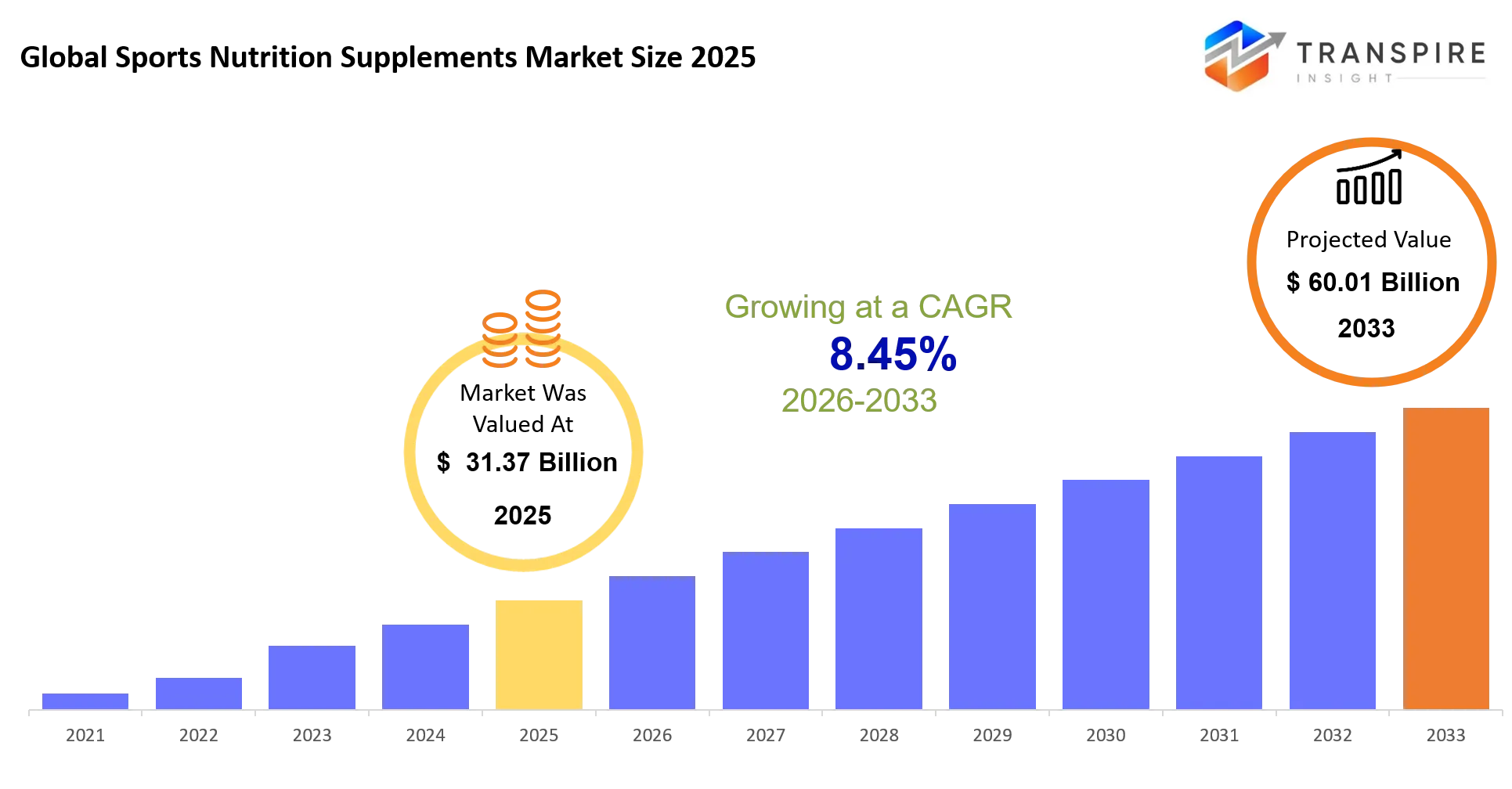
- Global Sports Nutrition Supplements Market Size 2025: USD 31.37 Billion
- Global Sports Nutrition Supplements Market Size 2033: USD 60.01 Billion
- Global Sports Nutrition Supplements Market CAGR: 8.45%
- Global Sports Nutrition Supplements Market Segments: By Product (Protein Powder, Energy Bars, RTD Beverages, Creatine, Amino Acids, Pre-workout Supplements, Recovery Supplements, Others); By Distribution Channel (Online Platforms, Specialty Stores, SuperMarkets, Pharmacies, Fitness Centers, Health Stores, Direct Sales, Others); By Consumer Group (Athletes, Bodybuilders, Fitness Enthusiasts, Recreational Users, Women Consumers, Teenagers, Senior Consumers, Others); By Ingredient (Whey Protein, Plant-based Protein, Casein, Mixed Proteins, Natural Ingredients, Organic Ingredients, Functional Ingredients, Others); By Application (Performance Enhancement, Weight Management, Muscle Recovery, Endurance Training, Wellness, Strength Building, Sports Recovery, Others)
Global Sports Nutrition Supplements Market Summary:
As per Transpire Insight Analysis, the Global Sports Nutrition Supplements Market size is estimated at USD 31.37 billion in 2025 and is anticipated to reach USD 60.01 billion by 2033, growing at a CAGR of 8.45% from 2026 to 2033.
The Global Sports Nutrition Supplements Market has changed a lot over time. It used to be for athletes, but now it is for everyone who wants to be healthy. In the past five years, more people have started working out and trying to stay healthy. They want to eat food that helps them perform better and feel good. People are looking for things that help them recover from workouts, have energy, lose weight and feel good overall.
People really want products that're natural and made from plants. This is making companies change what they put in their products and be more open about what's in them. A lot of people started working out at home after the pandemic, which made them want to buy sports nutrition supplements. As people make fitness a part of their lives, they want food that is easy to use and helps them with what they need. This is making companies come up with ideas for protein powders, drinks and other sports nutrition products. The sports nutrition supplements Market is going to keep growing for a time, and this is true for both rich and poor countries. The demand for sports nutrition supplements is rising because people want to be healthy and feel good. Sports nutrition supplements are becoming a part of people's lives, and companies are making new products to help them.
Key Market Insights:
Consumer preference is moving away from traditional performance enhancers to personalised, natural products and plant-based nutrition products. E-commerce and technology incorporation into fitness have changed consumer behaviour and product development.
- Protein powder accounts for approximately 44% of revenue share because of its versatility and broad application in fitness Markets.
- Sports nutrition products based on plants are expected to have the highest growth rate, reaching a CAGR of 16.1%, driven by consumers who value vegan and sustainable products.
- The RTD beverages' share accounts for nearly 16% of Market demand, driven by the need for convenience in nutrition products.
- Energy bars account for approximately 14% of overall sales, owing to rising demand for functional nutrition products that are easy to consume and take along anywhere.
- Creatine products hold approximately 10% of Market share and are increasingly popular among athletes and fitness enthusiasts.
- Leading companies are developing new ingredients to enhance absorption, flavour, and efficacy of their sports nutrition products.
- E-commerce websites are becoming important sources of sales as companies get the chance to create direct relationships and personalised nutrition programs for their customers.
- Growing participation of women in sports drives innovations in sports nutrition tailored for women's health.
What are the Key Drivers, Restraints, and Opportunities in the Global Sports Nutrition Supplements Market?
Drivers
The rising integration of fitness and wellness into day-to-day lifestyles is one of the main drivers for Market growth. Nowadays, consumers do not buy sports nutrition products just to increase their athletic performance but rather take supplements for maintaining muscles, recovery, losing extra weight, and improving overall well-being. The fast development of fitness apps, wearables, and digital coaching services has raised consumer awareness of the importance of proper nutrition and has stimulated the regular intake of supplements. Consequently, producers experience growing demand from multiple customer segments, such as recreational consumers, females, and older adults.
Restraints
Although there is plenty of demand, some issues related to the quality of products and regulations remain barriers to Market growth. There are significant differences in regulations on ingredients and labels of sports nutrition supplements between countries, making regulation adherence difficult for producers. Moreover, the proliferation of counterfeit products and health claims can negatively impact consumer trust and adoption rates.
Opportunities
There are many potential areas of Market growth associated with the increased use of plant-based and personal nutrition solutions. There have been developments within the field of nutrition science, the availability of novel ingredients, and analytics of consumer health data, which will help companies design customised formulations based on fitness goals. New regions such as Asia Pacific and Latin America offer many possibilities due to an increase in fitness consciousness along with disposable income. It is anticipated that companies that integrate personal nutrition solutions with sustainable ingredients will achieve a competitive edge.
What Has the Impact of Artificial Intelligence Been on the Global Sports Nutrition Supplements Market?
The global sports nutrition supplements industry is undergoing a revolution due to the incorporation of Artificial Intelligence, which has been playing a major role in product development, logistics, and consumer relations. The companies have started using AI to analyse consumer needs and preferences, purchase history, and fitness trends to create products tailored to Market demand. Such practice allows for the reduction of the time required for product development and the creation of new supplements that have improved nutritional value.
AI improves prediction capabilities with regard to inventory management and demand forecasting. Companies can use past sales information, seasonal purchasing tendencies, and Market trends to create an optimal schedule of production and minimise inventory expenses. In production itself, the use of automation through AI helps in managing quality control and finding any issues with formulation, which increases efficiency.
One more important use of AI is personalised nutrition. Health-oriented platforms based on Artificial Intelligence can help find out consumers' fitness objectives, dieting, and physical activity and create customised supplement packages for each consumer separately. In March 2025, Nestle Health Science utilised AI technology in order to make personalised supplement recommendations for performance nutrition, indicating that the application of artificial intelligence is becoming increasingly important for product development and consumer engagement in the global Market of sports nutrition supplements.
Key Market Trends:
There is an increase in consumer preference for personalised, sustainable, and scientifically sound nutrition solutions, prompting businesses to reassess traditional Marketing approaches.
- Technologically advanced wellness ecosystems have become more prominent in the supplement creation, promotion, and consumption processes.
- Sports nutrition products made with plant ingredients have been gradually moving from specialty items into mainstream sports nutrition solutions.
- The use of digital platforms for purchases has increased significantly; many brands are turning to direct selling and subscription purchase schemes.
- Clean labelling is becoming an important consideration when making purchases because consumers want to be aware of what ingredients the product contains.
- Personalised nutrition programs have significantly developed due to wearables, fitness apps, and other health-monitoring technology.
- Functionality is becoming a more important part of the products, with manufacturers adding ingredients that will assist in recovery, boosting immunity, hydration, and overall well-being in addition to performance.
- Packaging sustainability has become increasingly popular among sports nutrition businesses due to the growing environmental concern.
- Women's sports nutrition products have become a rapidly developing segment, resulting in creating products specially formulated for women's needs.
- More and more emphasis is being placed on scientific validity and research of the products.
Global Sports Nutrition Supplements Market Segmentation
By Product
Protein Powder accounts for around 44% of the worldwide Market value. It dominates based on its popularity among athletes and bodybuilders looking for quick access to protein for muscle building and recovery purposes. RTD beverages account for about 16% of Market revenue as well but are growing in popularity among consumers looking for easy and portable nutrition solutions. Energy Bars make up around 14% of the Market demand because of their convenience during endurance training. Creatine Products contribute almost 10% of total sales, driven by increasing scientific evidence of performance benefits. In terms of future Market potential, plant-based sports nutrition is predicted to witness the highest rate of growth, recording a CAGR of 16.1%.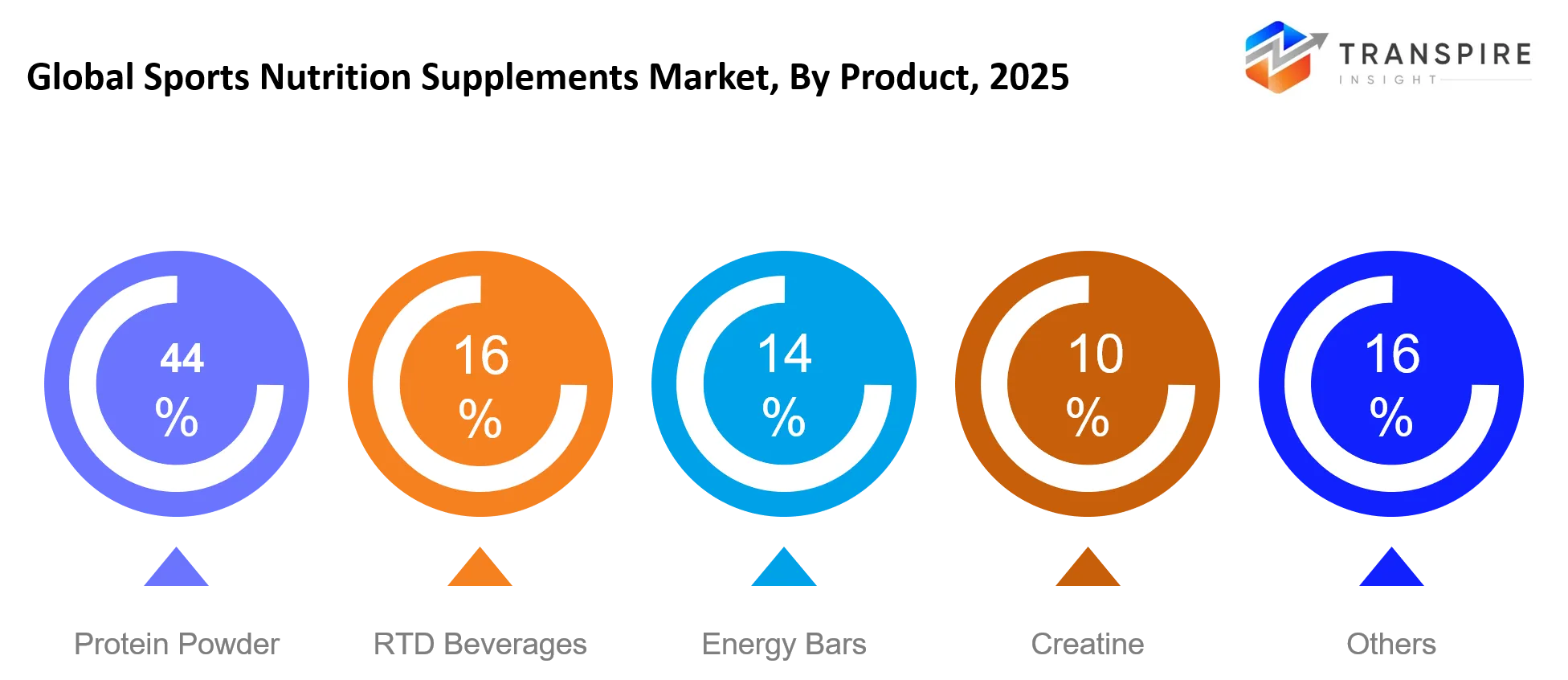
Distribution Channel
Online channels have emerged to be some of the most powerful distribution channels in the sports nutrition supplements industry. Customers are showing preference for online purchase channels because of product availability, affordability, subscriptions, and tailored suggestions. Specialist retailers are holding on to their importance through the provision of professional advice and high-quality products. General stores such as superMarkets and pharmacies still play a significant role in the channel since customers get trusted brands and easy access in these stores. Fitness centres and health stores also add value to the distribution channel through the provision of relevant products to the targeted audience.
By Consumer Group
The athletes and bodybuilders have been the key target consumers because of their interest in performance improvement, building muscles, and recovery. But the increasing share of the Market comes from the fitness buffs and casual users who use nutritional supplements as part of their holistic approach towards improving health and performance. The increasing involvement of women in fitness activities has led to the need for special nutritional products catering to the specific demands and health goals. The teenage and younger generations are getting involved in sports nutrition through participating in various sporting activities and living a fitness-oriented lifestyle.
By Ingredient
Whey protein is still the most commonly used ingredient as a result of its high level of amino acids, quick uptake, and proven efficacy in aiding muscle recovery. Casein protein will keep on attracting customers in search of slow release of proteins. Mixed proteins will keep gaining popularity as they blend the benefits of more than one ingredient. The use of natural and organic ingredients will grow as a result of increasing consumer preference for products with clear labelling of ingredients. Other functional ingredients include those that are used to promote hydration, boost the immune system, improve digestive functions, and overall well-being. It is predicted that plant-based proteins like pea protein, soy protein, rice protein, etc., will have the highest growth rates.
By Application
Sports Nutrition supplements are mainly used for performance enhancement through consumer demand from professional athletes and consumers who exercise for fitness. Sports Nutrition supplements applications for weight management are growing as consumers use protein-based supplements to help achieve healthy body composition. Muscle recovery supplements are growing popular owing to increased participation in high-intensity workouts and endurance sports. Sports Nutrition supplements for endurance training and muscle development are contributing to increased demand due to specific formulas of supplements that contain amino acids and creatine. Health-oriented applications are growing more significant as consumers seek nutritional supplements not only for improving athletic performance but for general well-being too.
What are the Key Use Cases Driving the Global Sports Nutrition Supplements Market?
Protein powders have the largest Market share and are mostly used to support muscle growth, post-workout recovery, and strength building. Athletes, bodybuilders, and fitness buffs take advantage of these supplements in order to provide their body with protein and help in training.
Apart from being used for sports purposes, the supplements are gaining popularity for being used for weight control, active lifestyles, endurance training, and wellness nutrition. RTD beverages, energy bars, and recovery drinks have become widely used by customers in their daily life in order to have good nutrition all through the day.
New applications are being discovered for the products, such as personalised nutrition plans, plant-based fitness diets, and healthy ageing programs. Sports nutrition supplements are gaining greater popularity among women, recreational users and seniors.
|
Report Metrics |
Details |
|
Market size value in 2025 |
USD 31.37 Billion |
|
Market size value in 2026 |
USD 34.01 Billion |
|
Revenue forecast in 2033 |
USD 60.01 Billion |
|
Growth rate |
CAGR of 8.45% from 2026 to 2033 |
|
Base year |
2025 |
|
Historical data |
2021 - 2024 |
|
Forecast period |
2026 - 2033 |
|
Report coverage |
Revenue forecast, competitive landscape, growth factors, and trends |
|
Regional scope |
United States; Canada; Mexico; United Kingdom; Germany; France; Italy; Spain; Denmark; Sweden; Norway; China; Japan; India; Australia; South Korea; Thailand; Brazil; Argentina; South Africa; Saudi Arabia; United Arab Emirates |
|
Key company profiled |
Optimum Nutrition, Glanbia, Herbalife, Abbott, Nestle Health Science, PepsiCo, GNC, MuscleTech, Dymatize, BSN, MyProtein, Cellucor, Amway, BioSteel, Transparent Labs |
|
Customization scope |
Free report customization (country, regional & segment scope). Avail customized purchase options to meet your exact research needs. |
|
Report Segmentation |
By Product (Protein Powder, Energy Bars, RTD Beverages, Creatine, Amino Acids, Pre-workout Supplements, Recovery Supplements, Others); By Distribution Channel (Online Platforms, Specialty Stores, SuperMarkets, Pharmacies, Fitness Centers, Health Stores, Direct Sales, Others); By Consumer Group (Athletes, Bodybuilders, Fitness Enthusiasts, Recreational Users, Women Consumers, Teenagers, Senior Consumers, Others); By Ingredient (Whey Protein, Plant-based Protein, Casein, Mixed Proteins, Natural Ingredients, Organic Ingredients, Functional Ingredients, Others); By Application (Performance Enhancement, Weight Management, Muscle Recovery, Endurance Training, Wellness, Strength Building, Sports Recovery, Others) |
Which Regions are Driving the Global Sports Nutrition Supplements MarketGrowth?
North America
The North American region dominates the global Market for sports nutrition supplements, contributing to more than 37% of the Market revenue. North America has a highly developed fitness culture, higher expenditures from consumers on health and wellness products, and an extensive brand presence in the sports nutrition categories. High engagement of consumers in gym sessions and other athletic activities will further contribute to the demand for protein powder, performance recovery supplements, and functional nutrition products. Effective distribution channels and strong penetration of the online channel in the region will contribute to Market accessibility.In October 2024, Reebok collaborated with Generation Joy to introduce a range of sports nutrition supplements in the U.S. and Canada that includes protein, collagen, hydration, and recovery supplements. It has increased product offerings and helped in boosting demands in the North American sports nutrition industry.
Europe
Europe accounts for nearly 29% of the Global Sports Nutrition Supplements Market and has a stable growth path due to health consciousness and the need for scientifically supported nutrition products. Compared to the North American region, Europeans put more emphasis on product transparency, label clarity, and compliance with regulations. The developed fitness culture, growth of the wellness industry, and the rise in popularity of active lifestyles in Europe will continue to drive supplement intake. Additionally, the rising preference for plant-based nutrition solutions stimulates innovation in this region. In June 2026, Lactalis made a strategic acquisition of Protein Works to further its reach in protein-rich nutrition products in Europe. It has helped Lactalis to gain more prominence in the fast-growing segment of sports nutrition and wellness, along with innovations in protein supplements.
Asia Pacific
Asia Pacific accounts for approximately 25% of the Global Sports Nutrition Supplements Market and is projected to be the fastest-growing region, expanding at a CAGR of 17.2% during the forecast period. Rapid urbanisation, increasing disposable income, and growing participation in fitness and recreational sports have significantly boosted demand across major countries in the region. Consumers are becoming more aware of the relationship between nutrition, physical performance, and overall health, creating favourable conditions for Market expansion. The continued growth of digital commerce, fitness applications, and international supplement brands is expected to generate substantial opportunities for manufacturers throughout Asia Pacific.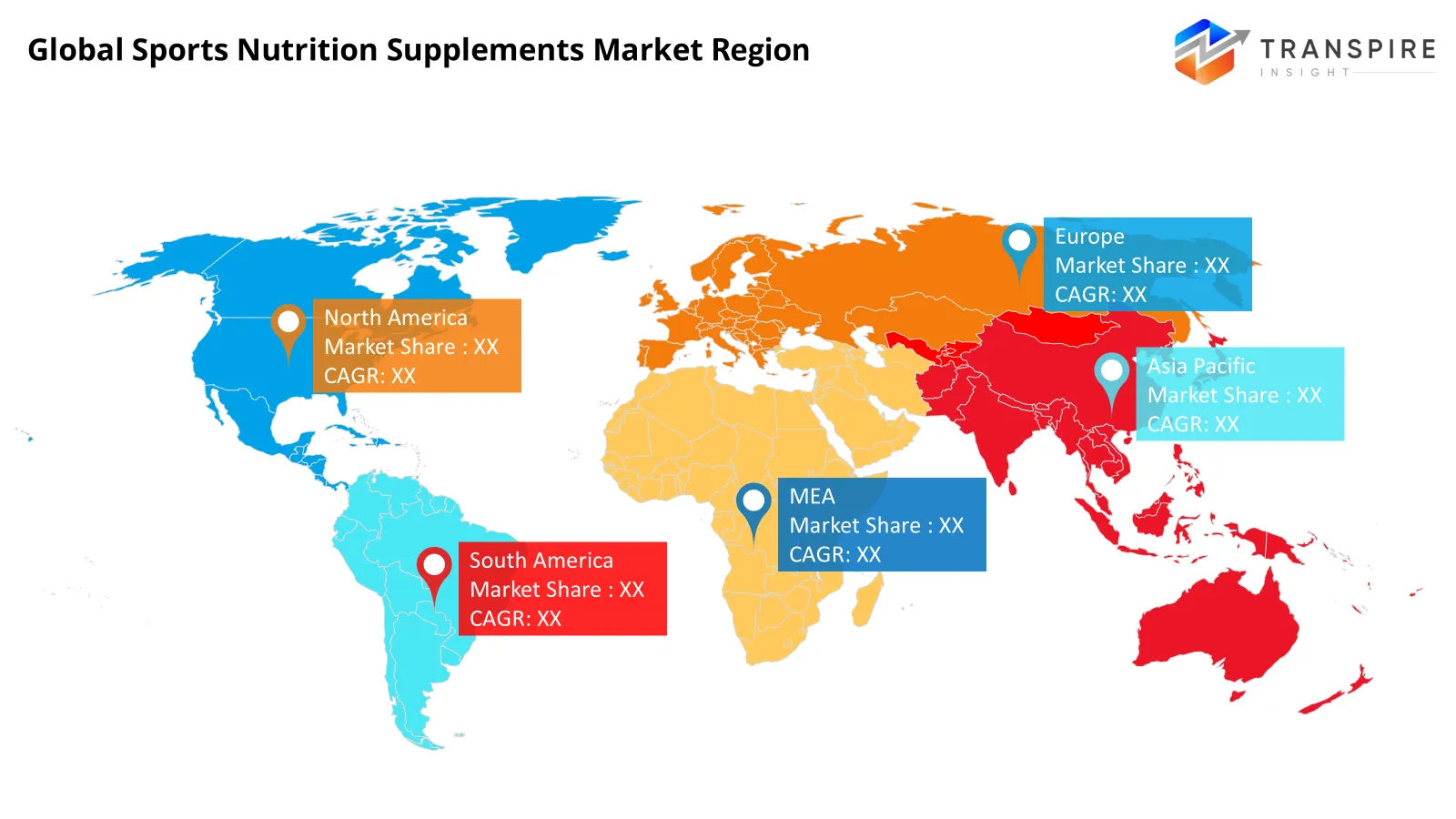
Who are the Key Players in the Global Sports Nutrition Supplements Marketand how do they Compete?
The global Market for sports nutrition supplements is quite intense, with companies competing through product innovations, brand power, and development of distribution networks. The increasing popularity of protein supplements, recovery products, and performance nutrition continues to fuel the competition within the Market.
Optimum Nutrition (Glanbia Performance Nutrition) has adopted an innovation-led business model where it provides scientifically formulated protein and fitness supplements. Brand power, quality control, and global distribution networks are some of the factors that distinguish Optimum Nutrition from its competitors. It grows by launching new products and expanding in e-commerce.MuscleTech is competing in terms of scientifically proven formulas and products that have been developed in line with the performance needs of fitness enthusiasts. Abbott Laboratories is leveraging the benefit of its nutrition science capabilities and consumer brand portfolio. Nestlé Health Science is emphasising functional and wellness-driven nutrition products.
Global Sports Nutrition Supplements Market companies
- Optimum Nutrition
- Glanbia
- Herbalife
- Abbott
- Nestle Health Science
- PepsiCo
- GNC
- MuscleTech
- Dymatize
- BSN
- MyProtein
- Cellucor
- Amway
- BioSteel
- Transparent Labs
Recent Development News
In September 2025, the brand Ronnie Coleman Signature Series (RCSS) established an association with HealthKart in India. This association widened the reach of RCSS throughout India and helped them become stronger in one of the fast-growing sports nutrition industries worldwide.
https://economictimes.indiatimes.com
In October 2025, the company Supreme bought out the UK and European divisions of SlimFast from Glanbia for £20.1 million. This move has helped Supreme to improve its nutritional offerings while making it possible to expand the product line through retail channels in Europe.
In April 2026, the brand Gruns was acquired by Unilever. This acquisition improved the presence in the health and wellness category and added another nutritional supplement brand to the Unilever portfolio in the U.S. Market.
What Strategic Insights Define the Future of the Global Sports Nutrition Supplements Market?
Key Market trends in the near future will include personalisation, innovative solutions related to plant-based nutrition, and product development based on scientific research and evidence. Consumers are becoming increasingly interested in finding personalized solutions for their specific fitness needs, dietary preferences, and health conditions, which means that companies focused on combining the capabilities of advanced analytics and using innovative ingredients together with full transparency in labelling will have a competitive advantage. An important challenge for industry players is the increasing scrutiny of the product claims and quality of its components. The regulatory standards in several countries are becoming tougher, which means that brands not providing transparency about their products can become vulnerable to certain risks.
The biggest opportunity in the current environment is the development of personalised plant-based sports nutrition. The rapid growth of the vegan lifestyle and sustainable consumption habits, combined with the increasing interest in digital health ecosystems, is making people look for customized nutritional solutions and alternative proteins. Key recommendations for companies in the industry would include investing in R&D and ingredient innovations and reaching customers directly.
key segmantation are:
By Product
- Protein Powder
- Energy Bars
- RTD Beverages
- Creatine
- Amino Acids
- Pre-workout Supplements
- Recovery Supplements
By Distribution Channel
- Online Platforms
- Specialty Stores
- SuperMarkets
- Pharmacies
- Fitness Centers
- Health Stores
Direct Sales
By Consumer Group
- Athletes
- Bodybuilders
- Fitness Enthusiasts
- Recreational Users
- Women Consumers
- Teenagers
- Senior Consumers
By Ingredient
- Whey Protein
- Plant-based Protein
- Casein
- Mixed Proteins
- Natural Ingredients
- Organic Ingredients
- Functional Ingredients
By Application
- Performance Enhancement
- Weight Management
- Muscle Recovery
- Endurance Training
- Wellness
- Strength Building
- Sports Recovery
Regional Outlook
North America
- United States
- Canada
- Mexico
Europe
- Germany
- United Kingdom
- France
- Spain
- Italy
- Rest of Europe
Asia Pacific
- Japan
- China
- Australia & New Zealand
- South Korea
- India
- Rest of Asia Pacific
South America
- Brazil
- Argentina
- Rest of South America
Middle East & Africa
- Saudi Arabia
- United Arab Emirates
- South Africa
- Rest of the Middle East & Africa
Frequently Asked Questions
Find quick answers to common questions.
The Global Sports Nutrition Supplements Market size was valued at USD 31.37 Billion in 2025 and is poised to reach USD 60.01 Billion by 2033, expanding at an 8.45% CAGR.
Key segments for the Global Sports Nutrition Supplements Market are By Product (Protein Powder, Energy Bars, RTD Beverages, Creatine, Amino Acids, Pre-workout Supplements, Recovery Supplements, Others); By Distribution Channel (Online Platforms, Specialty Stores, SuperMarkets, Pharmacies, Fitness Centers, Health Stores, Direct Sales, Others); By Consumer Group (Athletes, Bodybuilders, Fitness Enthusiasts, Recreational Users, Women Consumers, Teenagers, Senior Consumers, Others); By Ingredient (Whey Protein, Plant-based Protein, Casein, Mixed Proteins, Natural Ingredients, Organic Ingredients, Functional Ingredients, Others); By Application (Performance Enhancement, Weight Management, Muscle Recovery, Endurance Training, Wellness, Strength Building, Sports Recovery, Others).
Growth is primarily driven by factors that include health and fitness consciousness, growing involvement in physical exercise and gym activities, the rising demand for protein supplements, an increase in online sales, and the increasing trend among consumers to be physically active.
The global Market is led by major manufacturers including Optimum Nutrition, Glanbia, Herbalife, Abbott, Nestle Health Science, PepsiCo, GNC, MuscleTech, Dymatize, BSN, MyProtein, Cellucor, Amway, BioSteel, Transparent Labs.
North America represents around 37% of the sports nutrition supplements Market in the world, thus holding the most dominant position in the regional Markets. This domination is mainly facilitated by high consumer awareness related to fitness and wellness, a high level of participation in various sports and gym exercises, the presence of quality nutrition products, and product innovations on the part of the largest supplement manufacturers.
The commercial opportunities available in the global sports nutrition supplements industry include the increase in the demand for customised nutrition products, growth of e-commerce and direct-to-consumer sales channels, use of plant-based and clean label supplements, and rise in the participation of individuals in sports and fitness activities. The emergence of new Markets in Asia Pacific and Latin America can also be a key opportunity for growth.
- Optimum Nutrition
- Glanbia
- Herbalife
- Abbott
- Nestle Health Science
- PepsiCo
- GNC
- MuscleTech
- Dymatize
- BSN
- MyProtein
- Cellucor
- Amway
- BioSteel
- Transparent Labs
About the Authors

Chetan Dhatrak
I’m Chetan Dhatrak, a Senior Research Analyst at Transpire Insight, specializing in the Consumer Goods, Foods and Beverages industry. I focus on analyzing market trends, consumer behavior, competitive landscapes, and industry developments to deliver accurate, data-driven insights. My research at Transpire Insight is built on credible sources and in-depth analysis, helping businesses and readers better understand market dynamics, emerging opportunities, and evolving consumer preferences. I’m committed to creating reliable, well-researched content that supports informed decision-making and reflects the latest developments in the consumer goods and food & beverage sectors.

Chakradhar Khansole
Chakradhar serves as the Research Director at Transpire Insight, bringing over 8 years of experience in technology, innovation, and strategic market intelligence. He specializes in transforming complex market data into actionable business insights that enable organizations to make informed, growth-oriented decisions. Recognized for his strategic vision and analytical expertise, Chakradhar leads high-impact research initiatives, delivering comprehensive market assessments, competitive intelligence, and forward-looking industry analysis.
Recently Published Reports
-
Apr 2026
Baby Infant Formula Market
Baby Infant Formula Market Size, Share & Analysis Report By ype (Infant Milk, Follow On Milk, Specialty Baby Milk, Growing-Up Milk), By Ingredient (Carbohydrate, Fat, Protein, Minerals, Vitamins, and Others), By Product Form (Powder, Liquid, and Ready-to-feed), By Distribution Channels (Supermarket/Hypermarket, Specialty Store, Pharmacies, Online Retail, and Others), and Geography (North America, Europe, Asia-Pacific, Middle East and Africa, South and Central America), 2021 - 2031
-
Apr 2026
Edible Insects for Animal Feed Market
Edible Insects for Animal Feed Market Size, Share & Analysis Report By Type (Insect Powder, Insect Meal, Insect Bar, Insect Paste, Insect Oil, and Others), By Insect Type (Beetles, Cricket, Caterpillar, Hymenoptera, Orthoptera, Tree Bugs, and Others), By Application (Livestock, Pet Food, and Aquaculture), By Livestock Type (Poultry, Swine, and Others), and Geography (North America, Europe, Asia-Pacific, Middle East and Africa, South and Central America), 2021 - 2031
-
Apr 2026
Food Industry Disinfection and Bacterial Control Market
Food Industry Disinfection and Bacterial Control Market Size, Share & Analysis Report By Type (Chemical Disinfectants, Physical Disinfectants, and Biocides and Antimicrobials), By Application (Food Processing Equipment Surface Disinfection, Food Preparation Areas Surface Disinfection, Storage Areas Surface Disinfection, Anti-microbial Coatings Food Preservation, and Preservative Solutions Food Preservation), By End User (Meat and Poultry Processing, Dairy Processing, Seafood Processing, Bakery and Confectionery, Restaurants and Commercial Kitchens, and Food Service Providers), By Sales Channel (Online, Offline), and Geography (North America, Europe, Asia-Pacific, Middle East and Africa, South and Central America), 2021 - 2031
-
May 2026
Freeze Dried Food Market
Freeze Dried Food Market Size, Share & Analysis Report By Product Type (Fruits, Vegetables, Freeze-Dried Dairy Products, Freeze-Dried Meat and Seafood, Freeze-Dried Pet Food, and Prepared Meal), By Nature (Organic, and Conventional), By Form (Powdered, Granules, and Diced), By End Use (Breakfast Cereals, Dairy Products, Bakery & Confectionery, Nutritional Bars & Supplements, Powdered Beverages, Snacks, and Retail (Household)), and Geography (North America, Europe, Asia-Pacific, Middle East and Africa, South and Central America), 2021 - 2031