

United Kingdom Frozen Bakery Products Market Size & Forecast:
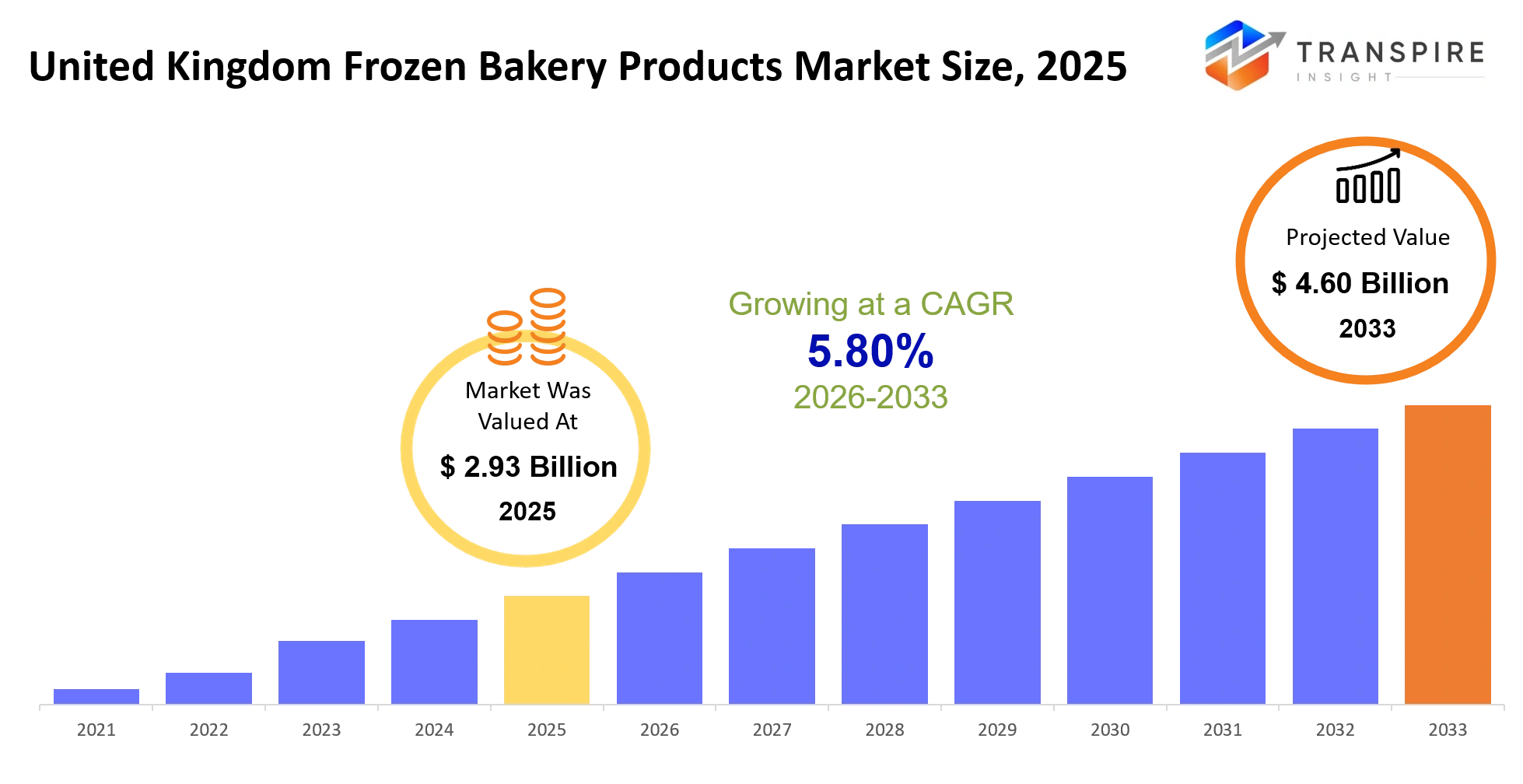
- United Kingdom Frozen Bakery Products Market Size 2025: USD 2.93 Billion
- United Kingdom Frozen Bakery Products Market Size 2033: USD 4.60 Billion
- United Kingdom Frozen Bakery Products Market CAGR: 5.80%
- United Kingdom Frozen Bakery Products Market Segments: By Product Type (Frozen Bread, Frozen Pizza Crusts, Frozen Cakes & Pastries, Frozen Cookies, Frozen Donuts, Frozen Croissants, Frozen Muffins, Others); By Distribution Channel (Supermarkets, Convenience Stores, Online Retail, Foodservice, Bakery Chains, Others); By Application (Household Consumption, Commercial Baking, Restaurants, Hotels, Cafes, Others); By End User (Retail Consumers, Bakeries, Hotels & Restaurants, Catering Services, Others).
To learn more about this report,  Download Free Sample Report
United Kingdom Frozen Bakery Products Market Summary
The United Kingdom Frozen Bakery Products Market was valued at USD 2.93 Billion in 2025. It is forecast to reach USD 4.60 Billion by 2033. That is a CAGR of 5.80% over the period.
The United Kingdom frozen bakery products market is kind of a big deal because it helps retailers, foodservice operators , and convenience channels keep getting bread , pastries, pizza bases, and baked snacks on a steady basis, while also cutting down labor needs, lowering food waste, and avoiding those annoying production bottlenecks. And it does this by letting inventory be managed a bit more flexibly, plus it allows quick preparation, so operational efficiency gets better in supermarkets, cafes , quick-service restaurants , and even in institutional catering.
Over the last five years the market kind of slid into a noticeable structural shift toward bake-off and ready-to-finish product types. Which basically lets operators offer something that feels freshly baked, even though they are not running a full scale bakery. This change gathered momentum during and after the COVID-19 pandemic, when labor shortages and supply chain disruptions showed up at the same time, and shoppers started buying differently. And to be fair it also shined a light on a few weak spots in the older fresh bakery distribution approach . So when operators began looking for more resilience, plus tighter cost control, frozen alternatives started being accepted much more widely. The momentum is still there, and it keeps pushing revenue growth by bringing in more users across both retail and foodservice, while also letting suppliers roll out wider product portfolios with longer shelf life and stronger distribution efficiency.
Key Market Insights
- England pretty much dominates the United Kingdom Frozen Bakery Products Market , with around 80% of the industry revenue in 2025.
- London and Southeast England keep a notable slice of the market too , helped by thick urban populations and steady appetite for quick convenience bakery items.
- Scotland is the fastest-growing regional market across the forecast stretch , largely because foodservice outlets are multiplying and premium frozen bakery options are being adopted more often.
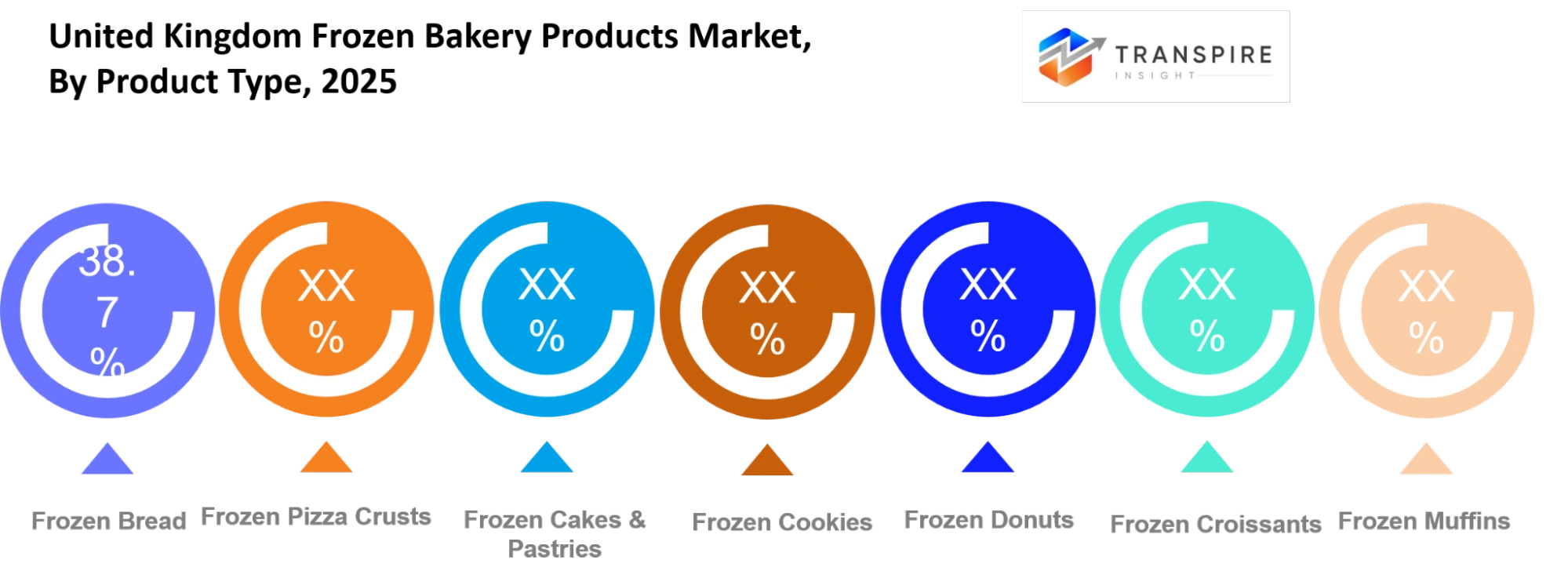
- When it comes to product types , frozen bread stays out in front, with an estimated 35% share in 2025. This is backed by broad consumption across retail and institutional channels, like it’s everywhere.
- Frozen pastries come in second largest, driven by the rising need for premium breakfast and snack choices.
- Looking ahead , frozen pizza crusts together with artisanal bakery products are projected to be the quickest movers through 2030, basically mirroring a shift toward convenience, but also better quality.
- On distribution, retail leads heavily , holding nearly 60% market share in 2025. Supermarkets and hypermarkets are expanding across the United Kingdom, so the channels keep getting stronger there.
- Meanwhile, bake-off solutions keep picking up steam, since operators want to keep product availability high while using less labor , which is a big deal right now.
- In end users, supermarkets and hypermarkets lead again , taking about 45% share in 2025.
- Foodservice operators are the fastest-growing end-user category , as labor shortages make many businesses lean harder on frozen bakery solutions instead of working from scratch.
What are the Key Drivers, Restraints, and Opportunities in the United Kingdom Frozen Bakery Products Market?
In the United Kingdom Frozen Bakery Products Market, the biggest growth driver seems to be the structural shift toward labor-efficient food making and retail operations. Since 2021 , labor shortages across hospitality, foodservice, and even in-store bakery departments have made it harder and more costly to keep using the older scratch-baking routines. Frozen bakery products, kind of by design, help with this problem because they cut down on prep time , reduce the need for highly skilled labor, and make the output more predictable from batch to batch. When supermarkets, cafés and quick-service restaurant chains keep widening their bake-off formats , suppliers usually get more consistent order volumes and steadier recurring revenue. In that way, operational efficiency turned frozen bakery products from a “just in case” backup idea into a core procurement item.
The strongest restraint on the other hand is the energy dependency tied to frozen storage and distribution. To keep the cold-chain running without interruptions, businesses have to invest heavily in refrigerated warehousing, transport systems, and storage that is basically energy-intensive. The issue feels structural, because it sits inside the frozen product model itself, and it doesn’t just vanish unless there are major infrastructure upgrades. With electricity prices staying high and cold-chain operating costs climbing, margins get squeezed for manufacturers and distributors , which then limits how easily they can push deeper into smaller retail networks and it also dampens the upside of revenue growth.
A big future opportunity is hiding in premium frozen artisanal bakery products, you know, those kinds that feel kinda fresh even though they’re shipped. With newer dough fermentation tech, improved par-baking processes and faster freezing systems, manufacturers can more or less reproduce the taste and texture of items made right that day. Retailers and foodservice folks are leaning more and more toward frozen sourdough breads, specialty pastries,and premium breakfast options. This shift can open doors to higher margin product lines and a stronger uplift in category value too, it’s not just volume.
What Has the Impact of Artificial Intelligence Been on the United Kingdom Frozen Bakery Products Market?
Artificial intelligence and other advanced digital technologies are getting to basically reshape how things run across the United Kingdom Frozen Bakery Products Market. More and more manufacturers roll out AI assisted production management systems that try to automate dough processing, baking parameters, freezing cycles, and packaging routines, all in one go. At the same time computer vision is used to check product shape, color steadiness, and surface imperfections while everything is running , which cuts down waste and it also makes quality control feel way more reliable on those high volume production lines.
Machine learning is also doing a lot here, because it strengthens predictive capabilities across the frozen bakery value chain. When these models look at equipment performance signals from mixers, proofers, ovens, and freezing units, they can spot early hints of mechanical aging and then set up maintenance ahead of time before actual failures show up. This kind of method supports lower unplanned downtime , better production uptime, and it tends to extend equipment life. On top of that, AI driven demand prediction tools help refine inventory decisions by taking into account retail sales momentum, seasonal buying behavior, and promotional momentum, so companies can reduce stock losses and keep order fulfillment more accurate overall.
Digital optimization is showing real operational wins too, things like reduced manufacturing waste, improved energy effectiveness during freezing operations, and more responsive supply chain coordination. Still, AI adoption comes with a real constraint. Bringing advanced analytics platforms into legacy bakery equipment can mean heavy upfront spending, and when operational data is all fragmented, the model precision can drop, which then slows down the time it takes to see the full productivity improvements.
Key Market Trends
- Since 2021, labor shortages have kinda pushed the quicker bake off bakery format uptake, so retail chains depend a bit less on those skilled in store bakers overall , and adoption just kept moving.
- Between 2020 and 2025, supermarkets expanded frozen artisanal bread offerings, because shoppers kept asking for bakery quality items with better staying power on the shelf, like longer shelf life type of thing.
- Manufacturers have been leaning into automated freezing and packaging lines since 2022, which raises throughput while also cutting down production waste , plus it lowers labor costs at the same time.
- After 2021, premium sourdough, croissants, and specialty pastries started taking more shelf space. That basically shifts competition away from only price based selling and toward product distinction and differentiation, more about the “what” than the “how cheap”.
- In foodservice, operators have increasingly swapped scratch baking for frozen dough systems. The result is more consistent output across multi site restaurant and café networks, even when stores are far apart.
- When energy costs surged in 2022, producers responded by upgrading refrigeration systems and warehouse technologies, to make cold chain efficiency better , not just slightly.
- Companies like Aryzta, Lantmännen Unibake, and Bridor moved to expand their premium product ranges, aiming to catch higher margin retail and hospitality demand.
- Digital demand forecasting tools also spread more after pandemic related supply disruptions showed the weak spots in traditional inventory planning models , so companies adjusted fast.
- Finally, clean label formulations and ingredient transparency started mattering more from 2021 to 2025, and manufacturers reformulated selected bakery products accordingly, sometimes in a pretty noticeable way.
United Kingdom Frozen Bakery Products Market Segmentation
By Product Type :
Frozen bread has a kind of key place in the United Kingdom Frozen Bakery Products Market because people eat it day to day, and it feels easy, or at least easier. Retail outlets, foodservice operators, and bakery shops lean on frozen bread items to keep products on shelves while also cutting down waste. With stable quality and longer storage life, adoption spreads pretty smoothly across many sales paths.
Frozen pizza crusts, cakes and pastries, cookies, donuts, croissants, and muffins cover a range of tastes. Some premium bakery products are getting more notice as shoppers want a more “fresh like” bite but with very little prep, kinda “ready when needed”. Other frozen bakery goods also push the category forward, bringing variety, and helping with seasonal or specialty requests without so much hassle.
To learn more about this report, Download Free Sample Report
By Distribution Channel :
Supermarkets stay a big distribution route since they offer wide access and strong consumer coverage. In a lot of stores, the frozen bakery aisles have grown, so customers can grab different bakery products across the whole year. Product display details and promotional efforts also help lift sales results, even when the season changes.
Convenience stores help with fast buying choices, while online retail keeps pulling in shoppers who want home delivery. Foodservice teams and bakery chains often rely on frozen bakery products for steady operations and predictable product output. Other options matter too, like local markets, plus specialized needs that don’t always match mainstream demand.
By Application :
Household consumption still feels like a major application area, because more consumers now really care about convenience and less prep time. Frozen bakery products let families keep items for longer spans of time, pretty much without losing much quality. A lot of busy lifestyles, plus shifting eating habits, still keep product usage steady across multiple age groups, and yes it does keep moving.
On the commercial side, baking facilities use frozen ingredients and also partly baked items , so their production schedules stay smoother. Restaurants, hotels, and cafes lean on frozen bakery products to keep quality repeatable and to make sure stock is there during long operating hours. There are also other application areas that help the market grow, mainly by matching particular foodservice and institutional needs.
By End User :
In the United Kingdom Frozen Bakery Products Market, retail consumers make up a big end user segment. Easy access, convenience, and a wide assortment encourage frequent buying across city centers and suburban areas. Another reason is that people are showing more appetite for premium bakery experiences at home, and that has shifted purchasing behavior too.
Bakeries, hotels and restaurants, plus catering services, depend on frozen bakery products to gain operational flexibility and handle inventory in a calmer way. When the product standards stay consistent and the cooking steps reduce, these businesses can meet customer expectations with less stress. Other end users also add to demand, by using frozen bakery solutions in specialized food preparation environments.
What are the Key Use Cases Driving the United Kingdom Frozen Bakery Products Market?
The main use case that is driving adoption in the United Kingdom Frozen Bakery Products Market is basically retail and foodservice bakery replenishment. Supermarkets, in-store bakery counters, and quick service outlets depend on frozen bread, pastries and croissants so they can keep products on hand through out the day, while also cutting down waste and lowering labor requirements. This particular application tends to pull the highest demand, because it strikes that mix of freshness, steady quality, and day-to-day operational efficiency
Beyond that, more expanded applications are showing up in hotels, cafes, and contract catering services. These operators are using frozen bakery products more often to simplify meal prep, handle shifting customer traffic, and also broaden menu variety, without having to invest in huge baking facilities or full scale ovens on site
On the more emerging side, you can see premium artisanal bake-off products, plus direct-to-consumer frozen bakery items sold through online grocery platforms. Improvements in freezing technology are letting manufacturers push bakery-like products with a longer shelf life. That creates new openings in higher end retail channels and home delivery services, which were mostly served by fresh formats before, now they're also moving into the frozen segment
|
Report Metrics |
Details |
|
Market size value in 2025 |
USD 2.93 Billion |
|
Market size value in 2026 |
USD 3.10 Billion |
|
Revenue forecast in 2033 |
USD 4.60 Billion |
|
Growth rate |
CAGR of 5.80% from 2026 to 2033 |
|
Base year |
2025 |
|
Historical data |
2021 - 2024 |
|
Forecast period |
2026 - 2033 |
|
Report coverage |
Revenue forecast, competitive landscape, growth factors, and trends |
|
Regional scope |
Middle East and Africa (Saudi Arabia, United Arab Emirates, South Africa, Rest of Middle East and Africa) |
|
Key company profiled |
Aryzta, Grupo Bimbo, General Mills, Europastry, Vandemoortele, Lantmannen Unibake, Dawn Foods, Conagra Brands, Rich Products, Nestlé, Kellogg’s, Premier Foods, Sara Lee, Flowers Foods, Dr. Oetker. |
|
Customization scope |
Free report customization (country, regional & segment scope). Avail customized purchase options to meet your exact research needs. |
|
Report Segmentation |
By Product Type (Frozen Bread, Frozen Pizza Crusts, Frozen Cakes & Pastries, Frozen Cookies, Frozen Donuts, Frozen Croissants, Frozen Muffins, Others); By Distribution Channel (Supermarkets, Convenience Stores, Online Retail, Foodservice, Bakery Chains, Others); By Application (Household Consumption, Commercial Baking, Restaurants, Hotels, Cafes, Others); By End User (Retail Consumers, Bakeries, Hotels & Restaurants, Catering Services, Others). |
Which Regions are Driving the United Kingdom Frozen Bakery Products Market Growth?
England still comes off as the most dominant part of the United Kingdom Frozen Bakery Products Market, mostly because it has such a big population base, a pretty far-reaching retail web, and foodservice operators that are clustered there. You can see it in the major cities, London, Birmingham, and Manchester too, where demand for frozen bread, pastries and bakery snacks really adds up. Another thing is the region’s cold chain setup that’s already well developed, so storage and distribution stays efficient, even when supermarkets and hospitality businesses need steady supply. And, the ongoing presence of national retailers, bakery chains plus distribution hubs keeps England at the top spot.
Scotland sits as the second-largest regional market, though the way it grows is a bit different than England. Buying demand there is helped along by steady consumer spending habits, a mature grocery market, and foodservice operators that keep investing for operational efficiency, not just for expansion. Frozen bakery products have also gotten more normal among independent cafés, hotels, and catering providers, mainly because the product stays consistent and it cuts down waste. So in practice, Scotland feels like a reliable revenue contributor, rather than the kind of place that chases volume-driven growth.
Wales is, meanwhile, emerging as the fastest growing region, and it seems tied to retailers widening frozen food shelves while foodservice players modernize procurement methods. More investment into regional distribution networks, plus better cold-storage options, has made products easier to find in urban areas and semi-urban zones, not only in the main centers. At the same time, consumer interest in premium bakery items and convenience-forward meal solutions keeps pushing demand upward. In the 2026–2033 period, this momentum is expected to open up solid chances for manufacturers, distributors, and even new entrants, especially those looking for regional markets that are still kind of underserved.
Who are the Key Players in the United Kingdom Frozen Bakery Products Market and How Do They Compete?
In the United Kingdom, the Frozen Bakery Products Market competitive landscape is kind of moderately consolidated, kind of like you see a blend, with bigger international bakery groups alongside more specialized frozen bakery suppliers. They go after both retail and foodservice channels, and competition mostly boils down to product quality, how efficiently they manufacture, how far they can distribute, and whether they can deliver “premium bakery” moments at scale. Most established suppliers keep trying to protect their market share using wide product portfolios , plus solid customer relationships, while smaller or niche producers tend to aim at particular segments like artisan breads, and those premium pastries. Lately, the market seems to favor businesses that can juggle operational efficiency while still pushing forward innovation, especially for premium but also convenience-leaning products.
Aryzta, for example, leans into providing frozen bakery solutions for foodservice operators and retail customers using large-scale manufacturing plants and a fairly diverse range of items. They sort of differentiate by offering customized bakery solutions, and by maintaining efficient distribution networks, which helps keep consistent availability. Lantmännen Unibake meanwhile puts a lot of emphasis on product development and on premium bakery formats, mainly across bread and pastry categories. Ongoing investment in production capacity plus customer-oriented product innovation seems to reinforce their footing across the United Kingdom, even as the space gets more competitive.
Bridor, specializes in premium frozen viennoiseries and artisan breads, plus a few French inspired bakery products, and it kind of sets itself apart thanks to product authenticity and real craftsmanship. From there, the company keeps expanding by doing partnerships with hotels, cafés , and even foodservice distributors, basically who are looking for high quality bakery solutions. Délifrance goes a similar premium route, but it mixes product innovation with a wide international distribution network. Then Vandemoortele strengthened its position by putting money into manufacturing efficiency and sustainable production initiatives, while also growing its frozen bakery range for both retail buyers and professional foodservice customers.
Company List
- Aryzta
- Grupo Bimbo
- General Mills
- Europastry
- Vandemoortele
- Lantmannen Unibake
- Dawn Foods
- Conagra Brands
- Rich Products
- Nestlé
- Kellogg’s
- Premier Foods
- Sara Lee
- Flowers Foods
- Dr. Oetker
Recent Development News
In May 2026, Marks & Spencer launched 47 new or revamped frozen food products and accelerated expansion of its frozen range. The move strengthens its position in the UK frozen food and bakery-related convenience segment by broadening consumer choice and increasing competition with major grocery retailers.
Source: https://www.thetimes.com/
In September 2025, Associated British Foods announced the acquisition of Hovis for approximately £70 million. The transaction creates one of the largest bakery businesses in the United Kingdom, potentially improving manufacturing scale, distribution efficiency, and product innovation across the bakery sector.
Source: https://www.thetimes.com/
What Strategic Insights Define the Future of the United Kingdom Frozen Bakery Products Market?
The United Kingdom Frozen Bakery Products Market is slowly leaning into a more value focused model, where product quality, operational efficiency and supply chain flexibility count more than sheer volume growth. Over the next five to seven years, improvements in freezing technology, automation, and premium bake off formats will keep shifting how buyers decide across retail as well as foodservice. Really the main push behind all this is the expectation of bakery grade outcomes, but with tighter control on labor costs , and with less waste showing up in the end.
There is also a quieter risk though , in the way some raw material supply is concentrated. Think wheat, dairy inputs, and all those energy heavy cold chain activities. If commodity prices or energy expenses stay shaky for too long, margins can get squeezed, and investment might slow down even when end market demand doesn’t really weaken.
Still , one promising opportunity is the move toward premium frozen artisan items meant for online grocery and home delivery. As digital grocery platforms grow, companies that craft smart packaging and product formats for direct to consumer shipment can pull ahead. Market players should put money into automated production and premium product novelty. At the same time they should build more resilient sourcing networks so the business has less exposure to those annoying input cost swings, and not just rely on stable conditions.
United Kingdom Frozen Bakery Products Market Report Segmentation
By Product Type
- Frozen Bread
- Frozen Pizza Crusts
- Frozen Cakes & Pastries
- Frozen Cookies
- Frozen Donuts
- Frozen Croissants
- Frozen Muffins
By Distribution Channel
- Supermarkets
- Convenience Stores
- Online Retail
- Foodservice
- Bakery Chains
By Application
- Household Consumption
- Commercial Baking
- Restaurants
- Hotels
- Cafes
By End User
- Retail Consumers
- Bakeries
- Hotels & Restaurants
- Catering Services
Frequently Asked Questions
Find quick answers to common questions.
The United Kingdom Frozen Bakery Products Market size is USD 4.60 Billion in 2033.
Key segments for the United Kingdom Frozen Bakery Products Market are By Product Type (Frozen Bread, Frozen Pizza Crusts, Frozen Cakes & Pastries, Frozen Cookies, Frozen Donuts, Frozen Croissants, Frozen Muffins, Others); By Distribution Channel (Supermarkets, Convenience Stores, Online Retail, Foodservice, Bakery Chains, Others); By Application (Household Consumption, Commercial Baking, Restaurants, Hotels, Cafes, Others); By End User (Retail Consumers, Bakeries, Hotels & Restaurants, Catering Services, Others).
Major United Kingdom Frozen Bakery Products Market players are Aryzta, Grupo Bimbo, General Mills, Europastry, Vandemoortele, Lantmannen Unibake, Dawn Foods, Conagra Brands, Rich Products, Nestlé, Kellogg’s, Premier Foods, Sara Lee, Flowers Foods, Dr. Oetker.
The United Kingdom Frozen Bakery Products Market size is USD 2.93 Billion in 2025.
The United Kingdom Frozen Bakery Products Market CAGR is 5.80% from 2026 to 2033.
- Aryzta
- Grupo Bimbo
- General Mills
- Europastry
- Vandemoortele
- Lantmannen Unibake
- Dawn Foods
- Conagra Brands
- Rich Products
- Nestlé
- Kellogg’s
- Premier Foods
- Sara Lee
- Flowers Foods
- Dr. Oetker
About the Authors

Chetan Dhatrak
I’m Chetan Dhatrak, a Senior Research Analyst at Transpire Insight, specializing in the Consumer Goods, Foods and Beverages industry. I focus on analyzing market trends, consumer behavior, competitive landscapes, and industry developments to deliver accurate, data-driven insights. My research at Transpire Insight is built on credible sources and in-depth analysis, helping businesses and readers better understand market dynamics, emerging opportunities, and evolving consumer preferences. I’m committed to creating reliable, well-researched content that supports informed decision-making and reflects the latest developments in the consumer goods and food & beverage sectors.

Chakradhar Khansole
Chakradhar serves as the Research Director at Transpire Insight, bringing over 8 years of experience in technology, innovation, and strategic market intelligence. He specializes in transforming complex market data into actionable business insights that enable organizations to make informed, growth-oriented decisions. Recognized for his strategic vision and analytical expertise, Chakradhar leads high-impact research initiatives, delivering comprehensive market assessments, competitive intelligence, and forward-looking industry analysis.
Recently Published Reports
-
Apr 2026
Baby Infant Formula Market
Baby Infant Formula Market Size, Share & Analysis Report By ype (Infant Milk, Follow On Milk, Specialty Baby Milk, Growing-Up Milk), By Ingredient (Carbohydrate, Fat, Protein, Minerals, Vitamins, and Others), By Product Form (Powder, Liquid, and Ready-to-feed), By Distribution Channels (Supermarket/Hypermarket, Specialty Store, Pharmacies, Online Retail, and Others), and Geography (North America, Europe, Asia-Pacific, Middle East and Africa, South and Central America), 2021 - 2031
-
Apr 2026
Edible Insects for Animal Feed Market
Edible Insects for Animal Feed Market Size, Share & Analysis Report By Type (Insect Powder, Insect Meal, Insect Bar, Insect Paste, Insect Oil, and Others), By Insect Type (Beetles, Cricket, Caterpillar, Hymenoptera, Orthoptera, Tree Bugs, and Others), By Application (Livestock, Pet Food, and Aquaculture), By Livestock Type (Poultry, Swine, and Others), and Geography (North America, Europe, Asia-Pacific, Middle East and Africa, South and Central America), 2021 - 2031
-
Apr 2026
Food Industry Disinfection and Bacterial Control Market
Food Industry Disinfection and Bacterial Control Market Size, Share & Analysis Report By Type (Chemical Disinfectants, Physical Disinfectants, and Biocides and Antimicrobials), By Application (Food Processing Equipment Surface Disinfection, Food Preparation Areas Surface Disinfection, Storage Areas Surface Disinfection, Anti-microbial Coatings Food Preservation, and Preservative Solutions Food Preservation), By End User (Meat and Poultry Processing, Dairy Processing, Seafood Processing, Bakery and Confectionery, Restaurants and Commercial Kitchens, and Food Service Providers), By Sales Channel (Online, Offline), and Geography (North America, Europe, Asia-Pacific, Middle East and Africa, South and Central America), 2021 - 2031
-
May 2026
Freeze Dried Food Market
Freeze Dried Food Market Size, Share & Analysis Report By Product Type (Fruits, Vegetables, Freeze-Dried Dairy Products, Freeze-Dried Meat and Seafood, Freeze-Dried Pet Food, and Prepared Meal), By Nature (Organic, and Conventional), By Form (Powdered, Granules, and Diced), By End Use (Breakfast Cereals, Dairy Products, Bakery & Confectionery, Nutritional Bars & Supplements, Powdered Beverages, Snacks, and Retail (Household)), and Geography (North America, Europe, Asia-Pacific, Middle East and Africa, South and Central America), 2021 - 2031