

United Kingdom Beer Kegs Market Size & Forecast:
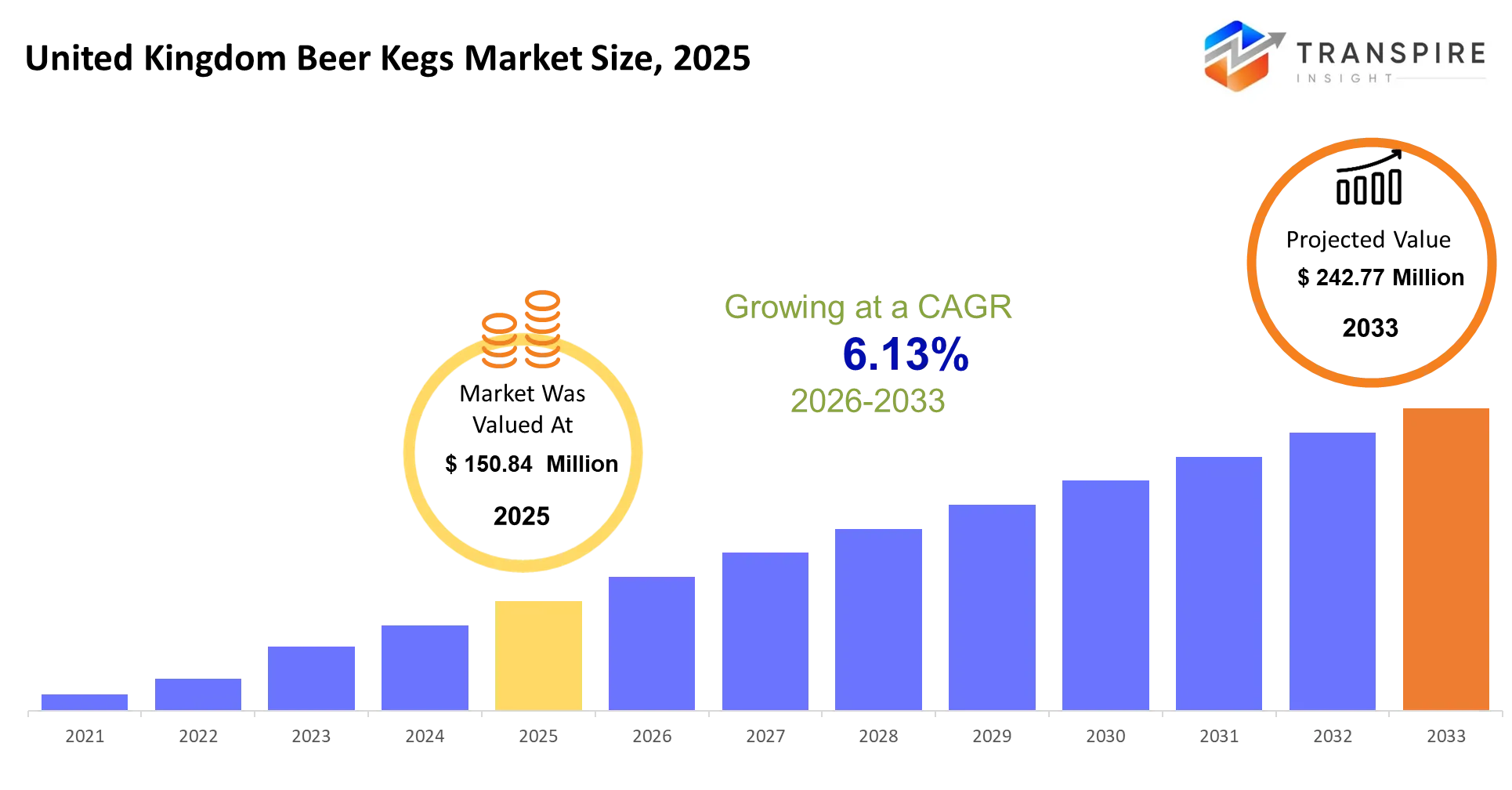
- United Kingdom Beer Kegs Market Size 2025: USD 150.84 Million
- United Kingdom Beer Kegs Market Size 2033: USD 242.77 Million
- United Kingdom Beer Kegs Market CAGR: 6.13%
- United Kingdom Beer Kegs Market Segments: By Type (Steel Kegs, Plastic Kegs, Disposable Kegs, Reusable Kegs, Slim Kegs, Others); By Application (Beer Storage, Distribution, Craft Beer, Commercial Brewing, Events, Others); By End-User (Breweries, Bars, Restaurants, Distributors, Retailers, Others); By Capacity (Below 20L, 20–30L, 30–50L, Above 50L, Standard, Others)
To learn more about this report,  Download Free Sample Report
United Kingdom Beer Kegs Market Summary
The United Kingdom Beer Kegs Market was valued at USD 150.84 Million in 2025. It is forecast to reach USD 242.77 Million by 2033. That is a CAGR of 6.13% over the period.
The United Kingdom Beer Kegs Market supports the continuous circulation of reusable containers that keep draught beer flowing, efficiently from breweries to pubs, bars, and big hospitality spaces. In day to day practice, it deals with the logistical headache of protecting product freshness, keeping carbonation steady , and enabling cost wise bulk deliveries across a tightly connected on-trade system.
Over the last 3 to 5 years, the whole market has moved more structurally from brewer owned keg fleets toward pooled options and service centered keg logistics. That change got pushed along by packaging waste regulations and extended producer responsibility rules, which quietly raised the expense of single use lifecycle inefficiencies. Also COVID-19 disruption, kinda highlighted how weak fragmented return logistics could be , so breweries started consolidating supply routes and leaning into more centralized fleet management models.
So now, growth feels less about pure volume expansion and more about efficiency improvements, reuse optimization, and digital tracking integration. IoT enabled keg monitoring, plus predictive logistics tools are lifting return rates and lowering asset leakage, which in turn improves operating margins for pooling providers. In the end, this shift is nudging revenue models away from one-time asset sales, and toward subscription based keg services , more or less.
Key Market Insights
- In 2025 Europe is basically dominating the United Kingdom Beer Kegs Market, with something like a 40–45% share, mostly because stricter packaging waste rules, and also because they ve got more advanced pooling infrastructure.
- Asia Pacific is still the fastest-growing reference region through 2026–2033, and it seems to be pushed by hospitality expansion, plus imported draught beer demand showing up more in big city urban centers.
- On the product side, steel kegs are the biggest slice, roughly around 55%, which makes sense due to long lifecycle durability and reuse efficiency across commercial brewing systems.
- Reusable keg systems are also the second-largest segment, reflecting the brewer shift away from disposable packaging models.
- For the fastest-growing formats, slim and lightweight keg formats are gaining traction, as craft breweries try to squeeze better space usage and reduce logistics costs, at the same time.
- For applications, beer storage and distribution takes the lead with over 50% share, driven by pub networks and centralized draught supply chains.
- Craft beer is the quickest-growing application segment too, since independent breweries keep expanding taproom activity and direct draught sales models.
- When it comes to end users, breweries stay in front as the top segment, with the highest procurement share, mainly tied to large-scale production that depends on keg systems.
- Bars and restaurants are growing the fastest end-user category, likely because on-trade recovery keeps strengthening after the 2023 hospitality expansion.
- Strategic partnerships between brewers and logistics providers are speeding up keg-as-a-service , adoption, a bit fast than people might expect, while manufacturers are putting money into recyclable materials and IoT enabled dispensing tech too.
What are the Key Drivers, Restraints, and Opportunities in the United Kingdom Beer Kegs Market?
The main driver in the United Kingdom beer kegs market is the structural movement toward reusable, shared keg logistics, sort of sparked by tighter packaging waste regulations and higher lifecycle cost pressures on brewers. Extended producer responsibility rules, plus sustainability targets, have made single owner keg fleets less cost friendly. So breweries are getting pushed into shared infrastructure setups that are run by pooling providers. In practice this has lifted asset utilization rates quite noticeably, cut down on idle inventory, and helped keg service operators steady their revenue, since they now often lock in longer term contracts with both global brewers and regional craft producers.
The biggest pullback though, is the heavy capital load required to modernize legacy distribution systems into keg pooling and tracking infrastructure. Breweries and distributors are dealing with major expenses for swapping out older stainless steel fleets, upgrading cleaning stations, and connecting digital tracking tools across supply chains that are fragmented and not always aligned. This is a structural kind of issue because it touches the physical assets, the logistics contracts, and even venue level dispensing equipment. That combination makes a fast, system wide conversion kind of unrealistic. So the rollout pace stays uneven, and smaller operators usually delay investment, which then suppresses near term revenue growth across much of the wider ecosystem.
One key, newer opportunity is IoT enabled keg lifecycle intelligence platforms that combine tracking, carbonation monitoring and predictive rotation scheduling. Early deployments by pooling providers in UK urban hospitality networks are showing better keg return performance and fewer loss events.As digital infrastructure costs drop a bit, scalable data driven keg management systems might unlock better efficiency and let subscription style “keg-as-a-service” models, that sort of re-define the way money works across the sector . It’s like the whole setup becomes more adaptable, more rhythmical, and easier to scale.
What Has the Impact of Artificial Intelligence Been on the United Kingdom Beer Kegs Market?
Artificial intelligence, and digital control systems, are getting more and more baked into scrubber performance systems, and a wider marine emission control tech that shows up across fleets supporting the United Kingdom beer kegs supply chain. People running these operations now tend to use automated monitoring platforms that follow washwater quality, pressure differentials, and dosing efficiency in real time, this kind of thing lowers the need for manual checks. Those platforms also spot when exhaust gas cleaning units are drifting off-spec, and they kick off automated corrections that help keep performance steadier as engine loads change around.
At the same time machine learning is being used to forecast when scrubber maintenance is needed, by looking at vibration signatures, corrosion rates, and past breakdown records. That earlier visibility helps crews plan interventions before efficiency starts to fall, or before compliance trouble shows up, which usually supports better vessel availability and less nasty surprise downtime. On top of that fleet optimization tools chew over fuel consumption patterns, plus route conditions, and that’s been linked to visible decreases in energy use and maintenance expenses across connected shipping and keg distribution channels.
Operators generally note a directionally positive outcome like reduced chance of compliance breaches, more stable scrubber efficiency, and less downtime tied to maintenance, largely due to earlier fault detection. Still, adoption stays a bit constrained by the lack of really high-quality training data drawn from day-to-day maritime operations, especially when conditions get rough at sea. And the integration bill for retrofitting older vessels… well it’s still pretty high too, so AI rollout can move slower among smaller logistics operators serving more regional beverage distribution runs.
Key Market Trends
- From 2022 onward, breweries started cutting back on owned keg fleets a bit more and more , and they were also, like, sliding into pooling models that were pushed by Kegstar and a few other logistics folks.
- Stainless steel kegs stayed the main thing, but those lighter PET alternatives slowly grabbed more space especially on short-haul runs, and this really showed up after 2023, due to efficiency pressures.
- Since 2024, IoT-enabled tracking has jumped hard , so the kegs are being found and returned faster. That improved return rates and it also reduced loss rates across a lot of UK pub distribution networks.
- Craft breweries, meanwhile kinda moved away from bottled formats toward smaller kegs around 2023-ish. The idea was better taproom margins and more reliable draught sales that go direct to consumers.
- Pub chains did something similar after 2022, they leaned harder into centralized procurement, and they began standardizing keg specs. That reduced cleaning and handling quirks from venue to venue, even if it’s not perfectly uniform.
- After 2023, as festivals came back in full, keg demand started behaving in a more event-driven way. Suppliers then tried flexible rental fleets and they scaled seasonal logistics to match the spikes.
- Then from 2024 , environmental rules tightened their expectations around packaging waste. That accelerated reusable keg adoption among commercial brewing operators, like right away.
- There were also pooling consolidation attempts, including Kegstar’s Konvoy acquisition plan during 2025–2026, and it kind of made clear that competition for logistics dominance is rising.
- On top of that, digital dispensing systems showed up across premium venues after 2024 , helping with carbonation control and lowering product waste during service cycles.
United Kingdom Beer Kegs Market Segmentation
By Type
Steel kegs kinda keep the lead , mostly because they last longer, handle high-pressure draught systems well, and they fit neatly with what a lot of major breweries and pub chains already run. There’s also that reuse ecosystem already in place , plus pretty strict quality expectations when it comes to on-trade beer service. Plastic kegs take a smaller yet still important slice, largely thanks to easier handling, lighter weight, and lower transport costs. Disposable kegs stay more of a niche choice, used mainly in limited export and specialty distribution situations, where the whole return logistics setup is just not as efficient.
In terms of growth, steel kegs get a boost from circular economy rules and also from brewer habits that lean toward reusable assets since they cut long-term packaging expenses. Plastic kegs , meanwhile, make more sense when distribution distances are short, or for event based consumption, where logistics flexibility matters more than long lifecycle durability. Slim keg formats are getting traction too, especially in craft focused channels , because they save space and let brands stay flexible in compact venues.
Looking at the forecast period, steel kegs will still be the backbone of overall demand , but the hybrid and lightweight options will probably grow faster when you look at percentage increases. Investors will likely zero in on manufacturers who can improve material efficiency and get better at lifecycle tracking. Product teams will probably push for less weight, stronger durability, and better compatibility with digital monitoring systems.
By Application
So, beer storage and distribution is probably the biggest application segment, mainly because pubs, bars, and hospitality chains always need a steady draught supply, you know, like no real breaks. Commercial brewing is also a big deal because large-scale brewers depend on standardized keg fleets for national delivery and even export distribution. Craft beer stays smaller in volume, but it’s more visible, not necessarily huge numbers, more like premium positioning and direct-to-consumer routes. Event usage is kind of up and down seasonally, but when it spikes, it can spike hard, especially during busy periods.
Craft beer growth, in particular, is pushed by independent breweries that keep stretching their taproom networks, and they tend to lean into higher-margin draught sales. When it comes to events, festivals and large gatherings back the demand, and portable draught setups tend to beat bottled options in practice. Storage and distribution are steadier long term, mostly because they sit inside core beverage logistics systems, rather than being something “extra” people buy only when they feel like it.
For what comes next, the craft and event parts should get more attention, since premiumization keeps building, and experiential drinking habits keep growing too. In distribution systems, tech integration should sharpen things like keg tracking, plus rotation efficiency. Suppliers that fit the craft brewery expectations and also the temporary event logistics, will likely see quicker adoption cycles.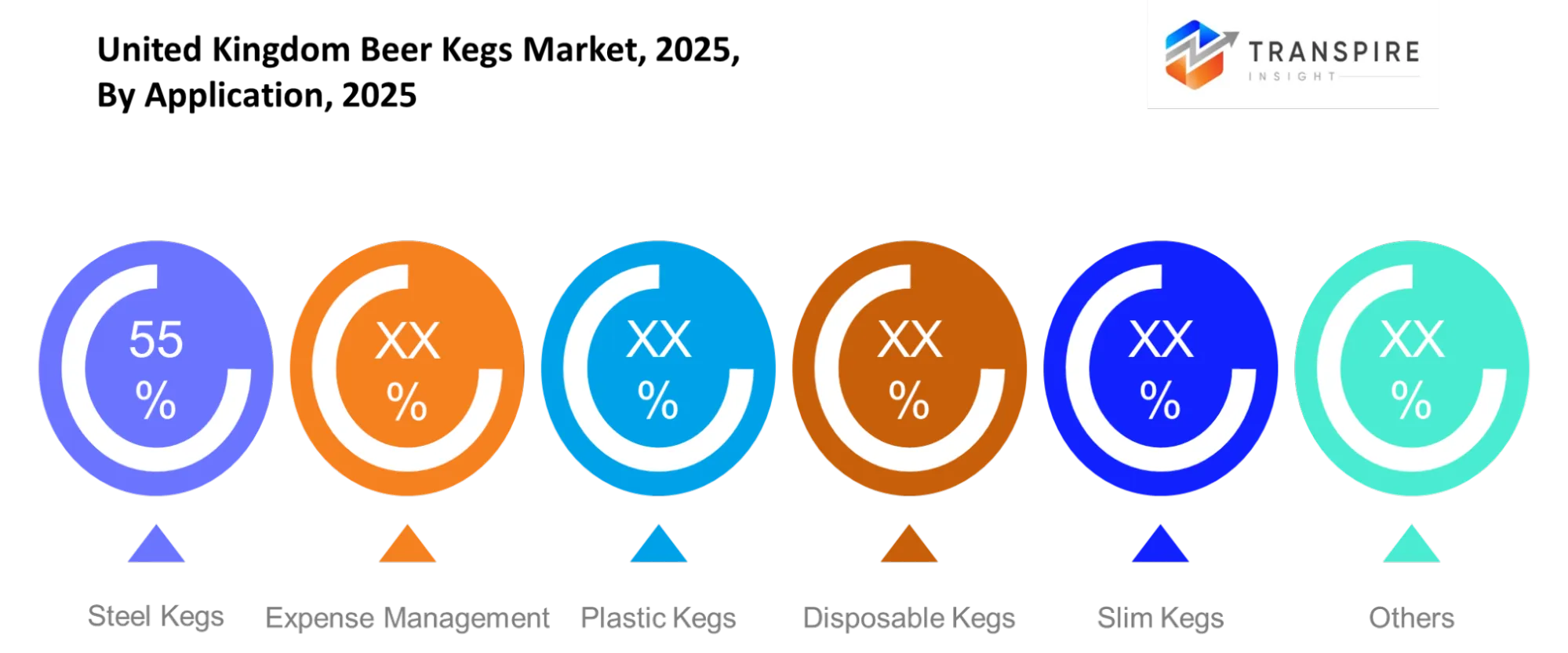
To learn more about this report, Download Free Sample Report
By End-User
Breweries clearly lead on the end-user side, because keg systems basically hold together the draught beer workflow: production, storage, distribution, and all that. Bars and restaurants are next, driven by on-trade consumption habits and the need for reliable draught service, every day. Distributors matter too, they act like the intermediary layer, handling fleet circulation along with logistics coordination. Retailers are comparatively minor here, because off-trade channels usually don’t have the same draught infrastructure depth.
Breweries grow because they’re scaling production, and also because there’s more attention on reusable packaging frameworks that cut down operational waste a bit. At the bar level and in restaurants people want a steady supply chain , plus the product has to look and taste the same every time so they end up relying on standardized keg ecosystems. Distributors get more weight too, since logistics gets tricky as pooled keg models spread, and as multi-brewery sharing systems become more common.
Later on , breweries will still sit at the center of demand, but distributors should get extra strategic power via digital logistics tools and pooling platforms. Money will likely move toward integrated service providers that connect brewing output with venue-level consumption. Equipment suppliers too, will benefit from tie ups that improve keg tracking and overall lifecycle management
By Capacity
Standard capacity kegs take the largest portion because they fit the existing pub setup, and they’re easy to manage across the distribution networks that already exist. The mid-range units, usually around 30 to 50 liters, are very common in commercial brewing and hospitality, since they hit a good compromise between volume efficiency and everyday handling. The smaller kegs, under 20 liters, are more for niche craft and experimental brews, where flexibility matters more than throughput. Bigger kegs , above 50 liters, show up mostly in high-volume locations and event distribution where speed and volume delivery are the focus.
Growth in smaller capacity kegs is being driven by craft breweries who try out limited batch drops and seasonal releases, pretty much on a trial basis. Meanwhile mid-range formats are staying steady since they match up well with most of the commercial dispensing setups and overall transport efficiencies. The biggest kegs, on the other hand get slowed down by handling complexity, still they are key for stadiums and big hospitality spaces where volume actually matters.
Looking ahead, demand should gradually turn toward flexible capacity systems, so mixed format distribution strategies become easier to run. Breweries will likely lean into modular keg fleets that can flex between different venue sizes and different drinking, consumption rhythms. Manufacturers that provide standardized connections across multiple capacities should benefit, because they will fit better into those evolving distribution networks and have that extra competitive edge.
What are the Key Use Cases Driving the United Kingdom Beer Kegs Market?
In the United Kingdom beer kegs market, the main use scenario kind of boils down to draught beer service across pubs, bars and managed hospitality chains, yeh. This part tends to pull the most interest, mainly because it really relies on steady carbonation and temperature handling and a brand governed pouring feel that bottled or canned options just don’t truly mirror. So, large brewers together with on trade distributors lean toward keg setups, since they keep quality consistent and also support fast movement in draft focused places.
The next level demand is creeping upward from event catering and festivals where portable keg solutions help meet big volume needs in a short time window. Craft breweries add their own pressure too, especially when taproom expansion goes on, using smaller stainless steel units and flexible keg formats, to push direct to consumer sales. You can see this trend showing up more often among independent breweries and hospitality operators who want those better margin draught menus.
What’s starting to emerge, more like still developing, are smart dispensing systems that go along with IoT ready kegs, for tracking things like volume, freshness and carbonation in near real time. There is also a newer idea around hybrid refillable pooling models, used by delivery first beer brands that aim at urban drinkers via subscription based draught services. These changes are still early days, but they’re picking up momentum as digital inventory control improves, and sustainability pressure keeps reshaping how beverage logistics are done.
|
Report Metrics |
Details |
|
Market size value in 2025 |
USD 150.84 Million |
|
Market size value in 2026 |
USD 160.09 Million |
|
Revenue forecast in 2033 |
USD 242.77 Million |
|
Growth rate |
CAGR of 6.13% from 2026 to 2033 |
|
Base year |
2025 |
|
Historical data |
2021 - 2024 |
|
Forecast period |
2026 - 2033 |
|
Report coverage |
Revenue forecast, competitive landscape, growth factors, and trends |
|
Regional scope |
United Kingdom |
|
Key company profiled |
Carlsberg, Heineken, AB InBev, Molson Coors, Diageo, Kegstar, Petainer, Ardagh Group, Schaefer Container Systems, Blefa, Thielmann, Dolium, KeyKeg, Lightweight Containers, Micro Matic |
|
Customization scope |
Free report customization (country, regional & segment scope). Avail customized purchase options to meet your exact research needs. |
|
Report Segmentation |
By Type (Steel Kegs, Plastic Kegs, Disposable Kegs, Reusable Kegs, Slim Kegs, Others); By Application (Beer Storage, Distribution, Craft Beer, Commercial Brewing, Events, Others); By End-User (Breweries, Bars, Restaurants, Distributors, Retailers, Others); By Capacity (Below 20L, 20–30L, 30–50L, Above 50L, Standard, Others) |
Which Regions are Driving the United Kingdom Beer Kegs Market Growth?
Europe essentially drives the United Kingdom beer kegs market ecosystem, largely because it has a dense brewing infrastructure and, plus that, mature circular logistics networks, along with strict sustainability rules. The UK gets a direct advantage from being close to the big keg pooling hubs across Northern Europe. There, fleet utilization is higher, and returnable container systems are already running pretty smoothly, kind of embedded in the day to day. On top of that, stronger enforcement around packaging waste pushes brewers to prefer reusable stainless steel keg systems. So you end up with this wider supporting setup—logistics providers, keg cleaning facilities, pooling operators—each part that keeps circulation fast, and yes, cost optimized as well.
North America feels more like a stability led counterpart rather than a true head to head competitor in how the system is structured. Even though its keg setup is very large in scale, it tends to lean on brewer controlled fleets and long term agreements with distributors, instead of centralized pooling at the same kind of European scale. Because of that, the demand side looks more predictable, with patterns that track consistent craft beer production and mature on trade channels. For investment, the biggest brewers behave pretty steadily too, they focus on incremental fleet renewal, not a full redesign of the system. That lowers volatility, but it also means structural transformation moves slower than in Europe.
Asia Pacific is growing the quickest, mainly tied to how fast modern hospitality channels are expanding, plus new brewery investments into draught infrastructure. This is especially visible in urban areas across China, India, and parts of Southeast Asia. Upgrades in cold chain logistics and stronger imported beer demand have made keg deployment happen faster in premium on trade venues. Also, in several countries, governments have loosened alcohol distribution barriers in hospitality zones, which enables broader draught adoption.For market entrants and investors, this creates a high growth window through 2033, but success will depend on adapting keg pooling and return logistics to fragmented and evolving infrastructure systems.
Who are the Key Players in the United Kingdom Beer Kegs Market and How Do They Compete?
The United Kingdom beer kegs market looks a bit mixed, like upstream demand is kind of grouped around the larger brewers, but on the other side the keg supply side , plus pooling and dispensing infrastructure stays rather fragmented, more spread out. Over time, rivalry seems to move away from “just shipping vessels” toward more connected service approaches, where logistics, tracking, and sustainability performance are bundled. Sure, cost efficiency is still important , but the real differentiation is increasingly about how well assets are used, how return logistics routes are arranged, and whether carbon intensity can be lowered across the whole keg lifecycle.
Kegstar leans into a pooled keg concept that reduces brewer capital burden and also boosts circulation efficiency, so it lands well with mid-sized brewers who want flexibility. Heineken uses a tightly managed internal keg fleet approach, with an emphasis on controlling draught quality and keeping consistency across UK on-trade channels, which helps reinforce the brand experience right at the tap. AB InBev, on the other hand, tries to win on scale via standardized keg specifications and centralized procurement, so it can negotiate lower lifecycle costs through its broader European distribution network.
Petainer competes by using lightweight PET keg systems that bring down transport emissions, and in selected channels they can even support one-way usage, which makes it a more offbeat option compared with classic stainless steel cycles. Ardagh Group strengthens its position thanks to large-scale metal packaging production, delivering durable keg components and benefiting from industrial scale efficiencies that some smaller players can’t really match. Micro Matic differentiates through dispensing and coupler technology that locks in venue-level infrastructure, creating switching friction and helping to build long-term service ties.
Company List
- Carlsberg
- Heineken
- AB InBev
- Molson Coors
- Diageo
- Kegstar
- Petainer
- Ardagh Group
- Schaefer Container Systems
- Blefa
- Thielmann
- Dolium
- KeyKeg
- Lightweight Containers
- Micro Matic
Recent Development News
“In May 2026, HEINEKEN UK announced £44.5 million investment into its Star Pubs estate expansion program.” The investment upgrades 647 pubs across the UK, reinforcing on-trade draught infrastructure and indirectly supporting keg circulation demand through improved draught-serving venues.https://www.heineken.co.uk
In September 2025, Kegstar (MicroStar Logistics) announced accelerated expansion across the UK and Europe, highlighting increased brewer adoption of its shared keg pooling model and operational scaling through a newly opened 150,000 sq ft keg quality centre near London. The expansion strengthens outsourced keg infrastructure in the UK market and reinforces the shift away from brewer-owned keg fleets toward pooled asset systems.https://www.globenewswire.com
What Strategic Insights Define the Future of the United Kingdom Beer Kegs Market?
Over the next 5–7 years, the United Kingdom beer kegs market is likely to shift from volume-driven growth toward efficiency- and sustainability-led replacement cycles. Structural pressure from circular economy mandates and cost volatility in metals will push brewers and distributors toward lighter, longer-life stainless-steel and hybrid keg systems, while rental and pooling models gain share over ownership.
A less obvious risk lies in packaging substitution: accelerating adoption of high-quality canned craft beer and advanced recyclable PET alternatives could quietly erode keg demand in on-trade and event channels, even if overall beer consumption remains stable.
At the same time, smart keg tracking—enabled by IoT-enabled logistics and real-time carbonation monitoring—represents an emerging opportunity that is still early in adoption but poised to reshape fleet utilization economics.
Market participants should prioritize asset digitization and shift toward keg-as-a-service platforms, locking in long-term contracts with pub groups before alternative packaging formats further fragment draft-beer volumes.
United Kingdom Beer Kegs Market Report Segmentation
By Type
- Steel Kegs
- Plastic Kegs
- Disposable Kegs
- Reusable Kegs
- Slim Kegs
- Others
By Application
- Beer Storage
- Distribution
- Craft Beer
- Commercial Brewing
- Events
- Others
By End-User
- Breweries
- Bars
- Restaurants
- Distributors
- Retailers
- Others
By Capacity
- Below 20L
- 20–30L
- 30–50L
- Above 50L
- Standard
- Others
Frequently Asked Questions
Find quick answers to common questions.
The United Kingdom Beer Kegs Market size is USD 242.77 Million in 2033.
Key Segments for the United Kingdom Beer Kegs Market are By Type (Steel Kegs, Plastic Kegs, Disposable Kegs, Reusable Kegs, Slim Kegs, Others); By Application (Beer Storage, Distribution, Craft Beer, Commercial Brewing, Events, Others); By End-User (Breweries, Bars, Restaurants, Distributors, Retailers, Others); By Capacity (Below 20L, 20–30L, 30–50L, Above 50L, Standard, Others).
Major United Kingdom Beer Kegs Market Players are Carlsberg, Heineken, AB InBev, Molson Coors, Diageo, Kegstar, Petainer, Ardagh Group, Schaefer Container Systems, Blefa, Thielmann, Dolium, KeyKeg, Lightweight Containers, Micro Matic.
The United Kingdom Beer Kegs Market size is USD 150.84 Million in 2025.
The United Kingdom Beer Kegs Market CAGR is 6.13% from 2026 to 2033.
- Carlsberg
- Heineken
- AB InBev
- Molson Coors
- Diageo
- Kegstar
- Petainer
- Ardagh Group
- Schaefer Container Systems
- Blefa
- Thielmann
- Dolium
- KeyKeg
- Lightweight Containers
- Micro Matic
Recently Published Reports
-
Apr 2026
Baby Infant Formula Market
Baby Infant Formula Market Size, Share & Analysis Report By ype (Infant Milk, Follow On Milk, Specialty Baby Milk, Growing-Up Milk), By Ingredient (Carbohydrate, Fat, Protein, Minerals, Vitamins, and Others), By Product Form (Powder, Liquid, and Ready-to-feed), By Distribution Channels (Supermarket/Hypermarket, Specialty Store, Pharmacies, Online Retail, and Others), and Geography (North America, Europe, Asia-Pacific, Middle East and Africa, South and Central America), 2021 - 2031
-
Apr 2026
Edible Insects for Animal Feed Market
Edible Insects for Animal Feed Market Size, Share & Analysis Report By Type (Insect Powder, Insect Meal, Insect Bar, Insect Paste, Insect Oil, and Others), By Insect Type (Beetles, Cricket, Caterpillar, Hymenoptera, Orthoptera, Tree Bugs, and Others), By Application (Livestock, Pet Food, and Aquaculture), By Livestock Type (Poultry, Swine, and Others), and Geography (North America, Europe, Asia-Pacific, Middle East and Africa, South and Central America), 2021 - 2031
-
Apr 2026
Food Industry Disinfection and Bacterial Control Market
Food Industry Disinfection and Bacterial Control Market Size, Share & Analysis Report By Type (Chemical Disinfectants, Physical Disinfectants, and Biocides and Antimicrobials), By Application (Food Processing Equipment Surface Disinfection, Food Preparation Areas Surface Disinfection, Storage Areas Surface Disinfection, Anti-microbial Coatings Food Preservation, and Preservative Solutions Food Preservation), By End User (Meat and Poultry Processing, Dairy Processing, Seafood Processing, Bakery and Confectionery, Restaurants and Commercial Kitchens, and Food Service Providers), By Sales Channel (Online, Offline), and Geography (North America, Europe, Asia-Pacific, Middle East and Africa, South and Central America), 2021 - 2031
-
Apr 2026
Freeze Dried Food Market
Freeze Dried Food Market Size, Share & Analysis Report By Product Type (Fruits, Vegetables, Freeze-Dried Dairy Products, Freeze-Dried Meat and Seafood, Freeze-Dried Pet Food, and Prepared Meal), By Nature (Organic, and Conventional), By Form (Powdered, Granules, and Diced), By End Use (Breakfast Cereals, Dairy Products, Bakery & Confectionery, Nutritional Bars & Supplements, Powdered Beverages, Snacks, and Retail (Household)), and Geography (North America, Europe, Asia-Pacific, Middle East and Africa, South and Central America), 2021 - 2031