
Market Summary
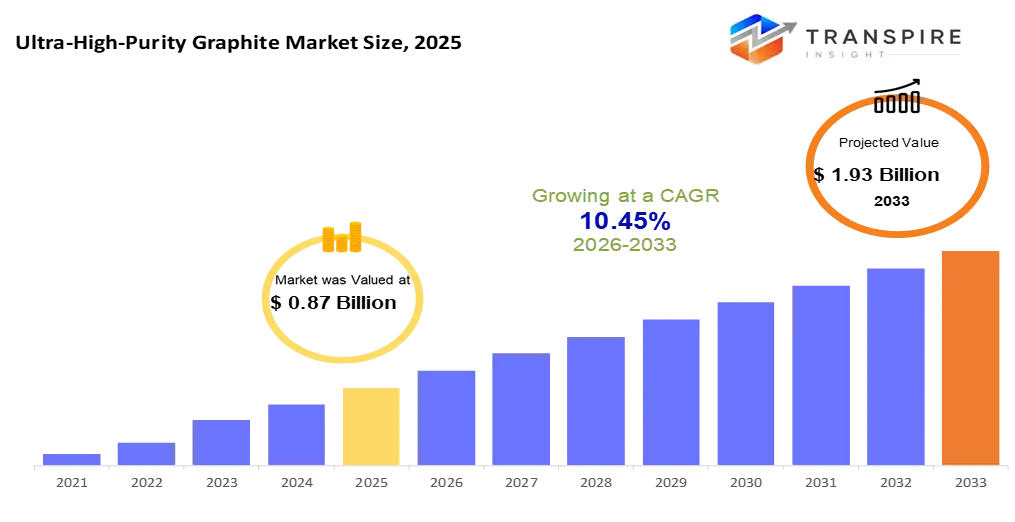
This market shift suggests the industry could reach roughly $1.93 billion in 2033. The worldwide ultra-high purity graphite scene gets a boost from more demand in chip-making, solar panel creation, and next-gen gadgets. This top-grade graphite stands out due to solid heat resistance, strong power flow ability, and minimal impurities, fitting tight, hot processes perfectly. Rising use in sunlight-powered tech, EVs - on top of microchip building -is pushing demand even higher.
Market Size & Forecast
- 2025 Market Size: USD 0.87 Billion
- 2033 Projected Market Size: USD 1.93 Billion
- CAGR (2026-2033): 10.45%
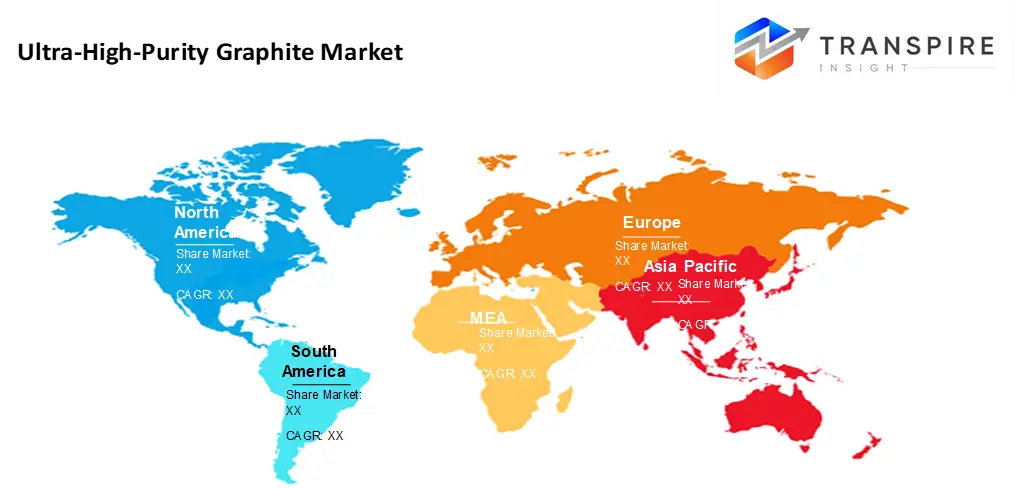
- Asia Pacific: Largest Market in 2026
- North America: Fastest Growing Market
Key Market Trends Analysis
- The Asia Pacific region is estimated market share will be 45% in 2026. Asia Pacific holds the biggest share because of its solid chip and solar panel production, driven by China, Japan, South Korea, and Taiwan.
- India is growing fast due to bigger chip-making efforts, more solar panel production, while state-backed tech hardware projects help push things forward.
- North America grabs a big chunk thanks to cutting-edge chip research and premium production capabilities, while sectors like aviation and military keep pushing the need.
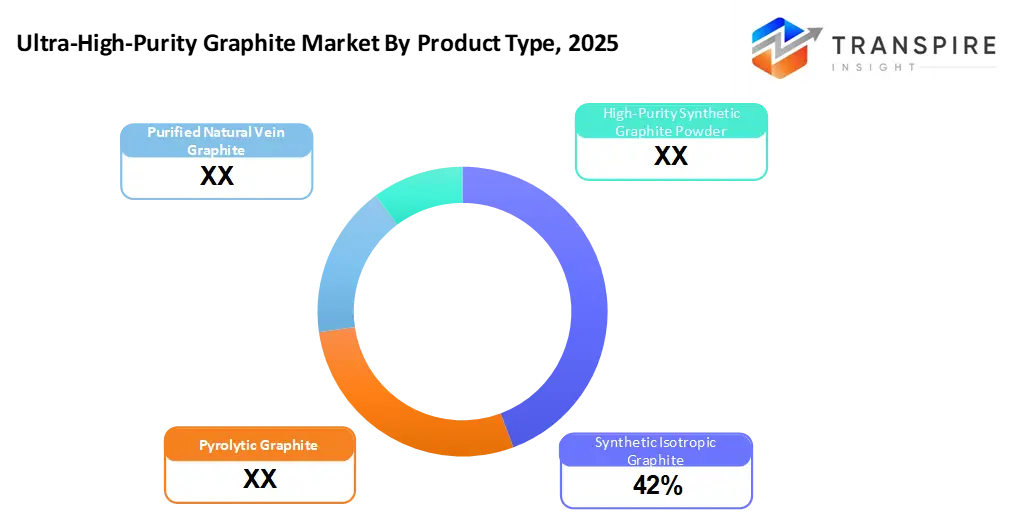
- Synthetic Isotropic Graphite has estimate market share will be 42% in 2026. Synthetic isotropic graphite leads because it’s consistent inside, extremely clean, and powers many chip and solar panel factories.
- Synthetic graphite tops the list since it gives better clean quality, steady results, and solid output where heat runs high.
- Semiconductor production leads the pack, boosted by expanding chip-making facilities while relying on ultra-clean materials for cutting-edge tech.
Ultra-high-purity graphite means a form of carbon that’s almost completely clean, usually over 99.99% pure due to special refining methods that pull out tiny unwanted elements. Its extreme cleanliness allows it to carry heat and electricity really well, resist reactions with most chemicals, and hold its shape under stress; so it's key in tough tech uses like making silicon wafers. Lithium-ion batteries, where it powers up anodes instead of using standard stuff. It handles blazing-hot environments just fine; that’s why industrial furnaces rely on it. Plus, modern energy setups use this material because it performs consistently when things get intense.
Worldwide need for super-clean graphite is climbing fast due to more electric cars and battery systems, a boom in chip-making plants, and growth in solar panel production, pushing things forward.
The Asia-Pacific area should see the biggest rise, due to strong output in chips, batteries, and electric vehicles. China, Japan, South Korea, and Taiwan are key players here. Synthetic ultra-pure graphite takes up a major chunk of the market because it offers consistent structure and clean composition, both vital for high-end production. When it comes to lithium-ion battery anodes, this part drives much of the overall need, since producers want more power storage and extended lifespan from their cells.
As needs grow in areas like computer chips, electric car batteries, aviation, and atomic power, making super clean graphite runs into issues: processing uses lots of energy, materials are limited, and supplies come from only a few places. This mix pushes prices up while creating risk if deliveries slow down. Yet new ways to purify carbon faster, public backing for green tech shifts, along with tapping varied suppliers, open strong chances ahead for growth and fresh ideas.
Ultra-High Purity Graphite Market Segmentation
By Product Type
- Pyrolytic Graphite
Pyrolytic graphite is super clean carbon stuff, which moves heat unevenly depending on direction. It holds its shape well under intense heat, so folks use it for making computer chips at high temps. Also serves as a heat diffuser in gadgets or parts inside furnaces. Shows up in precision mirrors plus military gear where performance matters when things get hot.
- Synthetic Isotropic Graphite
Built for even quality, giving steady performance plus solid structure; great for exact machine pieces or tech production, like chip containers and detailed tools.
- Purified Natural Vein Graphite
Top-tier natural graphite cleaned intensely, often sourced from crystalline veins; great for battery anodes since it keeps its original crystal form, also works well in electronics or heat management thanks to its stable structure
- High-purity synthetic graphite
This graphite is dust- super fine ground, extra clean stuff built for lithium-ion battery negatives, also works well in power storage or parts needing conductivity.
By Source
- Natural graphite
This comes from veins or flakes dug out of the ground, then cleaned up a bit. It keeps its original crystal shape, so it’s useful when needing that built-in flow of electricity or a stable form, like in battery negatives or certain detailed components.
- Synthetic
Using carbon sources, crafted with specific purity plus shape. Rules the market because it's easy to scale up while keeping contaminants super low. Offers tailored traits that work well in computer chips, power cells, planes, space gear, or high-tech production.
By Application
- Semiconductor Manufacturing
This works in silicon plate handling, containers, heat control pieces, or machines needing clean, heat-resistant carbon parts.
- Photovoltaic Industry
The photovoltaic sector uses top‑grade graphite containers plus components for growing silicon crystals, which also fit other solar production stages needing clean materials that handle heat well.
- LED Manufacturing
LED making graphite helps parts stay cool when building chips, and also holds things in place at super-hot temperatures.
- Lithium-Ion Batteries
Lithium-ion batteries use super-clean graphite, mostly powdered, to build better anodes. These boost how well electricity moves through the cell while lasting longer over charges. They also pack more power into each unit, which helps electric cars run farther. On top of that, they improve storage systems used at home or in industry.
- Aerospace & Defense
Ultra-clean graphite is used in frame pieces, protective layers, cooling setups, or custom elements when low mass, heat tolerance, and strong stability matter.
Regional Insights
The Asia-Pacific area leads worldwide in ultra-high-purity graphite use, growing fast because of heavy needs from electric cars, also boosted by lithium-ion battery making, chip production, solar panels, plus various factory uses. China dominates here, taking up most output and usage due to strong processing networks and big battery and tech sectors; meanwhile, Japan and South Korea soak up supplies mainly for advanced tech stuff. On the rise now are India and nations across Southeast Asia, gaining ground as local factories expand and more people switch to electric vehicles. Areas like East Asia, with China, Japan, and South Korea, and South Asia, especially India, play major roles in pushing the whole region forward.
In North America, growth keeps moving up, fueled by more spending on homegrown graphite refining, battery tech, chip making, and green power projects. The U.S., Canada, plus Mexico stand out here, especially the U.S., pushing ahead with ultra-clean man-made graphite to depend less on imports. Over in Europe, activity stays solid thanks to tough eco rules, rising need for electric vehicle batteries and stored renewables, along with mature manufacturing zones. Areas such as Western Europe, including Germany, France, Britain, and select spots in the east, boost their own graphite networks via reuse systems, local synthesis, or policy perks, shifting supply lines beyond Asia’s grip.
Latin America and the Middle East & Africa (MEA) emerging potential:
Even though it’s got less market share than Asia-Pacific, Latin America’s picking up speed because of its natural graphite, especially in places like Brazil, and more mining plus refining work is happening there, pulling in investors. Take Brazil or Argentina, for example: these spots, along with much of South America, could play a bigger role as companies spread out their supply sources. In the same way, parts of the Middle East and Africa are starting to matter more when it comes to top-grade graphite, thanks to new roads, factories, and booming steel and power industries across areas such as the UAE, Saudi Arabia, and South Africa - even if use right now isn’t high, chances look good as needs shift toward smarter, stronger materials.
Recent Development News
- December 11, 2025 – Focus Graphite Inc., Achieves 99.9996 wt.% Ultra-High Purity and 2.03 ppm EBC in Follow-On Testing
(Source: Focus Graphite https://focusgraphite.com/focus-graphite-achieves-99-9996-wt-ultra-high-purity-and-2-03-ppm-ebc-in-follow-on-testing/
|
Report Metrics |
Details |
|
Market size value in 2025 |
USD 0.87 Billion |
|
Market size value in 2026 |
USD 0.91 Billion |
|
Revenue forecast in 2033 |
USD 1.93 Billion |
|
Growth rate |
CAGR of 10.45% from 2026 to 2033 |
|
Base year |
2025 |
|
Historical data |
2021 – 2024 |
|
Forecast period |
2026 – 2033 |
|
Report coverage |
Revenue forecast, competitive landscape, growth factors, and trends |
|
Regional scope |
North America; Europe; Asia Pacific; Latin America; Middle East & Africa |
|
Country scope |
U.S.; Canada; Mexico; UK; Germany; France; Italy; Spain; Denmark; Sweden; Norway; China; Japan; India; Australia; South Korea; Thailand; Brazil; Argentina; South Africa; Saudi Arabia; UAE |
|
Key company profiled |
SGL Carbon, Toyo Tanso Co. Ltd, Superior Graphite, Mersen, GrafTech International, HPMS Graphite, Ceylon Graphite Corporation, Amsted Graphite Materials, Entegris, East Carbon, American Elements, Canada Carbon, XD Graphite Manufacturing Co. Ltd, SEC Carbon Ltd, Atlas Critical Minerals. |
|
Customization scope |
Free report customization (country, regional & segment scope). Avail customized purchase options to meet your exact research needs. |
|
Report Segmentation |
By Product Type (Pyrolytic Graphite, Synthetic Isotropic Graphite, Purified Natural Vein Graphite, High-Purity Synthetic Graphite Powder), By Source (Natural, Synthetic), By Application (Semiconductor Manufacturing, Photovoltaic Industry, LED Manufacturing, Lithium-Ion Batteries, Aerospace & Defense), |
Key Ultra-High Purity Graphite Company Insights
SGL Carbon SE makes top-grade carbon and graphite stuff, based in Wiesbaden, Germany. Instead of just selling materials, it focuses on super clean graphite for tough uses like making computer chips, solar panels, LEDs, plus rechargeable batteries or extreme heat setups. When it comes to its Graphite Solutions arm, the work starts from basic ingredients - goes through cleaning, shaping, and then precise cutting, all aimed at steady performance where tech demands more. Factories spread across Europe, North America, and parts of Asia help reach buyers in over 80 nations. Because it offers so many options and operates nearly everywhere, it ranks among the main go-to sources for ultra-pure graphite worldwide.
Key Ultra-High Purity Graphite Companies:
- SGL Carbon
- Toyo Tanso Co. Ltd
- Superior Graphite
- Mersen
- GrafTech International
- HPMS Graphite
- Ceylon Graphite Corporation
- Amsted Graphite Materials
- Entegris, East Carbon
- American Elements
- Canada Carbon
- XD Graphite Manufacturing Co. Ltd,
- SEC Carbon Ltd
- Atlas Critical Minerals.
Global Ultra-High Purity Graphite Market Report Segmentation
By Product Type
- Pyrolytic Graphite
- Synthetic Isotropic Graphite
- Purified Natural Vein Graphite
- High-Purity Synthetic Graphite Powder
By Source
- Natural
- Synthetic
By Application
- Semiconductor Manufacturing
- Photovoltaic Industry
- Led Manufacturing
- Lithium-Ion Batteries
- Aerospace & Defense
Regional Outlook
- North America
- U.S.
- Canada
- Europe
- Germany
- U.K.
- France
- Spain
- Italy
- Rest of Europe
- Asia Pacific
- Japan
- China
- Australia & New Zealand
- South Korea
- India
- Rest of Asia Pacific
- Latin America
- Brazil
- Mexico
- Rest of Latin America
- Middle East & Africa
- GCC
- South Africa
- Rest of the Middle East & Africa
Frequently Asked Questions
Find quick answers to common questions.
The ultra-high purity graphite market size for this market will be USD 1.93 billion in 2033.
These are the key segments for the ultra-high purity graphite market, such as Semiconductor Manufacturing, Photovoltaic Industry, LED Manufacturing, L
SGL Carbon, Toyo Tanso Co. Ltd, Superior Graphite, Mersen, these are major players in the ultra-high purity graphite market.
The Asia Pacific region is leading the ultra-high purity graphite market.
Rapid expansion of electric vehicles, semiconductor and electronic industry is growing continuously, increasing renewable energy, and industrial appli
- SGL Carbon
- Toyo Tanso Co. Ltd
- Superior Graphite
- Mersen
- GrafTech International
- HPMS Graphite
- Ceylon Graphite Corporation
- Amsted Graphite Materials
- Entegris, East Carbon
- American Elements
- Canada Carbon
- XD Graphite Manufacturing Co. Ltd,
- SEC Carbon Ltd
- Atlas Critical Minerals.
Recently Published Reports
-
Apr 2026
Healthcare Polymer Packaging Market
Healthcare Polymer Packaging Market Size, Share & Analysis Report By Packaging Type (Syringes, IV Bottles and Pouches, Clamshells, Blisters, Bottles & Jars, Containers, Tubes, IV Parental Packaging, Others), By Type (Regulated, Non-regulated), By Polymer Type (LDPE (Low-Density Polyethylene), HDPE (High-Density Polyethylene), Homo-polymer (Homo), Random Copolymer (Random), Block Copolymer (Block), PET, Polystyrene, Polyvinyl Chloride, Polyamide/EVOH, Others), and Geography (North America, Europe, Asia-Pacific, Middle East and Africa, South and Central America), 2021 - 2031
-
Apr 2026
Hydrophilic Tape (Waterstop) Market
Hydrophilic Tape (Waterstop) Market Size, Share & Analysis Report By Type (Bentonite-Based Hydrophilic Tape, Rubber-Based Hydrophilic Tape), By Application (Residential Buildings, Commercial Buildings, Infrastructure Projects), and Geography (North America, Europe, Asia-Pacific, Middle East and Africa, South and Central America), 2021 - 2031
-
Apr 2026
Metalens Market
Metalens Market Size, Share & Analysis Report By Type (Visible Light Metalens, and Infrared Metalens), By Application (Consumer Electronics, Automotive Electronics, Industrial, Medical, and Others), and Geography (North America, Europe, Asia-Pacific, Middle East and Africa, South and Central America), 2021 - 2031
-
Apr 2026
PBT Resin Market
PBT Resin Market Size, Share & Analysis Report By Type (Reinforced PBT Resin, Unreinforced PBT Resin), By Processing Method (Injection Molding, Extrusion, Blow Molding, Others), By End-User (Automotive, Electrical & Electronics, Consumer Appliances, Industrial Machinery, Medical Devices, Packaging, Others), and Geography (North America, Europe, Asia-Pacific, Middle East and Africa, South and Central America), 2021 - 2031