

Turkish Figs Market Summary:
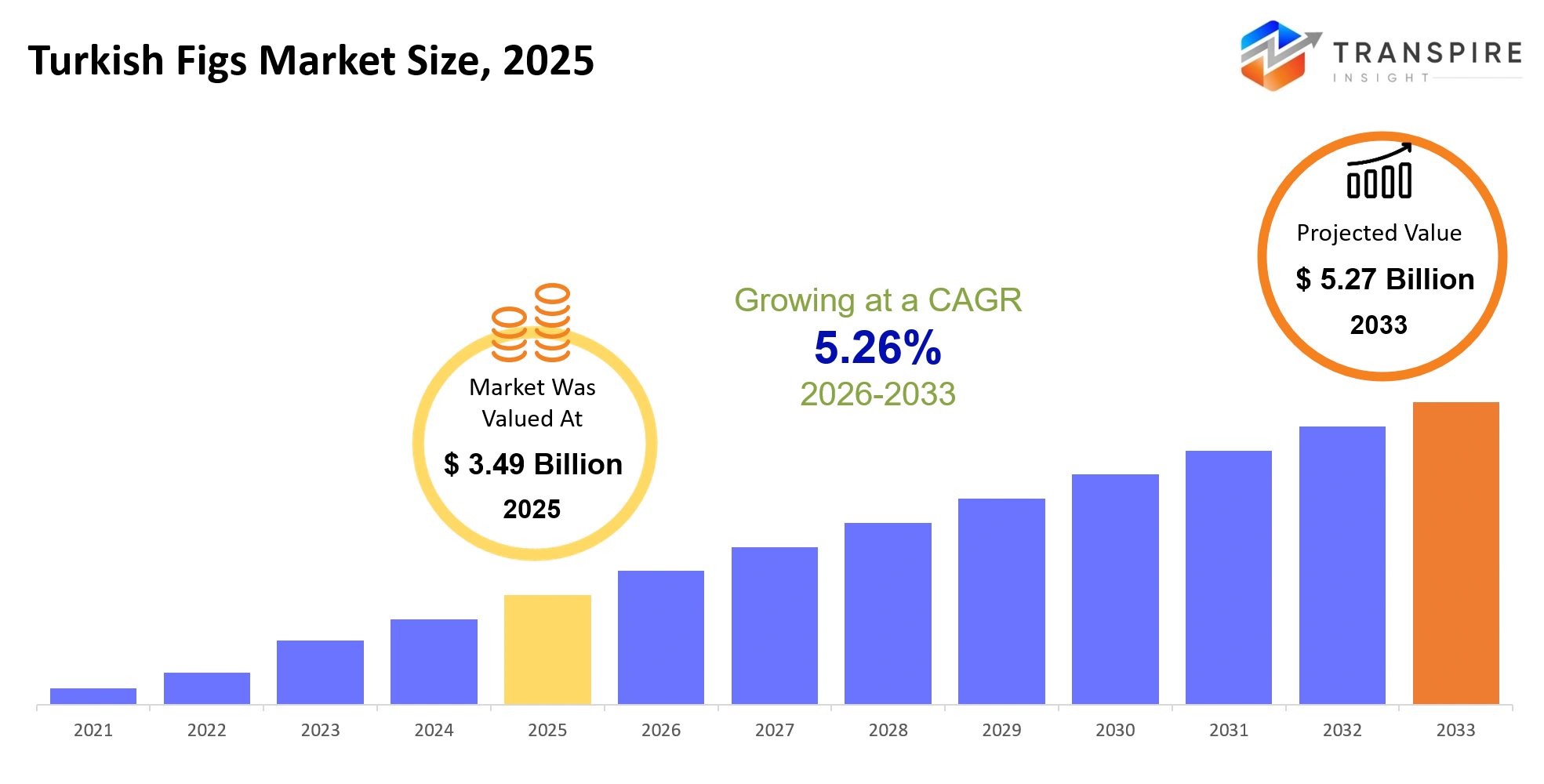
As per Transpire Insight Analysis, the Turkish Figs Market size is estimated at USD 3.49 Billion in 2025 and is anticipated to reach USD 5.27 Billion by 2033, growing at a CAGR of 5.26% from 2026 to 2033. Growth is attributed to higher demand for healthy food, increased exports and utilisation in bakery products, snacks, confectionery products, and dairy products.
The Turkish figs market is really important for getting quality figs to people who make food, bread, sweets, dairy products and healthy food. Turkish figs are loved by many because they are sweet for a long time and are good for you. This makes them a great ingredient for people who buy food and for companies that make food.
In the past few years, people have started to want products that are organic and better for them. Companies are also getting better at making and sending out figs. Now people want figs that are organic and made in a way that is good for the earth. More people are eating food, and this is helping the market for Turkish figs.
Turkish figs are being sent to Europe and North America. Are being used in food that is good for you. This is making the market for figs stronger. Because of this, the people who make Turkish figs are trying to make them better, package them in a better way and make new products. This is creating chances for the Turkish figs market to grow and be successful in the long run. The Turkish figs market is going to keep growing because of these things.
Turkish Figs Market Size & Forecast:
- Market Size 2025: USD 3.49 Billion
- Expected Market Value (2033): USD 5.27 Billion
- Forecast CAGR (2026–2033): 5.26%
- Leading Region in 2025: Europe
- Fastest Growing Region: Asia Pacific
- Key Company Profiles: Aydın Kuruyemiş, Oğuz Gıda, Pagysa, Sunny Fruit, Sun-Maid Growers, Valley Fig Growers, BATA Food, Taris, Anadolu Etap, Arslantürk Tarım, Anatolia AŞ, Ofis Yem, Fruit Bliss, Aurora Natural, Izmir Organics.
Key Market Insights:
The Turkish figs market globally is undergoing steady growth due to the rising demand for natural, healthy, and high-quality fruits. Increased exports, diversification of products, and improved quality have enhanced the prospects of the sector.
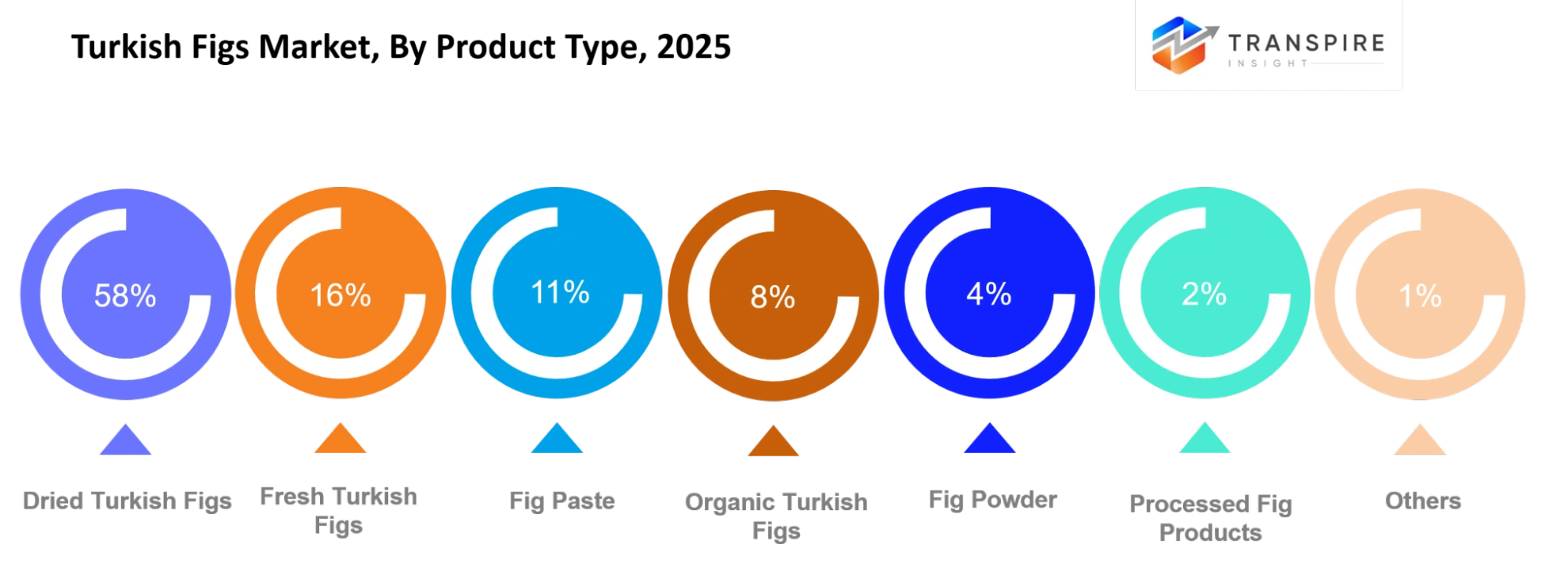
- Dried Turkish Figs form 58% of the market owing to their high application in snacking, baking and exporting, as producers keep on developing drying and packaging technology.
- Fresh Turkish Figs make up 16% of the market, with enhanced cold chain management systems enabling them to remain fresh during exporting.
- The Organic Turkish Figs are expected to have a CAGR of 14.9% due to growing demand for organic food and organic farming practices.
- Fig Pasts form 11% of the market with increased usage by food processing companies in making confectioneries, energy bars and natural sweeteners.
- Fig Powders make 4% of the market owing to increased demand in health supplements, beverages and functional food.
- Processed Fig Products form 2% of the market thanks to innovation in ready-to-eat products and convenience foods.
- The remaining 1% includes other fig products tailored to specialised markets.
- Top exporters are enhancing traceability systems, food safety certification and premium packaging facilities.
What are the Key Drivers, Restraints, and Opportunities in the Turkish Figs Market?
Drivers
The market for Turkish figs is largely being influenced by the increased use of dried and processed figs in the bakeries, confectionery, dairy, snack, and functional food industries. The increasing consumer preference for foods made from natural ingredients and nutritious foods has been one of the main factors that have stimulated growth in the industry. There has been an increased use of Turkish figs in various value-added foods as food manufacturers try to meet the demands of consumers who prefer natural foods with high nutritional value, while at the same time, there has been an increased export demand for Turkish figs from Europe and North America.
Restraints
The main constraint lies in the dependency of the market on seasonal harvesting and climatic conditions in the main producing countries of figs. Unpredictable rainfall, droughts, and weather patterns may negatively impact the yield as well as the quality of the fruits produced. Additionally, there are high regulatory standards regarding food safety and quality that have to be met.
Opportunities
Opportunities come from increasing organic Turkish figs and high-quality fig product exports. Investments in sustainable agriculture, advanced processing, and digital traceability solutions will be critical for exporters to gain entry into the premium international markets. Increased consumption of clean-label snack products and plant-based functional foods is expected to provide income generation prospects for firms concentrating on organic production.
What Has the Impact of Artificial Intelligence Been on the Turkish Figs Market?
AI is incrementally enhancing the efficiency of the Turkish figs industry worldwide by offering quality control, production planning, and logistics management assistance. Artificial vision is increasingly utilised in the processing plants to detect defects, classify figs based on their size, colour, and quality, as well as to minimise mistakes made in manual sorting. It allows the processing companies to consistently meet product specifications, avoid wasting products, and become more efficient. The application of AI in predictive analytics also gives producers and exporters the ability to forecast the volume of crops harvested, to evaluate weather conditions, and to calculate market demands.
This change is due to the increasing use of smart agriculture technologies that integrate the power of artificial intelligence into sensors and satellite imagery to analyse the state of soil, irrigation needs, and crops. It will help farmers save more water, grow better fruits, and react faster to any changes in the environment. Logistics can be enhanced using AI technologies to choose the most efficient ways to transport figs internationally. The adoption of such technologies is hindered by the high price of digital solutions and the lack of necessary knowledge about them. In February 2026, Scientists at Fırat University (Türkiye) created an artificial intelligence-based deep learning system (YOLO v11) capable of determining fig varieties through the analysis of their leaves with great precision. The innovation is intended to assist farmers in verifying the variety of the plant prior to cultivation.
Key Market Trends
There have been several developments in the market for Turkish figs in the past few years as manufacturers have started to pay more attention to premium quality and sustainable production as well as value addition to cope with consumer needs.
- More organic Turkish figs are being produced in the country in recent years due to an increased preference for organic and chemical-free food products among consumers.
- There has been a gradual move from bulk exports to premium packaged figs that adds to the value of the products and helps build brands.
- There have been initiatives by food manufacturers to use Turkish figs as an ingredient in functional snacks, nutrition bars, cereals, and bakery items.
- Smart farming technologies have been used to increase productivity without putting much pressure on resources.
- There has been automation in sorting, grading, and packaging operations in processing plants to ensure quality and reduce expenses.
- Sustainability is one of the main issues in this industry, with producers opting for ecological farming techniques and packaging.
Turkish Figs MarketSegmentation
By Product Type
Dried Turkish Figs lead the Turkish figs market with a market share of 58% on account of its longer shelf life, ease of storage, and utility across different industries including bakeries, confectionery manufacturers, snack manufacturers, and food processors. Fresh Turkish Figs contribute 16% of the market share owing to demand for fresh and high-quality fruits. Fig Paste is another major segment with a market share of 11% that is fueled by its application in processed foods and natural sweeteners, whereas Organic Turkish Figs contribute 8% of the market share and are likely to grow at the fastest CAGR of 14.9%. Fig Powder accounts for 4%, Processed Fig Products hold 2%, and Others account for 1%.
By Application
Bakery & Confectionery is the largest application segment due to extensive use of Turkish figs in breads, cakes, cookies, chocolates, and confections. Rising demand is also seen for snacks, dairy foods, breakfast cereals, and nutraceutical preparations where natural fruits are used to develop healthier food products. Food processing and consumption at households will help sustain demand for Turkish figs in the market, whereas potential applications in functional foods will provide more growth prospects.
By End Users
Food Manufacturers is the largest end-user segment as they use Turkish figs in different types of packaged foods and beverages. Increasing demand from retail consumers through the purchase of premium-quality and organic Turkish figs is helping maintain the rising demand in the market, whereas hotels, restaurants, and bakeries have started using these figs in their speciality dishes and bakery products. Nutraceutical manufacturers and exporters are also creating more market opportunities.
By Distribution Channel
Supermarkets and Hypermarkets are the most important sales channels, since they offer a wide range of products and have good consumer coverage. Speciality stores appeal to customers buying premium and organic varieties, while online shopping is developing very fast due to advances in digital groceries that make products easily available. The role of direct sales, exports and wholesalers is significant as they are important in providing domestic businesses and foreign markets with products.
By Form
Whole figs represent the largest market share because they are preferred by consumers and food producers, as well as having an attractive appearance. Sliced figs are commonly used in bakery and cereals, while powder and paste figs are gaining popularity among food ingredients for health food products, drinks and confectionery. Diced figs and other custom-made figs are also growing in popularity among food producers.
What are the Key Use Cases Driving the Turkish Figs Market?
Turkish dried figs, the most prominent product segment in the market, are extensively employed in the bakery and confectionery sector to make bread, cakes, cookies, chocolate, and traditional sweets. These naturally sweet fruits, having high nutritional value and a long shelf-life, are also preferred by food companies for packaging into snacks and breakfast products. The market is moving into dairy products, breakfast cereals, food processing, and nutraceutical uses. Food processors have been utilising fig pastes, powders, and sliced figs in yoghurt, energy bars, cereals, and other functional foods to add flavour and texture to the foods. Innovative uses of Turkish dried figs are health snacks, plant-based foods, and clean-label foods. The growing usage of Turkish organic dried figs in speciality retail and international export markets has generated new avenues for producers.
|
Report Metrics |
Details |
|
Market size value in 2025 |
USD 3.49 Billion |
|
Market size value in 2026 |
USD 3.68 Billion |
|
Revenue forecast in 2033 |
USD 5.27 Billion |
|
Growth rate |
CAGR of 5.26% from 2026 to 2033 |
|
Base year |
2025 |
|
Historical data |
2021 - 2024 |
|
Forecast period |
2026 - 2033 |
|
Report coverage |
Revenue forecast, competitive landscape, growth factors, and trends |
|
Regional scope |
United States; Canada; Mexico; United Kingdom; Germany; France; Italy; Spain; Denmark; Sweden; Norway; China; Japan; India; Australia; South Korea; Thailand; Brazil; Argentina; South Africa; Saudi Arabia; United Arab Emirates |
|
Key company profiled |
Aydın Kuruyemiş, Oğuz Gıda, Pagysa, Sunny Fruit, Sun-Maid Growers, Valley Fig Growers, BATA Food, Taris, Anadolu Etap, Arslantürk Tarım, Anatolia AŞ, Ofis Yem, Fruit Bliss, Aurora Natural, Izmir Organics. |
|
Customization scope |
Free report customization (country, regional & segment scope). Avail customized purchase options to meet your exact research needs. |
|
Report Segmentation |
By Product Type (Dried Turkish Figs, Fresh Turkish Figs, Organic Turkish Figs, Fig Paste, Fig Powder, Processed Fig Products, Premium Export-grade Figs, Others); By Application (Bakery & Confectionery, Snacks, Dairy Products, Breakfast Cereals, Nutraceuticals, Food Processing, Household Consumption, Others); By End User (Food Manufacturers, Retail Consumers, Hotels & Restaurants, Bakeries, Nutraceutical Companies, Exporters, Others); By Distribution Channel (Supermarkets & Hypermarkets, Specialty Stores, Online Retail, Direct Sales, Export Channels, Wholesalers, Others); By Form (Whole, Sliced, Powder, Paste, Diced, Others). |
Which Regions are Driving the Turkish Figs Market Growth?
North America
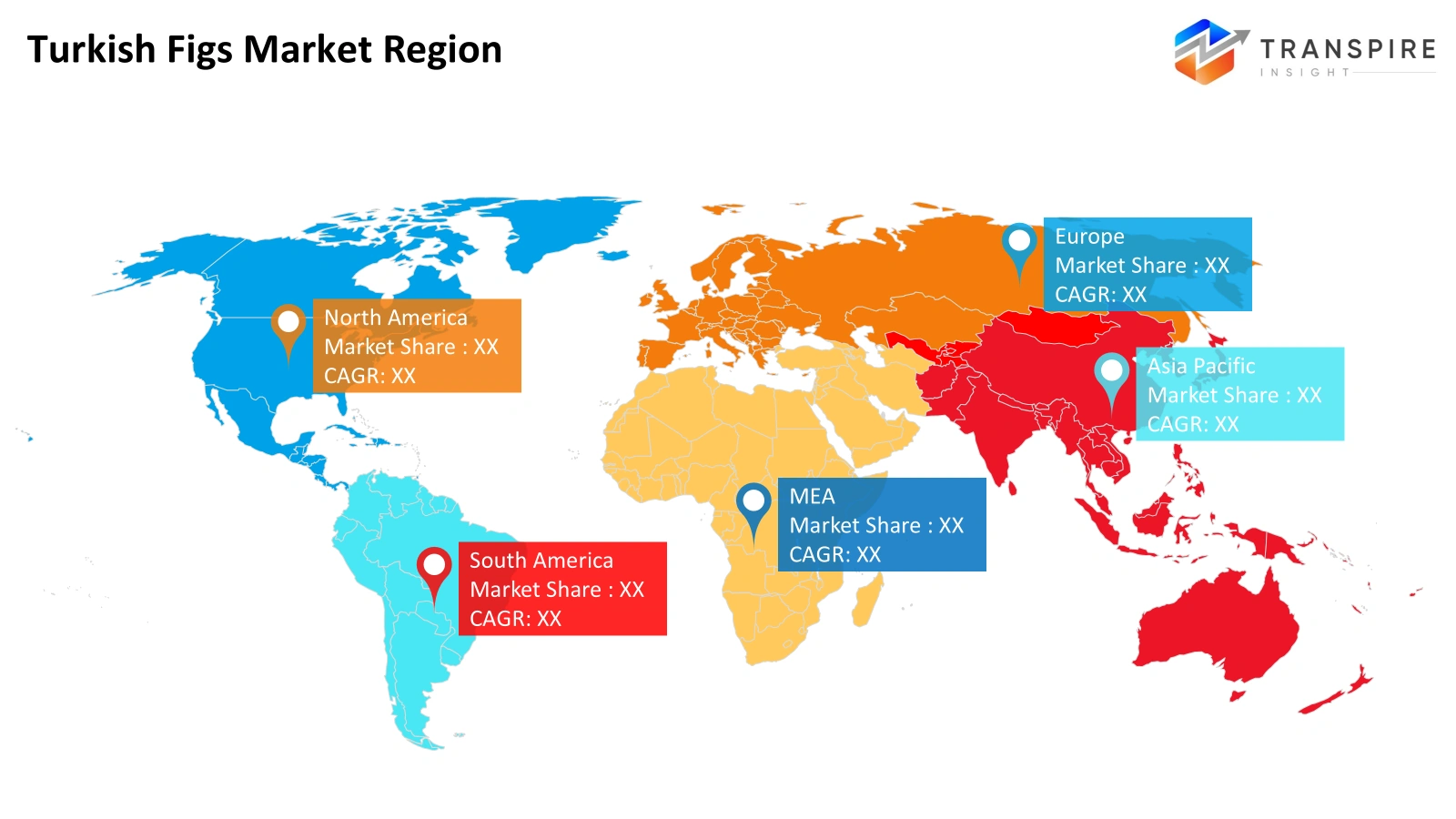
North America holds 25% market share and represents a stable growth region owing to increasing health consciousness and growing consumption of healthy snacks. As compared to Europe, the market is more affected by the demand for functional foods, bakery products, and natural ingredients incorporated in packaged foods. Increasing distribution via supermarkets, speciality stores, and online shopping portals has facilitated easy access to the product. Innovation in premium food segments is also contributing towards stable market growth in the region.In June 2026, Turkish fresh fruit exporter EREN announced that it was preparing for the 2026 fig season in Turkey, where it plans to concentrate efforts on sending more fruits to North America due to increased fruit quality and harvest volume expectations.
Europe
Europe is the largest regional market for the Turkish figs market, accounting for 43% market share. The dominance of the region is attributed to increasing consumer preference for premium dried fruits, a well-developed food processing industry, and stringent quality standards that encourage the import of high-quality Turkish figs. Increasing consumer preference for organic and clean-label food products has contributed towards increasing import volume in major European nations. Additionally, efficient retail chains and established trade relations with Turkish exporters have been strengthening Europe's leading market position.In July 2026, Tuna Project Trade Inc. (through Dried Figs Co. UK) increased the delivery of bulk dried figs from Turkey to UK and Europe-based food processing and distribution companies, with their advantages being the provision of direct deliveries from growers, quality certification and custom packaging in response to the growing demand for premium Turkish figs in Europe.
Asia Pacific
The Asia Pacific accounts for 22% of the market share for Turkish figs, with an estimated compound annual growth rate of 15.8%. Increasing levels of disposable income, shifts in food consumption trends, and growing consumer awareness about healthy food products are some of the major reasons driving the high demand for Turkish figs within various countries. The increasing penetration of modern retail and online channels has increased the availability of imported premium figs among consumers.
Who are the Key Players in the Turkish Figs Marketand how do they Compete?
Market competition in the market for Turkish figs is determined by product quality, export capacities, compliance with food safety standards, and the capacity to offer premium fig products to foreign clients. Businesses are gaining competitive advantages with the help of investments in modern processing technologies, sustainability, advanced packaging, and certificates recognised on an international level. In addition to the growing popularity of organic and added-value fig products, manufacturers are working on enlarging their product lines.
Aydın Kuruyemiş specialises in supplying premium dried figs by means of quality control and advanced processing methods. This helps the company to be strong in the export market. Anadolu Etap stands out with its combination of intensive agriculture and advanced processing capabilities, thus being able to work effectively with food manufacturing companies and retailers. Pagysa concentrates on food safety certificates, traceability, and custom packaging solutions. Ozur Tarim, Tatlan Gıda, Sunny Fruit, Taris Agricultural Sales Cooperatives Union, and Apex Fruits have been competing through building up their export networks, offering organic products, and adopting sustainable agricultural practices. In addition, most of the firms in question have also been working on improving the digital management of their supply chains, as well as on product standardisation and targeting high-end retail markets.
Turkish Figs Market companies
- Aydın Kuruyemiş
- Oğuz Gıda
- Pagysa
- Sunny Fruit
- Sun-Maid Growers
- Valley Fig Growers
- BATA Food, Taris
- Anadolu Etap
- Arslantürk Tarım
- Anatolia AŞ
- Ofis Yem
- Fruit Bliss
- Aurora Natural
- Izmir Organics
Recent Development News
In June 2026, EREN provided a positive outlook regarding the Turkish fresh fig season in 2026 due to the positive weather conditions during wintertime that should help increase the quality and the size of fruit. It was also mentioned that the company is committed to the provision of high-quality figs to consumers in Europe, North America, and Asia, thus improving the competitiveness of Turkey's exports.
Source: https://www.freshfruitportal.com
In August 2025, the 2025-2026 Dried Fig Sector Meeting took place at the Aydın Commodity Exchange, where producers, exporters, and other parties involved gathered to discuss the production, exports, and quality requirements for the coming season.
Source: https://www.aydinticaretborsasi.org.tr
What Strategic Insights Define the Future of the Turkish Figs Market?
The market for Turkish figs will continue to grow due to the increased focus on product positioning, organic farming, and value addition. In line with the growing trend in which consumers prefer nutritious foods have a clean label and healthy options, manufacturers who adopt the practice of investing in quality certifications, advanced processing technology, and sustainable agriculture will have the ability to take advantage of lucrative export opportunities. The one hidden risk associated with this market is its exposure to weather-related risks since the production process is dependent on climatic conditions, which could impact yield and export volume. The new opportunity for Turkish figs is their incorporation into plant-based nutrition products in Asia. Companies should seek to diversify their markets and develop new products from figs.
Key Segmentations are:
By Product Type
- Dried Turkish Figs
- Fresh Turkish Figs
- Organic Turkish Figs
- Fig Paste
- Fig Powder
- Processed Fig Products,
- Premium Export-grade Figs,
By Application
- Bakery & Confectionery
- Snacks
- Dairy Products
- Breakfast Cereals
- Nutraceuticals
- Food Processing
- Household Consumption
By End User
- Food Manufacturers
- Retail Consumers
- Hotels & Restaurants
- Bakeries
- Nutraceutical Companies
- Exporters
By Distribution Channel
- Supermarkets & Hypermarkets
- Specialty Stores
- Online Retail
- Direct Sales
- Export Channels
- Wholesalers
By Form
- Whole
- Sliced
- Powder
- Paste
- Diced
Regional Outlook
North America
- United States
- Canada
- Mexico
Europe
- Germany
- United Kingdom
- France
- Spain
- Italy
- Rest of Europe
Asia Pacific
- Japan
- China
- Australia & New Zealand
- South Korea
- India
- Rest of Asia Pacific
South America
- Brazil
- Argentina
- Rest of South America
Middle East & Africa
- Saudi Arabia
- United Arab Emirates
- South Africa
- Rest of the Middle East & Africa
Frequently Asked Questions
Find quick answers to common questions.
The turkish figs market size was valued at USD 3.49 Billion in 2025 and is poised to reach USD 5.27 Billion by 2033, expanding at a 5.26%CAGR.
Key segments for the turkish figs market are By Product Type (Dried Turkish Figs, Fresh Turkish Figs, Organic Turkish Figs, Fig Paste, Fig Powder, Processed Fig Products, Premium Export-grade Figs, Others); By Application (Bakery & Confectionery, Snacks, Dairy Products, Breakfast Cereals, Nutraceuticals, Food Processing, Household Consumption, Others); By End User (Food Manufacturers, Retail Consumers, Hotels & Restaurants, Bakeries, Nutraceutical Companies, Exporters, Others); By Distribution Channel (Supermarkets & Hypermarkets, Specialty Stores, Online Retail, Direct Sales, Export Channels, Wholesalers, Others); By Form (Whole, Sliced, Powder, Paste, Diced, Others).
Growth is primarily driven by Consumer demand for healthy and natural snacks, an increase in awareness regarding the nutritional value of figs, usage in bakery and confectionery products, a rise in exports, and demand for organic and clean-label foods.
The market is led by major manufacturers including Aydın Kuruyemiş, Oğuz Gıda, Pagysa, Sunny Fruit, Sun-Maid Growers, Valley Fig Growers, BATA Food, Taris, Anadolu Etap, Arslantürk Tarım, Anatolia AŞ, Ofis Yem, Fruit Bliss, Aurora Natural, Izmir Organics.
The share of Europe in the Turkish figs market is 43%, thanks to high consumption due to the health benefits of dried fruits, developed logistics and import channels, and usage in bakeries, confectioneries, and snacks. The high awareness level about the quality and premium foods supports this position.
Commercial prospects in the international market of Turkish figs comprise increased demand for organic and quality figs, increased usage in health snacks and functional foods, increased exports to emerging economies, increased usage in bakery and confectionery items, and the growth of e-commerce and direct-to-consumer marketing channels.
- Aydın Kuruyemiş
- Oğuz Gıda
- Pagysa
- Sunny Fruit
- Sun-Maid Growers
- Valley Fig Growers
- BATA Food, Taris
- Anadolu Etap
- Arslantürk Tarım
- Anatolia AŞ
- Ofis Yem
- Fruit Bliss
- Aurora Natural
- Izmir Organics
About the Authors

Chetan Dhatrak
I’m Chetan Dhatrak, a Senior Research Analyst at Transpire Insight, specializing in the Consumer Goods, Foods and Beverages industry. I focus on analyzing market trends, consumer behavior, competitive landscapes, and industry developments to deliver accurate, data-driven insights. My research at Transpire Insight is built on credible sources and in-depth analysis, helping businesses and readers better understand market dynamics, emerging opportunities, and evolving consumer preferences. I’m committed to creating reliable, well-researched content that supports informed decision-making and reflects the latest developments in the consumer goods and food & beverage sectors.

Chakradhar Khansole
Chakradhar serves as the Research Director at Transpire Insight, bringing over 8 years of experience in technology, innovation, and strategic market intelligence. He specializes in transforming complex market data into actionable business insights that enable organizations to make informed, growth-oriented decisions. Recognized for his strategic vision and analytical expertise, Chakradhar leads high-impact research initiatives, delivering comprehensive market assessments, competitive intelligence, and forward-looking industry analysis.
Recently Published Reports
-
Apr 2026
Baby Infant Formula Market
Baby Infant Formula Market Size, Share & Analysis Report By ype (Infant Milk, Follow On Milk, Specialty Baby Milk, Growing-Up Milk), By Ingredient (Carbohydrate, Fat, Protein, Minerals, Vitamins, and Others), By Product Form (Powder, Liquid, and Ready-to-feed), By Distribution Channels (Supermarket/Hypermarket, Specialty Store, Pharmacies, Online Retail, and Others), and Geography (North America, Europe, Asia-Pacific, Middle East and Africa, South and Central America), 2021 - 2031
-
Apr 2026
Edible Insects for Animal Feed Market
Edible Insects for Animal Feed Market Size, Share & Analysis Report By Type (Insect Powder, Insect Meal, Insect Bar, Insect Paste, Insect Oil, and Others), By Insect Type (Beetles, Cricket, Caterpillar, Hymenoptera, Orthoptera, Tree Bugs, and Others), By Application (Livestock, Pet Food, and Aquaculture), By Livestock Type (Poultry, Swine, and Others), and Geography (North America, Europe, Asia-Pacific, Middle East and Africa, South and Central America), 2021 - 2031
-
Apr 2026
Food Industry Disinfection and Bacterial Control Market
Food Industry Disinfection and Bacterial Control Market Size, Share & Analysis Report By Type (Chemical Disinfectants, Physical Disinfectants, and Biocides and Antimicrobials), By Application (Food Processing Equipment Surface Disinfection, Food Preparation Areas Surface Disinfection, Storage Areas Surface Disinfection, Anti-microbial Coatings Food Preservation, and Preservative Solutions Food Preservation), By End User (Meat and Poultry Processing, Dairy Processing, Seafood Processing, Bakery and Confectionery, Restaurants and Commercial Kitchens, and Food Service Providers), By Sales Channel (Online, Offline), and Geography (North America, Europe, Asia-Pacific, Middle East and Africa, South and Central America), 2021 - 2031
-
May 2026
Freeze Dried Food Market
Freeze Dried Food Market Size, Share & Analysis Report By Product Type (Fruits, Vegetables, Freeze-Dried Dairy Products, Freeze-Dried Meat and Seafood, Freeze-Dried Pet Food, and Prepared Meal), By Nature (Organic, and Conventional), By Form (Powdered, Granules, and Diced), By End Use (Breakfast Cereals, Dairy Products, Bakery & Confectionery, Nutritional Bars & Supplements, Powdered Beverages, Snacks, and Retail (Household)), and Geography (North America, Europe, Asia-Pacific, Middle East and Africa, South and Central America), 2021 - 2031