

Germany Functional Foods Market Size & Forecast:
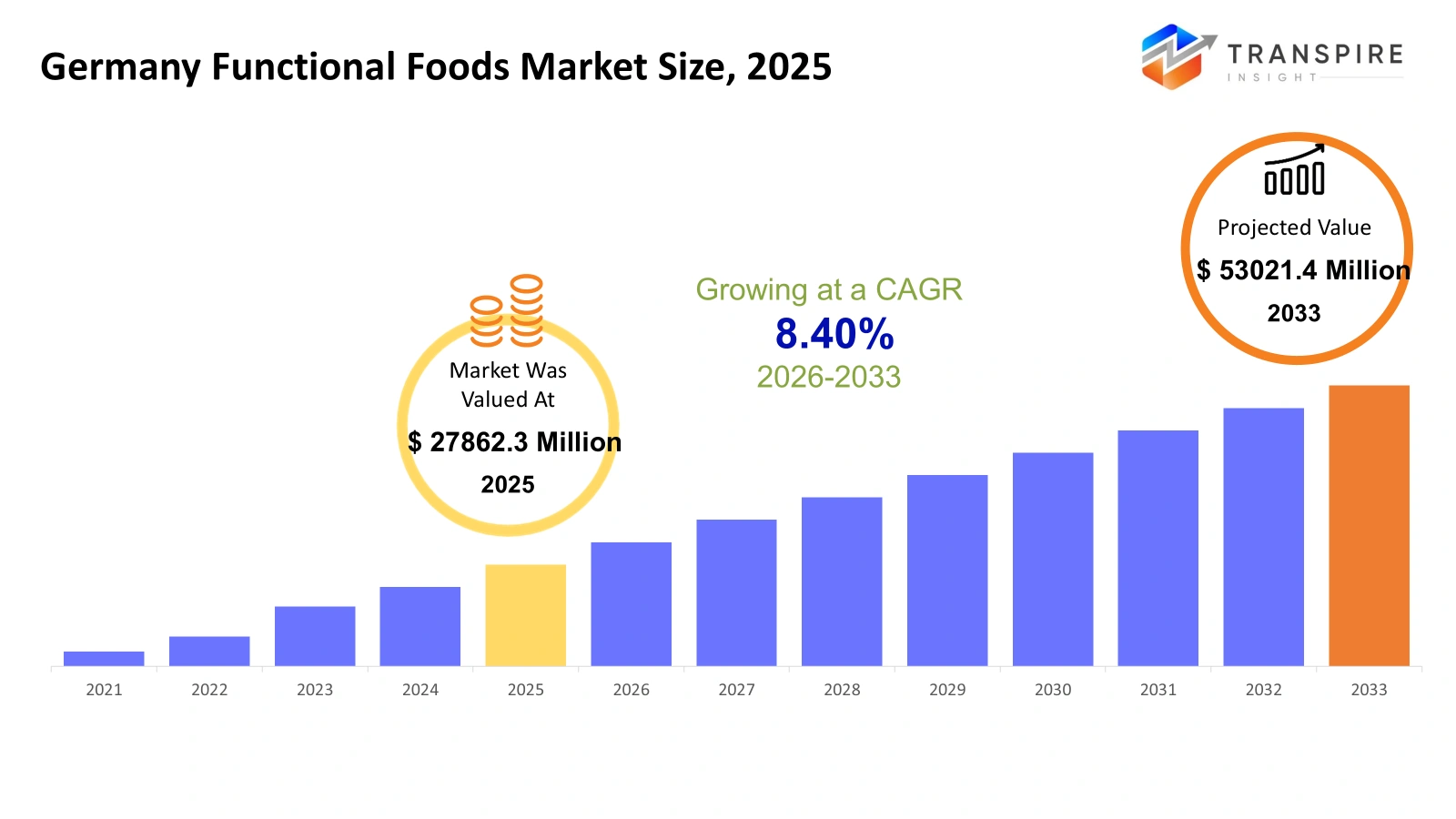
- Germany Functional Foods Market Size 2025: USD 27862.3 Million
- Germany Functional Foods Market Size 2033: USD 53021.4 Million
- Germany Functional Foods Market CAGR: 8.40%
- Germany Functional Foods Market Segments: By Product Type (Functional Dairy Products, Functional Bakery & Cereals, Functional Beverages, Functional Snacks), By Ingredient Type (Probiotics, Vitamins & Minerals, Omega Fatty Acids, Fibers & Specialty Carbohydrates), By Distribution Channel (Supermarkets & Hypermarkets, Online Retail, Specialty Stores).
To learn more about this report,  Download Free Sample Report
Germany Functional Foods Market Summary:
The Germany Functional Foods Market size was estimated at USD 27862.3 Million in 2025 and is anticipated to reach USD 53021.4 Million by 2033, growing at a CAGR of 8.40% from 2026 to 2033. The Germany functional foods market demonstrates a gradual transformation of food production processes, which will affect how food products get created, marketed and consumed throughout the nation. Food manufacturers will increasingly position everyday items such as dairy products and beverages and cereals and snacks as products that provide additional nutritional value that supports wellness-based dietary needs of consumers. Consumers will expect food options that align with busy routines while still delivering specific dietary benefits which will lead companies to improve their ingredient selection and product development processes. Producers will develop new products through their research work on food processing techniques and ingredient studies which enable them to create fortified foods with better taste and improved stability and longer shelf life. The regulatory environment in Germany will determine how manufacturers develop their labeling systems and their health claim guidelines which direct their methods of conveying nutritional information to customers and retailers. The retail space will display different products that combine easy access to products with health benefits, along with clear information about how ingredients are sourced which will boost the presence of Germany's functional foods market in common eating practices.
Key Market Trends & Insights:
- The Germany functional foods market demonstrates two important market tendencies through its three market insights. The German population shows sustained interest in nutritional science, which leads to changes in their food-buying behavior. The market will experience increasing demand for fortified dairy products and probiotic beverages, high-fiber cereals and plant-based nutrition products. The German functional foods market expands through product innovation and clear labeling and people understand health advantages while retail chains and health stores increase their distribution networks.
- The functional foods market in Germany shows two essential market trends through its three market insights.German food manufacturers now focus on developing products with natural ingredients that offer scientifically verified nutritional benefits. Supermarkets and specialty stores are increasingly dedicating shelf space to functional beverages and protein snacks, and vitamin-enriched food products. The Germany functional foods Market will experience steady growth because ongoing product research and consumer education will continue to drive industry development in the national health-focused food sector.
- The Germany functional foods market shows two important market trends through its three market insights. Urban residents and people with demanding jobs prefer nutritional products that offer convenience and support their energy needs and wellness goals. Health-conscious consumers are increasingly choosing ready-to-eat functional snacks and fortified breakfast options, and probiotic dairy products. The German functional foods Market will become more accessible to consumers through retail expansion and product variety.
- Germany functional foods market - key market trends and insights: Food safety standards and strong regulatory oversight continue to guide product development in Germany. Manufacturers build consumer trust through their commitment to transparent ingredient sourcing and to verifying health claims. The German functional foods market will see ongoing product launches driven by advancements in plant-based nutrition, immunity-support foods, and digestive health products.
Germany Functional Foods Market Segmentation
By Product Type
Functional Dairy Products: The segment of Functional Dairy Products is experiencing strong growth as people demand health-based dairy alternatives and products with added nutritional value. Consumers interested in digestive wellness and nutritional balance are choosing probiotic yogurt and fortified milk products and protein-based dairy beverages. The functional foods market in Germany will grow as products become available through supermarket chains and dedicated specialty retail outlets.
Functional Bakery and Cereals: The health-conscious market segment shows increasing acceptance of bread products and cereal items and grain-based products that contain added vitamins and fiber and mineral content. People who eat whole-grain products and breakfast cereals with added nutrients can meet their daily nutritional requirements while maintaining their customary eating patterns. The German functional foods market experiences steady demand, as Germans continue to consume enriched bakery products.
Functional Beverages: Consumers show increasing interest in ready-to-use nutritional solutions that contain fortified beverages with additional vitamins and minerals and probiotics. Energy drinks along with probiotic beverages and fortified juices, provide users with both nutritional advantages and hydration benefits. The Germany functional foods market will experience increased customer engagement through product development and improved access to stores.
Functional Snacks: The urban consumer market is seeing increasing demand for protein bars, fortified biscuits, and fiber-based snacks. Health-conscious consumers want snacks that are easy to access and offer health benefits. The German functional foods market will continue to grow because product availability in stores and new product development will increase in the market.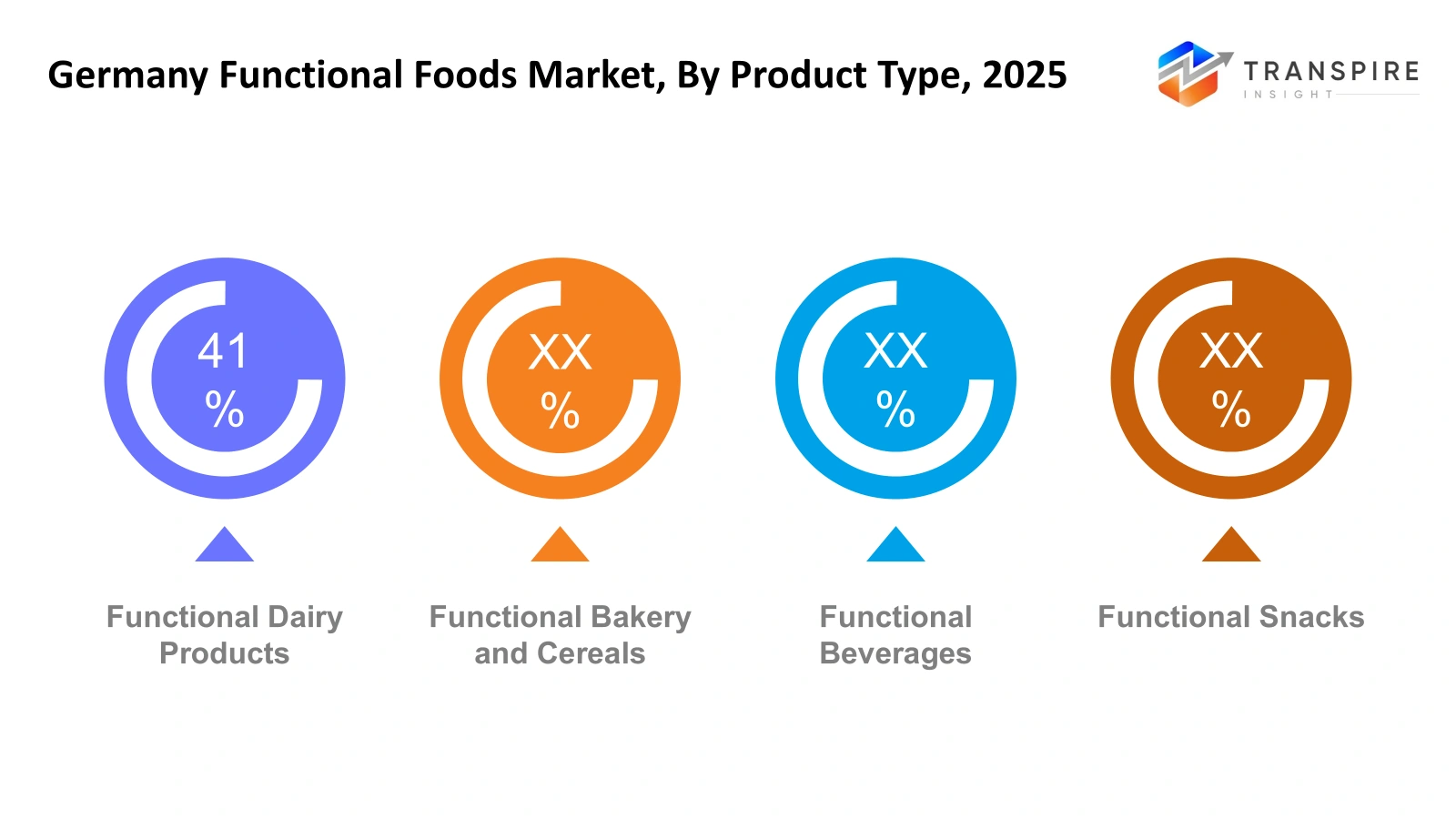
To learn more about this report, Download Free Sample Report
By Ingredient Type
Probiotics: The discovery of digestive health benefits has led to increased use of probiotics, as dairy, beverage, and nutritional supplement manufacturers incorporate these ingredients into their products. Probiotic cultures are used by functional food manufacturers to create products that enhance gut health and immune system function. Ongoing research together with product development activities will increase the number of probiotic-based products available in the German functional foods sector.
Vitamins and Minerals: Vitamins and minerals serve as the primary elements which nutrition fortification enhances through the addition to daily food intake. Food producers enhance the nutritional value of cereal beverages and snacks by adding vitamins and minerals which help consumers meet their dietary requirements. The German functional foods market will see steady demand for vitamin and mineral products as consumers seek to maintain proper nutrition.
Omega Fatty Acids: Omega fatty acids serve as vital components in functional food products which provide benefits for heart health and brain function. Food producers use omega compounds to boost the nutritional content of their fortified spreads, dairy products, and beverages. The German functional foods market is experiencing ongoing growth in ingredient use as consumers show increasing interest in preventive health care.
Dietary Fibre and Speciality Carbohydrates: Dietary fiber and specialty carbohydrates function as dual purposes; they create digestive balance while providing sustained energy throughout the day. Cereal products and baked goods as well as snack items, commonly utilize these ingredients to enhance their nutritional value. The German functional foods market will continue to expand because people increasingly understand how digestive health and healthy eating practices contribute to their well-being.
By Distribution Channel
Supermarkets and hypermarkets: The distribution channel analysis shows that Supermarkets and Hypermarkets function as major sales outlets for functional food products because they offer customers a broad range of products which they can easily access. The combination of shelf visibility and promotional campaigns together with easy access to products creates an environment which leads consumers to make purchases. The Germany functional foods market will continue to experience distribution growth because retailers expand their operations and introduce new products to the market.
Online retail: The Digital grocery platforms attract consumers who want to shop easily while accessing more products through online retail distribution channels. The Digital marketplaces enable users to view complete product details which lets them compare nutritional items. The growth of e-commerce grocery services will expand online distribution throughout the Germany functional foods market.
Speciality stores: The distribution channel analysis shows that Specialty Stores serve health food shops and nutrition-focused retail outlets because they need premium functional products and dietary supplements. The combination of knowledgeable staff members and specialized product collections leads customers to develop trust in the company which helps them make better buying choices. The Germany functional foods market will maintain its specialty store sales through ongoing customer demand for health-oriented food products.
Country Insights
Germany shows strong interest in food products that support daily nutrition and long-term wellness. The demand for products which provide additional health advantages has increased These items include fortified cereals and probiotic dairy products and plant-based snacks and vitamin-enriched beverages. Consumers who seek balanced diets, preventive healthcare, and active lifestyles drive demand for food products that demonstrate their nutritional benefits. Supermarkets, organic stores and health-focused retailers in Berlin, Munich, and other major cities show extensive product selections, which help consumers choose healthier food options. Germany's functional foods Market continues to develop through advances in food processing and packaging technology and ingredient sourcing methods.
The country's insights show that robust food safety regulations, together with transparent labeling standards determine both product innovation and consumer trust. The European Food Safety Authority and the Federal Office of Consumer Protection and Food Safety establish regulatory frameworks that ensure product information about ingredients and nutritional content remains clear to consumers. Food companies invest in research to create products that combine taste with measurable health benefits. The expansion of organic farming, together with rising interest in plant-based diets and digestive health products, creates market opportunities. The Germany functional foods Market will develop through retail network expansion and food technology advancements and increased public understanding of preventive nutrition.
Recent Development News
Expansion in health-focused food innovation continues across Germany as food manufacturers introduce products enriched with vitamins, probiotics, plant proteins, and fiber. Consumer demand for nutrition-based diets encourages development of fortified dairy, cereals, and beverages. Product research and ingredient development will support gradual growth within the Germany functional foods Market.
A growing number of German food companies are investing in nutrition-enhanced products as demand for immunity support and digestive health continues to rise. According to the Food and Agriculture Organization, European consumers increasingly choose foods that provide additional health benefits beyond basic nutrition, supporting expansion of functional food categories in Germany.
|
Report Metrics |
Details |
|
Market size value in 2025 |
USD 27862.3 Million |
|
Market size value in 2026 |
USD 30145.7 Million |
|
Revenue forecast in 2033 |
USD 53021.4 Million |
|
Growth rate |
CAGR of 8.40% from 2026 to 2033 |
|
Base year |
2025 |
|
Historical data |
2021 – 2024 |
|
Forecast period |
2026 – 2033 |
|
Report coverage |
Revenue forecast, competitive landscape, growth factors, and trends |
|
Country scope |
Germany |
|
Key company profiled |
Nestlé SA, Danone SA, Unilever PLC, PepsiCo Inc., General Mills Inc., Kellogg Company, Arla Foods, Yakult Honsha, FrieslandCampina, Glanbia PLC, Hain Celestial Group, Mondelez International, DMK Group, Müller Group, Amway Corporation. |
|
Customization scope |
Free report customization (country, regional & segment scope). Avail customized purchase options to meet your exact research needs. |
|
Report Segmentation |
By Product Type (Functional Dairy Products, Functional Bakery & Cereals, Functional Beverages, Functional Snacks), By Ingredient Type (Probiotics, Vitamins & Minerals, Omega Fatty Acids, Fibers & Specialty Carbohydrates), By Distribution Channel (Supermarkets & Hypermarkets, Online Retail, Specialty Stores). |
Key Germany Functional Foods Market Company Insights
The German food manufacturers create functional nutrition products to fulfill health needs and the demand for balanced diets. The companies create products that contain vitamins and minerals and probiotics, and plant nutrients to help customers achieve better digestive health and improved immunity. The German functional foods Market benefits from innovation by firms such as Nestlé, Danone, and Dr. Oetker, where research teams focus on nutritional improvement and product quality. The German food industry develops its products through strict food safety standards and advanced food research centers which enable it to create new items and practice safe manufacturing methods.
The German and international companies introduce new products through their expansion into fortified dairy and plant-based nutrition and functional beverages and enriched cereals. Nutritional research and consumer health studies from companies such as Yakult Honsha and Kellogg Company and Bayer AG drive industry growth through their participation in the market. The research laboratories and nutrition institutes present scientific evidence to support health claims and demonstrate the advantages of various ingredients. The strong retail networks and supermarket chains, together with consumer demand for wellness products will lead to continuous growth of the Germany functional foods Market.
Company List
- Nestlé SA
- Danone SA
- Unilever PLC
- PepsiCo Inc.
- General Mills Inc.
- Kellogg Company
- Arla Foods
- Yakult Honsha
- FrieslandCampina
- Glanbia PLC
- Hain Celestial Group
- Mondelez International
- DMK Group
- Müller Group
- Amway Corporation
Germany Functional Foods Market Report Segmentation
By Product Type
- Functional Dairy Products
- Functional Bakery & Cereals
- Functional Beverages
- Functional Snacks
By Ingredient Type
- Probiotics
- Vitamins & Minerals
- Omega Fatty Acids
- Fibers & Specialty Carbohydrates
By Distribution Channel
- Supermarkets & Hypermarkets
- Online Retail
- Specialty Stores
Frequently Asked Questions
Find quick answers to common questions.
The Approximate Germany Functional Foods Market size will be USD 53021.4 million in 2033.
The key Segments of the Germany Functional Foods Market are By Product Type (Functional Dairy Products, Functional Bakery & Cereals, Functional Beverages, Functional Snacks), By Ingredient Type (Probiotics, Vitamins & Minerals, Omega Fatty Acids, Fibers & Specialty Carbohydrates), By Distribution Channel (Supermarkets & Hypermarkets, Online Retail, Specialty Stores).
Major players in the Germany Functional Foods Market are Nestlé SA, Danone SA, Unilever PLC, PepsiCo Inc., General Mills Inc., Kellogg Company, Arla Foods, Yakult Honsha, FrieslandCampina, Glanbia PLC, Hain Celestial Group, Mondelez International, DMK Group, Müller Group, Amway Corporation.
The Current Market size of the Germany Functional Foods Market is USD 27862.3 Million by 2025.
The Germany Functional Foods Market CAGR is 8.40%.
- Nestlé SA
- Danone SA
- Unilever PLC
- PepsiCo Inc.
- General Mills Inc.
- Kellogg Company
- Arla Foods
- Yakult Honsha
- FrieslandCampina
- Glanbia PLC
- Hain Celestial Group
- Mondelez International
- DMK Group
- Müller Group
- Amway Corporation
Recently Published Reports
-
Apr 2026
Baby Infant Formula Market
Baby Infant Formula Market Size, Share & Analysis Report By ype (Infant Milk, Follow On Milk, Specialty Baby Milk, Growing-Up Milk), By Ingredient (Carbohydrate, Fat, Protein, Minerals, Vitamins, and Others), By Product Form (Powder, Liquid, and Ready-to-feed), By Distribution Channels (Supermarket/Hypermarket, Specialty Store, Pharmacies, Online Retail, and Others), and Geography (North America, Europe, Asia-Pacific, Middle East and Africa, South and Central America), 2021 - 2031
-
Apr 2026
Edible Insects for Animal Feed Market
Edible Insects for Animal Feed Market Size, Share & Analysis Report By Type (Insect Powder, Insect Meal, Insect Bar, Insect Paste, Insect Oil, and Others), By Insect Type (Beetles, Cricket, Caterpillar, Hymenoptera, Orthoptera, Tree Bugs, and Others), By Application (Livestock, Pet Food, and Aquaculture), By Livestock Type (Poultry, Swine, and Others), and Geography (North America, Europe, Asia-Pacific, Middle East and Africa, South and Central America), 2021 - 2031
-
Apr 2026
Food Industry Disinfection and Bacterial Control Market
Food Industry Disinfection and Bacterial Control Market Size, Share & Analysis Report By Type (Chemical Disinfectants, Physical Disinfectants, and Biocides and Antimicrobials), By Application (Food Processing Equipment Surface Disinfection, Food Preparation Areas Surface Disinfection, Storage Areas Surface Disinfection, Anti-microbial Coatings Food Preservation, and Preservative Solutions Food Preservation), By End User (Meat and Poultry Processing, Dairy Processing, Seafood Processing, Bakery and Confectionery, Restaurants and Commercial Kitchens, and Food Service Providers), By Sales Channel (Online, Offline), and Geography (North America, Europe, Asia-Pacific, Middle East and Africa, South and Central America), 2021 - 2031
-
Apr 2026
Freeze Dried Food Market
Freeze Dried Food Market Size, Share & Analysis Report By Product Type (Fruits, Vegetables, Freeze-Dried Dairy Products, Freeze-Dried Meat and Seafood, Freeze-Dried Pet Food, and Prepared Meal), By Nature (Organic, and Conventional), By Form (Powdered, Granules, and Diced), By End Use (Breakfast Cereals, Dairy Products, Bakery & Confectionery, Nutritional Bars & Supplements, Powdered Beverages, Snacks, and Retail (Household)), and Geography (North America, Europe, Asia-Pacific, Middle East and Africa, South and Central America), 2021 - 2031