

North America Breakfast Cereals Market Size & Forecast:
- North America Breakfast Cereals Market Size 2025: USD 16.12 Billion
- North America Breakfast Cereals Market Size 2033: USD 24.8 Billion
- North America Breakfast Cereals Market CAGR: 5.81%
- North America Breakfast Cereals Market Segments:By Type (Ready-to-eat, Hot cereals, Granola, Muesli, Oats, Cornflakes, Bran); By Flavor (Chocolate, Fruit, Honey, Nuts, Mixed, Plain, Specialty); By Distribution (Retail, Online, Supermarkets, Convenience, D2C, Wholesale, Specialty); By Packaging (Boxes, Pouches, Cups, Bulk, Single-serve, Family packs, Eco packs); By End-User (Consumers, Households, Kids, Adults, Health-conscious, Athletes, Institutions).
North America Breakfast Cereals Market Summary:
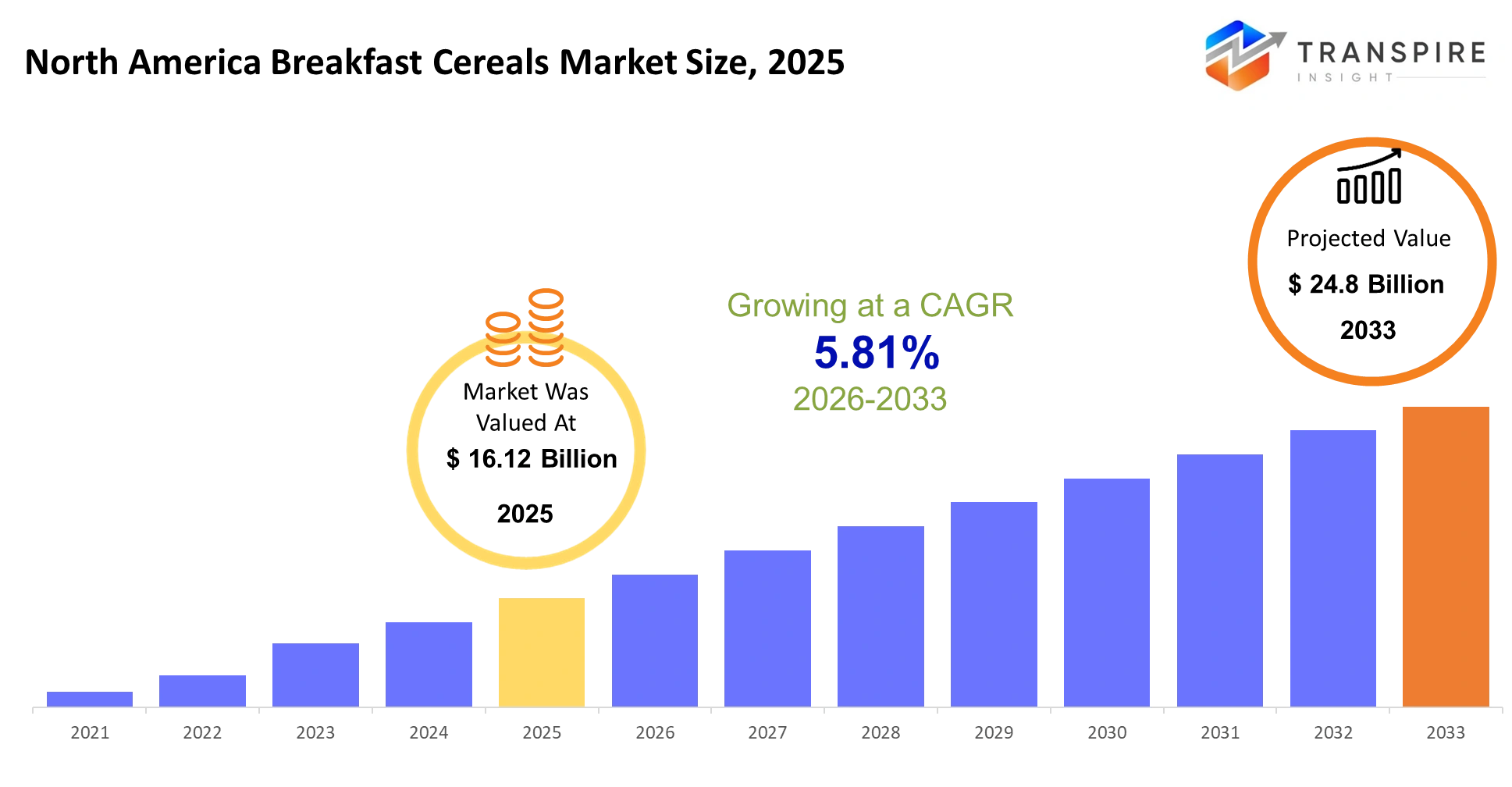
The North America Breakfast Cereals Market size is estimated at USD 16.12 Billion in 2025 and is anticipated to reach USD 24.8 Billion by 2033, growing at a CAGR of 5.81% from 2026 to 2033. The North America Breakfast Cereals Market shows continuous growth. The markets expand because people prefer breakfast foods which offer both convenience and nutritional value. People now choose cereals which contain high fiber content and low sugar levels and whole grains to create healthier diets. The North America Breakfast Cereals Market benefits from urban residents who need quick meals that provide both nutrition and flavor.
The North America Breakfast Cereals Market develops through product formulation and flavor innovation which enables brands to create organic and gluten-free and protein-enriched cereal products. Market accessibility increases through strong retail distribution and expanding supermarket penetration which enables more customers to access products. The region will maintain its consumer demand through upcoming years because of increasing health awareness and consumer preference for clean-label ingredients.
What Has the Impact of Artificial Intelligence Been on the North America Breakfast Cereals Market?
Artificial Intelligence is rapidly transforming the North America Breakfast Cereals Market which changes how companies conduct their demand analysis and consumer behavior studies. In North America Breakfast Cereals Market artificial intelligence enables companies to conduct advanced market research and perform real-time data analysis which helps them track consumer trends towards healthier and functional breakfast cereals. The North America Breakfast Cereals Market uses artificial intelligence with predictive analytics and machine learning models to improve demand forecasting while companies use it for strategic planning and market trend prediction.
The North America Breakfast Cereals Market experiences production efficiency gains through AI automation which drives operational improvements. The North America Breakfast Cereals Market achieves manufacturing excellence through smart automation and machine learning technologies which maintain product quality and decrease operational interruptions. The North America Breakfast Cereals Market uses artificial intelligence to enhance supply chain efficiency through its capability to monitor inventories in real time and plan logistics and cut expenses.
The companies which operate in the North America Breakfast Cereals Market achieve better operational results because they decreased waste and increased their ability to adapt to market changes.The North America Breakfast Cereals Market experiences product innovation through AI which creates customized products for consumers. The brand uses predictive analytics together with consumer insights to create cereal formulations which meet changing dietary requirements.
The North America Breakfast Cereals Market uses artificial intelligence to improve its product development speed and decision-making capabilities, which creates a market edge for businesses. The artificial intelligence technology in North America Breakfast Cereals Market creates new industry patterns which help businesses achieve sustainable development and extend their market reach across time.
Key Market Trends & Insights:
- The United States controls about 75 to 80 percent of the North America Breakfast Cereals Market in 2025 because people consume packaged breakfast foods at high rates.
- The North America Breakfast Cereals Market identifies Canada as its fastest-growing area which expects to grow continuously from 2025 until 2030 because people choose health-oriented foods.
- In 2025 the North America Breakfast Cereals Market designates ready-to-eat cereals as its most popular product which generates more than 60 percent of total market income.
- The North America Breakfast Cereals Market designates hot cereals as its second biggest product category which receives support from both seasonal and traditional product use.
- The North America Breakfast Cereals Market experiences its highest growth rate between 2024 and 2030 through organic cereals and high-protein cereals.
- The North America Breakfast Cereals Market shows household consumption as its primary driver which accounts for approximately 70 percent of total market share because people eat breakfast every day.
- The North America Breakfast Cereals Market experiences its strongest growth through on-the-go snack cereals which satisfy rising demands for convenient products.
- The North America Breakfast Cereals Market sees adult consumers as its main customer group because this demographic prefers healthy food products.
- The North America Breakfast Cereals Market experiences rapid expansion in children cereals which deliver both enhanced nutrition and new tasting options.
North America Breakfast Cereals Market Segmentation
By Type
The North America Breakfast Cereals Market demonstrates strong product segmentation which shows consumer preferences. The market for ready-to-eat cereals operates as the dominant segment because consumers can prepare them quickly and they are found in most retail stores. Health-conscious consumers who enjoy hot meals choose oats and bran products because they offer fiber-dense options. People will keep buying different kinds of cereal because they now understand balanced diets better.
People are increasingly interested in granola muesli, oats, cornflakes and bran products which they believe offer health advantages because of their natural components. The North America Breakfast Cereals Market keeps moving towards products that contain both high fiber content and protein benefits. Households stick to cornflakes as their preferred breakfast option because they are both cheap and widely known. The demand for organic and clean-label products helps muesli and granola products grow at a faster rate than other products. The introduction of new products will drive further development of the product category.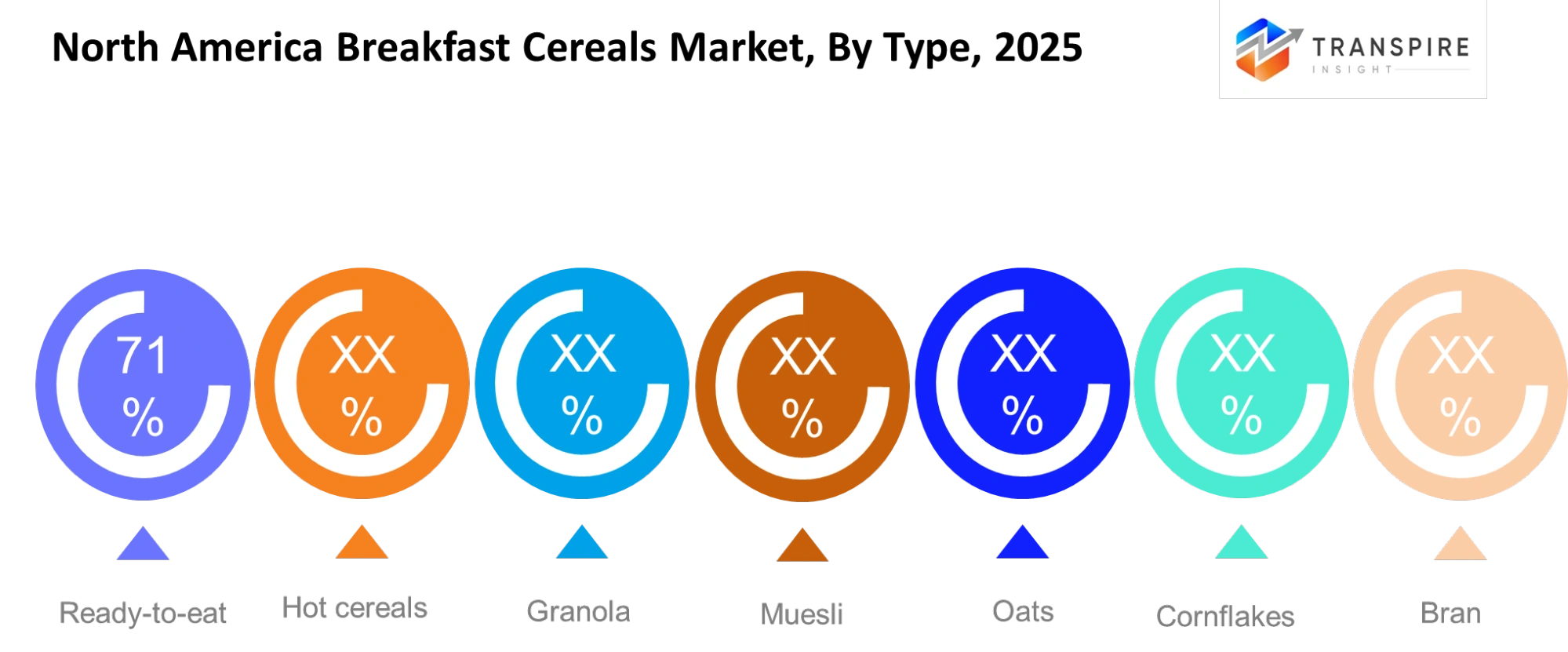
By Flavor
The North American breakfast cereal market shows diverse flavor development because different age groups develop different taste preferences. Children and young consumers prefer chocolate and fruit flavors because these flavors taste good. Adults who want to enjoy tasty food while getting nutritional benefits are choosing honey and nut-based products which have become more popular. Health-conscious consumers continue to buy plain cereals because they match their fitness needs.
Brands create new product combinations between different flavors to attract more customers through their special territory. The North America Breakfast Cereals Market is increasingly influenced by demand for natural sweeteners and reduced sugar formulations. Companies use flavor development to create unique products which help them establish their market identity. The research process will remain a focus for manufacturers because they want to create products that provide taste and health benefits across different product categories.
By Distribution
Supermarkets and retail chains in North America Breakfast Cereals Market distribution control product access which enables them to dominate the market. Supermarkets provide multiple product choices together with special discounts which lead customers to buy products in larger quantities. Convenience stores function as important business partners because they fulfill needs of customers who require quick access to products. The retail presence of products drives ongoing sales throughout both urban areas and suburban neighborhoods.
The two online channels together with D2C platforms experience rapid growth because more people start using digital technology and prefer home delivery services. The North America Breakfast Cereals Market benefits from e-commerce expansion and subscription-based cereal delivery models. Wholesale and specialty stores support institutional and niche demand segments. The process of digital transformation will create new customer buying patterns while it helps businesses reach customers in different markets.
By Packaging
The cereal market packaging trends show three main priorities which are customer convenience, environmental sustainability, and packaged serving sizes. The use of boxes as packaging material has become the most common choice because it provides both cost savings and product visibility on store shelves. Consumers who want to carry their drinks easily and finish them quickly prefer pouches and cups which have become more popular. Value-based purchasing behavior leads to family packs becoming the primary choice for home consumption.
The demand for single-serve packaging and environmentally friendly packaging solutions is increasing as people become more aware about environmental issues. Recyclable and biodegradable materials have become the main trend in the North America Breakfast Cereals Market. Institutional buyers use bulk packaging solutions to fulfill their needs for massive product consumption. Packaging innovation will maintain its critical status because companies require it to develop unique brand identities while they pursue their environmental sustainability goals.
By End-User
The end-user segmentation of the breakfast cereals market reveals distinct consumption patterns across demographic groups. The largest consumer group consists of households that maintain daily breakfast habits. Flavored and fortified cereals attract children because they represent a main target market for breakfast cereals. Adults show increasing interest in purchasing healthier cereal options that meet their dietary requirements and physical activity needs.
Health-conscious customers and athletes drive demand for cereals with high protein and low sugar. The North America Breakfast Cereals Market experiences changes because consumers increasingly want to achieve wellness with proper nutrition intake. School and cafeteria operators represent institutional buyers who maintain consistent product demand. Product innovation combined with specific marketing efforts will drive growth for all user groups.
What are the Main Challenges for the North America Breakfast Cereals Market Growth?
The North America Breakfast Cereals Market construction process faces ongoing technical and operational difficulties which manufacturers need to overcome because they must create products that maintain taste and nutritional value and shelf stability. The North America Breakfast Cereals Market faces product development challenges because companies must create products that retain their original freshness while using less sugar and artificial components.
The production process requires stable planning because supply chain interruptions and raw material price changes disrupt production operations. The North America Breakfast Cereals Market develops healthier products for retail networks which face growth hurdles that create extended periods before they reach operational capacity.
The North America Breakfast Cereals Market faces production and retail distribution obstacles because companies must comply with increasingly stringent regulatory frameworks and product quality standards. The North America Breakfast Cereals Market faces production challenges because food safety regulations require strict compliance with safety standards and product labeling requirements.
Mid-sized companies face financial difficulties because they need to invest in expensive processing equipment. The North America Breakfast Cereals Market requires extended periods to complete product launches which results in slower market growth and reduced innovation development.The North America Breakfast Cereals Market faces growth restrictions because of two main factors which include adoption difficulties and infrastructure deficiencies.
The production process in particular areas of the country suffers because people do not have access to advanced manufacturing facilities which leads to operational limitations. The North America Breakfast Cereals Market experiences operational limits because workers lack essential food technology and processing capabilities. Funding shortages that limit innovation-based startups create obstacles to developing new products and entering markets, thereby decreasing their overall market presence.
Country Insights
The North America Breakfast Cereals Market shows distinct regional patterns which result from different consumer consumption patterns and their various ways of life. The United States holds the largest share due to high demand for ready-to-eat breakfast options and strong retail penetration. The North America Breakfast Cereals Market experiences continuous growth through urban areas which develop because people need fast access to food during their daily activities. The rising health consciousness among people naturally affects their product selections throughout major urban areas.
Canada represents a steadily growing contributor to the North America Breakfast Cereals Market which benefits from rising demand for healthy organic breakfast products. The demand for clean-label cereals which provide high-fiber content continues to increase among consumers who live in urban and semi-urban regions. The North America Breakfast Cereals Market in Canada benefits from expanding supermarket networks and stronger product availability. Health-focused dietary shifts will further support long-term market expansion across the region.
Recent Development News
In April 2026, Ferrero advances strategy following WK Kellogg acquisition focus: Recent updates indicate Ferrero is moving forward with restructuring WK Kellogg operations, focusing on product innovation and healthier cereal offerings in the United States. The move aims to revive declining cereal demand through portfolio transformation and brand repositioning.
Source: https://nsjonline.com
In March 2026, General Mills adjusted strategy amid competition and changing consumer habits: General Mills continued to adjust its product and pricing strategies in response to shifting consumer behavior and strong competition in the U.S. cereal segment. The company is focusing on innovation and value offerings to stabilize performance.
Source: https://www.reuters.com
|
Report Metrics |
Details |
|
Market size value in 2025 |
USD 16.12 Billion |
|
Market size value in 2026 |
USD 17.04 Billion |
|
Revenue forecast in 2033 |
USD 24.8 Billion |
|
Growth rate |
CAGR of 5.81% from 2026 to 2033 |
|
Base year |
2025 |
|
Historical data |
2021 – 2024 |
|
Forecast period |
2026 – 2033 |
|
Report coverage |
Revenue forecast, competitive landscape, growth factors, and trends |
|
Country scope |
North America (Canada, The United States, and Mexico) |
|
Key company profiled |
Kellogg, General Mills, Nestle, Post Holdings, PepsiCo, Nature’s Path, Bob’s Red Mill, Weetabix, Quaker Oats, Bagrrys, Marico, Seven Sundays, Barbara’s, Alpen, Dorset Cereals |
|
Customization scope |
Free report customization (country, regional & segment scope). Avail customized purchase options to meet your exact research needs. |
|
Report Segmentation |
By Type (Ready-to-eat, Hot cereals, Granola, Muesli, Oats, Cornflakes, Bran); By Flavor (Chocolate, Fruit, Honey, Nuts, Mixed, Plain, Specialty); By Distribution (Retail, Online, Supermarkets, Convenience, D2C, Wholesale, Specialty); By Packaging (Boxes, Pouches, Cups, Bulk, Single-serve, Family packs, Eco packs); By End-User (Consumers, Households, Kids, Adults, Health-conscious, Athletes, Institutions). |
How Can New Companies Establish a Strong Foothold in the North America Breakfast Cereals Market?
New companies can build strong market positions in the North America Breakfast Cereals Market through two main strategies which involve creating innovative niche products and establishing health-based product identities. The North America Breakfast Cereals Market experiences increasing market demand for organic cereals which contain high protein and low sugar content, which enables flexible business newcomers to enter the market.
Magic Spoon has established itself as a successful startup through its creation of high-protein and low-carb cereals which serve customers who prioritize fitness. Three Wishes Cereal has developed a strong market presence through its use of basic allergen-free components which demonstrate how product uniqueness can help businesses succeed in their initial stages within the North America Breakfast Cereals Market.
The North America Breakfast Cereals Market requires businesses to establish strategic partnerships with both retail chains and e-commerce platforms for successful market expansion. New market players can enhance their product distribution capabilities through partnerships with supermarket chains and online grocery shopping platforms.
The North America Breakfast Cereals Market rewards brands that align with changing consumer behavior especially those offering subscription models or direct-to-consumer channels. Emerging brands use data-driven marketing techniques together with target positioning methods to compete against established market leaders.
Key North America Breakfast Cereals Market Company Insights
The North America Breakfast Cereals Market displays intense rivalry because established companies and new market entrants compete through health-focused product development. The major companies in the industry expand their product ranges by introducing low-sugar and high-protein and organic products.
The North America Breakfast Cereals Market maintains its intense market rivalry because consumers now prefer breakfast products that contain transparent ingredient lists and functional benefits. Retail channels will use price competition and branding strategies to determine their market positions.
The North America Breakfast Cereals Market's top companies use three main strategies to maintain their industry presence. The strong distribution networks of established companies combined with their established brand trust create a competitive advantage that helps them sustain market leadership.
The North America Breakfast Cereals Market faces increasing competition from smaller companies that provide specialized products which meet specific dietary needs. The future growth of businesses will depend on their ability to create unique products and effective marketing campaigns which will establish a competitive advantage.
Company List
- Kellogg
- General Mills
- Nestle
- Post Holdings
- PepsiCo
- Nature’s Path
- Bob’s Red Mill
- Weetabix
- Quaker Oats
- Bagrrys
- Marico
- Seven Sundays
- Barbara’s
- Alpen
- Dorset Cereals
What are the Key Use-Cases Driving the Growth of the North America Breakfast Cereals Market?
The North America Breakfast Cereals Market experiences steady growth because busy consumers want quick nutritious breakfast options that require no cooking. The North America Breakfast Cereals Market serves households which prioritize convenient products that provide balanced nutrition. People are increasingly incorporating high-fiber foods together with fortified foods into their regular diets.
The North America Breakfast Cereals Market has become more important for the healthcare and wellness sector because consumers now prefer functional foods that help them maintain healthy hearts while controlling their weight and managing their energy levels. Fortified cereals are being used more frequently throughout hospitals and nutrition programs and diet-focused meal plans.
The North America Breakfast Cereals Market grows because people now recognize preventive healthcare together with dietary management. The health-focused usage of these products creates ongoing demand within populations that prioritize their well-being.The North America Breakfast Cereals Market receives substantial support from institutional and commercial uses which schools, hotels and food service providers implement.
Cafeterias utilize breakfast cereals as their primary food option because it provides both cost savings and simple serving methods. The North America Breakfast Cereals Market receives additional support through new product development which creates portion-controlled and portable packaging solutions. The non-retail channels gain operational advantages through these applications which boost scalability and maintain steady demand for bulk products.
North America Breakfast Cereals Market Report Segmentation
By Type
- Ready-to-eat
- Hot cereals
- Granola
- Muesli
- Oats
- Cornflakes
- Bran
By Flavor
- Chocolate
- Fruit
- Honey
- Nuts
- Mixed
- Plain
- Specialty
By Distribution
- Retail
- Online
- Supermarkets
- Convenience
- D2C
- Wholesale
- Specialty
By Packaging
- Boxes
- Pouches
- Cups
- Bulk
- Single-serve
- Family packs
- Eco packs
By End-User
- Consumers
- Households
- Kids
- Adults
- Health-conscious
- Athletes
- Institutions
Frequently Asked Questions
Find quick answers to common questions.
The Approximate North America Breakfast Cereals Market size for the Market will be USD 24.8 Billion in 2033.
The key Segments of the North America Breakfast Cereals Market are By Type (Ready-to-eat, Hot cereals, Granola, Muesli, Oats, Cornflakes, Bran); By Flavor (Chocolate, Fruit, Honey, Nuts, Mixed, Plain, Specialty); By Distribution (Retail, Online, Supermarkets, Convenience, D2C, Wholesale, Specialty); By Packaging (Boxes, Pouches, Cups, Bulk, Single-serve, Family packs, Eco packs); By End-User (Consumers, Households, Kids, Adults, Health-conscious, Athletes, Institutions).
Major Players in the North America Breakfast Cereals Market are Kellogg, General Mills, Nestle, Post Holdings, PepsiCo, Nature’s Path, Bob’s Red Mill, Weetabix, Quaker Oats, Bagrrys, Marico, Seven Sundays, Barbara’s, Alpen, Dorset Cereals.
The Current Market size of the North America Breakfast Cereals Market is USD 16.12 Billion in 2025.
The North America Breakfast Cereals Market CAGR is 5.81%.
- Kellogg
- General Mills
- Nestle
- Post Holdings
- PepsiCo
- Nature’s Path
- Bob’s Red Mill
- Weetabix
- Quaker Oats
- Bagrrys
- Marico
- Seven Sundays
- Barbara’s
- Alpen
- Dorset Cereals
Recently Published Reports
-
Dec 2024
Baby Infant Formula Market
Baby Infant Formula Market Size, Share & Analysis Report By ype (Infant Milk, Follow On Milk, Specialty Baby Milk, Growing-Up Milk), By Ingredient (Carbohydrate, Fat, Protein, Minerals, Vitamins, and Others), By Product Form (Powder, Liquid, and Ready-to-feed), By Distribution Channels (Supermarket/Hypermarket, Specialty Store, Pharmacies, Online Retail, and Others), and Geography (North America, Europe, Asia-Pacific, Middle East and Africa, South and Central America), 2021 - 2031
-
Jan 2025
Edible Insects for Animal Feed Market
Edible Insects for Animal Feed Market Size, Share & Analysis Report By Type (Insect Powder, Insect Meal, Insect Bar, Insect Paste, Insect Oil, and Others), By Insect Type (Beetles, Cricket, Caterpillar, Hymenoptera, Orthoptera, Tree Bugs, and Others), By Application (Livestock, Pet Food, and Aquaculture), By Livestock Type (Poultry, Swine, and Others), and Geography (North America, Europe, Asia-Pacific, Middle East and Africa, South and Central America), 2021 - 2031
-
Jan 2025
Food Industry Disinfection and Bacterial Control Market
Food Industry Disinfection and Bacterial Control Market Size, Share & Analysis Report By Type (Chemical Disinfectants, Physical Disinfectants, and Biocides and Antimicrobials), By Application (Food Processing Equipment Surface Disinfection, Food Preparation Areas Surface Disinfection, Storage Areas Surface Disinfection, Anti-microbial Coatings Food Preservation, and Preservative Solutions Food Preservation), By End User (Meat and Poultry Processing, Dairy Processing, Seafood Processing, Bakery and Confectionery, Restaurants and Commercial Kitchens, and Food Service Providers), By Sales Channel (Online, Offline), and Geography (North America, Europe, Asia-Pacific, Middle East and Africa, South and Central America), 2021 - 2031
-
Jan 2025
Freeze Dried Food Market
Freeze Dried Food Market Size, Share & Analysis Report By Product Type (Fruits, Vegetables, Freeze-Dried Dairy Products, Freeze-Dried Meat and Seafood, Freeze-Dried Pet Food, and Prepared Meal), By Nature (Organic, and Conventional), By Form (Powdered, Granules, and Diced), By End Use (Breakfast Cereals, Dairy Products, Bakery & Confectionery, Nutritional Bars & Supplements, Powdered Beverages, Snacks, and Retail (Household)), and Geography (North America, Europe, Asia-Pacific, Middle East and Africa, South and Central America), 2021 - 2031