
Spinal Fusion Devices Market Summary:
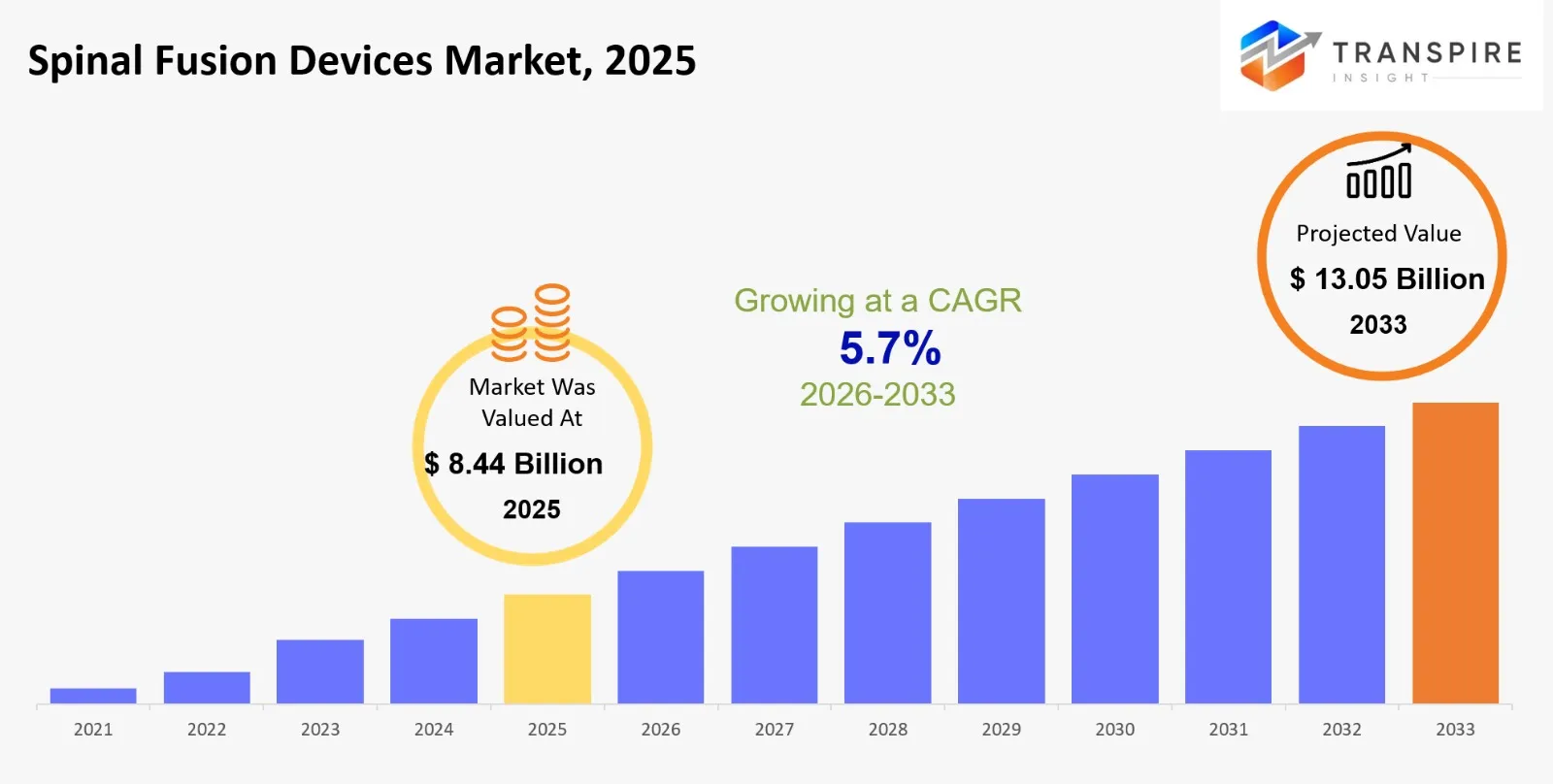
As per Transpire Insight Analysis, the Spinal Fusion Devices Market size is estimated at USD 8.44 billion in 2025 and is anticipated to reach USD 13.05 billion by 2033, growing at a CAGR of 5.7% from 2026 to 2033.
The spinal fusion devices market supports doctors in treating problems such as instability, deformities, degenerative disc disease and injuries. It does this with implants that keep vertebrae steady and help bones grow together. In the past three to five years, the industry has shifted from plain metal implants to expandable cages, porous titanium structures, implants made for each patient and procedures that use technology. More doctors use small‑cut surgeries. That has changed the way they pick implants and plan tough operations. A big reason for this change is that robotic navigation and high‑quality imaging in the operating room are now easier to get. These tools let doctors place implants accurately. Because of this, hospitals are moving toward spinal systems. The need to treat people with spine problems and complex lower‑back issues keeps the number of surgeries high.
Spinal Fusion Devices Market Size & Forecast:
- Market Size 2025: USD 8.44 Billion
- Expected Market Value (2033): USD 13.05 Billion
- Forecast CAGR (2026–2033): 5.7%
- Leading Region in 2025: North America
- Fastest Growing Region: Asia Pacific
- Key Company Profiles: Medtronic, Johnson & Johnson, Stryker, Zimmer Biomet, NuVasive, Globus Medical, Medacta, Orthofix, Exactech, SeaSpine, Xtant Medical, Spinal Elements, Spine Wave, Alphatec, Centinel Spine
Key Market Insights:
The market is moving toward implant technology advancements allowing anatomical fit, bone integration and surgical efficiency.
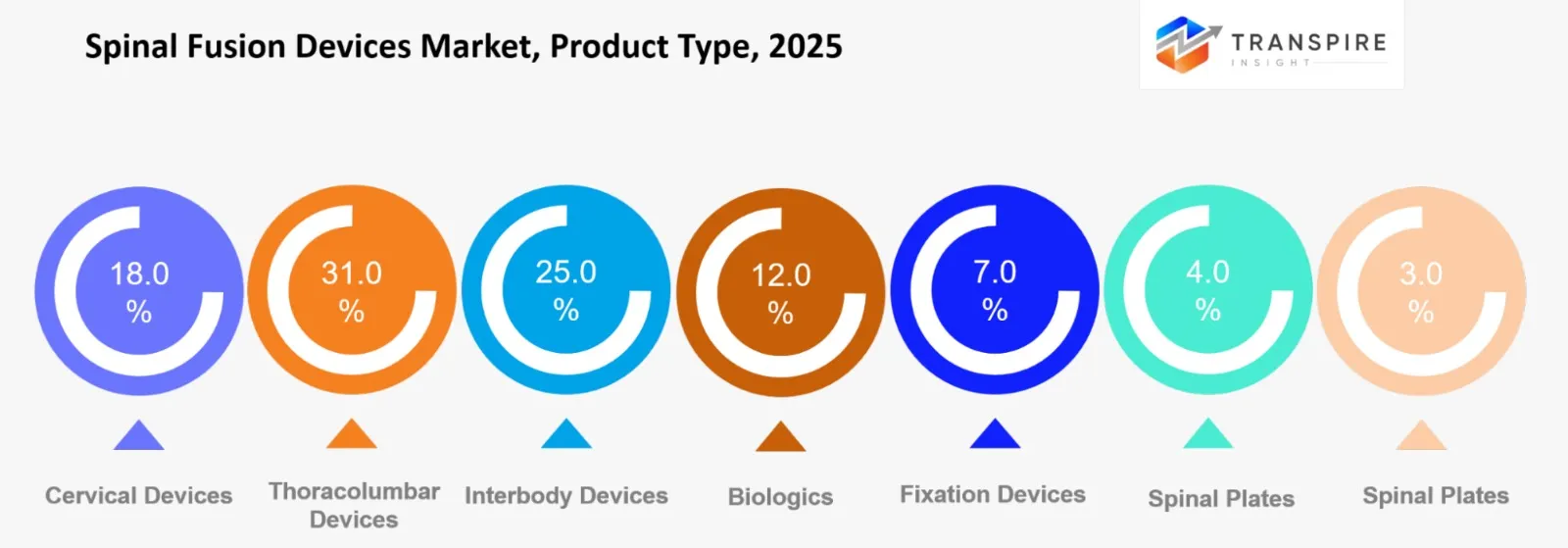
- The market segment of thoracolumbar devices represents 31.0% of the market; these types of implants are actively used during spine deformities, fractures and lumbar stabilisation surgeries.
- The share of interbody implants is 25.0%, and now manufacturers work on expandable and porous titanium cages that allow better positioning and bone integration of the implants.
- Cervical implants hold 18.0% of the market, and manufacturers are expanding implant possibilities used for degenerative diseases and anterior fusion of the cervical region of the spine.
- Biologics are next in line; the biologics market segment takes 12.0% of the market due to bone graft materials that support effective fusion.
- Fixation implants hold 7.0% of the market, while manufacturers perfect screw and rod systems needed for complex surgeries on spine.
- Spinal plates account for 4.0% of the market, and current products allow implant stability and compatibility with cervical surgery.
What are the Key Drivers, Restraints, and Opportunities in the Spinal Fusion Devices Market?
Drivers
The rising number of spinal fusion surgeries for treating disc diseases, spinal stenosis, and deformities is also contributing to the growth of the market. Degradation of discs owing to aging and instability of the spine requires surgical stabilization of many patients because of the inefficiency of conservative treatment. The development of expandable interbody cages, porous titanium implants, and surgical navigation systems is also pushing surgeons to consider the use of advanced implant systems. It facilitates the development of valuable products by medical device companies and the establishment of relationships with more hospitals.
Restraint
High implant prices and costs associated with advanced surgical infrastructure prevent the use of such products, particularly in small hospitals and underdeveloped segments of healthcare industry. Robotic surgical systems, navigational systems, and advanced implants require a huge investment from hospitals. Besides, such issues as infection, implant failure, and bone non-fusion complicate treatment options and add up to the costs of healthcare organizations.
Opportunities
Patient-specific implants, 3D printing technology, and minimally invasive surgeries are some of the opportunities available in the market. Medical devices companies can make use of customised titanium implants and technological surgeries to gain an edge. The other opportunity is in the Asia Pacific region because of increasing infrastructure and specialized services for orthopaedics and neurosurgeries.
|
Driver |
Relative Impact on Growth (%) |
Geographic Relevance |
Impact Timeline |
Demand Strength |
Growth Mechanism (5–10 words) |
Key Beneficiaries (5–10 words) |
Major Constraint (5–10 words) |
|
Rising prevalence of degenerative spinal disorders and increasing aging population |
28% |
North America, Europe, Asia Pacific |
Long-term (≥4 years) |
High |
Increases demand for surgical stabilization and fusion procedures |
Spinal implant manufacturers, hospitals, orthopedic surgeons |
High treatment costs and patient surgical risks |
|
Growing adoption of minimally invasive spinal fusion procedures |
23% |
North America, Europe |
Medium-term (2–4 years) |
High |
Reduces surgical trauma and accelerates patient recovery |
Minimally invasive device manufacturers, hospitals, surgical centers |
Limited surgeon expertise and equipment affordability |
|
Technological advancements in 3D-printed implants and advanced biomaterials |
19% |
North America, Europe, Asia Pacific |
Medium-term (2–4 years) |
High |
Improves implant fit, osseointegration, and surgical outcomes |
Implant manufacturers, technology vendors, spinal surgeons |
Manufacturing complexity and regulatory approval requirements |
|
Increasing demand for robotic-assisted and AI-enabled spinal surgeries |
17% |
North America, Asia Pacific, Europe |
Long-term (≥4 years) |
Medium |
Enhances surgical precision, planning, and procedural consistency |
Robotics companies, hospitals, navigation system providers |
High capital investment and technology integration challenges |
|
Expanding healthcare infrastructure and improving access to spinal surgeries |
13% |
Asia Pacific, Latin America, Middle East & Africa |
Short-term (≤2 years) |
High |
Expands surgical capacity and access to advanced implants |
Regional manufacturers, hospitals, distributors, healthcare providers |
Uneven reimbursement coverage and limited specialist availability |
|
Total |
100% |
What Has the Impact of Artificial Intelligence Been on the Spinal Fusion Devices Market?
Artificial intelligence is slowly finding its place in spinal fusion surgery with regard to the process of pre-surgical planning, analysing images from medical imaging techniques and aiding surgical decision-making. There are machine learning applications that can review CT/MRI images, spot abnormalities in the spine, analyse anatomy, and choose optimal surgical techniques. Pre-surgery planning with the help of AI can aid in evaluating dimensions and positions for implants. Predictive analytics is an application that is developing right now since algorithms allow predicting possible complications, rehabilitation trajectory and surgical outcomes based on patients' parameters and clinical data. Such tools might allow planning the treatment better and allocating resources in operating rooms more efficiently. The integration with robot navigation and intraoperative imaging will help increase precision in the placement of the implants. There are numerous difficulties in using this tool due to the need for accurate clinical datasets for training AI, regulatory framework, specialist validation, and integration with other hospital software. The high costs of implementation and the discrepancy in algorithms' accuracy are also obstacles for usage of this tool.
Instance
In April 2026, Medtronic launched its Stealth AXiS Surgical System, which uses artificial intelligence, navigation, and robotic assistance for spinal surgeries. The system enables patient-specific surgical planning, better placement of implants, and increased accuracy in performing spinal fusion surgeries. https://news.medtronic.com/2026-04-29-Medtronic-Advances-First-Clinical-Cases-with-Stealth-AXiS-TM-Surgical-System,-Demonstrating-the-Power-of-Connected-Smart-Ecosystems-Across-Neurosurgery
Key Market Trends:
There is an increasing trend in designing implants that integrate both mechanical stability and enhanced bone ingrowth and fit.
- Alongside the existing traditional implants, the market sees more porous titanium implants that provide bone adherence and implant integration.
- Interbody fixed cages are being replaced by systems of expandable implants, which allow the surgeon to change the implant’s height in the course of the procedure.
- The existing open fusion techniques are coming under pressure from minimally invasive techniques.
- Along with manual surgical planning, there is an increase in using such planning techniques as CT navigation, robotic assistance and digital platforms of visualization.
- The existing traditional implant manufacturing is extending towards 3D printing technologies.
- The portfolio of general-purpose implants is extended through individualized implants made based on the patient’s spine anatomy.
- Along with standard bone grafts, the market sees new biologic materials and processed grafts with enhanced performance.
Spinal Fusion Devices Market Segmentation
By Product Type
Thoracolumbar Devices constitute the largest product segment with 31.0% revenue contribution due to their applicability in the treatment of lumbar instability, spinal deformities, and spinal trauma. Interbody Devices are worth 25.0%, and are predicted to grow at 8% CAGR owing to the development of expandable cages as well as implant surface innovations. Cervical Devices contribute 18.0%, which is attributed to the importance of these devices in the treatment of cervical disc degeneration and spinal instability conditions. Biologics make up 12.0%, whereas Fixation Devices are worth 7.0%. The share of Spinal Plates and Bone Grafts in the market revenue is 4.0% and 3.0%, respectively, owing to the need for spinal stability.
By Disease Indication
Degenerative Disc Disease is one of the important applications in this market since the progressive destruction of intervertebral discs leads to pain and decreased functionality as well as spinal instability. Complex Deformity procedures require implants to restore proper alignment as well as stability of several vertebrae. Trauma and Fractures require fixation of the spine during surgery for its reconstruction after injuries. Procedures related to the treatment of Spinal Stenosis and Spondylolisthesis increase the procedural demands in this market. Tumours and other conditions create additional
By Surgery Type
Open Surgery is still necessary for cases where significant destruction of the spine needs to be reconstructed as well as in patients with highly complex deformities. Minimally Invasive Surgery is starting to gain momentum; with more limited access to the spine and less trauma to the patient, it has the potential to lead to shorter recovery times. Robotic-Assisted Surgery is evolving by combining navigation platforms and robotic guidance. Anterior Fusion, Posterior Fusion, and Lateral Fusion each address varying anatomic and surgical needs, while combined approaches address more complex needs requiring multiple access points or stabilisation.
By Material
Titanium retains a strong role due to its excellent mechanical properties, corrosion resistance and applicability for use with spinal implants. Stainless Steel retains a major role in selected fixation applications. PEEK is available in interbody implants, being radiolucent and compatible with imaging. Cobalt-Chrome maintains a role in high mechanical strength situations for some implant needs. Ceramic and Carbon Fiber materials present alternative properties for some specific uses. Bioabsorbable Materials are also drawing research interest as potential constructions.
By End User
Hospitals are a key end-user segment as they house the surgical infrastructure, specialist surgical teams and bedside facilities for complex spinal fusion surgeries. Ambulatory Surgery Centres are becoming more important for procedures that are suitable for day care. Speciality Clinics and Orthopaedic Centres play a role in diagnosing and evaluating patients, determining a plan of care and preparing the patient for surgery, while dedicated Spine Centers provide speciality surgical care. Research Institutions have the potential to contribute to new technologies through evaluation of implants and other research activities. Other facilities are also involved in the use of spinal fusion products.
By Technology
Traditional Systems will still be widely used in spinal fusion surgeries, as existing implant designs satisfy clinical needs. Manufacturers are using 3D Printing to create porous implants and more intricate implant shapes. Navigation Systems and robotics enhance the visualisation of the operation and assist with implant placement. Expandable Implants allow the size of an implant to be altered by the surgeon during the operation. Biologics help with bone healing, and Patient-Specific Implants are offering opportunities for patient-tailored reconstruction.
What are the Key Use Cases Driving the Spinal Fusion Devices Market?
The thoracolumbar stabilisation is one of the use cases where such implants are useful to the patient because they experience spinal deformity, spinal instability and spinal trauma. Implants that keep in check the alignment as well as the structural stability of bone fusion are required for the same. The degeneration and damage to the discs of the spine, spinal stenosis as well as Spondylolisthesis is another application area of the implants under discussion. For the cervical and lumbar fusions after decompression or disc removal, such implants are very much in need.
|
Report Metrics |
Details |
|
Market size value in 2025 |
USD 8.44 Billion |
|
Market size value in 2026 |
USD 8.92 Billion |
|
Revenue forecast in 2033 |
USD 13.05 Billion |
|
Growth rate |
CAGR of 5.7% from 2026 to 2033 |
|
Base year |
2025 |
|
Historical data |
2021 - 2024 |
|
Forecast period |
2026 - 2033 |
|
Report coverage |
Revenue forecast, competitive landscape, growth factors, and trends |
|
Regional scope |
United States; Canada; Mexico; United Kingdom; Germany; France; Italy; Spain; Denmark; Sweden; Norway; China; Japan; India; Australia; South Korea; Thailand; Brazil; Argentina; South Africa; Saudi Arabia; United Arab Emirates |
|
Key company profiled |
Medtronic, Johnson & Johnson, Stryker, Zimmer Biomet, NuVasive, Globus Medical, Medacta, Orthofix, Exactech, SeaSpine, Xtant Medical, Spinal Elements, Spine Wave, Alphatec, Centinel Spine |
|
Customization scope |
Free report customization (country, regional & segment scope). Avail customized purchase options to meet your exact research needs. |
|
Report Segmentation |
Product Type (Cervical Devices, Thoracolumbar Devices, Interbody Devices, Biologics, Fixation Devices, Spinal Plates, Bone Grafts); Disease Indication (Degenerative Disc Disease, Complex Deformity, Trauma & Fractures, Spinal Stenosis, Spondylolisthesis, Tumors, Other); Surgery Type (Open Surgery, Minimally Invasive Surgery, Robotic-Assisted Surgery, Anterior Fusion, Posterior Fusion, Lateral Fusion, Combined Approaches); Material (Titanium, Stainless Steel, PEEK, Cobalt-Chrome, Ceramic, Carbon Fiber, Bioabsorbable Materials); End User (Hospitals, Ambulatory Surgery Centers, Specialty Clinics, Orthopedic Centers, Spine Centers, Research Institutions, Others); Technology (3D Printing, Navigation Systems, Robotics, Expandable Implants, Biologics, Patient-Specific Implants, Conventional Systems) |
Which Regions are Driving the Spinal Fusion Devices Market Growth?
North America
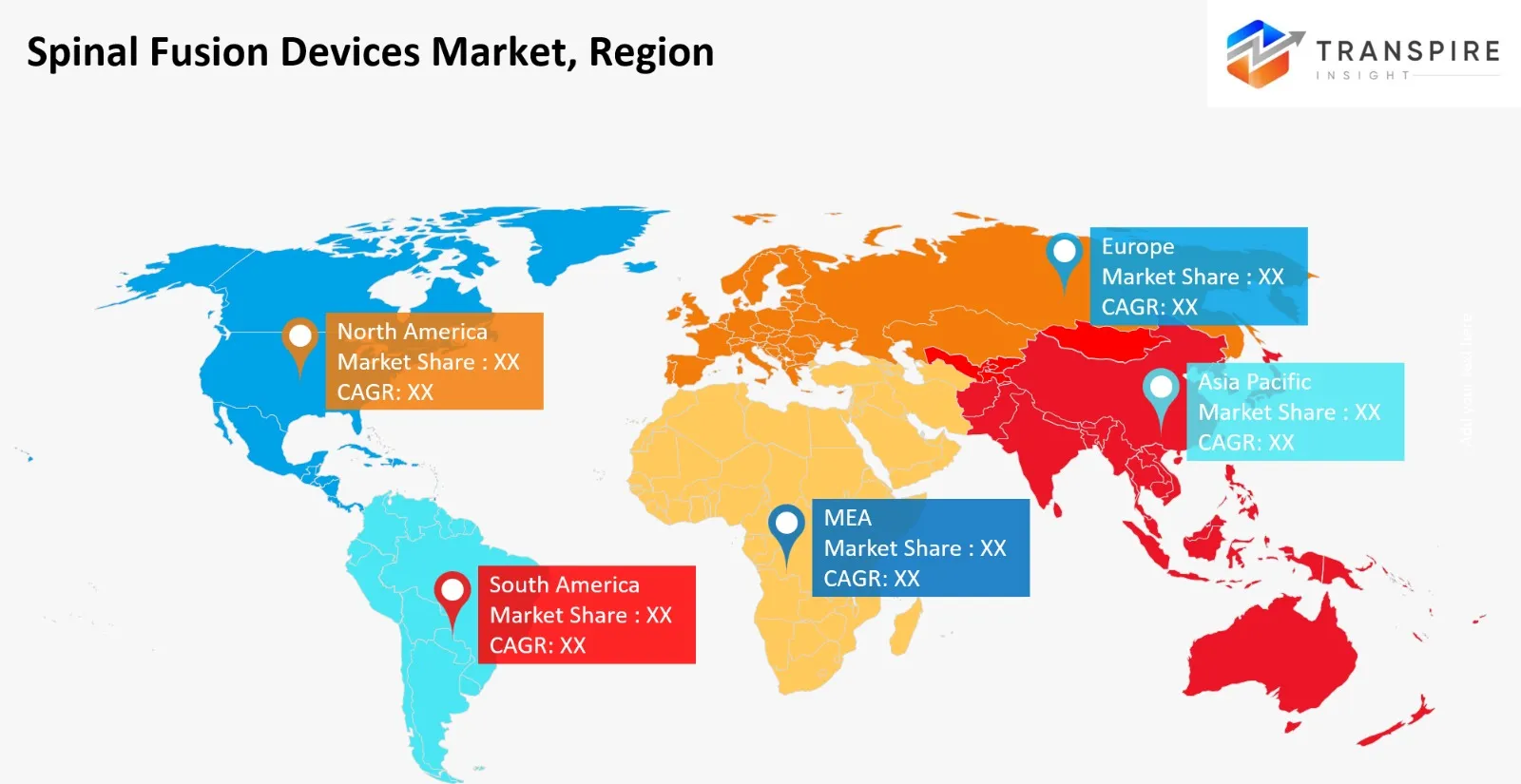
North America leads the market and holds 47.41%. The presence of highly developed healthcare infrastructure, presence of spinal surgery centres, and the availability of the medical devices industry within the country. Robotic-assisted procedures, advanced spinal implants, and minimally invasive procedures further drive the demand in the region. Healthcare reimbursements and orthopaedics and neurosurgery specialities further contribute to the market dominance of North America.
In February 2026, Medtronic gained FDA approval for the use of its INFUSE Bone Graft in one- and two-level TLIF procedures, which broadened the use of its products in lumbar spinal fusion procedures. https://news.medtronic.com/2026-02-17-Medtronic-Announces-FDA-approval-of-Infuse-TM-bone-graft-for-one-and-two-level-Transforaminal-Lumbar-Interbody-Fusion-TLIF-spine-procedures
Europe
Europe constitutes 25.0%. The presence of developed healthcare facilities, medical device companies, and spinal treatment clinics is one of the major reasons contributing to the dominance of the region. Countries like Germany, France, and the UK help maintain stability in the market through innovations in spinal surgeries, medical research, and orthopaedic treatments. In comparison to North America, the region's growth is driven by the presence of public healthcare, established clinical practice, and advanced implant technology.
In September 2026, Medtronic carried out the first surgical procedures in Europe via its Stealth AXiS Surgical System at seven centres in Germany, the UK, Italy, and Spain, contributing to the growth of navigation and robotic spine surgery. https://news.medtronic.com/Medtronic-announces-first-procedures-in-Europe-with-Stealth-AXiS-TM-Surgical-System
Asia Pacific
In Asia Pacific, the market constitutes 19.0% of the world's market size of spinal fusion device. This region is the fastest growing in the world, and this region is expected to record a CAGR of 6.72%. The reason behind this is that this region is improving the facilities of their hospitals and increasing the availability of new technological medical tools. This region consists of countries like China, India, and Japan, which are taking initiatives in order to create expansion opportunities.
In August 2025, Chinese medical technology firm AK Medical witnessed a whopping 87% increase in its atlantoaxial lateral mass fusion products in the first half of 2025, along with the addition of new hospitals from 20 to more than 40 hospitals. https://www1.hkexnews.hk/listedco/listconews/sehk/2025/0827/2025082701349.pdf
Who are the Key Players in the Spinal Fusion Devices Market and how do they compete?
Competitors and implant companies that specialise in the production of spine implants. These companies compete by virtue of the engineering involved in making implants, biologics, surgical instruments, navigation and robotic technology. The focus of their business strategies continues to tilt towards providing integrated solutions, as opposed to simply competing on the basis of their own implant product offerings.The competitive strategy of Medtronic involves the extensive use of spinal implants and biologics, which consist of thoracolumbar systems, interbody products, bone graft solutions and surgical navigation. With its comprehensive product line, Medtronic maintains strong relationships with hospitals and spine specialists. Globus Medical is distinguished by expandable implants and the Excelsius robot-assisted surgical navigation ecosystem. This strategy entails innovation in implants and surgical technology. For J&J MedTech, DePuy Synthes focuses its strategy on sophisticated interbody platforms, porous titanium implants and dedicated systems. This strategy allows it to cater to cervical and lumbar fusions, among other procedures. Strategy for Stryker involves competing using spine instrumentation, navigation, robotic systems and overall surgical solutions.
Spinal Fusion Devices Market companies
- Medtronic
- Johnson & Johnson
- Stryker
- Zimmer Biomet
- NuVasive
- Globus Medical
- Medacta
- Orthofix
- Exactech
- SeaSpine
- Xtant Medical
- Spinal Elements
- Spine Wave
- Alphatec
- Centinel Spine
|
Company |
Est. Revenue Share Range |
Key Offerings |
Strategic Positioning |
Geographic Strength |
Technology Focus |
|
Medtronic plc |
20–24% |
INFUSE Bone Graft, CD HORIZON, SOLERA, CAPSTONE interbody systems |
leadership through comprehensive spinal implant portfolio |
North America, Europe, Asia Pacific |
Robotic navigation and advanced spinal implants |
|
Globus Medical, Inc. |
18–22% |
CREO, RISE, ALTERA, EXCELSIUSGPS |
Technology-led leadership through integrated surgical platforms |
North America, Europe, Asia Pacific |
Robotic-assisted surgery and 3D-printed implants |
|
Johnson & Johnson MedTech (DePuy Synthes) |
6–9% |
CONCORDE, EXPEDIUM, VIPER, SYNFIX |
Premium positioning through established surgical relationships |
North America, Europe, Asia Pacific |
Minimally invasive implants and surgical instrumentation |
|
Alphatec Holdings, Inc. (ATEC) |
5–7% |
INTEGRITY, PTP, PTP Patient Positioning, EOS imaging-enabled workflows |
Innovation-led differentiation in lateral spine surgery |
North America, Europe |
Surgical workflow integration and navigation |
|
VB Spine |
3–5% |
Acquired Stryker spinal implant portfolio, spinal fixation systems, interbody implants |
Portfolio expansion through acquired implant technologies |
North America, selected international markets |
Spinal implant engineering and surgical navigation partnerships |
|
Highridge Medical |
3–4% |
Cervical and lumbar interbody systems, spinal fixation systems, deformity solutions |
Focused spine specialist with established surgeon relationships |
North America, Europe, selected Asia Pacific markets |
Advanced implant materials and spinal fixation designs |
|
Orthofix Medical Inc. |
2–4% |
FIREBIRD, FORZA, CONSTRUX, Trinity bone graft products |
Differentiation through implants and complementary bone-healing solutions |
North America, Europe, Latin America |
Biologics, bone growth stimulation and fixation systems |
|
SI-BONE, Inc. |
1–2% |
iFuse Implant System, iFuse TORQ, iFuse Bedrock |
Specialty positioning in sacroiliac joint fusion |
North America, Europe, Australia |
Minimally invasive SI joint fusion implants |
|
Stryker Corporation |
1–2% |
Q Guidance System, spinal navigation technologies, interventional spine products |
Enabling-technology focus following spinal implant divestiture |
North America, Europe, Asia Pacific |
Surgical navigation and image-guided procedures |
|
Xtant Medical Holdings, Inc. |
Below 1% |
Axle Interbody System, Cortera, OsteoSponge, OsteoSelect |
Niche specialization in spinal implants and biologics |
North America, selected international markets |
Biologic graft materials and interbody implant designs |
Recent Development News
In March 2026, the company received FDA 510(k) clearance and conducted its first surgical cases utilising its Ventana A Anterior Lumbar Interbody Fusion System. Its introduction has expanded the portfolio of titanium 3D-printed interbody products and solidified its market position in lumbar fusion solutions. https://spinalelements.com/company/newsroom/spinal-elements-expands-ventana-platform-with-fda-51-ok-clearance-and-first-cases-of-ventana-a-alif-system/
In August 2025, the company received FDA 510(k) clearance for its Project X Expandable Posterior Lumbar Interbody System. It has been a major step toward regulatory approval for the commercial pathway of its expanding lumbar fusion system. https://www.accessdata.fda.gov/scripts/cdrh/cfdocs/cfpmn/pmn.cfm
What Strategic Insights Define the Future of the Spinal Fusion Devices Market?
Technology-oriented spinal fusion implants, bespoke surgeries, and operating room technologies are some future trends in the spinal fusion devices market. The future success of competitors in the market will be dependent on their abilities to integrate advanced implant functionality with robotic navigation, surgical imaging, and biological components. There is one risk that is not very visible in the industry, which is the high expense that comes with incorporating advanced surgical tools. This may lead to a further increase in disparities between well-endowed hospitals and those that are smaller and not endowed enough. Demonstrating consistency and reliability of long-term clinical results is another challenge, especially when it comes to new implant materials and personalised products. Asia Pacific represents an emerging market because of the increase in specialisation of healthcare facilities and accessibility of complex surgeries in that region.
Product Type
- Cervical Devices
- Thoracolumbar Devices
- Interbody Devices
- Biologics
- Fixation Devices
- Spinal Plates
- Bone Grafts
Disease Indication
- Degenerative Disc Disease
- Complex Deformity
- Trauma & Fractures
- Spinal Stenosis
- Spondylolisthesis
- Tumors
- Other
Surgery Type
- Open Surgery
- Minimally Invasive Surgery
- Robotic-Assisted Surgery
- Anterior Fusion
- Posterior Fusion
- Lateral Fusion
- Combined Approaches
Material
- Titanium
- Stainless Steel
- PEEK
- Cobalt-Chrome
- Ceramic
- Carbon Fiber
- Bioabsorbable Materials
End User
- Hospitals
- Ambulatory Surgery Centers
- Specialty Clinics
- Orthopedic Centers
- Spine Centers
- Research Institutions
- Others
Technology
- 3D Printing
- Navigation Systems
- Robotics
- Expandable Implants
- Biologics
- Patient-Specific Implants
- Conventional Systems
By Regional Analysis
North America
- US
- Canada
- Mexico
Europe
- Germany
- UK
- France
- Italy
- Spain
- Russia
- Rest of Europe
Asia Pacific
- China
- Japan
- India
- South Korea
- Australia
- Rest of Asia Pacific
South America
- Brazil
- Argentina
- Rest of South America
Middle East & Africa
- UAE
- Saudi Arabia
- Qatar
- South Africa
- Rest of the Middle East & Africa
Frequently Asked Questions
Find quick answers to common questions.
The spinal fusion devices market size was valued at USD 8.44 billion in 2025 and is poised to reach USD 13.05 billion by 2033, expanding at a 5.7% CAGR
Key segments for the spinal fusion devices market are Product Type (Cervical Devices, Thoracolumbar Devices, Interbody Devices, Biologics, Fixation Devices, Spinal Plates, Bone Grafts); Disease Indication (Degenerative Disc Disease, Complex Deformity, Trauma & Fractures, Spinal Stenosis, Spondylolisthesis, Tumors, Other); Surgery Type (Open Surgery, Minimally Invasive Surgery, Robotic-Assisted Surgery, Anterior Fusion, Posterior Fusion, Lateral Fusion, Combined Approaches); Material (Titanium, Stainless Steel, PEEK, Cobalt-Chrome, Ceramic, Carbon Fiber, Bioabsorbable Materials); End User (Hospitals, Ambulatory Surgery Centers, Specialty Clinics, Orthopedic Centers, Spine Centers, Research Institutions, Others); Technology (3D Printing, Navigation Systems, Robotics, Expandable Implants, Biologics, Patient-Specific Implants, Conventional Systems)
Growth is primarily driven by increasing prevalence of spinal disorders, increasing geriatric population, growing demand for minimally invasive spinal surgeries, advancements in spinal implant technologies, increasing adoption of robotic-assisted procedures, and rising healthcare expenditure.
The market is led by major manufacturers including Medtronic, Johnson & Johnson, Stryker, Zimmer Biomet, NuVasive, Globus Medical, Medacta, Orthofix, Exactech, SeaSpine, Xtant Medical, Spinal Elements, Spine Wave, Alphatec, Centinel Spine
The North American region accounts for a share of 47.41% in the spinal fusion devices market owing to the presence of a well-developed healthcare sector, extensive use of minimally invasive and robotic spinal surgeries, dominance of medical device companies, good reimbursement scenarios, and growing incidence of spinal disorders.
The commercial opportunities are increased interest in minimally invasive spinal fusion techniques, use of robotic-assisted surgical technology, use of advanced spinal implants, increased health care investments in developing nations, and design of 3D-printed spine implants according to patients’ requirements.
- Medtronic
- Johnson & Johnson
- Stryker
- Zimmer Biomet
- NuVasive
- Globus Medical
- Medacta
- Orthofix
- Exactech
- SeaSpine
- Xtant Medical
- Spinal Elements
- Spine Wave
- Alphatec
- Centinel Spine
About the Authors

Pankaj Ghogare Patil
I am Pankaj Ghogare Patil, a Senior Research Analyst at Transpire Insight, specializing in the Pharmaceutical, Chemicals & Materials, Healthcare IT, and Biotechnology industry. My expertise lies in conducting comprehensive market research, analyzing industry trends, evaluating competitive landscapes, and translating complex data into actionable insights. At Transpire Insight, I closely follow emerging technologies, regulatory developments, and market innovations to create accurate, well-researched, and informative content that helps businesses and professionals make informed decisions. I am committed to producing credible, evidence-based articles that reflect industry best practices while making technical topics accessible and valuable for a broad audience.

Chakradhar Khansole
Chakradhar serves as the Research Director at Transpire Insight, bringing over 8 years of experience in technology, innovation, and strategic market intelligence. He specializes in transforming complex market data into actionable business insights that enable organizations to make informed, growth-oriented decisions. Recognized for his strategic vision and analytical expertise, Chakradhar leads high-impact research initiatives, delivering comprehensive market assessments, competitive intelligence, and forward-looking industry analysis.
Recently Published Reports
-
Apr 2026
AI in Diabetic Retinopathy Market
AI in Diabetic Retinopathy Market Size, Share & Analysis Report By Type (Screening AI Systems, Diagnostic AI Systems, and Predictive AI Models), By Application Segment (Hospitals, Ophthalmology Clinics, Diagnostic Centers, and Research and Development), and Geography (North America, Europe, Asia-Pacific, Middle East and Africa, South and Central America), 2021 - 2031
-
Apr 2026
Psychometric Tests Market
Psychometric Tests Market Size, Share & Analysis Report By Type (Personality Tests, Ability/Aptitude Tests, Skill/Knowledge Tests, and Others), By Application (Talent Acquisition and Talent Management), and Geography (North America, Europe, Asia-Pacific, Middle East and Africa, South and Central America), 2021 – 2031
-
Apr 2026
Rare Biological Sample Collection Market
Rare Biological Sample Collection Market Size, Share & Analysis Report By Type (Isolation Kits & Reagent, Blood Collection Tubes, and Others), By Application (Oncology, Transcriptomics, Pharmacogenomics, and Others), and Geography (North America, Europe, Asia-Pacific, Middle East and Africa, South and Central America), 2021 – 2031
-
Jul 2026
Diabetic Retinopathy Market
Diabetic Retinopathy Market Size, Share & Analysis Report By Type (Proliferative Diabetic Retinopathy, and Diabetic Macular Edema (DME)), By Treatment Type (Anti VEGF Drug, Steroid Implants, Laser Surgeries, and Vitrectomy), and Geography (North America, Europe, Asia-Pacific, Middle East and Africa, South and Central America), 2021 – 2031
Our Clients