
South Korea SGLT2 Inhibitors Market Summary:
According to Transpire Insights, a detailed research report on the market reflects that the Empagliflozin segment dominates the South Korea SGLT2 Inhibitors Market, accounting for approximately 51% of the total market share in 2025. Boehringer Ingelheim and Eli Lilly lead the market through Jardiance (empagliflozin), supported by strong clinical adoption, established cardiovascular and renal applications, extensive commercialization capabilities, and continued therapeutic innovation, making them significant contributors to South Korea market development, advanced SGLT2 inhibitor therapies, expanding treatment applications, and market growth dynamics.
Market Snapshot
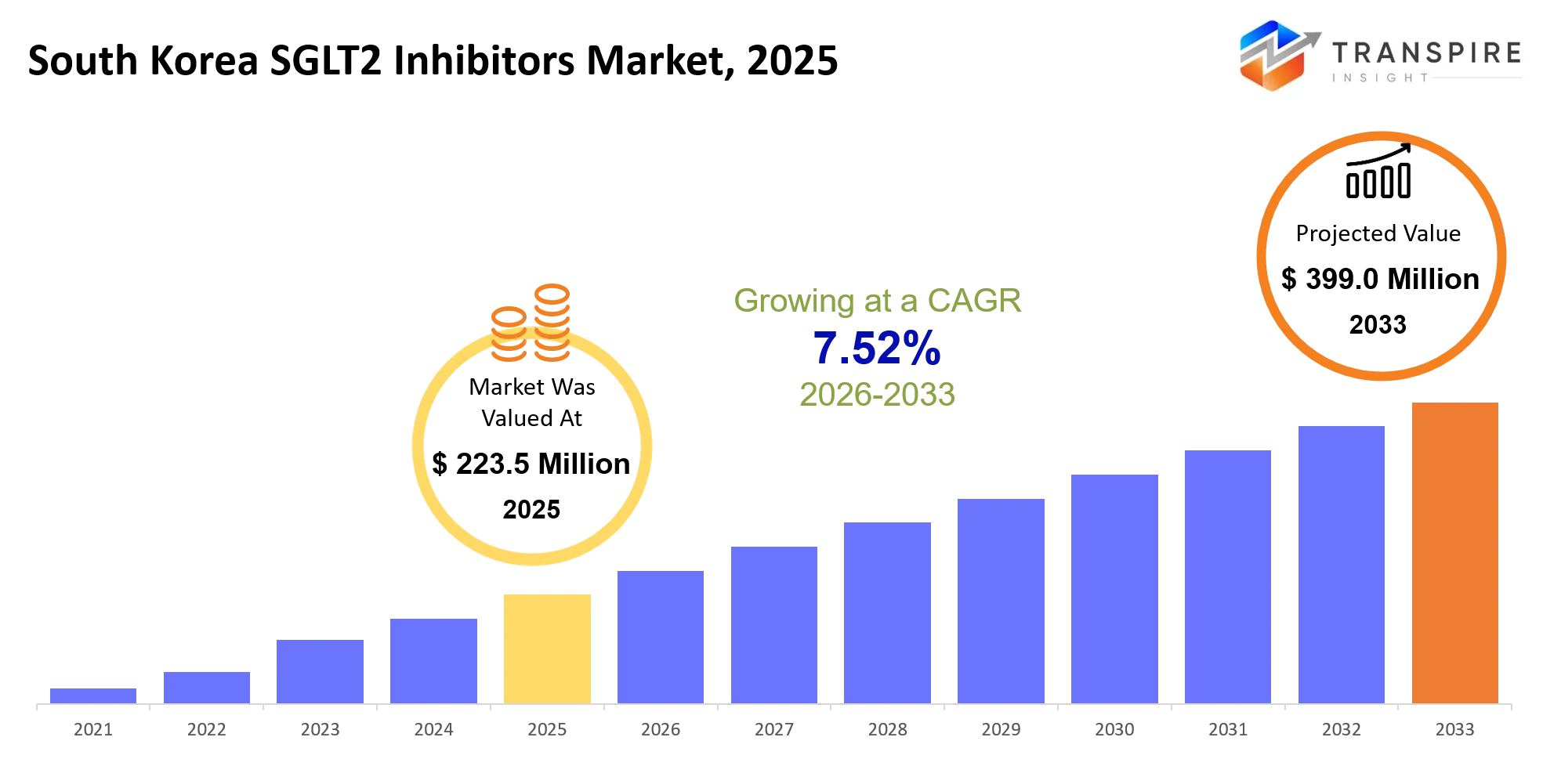
- Market Value (2025): USD 223.5 Million.
- Expected Market Value (2026): USD 240.2 Million.
- Estimated Market Value (2033): USD 399.0 Million.
- Forecast CAGR (2026–2033): 7.52%
Introduction
The market for SGLT2 (Sodium-Glucose Cotransporter-2) inhibitors includes global and local trade, production, and prescriptions for drugs taken orally for the treatment of type 2 diabetes mellitus (T2DM), chronic kidney disease (CKD), and heart failure. These small-molecule drugs function by blocking SGLT2 receptors present in the kidneys, thereby aiding the removal of excess sugar by the kidneys. SGLT2 inhibitors SGLT2 inhibitors including gliflozins belong to a class of drugs taken orally for treating type 2 diabetes mellitus. SGLT2 inhibitors confer multiple therapeutic advantages that play a key role in their increasing use for diabetes and Cardiorenal treatment. By lowering the reabsorption of glucose from the kidneys and increasing the amount of glucose excreted in urine, treatments based on SGLT2 inhibitors provide effective blood glucose control. The established cardiovascular benefits of these drugs include reductions of the use of hospitals for treatment of heart failure, as well as assistance with the management of cardiovascular risk. In addition to these widely known cardiovascular effects, SGLT2 inhibitors have also been shown to have the renal-protecting effects, allowing for a slowdown of chronic kidney disease and maintenance of kidney function. The osmotic diuretic mechanism of SGLT2 inhibitors can be used for achieving modest weight loss and lowered blood pressure. All of these metabolic, cardiovascular, and renal effects of SGLT2 inhibitors enable their widespread usage and growing demand in South Korea.
Key Market Highlights: -
- By drug, the Empagliflozin segment dominated the market and holds nearly 51% share in 2025 and is projected to grow at a substantial CAGR during the forecast period.
- By indication, the Cardiovascular Disease segment dominated the market and holds nearly 32 % share in 2025 and is projected to grow at a substantial CAGR during the forecast period.
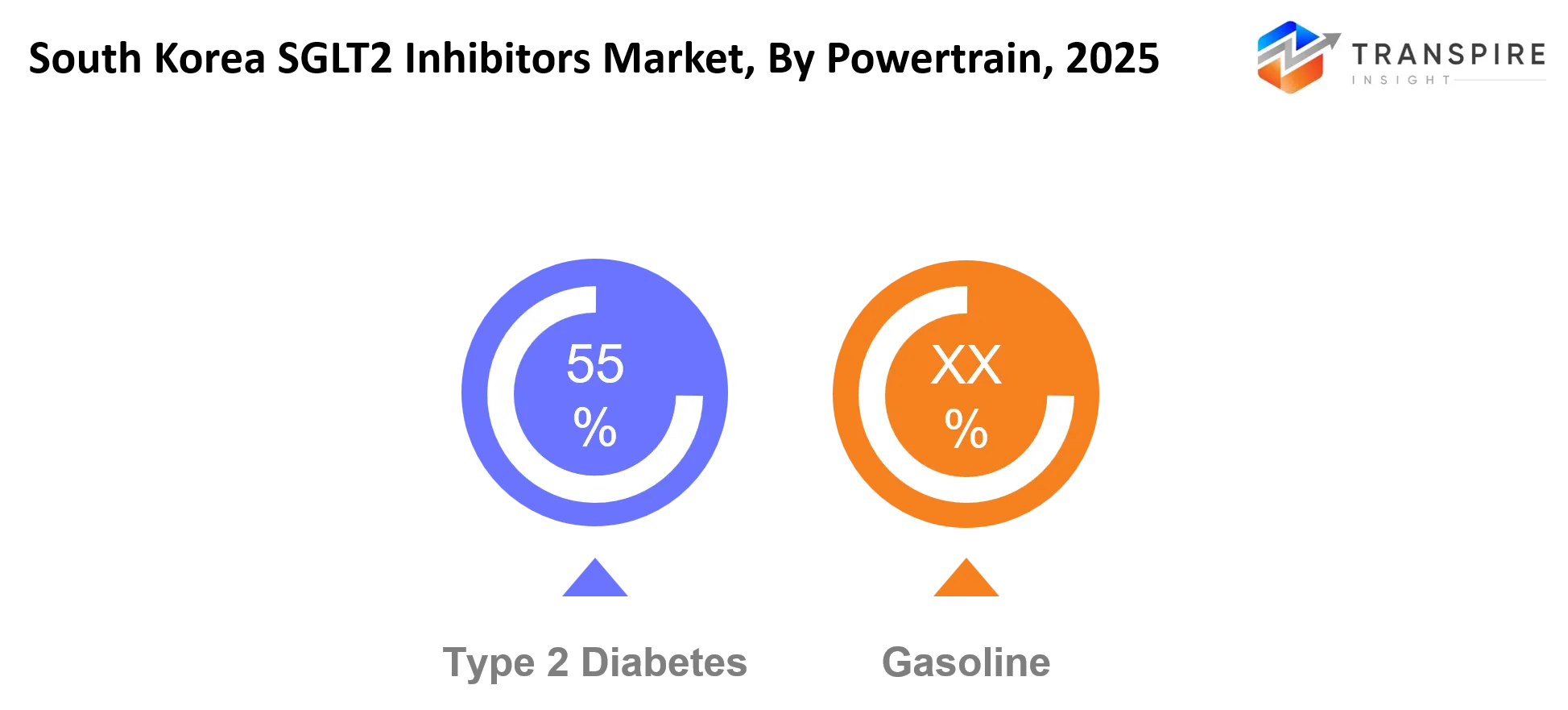
- By route, the Oral Tablets segment dominated the market and holds nearly 55 % share in 2025 and is projected to grow at a substantial CAGR during the forecast period.
- The South Korean government has introduced a comprehensive national health program to cover the costs of SGLT2 inhibitors, which provides significant support for patients needing diabetes and cardiovascular care. Such incentives facilitate the prescription process by assuring that SGLT2 inhibitors are accepted and implemented smoothly.
How is Technology Driving Growth in the South Korea SGLT2 Inhibitors Market?
The SGLT2 Inhibitors Market in South Korea is progressing due to drug discovery innovations, digital health integration, better formulations and telemedicine enablement of healthcare delivery. Moreover, strong drug discovery capacities are facilitating the development of local enavogliflozin SGLT2 inhibitors, promoting local innovativeness. The digital health platforms integrate the tools for medication administration, remote monitoring and patient involvement supporting adherence to treatment. The advances in formulation technologies, like fixed-dose combinations with metformin, have simplified the treatment process with the help of other technological enhancements. Telemedicine and healthcare sites have made consultations easier and the distribution of medicines more consumer-friendly.
Market Drivers
The factors driving the growth of South Korea SGLT2 Inhibitor Market include growing incidence of diabetes, rise in cases of cardiovascular and renal complications, improved healthcare infrastructure, and advanced capabilities of pharmaceutical industry regarding R&D. The rising cases of type 2 diabetes due to sedentary lifestyle and changes in food habits is contributing to the increased demand for efficient glucose controlling drugs. Moreover, the increasing awareness among clinicians on the cardiovascular and renal benefits of SGLT2 inhibitors such as heart failure treatment and chronic kidney disease treatment is enabling their wider acceptance. Also, the increase in healthcare expenditures, improvement in medical accessibility and initiation of early diagnosis is leading to the use of treatments. The established pharmaceutical sector of South Korea, its abilities of conducting research in the clinical field and partnership creation are enabling it to innovate and commercialize efficiently and quickly. The market for the SGLT2 inhibitors in South Korea is characterized by the strong cardiovascular and renal safeguard afforded by SGLT2 inhibitors, enhanced insurance coverage for selected patients and weight control capability of the drug. SGLT2 inhibitors are recognized not only as glucose lowering drugs, but also as beneficial for cardiovascular and renal systems. Availability of insurance for patients with chronic heart failure and chronic kidney disease issues leads to an increased demand for the medication. SGLT2 inhibitors are also beneficial in maintaining normal body weight as they boost the process of glucose elimination from the organism. The innovative products like Envlo developed by Daewoong Pharmaceutical illustrate the increasing possibilities of pharmaceutical R&D in South Korea, bringing forth a number of new products and enhancing the country’s standing in the SGLT2 inhibitor market.
Restrain
The restrictive criteria for reimbursement, careful clinical prescribing for senior patients and patients with advanced CKD and competition from alternative treatments have become obstacles for the South Korean SGLT2 Inhibitors market. Patients might not be able to start treatment because they are already taking DPP-4 inhibitors and GLP-1 therapies. Moreover, there is a variation between physicians prescribing practices within specialties.
|
Driver |
Relative Impact on Growth (%) |
Geographic Relevance |
Impact Timeline |
Demand Strength |
Growth Mechanism |
Key Beneficiaries |
Major Constraint |
|
Driver 1: Expanding Cardiorenal Applications |
28% |
South Korea — Nationwide |
Short/Medium-term |
High |
Expands prescriptions beyond glucose control |
Drug manufacturers, hospitals, physicians, patients |
Restricted eligibility criteria limit access |
|
Driver 2: Rising Diabetes Burden |
24% |
South Korea — Nationwide |
Long-term |
High |
Increases demand for glucose-lowering therapies |
Manufacturers, pharmacies, healthcare providers |
Treatment adherence and diagnosis gaps |
|
Driver 3: Expanded National Health Insurance Reimbursement |
20% |
South Korea — Nationwide |
Short/Medium-term |
High |
Improves affordability and treatment accessibility |
Patients, manufacturers, hospitals, pharmacies |
Reimbursement remains indication-specific |
|
Driver 4: Growing SGLT2i Prescription Adoption |
16% |
South Korea — Nationwide |
Medium-term |
High |
Accelerates physician adoption across specialties |
Manufacturers, hospitals, physicians, patients |
Competition from alternative therapies |
|
Driver 5: Domestic Pharmaceutical Innovation |
12% |
South Korea — Seoul, Gyeonggi, Nationwide |
Medium/Long-term |
Medium |
Strengthens local product development and competition |
Domestic manufacturers, R&D firms, patients |
High development and commercialization costs |
|
Total |
100% |
— |
— |
— |
— |
— |
— |
Analysis of Prices and Consumer Behaviour
The SGLT2 inhibitor market is dominated by Jardiance (Empagliflozin), which is responsible for 61.76 % of market revenue, especially because of its long-standing clinical relevance and the development of cardiovascular and renal applications. Its pricing continues to be bolstered by its position in clinical use as well as its approved treatments. About 61.76 % of total market revenue comes from Jardiance (Empagliflozin). The sales volume of this segment is influenced by the fact that physicians are increasingly recognizing its verified clinical benefits. Currently, the Jardiance (Empagliflozin) segment holds 61.76% of South Korea SGLT2 Inhibitors Market. The trend of prescribing medicines indicates an inclination toward SGLT2 inhibitors with known cardiovascular and renal effects. Additionally, expanding reimbursement coverage also favors increasing access to treatments and thus widens the scope of SGLT2 inhibitors in South Korea.
Who are the Key Players in the South Korea SGLT2 Inhibitors Market and how do they compete?
The level of competition in the SGLT2 inhibitors market in South Korea depends on the pharmaceutical companies' ability to provide innovative products, demonstrate clinical effectiveness, expand the range of cardiovascular and renal indications, and commercialize the products efficiently. Competitors rely not on product availability but also on clinical data, reimbursement availability, use of combination therapy, and research and development in order to launch their products into the market and offer better treatment options to assist people with diabetes and heart-kidney diseases.
Boehringer Ingelheim and Eli Lilly are increasing their presence in the market with the help of Jardiance (empagliflozin), which has strong clinical studies confirming its efficiency and wide application in cardiovascular and renal pathology. Daewoong Pharmaceutical is presenting its Envlo (enavogliflozin) as the first SGLT2 inhibitor produced in South Korea, while competitors use innovative formulations, combined therapies, clinical tests, and many other means to gain competitive advantages.
Top Companies in the South Korea SGLT2 Inhibitors Market
- AstraZeneca
- Boehringer Ingelheim
- Eli Lilly
- Johnson & Johnson
- Merck
- Pfizer
- Novartis
- Sanofi
- Novo Nordisk
- Daiichi Sankyo
- Mitsubishi Tanabe Pharma
- Ono Pharmaceutical
- Hanmi Pharmaceutical
- Chong Kun Dang
- Yuhan Corporation
|
Company |
Est. Revenue Share Range |
Key Offerings |
Strategic Positioning |
Geographic Strength |
Technology Focus |
|
Boehringer Ingelheim |
18–24% |
Jardiance; Empagliflozin; Cardiorenal indications |
Cardiorenal leadership through Jardiance franchise |
Asia-Pacific, Europe, North America |
Cardiorenal evidence and lifecycle expansion |
|
Eli Lilly and Company |
14–20% |
Jardiance; Empagliflozin; Combination therapies |
Global commercialization through strategic partnership |
North America, Europe, Asia-Pacific |
Clinical evidence and combination therapies |
|
AstraZeneca |
10–15% |
Forxiga; Dapagliflozin; Xigduo |
Cardiorenal expansion and broad indication coverage |
Europe, Asia-Pacific, North America |
Cardiorenal innovation and clinical development |
|
Daewoong Pharmaceutical |
8–12% |
Envlo; Enavogliflozin; EnvloMet |
Domestic innovation with international expansion |
Asia-Pacific, Latin America, Middle East & Africa |
Novel SGLT2 chemistry and combination development |
|
Yuhan Corporation |
5–8% |
Jardiance; Yuhan M-Met XR; Empagliflozin combinations |
Local commercialization and chronic-care portfolio |
South Korea, Asia-Pacific |
Formulation optimization and fixed-dose combinations |
|
Johnson & Johnson / Janssen |
3–5% |
Invokana; Canagliflozin; Invokamet |
Established SGLT2 franchise with renal positioning |
North America, Asia-Pacific, Europe |
Renal outcomes and metabolic therapy |
|
Chong Kun Dang Pharmaceutical |
3–5% |
Empagliflozin; Empagliflozin/metformin; CKD-370 |
Formulation innovation and combination diversification |
South Korea, Asia-Pacific |
Cocrystal formulations and PK optimization |
|
Hanmi Pharmaceutical |
2–4% |
Empalon; Empalon Duo XR; Empagliflozin |
Value-oriented domestic portfolio expansion |
South Korea, Asia-Pacific |
Formulation technology and combination products |
|
Dong-A ST |
2–4% |
Empagliflozin; Dapagliflozin; Dapagliflozin/metformin |
Local portfolio diversification and combination strategy |
South Korea, Asia-Pacific |
Multi-drug combinations and lifecycle management |
|
Merck & Co. (MSD) |
1–3% |
Steglatro; Steglujan; Segluromet |
Established ertugliflozin franchise with combination breadth |
North America, Europe, Asia-Pacific |
SGLT2/DPP-4 and SGLT2/metformin combinations |
South Korea SGLT2 Inhibitors Market Segmentation
The South Korea SGLT2 Inhibitors Market share is divided into five categories: By drug, indication, age group, distribution channel and route.
The Empagliflozin dominated the market, accounting for nearly 51% in 2025 and is expected to rise at a significant CAGR during the forecast period.
The South Korea SGLT2 Inhibitors Market is segmented by drug into Dapagliflozin, Empagliflozin, Canagliflozin, Ertugliflozin, Sotagliflozin, Bexagliflozin, Remogliflozin. Among these, the Empagliflozin segment dominated the market, accounting for nearly 51% in 2025 and expected to increase at a significant CAGR during the forecast period. In the year 2025, emapgliflozin ruled in the market, commanding approximately 51% share due to its confirmed successfulness in treating type 2 diabetes, as well as lowering cardiovascular failure risk. High clinical popularity, elaborating guidelines for treatment, doctors' preferences, and more frequent occurrence of diabetes and cardiovascular illnesses serve as the basis for strong market demand.
The Cardiovascular Disease dominated the market, accounting for nearly 32% in 2025, and is expected to rise at a significant CAGR during the forecast period.
The South Korea SGLT2 Inhibitors Market is segmented by indication into Type 2 Diabetes, Heart Failure, Chronic Kidney Disease, Cardiovascular Disease, Diabetic Kidney Disease, Obesity, Other Metabolic Disorders. Among these, the Cardiovascular Disease segment dominated the market, accounting for nearly 32% in 2025 and expected to increase at a significant CAGR during the forecast period. In 2025, cardiovascular disease took over the largest share with close to 32% due to increased prevalence of heart failure, hypertension, and other cardiovascular diseases. Rise in disease awareness, increasing diagnoses, growing treatment options availability, and increase in adoption of evidence-based therapies are contributing to the growth of the market. Continuous investment in healthcare as well as clinical developments is likely to continue supporting the growth of the market.
The Oral Tablets dominated the market, accounting for nearly 55% in 2025 and is expected to rise at a significant CAGR during the forecast period.
The South Korea SGLT2 Inhibitors Market is segmented by route into Oral Tablets, Fixed-Dose Combination Tablets, Monotherapy, Combination Therapy, Once-Daily Formulations, Extended-Release, Immediate-Release. Among these, the Oral Tablets segment dominated the market, accounting for nearly 55% in 2025 and expected to increase at a significant CAGR during the forecast period. In 2025, Oral Tablets held a significant share of approximately 55% of the market due to the simplicity of their administration, ease of dosage forms for patients, proven clinical acceptance, and effectiveness in terms of cost. The preference of doctors, easy availability, and ease of adherence to the treatment regimen increased the demand for oral tablets based on their wide usage in diabetes and cardiovascular diseases.
Future Market Trends for the South Korea SGLT2 Inhibitors Market: -
- Expansion within Cardiorenal Indications: As drugs such as Jardiance (empagliflozin) and Forxiga (dapagliflozin) rapidly gain greater insurance reimbursement alongside getting myriad tag approvals for chronic heart failure and chronic kidney disease in addition to type 2 diabetes therapies, the prescribing trends are changing.
- Growth of Combination Therapies: Fixed-dose combinations are experiencing the fastest growth in the market with cases of SGLT2 inhibitors along with metformin as they solve the issue of therapeutic inertia and enhance patient compliance.
- Aging Population and Prevalence: The rapidly aging population and lifestyle changes associated with urbanization are accountable for a higher incidence of metabolic, cardiovascular, and renal diseases.
- Integration of Digital Health Solutions: The solutions that connect home glucose monitoring, adherence tracking and online coaching are entering chronic care clinical practice faster than ever, mainly due to their peculiarities of providing urbanizations like Seoul.
Recent Development
- In June 2026: Daewoong Pharmaceutical extended Envlo's international commercialization through an agreement with Arcera/Acino in eight markets across the Middle East. With this agreement, the impact of the SGLT2 inhibitor developed in South Korea would gain commercial momentum in the SGLT2 Inhibitors Market.
- In March 2026: Chong Kun Dang received the approval from the South Korean MFDS for its Duviempol Extended-Release Tablet (CKD-383). The drug consists of the fixed-dose combination of lobeglitazone, empagliflozin, and metformin for adult patients suffering from type 2 diabetes. The approval reinforces and creates new innovation opportunities for the use of SGLT2-based combination therapy in the South Korean SGLT2 Inhibitor market.
Market Segment
This study forecasts revenue at South Korea, regional and country levels from 2020 to 2033. Transpire Insights has segmented the South Korea SGLT2 Inhibitors Market based on the below-mentioned segments:
South Korea SGLT2 Inhibitors Market, By Drug
- Dapagliflozin
- Empagliflozin
- Canagliflozin
- Ertugliflozin
- Sotagliflozin
- Bexagliflozin
- Remogliflozin
South Korea SGLT2 Inhibitors Market, By Indication
- Type 2 Diabetes
- Heart Failure
- Chronic Kidney Disease
- Cardiovascular Disease
- Diabetic Kidney Disease
- Obesity
- Other Metabolic Disorders
South Korea SGLT2 Inhibitors Market, By Age Group
- 18–44 Years
- 45–54 Years
- 55–64 Years
- 65–74 Years
- 75+ Years
- Young Adults
- Elderly
South Korea SGLT2 Inhibitors Market, By Distribution Channel
- Hospital Pharmacies
- Retail Pharmacies
- Online Pharmacies
- Specialty Pharmacies
- Clinics
- Direct Sales
- Other Channels
South Korea SGLT2 Inhibitors Market, By Route
- Oral Tablets
- Fixed-Dose Combination Tablets
- Monotherapy
- Combination Therapy
- Once-Daily Formulations
- Extended-Release
- Immediate-Release
Frequently Asked Questions
Find quick answers to common questions.
The market is projected to grow at a 7.52% CAGR from 2026 to 2033, driven by diabetes and Cardiorenal disease.
Empagliflozin dominated in 2025, supported by established clinical adoption and expanding cardiovascular and renal therapeutic applications.
Cardiovascular disease dominated in 2025, supported by rising disease prevalence, improved diagnosis, treatment adoption, and clinical advancements
Key players include Boehringer Ingelheim, Eli Lilly, AstraZeneca, Daewoong Pharmaceutical, Hanmi Pharmaceutical, and Chong Kun Dang
Rising diabetes prevalence, Cardiorenal benefits, reimbursement expansion, pharmaceutical innovation, combination therapies, and digital healthcare adoption support market growth.
- AstraZeneca
- Boehringer Ingelheim
- Eli Lilly
- Johnson & Johnson
- Merck
- Pfizer
- Novartis
- Sanofi
- Novo Nordisk
- Daiichi Sankyo
- Mitsubishi Tanabe Pharma
- Ono Pharmaceutical
- Hanmi Pharmaceutical
- Chong Kun Dang
- Yuhan Corporation
About the Authors

Pankaj Ghogare Patil
I am Pankaj Ghogare Patil, a Senior Research Analyst at Transpire Insight, specializing in the Pharmaceutical, Chemicals & Materials, Healthcare IT, and Biotechnology industry. My expertise lies in conducting comprehensive market research, analyzing industry trends, evaluating competitive landscapes, and translating complex data into actionable insights. At Transpire Insight, I closely follow emerging technologies, regulatory developments, and market innovations to create accurate, well-researched, and informative content that helps businesses and professionals make informed decisions. I am committed to producing credible, evidence-based articles that reflect industry best practices while making technical topics accessible and valuable for a broad audience.

Chakradhar Khansole
Chakradhar serves as the Research Director at Transpire Insight, bringing over 8 years of experience in technology, innovation, and strategic market intelligence. He specializes in transforming complex market data into actionable business insights that enable organizations to make informed, growth-oriented decisions. Recognized for his strategic vision and analytical expertise, Chakradhar leads high-impact research initiatives, delivering comprehensive market assessments, competitive intelligence, and forward-looking industry analysis.
Recently Published Reports
-
Apr 2026
AI in Diabetic Retinopathy Market
AI in Diabetic Retinopathy Market Size, Share & Analysis Report By Type (Screening AI Systems, Diagnostic AI Systems, and Predictive AI Models), By Application Segment (Hospitals, Ophthalmology Clinics, Diagnostic Centers, and Research and Development), and Geography (North America, Europe, Asia-Pacific, Middle East and Africa, South and Central America), 2021 - 2031
-
Apr 2026
Psychometric Tests Market
Psychometric Tests Market Size, Share & Analysis Report By Type (Personality Tests, Ability/Aptitude Tests, Skill/Knowledge Tests, and Others), By Application (Talent Acquisition and Talent Management), and Geography (North America, Europe, Asia-Pacific, Middle East and Africa, South and Central America), 2021 – 2031
-
Apr 2026
Rare Biological Sample Collection Market
Rare Biological Sample Collection Market Size, Share & Analysis Report By Type (Isolation Kits & Reagent, Blood Collection Tubes, and Others), By Application (Oncology, Transcriptomics, Pharmacogenomics, and Others), and Geography (North America, Europe, Asia-Pacific, Middle East and Africa, South and Central America), 2021 – 2031
-
Jul 2026
Diabetic Retinopathy Market
Diabetic Retinopathy Market Size, Share & Analysis Report By Type (Proliferative Diabetic Retinopathy, and Diabetic Macular Edema (DME)), By Treatment Type (Anti VEGF Drug, Steroid Implants, Laser Surgeries, and Vitrectomy), and Geography (North America, Europe, Asia-Pacific, Middle East and Africa, South and Central America), 2021 – 2031
Our Clients







