

South Korea Pompe Disease Treatment Market Summary:
According to Transpire Insights, a detailed research report on the market reflects that the enzyme replacement therapy application segment dominates the South Korea Pompe Disease Treatment Market, accounting for approximately 95% of the total share nationwide. Sanofi leads the market with approximately €1.31 billion in global Pompe franchise revenue and an estimated 60.4% contribution from Nexviazyme/Nexviadyme, making it the leading contributor to South Korea Pompe Disease Treatment Market development, innovation, advanced enzyme replacement therapy production, expanding treatment accessibility, and growth dynamics.
Market Snapshot
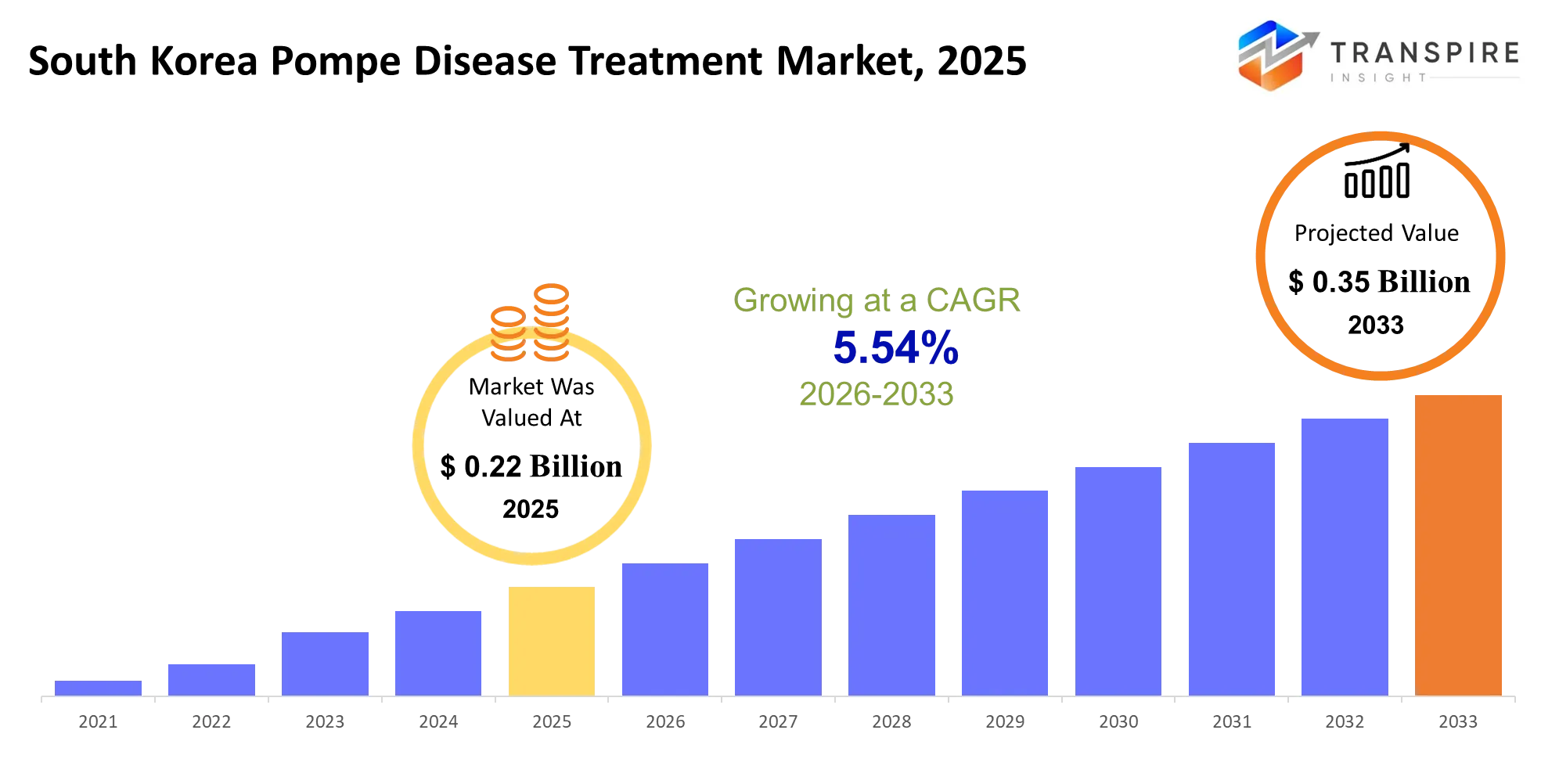
- Market Value (2025): USD 0.22 Billion.
- Expected Market Value (2026): USD 0.24 Billion.
- Estimated Market Value (2033): USD 0.35 Billion.
- Forecast CAGR (2026–2033): 5.54%.
Introduction
South Korea Pompe Disease Treatment Market is a unique subset of rare disease healthcare and biopharmaceutical market, which includes the production, distribution and use of Pompe disease therapies in South Korea. Pompe disease is a rare and inherited disorder of the lysosome in which there is a deficiency of the acid alpha-glucosidase (GAA) enzyme, leading to the deposition of glycogen within skeletal, respiratory and cardiac muscles. South Korea Pompe Disease Treatment Market is mainly dependent on enzyme replacement therapy (ERT), including recombinant enzyme therapy along with support therapy and other alternative therapies. There have been many factors contributing to the increase in patient access to Pompe disease therapies in South Korea.
Key Market Highlights: -
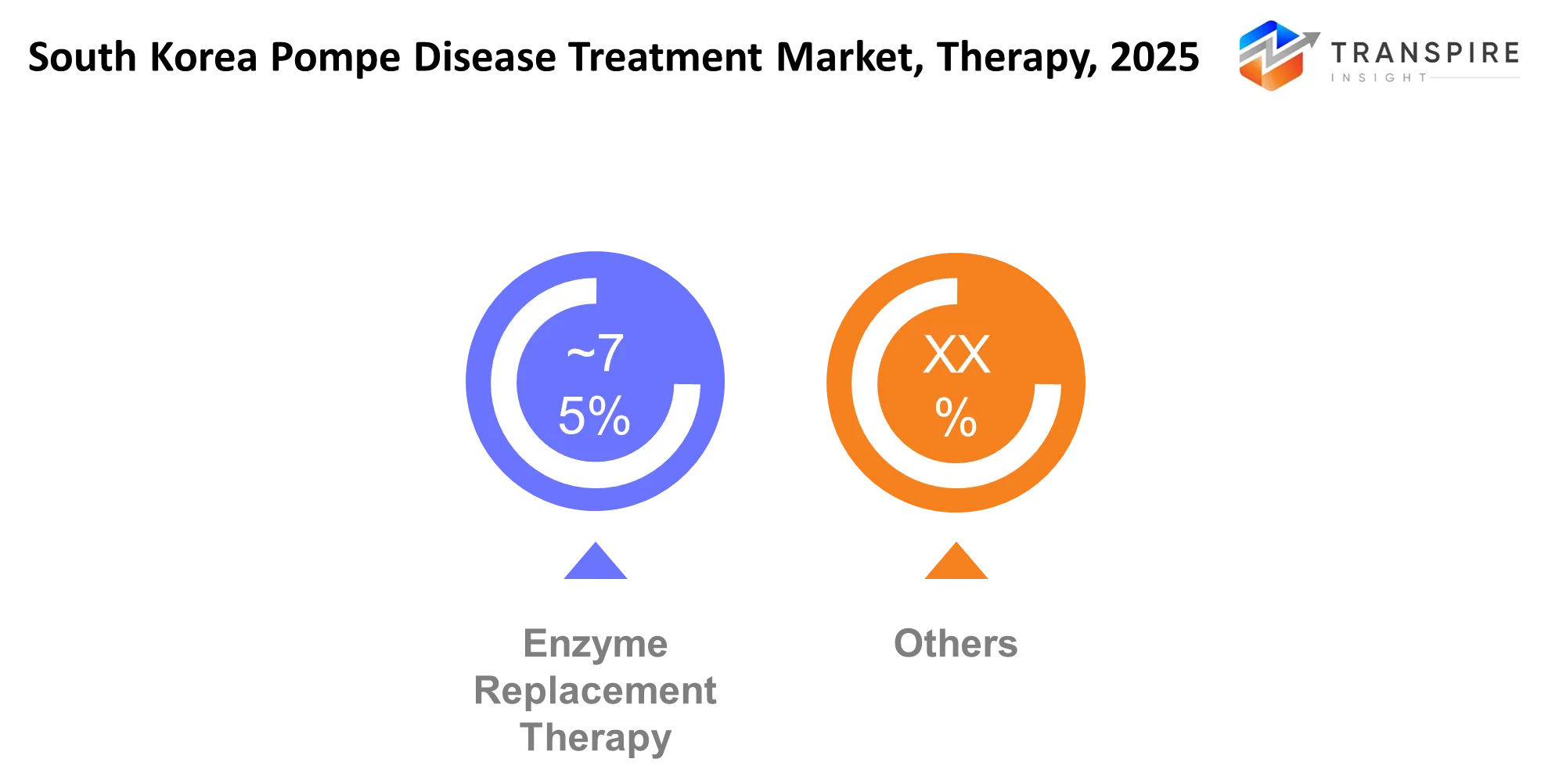
- By Therapy, the Enzyme Replacement Therapy (ERT) dominated the market and holds approximately 60% share in 2025 and is projected to grow at a substantial CAGR during the forecast period.
- By Drug Class, the Recombinant Enzymes dominated the market and holds approximately 89.75% share in 2025 and is projected to grow at a substantial CAGR during the forecast period.
- By Type, the Late-Onset Pompe Manufacturers segment dominated the market and holds approximately 84% share in 2025 and is projected to grow at a substantial CAGR during the forecast period.
- South Korea increases Pompe disease access by means of rare-disease reimbursement, diagnostics support, financial support, and additional healthcare specialization facilities.
How is Technology Driving Growth in the South Korea Pompe Disease Treatment Market?
The technology is empowering the South Korea Pompe Disease Treatment Market with advanced diagnostics, next-generation enzyme replacement therapies, digital patient monitoring, and data-driven clinical management. Better testing of the activity of the GAA enzyme and genetic analysis enables doctors to make earlier and more accurate diagnoses, especially for late-onset Pompe disease. Advanced ERT formulations, such as avalglucosidase alfa, are developed to increase enzyme uptake and glycogen clearance. Digital health platforms, electronic medical records, and patient registries can improve longitudinal monitoring, coordination of care, and collaboration with specialists. At the same time, new gene therapy and precision-treatment technologies are expanding the future therapeutic landscape and driving ongoing innovation in the management of Pompe disease.
Market Drivers
The South Korea Pompe Disease Treatment Market is fuelled by the growing government initiatives for rare disease, enhanced diagnostic capabilities and greater access to specialised therapies. National rare-disease programs help patients get identified, treated and coordinated, and help the health care system. Newborn and Early Screening programs can allow for earlier diagnosis especially of infantile-onset Pompe disease. Orphan Drug Regulatory Pathways enable the development and commercialisation of novel therapies, such as next-generation enzyme replacement therapies. International pharmaceutical developers partner with Korean healthcare institutions for clinical research and therapeutic innovation. Meanwhile, Reimbursement Policies and Patient Registries help improve treatment access, disease monitoring, and long-term adoption of Pompe disease therapies across South Korea.
Restrain
High cost of lifelong ERT, reimbursement limitations & affordability issues associated with advanced therapies are expected to hinder the South Korea Pompe Disease Treatment Market. In addition, partial reversal of existing skeletal muscle damage might lead to limited long-term treatment outcomes in some patients. Concentration of specialised care on the big metropolitan hospitals can cause regional access gaps and delay of diagnosis and initiation of treatment. These factors may impact treatment adherence, healthcare expenses and the development of novel treatments for Pompe disease in South Korea.
|
Driver |
Relative Impact on Growth (%) |
Geographic Relevance |
Impact Timeline |
Demand Strength |
Growth Mechanism |
Key Beneficiaries |
Major Constraint |
|
Driver 1: Expanded reimbursement and rare-disease financial support |
28% |
Nationwide; strongest in Seoul Metropolitan Area |
Short-term |
High |
Lower patient costs expand access to lifelong enzyme therapy. |
ERT manufacturers, hospitals, patients, insurers |
High treatment costs pressure reimbursement budgets. |
|
Driver 2: Earlier diagnosis through enzyme and genetic screening |
24% |
Nationwide; major tertiary centers in Seoul |
Medium-term |
High |
Earlier identification increases eligible patients receiving disease-modifying treatment. |
Diagnostic laboratories, genetic-testing firms, hospitals, ERT manufacturers |
Screening false positives complicate confirmatory diagnosis. |
|
Driver 3: Adoption of next-generation enzyme replacement therapies |
20% |
Nationwide; tertiary metabolic centers |
Short-term |
High |
Improved enzyme uptake encourages switching and sustained treatment adoption. |
Innovative biopharma, infusion providers, patients |
Infusion burden and clinical response variability remain. |
|
Driver 4: Growing specialist infrastructure and multidisciplinary Pompe care |
16% |
Seoul, Gyeonggi, Busan, major academic hospitals |
Medium-term |
Medium |
Specialized monitoring improves treatment initiation and long-term persistence. |
Academic hospitals, specialists, rehabilitation providers |
Specialist concentration limits regional accessibility. |
|
Driver 5: Emerging pediatric therapies and precision-treatment innovation |
12% |
Nationwide; leading research hospitals |
Long-term |
Medium |
New modalities could expand treatment options and improve outcomes. |
Biopharma, research institutions, patients, technology providers |
Clinical validation and regulatory approval remain uncertain. |
|
Total |
100% |
— |
— |
— |
— |
— |
— |
Analysis of Prices and Consumer Behaviour
South Korea Pompe Disease Treatment Market: ERT constitutes a leading share in the South Korea Pompe Disease Treatment Market (68% of overall market; this is due to the presence of well-defined treatment regimen in the form of lifelong ERT for infantile-onset and late-onset Pompe disease). The pricing for next generation high performing ERT is anticipated to be 35% higher compared to the other therapies since these therapies feature advanced enzyme-engineered products with enhanced delivery and performance attributes. Around 45% of all treatments are related to hospital-based intravenous treatments. The volume of treatment is influenced by the presence of well-defined treatment regimen, monitoring and treatment. The segment of infantile-onset and late-onset Pompe disease accounts for approximately 70% of treatment demand due to growing diagnosis and availability of therapies. The purchasing pattern among health care providers shows that 55% prioritize treatment efficacy, safety and clinical performance while making purchasing decision. In addition, another 33% of hospitals prefer long-term procurement agreements since they try to reduce cost of treatment as well as ensure consistent availability of Pompe disease treatments in South Korea.
|
Company |
Est. Revenue Share Range |
Key Offerings |
Strategic Positioning |
Geographic Strength |
Technology Focus |
|
Sanofi |
Estimated 95–100% |
Myozyme; Nexviazyme; long-term ERT; Pompe patient-support programs |
Market leadership through dual-generation ERT portfolio |
Asia Pacific; Europe; North America |
M6P-targeted enzyme uptake and enhanced glycogen clearance |
|
Samoh Pharm |
Estimated 0–3%* |
Pompe orphan-drug commercialization; pharmaceutical distribution; rare-disease supply services |
Korean orphan-drug commercialization and distribution specialist |
South Korea; Asia Pacific |
Rare-disease supply-chain and commercialization capabilities |
|
Amicus Therapeutics |
Estimated 0–1%* |
Pombiliti; Opfolda; adult LOPD combination therapy; pediatric development |
Next-generation ERT differentiation through enzyme stabilization |
North America; Europe; Japan |
Optimized rhGAA plus pharmacological chaperone technology |
|
Astellas Pharma |
Estimated 0–1%* |
AT845; AAV8 gene therapy; FORTIS clinical program |
Gene-therapy challenger targeting durable treatment effects |
Japan; North America; Europe |
Muscle-directed AAV8 GAA gene delivery |
|
Roche / Spark Therapeutics |
Estimated 0–1%* |
SPK-3006; RESOLUTE; gene-transfer development |
One-time gene-transfer alternative to chronic ERT |
North America; Europe; Asia Pacific |
AAV-mediated liver-directed systemic GAA expression |
|
Bayer / AskBio |
Estimated 0–1%* |
AB-1009; PROGRESS-GT LOPD; AAV gene therapy |
Gene-therapy innovation targeting sustained GAA production |
North America; Europe |
AAV gene transfer for continuous GAA expression |
|
Shionogi |
Estimated 0–1%* |
S-606001; Pompe therapeutic development; small-molecule approach |
Oral therapeutic challenger beyond conventional ERT |
Japan; Asia Pacific |
Small-molecule glycogen metabolism modulation |
|
Maze Therapeutics |
Estimated 0–1%* |
MZE001; GYS1 inhibitor; Pompe clinical development |
Oral disease-modifying strategy targeting glycogen synthesis |
North America; Europe |
GYS1 inhibition to reduce glycogen production |
|
Denali Therapeutics |
Estimated 0–1%* |
DNL952; ETV:GAA; enzyme-transport technology |
Targeted enzyme-delivery platform addressing tissue penetration |
North America; Europe |
Enzyme TransportVehicle-mediated GAA delivery |
|
GeneCradle Therapeutics |
Estimated 0–1%* |
GC301; AAV gene-therapy program; Pompe development |
Specialty gene-therapy challenger for durable expression |
Asia Pacific; North America |
AAV-based GAA gene replacement technology |
Who are the Key Players in the South Korea Pompe Disease Treatment Market and how do they compete?
The competitiveness in the international market for South Korea Pompe Disease Treatment Market is conditioned by companies specializing in innovations in the field of therapies, therapies dedicated to rare diseases and creation of the distribution network at a global scale. Competing not only by offering therapies but also by offering advanced therapies, innovative enzyme replacement therapies, specialized therapies and integration into clinical services and patient services, such approach to competing results in constant development of therapies, as well as in better treatment outcomes of healthcare providers.
Sanofi gains competitive advantage in the market through its innovations, such as development of advanced enzyme replacement therapies, innovative therapies for Pompe disease and patient services solutions. By developing next-generation enzyme replacement and combination therapies for Pompe disease, Amicus Therapeutics differentiates itself among its competitors. Chiesi Farmaceutici builds up its position through specialized rare-disease therapies, treatment solutions and patient healthcare approach.
Top Companies in the South Korea Pompe Disease Treatment Market
- Sanofi
- Amicus Therapeutics
- Chiesi Farmaceutici
- Takeda
- BioMarin
- AstraZeneca/Alexion
- Maze Therapeutics
- Pfizer
- Roche
- Novartis
- AbbVie
- Johnson & Johnson
- Bayer
- Celltrion
- Samsung Biologics
South Korea Pompe Disease Treatment Market Segmentation
The South Korea Pompe Disease Treatment Market share is divided into five categories:By Therapy, By Product, By Disease Type, By Route, By End User,
The Enzyme Replacement Therapy (ERT) dominated the market, accounting for nearly 60% in 2025 and is expected to rise at a significant CAGR during the forecast period.
The South Korea Pompe Disease Treatment Market is segmented by therapy into enzyme replacement therapy, substrate reduction therapy, gene therapy, supportive therapy, respiratory therapy, physical therapy; nutritional therapy. Among these, the Enzyme Replacement Therapy (ERT) segment dominated the market, accounting for nearly 60% in 2025 and expected to increase at a significant CAGR during the forecast period. Enzyme Replacement Therapy (ERT) was the leading market segment, accounting for almost 60% in 2025, owing to established clinical uptake, reimbursement support, and sustained demand for lifelong management of Pompe disease.
The Recombinant Enzymes dominated the market, accounting for nearly 89.75% in 2025, and is expected to rise at a significant CAGR during the forecast period.
The South Korea Pompe Disease Treatment Market is segmented by product into alglucosidase alfa, avalglucosidase alfa, cipaglucosidase alfa, miglustat, gene therapy candidates, recombinant enzymes, combination therapy. Among these, the Recombinant Enzymes dominated the market, accounting for nearly 89.75% in 2025 and expected to increase at a significant CAGR during the forecast period. Recombinant enzymes were the most prevalent in 2025 due to established therapeutic efficacy, extensive clinical adoption, and their involvement in enzyme replacement therapy.
The Late-Onset Pompe dominated the market, accounting for nearly 84% in 2025 and is expected to rise at a significant CAGR during the forecast period.
The South Korea Pompe Disease Treatment Market is segmentedby disease type into infantile-onset pompe, late-onset pompe, classic infantile, non-classic infantile, juvenile-onset, adult-onset, advanced disease. Among these, the Late-Onset Pompe dominated the market, accounting for nearly 84% in 2025 and expected to increase at a significant CAGR during the forecast period. Late-Onset Pompe was the leading disease in 2025, supported by rising diagnosis, improved disease awareness, specialist care and access to enzyme replacement therapies.
Future Market Trends for the South Korea Pompe Disease Treatment Market:-
Next-Generation ERT Adaption: The use of next-generation enzyme replacement therapies will increase, thanks to improvements in therapy efficacy and disease management, as well as changes in treatment preferences.
Earlier Diagnostics and Molecular Testing: The increased use of biochemical and molecular genetic testing will help identify Pompe patients early, allowing for treatment and special care.
Innovative Approaches to Gene Therapy: Further research in the field of AAV-based gene therapy may revolutionize Pompe disease treatment through the constant expression of the enzyme.
Recent Development
In June 2026 - Sanofi Nexviazyme Market Introduction: Sanofi reported encouraging results from its Phase 3 Baby-COMET trial for Nexviazyme, which would help in expanding treatment of Pompe disease in children and future regulatory applications.
In January 2026 – Rapid Market Access: South Korea introduced new market-access measures that would enable rapid uptakeof innovative diagnostic and therapeutic products in line with rare disease treatments.
In June 2026 - Nexviazyme Market Reimbursements: South Korea enhanced reimbursement policies for advanced enzyme replacement therapy, which would improve the availability of innovative treatment options for Pompe disease patients.
Market Segmentation
This study forecasts revenue at Japan, regional and country levels from 2020 to 2033. Transpire Insights has segmented the South Korea Pompe Disease Treatment Market based on the below-mentioned segments:
South Korea Pompe Disease Treatment Market, By Therapy
- Enzyme Replacement Therapy
- Substrate Reduction Therapy
- Gene Therapy
- Supportive Therapy
- Respiratory Therapy
- Physical Therapy
- Nutritional Therapy
South Korea Pompe Disease Treatment Market, By Product
- Alglucosidase Alfa
- Avalglucosidase Alfa
- Cipaglucosidase Alfa
- Miglustat
- Gene Therapy Candidates
- Recombinant Enzymes
- Combination Therapy
South Korea Pompe Disease Treatment Market, By Disease Type
- Infantile-Onset Pompe
- Late-Onset Pompe
- Classic Infantile
- Non-Classic Infantile
- Juvenile-Onset
- Adult-Onset
- Advanced Disease
South Korea Pompe Disease Treatment Market, By Route
- Intravenous
- Oral
- Subcutaneous
- Intramuscular
- Intrathecal
- Gene-Delivery Route
- Other Routes
South Korea Pompe Disease Treatment Market, By End User
- Hospitals
- Specialty Clinics
- Diagnostic Centers
- Home Healthcare
- Research Institutes
- Rehabilitation Centers
- Academic Hospitals
Frequently Asked Questions
Find quick answers to common questions.
Increasing diagnosis, rare-disease support, reimbursement mechanisms, specialist care, and adoption of advanced enzyme replacement therapies are driving market growth.
Enzyme replacement therapy dominates, supported by established clinical adoption, reimbursement access, proven efficacy, and lifelong treatment requirements for Pompe disease.
Recombinant enzymes lead the product segment, supported by established therapeutic efficacy, extensive clinical adoption, and widespread enzyme replacement therapy utilization.
Late-onset Pompe disease leads the market, supported by increasing diagnosis, improved disease awareness, specialist management, and access to enzyme replacement therapies.
Next-generation ERT, earlier molecular diagnosis, genetic testing, digital monitoring, and emerging AAV-based gene therapies are expected to shape future development.
- Sanofi
- Amicus Therapeutics
- Chiesi Farmaceutici
- Takeda
- BioMarin
- AstraZeneca/Alexion
- Maze Therapeutics
- Pfizer
- Roche
- Novartis
- AbbVie
- Johnson & Johnson
- Bayer
- Celltrion
- Samsung Biologics
About the Authors

Pankaj Ghogare Patil
I am Pankaj Ghogare Patil, a Senior Research Analyst at Transpire Insight, specializing in the Pharmaceutical, Chemicals & Materials, Healthcare IT, and Biotechnology industry. My expertise lies in conducting comprehensive market research, analyzing industry trends, evaluating competitive landscapes, and translating complex data into actionable insights. At Transpire Insight, I closely follow emerging technologies, regulatory developments, and market innovations to create accurate, well-researched, and informative content that helps businesses and professionals make informed decisions. I am committed to producing credible, evidence-based articles that reflect industry best practices while making technical topics accessible and valuable for a broad audience.

Chakradhar Khansole
Chakradhar serves as the Research Director at Transpire Insight, bringing over 8 years of experience in technology, innovation, and strategic market intelligence. He specializes in transforming complex market data into actionable business insights that enable organizations to make informed, growth-oriented decisions. Recognized for his strategic vision and analytical expertise, Chakradhar leads high-impact research initiatives, delivering comprehensive market assessments, competitive intelligence, and forward-looking industry analysis.
Recently Published Reports
-
Apr 2026
AI in Diabetic Retinopathy Market
AI in Diabetic Retinopathy Market Size, Share & Analysis Report By Type (Screening AI Systems, Diagnostic AI Systems, and Predictive AI Models), By Application Segment (Hospitals, Ophthalmology Clinics, Diagnostic Centers, and Research and Development), and Geography (North America, Europe, Asia-Pacific, Middle East and Africa, South and Central America), 2021 - 2031
-
Apr 2026
Psychometric Tests Market
Psychometric Tests Market Size, Share & Analysis Report By Type (Personality Tests, Ability/Aptitude Tests, Skill/Knowledge Tests, and Others), By Application (Talent Acquisition and Talent Management), and Geography (North America, Europe, Asia-Pacific, Middle East and Africa, South and Central America), 2021 – 2031
-
Apr 2026
Rare Biological Sample Collection Market
Rare Biological Sample Collection Market Size, Share & Analysis Report By Type (Isolation Kits & Reagent, Blood Collection Tubes, and Others), By Application (Oncology, Transcriptomics, Pharmacogenomics, and Others), and Geography (North America, Europe, Asia-Pacific, Middle East and Africa, South and Central America), 2021 – 2031
-
Jul 2026
Diabetic Retinopathy Market
Diabetic Retinopathy Market Size, Share & Analysis Report By Type (Proliferative Diabetic Retinopathy, and Diabetic Macular Edema (DME)), By Treatment Type (Anti VEGF Drug, Steroid Implants, Laser Surgeries, and Vitrectomy), and Geography (North America, Europe, Asia-Pacific, Middle East and Africa, South and Central America), 2021 – 2031
Our Clients







