

Japan Caroli Disease Market Summary:
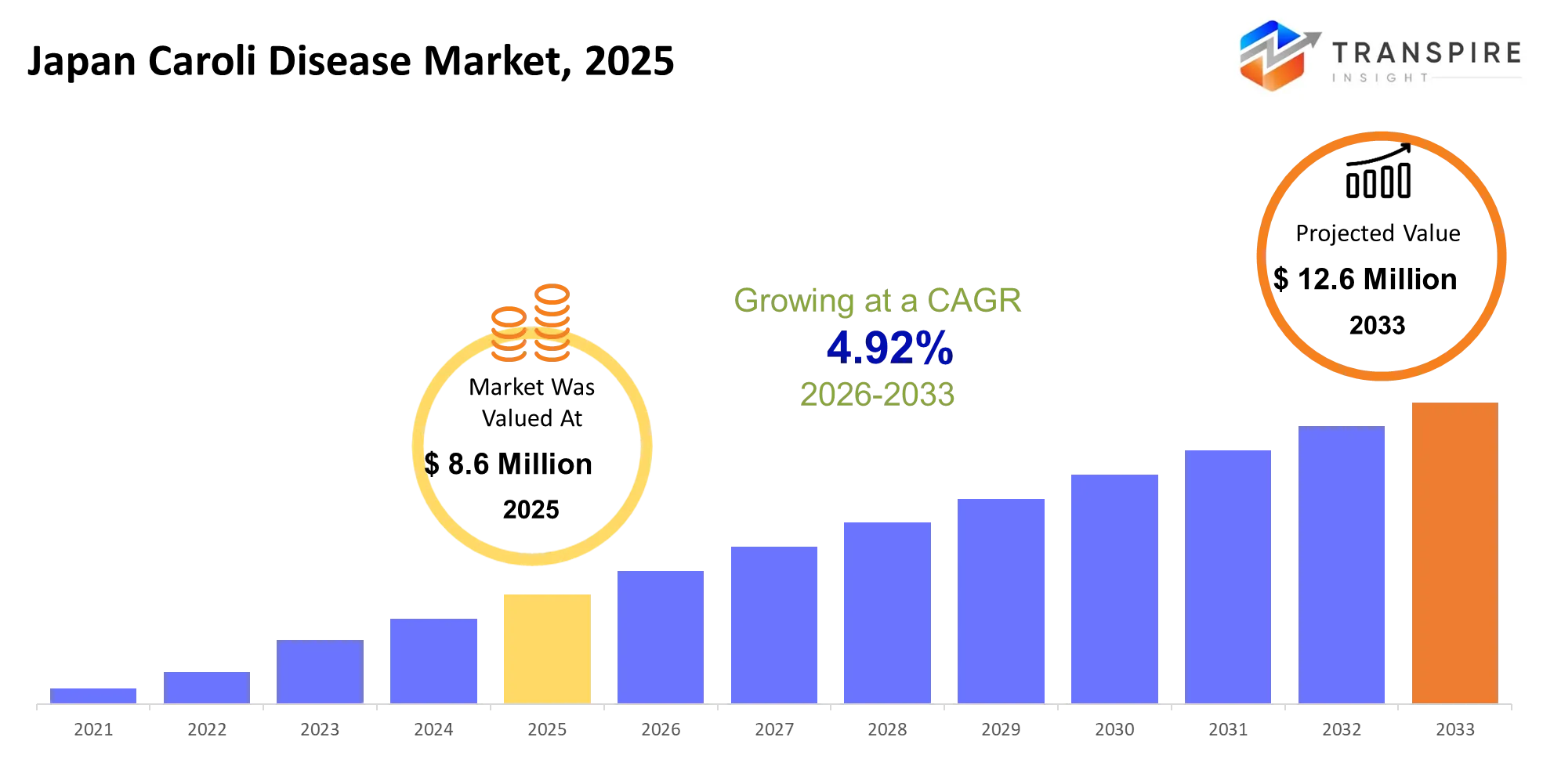
According to Transpire Insight, a detailed research report on the market reflects that the Japan Caroli Disease Market was valued at approximately USD 8.6 million in 2025 and is expected to reach USD 9.0 million in 2026, further expanding to approximately USD 12.6 million by 2033, registering a CAGR of 4.92% during the forecast period 2026–2033. The market’s development is driven by increasing disease awareness, advancements in diagnostic technologies, improved clinical management approaches, and expanding healthcare capabilities, making these factors important contributors to Japan Caroli Disease Market development, innovation, treatment improvements, healthcare infrastructure enhancement, and overall market growth dynamics.
Market Snapshot
- Market Value (2025): USD 8.6 Million.
- Expected Market Value (2026): USD 9.0 Million.
- Estimated Market Value (2033): USD 12.6 Million.
- Forecast CAGR (2026–2033): 4.92%.
Introduction
The Japan Caroli Disease Market comprises the healthcare ecosystem involved in diagnosis, monitoring and management of this rare congenital hepatobiliary disorder. Caroli disease is characterized by segmental non-obstructive dilation of intrahepatic bile ducts and may cause recurrent cholangitis, hepatolithiasis and progressive liver complications. Specialized hepatology services, state of the art diagnostic imaging, genetic assessment and multidisciplinary approaches to complex biliary disorders support market development in Japan. The clinical management landscape includes magnetic resonance cholangiopancreatography (MRCP), computed tomography, molecular testing, antimicrobial management, surgical intervention, and liver transplantation. Growing awareness of rare liver diseases, enhanced diagnostic capabilities and increased clinical expertise are improving disease identification and treatment pathways, creating opportunities for continued growth of the Japan Caroli Disease Market.
Key Market Highlights: -
- By Disease Type, the Caroli Syndrome dominated the market and holds approximately 80% share in 2025 and is projected to grow at a substantial CAGR during the forecast period.
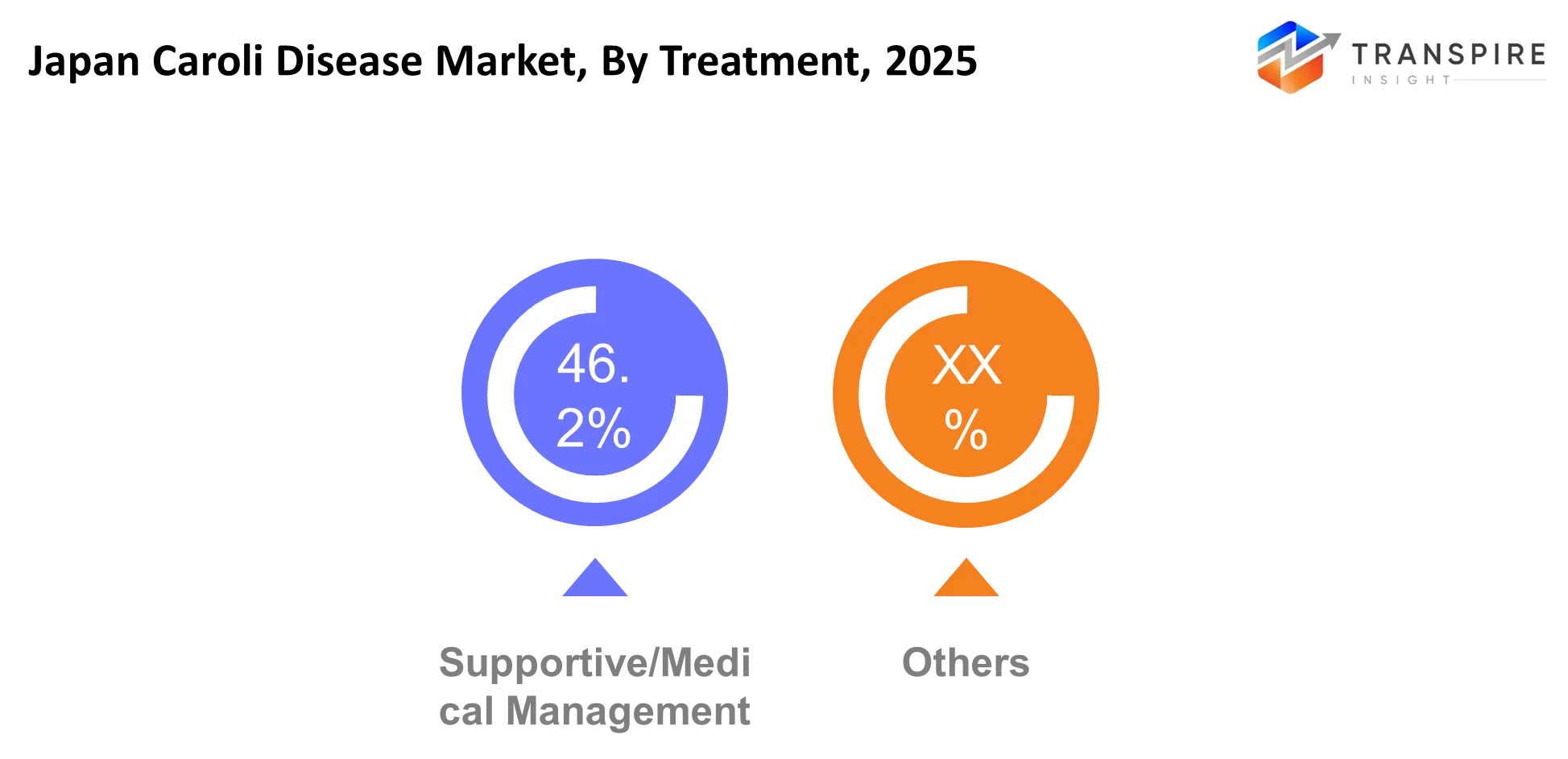
- By Treatment, the ursodeoxycholic acid dominated the market and holds approximately 60% share in 2025 and is projected to grow at a substantial CAGR during the forecast period.
- By Complication, the Cholangitis Manufacturers segment dominated the market and holds approximately 50% share in 2025 and is projected to grow at a substantial CAGR during the forecast period.
- Market for Caroli’s Disease in Japan is bolstered by healthcare services for rare diseases, hepatobiliary diagnostic tests, expert knowledge, and research and development activities leading to improved diagnosis and disease management.
How is Technology Driving Growth in the Japan Caroli Disease Market?
Technology is transforming the Japan Caroli Disease Market, with the introduction of advanced hepatobiliary imaging, AI-assisted diagnostic interpretation, molecular genetic testing, and digitally enabled clinical coordination. Magnetic resonance cholangiopancreatography (MRCP) and high resolution imaging facilitate the visualization of intrahepatic bile-duct abnormalities, allowing a more accurate diagnosis and disease monitoring. Genetic testing can help identify relevant hereditary associations, especially in complex or familial cases. AI-enabled image analysis may provide further aid in the recognition and characterization of biliary abnormalities. Integrated digital health systems facilitate multidisciplinary coordination between hepatologists, radiologists, surgeons, and transplant specialists. Such technological advancements are contributing to diagnostic accuracy, personalized disease management, clinical decision-making, and specialized care delivery in Japan’s Caroli Disease Market.
Market Drivers
The growth of the Japan Caroli Disease market is being fueled by advances in non-invasive hepatobiliary diagnostics such as Magnetic Resonance Cholangiopancreatography (MRCP), ultrasound and computed tomography, which allow for better visualization and monitoring of intrahepatic bile-duct abnormalities. Genetic testing and next generation sequencing may help in providing insight into hereditary associations including PKHD1 related conditions and may assist in guiding accurate diagnosis and clinical assessment. Rare-disease healthcare infrastructure established in Japan and specialized hepatology infrastructure further enhance patient management. The growing clinical understanding of recurrent cholangitis, hepatolithiasis, portal hypertension, and progressive liver complications is improving the diagnostic pathways and treatment planning, which is aiding the steady growth of the Japan Caroli Disease Market.
Restrain
The Japan Caroli Disease Market is impeded by the low prevalence of the disease, limited availability of pharmacological treatments specifically designed for the condition, and the high expenses involved in long-term management and sophisticated interventions. The small number of patients may discourage commercial interest in a drug development approach. Treatment is largely supportive, with management of complications, including recurrent cholangitis and hepatolithiasis, being the focus, using medical, surgical and transplant-based approaches. The limited clinical evidence and the challenges in conducting trials in rare diseases can also limit innovation in therapy, market access, and investment in the Caroli Disease treatment landscape in Japan.
Analysis of Prices and Consumer Behaviour
The Japan Caroli Disease market is primarily driven by advanced diagnostic & disease-management services (68% of the total market; mainly owing to the requirement for specialized hepatobiliary diagnosis, monitoring & treatment). Advanced diagnostic procedures & specialized interventions are expected to cost 35% more than routine liver-disease services. These procedures require sophisticated imaging technologies, specialized clinical expertise and multidisciplinary care. Specialist hospital-based services comprise about 45% of all clinical management activity for Caroli disease, reflecting the complexity of diagnosis, recurrent complications and long term monitoring. The niche segment of hepatology and hepatobiliary care constitutes around 70% of demand among these services. 55% of patients and healthcare providers prioritize diagnostic accuracy, treatment effectiveness and specialized clinical expertise. Thirty-three percent choose well-coordinated long-term care through specialist hospitals or centers because they require continuity of care, effective handling of complications, and assured availability of hepatobiliary treatment facilities in Japan.
Top Companies in the Japan Caroli Disease Market
- Takeda Pharmaceutical
- Eisai
- Otsuka Pharmaceutical
- Chugai Pharmaceutical
- Astellas Pharma
- Daiichi Sankyo
- Kyowa Kirin
- Shionogi
- Ono Pharmaceutical
- Mitsubishi Tanabe Pharma
- AbbVie
- Sanofi
- Pfizer
- Roche
- AstraZeneca
Japan Caroli Disease Market Segmentation
The Japan Caroli Disease Market share is divided into six categories: By Disease Type, By Treatment, By Complication, By Diagnosis, By Patient Type, By End User
The Caroli Syndrome dominated the market, accounting for nearly 80% in 2025 and is expected to rise at a significant CAGR during the forecast period.
The Japan Caroli Disease Market is segmented by disease type into simple caroli disease, caroli syndrome, diffuse disease, segmental disease, intrahepatic disease, recurrent disease, complicated disease, advanced disease. Among these, the Caroli Syndrome segment dominated the market, accounting for nearly 80% in 2025 and expected to increase at a significant CAGR during the forecast period. The Caroli syndrome segment is predominant owing to its more comprehensive clinical symptoms, complications, and requirement of continuous diagnosis and treatment, thereby reinforcing the specialty healthcare needs in Japan.
The Ursodeoxycholic Acid dominated the market, accounting for nearly 60% in 2025, and is expected to rise at a significant CAGR during the forecast period.
The Japan Caroli Disease Market is segmented by treatment into ursodeoxycholic acid, antibiotic therapy, endoscopic therapy, surgical resection, liver transplantation, symptomatic treatment, biliary drainage, supportive care. Among these, the Ursodeoxycholic Acid dominated the market, accounting for nearly 60% in 2025 and expected to increase at a significant CAGR during the forecast period. The ursodeoxycholic acid segment is dominant because of its proven efficacy in treating the complications of cholestasis and hepatolithiasis, ensuring the continuous use in clinical practice in Japan.
The Cholangitis dominated the market, accounting for nearly 50% in 2025 and is expected to rise at a significant CAGR during the forecast period.
The Japan Caroli Disease Market is segmentedby complication into cholangitis, hepatolithiasis, liver abscess, biliary obstruction, portal hypertension, liver fibrosis, sepsis, cholangiocarcinoma. Among these, the Cholangitis dominated the market, accounting for nearly 50% in 2025 and expected to increase at a significant CAGR during the forecast period. The cholangitis segment is predominant as recurrence of infection is one of the complications of Caroli disease, which necessitates the repeated administration of antimicrobials.
Future Market Trends for the Japan Caroli Disease Market: -
- Advanced Diagnostic Imaging Increased use of MRCP, high-resolution ultrasound and other non-invasive imaging modalities will likely improve detection, disease monitoring and clinical assessment of intrahepatic bile-duct abnormalities.
- Genomic and Personalized Healthcare: Growing utilization of genetic testing and next-generation sequencing will likely improve diagnostic accuracy, uncover hereditary associations, and guide individualized treatment approaches for Caroli disease.
- Specialized Disease Management: The Caroli Disease Market in Japan is expected to witness improved long-term treatment pathways with increased focus on multidisciplinary hepatobiliary care, complication prevention, and advanced surgical or transplant interventions.
Recent Development
- In March 2026: Japan’s evolving regulatory landscape for specialized therapies enhanced opportunities for accelerated development and review of novel treatments for rare and complex diseases, including Caroli disease.
- In June 2026: Japan’s ongoing efforts to include rare-disease clinical research in international trial networks are anticipated to enhance opportunities for evidence generation and specialized management of Caroli disease.
Market Segmentation
This study forecasts revenue at Japan, regional and country levels from 2020 to 2033. Transpire Insight has segmented the Japan Caroli Disease Market based on the below-mentioned segments:
Japan Caroli Disease Market, By Disease Type
- Simple Caroli Disease
- Caroli Syndrome
- Diffuse Disease
- Segmental Disease
- Intrahepatic Disease
- Recurrent Disease
- Complicated Disease
- Advanced Disease
Japan Caroli Disease Market, By Treatment
- Ursodeoxycholic Acid
- Antibiotic Therapy
- Endoscopic Therapy
- Surgical Resection
- Liver Transplantation
- Symptomatic Treatment
- Biliary Drainage
- Supportive Care
Japan Caroli Disease Market, By Complication
- Cholangitis
- Hepatolithiasis
- Liver Abscess
- Biliary Obstruction
- Portal Hypertension
- Liver Fibrosis
- Sepsis
- Cholangiocarcinoma
Japan Caroli Disease Market, By Diagnosis
- Ultrasound
- CT Scan
- MRI/MRCP
- ERCP
- Liver Biopsy
- Genetic Testing
- Blood Tests
- Molecular Diagnosis
Japan Caroli Disease Market, By Patient Type
- Pediatric Patients
- Adults
- Elderly
- Congenital Cases
- Familial Cases
- Sporadic Cases
- Advanced Cases
- Transplant Candidates
Japan Caroli Disease Market, By End User
- Hospitals
- Hepatology Centers
- Gastroenterology Clinics
- Liver Transplant Centers
- Academic Hospitals
- Specialty Clinics
- Diagnostic Centers
- Research Institutes
Frequently Asked Questions
Find quick answers to common questions.
Advanced hepatobiliary diagnostics, specialized clinical expertise, rare-disease infrastructure, and improved management of complications are supporting continued market development across Japan.
Caroli Syndrome dominates, supported by its broader clinical manifestations, greater complication burden, and continuous requirements for specialized diagnosis and treatment.
Ursodeoxycholic Acid leads the treatment segment because its established clinical role supports management of cholestasis and hepatolithiasis-related complications in Japan.
MRCP, high-resolution imaging, genetic testing, AI-assisted interpretation, and digital coordination are improving diagnostic accuracy, monitoring, personalized management, and specialized care.
Low disease prevalence, limited disease-specific pharmacological treatments, high management costs, and limited clinical evidence constrain investment and therapeutic innovation.
- Takeda Pharmaceutical
- Eisai
- Otsuka Pharmaceutical
- Chugai Pharmaceutical
- Astellas Pharma
- Daiichi Sankyo
- Kyowa Kirin
- Shionogi
- Ono Pharmaceutical
- Mitsubishi Tanabe Pharma
- AbbVie
- Sanofi
- Pfizer
- Roche
- AstraZeneca
About the Authors

Pankaj Ghogare Patil
I am Pankaj Ghogare Patil, a Senior Research Analyst at Transpire Insight, specializing in the Pharmaceutical, Chemicals & Materials, Healthcare IT, and Biotechnology industry. My expertise lies in conducting comprehensive market research, analyzing industry trends, evaluating competitive landscapes, and translating complex data into actionable insights. At Transpire Insight, I closely follow emerging technologies, regulatory developments, and market innovations to create accurate, well-researched, and informative content that helps businesses and professionals make informed decisions. I am committed to producing credible, evidence-based articles that reflect industry best practices while making technical topics accessible and valuable for a broad audience.

Chakradhar Khansole
Chakradhar serves as the Research Director at Transpire Insight, bringing over 8 years of experience in technology, innovation, and strategic market intelligence. He specializes in transforming complex market data into actionable business insights that enable organizations to make informed, growth-oriented decisions. Recognized for his strategic vision and analytical expertise, Chakradhar leads high-impact research initiatives, delivering comprehensive market assessments, competitive intelligence, and forward-looking industry analysis.
Recently Published Reports
-
Jul 2026
Alopecia Treatment Market
Alopecia Treatment Market Size, Share & Analysis Report By Disease Type (Alopecia Areata, Cicatricial Alopecia, Traction Alopecia, Alopecia Totalis, Androgenetic Alopecia, Alopecia Universalis, and Other Disease Types), By Treatment Type (Topical Treatments, Oral Medications, Injectable Therapies, and Hair Transplantation), By Gender (Male, and Female), By Distribution Channel (Hospitals and Clinics, Retail Pharmacies, and Online Retailers), and Geography (North America, Europe, Asia-Pacific, Middle East and Africa, South and Central America), 2021 - 2031
-
Jul 2026
Medical Ultrasound Probe Market
Medical Ultrasound Probe Market Size, Share & Analysis Report By Type (Linear Type, Convex Type, Endocavitary Probe, Phased Array/Cardiac Probe, Transesophageal (TEE) Probe, and Others), By Application (Ophthalmology, Cardiology, Musculoskeletal, Oncology, Obstetrics & Gynecology, General Imaging, and Others), By End User (Hospitals & Clinics, Diagnostic Centers, Ambulatory Surgical Centers, and Others), and Geography (North America, Europe, Asia-Pacific, Middle East and Africa, South and Central America), 2021 – 2031
-
May 2026
Biosimilars Market
Biosimilars Market By Product Type (Monoclonal Antibodies, Recombinant Hormones, Erythropoietin, G-CSF, Others), By Indication (Oncology, Autoimmune Diseases, Blood Disorders, Diabetes, Others), By Manufacturing Type (In-House Manufacturing, Contract Manufacturing), By Distribution Channel (Hospital Pharmacies, Retail Pharmacies, Online Pharmacies), By Industry Analysis, Size, Share, Growth, Trends, and Forecasts 2021-2033
-
Apr 2026
Gastrointestinal Endoscopy Market
Gastrointestinal Endoscopy Market By Type (Rigid Gastrointestinal Endoscope, Flexible Gastrointestinal Endoscopes, Disposable Gastrointestinal Endoscope), By Procedure Type (Colonoscopy, Gastroscopy, Duodenoscopy, Enteroscopy, Flexible Sigmoidoscopy, Others), By Application (Diagnosis, Treatment), By End-Users (Hospitals, Ambulatory Surgical Centers, Specialty Clinics, Laboratories, Others), By Industry Analysis, Size, Share, Growth, Trends, and Forecasts 2021-2033