
South Korea PCR Plastic Packaging Market Size & Forecast:
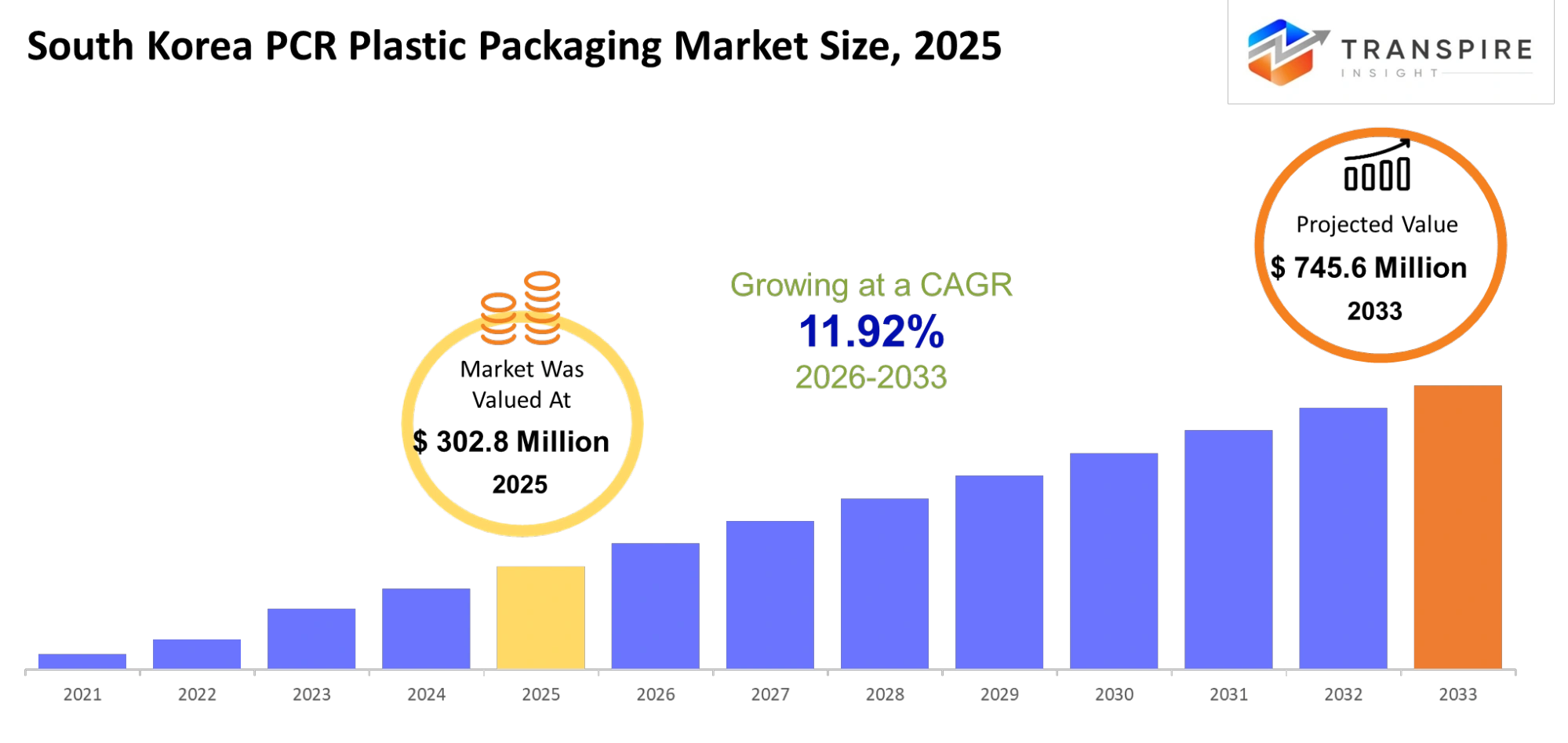
- South Korea PCR Plastic Packaging Market Size 2025: USD 302.8 Million
- South Korea PCR Plastic Packaging Market Size 2033: USD 745.6 Million
- South Korea PCR Plastic Packaging Market CAGR: 11.92%
- South Korea PCR Plastic Packaging Market Segments: By Type (Recycled PET, Recycled HDPE, Recycled PP, Recycled LDPE, Mixed Plastics, Others); By Application (Food Packaging, Beverage Packaging, Pharma Packaging, Cosmetics, Industrial, Others); By End-User (FMCG, Pharma, Food Industry, Retail, Industrial, Others); By Form (Bottles, Containers, Films, Trays, Pouches, Others)
To learn more about this report,  Download Free Sample Report
South Korea PCR Plastic Packaging Market Summary:
The South Korea PCR Plastic Packaging Market size is estimated at USD 302.8 Million in 2025 and is anticipated to reach USD 745.6 Million by 2033, growing at a CAGR of 11.92% from 2026 to 2033.
The South Korea PCR plastic packaging market in the packaging sector will show increased recycling material adoption because of new environmental regulations and changing consumer behaviour. The cosmetics and food and household goods industries will adopt post-consumer recycled plastics because consumers increasingly demand packaging solutions with reduced environmental impact.
The South Korea PCR plastic packaging market will show better sustainability alignment through material innovation which recycling and processing technology improvements will enable. Consumers who prefer sustainable packaging will drive companies to create new packaging designs that decrease their use of new plastic materials. Companies across various sectors will select their materials and handle their supply chains based on both regulatory requirements and their corporate sustainability goals.
What Has the Impact of Artificial Intelligence Been on the South Korea PCR Plastic Packaging Market?
The South Korean PCR plastic packaging market operates all its business processes because artificial intelligence helps executives make their strategic and operational decisions. The AI system analyzes recycling data and consumption patterns and material performance information to assist south Korean companies in their business operations. The research process benefits from improved market research results because organizations can now quickly meet the packaging requirements that arise from their sustainability initiatives in the fast-moving consumer goods and food industries.
The artificial intelligence system in the South Korean PCR plastic packaging market uses machine learning technology to estimate future demand by analyzing seasonal consumption patterns and resin supply availability and price changes. The predictive analytics tools enable organizations to decrease material waste while enhancing their procurement processes for recycled PET and HDPE materials. The smart automation systems in production lines increase operational efficiency by detecting contamination and improving sorting accuracy and maintaining consistent output levels throughout the South Korean PCR plastic packaging industry.
AI technology improves supply chain processes because it helps organizations track their shipments more accurately while also identifying delays and optimizing their delivery networks. The system establishes continuous production processes while it decreases the time needed to deliver recycled materials to customers. The South Korean PCR plastic packaging market uses AI technology to develop customized products which improve operational efficiency and product quality through data-based decision-making that drives sustainable development.
Key Market Trends & Insights:
- The south korea pcr plastic packaging market shows strong growth because FMCG companies and cosmetics manufacturers use recyclable packaging materials which they implement at a rate of 38 percent market share throughout 2025.
- The East Asian region shows South Korea as its leading country which holds 32 percent market share throughout 2025 because of its effective recycling systems and its environmental protection policies.
- The South Korean pcr plastic packaging market shows its fastest growth in metropolitan industrial zones which will experience rapid development between 2026 and 2030 because of e-commerce growth.
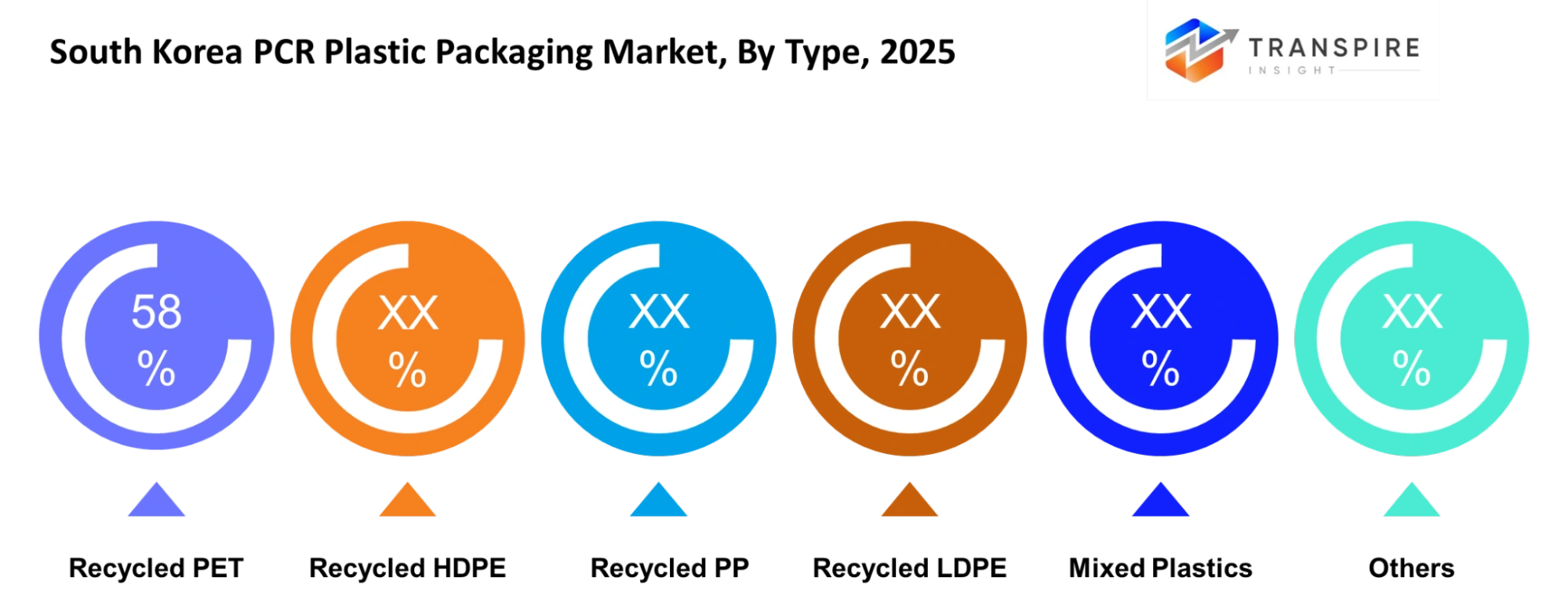
- The South Korean pcr plastic packaging market shows its product segmentation most through recycled PET which takes more than 45 percent of the market because of beverage bottle and food packaging requirements.
- The second position in market share belongs to recycled HDPE because it finds increasing use in making both rigid containers and household packaging products.
- The South Korean pcr plastic packaging market sees beverage packaging as its most important application which reaches almost 40 percent market share because of bottled water and functional drink consumption.
- Cosmetics packaging is the fastest-growing application, supported by eco-friendly branding strategies and premium sustainable packaging demand.
- FMCG companies hold the largest share of end-user demand because they use more than 42 percent of South Korean pcr plastic packaging market demand which shows their dedication to sustainable practices.
- Companies develop their supply chains through recycled resin development and advanced sorting technology and strategic partnerships with FMCG companies.
- The company achieves higher market position through its plans to expand in Asia and its dedication to developing chemical recycling solutions.
South Korea PCR Plastic Packaging Market Segmentation
By Type:
The South Korea PCR Plastic Packaging Market shows strong demand for recycled PET because it serves as the primary material for both bottle manufacturing and food-safe packaging production. Recycled HDPE maintains constant demand because it serves as a material for manufacturing rigid containers while PP and LDPE meet the requirements of flexible packaging solutions. The recycling process of mixed plastics achieves limited results because of their inherent quality issues yet the recycling process improvements will enable better material quality and increased usage in different sectors.
To learn more about this report, Download Free Sample Report
By Application:
The South Korea PCR Plastic Packaging Market shows its greatest demand for food and beverage packaging because this packaging solution enables companies to fulfill their safety requirements while reaching their environmental sustainability goals. The beverage industry uses recycled PET in large quantities for bottle production whereas cosmetics packaging emphasizes both high-quality design and environmentally sustainable marketing. The pharmaceutical industry restricts its usage because of stringent hygiene requirements yet industrial sectors maintain their steady growth by utilizing economical recycled materials.
By End-User:
FMCG companies dominate demand in the South Korea PCR Plastic Packaging Market as brands shift toward sustainable packaging for consumer trust. Food industry players focus on safe and traceable recycled inputs, while retail channels use PCR packaging for e-commerce growth. The industrial sector uses recycled plastics to reduce expenses while pharmaceutical companies face limitations because of their need to follow strict regulations.
By Form:
The South Korean PCR plastic packaging market shows its largest market share through bottle products which account for their highest demand from both beverage and personal care products. The market for containers and trays supports food products and household items while flexible packaging options experience growth through films and pouches. The recycling technology field will achieve material quality upgrades through ongoing innovative developments which will enable wider applications for all packaging materials in upcoming use cases.
What are the Main Challenges for the South Korea PCR Plastic Packaging Market Growth?
The South Korea PCR plastic packaging market encounters dual technical and operational difficulties because of problems with maintaining material consistency and material performance stability. The use of recycled plastic results in strength and clarity and durability properties that differ from those of virgin materials, which makes it unsuitable for high-end packaging. The south korea pcr plastic packaging market experiences slow adoption of recycling processes because of two main factors which include inconsistent feedstock quality and contamination during recycling processes that lead to output unreliability.
The south korea pcr plastic packaging market experiences expansion limitations because of manufacturing and commercialization obstacles. Advanced recycling systems need funding while their production processes become complicated because of demanding quality and safety standards. Companies must comply with regulations which create challenges for their operations because food-grade and medical packaging need certification before products can enter the market. The high production costs of bioplastics which exceed those of traditional plastics create a competitive disadvantage that prevents smaller manufacturers from achieving operational growth.
The South Korea PCR plastic packaging market faces two main challenges which include adoption problems and infrastructure limitations. The ongoing improvements in recycling collection systems and sorting infrastructure lead to interruptions in the continuous availability of high-quality recycled resin.
The market faces two main difficulties which come from both competition and pricing pressure created by alternative sustainable materials that include biodegradable plastics and bio-based polymers. The industry faces two main challenges which arise from fast technological progress and changing environmental laws.
The South Korea PCR plastic packaging market currently faces several challenges which need improved innovation procedures and reduced operational expenses and better infrastructure systems to achieve future market growth.
Regional Insights
The South Korea PCR Plastic Packaging Market shows higher market concentration in industrial areas and urban centers which include Seoul and Gyeonggi because the FMCG and cosmetics sectors create most of their demand. The regions provide facilities for advanced recycling systems together with improved waste collection systems. The established infrastructure together with corporate sustainability targets will drive packaging solutions adoption throughout the industry.
The South Korea PCR Plastic Packaging Market shows active operations in coastal manufacturing centers which focus on plastic processing and production for export markets. The region benefits from its location near ports which enables efficient supply chain operations to expedite the transportation of recycled materials.
The establishment of new recycling facilities together with government-funded environmental projects will enhance sustainability efforts in the area while decreasing reliance on limited resource regions.
Recent Development News
In April 2026, Berlin Packaging announced acquisition of Nest-Filler PKG Co., Ltd.. The deal expands Berlin Packaging’s presence in South Korea and strengthens its portfolio of sustainable cosmetic packaging solutions, including post-consumer resin (PCR)-based products.https://www.berlinpackaging.com
In April 2026, Berlin Packaging completed integration of Nest-Filler PKG Co., Ltd. following its acquisition. The integration enables broader access to South Korean-developed PCR and refillable packaging technologies for global beauty and personal care clients.https://worldaerosols.com
|
Report Metrics |
Details |
|
Market size value in 2025 |
USD 302.8 Million |
|
Market size value in 2026 |
USD 338.9 Million |
|
Revenue forecast in 2033 |
USD 745.6 Million |
|
Growth rate |
CAGR of 11.92% from 2026 to 2033 |
|
Base year |
2025 |
|
Historical data |
2021 - 2024 |
|
Forecast period |
2026 - 2033 |
|
Report coverage |
Revenue forecast, competitive landscape, growth factors, and trends |
|
Regional scope |
South Korea |
|
Key company profiled |
Amcor, Berry Global, Sealed Air, Sonoco, Mondi, Huhtamaki, Coveris, DS Smith, ALPLA, Plastipak, AptarGroup, RPC Group, Silgan Holdings, Constantia Flexibles, Winpak |
|
Customization scope |
Free report customization (country, regional & segment scope). Avail customized purchase options to meet your exact research needs. |
|
Report Segmentation |
By Type (Recycled PET, Recycled HDPE, Recycled PP, Recycled LDPE, Mixed Plastics, Others); By Application (Food Packaging, Beverage Packaging, Pharma Packaging, Cosmetics, Industrial, Others); By End-User (FMCG, Pharma, Food Industry, Retail, Industrial, Others); By Form (Bottles, Containers, Films, Trays, Pouches, Others) |
How Can New Companies Establish a Strong Foothold in the South Korea PCR Plastic Packaging Market?
New companies entering the south korea pcr plastic packaging market should establish their competitive edge by developing sustainable solutions based on specific consumer needs. The business should focus on premium cosmetics and healthcare packaging and regulated food-grade products because this approach will lead to faster market acceptance of their offerings. The south korea pcr plastic packaging market awards advantages to multiple companies that show they maintain uniform material standards while meeting all recycling requirements and safety regulations, which create challenges for businesses trying to enter the market.
Companies will use strategic partnerships as a primary method to expand their business operations. Startups should work with recycling companies and chemical manufacturers and fast-moving consumer goods companies to create consistent material supply chains that enhance their market reputation. The startup EcoRegen Packaging develops traceable PCR resin systems, which enable brands to monitor their recycled content through an accessible tracking mechanism. The south korea pcr plastic packaging market depends on innovation-driven methods to establish trust and create initial market advantages.
Successful business operations depend on technology-based solutions. Startups can use advanced sorting and depolymerization and purification systems to achieve better product quality while decreasing contamination problems. The solution tackles material consistency issues that arise during packaging operations in healthcare and manufacturing environments. GreenLoop Materials (illustrative) uses AI technology to develop recycling optimization systems, which increase operational efficiency.
Key South Korea PCR Plastic Packaging Market Company Insights
The growth of the market benefits from FMCG and personal care demand because brands use recycled plastic packaging to achieve their sustainability objectives. Beauty and skincare companies are using PCR bottles and tubes to improve brand trust. The shift will continue because consumer awareness increases while the country implements stricter recycling regulations.
Food and beverage applications are expanding as companies invest in safer recycled materials that meet hygiene rules. The use of PCR content in beverage bottles and food trays and storage packs is on the rise. The adoption process will benefit from strong quality control methods and recycling technology, which will help businesses decrease their need for new plastic materials.
The demand for healthcare and e-commerce solutions is increasing, particularly in delivery protection and secondary packaging and non-critical medical packaging. The growth of online retail is driving demand for lightweight recycled packaging materials. These applications help companies achieve cost savings and environmental targets, which leads to increased adoption of PCR-based solutions throughout their supply networks.
The South Korea PCR Plastic Packaging Market experiences intense competition because multiple packaging manufacturers and recyclers and chemical producers participate in the market. Companies are developing advanced recycling technologies and establishing partnerships to maintain a reliable supply of raw materials. Local companies prioritize maintaining quality standards and controlling expenses, but processing technology innovations will drive their future development.
Company List
- Amcor
- Berry Global
- Sealed Air
- Sonoco
- Mondi
- Huhtamaki
- Coveris
- DS Smith
- ALPLA
- Plastipak
- AptarGroup
- RPC Group
- Silgan Holdings
- Constantia Flexibles
- Winpak
What are the Key Use-Cases Driving the Growth of the South Korea PCR Plastic Packaging Market?
The South Korea PCR plastic packaging market is experiencing growth because fast-moving consumer goods (FMCG) and retail sectors have started using this packaging solution to fulfill their sustainability requirements. South Korean beauty and personal care brands use post-consumer recycled (PCR) plastics to manufacture bottles and tubes and containers because this practice helps them meet eco-labeling standards and attract customers who care about environmental issues. The company improves brand equity while decreasing its need for new plastic materials.
The South Korea PCR plastic packaging market in the food and beverage sector has expanded because of developments in food-grade recycled resins which meet safety standards. Companies are investing in advanced recycling technologies to ensure PCR materials maintain quality and durability, which allows these materials to be used in beverage bottles and trays and flexible packaging. The new business opportunities have emerged while the company supports its circular economy programs.
The South Korea PCR plastic packaging market receives major contributions from both the healthcare and e-commerce industries. Healthcare facilities use PCR plastics for secondary packaging and non-critical applications because these materials help them achieve their hygiene standards and sustainability objectives. E-commerce companies use PCR-based mailers and protective packaging to decrease their carbon emissions. The combination of cross-industry applications with regulatory support and technological advancements will lead to increased adoption which will result in sustained market expansion.
South Korea PCR Plastic Packaging Market Report Segmentation
By Type
- Recycled PET
- Recycled HDPE
- Recycled PP
- Recycled LDPE
- Mixed Plastics
- Others
By Application
- Food Packaging
- Beverage Packaging
- Pharma Packaging
- Cosmetics
- Industrial
- Others
By End-User
- FMCG
- Pharma
- Food Industry
- Retail
- Industrial
- Others
By Form
- Bottles
- Containers
- Films
- Trays
- Pouches
- Others
Frequently Asked Questions
Find quick answers to common questions.
The approximate South Korea PCR Plastic Packaging Market size for the market will be USD 745.6 Million in 2033.
Key segments for the South Korea PCR Plastic Packaging Market are By Type (Recycled PET, Recycled HDPE, Recycled PP, Recycled LDPE, Mixed Plastics, Others); By Application (Food Packaging, Beverage Packaging, Pharma Packaging, Cosmetics, Industrial, Others); By End-User (FMCG, Pharma, Food Industry, Retail, Industrial, Others); By Form (Bottles, Containers, Films, Trays, Pouches, Others).
Major South Korea PCR Plastic Packaging Market players are Amcor, Berry Global, Sealed Air, Sonoco, Mondi, Huhtamaki, Coveris, DS Smith, ALPLA, Plastipak, AptarGroup, RPC Group, Silgan Holdings, Constantia Flexibles, Winpak.
The South Korea PCR Plastic Packaging Market size is USD 302.8 Million in 2025.
The South Korea PCR Plastic Packaging Market CAGR is 11.92%.
- Amcor
- Berry Global
- Sealed Air
- Sonoco
- Mondi
- Huhtamaki
- Coveris
- DS Smith
- ALPLA
- Plastipak
- AptarGroup
- RPC Group
- Silgan Holdings
- Constantia Flexibles
- Winpak
Recently Published Reports
-
Jan 2026
Pharmaceutical Cold Chain Packaging Market
Pharmaceutical Cold Chain Packaging Market By Material (Plastic,(Polyethylene (PE), Polypropylene (PP), Polyethylene Terephthalate (PET), Expanded Polystyrene (EPS), Polyurethane (PU),Others), Paper, Metal, Others), By Product (Small Boxes, Pallets, Large Sized Pallet Containers, Others), By End Use (Biopharmaceutical Companies, Clinical Research Organizations, Hospitals, Research Institutes, Logistics and Distribution Companies, Others)”, By Industry Analysis, Size, Share, Growth, Trends, and Forecasts 2026-2033
-
Feb 2026
Active & Intelligent Packaging Market
Active & Intelligent Packaging Market By Type (Active Packaging, Smart Packaging), By Material (Polymer-Based, Paper & Board-Based, Metal-Based, Glass-Based), By Technology (Time-Temperature Indicators, Freshness Indicators, RFID, Antimicrobial Packaging, Modified Atmosphere Packaging), By Application (Food & Beverages, Pharmaceutical, Cosmetics & Personal Care, Electronics & Consumer Goods, Others), By Industry Analysis, Size, Share, Growth, Trends, and Forecasts 2026-2033
-
Feb 2026
Biodegradable Cut Flower Packaging Market
Biodegradable Cut Flower Packaging Market By Material Type (Paper & Paperboard, Biodegradable Plastics, Natural Fibers, Molded Pulp, Others), By Product Type (Sleeves, Wraps, Boxes & Cartons, Bags & Pouches, Inserts & Holders), By Application (Roses, Carnations, Tulips, Chrysanthemums, Mixed Flowers, Others) and By Distribution Channel (Direct Sales, Distributors & Wholesalers, Online Channels), By Industry Analysis, Size, Share, Growth, Trends, and Forecasts 2026-2033
-
Feb 2026
Pharmaceutical Packaging Market
Pharmaceutical Packaging Market By Material Type (Plastic, Glass, Metal, Paper & Paperboard, Others), By Packaging Type (Bottles, Blister Packs, Vials, Ampoules, Pouches & Sachets, Others) and By End User (Hospitals & Clinics, Retail Pharmacies, Online Pharmacies, Pharmaceutical Manufacturers), By Industry Analysis, Size, Share, Growth, Trends, and Forecasts 2026-2033