

South Korea Monoclonal Antibodies Market Summary:
According to Transpire Insight, a detailed research report on the market reflects that the cancer application segment dominates the South Korea Monoclonal Antibody Therapy Market, while monoclonal antibodies represented 68.73% of South Korea’s cancer immunotherapy market revenue in 2025. Samsung Biologics leads South Korea’s biopharmaceutical manufacturing landscape, recording approximately KRW 4.56 trillion (around USD 3.2 billion) in 2025 revenue, supported by expanded manufacturing capacity, advanced biologics production, global partnerships, and growing capabilities in antibody-based therapies.
Market Snapshot
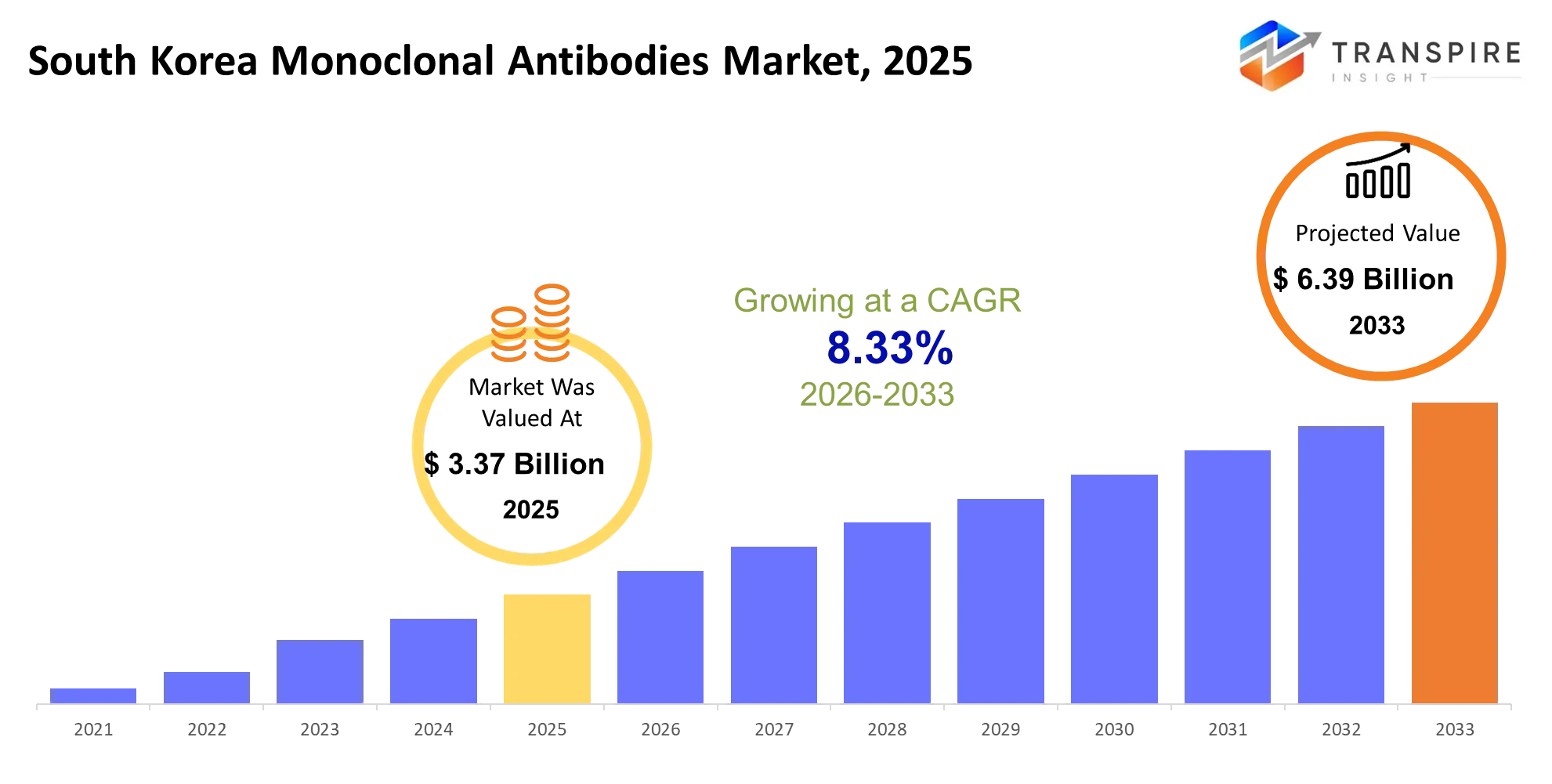
- Market Value (2025): USD 3.37 Billion.
- Expected Market Value (2026): USD 3.65 Billion.
- Estimated Market Value (2033): USD 6.39 Billion.
- Forecast CAGR (2026–2033): 8.33%
Introduction
It consists of the manufacturing, distributing, and marketing of artificial proteins that can target specific antigens within the body to treat or protect from certain diseases. Monoclonal antibodies (mAbs) are biological drugs that help the body fight off diseases such as cancer, autoimmunity and infectious diseases. Monoclonal Antibodies (mAbs). These are artificially created molecules manufactured through cloning of immune cells in laboratories. Unlike polyclonal antibodies, which recognize various parts of the same antigen molecule, monoclonal antibodies are structurally identical molecules capable of binding to one specific target (epitope) of a disease-causing agent. Advantages of the South Korea Monoclonal Antibodies Market include modern healthcare system, advanced bio manufacturing, government policies, and increased usage of precision medicines. Large investments in healthcare and quick implementation of innovative drugs increase the demand for biologics. The presence of CMOs/CDMOs capable of providing advanced cell culture techniques, single-use bioreactors, and GMP production facilities ensures production scalability. Moreover, government policy and regulations are continuously encouraging research and development of biopharmaceuticals. Additionally, the rising adoption of companion diagnostics, bispecific antibodies, and antibody-drug conjugates (ADCs) improves target specificity.
Key Market Highlights: -
- By source, the Human segment dominated the market and holds nearly 53% share in 2025 and is projected to grow at a substantial CAGR during the forecast period.
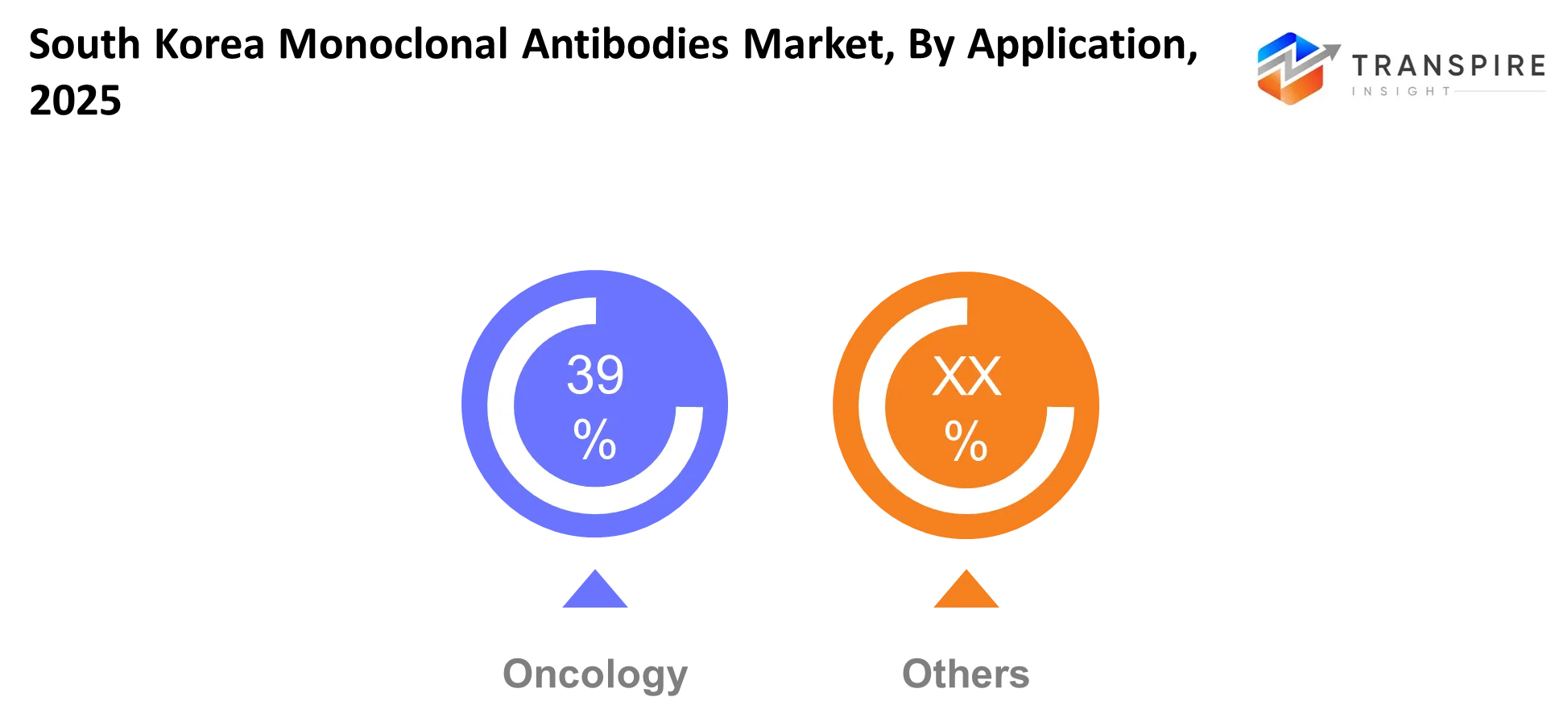
- By application, the Oncology segment dominated the market and holds nearly 40% share in 2025 and is projected to grow at a substantial CAGR during the forecast period.
- By end user, the Hospitals segment dominated the market and holds nearly 35% share in 2025 and is projected to grow at a substantial CAGR during the forecast period.
- Biopharmaceuticals R&D Investment: South Korea invests heavily in the monoclonal antibodies market via public investments in R&D within the healthcare and biohealth sector. The amount invested by the government into healthcare R&D in 2025 was KRW 2.1047 trillion, out of which KRW 994.7 billion was earmarked for biohealth new industry development.
How is Technology Driving Growth in the South Korea Monoclonal Antibodies Market?
The Monoclonal Antibodies Market in South Korea is making progress via biomanufacturing scalability, digital transformation, and the development of advanced antibodies. Single-use bioreactors, high-titer CHO cell lines, and PAT systems enhance production efficiency, scalability, and control. Drug discovery through artificial intelligence, HTS techniques, and automation are helping in the rapid development of antibodies without increasing complexities. On the other hand, bispecific antibodies, antibody-drug conjugates, and humanized antibodies are increasing precision in therapy through targeted delivery, reduced immunogenicity, and better treatment outcomes for oncology and immunological indications.
Market Drivers
There are several factors fueling growth in the South Korea Monoclonal Antibodies Market. Firstly, there is an increase in the aging population which increases the incidence of cancer, chronic diseases, and autoimmune diseases thus increasing the demand for specific biological treatments. Secondly, increased government backing, research and development funding, and favorable regulatory policies will aid the rapid development of monoclonal antibodies and their commercialization. Thirdly, there is advanced infrastructure, research facilities, and investment in the healthcare sector making it a preferred destination for foreign pharmaceutical collaborations. Finally, technology advances in artificial intelligence-based drug development, bio manufacturing, and biosimilar production are fueling efficient development and production. There are several factors fueling growth in the South Korea Monoclonal Antibodies Market. Firstly, there is an increase in the aging population which increases the incidence of cancer, chronic diseases, and autoimmune diseases thus increasing the demand for specific biological treatments. Secondly, increased government backing, research and development funding, and favorable regulatory policies will aid the rapid development of monoclonal antibodies and their commercialization. Thirdly, there is advanced infrastructure, research facilities, and investment in the healthcare sector making it a preferred destination for foreign pharmaceutical collaborations. Finally, technology advances in artificial intelligence-based drug development, bio manufacturing, and biosimilar production are fueling efficient development and production.
Restrain
The restraints in the South Korea Monoclonal Antibody Market include expensive treatments, investment-intensive GMP-based manufacturing process, and intricate bioprocessing needs. The vulnerability of the supply chain through the use of special raw materials and cold chain logistics may disrupt the manufacturing process. The rigorous regulatory requirements of the MFDS may lead to delays in the commercialization process. There is also a scarcity of experts on bioprocessing, data integrity, and cyber security.
|
Driver |
Relative Impact on Growth (%) |
Geographic Relevance |
Impact Timeline |
Demand Strength |
Growth Mechanism |
Key Beneficiaries |
Major Constraint |
|
Driver 1: Rising Oncology and Immunology Treatment Demand |
30% |
Seoul, Gyeonggi, Major Tertiary Hospitals |
Long-term |
High |
Expands antibody utilization across cancer and autoimmune indications |
Manufacturers, hospitals, oncology centers, patients |
High treatment costs constrain patient access |
|
Driver 2: Rapid Biosimilar Adoption and Portfolio Expansion |
25% |
Nationwide, strongest in Seoul and Gyeonggi |
Short-term |
High |
Lower-cost biosimilars expand access and treatment volumes |
Biosimilar manufacturers, distributors, hospitals, insurers |
Pricing pressure reduces manufacturer margins |
|
Driver 3: Biopharmaceutical R&D and Manufacturing Investment |
18% |
Seoul, Incheon, Gyeonggi Bio-Clusters |
Medium-term |
High |
Capacity expansion supports antibody development and commercial production |
Biopharma firms, CDMOs, technology vendors, researchers |
High capital requirements and lengthy development cycles |
|
Driver 4: Accelerated Regulatory Pathways for Biologics |
15% |
Nationwide |
Short-term |
Medium |
Faster approvals shorten commercialization timelines for biologics |
Innovators, biosimilar developers, regulatory-service providers |
Complex evidence requirements remain substantial |
|
Driver 5: Next-Generation Antibody Technologies and Clinical Innovation |
12% |
Seoul, Gyeonggi, Incheon Research Clusters |
Long-term |
Medium |
Advanced formats broaden therapeutic applications and clinical pipelines |
Biotech firms, research institutes, technology providers |
Complex development increases technical and clinical risk |
Analysis of Prices and Consumer Behaviour
Monoclonal antibody therapies market in cancer indications (accounting for about 50% of the total market size; caused by the need for targeted cancer treatments and increasing adoption of immunotherapies). The price of a novel, high-purity monoclonal antibody therapy is estimated to be around 30% higher than other products, given the fact that this product would be produced by employing an advanced bioprocessing technique, quality-certified production process and consistent therapeutic effects. About 55% of all treatment administrations with monoclonal antibodies involve intravenous administrations. The reason for that is caused by the already existing practice of intravenous administration in hospitals and specialty clinics and the adoption of biologics. The oncology and autoimmune diseases account for about 70% of all demands for monoclonal antibody therapies. Purchasing behavior of the healthcare providers shows that 55% of buyers give the most weight to the efficacy, quality and consistency of the therapeutic product. Also, another 33% of buyers are willing to buy products in bulk or through long-term contracts since they would like to save money and secure their supply in South Korea.
Who are the Key Players in the South Korea Monoclonal Antibodies Market and how do they compete?
The competitiveness in the South Korean market for monoclonal antibodies relies on firms which specialize in advanced biologics manufacturing, antibody development, biosimilar development, and strategic partnership in the fields of pharmaceuticals and biotechnology. The competition not only comes from size and volume of production but also from the quality of production processes, clinical development of drugs, regulation expertise, innovations, and implementation of advanced cell culture and purification technologies. In such a way, the competition allows the continual development of products and helps the pharmaceutical companies enhance drug accessibility, efficiency of production processes, and supply of biologics security.
Samsung Biologics enhances its competitive position by implementing large-scale biologics manufacturing and antibody production through advanced manufacturing technology, global pharmaceutical partnerships, and highly efficient contract development and manufacturing services. Celltrion gains competitive advantage through innovations in antibody therapies and biosimilars based on advanced biologics development and commercialization. Hanmi Pharmaceutical creates competitive advantage in the market by innovative antibody-based therapeutic solutions and biopharmaceutical platforms.
Top Companies in the South Korea Monoclonal Antibodies Market
- Samsung Biologics
- Celltrion
- Roche
- Johnson & Johnson
- AbbVie
- Bristol Myers Squibb
- Merck
- AstraZeneca
- Pfizer
- Eli Lilly
- Amgen
- Regeneron
- Sanofi
- Takeda
- GC Biopharma
|
Company |
Est. Revenue Share Range |
Key Offerings |
Strategic Positioning |
Geographic Strength |
Technology Focus |
|
Celltrion |
16–21% |
Remsima, Remsima SC, Truxima, Herzuma, Yuflyma, Vegzelma, Omlyclo |
Integrated biosimilar scale and direct commercialization |
Asia Pacific, Europe, North America |
Antibody engineering, biosimilars, SC formulations, large-scale biomanufacturing |
|
Samsung Bioepis |
13–18% |
Hadlima, Samfenet, Renflexis, Onbevzi, Epyztek, Obodence, Xbryk |
Broad biosimilar portfolio with global commercialization partnerships |
Asia Pacific, Europe, North America |
Biosimilar development, antibody analytics, ADCs, AI-enabled drug development |
|
Roche |
10–14% |
Herceptin, Avastin, Perjeta, Tecentriq, Ocrevus |
Innovator leadership through differentiated biologics |
Europe, North America, Asia Pacific |
Targeted antibodies, immuno-oncology, companion diagnostics |
|
Johnson & Johnson |
7–10% |
Darzalex, Stelara, Remicade, Tremfya |
Specialty-biologics leadership across oncology and immunology |
North America, Europe, Asia Pacific |
Bispecific antibodies, antibody therapeutics, advanced SC delivery |
|
MSD |
6–9% |
Keytruda, other oncology biologics and pipeline antibodies |
Oncology-focused innovation and clinical-development strength |
North America, Asia Pacific, Europe |
PD-1 immunotherapy, immune-oncology combinations, biomarker research |
|
AbbVie |
5–8% |
Humira, Skyrizi, Rinvoq-related biologics portfolio |
Immunology specialization with lifecycle management |
North America, Europe, Asia Pacific |
Targeted immunology antibodies, formulation innovation, biologics R&D |
|
Amgen |
4–7% |
Prolia, Xgeva, Repatha, Tezspire |
Specialty biologics supported by advanced clinical platforms |
North America, Europe, Asia Pacific |
Human antibody engineering, bispecifics, protein therapeutics |
|
AstraZeneca |
4–6% |
Fasenra, Tezspire, Imfinzi, Saphnelo |
Innovation-led respiratory and immuno-oncology portfolio |
Europe, North America, Asia Pacific |
Immune-targeting antibodies, respiratory biologics, oncology platforms |
|
Novartis |
3–5% |
Cosentyx, Xolair-related portfolio, specialty biologics |
Specialty-medicine positioning with targeted biologics |
Europe, North America, Asia Pacific |
Targeted immune modulation, antibody therapeutics, precision medicine |
|
Eli Lilly |
2–4% |
Taltz and emerging antibody-based therapies |
Focused specialty-immunology expansion and pipeline innovation |
North America, Europe, Asia Pacific |
Cytokine-targeting antibodies, immunology R&D, biologic platforms |
South Korea Monoclonal Antibodies Market Segmentation
The South Korea Monoclonal Antibodies Market share is divided into five categories: By source, production, application, route and end user.
The Human dominated the market, accounting for nearly 53% in 2025 and is expected to rise at a significant CAGR during the forecast period.
The South Korea Monoclonal Antibodies Market is segmented by source into Human, Humanized, Chimeric, Murine, Bispecific, Recombinant, Fc-Engineered. Among these, the Human segment dominated the market, accounting for nearly 53% in 2025 and expected to increase at a significant CAGR during the forecast period. Human Segment Leads in Market Share in 2025 at Nearly 53% due to the superior ability of humans to understand context and make decisions in complex situations and the unpredictability in which they must operate. Growth in demand for human guidance, ethical decision making, and collaboration remains an impetus for maintaining market dominance.
The Oncology dominated the market, accounting for nearly 40% in 2025, and is expected to rise at a significant CAGR during the forecast period.
The South Korea Monoclonal Antibodies Market is segmented by application into Oncology, Autoimmune Diseases, Infectious Diseases, Cardiovascular Diseases, Neurological Disorders, Hematological Disorders, Ophthalmic Diseases. Among these, the Oncology segment dominated the market, accounting for nearly 40% in 2025 and expected to increase at a significant CAGR during the forecast period. In 2025, the Oncology domain held a leading share in the market, comprising almost 40%, mainly due to an increase in the incidence of cancer worldwide, advancements in technology related to diagnosis and treatment, and the growing requirement for personalized treatment approaches. Research in oncology, targeted drugs, immunotherapy, and precision medicine is fueling market growth.
The Hospitals dominated the market, accounting for nearly 35% in 2025 and is expected to rise at a significant CAGR during the forecast period.
The South Korea Monoclonal Antibodies Market is segmented by end user into Hospitals, Specialty Clinics, Research Institutes, Diagnostic Laboratories, Academic Institutions, Pharmaceutical Companies, Biotechnology Companies. Among these, the Hospitals segment dominated the market, accounting for nearly 35% in 2025 and expected to increase at a significant CAGR during the forecast period. The Hospitals segment was the leading segment in the market share of 2025, occupying a near 35% share. The factors such as huge numbers of patients, sophisticated healthcare facilities, and adoption of new medical techniques have been fuelling the market. Increasing need for comprehensive healthcare and rising healthcare spending will fuel the growth of the market in the future.
Future Market Trends for the South Korea Monoclonal Antibodies Market: -
- Precision Medicine Approach: Development of customized immune therapies based on specific molecular pathways of diseases.
- AI Incorporation: Implementation of AI in discovering new drugs and predicting patient reactions to medications.
- Biosimilars Progress: Improvement in manufacturing processes and global compliance rules to develop effective biosimilars.
- Bispecifics Application: Using bispecific molecules to overcome drug resistance in oncological therapy.
Recent Development
- In March 2026: The deal was finalized between Samsung Biologics and GSK to purchase the latter’s Rockville, Maryland-based drug substance manufacturing plant which provides an additional capacity of 60,000 liters of manufacturing capability for Samsung Biologics. This deal improves the global standing of South Korea in the field of manufacturing monoclonal antibodies and biologics.
- In February 2026: Completion of Celltrion’s regulatory clinical trial for Herzuma SC (CT-P6 SC), which is a trastuzumab biosimilar delivered subcutaneously, would enable regulatory applications for South Korea and Europe. This development enhances the monoclonal antibody market in South Korea via the use of biosimilars, subcutaneous delivery, increased patient convenience, and local biopharmaceutical expertise.
Market Segment
This study forecasts revenue at South Korea, regional and country levels from 2020 to 2033. Transpire Insight has segmented the South Korea Monoclonal Antibodies Market based on the below-mentioned segments:
South Korea Monoclonal Antibodies Market, By Source
- Human
- Humanized
- Chimeric
- Murine
- Bispecific
- Recombinant
- Fc-Engineered
South Korea Monoclonal Antibodies Market, By Production
- In-Vitro
- In-Vivo
- Recombinant DNA
- Hybridoma
- Cell Culture
- Microbial
- Transgenic
South Korea Monoclonal Antibodies Market, By Application
- Oncology
- Autoimmune Diseases
- Infectious Diseases
- Cardiovascular Diseases
- Neurological Disorders
- Hematological Disorders
- Ophthalmic Diseases
South Korea Monoclonal Antibodies Market, By Route
- Intravenous
- Subcutaneous
- Intramuscular
- Intraperitoneal
- Intradermal
- Oral
- Other Routes
South Korea Monoclonal Antibodies Market, By End User
- Hospitals
- Specialty Clinics
- Research Institutes
- Diagnostic Laboratories
- Academic Institutions
- Pharmaceutical Companies
- Biotechnology Companies
Frequently Asked Questions
Find quick answers to common questions.
The market was valued at USD 3.37 billion in 2025 and is projected to reach USD 6.39 billion by 2033.
Human monoclonal antibodies dominated with nearly 53% market share in 2025, supported by growing demand for targeted therapies.
Oncology held nearly 40%, driven by cancer incidence, targeted therapies, immunotherapy adoption, and growing precision medicine applications.
Hospitals accounted for nearly 35%, supported by high patient volumes, advanced healthcare infrastructure, and adoption of innovative treatments.
AI, automation, advanced bio manufacturing, bispecific antibodies, and ADCs improve antibody development, production scalability, and therapeutic precision.
- Samsung Biologics
- Celltrion
- Roche
- Johnson & Johnson
- AbbVie
- Bristol Myers Squibb
- Merck
- AstraZeneca
- Pfizer
- Eli Lilly
- Amgen
- Regeneron
- Sanofi
- Takeda
- GC Biopharma
About the Authors

Pankaj Ghogare Patil
I am Pankaj Ghogare Patil, a Senior Research Analyst at Transpire Insight, specializing in the Pharmaceutical, Chemicals & Materials, Healthcare IT, and Biotechnology industry. My expertise lies in conducting comprehensive market research, analyzing industry trends, evaluating competitive landscapes, and translating complex data into actionable insights. At Transpire Insight, I closely follow emerging technologies, regulatory developments, and market innovations to create accurate, well-researched, and informative content that helps businesses and professionals make informed decisions. I am committed to producing credible, evidence-based articles that reflect industry best practices while making technical topics accessible and valuable for a broad audience.

Chakradhar Khansole
Chakradhar serves as the Research Director at Transpire Insight, bringing over 8 years of experience in technology, innovation, and strategic market intelligence. He specializes in transforming complex market data into actionable business insights that enable organizations to make informed, growth-oriented decisions. Recognized for his strategic vision and analytical expertise, Chakradhar leads high-impact research initiatives, delivering comprehensive market assessments, competitive intelligence, and forward-looking industry analysis.
Recently Published Reports
-
Jul 2026
Alopecia Treatment Market
Alopecia Treatment Market Size, Share & Analysis Report By Disease Type (Alopecia Areata, Cicatricial Alopecia, Traction Alopecia, Alopecia Totalis, Androgenetic Alopecia, Alopecia Universalis, and Other Disease Types), By Treatment Type (Topical Treatments, Oral Medications, Injectable Therapies, and Hair Transplantation), By Gender (Male, and Female), By Distribution Channel (Hospitals and Clinics, Retail Pharmacies, and Online Retailers), and Geography (North America, Europe, Asia-Pacific, Middle East and Africa, South and Central America), 2021 - 2031
-
Jul 2026
Medical Ultrasound Probe Market
Medical Ultrasound Probe Market Size, Share & Analysis Report By Type (Linear Type, Convex Type, Endocavitary Probe, Phased Array/Cardiac Probe, Transesophageal (TEE) Probe, and Others), By Application (Ophthalmology, Cardiology, Musculoskeletal, Oncology, Obstetrics & Gynecology, General Imaging, and Others), By End User (Hospitals & Clinics, Diagnostic Centers, Ambulatory Surgical Centers, and Others), and Geography (North America, Europe, Asia-Pacific, Middle East and Africa, South and Central America), 2021 – 2031
-
May 2026
Biosimilars Market
Biosimilars Market By Product Type (Monoclonal Antibodies, Recombinant Hormones, Erythropoietin, G-CSF, Others), By Indication (Oncology, Autoimmune Diseases, Blood Disorders, Diabetes, Others), By Manufacturing Type (In-House Manufacturing, Contract Manufacturing), By Distribution Channel (Hospital Pharmacies, Retail Pharmacies, Online Pharmacies), By Industry Analysis, Size, Share, Growth, Trends, and Forecasts 2021-2033
-
Apr 2026
Gastrointestinal Endoscopy Market
Gastrointestinal Endoscopy Market By Type (Rigid Gastrointestinal Endoscope, Flexible Gastrointestinal Endoscopes, Disposable Gastrointestinal Endoscope), By Procedure Type (Colonoscopy, Gastroscopy, Duodenoscopy, Enteroscopy, Flexible Sigmoidoscopy, Others), By Application (Diagnosis, Treatment), By End-Users (Hospitals, Ambulatory Surgical Centers, Specialty Clinics, Laboratories, Others), By Industry Analysis, Size, Share, Growth, Trends, and Forecasts 2021-2033