

South Korea Methylene Diphenyl Di-Isocyanate (MDI) Market Size & Forecast:
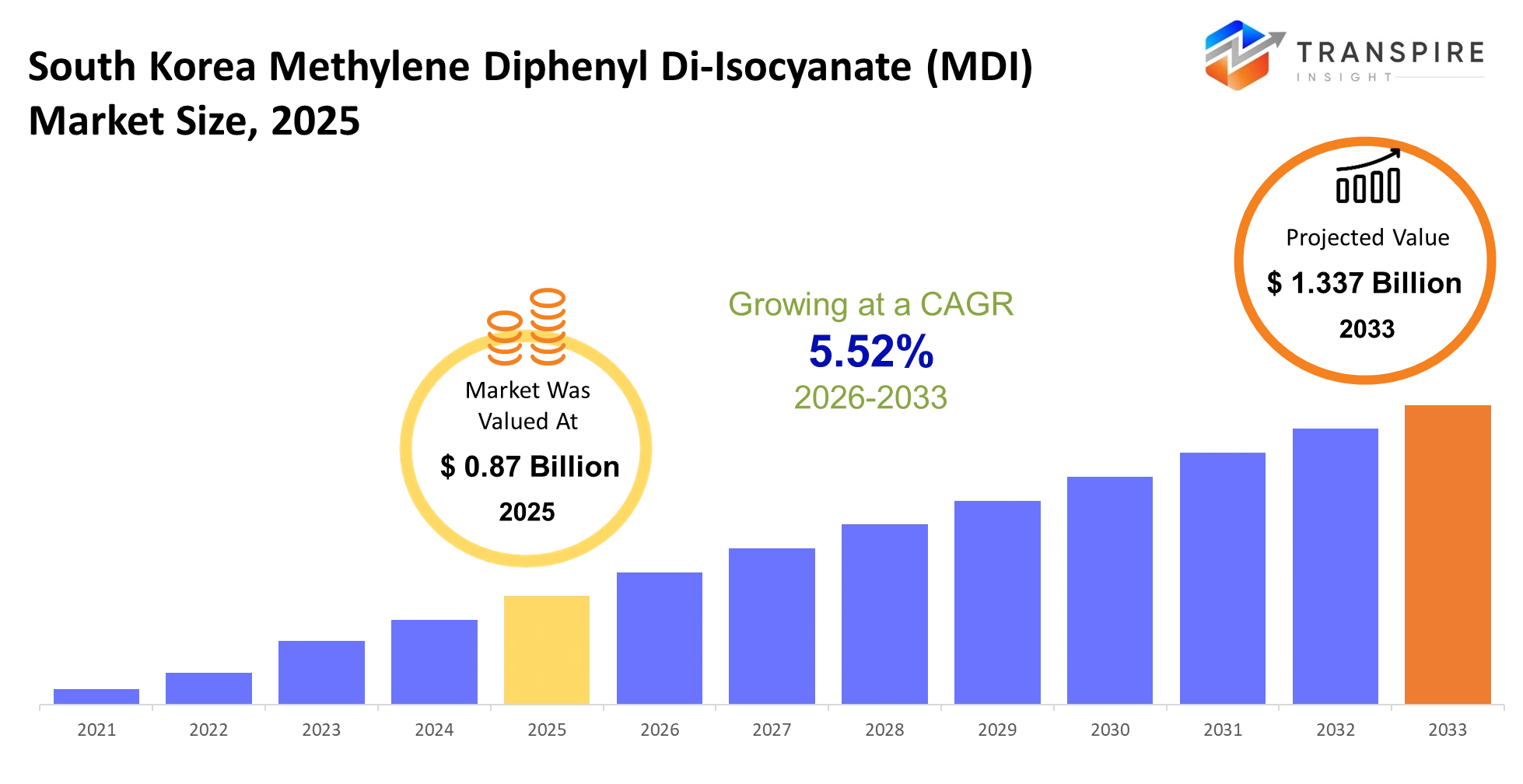
- South Korea Methylene Diphenyl Di-Isocyanate (MDI) Market Size 2025: USD 0.87 Billion
- South Korea Methylene Diphenyl Di-Isocyanate (MDI) Market Size 2033: USD 1.337 Billion
- South Korea Methylene Diphenyl Di-Isocyanate (MDI) Market CAGR: 5.52%
- South Korea Methylene Diphenyl Di-Isocyanate (MDI) Market Segments: By Type (Polymeric MDI, Pure MDI), By Application (Rigid Foam, Flexible Foam, Coatings & Adhesives), By End-User (Construction, Automotive, Furniture).
To learn more about this report,  Download Free Sample Report
South Korea Methylene Diphenyl Di-Isocyanate (MDI) Market Summary:
South Korea Methylene Diphenyl Di-Isocyanate (MDI) Market size was estimated at USD 0.87 Billion in 2025 and is anticipated to reach USD 1.337 Billion by 2033, growing at a CAGR of 5.52% from 2026 to 2033.
The South Korean methylene diphenyl di-isocyanate market within the chemical and advanced materials sector will maintain its connection to manufacturing requirements which construction and automotive and electronics industries create. Manufacturers will modify their operations according to customer demand which requires energy-efficient buildings and lightweight components for vehicles. Customers will demand more high-performance insulation materials which will lead manufacturers to develop products with better thermal performance and product consistency. Export-driven businesses will maintain their domestic supply chain connections which require them to follow strict quality control procedures and timely delivery requirements.
Technological advancements in production processes will lead to emission reductions and resource efficiency improvements while South Korean environmental regulations become more stringent. Businesses will adjust their operations as chemical safety regulations and workplace safety rules become more stringent which will lead them to implement environmentally friendly technologies. Users will demand materials that meet sustainability requirements which will drive development of low-emission products. The existing industrial environment will create a market which progresses between industrial needs and sustainable production methods while meeting performance requirements and compliance obligations.
Key Market Trends & Insights:
- The South Korea Methylene Diphenyl Di-Isocyanate MDI Market exhibits strong ties to construction work because polyurethane products are needed for insulation materials and energy-efficient buildings. Material consumption keeps increasing because urban development and renovation projects continue, which results in growing demand that both residential and commercial development patterns in major cities sustain.
- The South Korea Methylene Diphenyl Di-Isocyanate MDI Market experiences growth because the material becomes more common in automotive interiors and seating and lightweight components. Automakers select polyurethane as their material because they want to achieve weight reduction and fuel efficiency goals. The domestic production capabilities for vehicle manufacturing together with the export-oriented vehicle production system create a steady demand for materials across different vehicle categories.
- The South Korea Methylene Diphenyl Di-Isocyanate MDI Market witnesses substantial expansion because of increasing requirements for refrigeration systems and cold storage facilities. Food safety standards and pharmaceutical logistics require better insulation systems. The market for refrigeration equipment depends on MDI-based polyurethane foam as the material maintains its popularity in various applications.
- The South Korea Methylene Diphenyl Di-Isocyanate MDI Market shows manufacturing improvements through better processing methods which lead to better operational efficiency and superior product output. The producers concentrate on two objectives, which include decreasing their emissions and maximizing their production capabilities. The creation of new formulations improves performance features, which makes products suitable for various industrial uses while maintaining their market price advantage in both domestic and international trade.
- The South Korean market for Methylene Diphenyl Di-Isocyanate (MDI) shows permanent changes in its operations because of environmental regulations and sustainability requirements. The existing regulatory requirements drive organizations to create environmentally friendly products and implement cleaner manufacturing processes. Businesses invest in recycling programs and technologies that generate lower emissions to achieve compliance with national environmental standards and international sustainability requirements.
South Korea Methylene Diphenyl Di-Isocyanate (MDI) Market Segmentation
By Type :
- Polymeric MDI: Polymeric MDI holds a strong position in the South Korea Methylene Diphenyl Di-Isocyanate (MDI) Market because it serves as a vital component for insulation materials and various industrial applications. The manufacturing and construction sectors maintain a constant need for this material because it delivers both high durability and cost-effective performance while enabling production of rigid foam products which need dependable long-lasting results.
- Pure MDI: Pure MDI serves specialized applications which demand exacting standards of performance and consistent results. The South Korea Methylene Diphenyl Di-Isocyanate (MDI) Market sees demand from sectors producing elastomers, coatings, and adhesives. The improved chemical property management system enables manufacturers to produce high-quality products which meet requirements for smooth surfaces and strong mechanical performance.
By Application :
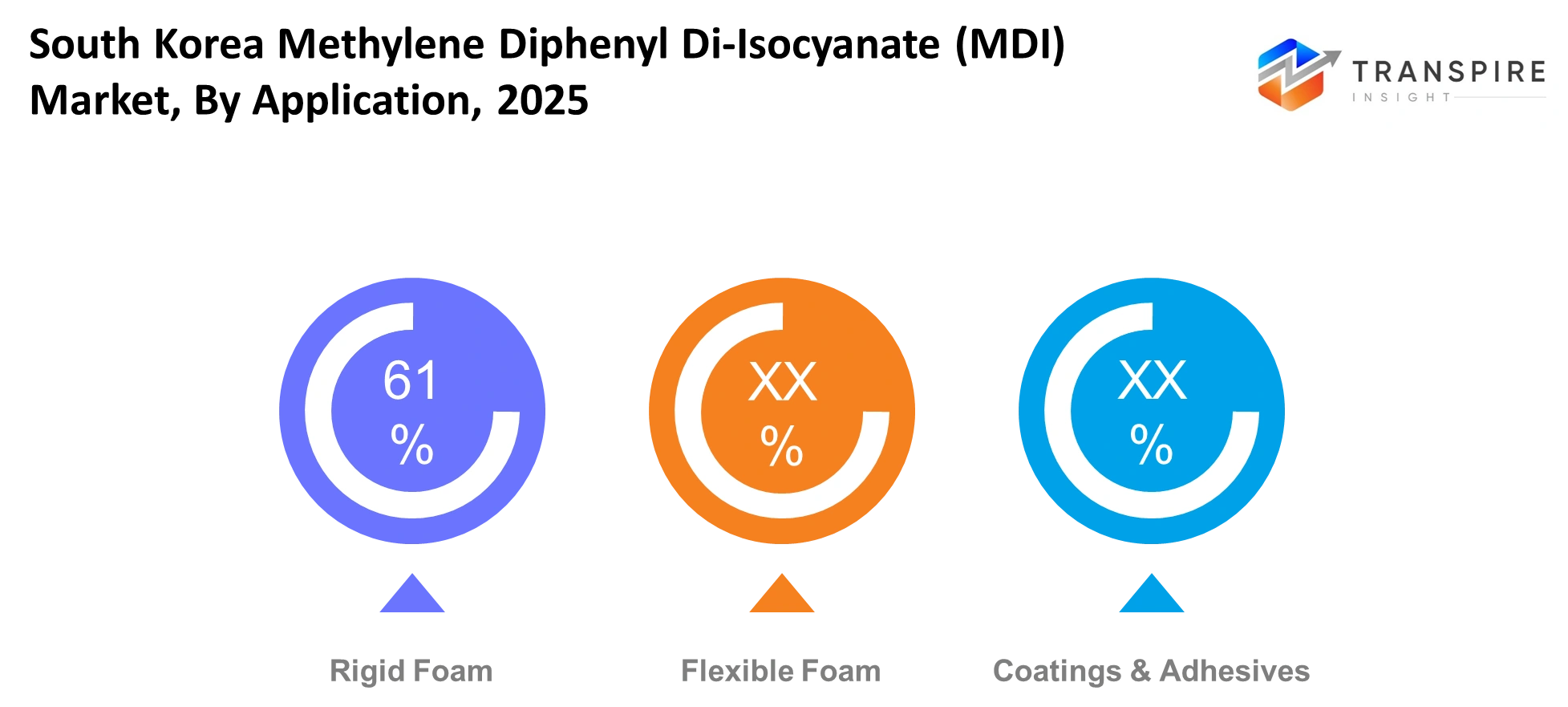
- Rigid Foam: The South Korean Methylene Diphenyl Di-Isocyanate MDI Market uses rigid foam as its primary material because buildings and refrigeration systems require insulation. The material shows steady performance because its thermal resistance properties and energy-saving advantages help fulfill energy-saving requirements that become essential in residential and industrial projects.
- Flexible Foam: Flexible foam creates comfort through its use in products that include bedding and seating and cushioning materials. The South Korean Methylene Diphenyl Di-Isocyanate MDI Market experiences expansion because people are increasing their spending on lifestyle products. The demand for these items depends on their application in furniture creation and automotive interior design because these markets require products that need to maintain both softness and durable protective strength.
- Coatings & Adhesives: The coatings and adhesives industry is expanding steadily in light of the continuous growth in industrial and commercial business activities. The South Korean Methylene Diphenyl Di-Isocyanate MDI Market benefits from strong bonding performance and protective properties available in MDI-based formulations. The material finds applications in construction and packaging and automotive finishing which creates a stable demand for the product.
To learn more about this report, Download Free Sample Report
By End-User :
- Construction: The construction industry establishes a significant portion of South Korea's Methylene Diphenyl Di-Isocyanate (MDI) market through its use of insulation materials and sealants and structural components. MDI-based products experience increased usage because energy-efficient building design and durable infrastructure development create ongoing demand which matches urban development and modernization efforts.
- Automotive: The automotive industry establishes market demand by developing lightweight materials and manufacturing vehicle interior parts. The South Korea Methylene Diphenyl Di-Isocyanate (MDI) Market benefits from the need for improved fuel efficiency and passenger comfort. The materials which find use in seating and insulation and coatings help improve performance while enabling manufacturers to operate their production processes more effectively.
- Furniture: The furniture market segment maintains a steady demand because both residential and commercial sectors require its products. The South Korea Methylene Diphenyl Di-Isocyanate (MDI) Market gains from production of mattresses, sofas, and cushions using flexible foam. The combination of comfort and durability and design flexibility leads to continuous purchasing from both domestic and international manufacturing operations.
Country Insights
- The industrial strength of South Korea creates permanent market demand for methylene diphenyl di-isocyanate which various sectors including construction, automotive industry and electronics manufacturing require. The demand for rigid polyurethane foam will expand because of rising insulation material consumption and energy-efficient building construction demands. The combination of local production capacity with import balance creates a steady supply situation which government sustainability efforts will use to determine material choices and production processes.
- The automotive and electronics manufacturing sectors in South Korea create an ongoing demand for materials which will affect the Methylene Diphenyl Di-Isocyanate (MDI) Market. The demand for advanced polyurethane systems has increased because of their lightweight components and enhanced thermal insulation capabilities. The export-oriented industries show stable market demand while the production facility upgrades will result in better operational efficiency and environmental compliance during upcoming periods.
- The South Korean regulatory framework will establish essential market parameters which will be particularly influenced by strengthened environmental regulations and safety requirements. The producers implement process modifications to achieve compliance with emission standards while decreasing their environmental footprint. The South Korea Methylene Diphenyl Di-Isocyanate (MDI) Market experiences gradual changes in production and application development because companies innovate bio-based materials and recycling techniques.
Recent Development News
In March 2026, BASF stated that it would raise MDI prices by $500 per ton in East Asia because of increased expenses for raw materials and logistics and energy. The South Korean market gets affected because the country serves as both a major regional consumer and production center.
In March 2026, regional confirmation of price hikes affecting Korea. The BASF price increase confirms its application across all East Asian markets which will increase production expenses for South Korean customers and their downstream construction and appliance manufacturing operations.
|
Report Metrics |
Details |
|
Market size value in 2025 |
USD 0.87 Billion |
|
Market size value in 2026 |
USD 0.918 Billion |
|
Revenue forecast in 2033 |
USD 1.337 Billion |
|
Growth rate |
CAGR of 5.52% from 2026 to 2033 |
|
Base year |
2025 |
|
Historical data |
2021 - 2024 |
|
Forecast period |
2026 - 2033 |
|
Report coverage |
Revenue forecast, competitive landscape, growth factors, and trends |
|
Country scope |
South Korea |
|
Key company profiled |
BASF SE, Covestro AG, Wanhua Chemical Group Co. Ltd., Huntsman Corporation, Dow Inc., Tosoh Corporation, Kumho Mitsui Chemicals Inc., Mitsubishi Chemical Group Corporation, LANXESS AG, GNFC Ltd., Sadara Chemical Company, Chevron Phillips Chemical Company LLC, Sinopec Group, SKC Co. Ltd., OCI Company Ltd. |
|
Customization scope |
Free report customization (country, regional & segment scope). Avail customized purchase options to meet your exact research needs. |
|
Report Segmentation |
By Type (Polymeric MDI, Pure MDI), By Application (Rigid Foam, Flexible Foam, Coatings & Adhesives), By End-User (Construction, Automotive, Furniture). |
Key South Korea Methylene Diphenyl Di-Isocyanate (MDI) Company Insights
- The South Korea Methylene Diphenyl Di-Isocyanate (MDI) Market operates through strong industrial foundations which enable chemical producers to deliver consistent product quality while maintaining cost efficiency. The domestic market for construction and automotive sectors receives support from large-scale manufacturing facilities which export products to improve global market presence and secure continuous revenue growth.
- The South Korea Methylene Diphenyl Di-Isocyanate (MDI) Market displays competitive dynamics which result from companies spending money on technological improvements and sustainable production methods. The companies will focus on increasing efficiency through capacity growth and regulatory compliance which will enable them to establish permanent business relationships with their downstream partners in insulation and furniture and packaging sectors.
South Korea Methylene Diphenyl Di-Isocyanate (MDI) Market Companies:
- BASF SE
- Covestro AG
- Wanhua Chemical Group Co. Ltd.
- Huntsman Corporation
- Dow Inc.
- Tosoh Corporation
- Kumho Mitsui Chemicals Inc.
- Mitsubishi Chemical Group Corporation
- LANXESS AG
- GNFC Ltd.
- Sadara Chemical Company
- Chevron Phillips Chemical Company LLC
- Sinopec Group
- SKC Co. Ltd.
- OCI Company Ltd
South Korea Methylene Diphenyl Di-Isocyanate (MDI) Market Segmentation
By Type
- Polymeric MDI
- Pure MDI
By Application
- Rigid Foam
- Flexible Foam
- Coatings & Adhesives
By End-User
- Construction
- Automotive
- Furniture
Frequently Asked Questions
Find quick answers to common questions.
The approximate South Korea Methylene Diphenyl Di-Isocyanate (MDI) Market size for the market will be USD 1.337 Billion in 2033.
Key segments for the South Korea Methylene Diphenyl Di-Isocyanate (MDI) Market are By Type (Polymeric MDI, Pure MDI), By Application (Rigid Foam, Flexible Foam, Coatings & Adhesives), By End-User (Construction, Automotive, Furniture).
Major South Korea Methylene Diphenyl Di-Isocyanate (MDI) Market players are BASF SE, Covestro AG, Wanhua Chemical Group Co. Ltd., Huntsman Corporation, Dow Inc., Tosoh Corporation, Kumho Mitsui Chemicals Inc., Mitsubishi Chemical Group Corporation, LANXESS AG, GNFC Ltd., Sadara Chemical Company, Chevron Phillips Chemical Company LLC, Sinopec Group, SKC Co. Ltd., OCI Company Ltd.
The South Korea Methylene Diphenyl Di-Isocyanate (MDI) Market size is USD 0.87 Billion in 2025.
The South Korea Methylene Diphenyl Di-Isocyanate (MDI) Market CAGR is 5.52%.
- BASF SE
- Covestro AG
- Wanhua Chemical Group Co. Ltd.
- Huntsman Corporation
- Dow Inc.
- Tosoh Corporation
- Kumho Mitsui Chemicals Inc.
- Mitsubishi Chemical Group Corporation
- LANXESS AG
- GNFC Ltd.
- Sadara Chemical Company
- Chevron Phillips Chemical Company LLC
- Sinopec Group
- SKC Co. Ltd.
- OCI Company Ltd
Recently Published Reports
-
May 2026
Healthcare Polymer Packaging Market
Healthcare Polymer Packaging Market Size, Share & Analysis Report By Packaging Type (Syringes, IV Bottles and Pouches, Clamshells, Blisters, Bottles & Jars, Containers, Tubes, IV Parental Packaging, Others), By Type (Regulated, Non-regulated), By Polymer Type (LDPE (Low-Density Polyethylene), HDPE (High-Density Polyethylene), Homo-polymer (Homo), Random Copolymer (Random), Block Copolymer (Block), PET, Polystyrene, Polyvinyl Chloride, Polyamide/EVOH, Others), and Geography (North America, Europe, Asia-Pacific, Middle East and Africa, South and Central America), 2021 - 2031
-
Apr 2026
Hydrophilic Tape (Waterstop) Market
Hydrophilic Tape (Waterstop) Market Size, Share & Analysis Report By Type (Bentonite-Based Hydrophilic Tape, Rubber-Based Hydrophilic Tape), By Application (Residential Buildings, Commercial Buildings, Infrastructure Projects), and Geography (North America, Europe, Asia-Pacific, Middle East and Africa, South and Central America), 2021 - 2031
-
Apr 2026
Metalens Market
Metalens Market Size, Share & Analysis Report By Type (Visible Light Metalens, and Infrared Metalens), By Application (Consumer Electronics, Automotive Electronics, Industrial, Medical, and Others), and Geography (North America, Europe, Asia-Pacific, Middle East and Africa, South and Central America), 2021 - 2031
-
Apr 2026
PBT Resin Market
PBT Resin Market Size, Share & Analysis Report By Type (Reinforced PBT Resin, Unreinforced PBT Resin), By Processing Method (Injection Molding, Extrusion, Blow Molding, Others), By End-User (Automotive, Electrical & Electronics, Consumer Appliances, Industrial Machinery, Medical Devices, Packaging, Others), and Geography (North America, Europe, Asia-Pacific, Middle East and Africa, South and Central America), 2021 - 2031