
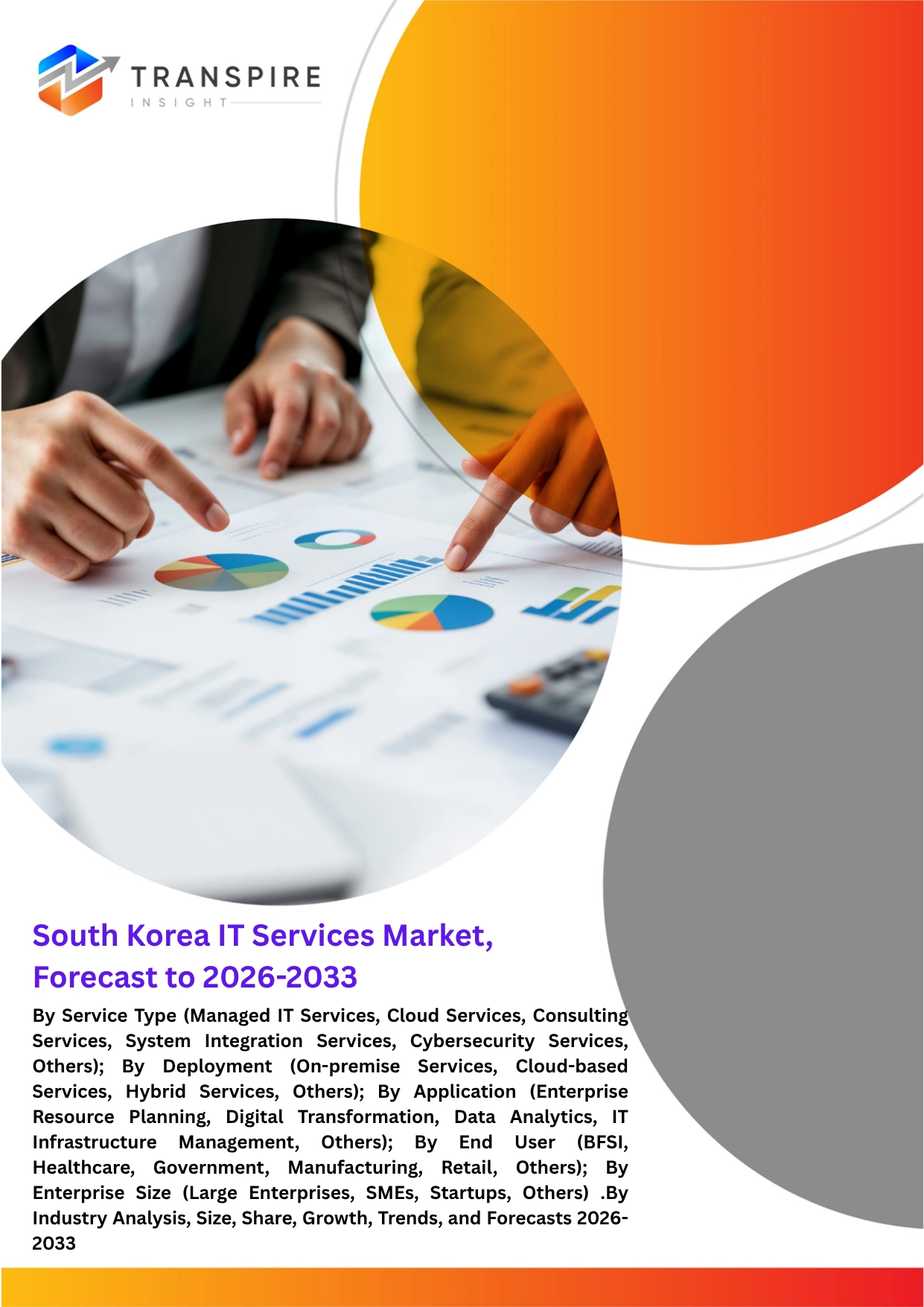
South Korea IT Services Market Size & Forecast:
- South Korea IT Services Market Size 2025: USD 34.78 Billion
- South Korea IT Services Market Size 2033: USD 80.67 Billion
- South Korea IT Services Market CAGR: 11.10%
- South Korea IT Services Market Segments: By Service Type (Managed IT Services, Cloud Services, Consulting Services, System Integration Services, Cybersecurity Services, Others); By Deployment (On-premise Services, Cloud-based Services, Hybrid Services, Others); By Application (Enterprise Resource Planning, Digital Transformation, Data Analytics, IT Infrastructure Management, Others); By End User (BFSI, Healthcare, Government, Manufacturing, Retail, Others); By Enterprise Size (Large Enterprises, SMEs, Startups, Others)
To learn more about this report,  Download Free Sample Report
South Korea IT Services Market Summary
The South Korea IT Services Market was valued at USD 34.78 Billion in 2025. It is forecast to reach USD 80.67 Billion by 2033. That is a CAGR of 11.10% over the period.
The South Korea IT Services Market basically helps enterprises, government organizations, and industrial manufacturers modernize their daily operations through cloud migration, managed services, cybersecurity integration, and enterprise software rollout. In real life, it sort of fixes those messy legacy system issues, it also enables faster near real time data processing, and it makes it easier for companies to expand digital infrastructure without having to build everything inside their own walls. Over the last five years, there’s been a big structural turn toward cloud first architecture, and it has changed how buyers do procurement. Instead of mostly paying for separate projects, many buyers moved toward subscription led service models. This shift sped up after the global supply chain disruptions in the COVID-19 period, when it became obvious how risky on premise dependency can be. To cope, firms started boosting spend on distributed digital infrastructure as well as more resilient cybersecurity frameworks. Consequently, demand now leans toward integrated service providers that can run the whole end to end digital ecosystem, which in turn boosts enterprise adoption and keeps recurring revenue growing across the full IT services value chain.
Key Market Insights
- South Korea IT Services Market is getting more and more cloud-centric, as over 60% of enterprises are moving workloads to hybrid cloud by 2025.
- At the same time, Enterprise digital transformation basically steers the whole demand, and banking plus manufacturing take up a big chunk of IT services usage.
- Seoul and Gyeonggi, together hold almost 55% of the market concentration because there are so many enterprise clusters and data centers around there.
- Meanwhile, Busan looks like it’s becoming a fastest-growing IT hub, helped by logistics digitalization and those smart port initiatives, stretching through 2033.
- When it comes to services breakdown, the managed services portion leads the South Korea IT Services Market, mainly due to outsourcing of cyber security and infrastructure operations.
- Cloud services stay as the second-largest segment too, supported by SaaS take-up in SMEs and public sector digitization efforts.
- If we zoom in further, application development is the fastest-growing segment, largely because of API-driven platforms and tighter enterprise mobile integration.
- For end users, the BFSI industry holds the biggest share at nearly 30% contribution, largely tied to regulatory compliance and the ongoing expansion of digital banking.
- And healthcare IT adoption is growing the quickest among end-user categories, with electronic records plus AI diagnostics integration acting like key drivers.
What are the Key Drivers, Restraints, and Opportunities in the South Korea IT Services Market?
The main driver in the South Korea IT Services Market is that companies are moving fast toward cloud migration and a modernization of their digital backbone, you know, stuff like that. A lot of this happened because keeping older platforms running is getting more expensive and enterprises also needed more elastic computing capacity after remote work really took off. So as businesses shift into hybrid setups and multi-cloud setups, the appetite for managed services, the glue that is cybersecurity integration and also better data orchestration has grown quite a lot. That basically pulls up the provider recurring service income, and it does it in a pretty direct way.
One big restraint though is the heavy reliance on skilled IT talent plus the fact that system integration can be pretty involved, especially across legacy enterprise estates. A number of large firms run infrastructure that is kind of fragmented, and it just cant be moved quickly without adding operational risk. Because of that structural mess, deployment timelines stretch out and total transformation budgets climb, which slows down full-scale adoption among mid-tier enterprises. It also puts a ceiling on the short-term revenue momentum that service providers might want.
On the opportunity side, AI-enabled enterprise automation and industry-tailored cloud platforms are starting to look really promising, particularly in manufacturing and financial services. For instance, smart factory efforts in automotive clusters are pushing the demand for predictive maintenance tools and real-time production analytics platforms. That gives IT providers room to go past only infrastructure support and instead deliver more value-added intelligence services. In turn, this can unlock new revenue layers and help expand long-term contract commitments over time.
What Has the Impact of Artificial Intelligence Been on the South Korea IT Services Market?
Artificial intelligence is reshaping the South Korea IT Services Market, sort of by slipping automation and predictive intelligence into enterprise IT operations. IT service providers are using AI based monitoring systems to handle infrastructure chores with less human work, like server load balancing , catching cybersecurity threats, and tuning application performance optimization. The end result is fewer manual touches, and generally faster system response times across big enterprise setups.
Machine learning models are also getting more attention for predictive maintenance in data centers and industrial IT settings. This helps companies see possible system failures earlier, before they happen. In manufacturing and logistics especially, AI powered analytics platforms are helping with operational efficiency by steering resource allocation better and trimming downtime. These tools have led to real world improvements in uptime and operating cost efficiency, notably in big enterprise environments run by providers like Samsung SDS and LG CNS.
Still, adoption is not fully smooth. Integration complexity plus inconsistent data quality across legacy systems keeps pulling things back. A lot of enterprises deal with limited interoperability between AI platforms and older infrastructure, which makes it hard to roll out at full scale. On top of that, implementation expenses are high, and there is a shortage of AI skilled engineers, so mid-sized firms tend to slow down.
Key Market Trends
- Between 2023 and 2026, enterprise migration to hybrid cloud seemed to accelerate, and it did lower dependence on on-premise infrastructure models , even if teams kept some legacy tooling.
- In parallel , AI integration in IT operations kept expanding fast, and it improved automation for cybersecurity, plus the system monitoring frameworks.
- Government-backed digital transformation programs have also pulled more IT outsourcing demand across public sector agencies since 2024, kind of like a domino effect.
- Manufacturing firms meanwhile rolled out smart factory IT systems, which boosted demand for real-time analytics, and edge computing services as well.
- Managed services contracts moved toward longer multi-year agreements, helping providers such as SK C&C keep revenue more steady.
- After the 2024 data breaches, cybersecurity spending jumped sharply, and that reshaped enterprise IT budgets and priorities more than people expected.
- API-first architecture adoption rose quite a lot too, letting enterprises connect applications and cloud platforms faster.
- At the same time , financial services firms modernized core banking systems, so their dependency on external IT service vendors increased.
- And finally cloud-native application development replaced older software deployment approaches in big enterprise projects, with fewer “lift and shift” cycles.
South Korea IT Services Market Segmentation
By Service Type
Managed IT Services are taking a top spot, mostly because lots of enterprises depend heavily on outsourced infrastructure management, cybersecurity surveillance, and application help. Big companies like that more predictable operating expense approach, so it tends to lock in longer managed service agreements. Banking as well as manufacturing keep showing up as major drivers, since no interruptions in system uptime is basically required to keep day to day operations running.
Cloud Services are seeing the quickest expansion, especially as organizations move into hybrid and multi cloud setups. Consulting Services are still quite relevant for shaping strategy and mapping digital transformation plans, and it matters a lot for large enterprises that are modernizing older platforms. System Integration Services keep steady traction because the overall enterprise architecture can be complicated , spanning both legacy and newer systems at the same time. Cyber Security Services are also booming due to heightened threats and the continuous stress of complying with regulations. Then there are the rest of the services, such as niche outsourcing and specialized IT that address certain voids. Throughout the period of forecast, it is expected that cloud-based services and cybersecurity services would experience better growth, as companies are focusing on both flexibility and resiliency.
By Deployment
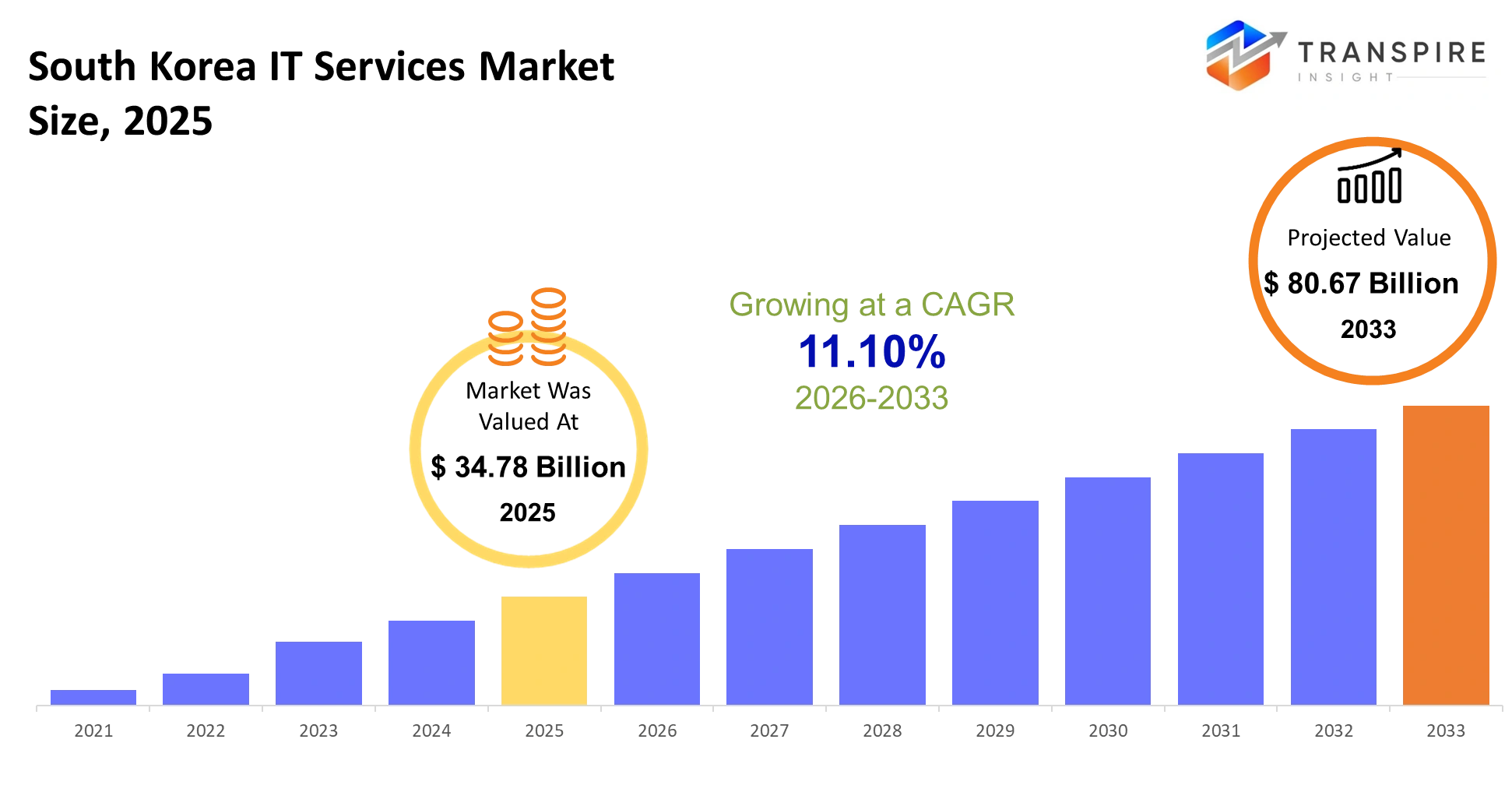
Deployment through Cloud-Based Services is prevalent due to the rapid transition from old infrastructure to scalable digital infrastructure. Enterprises are favoring cloud-based deployment solutions for their agility, fast deployment times, and minimized expenses. The finance sector and manufacturing industries have been adopting cloud-based service platforms owing to their requirement for processing in real time and need for global connections.
Hybrid services are gaining ground, mainly because many companies use both their traditional infrastructures and cloud-based infrastructures together. Traditional Services will still be used for sectors such as government and defense where control over the data is still crucial. These services are also used in other unique distributed systems that serve specific purposes. With time, more organizations will migrate to cloud-based deployment services.
To learn more about this report, Download Free Sample Report
By Application
The Digital Transformation Services category drives the application demand since the companies are modernizing their businesses through automation, cloud computing, and artificial intelligence adoption. This sub-segment enjoys significant backing from government-led digital campaigns and competitive pressures among companies. Major companies make up the majority of adopters because of their need to address complicated legacy restructurings.
Enterprise Resource Planning (ERP) systems witness steady demand since the firms are streamlining various aspects like finances, logistics, and human resources management. Data Analytics has seen rapid growth owing to the importance of real-time analysis and predictions by companies in making decisions. IT Infrastructure Management is critical in ensuring continuous operations of businesses in a hybrid setting. Other categories include specialized enterprise software and workflow automation solutions. In the coming years, IT solutions related to digital transformation and data analytics will record higher growth rates compared to ERP.
By End User
BFSI dominates because of its high dependency on secure digital systems, regulatory compliance systems, and real-time transactions. The financial industry has been investing significantly in cloud technology to ensure efficient operations and improved customer satisfaction. Continuous upgrading of the digital banking platforms ensures constant demand.
Among the fastest growing end-users, we have manufacturing because of its automation and integration of industrial IoT technologies. We see a consistent increase in demand in the healthcare industry because of the adoption of e-medical records and AI-based diagnostic systems. The government and public sectors have shown steady demand through initiatives for digital governance and infrastructure modernization. There is continuous growth in the retail industry through the implementation of e-commerce platforms and omnichannel strategies. Other verticals include the education and logistics sectors. In the coming years, we expect rapid growth in the manufacturing and healthcare industries, whereas BFSI would be a consistent contributor to revenue.
By Enterprise Size
Demand will be led by Large Enterprises owing to their need for intricate IT infrastructure, multiple layer security, and extensive digital transformations. They will enter into long-term service contracts regarding cloud migration, cybersecurity, and system integration. Availability of funds will help in continuous investment in new technologies.
A growing category is that of Small and Medium Enterprises (SMEs), who can now afford services through the advent of pay-as-you-use pricing model in the cloud environment. Start-ups have started to embrace scalable cloud-based services and rapid development tools to speed up the development process. Other segments are micro-enterprises, who have modest but steadily increasing digital technology adoption. During the forecast period, SMEs and start-ups are likely to outpace large enterprises due to growing affordability of digital solutions.
What are the Key Use Cases Driving the South Korea IT Services Market?
Core demand in the South Korea IT Services Market kinda gets pulled forward by enterprise cloud migration plus infrastructure modernization , mostly across BFSI and manufacturing firms. In practice these organizations lean on managed IT services to keep their digital environments secure, scalable and compliant, while at the same time trimming internal IT overhead. Honestly this is still the main use case, because the operational complexity is pretty high and the regulatory demands stay strict , all the time.
On the side, you also see secondary applications like cybersecurity management and enterprise data analytics , especially in healthcare and retail. Those verticals are getting more and more dependent on real time data processing, and on secure digital platforms that help with better decisions, plus smoother customer engagement.
Then there are the emerging use cases: AI-driven enterprise automation and edge computing for smart factories. These are starting to gain momentum in automotive and semiconductor industries, where real time operational intelligence is turning into a must-have for competitiveness.
|
Report Metrics |
Details |
|
Market size value in 2025 |
USD 34.78 Billion |
|
Market size value in 2026 |
USD 38.61 Billion |
|
Revenue forecast in 2033 |
USD 80.67 Billion |
|
Growth rate |
CAGR of11.10% from 2026 to 2033 |
|
Base year |
2025 |
|
Historical data |
2021 - 2024 |
|
Forecast period |
2026 - 2033 |
|
Report coverage |
Revenue forecast, competitive landscape, growth factors, and trends |
|
Regional scope |
South Korea |
|
Key company profiled |
Samsung SDS, LG CNS, SK C&C, IBM, Accenture, Tata Consultancy Services, Infosys, Wipro, Fujitsu, NTT Data, Oracle, Microsoft, Deloitte, Capgemini, Cognizant |
|
Customization scope |
Free report customization (country, regional & segment scope). Avail customized purchase options to meet your exact research needs. |
|
Report Segmentation |
By Service Type (Managed IT Services, Cloud Services, Consulting Services, System Integration Services, Cybersecurity Services, Others); By Deployment (On-premise Services, Cloud-based Services, Hybrid Services, Others); By Application (Enterprise Resource Planning, Digital Transformation, Data Analytics, IT Infrastructure Management, Others); By End User (BFSI, Healthcare, Government, Manufacturing, Retail, Others); By Enterprise Size (Large Enterprises, SMEs, Startups, Others) |
Which Regions are Driving the South Korea IT Services Market Growth?
Seoul and the nearby Gyeonggi area kinda make up the main hub for the South Korea IT services market. It’s the leader mostly because there’s a heavy build up of headquarters, financial organizations, and also hyperscale data centers . On top of that, strong government digital programs, plus early cloud adoption, keep pushing the region forward. Because the enterprise ecosystem is already pretty mature, there is a nonstop need for advanced IT services, and for managed solutions too.
Meanwhile, Busan and the southern coastal regions behave like a steady second engine for market growth. And unlike Seoul, Busan’s edge isn’t so much about financial services, it’s more about logistics , maritime trade digitization, and port automation systems . With continuing investments in smart port infrastructure, plus industrial IT upgrades, demand stays consistent. So for many service providers, this area turns into a dependable long-term revenue ground.
The quickest momentum is showing up in industrial clusters across Chungcheong and other inland provinces . Lately, new investment in semiconductor fabs and smart manufacturing parks has accelerated digital infrastructure rollouts. Then government backed industrial diversification plans have helped IT service penetration take hold in those areas . For the period over 2026–2033, this growth pattern is pointing to fresh expansion openings, especially for vendors aiming at manufacturing driven digital ecosystems.
Who are the Key Players in the South Korea IT Services Market and How Do They Compete?
South Korea’s IT Services Market is, kind of moderately consolidated, but still with strong dominance from domestic conglomerate-backed firms while global IT service providers are also there. The competition usually gets pulled by things like cloud capability, AI integration, cybersecurity know-how, and enterprise level system integration. Most players end up defending their position using long term enterprise contracts, whereas the global companies seem to push harder with advanced platform offerings and niche consulting type capabilities.
In that space, Samsung SDS looks very focused on cloud transformation and enterprise AI platforms, and it uses its solid domestic enterprise connections to stretch managed services contracts further. LG CNS tends to lean into smart city style initiatives and digital twin solutions, especially in infrastructure heavy projects across government and industrial environments. SK C&C, on the other hand, emphasizes data driven cloud services and AI powered enterprise platforms, and they are expanding partnerships with global hyperscalers to stay competitive.
Meanwhile, global names like IBM and Accenture compete more through high-end consulting, hybrid cloud options, and AI driven enterprise transformation programs. Their approach is basically to bring global best practices and combine it with localized delivery models, even if it sometimes feels a bit rigid. Expansion is being pushed via strategic alliances with Korean enterprises co development of cloud ecosystems, and also investments into AI innovation centers that are supposed to keep them fresh.
Company List
- Samsung SDS
- LG CNS
- SK C&C
- IBM
- Accenture
- Tata Consultancy Services
- Infosys
- Wipro
- Fujitsu
- NTT Data
- Oracle
- Microsoft
- Deloitte
- Capgemini
- Cognizant
Recent Development News
In April 2026, Samsung SDS announced a strategic partnership with Google Cloud. The collaboration focuses on expanding AI, cloud, and security services for regulated industries such as finance and public sector, strengthening its enterprise managed services and sovereign cloud offerings.http://www.samsungsds.com
In April 2026, LG CNS was named “Google Cloud Partner of the Year 2026” for Korea. The recognition highlights its large-scale AI and cloud deployments using Gemini and Vertex AI across manufacturing, healthcare, and financial services, reinforcing its leadership in enterprise AI transformation.https://www.lgcns.com
In April 2026, Samsung SDS entered an expanded AI and cloud partnership with Google Cloud. The companies jointly developed agentic AI solutions and cloud infrastructure targeting highly regulated enterprise environments, strengthening Korea’s AI-driven IT services ecosystem.https://pulse.mk.co.kr
What Strategic Insights Define the Future of the South Korea IT Services Market?
The South Korea IT Services Market is kind of steadily moving toward platform-led, AI blended enterprise ecosystems, where recurring service money starts to beat one time system integration contracts. This whole change seems pushed by cloud-native adoption, yeah also by higher cybersecurity needs, and by enterprises wanting real-time data intelligence, not just reports. In the next 5 to 7 years the biggest growth should clump around AI-enabled managed services and industry focused cloud platforms, the kind that get embedded inside manufacturing and financial systems.
One quieter risk is overdependence on a small set of big domestic conglomerate IT providers, which can squeeze pricing flexibility and maybe slow the spread of innovation for smaller companies. There’s also a newer opportunity that’s less talked about: edge AI deployment in semiconductor and smart factory clusters. There low-latency computing becomes more and more critical, like, directly tied to production efficiency.
So market players should aim to build interoperable AI-cloud platforms, and also lock in ecosystem partnerships with hyperscalers, so they can win longer horizon enterprise contracts and not rely as much on older legacy system integration revenue.
South Korea IT Services Market Report Segmentation
By Service Type
- Managed IT Services
- Cloud Services
- Consulting Services
- System Integration Services
- Cybersecurity Services
- Others
By Deployment
- On-premise Services
- Cloud-based Services
- Hybrid Services
- Others
By Application
- Enterprise Resource Planning (ERP)
- Digital Transformation Services
- Data Analytics
- IT Infrastructure Management
- Others
By End User
- BFSI
- Healthcare
- Government & Public Sector
- Manufacturing
- Retail
- Others
By Enterprise Size
- Large Enterprises
- Small & Medium Enterprises (SMEs)
- Startups
- Others
Frequently Asked Questions
Find quick answers to common questions.
The estimated South Korea IT Services Market size for the market will be USD 80.67 Billion in 2033.
Key segments for the South Korea IT Services Market are By Service Type (Managed IT Services, Cloud Services, Consulting Services, System Integration Services, Cybersecurity Services, Others); By Deployment (On-premise Services, Cloud-based Services, Hybrid Services, Others); By Application (Enterprise Resource Planning, Digital Transformation, Data Analytics, IT Infrastructure Management, Others); By End User (BFSI, Healthcare, Government, Manufacturing, Retail, Others); By Enterprise Size (Large Enterprises, SMEs, Startups, Others)
Major South Korea IT Services Market players are Samsung SDS, LG CNS, SK C&C, IBM, Accenture, Tata Consultancy Services, Infosys, Wipro, Fujitsu, NTT Data, Oracle, Microsoft, Deloitte, Capgemini, Cognizant.
The South Korea IT Services Market size is USD 34.78 Billion in 2025.
The South Korea IT Services Market CAGR is 11.10% from 2026 to 2033.
- Samsung SDS
- LG CNS
- SK C&C
- IBM
- Accenture
- Tata Consultancy Services
- Infosys
- Wipro
- Fujitsu
- NTT Data
- Oracle
- Microsoft
- Deloitte
- Capgemini
- Cognizant
Recently Published Reports
-
Apr 2026
3D Optical Profiler Market
3D Optical Profiler Market Size, Share & Analysis Report By Type (Desktop 3D Optical Profiler, and Portable 3D Optical Profiler), By Technology (Confocal Technology, and White Light Interference), By End-Use Industry (Manufacturing, Research Institutions, Automotive, Aerospace and Defense, Medical Devices, and Other), and Geography (North America, Europe, Asia-Pacific, Middle East and Africa, South and Central America), 2021 - 2031
-
Apr 2026
Depth Sensor Market
Depth Sensor Market Size, Share & Analysis Report By Type (Infrared Depth Sensors, Time-of-Flight (ToF) Sensors, Stereo Vision Sensors, Structured Light Sensors, Ultrasonic Depth Sensors), By Application (Automotive, Robotics, Gaming, Consumer Electronics, Industrial Automation, Healthcare, Security & Surveillance, Others), By End Users (Automotive Manufacturers, Consumer Electronics Companies, Healthcare Providers, Industrial Companies, Security Agencies, Gaming Companies, Robotics Companies, Others), and Geography (North America, Europe, Asia-Pacific, Middle East and Africa, South and Central America), 2021 – 2031
-
Apr 2026
Digital Manufacturing Market
Digital Manufacturing Market Size, Share & Analysis Report By Component (Hardware, Software, and Services), By Technology (Robotics, 3D Printing, Internet of Things (IoT), and Others), By Application (Automotive and Transportation, Aerospace and Defense, Consumer Electronics, Industrial Machinery, and Others), By Process Type (Computer-Based Designing, Computer-Based Simulation, Computer 3D Visualization, Analytics, and Others), and Geography (North America, Europe, Asia-Pacific, Middle East and Africa, South and Central America), 2021 – 2031
-
Apr 2026
Digital Visa Services Market
Digital Visa Services Market Size, Share & Analysis Report By Type (Individual Travelers, Group Travelers), By Application (Tourism, Business Travel, Others), and Geography (North America, Europe, Asia-Pacific, Middle East and Africa, South and Central America), 2021 – 2031