

South Korea Growth Hormone Deficiency Market Size & Forecast:
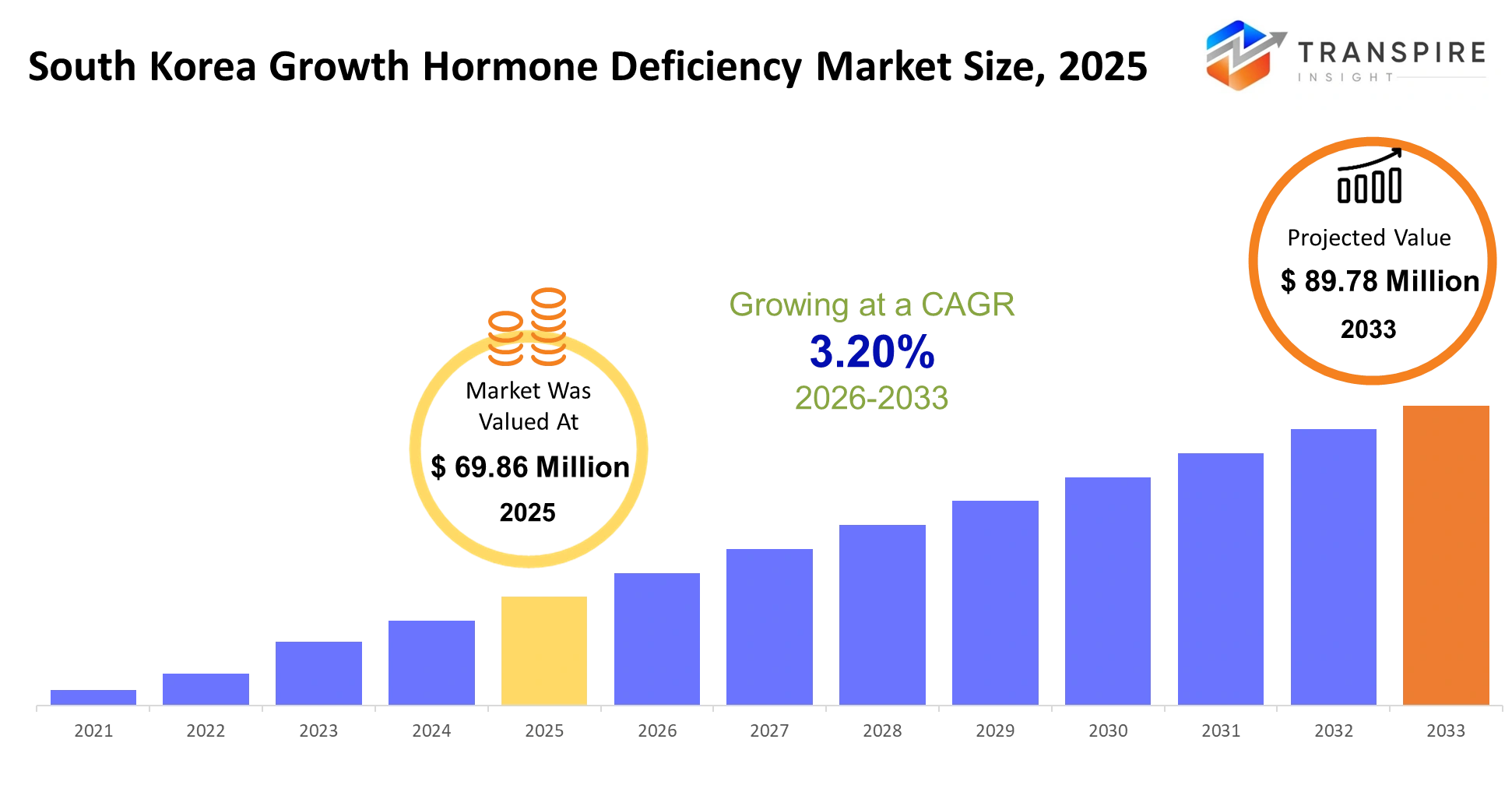
- South Korea Growth Hormone Deficiency Market Size 2025: USD 69.86 Million
- South Korea Growth Hormone Deficiency Market Size 2033: USD 89.78 Million
- South Korea Growth Hormone Deficiency Market CAGR: 3.20%
- South Korea Growth Hormone Deficiency Market Segments: By Type (Recombinant GH, Biosimilars, Long-acting GH, Injectable), By Application (Pediatric, Adult, Turner Syndrome, Chronic Diseases), By End-User (Hospitals, Clinics, Patients, Pharma Companies)
To learn more about this report,  Download Free Sample Report
South Korea Growth Hormone Deficiency Market Summary:
South Korea Growth Hormone Deficiency Market size was estimated at USD 69.86 Millionin 2025 and is anticipated to reach USD 89.78 Million by 2033, growing at a CAGR of 3.20% from 2026 to 2033.
The South Korean market for growth hormone deficiency treatment exists within the country's specialty biopharmaceutical and endocrine care sector which experiences growth due to increased early diagnosis and parents' willingness to obtain prompt treatment. The demand for products will be determined by two factors which include improved parental understanding and the development of school health programs and the rising trend of doctors to conduct pediatric health assessments. Patients will expect therapies that fit more easily into daily life, with less frequent dosing and improved delivery methods, which creates a shift toward greater convenience and better treatment adherence instead of only focusing on clinical results.
The combination of recombinant technology advances and long-acting hormone development will create new treatment methods, while digital health technologies will enable patient monitoring and customized healthcare solutions. South Korea will develop more flexible regulatory pathways which will allow faster access to new medical treatments but still enforce stringent safety regulations. Insurance coverage policies will evolve in response to cost concerns, pushing manufacturers to demonstrate clear value. The market will develop toward patient-centered care and precision-based medicine because treatment experience and long-term treatment results requirements continue to increase.
Key Market Trends & Insights:
- The increased diagnosis rates which result from better screening programs combined with greater healthcare provider knowledge will drive the South Korean Growth Hormone Deficiency Market. The treatment demand for both pediatric and adult patients continues to rise because of early detection, while clinical guidelines help hospitals and specialty clinics achieve uniform treatment patterns.
- Healthcare institutions will show continuous adoption of recombinant growth hormone treatments because of their improved therapeutic effectiveness. Long-acting formulations attract interest because they enable patients to extend intervals between medication doses which results in improved treatment outcomes and better treatment compliance. The South Korean Growth Hormone Deficiency Market maintains trust in its prescribed medications because pharmaceutical innovation works together with safety monitoring and efficacy assessment.
- The healthcare system expansion together with specialty endocrinology services will improve patient access to essential diagnostic and treatment services. Urban medical centers lead in adoption, while regional healthcare facilities gradually improve capabilities. The treatment accessibility and continuity for patients with various income levels depend on the existing insurance coverage policies and reimbursement systems.
- The growing emphasis on pediatric healthcare will drive market expansion. The growth monitoring programs which operate in schools and clinics provide a mechanism for health professionals to identify hormone-related disorders during their early stages. Parents who know about the condition together with doctors who work with them provide essential support for early treatment which leads to better health results and maintains steady market demand in South Korea for growth hormone deficiency treatment.
- Research collaborations and clinical trials will develop better therapeutic treatments and treatment methods. Academic institutions and pharmaceutical companies conduct research to develop new delivery methods and precision treatment methods. Data-driven healthcare practices and patient registries help researchers study disease patterns which enables them to prepare better for South Korea Growth Hormone Deficiency Market expansion.
South Korea Growth Hormone Deficiency Market Segmentation
By Type :
- Recombinant GH: The stable quality and dependable clinical results of recombinant growth hormone establish its strong market position. Advanced biotechnology methods enable production processes which deliver consistent product availability and high product purity. The medical field maintains its use of this treatment because doctors can expect the same results for their patients. Healthcare providers prefer this option for controlled dosing which supports better management of deficiency conditions across different patient groups.
- Biosimilars: Biosimilars are gaining attention as cost-effective alternatives which support wider treatment access. Regulatory approvals ensure that biosimilars will provide customers the same safety and efficacy benefits which people receive from original biologics. Market growth expands because businesses can adjust their pricing strategies to attract customers who need economical solutions. Demand exists because healthcare systems strive to deliver affordable hormone deficiency treatments which maintain treatment effectiveness.
- Long-acting GH: Long-acting growth hormone products were created to decrease injection needs which benefits patients by making their treatment more manageable. The extended-release formulations maintain constant hormone levels throughout the day. The treatment burden has decreased which has caused patient interest to keep increasing. Medical professionals consider this option valuable especially in long-term therapy plans where consistent compliance plays a key role.
- Injectable: Healthcare providers continue to use injectable forms because these methods deliver medication directly while giving them control over how much medicine enters the body. The established medical protocols enable treatment to continue in all medical environments. Patients find it easier to use modern devices which leads to better acceptance of medical treatments. Patients select this method because it provides dependable treatment results which work best when doctors need to deliver precise medicine amounts for quick patient recovery.
By Application :
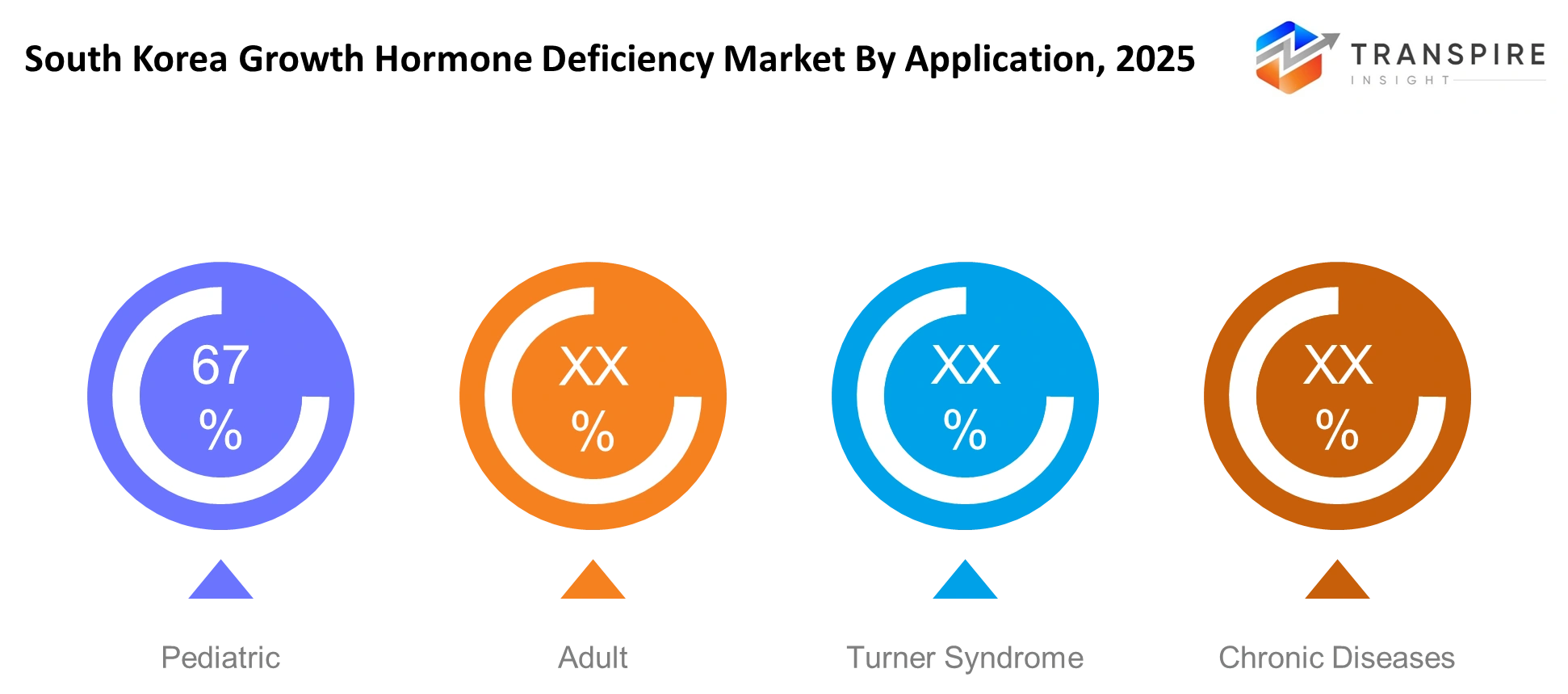
- Pediatric:The primary reason for pediatric usage at this medical facility comes from the need to detect and treat illness at its earliest stage. Medical professionals need to handle growth-related issues because it happens during their patient development periods. The clinical guidelines require healthcare professionals to conduct ongoing patient assessments while making necessary modifications to treatment dosages. The healthcare providers and families involved in this process work together to achieve better height results and improved health status, which creates continuous need for this field.
- Adult: The medical field views adult patient treatment as a method to help people with their low energy and metabolic problems. The healthcare field has seen better diagnosis rates because professionals now have greater understanding of medical conditions. The therapy process brings advantages that enhance both physical abilities and life quality. The adult population begins to adopt long-term management methods which generate gradual increases in their medical treatment.
- Turner Syndrome: The medical community uses growth hormones to treat Turner Syndrome because it helps people develop physically throughout their lives. The medical treatment process achieves better results when doctors begin their work at an earlier stage which leads to better screening methods. The healthcare system uses dedicated medical treatment plans to deliver healthcare services to patients. The medical field sees continuous need to develop solutions which can address the growth issues linked to this genetic condition.
- Chronic Diseases: Growth hormone therapy treats specific chronic diseases which create health problems because of hormone deficiency. The medical process helps people restore their body weight while maintaining metabolic equilibrium. Medical professionals now understand the importance of hormones for managing chronic diseases, which has led to increased treatment. Medical professionals use therapy as a component of their comprehensive patient management strategies to enhance long-term results for their patients.
To learn more about this report, Download Free Sample Report
By End-User :
- Hospitals: Hospitals function as main facilities which identify medical conditions and begin treatment procedures. The availability of specialized equipment and skilled personnel enables precise evaluation. The facility maintains ongoing observation for all treatment procedures which it implements. The strong infrastructure of hospitals enables hospitals to manage operations properly which makes them essential components of complete patient treatment systems.
- Clinics: Clinics provide essential services which help with both ongoing therapy and patient follow-up activities. The facility provides easy access which enables patients to attend their appointments for regular health checkups. Physicians control drug dosage changes while they observe patient development throughout the treatment period. The increasing number of specialty clinics provides patients with more treatment options which leads to continuous growth of this medical field.
- Patients: Patients are becoming more involved in treatment decisions, supported by increasing awareness and education. Home-based administration services give patients the power to choose their treatment time. People stick to their treatment plan better when their treatment schedule matches their everyday activities. Demand exists because people want easy solutions which can accomplish all their tasks without interrupting their work schedule.
- Pharma Companies: Pharmaceutical companies utilize research and product development to create new treatments for medical conditions. Advanced formulation technologies enable businesses to enter new markets which drive their business growth. The combination of strategic partnerships with regulatory approvals enables companies to build their competitive advantage. The company concentrates on developing better treatment methods which will make medical therapies more reachable to patients in South Korea who experience Growth Hormone Deficiency.
Country Insights
- The South Korea Growth Hormone Deficiency Market demonstrates continuous development because of its advanced medical facilities and its ability to identify medical conditions at an early stage. The combination of extensive hospital systems and dedicated endocrinology facilities together with increased public awareness about growth disorders enables medical professionals to detect these conditions earlier which results in ongoing requirements for both medical treatment and extended patient care solutions.
- The South Korea Growth Hormone Deficiency Market maintains its operations because the government provides healthcare funding together with established reimbursement systems. The existing medical guidelines enable healthcare professionals to deliver standardized treatment methods which are widely accessible throughout the medical community. The combination of available medications and qualified medical personnel enables better patient results while sustaining consistent treatment patterns across both urban and semi-urban regions.
- The South Korea Growth Hormone Deficiency Market demonstrates current behavioral changes because certain social elements and academic demands make it difficult for children to receive proper diagnosis. Health screening initiatives at schools and clinics have grown which enables improved detection of health conditions. Technological advancements in biologics and delivery systems have resulted in better treatment methods which enhance patient compliance and treatment success rates.
Recent Development News
In March 2025, Government health data showed prescriptions increased from 138,537 (2021) to 269,129 (2024), indicating strong expansion of the treatment market beyond traditional GHD patients.
In July 2025, South Korea’s growth hormone market nearly tripled since 2019, reflecting strong demand expansion beyond GHD indications.
|
Report Metrics |
Details |
|
Market size value in 2025 |
USD 69.86 Million |
|
Market size value in 2026 |
USD 72.03 Million |
|
Revenue forecast in 2033 |
USD 89.78 Million |
|
Growth rate |
CAGR of 3.20% from 2026 to 2033 |
|
Base year |
2025 |
|
Historical data |
2021 - 2024 |
|
Forecast period |
2026 - 2033 |
|
Report coverage |
Revenue forecast, competitive landscape, growth factors, and trends |
|
Country scope |
South Korea |
|
Key company profiled |
Pfizer, Novartis, Roche, Merck, Novo Nordisk, Eli Lilly, Ipsen, Ferring, Teva, Takeda, Astellas, LG Chem, Hanmi Pharma, Dong-A ST, Daewoong |
|
Customization scope |
Free report customization (country, regional & segment scope). Avail customized purchase options to meet your exact research needs. |
|
Report Segmentation |
By Type (Recombinant GH, Biosimilars, Long-acting GH, Injectable), By Application (Pediatric, Adult, Turner Syndrome, Chronic Diseases), By End-User (Hospitals, Clinics, Patients, Pharma Companies) |
Key South Korea Growth Hormone Deficiency Company Insights
- The South Korean market for Growth Hormone Deficiency shows continuous activity because businesses pursue development of biological treatments and hormone replacement therapies. The company will establish distribution networks that connect all hospitals and specialized clinics to achieve product accessibility. The companies will use strategic alliances and licensing contracts to build market presence while they keep their products in stock. The South Korean market for Growth Hormone Deficiency currently attracts funding for the development of long-acting drugs and better delivery methods. The research team will focus on developing methods that decrease the number of required doses while enhancing patient treatment compliance. The introduction of biosimilars and advanced recombinant technology will create competitive advantages that separate existing companies from new market entrants.
- The South Korean market for Growth Hormone Deficiency treatment operates under strict government regulations which protect patient safety while maintaining treatment effectiveness. The pathways which govern approval of biologics and biosimilars will determine when products enter the market. National healthcare guidelines will remain a vital requirement for companies in both domestic and international markets to achieve market entry and sustain their business. The South Korean market for Growth Hormone Deficiency treatment uses a formal reimbursement process that determines pricing ranges within the market. The companies will establish their pricing methods based on government regulations and available insurance coverage for their products. The combination of affordable pricing and effective clinical results will lead to increased product use which will benefit patients throughout various medical facilities.
South Korea Growth Hormone Deficiency Market Companies:
- Pfizer
- Novartis
- Roche
- Merck
- Novo Nordisk
- Eli Lilly
- Ipsen
- Ferring
- Teva
- Takeda
- Astellas
- LG Chem
- Hanmi Pharma
- Dong-A ST
- Daewoong
South Korea Growth Hormone Deficiency Market Segmentation
By Type
- Recombinant GH
- Biosimilars
- Long-acting GH
- Injectable
By Application
- Pediatric
- Adult
- Turner Syndrome
- Chronic Diseases
By End-User
- Hospitals
- Clinics
- Patients
- Pharma Companies
Frequently Asked Questions
Find quick answers to common questions.
The Approximate South Korea Growth Hormone Deficiency Market size for the Market will be USD 89.78 Million in 2033.
Key Segments for the South Korea Growth Hormone Deficiency Market are By Type (Recombinant GH, Biosimilars, Long-acting GH, Injectable), By Application (Pediatric, Adult, Turner Syndrome, Chronic Diseases), By End-User (Hospitals, Clinics, Patients, Pharma Companies).
Major South Korea Growth Hormone Deficiency Market players are Pfizer, Novartis, Roche, Merck, Novo Nordisk, Eli Lilly, Ipsen, Ferring, Teva, Takeda, Astellas, LG Chem, Hanmi Pharma, Dong-A ST, Daewoong.
The Current South Korea Growth Hormone Deficiency Market size is USD 69.86 Million in 2025.
The South Korea Growth Hormone Deficiency Market CAGR is 3.20%.
- Pfizer
- Novartis
- Roche
- Merck
- Novo Nordisk
- Eli Lilly
- Ipsen
- Ferring
- Teva
- Takeda
- Astellas
- LG Chem
- Hanmi Pharma
- Dong-A ST
- Daewoong
Recently Published Reports
-
May 2026
Biosimilars Market
Biosimilars Market By Product Type (Monoclonal Antibodies, Recombinant Hormones, Erythropoietin, G-CSF, Others), By Indication (Oncology, Autoimmune Diseases, Blood Disorders, Diabetes, Others), By Manufacturing Type (In-House Manufacturing, Contract Manufacturing), By Distribution Channel (Hospital Pharmacies, Retail Pharmacies, Online Pharmacies), By Industry Analysis, Size, Share, Growth, Trends, and Forecasts 2021-2033
-
Apr 2026
Gastrointestinal Endoscopy Market
Gastrointestinal Endoscopy Market By Type (Rigid Gastrointestinal Endoscope, Flexible Gastrointestinal Endoscopes, Disposable Gastrointestinal Endoscope), By Procedure Type (Colonoscopy, Gastroscopy, Duodenoscopy, Enteroscopy, Flexible Sigmoidoscopy, Others), By Application (Diagnosis, Treatment), By End-Users (Hospitals, Ambulatory Surgical Centers, Specialty Clinics, Laboratories, Others), By Industry Analysis, Size, Share, Growth, Trends, and Forecasts 2021-2033
-
Apr 2026
Rare Inherited Metabolic Disorder Drug Market
Rare Inherited Metabolic Disorder Drug Market By Drug Class (Enzyme Replacement Drugs, Gene Therapy Drugs, Substrate Reduction Drugs, Small Module Drugs, Protein Drugs), By Route of Administration(Parenteral, Oral, Intrathecal), By Clinical Development (Marketed Drugs, Late Stage Clinical Phase III, Early Stage Clinical Phase I-II, Preclinical Candidates), By Indication (Lysosomal Storage Disorders, Urea Cycle Disorders, Amino Acid Metabolic Disorders, organic Acidemias, Peroximal Disorders), By Industry Analysis, Size, Share, Growth, Trends, and Forecasts 2021-2033
-
Jan 2026
Pharmaceutical Cleanroom Technology Market
Pharmaceutical Cleanroom Technology Market By Product (Equipment, Consumables, Services); By Cleanroom Type (Standard Cleanrooms, Modular Cleanrooms); By End Use (Pharmaceutical Companies, Biotechnology Companies), By Industry Analysis, Size, Share, Growth, Trends, and Forecasts 2021-2033