South Korea Graft Versus Host Disease Market Summary:
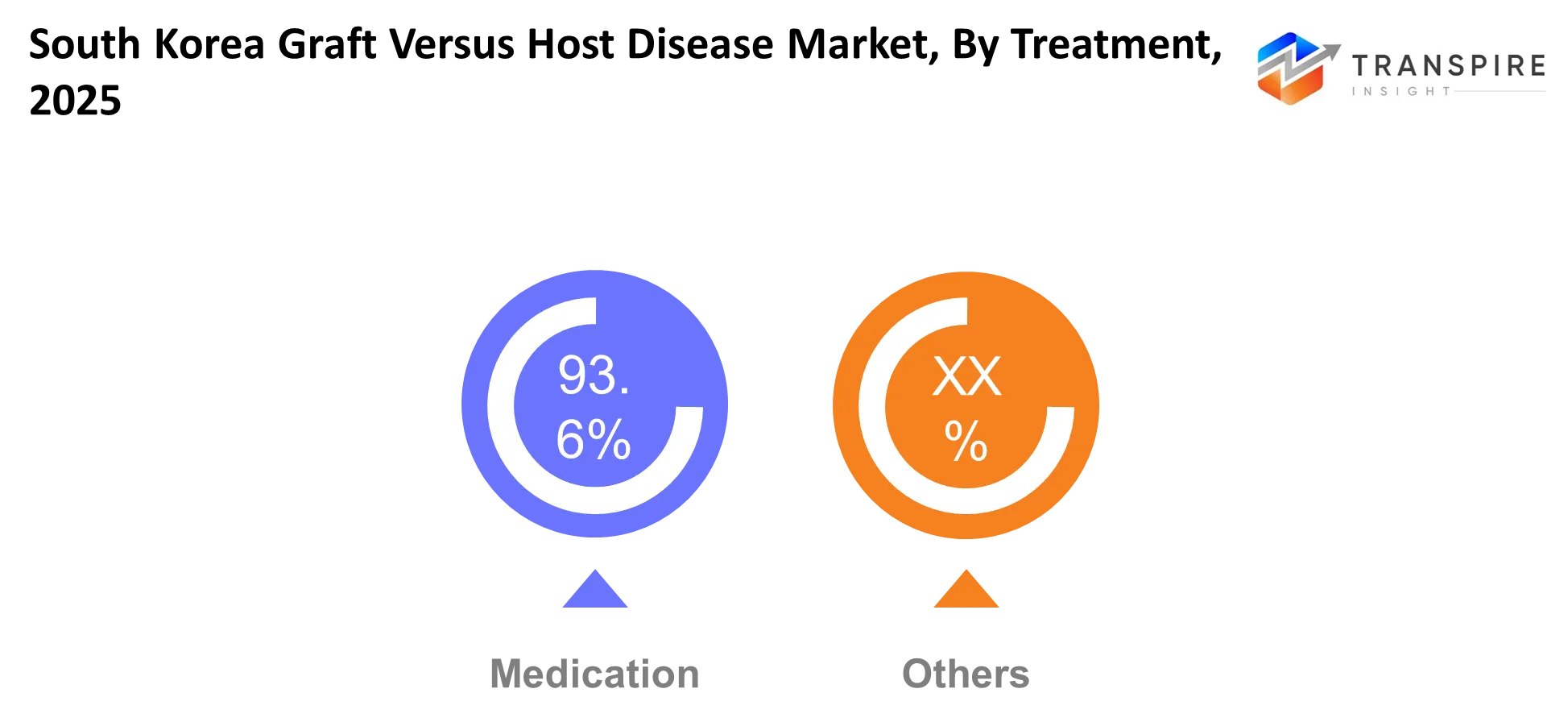
According to Transpire Insight, a detailed research report on the market reflects that the medication application segment dominates the South Korea Graft Versus Host Disease Market, accounting for approximately 94% of the total market share in 2024. Novartis AG leads the market with approximately USD 45.15 million in annual market value and an estimated 17–21% South Korea market share, making it the leading contributor to South Korea market development, innovation, advanced graft versus host disease treatment production, expanding therapeutic capabilities, and growth dynamics.
Market Snapshot
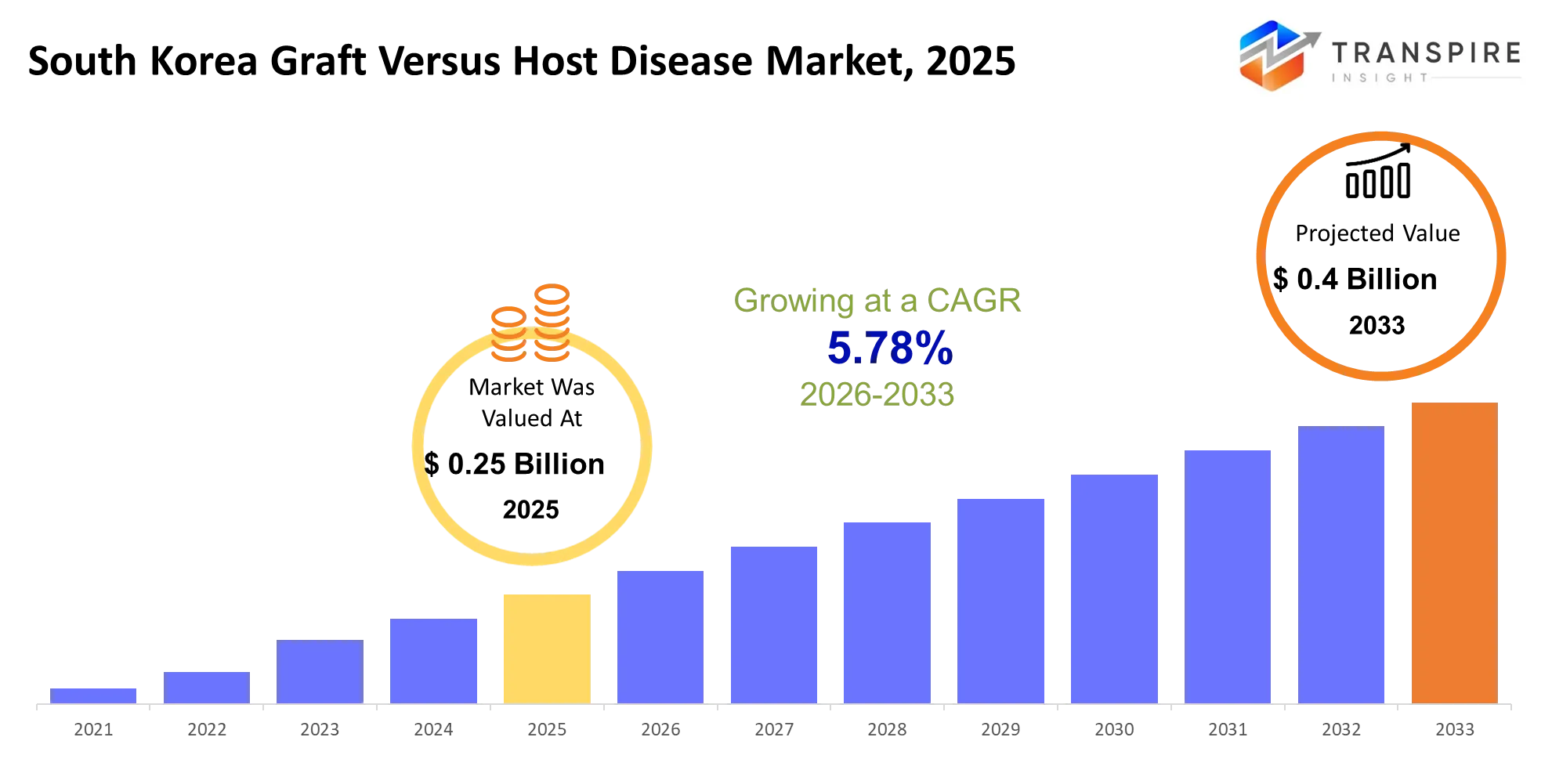
- Market Value (2025): USD 0.25 Billion.
- Expected Market Value (2026): USD 0.27 Billion.
- Estimated Market Value (2033): USD 0.4 Billion.
- Forecast CAGR (2026–2033): 5.78%.
Introduction
The South Korea Graft Versus Host Disease Market includes pharmaceutical drugs, biological drugs, cellular therapy and associated supportive therapies utilized to mitigate and treat the immune-mediated adverse events after allogeneic stem cell transplantation. The occurrence of GVHD arises from the donor’s immune cells identifying the host’s tissues as foreign, which affects the skin, gut, liver, lungs and other organ systems. The market comprises treatments for both acute and chronic GVHD and prophylaxis aimed at minimizing the problems arising post-transplantation. The high levels of transplant facilities, the existence of specialty tertiary care hospitals, excellent HLA typing and increasing use of immunomodulatory drugs in South Korea facilitate market growth.
Key Market Highlights: -
- By Treatment, the Medication dominated the market and holds approximately 60% share in 2025 and is projected to grow at a substantial CAGR during the forecast period.
- By Drug Class, the Monoclonal Antibodies dominated the market and holds approximately 48% share in 2025 and is projected to grow at a substantial CAGR during the forecast period.
- By Type, the Acute GVHD Manufacturers segment dominated the market and holds approximately 61.12% share in 2025 and is projected to grow at a substantial CAGR during the forecast period.
- Regenerative medicine technology in South Korea, robust transplant system, and government-funded biohealth research & development are promoting the innovation and adoption of the next generation of GVHD treatments in the country.
How is Technology Driving Growth in the South Korea Graft Versus Host Disease Market?
Technological advancement is a key driver of the growth of the South Korea Graft Versus Host Disease Market owing to high-resolution HLA typing, molecular diagnosis, targeted therapies, and cellular therapeutics. The advanced technological methods such as next-generation sequencing and high-resolution HLA typing help in improving compatibility between the donor and recipient for better planning of transplantation, whereas molecular diagnosis helps in identifying any problems after the procedure. The use of targeted therapies in the treatment of steroid-resistant GVHD through specific immune pathways is on the rise.
Market Drivers:
The South Korea Graft Versus Host Disease Market is fueled by the rise in allogeneic hematopoietic stem cell transplants, increase in the capabilities of transplant centers, and increasing need for efficient GVHD prevention and treatments. The availability of advanced healthcare infrastructure helps in the efficient monitoring of patients and rapid deployment of novel treatments. The government’s efforts to boost the biotechnology industry and regenerative medicine sector are encouraging the development of novel immunotherapy and cell-based approaches. Growing clinical awareness helps in the early detection of both acute and chronic GVHD. Besides, the increased focus on precision medicine and personalized treatments in South Korea is proving beneficial for managing GVHD.
Restrain:
The South Korea Graft versus Host Disease (GvHD) Market will be affected by factors such as high costs of treatment modalities and lengthy treatments, especially in cases where GvHD is resistant to steroids. The availability of limited reimbursement for newer treatment modalities may limit patients' access and adoption of more effective treatment modalities. Management of the disease and complications arising from treatment may make additional healthcare resource use necessary. Further, considerable morbidity due to chronic GvHD may present challenges to treatment access and market growth.
|
Driver |
Relative Impact on Growth (%) |
Geographic Relevance |
Impact Timeline |
Demand Strength |
Growth Mechanism |
Key Beneficiaries |
Major Constraint |
|
Increasing Allogeneic Hematopoietic Stem Cell Transplantation |
28% |
Seoul, Gyeonggi, major tertiary hospitals nationwide |
Long-term |
High |
Expands patient pool requiring GVHD prevention and treatment |
Transplant centers, pharmaceutical companies, patients |
Limited eligible donor availability and transplant capacity |
|
Expansion of GVHD Prophylaxis and Reimbursement Coverage |
22% |
Nationwide, particularly approved transplant institutions |
Short-term |
High |
Broader reimbursement improves access to prophylactic therapies |
Drug manufacturers, hospitals, insurers, patients |
Budget controls and eligibility-based reimbursement criteria |
|
Adoption of Targeted and Novel GVHD Therapies |
20% |
Seoul metropolitan region and advanced tertiary centers |
Medium-term |
High |
New targeted therapies expand options for refractory GVHD |
Innovative drug developers, hospitals, specialty pharmacies |
High treatment costs and regulatory approval requirements |
|
Growth of Cellular and Regenerative GVHD Therapies |
16% |
Seoul, Gyeonggi and research-intensive medical centers |
Long-term |
Medium |
Cell therapies introduce alternatives for steroid-refractory disease |
Cell-therapy firms, research hospitals, biotechnology companies |
Manufacturing complexity and clinical validation requirements |
|
Rising Demand for Precision GVHD Monitoring and Personalized Care |
14% |
Nationwide; strongest at tertiary transplant centers |
Medium-term |
Medium |
Biomarkers and monitoring enable earlier intervention and individualized therapy |
Diagnostic companies, hospitals, technology providers, patients |
Biomarker standardization and integration challenges |
Analysis of Prices and Consumer Behaviour
Market for the Graft Versus Host Disease treatments is mainly occupied by the premium targeted therapies (68% of overall market share; mostly driven by the demand from transplant centers, hematology departments and special healthcare institutions). Price of premium quality and highly targeted therapy with optimized therapeutic effectiveness is expected to be 35% higher than the price of other treatments, since the therapy will be produced using advanced biotechnologies, will be clinically tested and will have stable therapeutic efficiency. About 45% of all Graft Versus Host Disease treatments are sold in oral form. Sales of these drugs are driven by the convenient method of administration, treatment flexibility and requirements of the long-term treatment. Hematology and transplant-care industries drive about 70% of demand from these healthcare segments. The purchasing behavior of healthcare institutions demonstrates that 55% of treatment buyers prioritize the highest therapeutic efficiency, safety of therapy and standardized treatment procedure. Also, 33% of healthcare organizations are willing to purchase the treatments in bulk orders or through long-term contracts in order to decrease their expenses related to procurement of the treatments and provide stable supply of them to patients who need long-term GVHD treatment.
|
Company |
Est. Revenue Share Range |
Key Offerings |
Strategic Positioning |
Geographic Strength |
Technology Focus |
|
Novartis |
40–55% (Estimated) |
Jakavi (ruxolitinib); GVHD post-marketing surveillance; JAK1/JAK2 inhibition |
Established treatment leader with differentiated JAK inhibition |
Europe, Asia Pacific, North America |
JAK1/JAK2 targeted immunomodulation |
|
Johnson & Johnson / Janssen |
10–18% (Estimated) |
Imbruvica (ibrutinib); cGVHD systemic therapy; BTK inhibition |
Targeted-therapy challenger leveraging established hematology franchise |
North America, Europe, Asia Pacific |
BTK pathway inhibition |
|
AbbVie |
5–10% (Estimated) |
Imbruvica alliance commercialization; ibrutinib; cGVHD treatment |
Alliance-based hematology positioning with targeted therapy |
North America, Europe, Asia Pacific |
BTK inhibition and immune signaling |
|
Incyte |
2–5% (Estimated) |
Niktimvo (axatilimab); axatilimab clinical programs; cGVHD combinations |
Innovation-led expansion into refractory cGVHD |
North America, Europe, Asia Pacific |
CSF-1R macrophage targeting |
|
Syndax Pharmaceuticals |
1–3% (Estimated) |
Axatilimab; AGAVE-201; cGVHD development programs |
Specialty innovation focused on refractory cGVHD |
North America, Europe, Asia Pacific |
Anti-CSF-1R monoclonal antibody |
|
Sanofi |
1–3% (Estimated) |
Rezurock (belumosudil); ROCK2 inhibition; cGVHD treatment |
Late-line targeted therapy and global rare-disease expansion |
North America, Europe, Asia Pacific |
ROCK2 pathway modulation |
|
SCM Lifescience |
0–2% (Estimated) |
SCM-CGH; stem-cell therapy; cGVHD clinical development |
Korean specialty challenger using cell-therapy differentiation |
Asia Pacific, South Korea |
High-purity mesenchymal stem cells |
|
ViGenCell |
0–1% (Estimated) |
VM-GD; ViMedier platform; CBMS/MDSC therapy |
Domestic pipeline challenger pursuing next-generation immunosuppression |
South Korea, Asia Pacific |
Cord-blood-derived MDSC therapy |
|
Mesoblast |
0–1% (Estimated) |
Ryoncil (remestemcel-L); MSC therapy; SR-aGVHD |
Regenerative-medicine specialist targeting steroid-refractory disease |
North America, Asia Pacific, Europe |
Allogeneic mesenchymal stromal cells |
|
JCR Pharmaceuticals |
0–1% (Estimated) |
TEMCELL HS Inj.; allogeneic MSC therapy; acute GVHD |
Specialty cell-therapy player with established Japanese GVHD experience |
Japan, Asia Pacific |
Allogeneic bone-marrow MSC therapy |
Who are the Key Players in the South Korea Graft Versus Host Disease Market and how do they compete?
The competitiveness in the international market of the South Korea Graft Versus Host Disease Market will depend on the companies which specialize in therapeutic innovations, treatment solutions specific for hematology and transplantation, and building up the distribution networks globally. Competition in not the price but based on advanced therapies, specific treatment technologies, innovative biologics, and integration with the specialized healthcare system, this way of competition involves constant innovation and helps healthcare organizations to increase their efficiency and effectiveness of treatment.
Through developing specific therapies for GVHD, immunomodulation, and hematology treatment, Sanofi becomes more competitive in the market. Through creating high-quality therapies for GVHD, hematological diseases, immunomodulatory disorders, and other applications in the specialized healthcare, Incyte gains advantage over its competitors. Novartis gains competitive advantage through providing GVHD treatment solutions, targeted therapies, immunomodulation, and hematology innovations.
Top Companies in the South Korea Graft Versus Host Disease Market
- Sanofi
- Incyte
- Novartis
- Bristol Myers Squibb
- Pfizer
- AbbVie
- Takeda
- Astellas Pharma
- Roche
- AstraZeneca
- Johnson & Johnson
- Kyowa Kirin
- BeiGene
- Galderma
- Hanmi Pharmaceutical
South Korea Graft Versus Host Disease Market Segmentation
The South Korea Graft Versus Host Disease Market share is divided into five categories: By Treatment, By Drug Class, By Type, By Administration, By End User
The Medication dominated the market, accounting for nearly 60% in 2025 and is expected to rise at a significant CAGR during the forecast period.
The South Korea Graft Versus Host Disease Market is segmented by treatment into medication, therapy, supportive care, immunosuppression, phototherapy, cellular therapy, prophylaxis. Among these, the Medication segment dominated the market, accounting for nearly 60% in 2025 and expected to increase at a significant CAGR during the forecast period. The Medication segment was a dominant one, commanding almost 60% of the market in 2025, thanks to the presence of existing therapies, an increase in transplants, and the need for management of GVHD.
The Monoclonal Antibodies dominated the market, accounting for nearly 48% in 2025, and is expected to rise at a significant CAGR during the forecast period.
The South Korea Graft Versus Host Disease Market is segmented by drug class into corticosteroids, calcineurin inhibitors, jak inhibitors, il-2 receptor antagonists, monoclonal antibodies, mtor inhibitors, other immunosuppressants. Among these, the Monoclonal Antibodies dominated the market, accounting for nearly 48% in 2025 and expected to increase at a significant CAGR during the forecast period. The Monoclonal Antibodies segment was a dominant one owing to immune modulation, precision in therapy, increased use of biologics, and rising needs for managing refractory GVHD.
The Acute GVHD dominated the market, accounting for nearly 61.12% in 2025 and is expected to rise at a significant CAGR during the forecast period.
The South Korea Graft Versus Host Disease Market is segmentedby type into chronic gvhd, acute gvhd, prophylactic gvhd, mild gvhd, moderate gvhd, severe gvhd, steroid-refractory gvhd. Among these, the Acute GVHD dominated the market, accounting for nearly 61.12% in 2025 and expected to increase at a significant CAGR during the forecast period. The Acute GVHD segment was the leading one because of its higher incidence after transplantation and need for intensive care.
Future Market Trends for the South Korea Graft Versus Host Disease Market:-
- Targeted Therapies: The rising use of precise immunotherapy, such as JAK inhibitors and others, is enhancing treatment alternatives for steroid-resistant graft versus host disease.
- Demographic Changes: An aging demographic in South Korea will increase the prevalence of hematological diseases, creating ongoing need for allogeneic stem cell transplant and GVHD treatments.
- Regulatory Environment: Advanced regulatory infrastructure in regenerative medicines in South Korea is aiding in the development of next-generation cellular and biopharmaceuticals for GVHD treatments.
Recent Development
- In January 2026 – Launch of Drug Pricing Reforms: South Korea began implementing reforms in the pricing of drugs, which aimed to facilitate easier availability of new innovative drugs and biologics.
- In February 18, 2026 – Launch of Regulatory Fast-track: South Korea began implementing regulations for fast-tracking of innovative medical devices.
- In September 2026 – Launch of Immunology Market Outlook: Analyses revealed that the immunology market of South Korea is increasing due to advancements in transplantation.
Market Segmentation
This study forecasts revenue at Japan, regional and country levels from 2020 to 2033. Transpire Insight has segmented the South Korea Graft Versus Host Disease Market based on the below-mentioned segments:
South Korea Graft Versus Host Disease Market, By Treatment
- Medication
- Therapy
- Supportive Care
- Immunosuppression
- Phototherapy
- Cellular Therapy
- Prophylaxis
South Korea Graft Versus Host Disease Market, By Drug Class
- Corticosteroids
- Calcineurin Inhibitors
- JAK Inhibitors
- IL-2 Receptor Antagonists
- Monoclonal Antibodies
- mTOR Inhibitors
- Other Immunosuppressants
South Korea Graft Versus Host Disease Market, By Type
- Chronic GVHD
- Acute GVHD
- Prophylactic GVHD
- Mild GVHD
- Moderate GVHD
- Severe GVHD
- Steroid-Refractory GVHD
South Korea Graft Versus Host Disease Market, By Administration
- Oral
- Intravenous
- Topical
- Subcutaneous
- Intramuscular
- Local
- Other Routes
South Korea Graft Versus Host Disease Market, By End User
- Hospitals
- Transplant Centers
- Specialty Centers
- Clinics
- Research Institutes
- Ambulatory Centers
- Academic Medical Centers
Frequently Asked Questions
Find quick answers to common questions.
Increasing stem cell transplantation, advanced GVHD therapies, precision medicine adoption, and expanding transplant infrastructure are driving market growth.
Medication dominates the market, supported by established therapies, increasing transplantation procedures, and growing demand for effective GVHD management.
Monoclonal antibodies lead the market, driven by targeted immune modulation, biologic adoption, and increasing demand for refractory GVHD treatment.
Acute GVHD represents a major treatment burden because it can develop rapidly after transplantation and requires intensive clinical management.
Targeted immunotherapies, cellular therapies, precision monitoring, regenerative medicine, and advanced regulatory pathways are expected to shape future market development.
- Sanofi
- Incyte
- Novartis
- Bristol Myers Squibb
- Pfizer
- AbbVie
- Takeda
- Astellas Pharma
- Roche
- AstraZeneca
- Johnson & Johnson
- Kyowa Kirin
- BeiGene
- Galderma
- Hanmi Pharmaceutical
About the Authors

Pankaj Ghogare Patil
I am Pankaj Ghogare Patil, a Senior Research Analyst at Transpire Insight, specializing in the Pharmaceutical, Chemicals & Materials, Healthcare IT, and Biotechnology industry. My expertise lies in conducting comprehensive market research, analyzing industry trends, evaluating competitive landscapes, and translating complex data into actionable insights. At Transpire Insight, I closely follow emerging technologies, regulatory developments, and market innovations to create accurate, well-researched, and informative content that helps businesses and professionals make informed decisions. I am committed to producing credible, evidence-based articles that reflect industry best practices while making technical topics accessible and valuable for a broad audience.

Chakradhar Khansole
Chakradhar serves as the Research Director at Transpire Insight, bringing over 8 years of experience in technology, innovation, and strategic market intelligence. He specializes in transforming complex market data into actionable business insights that enable organizations to make informed, growth-oriented decisions. Recognized for his strategic vision and analytical expertise, Chakradhar leads high-impact research initiatives, delivering comprehensive market assessments, competitive intelligence, and forward-looking industry analysis.
Recently Published Reports
-
Apr 2026
AI in Diabetic Retinopathy Market
AI in Diabetic Retinopathy Market Size, Share & Analysis Report By Type (Screening AI Systems, Diagnostic AI Systems, and Predictive AI Models), By Application Segment (Hospitals, Ophthalmology Clinics, Diagnostic Centers, and Research and Development), and Geography (North America, Europe, Asia-Pacific, Middle East and Africa, South and Central America), 2021 - 2031
-
Apr 2026
Psychometric Tests Market
Psychometric Tests Market Size, Share & Analysis Report By Type (Personality Tests, Ability/Aptitude Tests, Skill/Knowledge Tests, and Others), By Application (Talent Acquisition and Talent Management), and Geography (North America, Europe, Asia-Pacific, Middle East and Africa, South and Central America), 2021 – 2031
-
Apr 2026
Rare Biological Sample Collection Market
Rare Biological Sample Collection Market Size, Share & Analysis Report By Type (Isolation Kits & Reagent, Blood Collection Tubes, and Others), By Application (Oncology, Transcriptomics, Pharmacogenomics, and Others), and Geography (North America, Europe, Asia-Pacific, Middle East and Africa, South and Central America), 2021 – 2031
-
Jul 2026
Diabetic Retinopathy Market
Diabetic Retinopathy Market Size, Share & Analysis Report By Type (Proliferative Diabetic Retinopathy, and Diabetic Macular Edema (DME)), By Treatment Type (Anti VEGF Drug, Steroid Implants, Laser Surgeries, and Vitrectomy), and Geography (North America, Europe, Asia-Pacific, Middle East and Africa, South and Central America), 2021 – 2031
Our Clients