
South Korea Diabetic Retinopathy Treatment Market Size & Forecast:
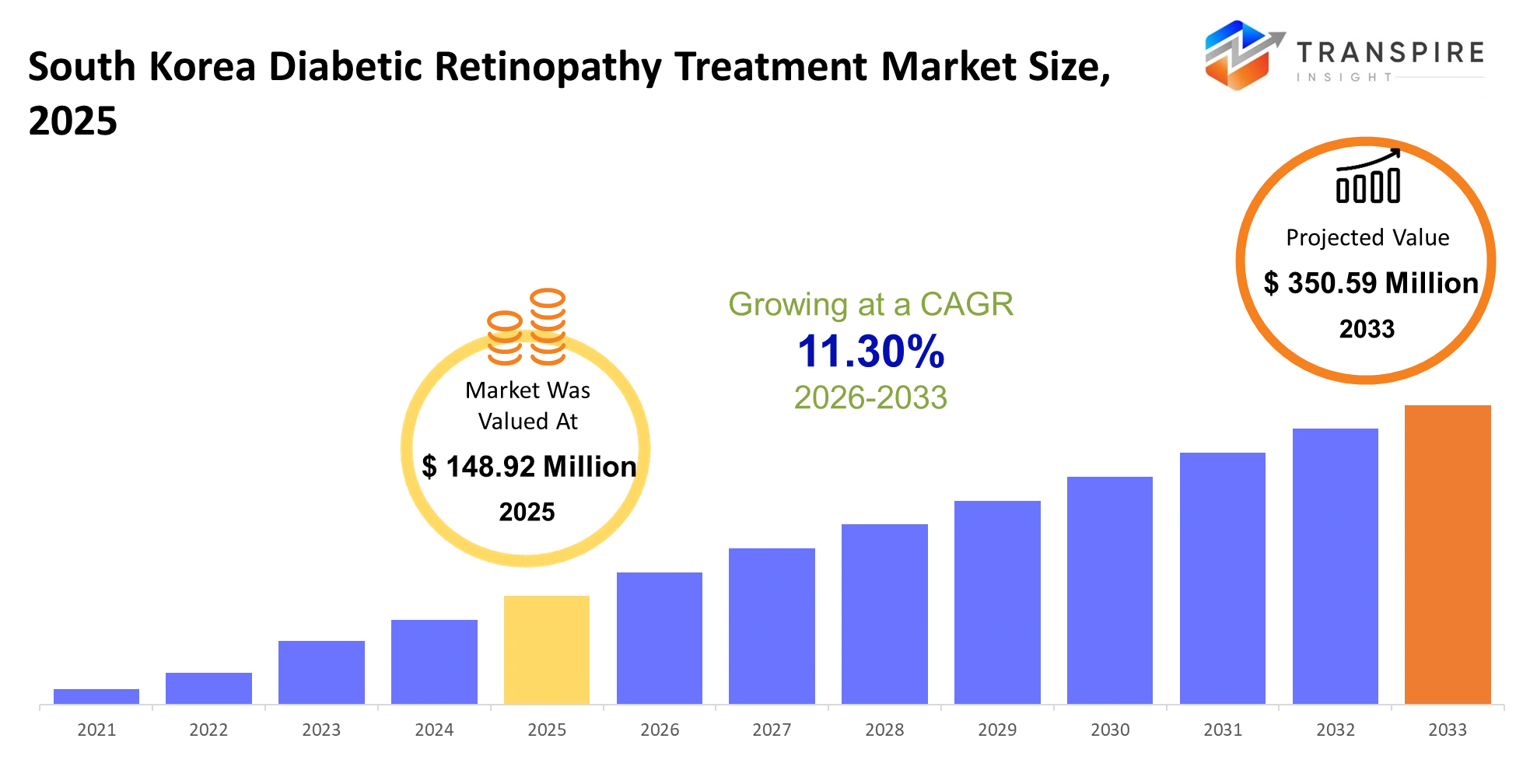
- South Korea Diabetic Retinopathy Treatment Market Size 2025: USD 148.92 Million
- South Korea Diabetic Retinopathy Treatment Market Size 2033: USD 350.59 Million
- South Korea Diabetic Retinopathy Treatment Market CAGR: 11.30%
- South Korea Diabetic Retinopathy Treatment Market Segments: By Treatment Type (Anti-VEGF Therapy, Corticosteroid Therapy, Laser Surgery, Vitrectomy Surgery, Others); By Drug Type (Ranibizumab, Aflibercept, Dexamethasone Implants, Bevacizumab, Others); By Application (Non-proliferative Diabetic Retinopathy, Proliferative Diabetic Retinopathy, Diabetic Macular Edema, Others); By End User (Hospitals, Ophthalmology Clinics, Specialty Eye Centers, Others); By Distribution Channel (Hospital Pharmacies, Retail Pharmacies, Online Pharmacies, Others).
To learn more about this report,  Download Free Sample Report
South Korea Diabetic Retinopathy Treatment Market Summary
The South Korea Diabetic Retinopathy Treatment Market was valued at USD 148.92 Million in 2025. It is forecast to reach USD 350.59 Million by 2033. That is a CAGR of 11.30% over the period.
The South Korea Diabetic Retinopathy Treatment Market plays out like a kind of real time clinical safety net, helping stop vision loss in diabetic patients by getting to issues early , then supporting retinal intervention and ongoing management in hospitals plus specialty eye clinics. In day to day practice, it gives ophthalmologists a bundle of tools like imaging systems, anti-VEGF treatments , laser photocoagulation and also surgical steps, all aiming to keep sight intact and lower blindness related disability expenses, even if sometimes the costs show up later.
Over the last 3–5 years , the whole space has been changing in a more structural way toward AI assisted retinal screening, placed directly into hospital diagnostic routines. This move, in many places, has cut down on the need for strictly manual fundus reading and it tends to lift early detection outcomes, especially in outpatient care. One big push behind this was the post pandemic backlog in eye treatment, where waits grew and clinics needed a way to handle more diabetic patients without losing time, so automated screening options became more common. Because of that, adoption of therapy is more and more tied to earlier diagnosis, faster triage, and better patient flow, which in turn boosts procedure counts and pushes therapy usage throughout South Korea’s specialized eye care ecosystem.
Key Market Insights
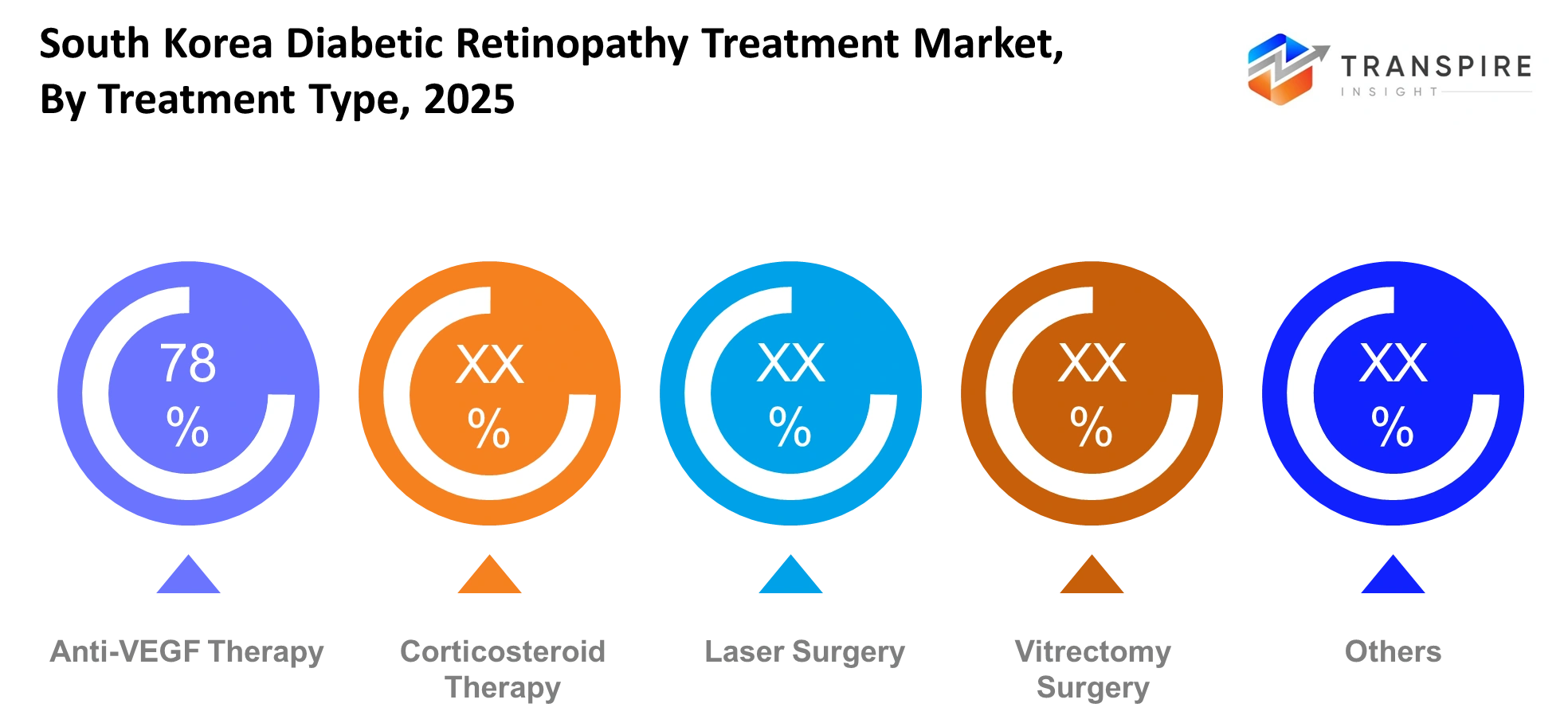
- South Korea Diabetic Retinopathy Treatment Market is getting, more and more, led by anti-VEGF drug therapies and in 2025 they hold almost 42% of the treatment share.
- Retinal imaging systems are sitting at around 35% share, mainly because hospitals are quickly adding AI screening to ophthalmology departments, in a sort of unified way.
- On the end user side, hospitals are taking the lead at about 58% share, helped by centralized diabetic care programs and those government-supported screening initiatives that keep expanding.
- Outpatient eye clinics are actually the fastest-growing portion, growing 12%+ as early diagnosis referrals rise , and patients are being routed sooner.
- Seoul and Gyeonggi Province together are responsible for more than 55% of overall demand, mostly due to thick hospital infrastructure, along with a bigger diabetic population concentration.
- Meanwhile anti-VEGF biologics use went up by over 18% from 2022 to 2025, backed by better reimbursement policies and stronger clinical efficacy results.
- Optical coherence tomography adoption also climbed, nearly 40% from 2021 to 2025, giving clinicians more precision-centered retinal evaluation workflows.
- AI-enabled screening tools are cutting diagnostic time by as much as 60% , which improves patient flow especially in tertiary care hospitals.
- South Korea Diabetic Retinopathy Treatment Market is seeing increased investment from international players like Novartis, Roche and Bayer, as they broaden ophthalmology pipelines.
- Domestic players like Samsung Bioepis are strengthening the biosimilar anti-VEGF competition, which in turn is improving treatment accessibility, and helping with cost optimization a bit more.
What are the Key Drivers, Restraints, and Opportunities in the South Korea Diabetic Retinopathy Treatment Market?
The South Korea Diabetic Retinopathy Treatment Market is mostly being pushed by the fast uptake of kinda structured diabetic eye screening programs inside the national healthcare routes. When the government backs screening for diabetic patients, early-stage findings go up, so ophthalmologists can step in sooner , before retinal damage becomes permanent. That change from handling cases late , to acting early has boosted the need for anti-VEGF injections, laser therapy, and diagnostic imaging. And in turn this has improved treatment volumes and hospital revenues in a direct way.
A big restraint is the heavy long term cost load tied to biologic therapies plus the more advanced imaging setup. Even if reimbursement helps a bit, the repeated anti-VEGF injections still create financial strain on healthcare providers and patients alike, especially for chronic patients who need ongoing cycles. This kind of cost structure can slow down adoption in smaller private clinics and also causes uneven access from one region to another , which then limits how far the market can actually grow overall.
The main opportunity sits in biosimilar expansion together with AI-assisted diagnostic scaling. Cheaper biosimilars are becoming more accessible as local manufacturing ramps up, making it easier for more patients to receive care. Meanwhile, AI retinal imaging tools are supporting large-scale screening in primary care environments , which builds a larger diagnostic pipeline feeding specialty hospitals. Taken together, these shifts are expected to sustain treatment demand and also make long-term disease management more efficient.
What Has the Impact of Artificial Intelligence Been on the South Korea Diabetic Retinopathy Treatment Market?
Artificial intelligence is quietly reshaping the South Korea Diabetic Retinopathy Treatment Market, by changing the way retinal diseases are spotted , tracked, and handled across clinical networks. Right now, AI-enabled fundus imaging systems are showing up a lot in hospitals, mostly to automate the first round of screening. Non specialist technicians can take retinal images while built in algorithms flag early indicators such as microaneurysms and hemorrhages. As a result, diagnostic bottlenecks get smaller and patients move faster to ophthalmologists , instead of waiting around.
Alongside that, machine learning models are getting woven into progression monitoring platforms, where they look at retinal scans over time. The idea is to forecast how quickly severity might climb, and then suggest when treatment should be scheduled. In practice this “prediction layer” helps clinicians plan more efficiently, and it can also reduce needless follow up appointments, which in turn makes better use of hospital capacity.
From an operational angle , many hospitals report smoother screening cycles and more consistent interpretation. AI tools reduce the swing in how different clinicians read the same image, so early detection improves. That’s also been linked with higher volumes of treatment initiation, especially for anti-VEGF therapies and laser based interventions.
Still, an important caveat is that AI accuracy can vary quite a bit once it leaves the controlled environment. Differences in camera or imaging equipment , incomplete patient data, and the absence of standardized training sets between hospitals make large scale rollouts harder. On top of that, hospital wide integration costs can be steep, so smaller diagnostic centers tend to adopt more slowly, or only in limited deployments.
Key Market Trends
- AI assisted retinal screening kinda rolled out more widely across tertiary hospitals, and yeah it helped with early detection by almost 50% from 2022 to 2025.
- In 2025, anti-VEGF biologics started replacing older laser-only approaches in more than 60% of newly diagnosed diabetic retinopathy cases , so the whole workflow shifted pretty fast.
- Optical coherence tomography adoption meanwhile went up a lot, which made it possible to do high resolution retinal mapping in over 70% of urban hospitals.
- Also the government diabetic screening programs expanded coverage to about 65% of registered diabetic patients by 2025 .
- Biosimilar competition seems to have cut treatment costs by close to 20% , which improved accessibility especially in mid-tier hospitals and local clinics .
- Hospital based treatment still dominates, but outpatient ophthalmology centers are showing quick growth, around 12% annual expansion .
- And companies like Novartis and Bayer are putting significant money into next generation retinal biologics pipelines, basically in parallel with the newer care models.
- On top of that, cloud based ophthalmology records improved cross hospital patient tracking and lowered diagnostic duplication rates .
- For rural areas, screening got adopted more broadly because mobile retinal imaging units were sent out to secondary healthcare centers.
- South Korea Diabetic Retinopathy Treatment Market is also seeing a stronger AI ophthalmology convergence, reshaping how clinicians run diagnostic workflows, and how fast they can start treatment.
South Korea Diabetic Retinopathy Treatment Market Segmentation
By Treatment Type
Anti-VEGF Therapy still holds the dominant position in the South Korea Diabetic Retinopathy Treatment Market. It kinda goes straight at abnormal blood vessel growth, and it also addresses macular edema which are among the most clinically significant reasons people lose vision. In South Korea, ophthalmology departments in tertiary hospitals lean a lot on repeated intravitreal injections, so this segment ends up being the biggest driver of procedural revenue. On top of that, solid reimbursement support, plus established clinical protocols, keeps the adoption consistent across hospital networks, even when patient volumes fluctuate
Also, Anti-VEGF adoption keeps moving upward because early diagnosis using retinal imaging tends to push treatment initiation sooner, including when disease is still in non-proliferative stages. Corticosteroid Therapy, and Laser Surgery work like supporting options, particularly if patients show an inadequate response, or if there are contraindications tied to biologics. Meanwhile, Vitrectomy Surgery is mostly confined to advanced proliferative situations where a more direct surgical intervention becomes necessary. Over the forecast period, biosimilar entry, along with longer-acting injectable formulations, should improve overall access to treatment, while lowering the economic hurdles that come with repeated dosing cycles, for chronic patient groups.
To learn more about this report, Download Free Sample Report
By Drug Type
Ranibizumab kind of holds the lead, mainly because it has been used for a long time, and its clinical performance is strong for diabetic macular edema and the vision-threatening parts of retinopathy. Since hospitals like already known biologics with more predictable outcomes, this keeps it in steady demand across both inpatient and outpatient care. Aflibercept comes right after it, backed by longer dosing intervals and better anatomical results, especially in more severe retinal conditions
Market growth in terms of drug types seems to be pushed, at least in part, by the rising preference for Aflibercept-based therapies, where physicians try to lower the injection frequency so patients don’t have to come in as often. Bevacizumab is still there as a budget-friendly option, particularly when healthcare systems are working with tight funding. Meanwhile, Dexamethasone implants are getting more attention for those cases that do not respond well to anti-VEGF treatments. Over time, as biosimilars gain more traction, pricing will likely shift and access should broaden, especially in secondary hospitals and ophthalmology clinics. That should raise the total treatment volume, but also increase competition between biologic manufacturers.
By Application
Diabetic Macular Edema kind of holds the main ground because it messes with central vision directly, and it also needs pharmacological action quickly , like not later. Most hospitals try to start therapy fast, using anti-VEGF injections, so this specific use case ends up being the biggest revenue driver. On top of that , OCT imaging gives strong diagnostic support, which helps raise the rates of early detection, and then the timing of intervention too.
Proliferative Diabetic Retinopathy stays in a high intensity treatment lane because it often involves laser surgery , plus more surgical correction when cases get advanced. Non-proliferative Diabetic Retinopathy is the fastest growing group, since better screening frameworks catch it earlier, so people get preventive treatment sooner. Over time, the push toward earlier diagnosis will also redirect care toward long term management instead of waiting for late stage surgical correction, and that means a steady rise in total procedure volume across ophthalmology networks, pretty much continuously.
By End User
Hospitals tend to keep the dominant position because they work as the main hubs for diabetic screening, advanced imaging, and the administration of biologic therapy , you know. Big tertiary hospitals also link ophthalmology with endocrinology teams, which makes it easier to run more structured patient referral paths, and this really helps maintain higher treatment volumes. With strong infrastructure in place and reimbursement frameworks that basically do the heavy lifting, they keep their leadership all along the care continuum.
Ophthalmology Clinics are viewed as the fastest-growing end user segment , mostly because patients increasingly prefer specialized eye care that feels quicker and more focused. Specialty Eye Centers are right behind them, providing advanced diagnostic imaging plus targeted treatment procedures , mainly outside traditional hospital systems. During the forecast period , decentralized eye care delivery is expected to grow quite a bit too since AI based screening tools and outpatient infusion models reduce the need for bigger hospital networks.
By Distribution Channel
Hospital Pharmacies keep the dominant spot, since most anti-VEGF injections and retinal therapies are basically administered straight inside hospital controlled environments . With centralized procurement systems plus integrated clinical workflows, drug distribution stays more or less steady across the hospital network. Retail Pharmacies, meanwhile, have a more limited but still stable function, mainly for supportive medications and those follow-up care prescriptions.
Hospital Pharmacies are also still tightening their grip, partly because biologic therapy demand is climbing and because strict administration protocols for clinics are not really optional. Online Pharmacies look like the fastest growing channel as digital healthcare platforms keep expanding prescription accessibility , and they also bundle chronic disease management services . During the forecast period, distribution should drift more toward hybrid setups, where hospital administration is paired with digital pharmacy integration. That kind of setup improves treatment continuity and boosts patient adherence along longer diabetic retinopathy care pathways, even when patients move between services.
What are the Key Use Cases Driving the South Korea Diabetic Retinopathy Treatment Market?
The main use case pushing demand in the South Korea Diabetic Retinopathy Treatment Market is early-stage diabetic retinal screening, mostly inside hospital ophthalmology departments, kinda straightforward but also crucial. It tends to pull the highest interest because finding issues in time really decides what happens next. Like whether the patient ends up needing anti-VEGF injections, or laser therapy, so it stays right in the middle of treatment planning.
Beyond that, the use cases widen to outpatient monitoring in specialist eye clinics and also diabetes management programs in general hospitals. In these places, clinicians are increasingly using OCT imaging and retinal photography to watch progression over time. This matters especially for high-risk groups, and yes elderly patients and long-term insulin users show up a lot in these workflows
Then there are the newer directions, such as AI-enabled population screening programs and home-based retinal monitoring tools. These options are being tested in pilot healthcare initiatives, aiming to ease the hospital load while also improving early referral pathways. The focus is often on suburban areas , and other aging population clusters across South Korea, where access can be tighter
|
Report Metrics |
Details |
|
Market size value in 2025 |
USD 148.92 Million |
|
Market size value in 2026 |
USD 165.75 Million |
|
Revenue forecast in 2033 |
USD 350.59 Million |
|
Growth rate |
CAGR of 11.30% from 2026 to 2033 |
|
Base year |
2025 |
|
Historical data |
2021 - 2024 |
|
Forecast period |
2026 - 2033 |
|
Report coverage |
Revenue forecast, competitive landscape, growth factors, and trends |
|
Regional scope |
South Korea |
|
Key company profiled |
Roche, Regeneron Pharmaceuticals, Novartis, Bayer, AbbVie, Alimera Sciences, Bausch + Lomb, Samsung Bioepis, Santen Pharmaceutical, Pfizer, Kodiak Sciences, Chengdu Kanghong, Ocular Therapeutix, EyePoint Pharmaceuticals, Genentech. |
|
Customization scope |
Free report customization (country, regional & segment scope). Avail customized purchase options to meet your exact research needs. |
|
Report Segmentation |
By Treatment Type (Anti-VEGF Therapy, Corticosteroid Therapy, Laser Surgery, Vitrectomy Surgery, Others); By Drug Type (Ranibizumab, Aflibercept, Dexamethasone Implants, Bevacizumab, Others); By Application (Non-proliferative Diabetic Retinopathy, Proliferative Diabetic Retinopathy, Diabetic Macular Edema, Others); By End User (Hospitals, Ophthalmology Clinics, Specialty Eye Centers, Others); By Distribution Channel (Hospital Pharmacies, Retail Pharmacies, Online Pharmacies, Others). |
Which Regions are Driving the South Korea Diabetic Retinopathy Treatment Market Growth?
Seoul Metropolitan Area still ends up as the main region in the South Korea Diabetic Retinopathy Treatment Market, mostly because there’s a heavy clustering of tertiary hospitals, pretty advanced ophthalmology departments, and insurance-backed diabetic screening programs that are not really optional. The area also seems to move early on AI-enabled retinal imaging systems , which then get put into university hospitals and the bigger private medical networks. With a high density of people living with diabetes plus a lot of specialist visits, demand keeps staying steady for anti-VEGF therapies and also for more advanced diagnostic procedures. On top of that, strong enforcement of the national eye screening guidelines keeps pulling patients into clearer, more structured treatment pathways. So basically you get this self-reinforcing loop, where earlier detection and easier access to treatment help keep procedural volumes strong.
Gyeonggi Province works like a stable secondary hub, kind of close to Seoul, but with healthcare that’s spread out across mid-sized cities instead of being fully concentrated. While Seoul feels more innovation led, Gyeonggi growth is usually anchored in steady hospital expansion and gradual, consistent uptake of standardized ophthalmic care protocols. Regional hospitals there tend to lean on scalable diagnostic tools, like OCT and basic fundus imaging, rather than pushing the newest AI platforms right away. Over time, providers keep investing, and reimbursement coverage stays steady enough, so treatment demand becomes predictable. In other words, it becomes a dependable contributor, not exactly a first-mover, technology-first type of region.
Busan and the southern coastal belt, meanwhile, are showing the fastest growth. That’s linked to recent upgrades across regional hospital networks and also broader diabetic screening coverage through provincial health initiatives, which is why patient volume looks like it’s rising faster than in the others.
Who are the Key Players in the South Korea Diabetic Retinopathy Treatment Market and How Do They Compete?
The South Korea Diabetic Retinopathy Treatment Market feels moderately consolidated , but competition is pretty intense between major global pharmaceutical innovators and the biosimilar makers, like it’s never really calm. Most of the rivalry comes from clinical effectiveness, biologic novelty, and the overall affordability of ongoing retinal therapies, rather than just geography by itself. Some well established companies try to hold on to their share with patented anti-VEGF portfolios, and then biosimilar entrants sort of shake the pricing model, while also widening patient access through hospitals and clinics.
Roche, for example, is pushing harder via precision ophthalmology biologics and by tying itself into hospital diagnostic ecosystems. This is especially noticeable in advanced retinal imaging linked treatment pathways, where everything is connected more tightly than before. Regeneron Pharmaceuticals leans into differentiation with high-efficacy anti-VEGF therapies that aim for extended dosing intervals, so patients spend less time in treatment cycles, which also helps adherence outcomes, sometimes in a more measurable way.
Novartis keeps its attention on next generation retinal drug pipelines and also collaborates with Asian healthcare systems to widen specialty eye-care access. Bayer, meanwhile, competes through cost optimized ophthalmology portfolios and partnerships with hospital procurement networks, basically to lock in large volume supply contracts.
Samsung Bioepis drives biosimilar adoption across Korea by offering lower cost anti-VEGF alternatives, which helps them move faster into mid tier hospitals and regional clinics. Santen Pharmaceutical expands through Asia focused ophthalmology specialization, and it really emphasizes localized clinical support along with distribution partnerships throughout South Korea.
Company List
- Roche
- Regeneron Pharmaceuticals
- Novartis
- Bayer
- AbbVie
- Alimera Sciences
- Bausch + Lomb
- Samsung Bioepis
- Santen Pharmaceutical
- Pfizer
- Kodiak Sciences
- Chengdu Kanghong Pharmaceuticals
- Ocular Therapeutix
- EyePoint Pharmaceuticals
- Genentech
Recent Development News
In January 2026, Samsung Bioepis entered into a settlement and license agreement with Regeneron and Bayer. The agreement enables commercialization of its aflibercept biosimilar across multiple non-US markets, supporting expanded access to diabetic retinopathy and retinal disease therapies through lower-cost biosimilar entry.
Source: http://www.samsungbioepis.com
In January 2026, Samsung Bioepis finalized settlement terms allowing staged SB15 launches across Europe and other regions. The rollout includes diabetic retinopathy indications via aflibercept-based therapy expansion, increasing competitive pressure on originator biologics and improving treatment affordability in ophthalmology markets.
Source: http://www.pharmashots.com
In February 2026, Regeneron and Samsung Bioepis resolved ongoing BPCIA litigation related to aflibercept biosimilars including Opuviz. This settlement clears regulatory and commercial pathways for broader biosimilar deployment in retinal diseases such as diabetic retinopathy, improving market entry certainty and accelerating competition in anti-VEGF treatment segments.
Source: http://biologicshq.com
What Strategic Insights Define the Future of the South Korea Diabetic Retinopathy Treatment Market?
The South Korea Diabetic Retinopathy Treatment Market is sliding, kind of toward a structurally integrated care model where early AI screening, biosimilar affordability, and hospital centered biologic treatment pathways run like one long continuum , not really separate things. Over the next 5–7 years, growth will be influenced by the decentralization of diagnostics from tertiary hospitals into regional clinics and that shift should boost treatment initiation rates in a noticeable way. There’s also a risk that is less obvious, like reimbursement pressure on long term anti-VEGF therapies, if cost containment policies get sharper it could slow down how fast hospitals adopt these options, cycle after cycle.
Meanwhile AI based population screening in non-urban areas is showing up as a real high potential opening, in particular via mobile diagnostic units, plus cloud linked ophthalmology platforms that keep workflows connected. Market players should lean into hybrid approaches, meaning they should blend low-cost biosimilars with AI enabled diagnostic collaborations, so access expands but clinical efficiency doesn’t fall apart. In the end, this alignment will shape competitive positioning because treatment demand is moving away from hospital-only care toward distributed preventive ophthalmology networks, and everyone will be judged on how smoothly they can make that transition.
South Korea Diabetic Retinopathy Treatment Market Report Segmentation
By Treatment Type
- Anti-VEGF Therapy
- Corticosteroid Therapy
- Laser Surgery
- Vitrectomy Surgery
- Others
By Drug Type
- Ranibizumab
- Aflibercept
- Dexamethasone Implants
- Bevacizumab
- Others
By Application
- Non-proliferative Diabetic Retinopathy
- Proliferative Diabetic Retinopathy
- Diabetic Macular Edema
- Others
By End User
- Hospitals
- Ophthalmology Clinics
- Specialty Eye Centers
- Others
By Distribution Channel
- Hospital Pharmacies
- Retail Pharmacies
- Online Pharmacies
- Others
Frequently Asked Questions
Find quick answers to common questions.
The expected South Korea Diabetic Retinopathy Treatment Market size for the market will be USD 350.59 Million in 2033.
Key segments for the South Korea Diabetic Retinopathy Treatment Market are By Treatment Type (Anti-VEGF Therapy, Corticosteroid Therapy, Laser Surgery, Vitrectomy Surgery, Others); By Drug Type (Ranibizumab, Aflibercept, Dexamethasone Implants, Bevacizumab, Others); By Application (Non-proliferative Diabetic Retinopathy, Proliferative Diabetic Retinopathy, Diabetic Macular Edema, Others); By End User (Hospitals, Ophthalmology Clinics, Specialty Eye Centers, Others); By Distribution Channel (Hospital Pharmacies, Retail Pharmacies, Online Pharmacies, Others).
Major South Korea Diabetic Retinopathy Treatment Market players are Roche, Regeneron Pharmaceuticals, Novartis, Bayer, AbbVie, Alimera Sciences, Bausch + Lomb, Samsung Bioepis, Santen Pharmaceutical, Pfizer, Kodiak Sciences, Chengdu Kanghong, Ocular Therapeutix, EyePoint Pharmaceuticals, Genentech.
The South Korea Diabetic Retinopathy Treatment Market size is USD 148.92 Million in 2025.
The South Korea Diabetic Retinopathy Treatment Market CAGR is 11.30% from 2026 to 2033.
- Roche
- Regeneron Pharmaceuticals
- Novartis
- Bayer
- AbbVie
- Alimera Sciences
- Bausch + Lomb
- Samsung Bioepis
- Santen Pharmaceutical
- Pfizer
- Kodiak Sciences
- Chengdu Kanghong Pharmaceuticals
- Ocular Therapeutix
- EyePoint Pharmaceuticals
- Genentech
Recently Published Reports
-
May 2026
Biosimilars Market
Biosimilars Market By Product Type (Monoclonal Antibodies, Recombinant Hormones, Erythropoietin, G-CSF, Others), By Indication (Oncology, Autoimmune Diseases, Blood Disorders, Diabetes, Others), By Manufacturing Type (In-House Manufacturing, Contract Manufacturing), By Distribution Channel (Hospital Pharmacies, Retail Pharmacies, Online Pharmacies), By Industry Analysis, Size, Share, Growth, Trends, and Forecasts 2021-2033
-
Apr 2026
Gastrointestinal Endoscopy Market
Gastrointestinal Endoscopy Market By Type (Rigid Gastrointestinal Endoscope, Flexible Gastrointestinal Endoscopes, Disposable Gastrointestinal Endoscope), By Procedure Type (Colonoscopy, Gastroscopy, Duodenoscopy, Enteroscopy, Flexible Sigmoidoscopy, Others), By Application (Diagnosis, Treatment), By End-Users (Hospitals, Ambulatory Surgical Centers, Specialty Clinics, Laboratories, Others), By Industry Analysis, Size, Share, Growth, Trends, and Forecasts 2021-2033
-
Apr 2026
Rare Inherited Metabolic Disorder Drug Market
Rare Inherited Metabolic Disorder Drug Market By Drug Class (Enzyme Replacement Drugs, Gene Therapy Drugs, Substrate Reduction Drugs, Small Module Drugs, Protein Drugs), By Route of Administration(Parenteral, Oral, Intrathecal), By Clinical Development (Marketed Drugs, Late Stage Clinical Phase III, Early Stage Clinical Phase I-II, Preclinical Candidates), By Indication (Lysosomal Storage Disorders, Urea Cycle Disorders, Amino Acid Metabolic Disorders, organic Acidemias, Peroximal Disorders), By Industry Analysis, Size, Share, Growth, Trends, and Forecasts 2021-2033
-
Jan 2026
Pharmaceutical Cleanroom Technology Market
Pharmaceutical Cleanroom Technology Market By Product (Equipment, Consumables, Services); By Cleanroom Type (Standard Cleanrooms, Modular Cleanrooms); By End Use (Pharmaceutical Companies, Biotechnology Companies), By Industry Analysis, Size, Share, Growth, Trends, and Forecasts 2021-2033