
Somatic Therapy Market Summary:
According to Transpire Insights, a detailed research report on the market reflects that the individual therapy application segment dominates the Somatic Therapy Market, accounting for approximately 64%–68% of the total market share worldwide. Trauma Research Foundation and The Embody Lab are among the leading organizations advancing the market through professional training, certification programs, and adoption of somatic therapy practices. Additionally, major behavioral healthcare providers and wellness networks are expanding investments in trauma-informed care, digital mental health integration, practitioner education, and evidence-based therapeutic innovations, collectively accelerating market growth, service accessibility, clinical outcomes, and long-term industry development worldwide.
Market Snapshot
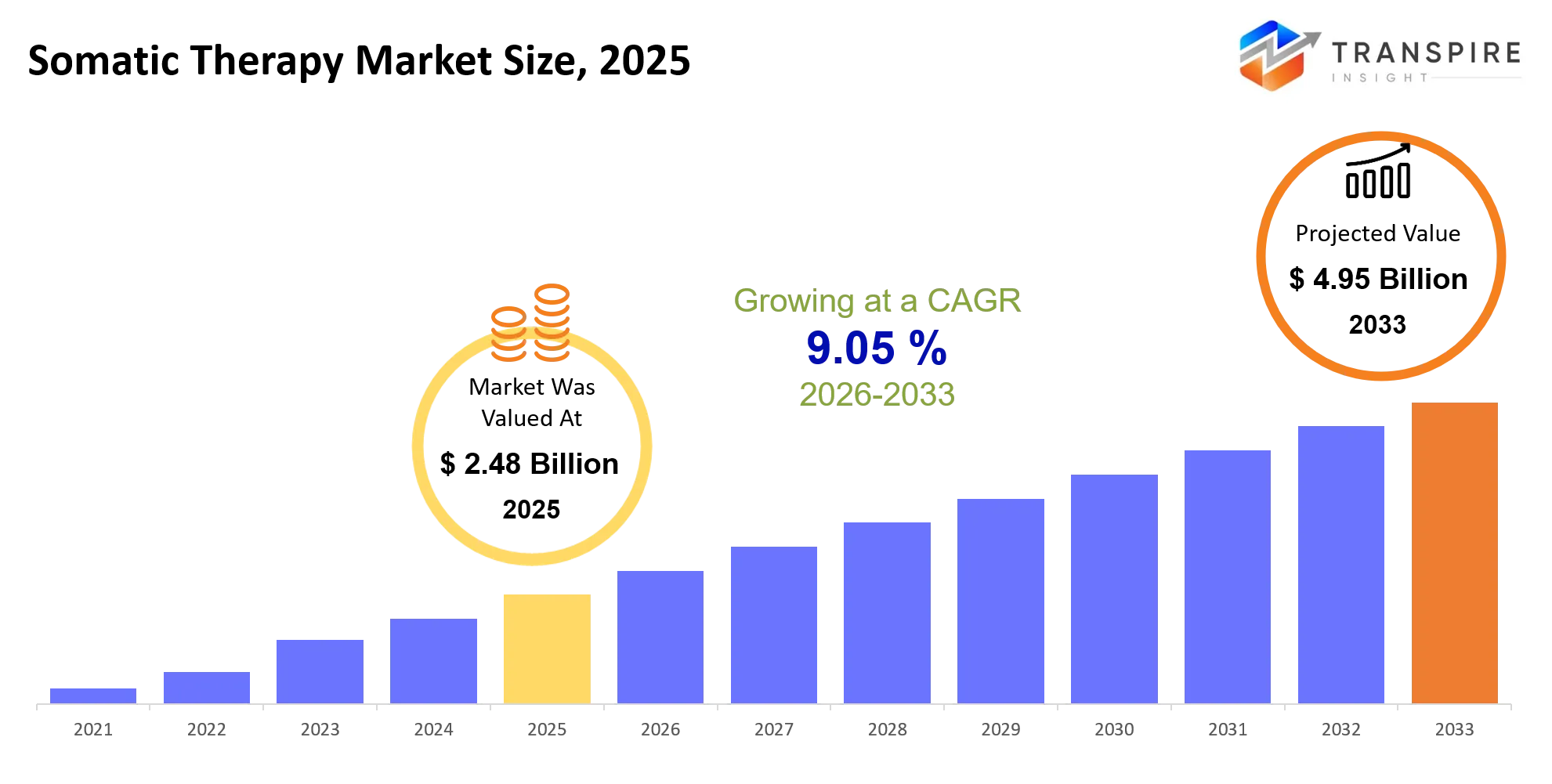
- Market Value (2025): USD 2.48 Billion.
- Expected Market Value (2026): USD 2.70 Billion.
- Estimated Market Value (2033): USD 4.95 Billion.
- Forecast CAGR (2026–2033): 9.05%.
- Leading Region in 2025: North America
- Second-largest Region: Europe
- Fastest Growing Region: Asia Pacific
Introduction
The Somatic Therapy Markets are gaining significant traction as individuals, healthcare providers and wellness organizations are increasingly recognizing the importance of holistic, body-centered approaches towards mental & emotional wellbeing. Somatic therapy incorporates body awareness, movement, breathing and successful psychotherapeutic techniques to heal trauma, anxiety, stress and other nervous system conditions by developing a stronger connection between the body and mind. Increasing awareness of mental health, rising demand for non-pharmacological treatment options and growing adoption of trauma-informed care are all contributing to the increasing acceptance of somatic therapy in clinical, rehabilitation and wellness settings. Somatic therapy market is also experiencing continuous innovations in digital health platforms, teletherapy services and practitioner training programs, which are further enhancing accessibility, enabling personalized treatment approaches and facilitating expansion of the market.
- For instance:- North America is the leading region in the Somatic Therapy Market. The market growth in this region is due to the strong mental health care infrastructure, extensive insurance coverage and growing adoption of trauma-informed care, integration of digital therapy, and increasing investments in practitioner training and rehabilitation services.
- The Asia-Pacific Somatic Therapy Market is growing at a rapid pace due to increasing awareness of mental health, growing acceptance of holistic wellness practices, increasing adoption of teletherapy and investments in integrative healthcare and corporate wellness programs.
Key Market Highlights: -
- North America is expected to grow at a rapid CAGR in the Somatic Therapy Market by holding around 40 % of the share during the forecast period.
- Europe is anticipated to hold roughly30.2 % share of the Somatic Therapy Market over the predicted timeframe.
- Asia Pacific is anticipated to hold nearly 20 % share of the Somatic Therapy Market over the predicted timeframe.
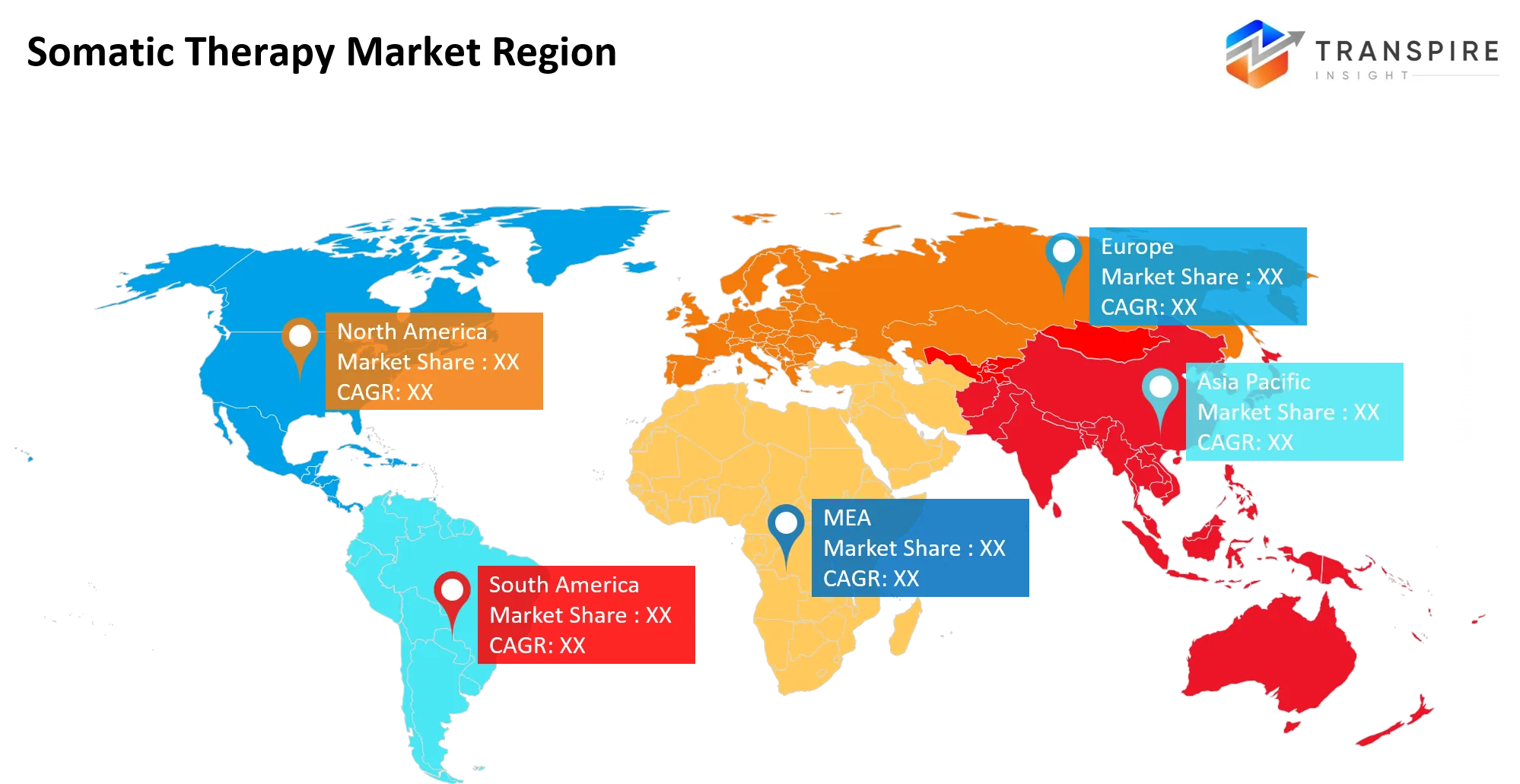
- 4 By Therapy Type, the Somatic Experiencing dominated the market and holds nearly 34 % share in 2025 and is projected to grow at a substantial CAGR during the forecast period.
- By Application, the Depression and anxiety management dominated the market and holds close to 37 % share in 2025 and is projected to grow at a substantial CAGR during the forecast period.
- By Delivery Mode, the Online Therapy dominated the market and holds about 55 % share in 2025 and is projected to grow at a substantial CAGR during the forecast period.
- Increased awareness, rising availability of treatment and long-term growth of the Somatic Therapy Market is supported by government initiatives for mental health, increasing digital counseling services and integration of psychological care into primary healthcare systems.
How is Technology Driving Growth in the Somatic Therapy Market?
Telehealth platforms, wearable biofeedback devices and AI-powered therapeutic solutions are being adopted by technology which is accelerating the growth of the Somatic Therapy Market. Virtual care allows therapists to provide body-centered treatments through telehealth and increases access to care for patients who live in underserved areas. Wearable technologies monitor physiological indicators such as heart rate variability and stress responses, facilitating personalized treatment and real-time progress tracking. At the same time, artificial intelligence adds to therapy with individually tailored exercises, the analysis of movements and predictions of the course of recovery. These technological innovations enhance treatment efficacy, boost patient engagement, foster data-driven clinical decisions, and expedite innovation in the somatic therapy market.
Market Drivers
The Somatic Therapy Market is driven by increasing awareness of mental health, rising prevalence of trauma, anxiety, PTSD and stress-related disorders, and growing demand for non-pharmacological treatment approaches. The market is growing due to the increasing adoption of holistic and body-centered therapies in healthcare settings, rehabilitation and wellness. The fast uptake of telehealth platforms, digital mental health apps, and wearable biofeedback devices is improving access to care and patient engagement. Furthermore, the somatic therapy market is experiencing a rise in clinical adoption, enhanced therapeutic outcomes, and continuous innovation, driven by increased investments in practitioner training, trauma-informed care, corporate wellness programs, and integrative healthcare services.
For Instance: Europe’s somatic therapy market is growing steadily, driven by strong mental health policies, rising demand for non-pharmacological therapies, expansion of practitioner certification programs, and ongoing investments in digital mental health care and rehabilitation services.
Restrain
High cost of personalized treatment, limited insurance reimbursement and lack of certified practitioners restricts the Somatic Therapy Market Workforce growth is limited by expensive training and certification schemes . Lack of standardized clinical protocols leads to differences in service quality and regulatory approval. In addition, the lack of awareness among the general population regarding body-centered therapeutic approaches, especially in emerging economies, is still restraining the wider adoption and market growth.
Analysis of Prices and Consumer Behaviour
Individual therapy services constitute the largest segment of the somatic therapy market (approximately 64%–68% of the total market), driven by the increasing demand for personalized trauma recovery, anxiety management, PTSD treatment, and holistic mental healthcare. Individual somatic therapy sessions are usually 30%–40% more expensive than regular counseling services, due to specialized practitioner expertise, tailored treatment plans, and sophisticated body-centered therapeutic methods. Face-to-face consultations represent about 58%–62% of all therapy sessions thanks to the effectiveness of hands-on therapeutic interventions and personal care. Institutional adoption is growing, with hospitals, mental health clinics, rehabilitation centers and wellness organizations accounting for almost 68%–72% of total service demand. Consumer purchasing behavior shows that around 60%–65% of clients appreciate therapist certification, clinical expertise, and evidence-based treatment approaches. Almost 30%–35% choose long-term therapy packages or subscription-based treatment plans for continuity of care, better therapeutic outcomes, and cost-effective access to specialized somatic therapy services.
Top Companies in the Somatic Therapy Market
- Somatic Experiencing International
- PESI
- BetterHelp
- Talkspace
- Teladoc Health
- Headspace Health
- Lyra Health
- Modern Health
- Spring Health
- SonderMind
- Calm
- Embody Lab
- Trauma Research Foundation
- Unmind
- Mindful Health Solutions
Somatic Therapy Market Segmentation
The Somatic Therapy Market share is divided into five categories: By Therapy Type, By Application, By Delivery Mode, By End User, By Age Group.
The Somatic Experiencing dominated the market, accounting for nearly 34% in 2025 and is expected to rise at a significant CAGR during the forecast period.
The Somatic Therapy Market is segmented by therapy type into somatic experiencing, sensorimotor psychotherapy, hakomi therapy, trauma release exercises, body-mind centering, integrative somatic therapy, others. Among these, the Somatic Experiencing dominated the market, accounting for nearly 34% in 2025 and expected to increase at a significant CAGR during the forecast period. Somatic Experiencing leads the Somatic Therapy Market owing to proven efficacy in trauma recovery, growing clinical adoption, preference among practitioners, evidence-based results, and expanding applications in mental healthcare.
The Depression and anxiety management dominated the market, accounting for close to 37% in 2025, and is expected to rise at a significant CAGR during the forecast period
The Somatic Therapy Market is segmented by application into ptsd, anxiety disorders, depression, stress management, chronic pain, addiction recovery, others. Among these, the Depression and anxiety management dominated the market, accounting for close to 37% in 2025 and expected to increase at a significant CAGR during the forecast period. The Somatic Therapy Market is being propelled by the management of depression and anxiety. The increasing prevalence of mental health conditions, the necessity for early intervention, the uptake of holistic treatment approaches, and the enhancement in clinical results are driving the Somatic Therapy Market.
The Online Therapy dominated the market, accounting for about 55% in 2025 and is expected to rise at a significant CAGR during the forecast period.
The Somatic Therapy Market is segmented by delivery mode into in-person therapy, online therapy, hybrid therapy, group therapy, workshops, others. Among these, the Online Therapy segment dominated the market, accounting for about 55% in 2025 and expected to increase at a significant CAGR during the forecast period. Somatic Therapy Market – Online Therapy Segment to Lead the Market Owing to Increased Accessibility and Convenience, Telehealth Adoption, Cost Efficiency, Flexible Scheduling, and Growing Digital Mental Healthcare Services
Regional Segment Analysis of the Somatic Therapy Market
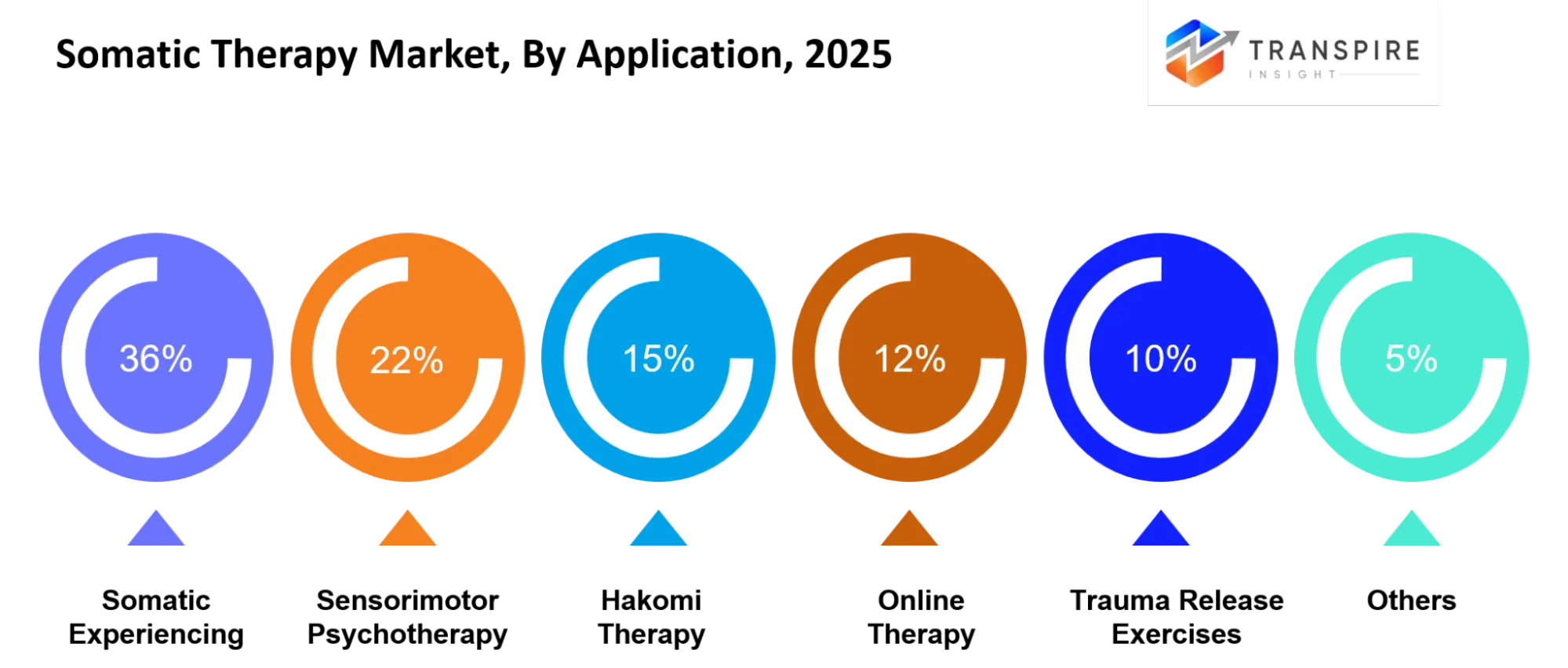
- Europe (Germany, France, U.K., Italy, Spain, Rest of Europe)
- North America (U.S., Canada, Mexico)
- Asia-Pacific (China, Japan, India, Rest of APAC)
- South America (Brazil and the Rest of South America)
- The Middle East and Africa (UAE, South Africa, Rest of MEA)
North America is expected to grow at a rapid CAGR in the Somatic Therapy Market, holding around 40% of the share during the forecast period.
North America leads the Somatic Therapy Market because of its sophisticated mental healthcare system, high awareness of trauma-informed therapies, good insurance coverage for behavioral health services and a large pool of certified somatic therapy practitioners. Market leadership and long-term growth potential in the region are further cemented by the expansion of telehealth platform adoption, corporate wellness programs, digital mental health investment, and the demand for holistic, evidence-based treatment approaches.
Europe is the fastest-growing region in the Somatic Therapy Market during the period, holding roughly 30.2% share.
Europe is the fastest growing region in the Somatic Therapy Market due to increasing awareness about mental health, strong government support for psychological care and increasing demand for non-pharmacological treatment approaches. Increasing investments in digital mental health platforms, trauma-informed care, practitioner training and integrative healthcare services are driving market growth. Moreover, growth in the regional market is expected to be driven by supportive healthcare policies, growing acceptance of holistic therapies, and expanding corporate wellness programs.
Asia Pacific is the fastest-growing region in the Somatic Therapy Market during the period, holding nearly 20% share.
Asia Pacific is the fastest growing region in the Somatic Therapy Market owing to increasing mental health awareness, increasing prevalence of stress related disorders and increasing acceptance of holistic wellness practices. Regional demand is being driven by the growth of healthcare infrastructure, rapid adoption of teletherapy platforms and increasing investments in digital mental health services. Furthermore, supportive government mental health initiatives, corporate wellness programs, and increased availability of integrative therapeutic services further drive market growth across the region.
Strategies for Market Growth in Non-Leading Regions:
The improvement of somatic therapy service accessibility could be achieved through the development of digital mental health infrastructure, teletherapy platforms, and practitioner training programs to stimulate non-leading regions. Increasing local certification programs, trauma-informed care centers, and community mental health facilities can reduce reliance on large urban healthcare networks and improve access to treatment. Partnering with hospitals, rehab centers, corporate wellness providers, universities and digital health platforms will improve service availability and market penetration. Training therapists in holistic somatic therapy techniques, trauma care and evidence-based clinical practices will help address workforce shortages and improve the quality of treatment. Flexible reimbursement models, expansion of insurance coverage, subscription-based therapy programs and public-private partnerships will also help to make services more affordable and accessible. Healthcare organizations and digital healthcare providers, in collaboration with government mental health initiatives, will play a crucial role in accelerating the adoption and driving sustainable long-term growth of the Somatic Therapy Market across emerging regions, aided by advanced telehealth technologies and awareness campaigns.
Future Market Trends for the Somatic Therapy Market: -
- Digital mental health platforms, teletherapy services, and AI-enabled patient monitoring are anticipated to improve access to personalized somatic therapy resulting in better treatment outcomes, patient engagement, and healthcare access worldwide.
- The increasing adoption of wearable biofeedback devices, physiological monitoring technologies, and data-driven therapeutic solutions will improve real-time assessment, personalized care, and evidence-based clinical decision-making in somatic therapy practices.
- With more widespread inclusion of somatic therapy in corporate wellness programs, trauma-informed healthcare, rehabilitation services, and standardized practitioner certification, the clinical adoption, service quality, and long-term market growth of somatic therapy will be bolstered across the globe.
Recent Development
January 2026: Naropa University increased capacity in its low-residency hybrid somatic counseling program so that it could better meet the needs of practitioners, increase the availability of the workforce, and meet the rising demand for trauma-informed mental healthcare.
March 2026: Telehealth leaders increased digital mental health services by adding body-centered somatic therapy techniques to improve access to remote treatment, personalized care, and patient engagement for underserved populations.
June 2026: Workplace wellness programs were expanded by corporate organizations through the adoption of somatic stress-regulation programs that targeted employee mental health, resilience, trauma-informed care, and holistic health management in professional settings.
Market Segment
This study forecasts revenue at global, regional and country levels from 2020 to 2033. Transpire Insights has segmented the Somatic Therapy Market based on the below-mentioned segments:
Somatic Therapy Market, By Therapy Type
- Somatic Experiencing
- Sensorimotor Psychotherapy
- Hakomi Therapy
- Trauma Release Exercises
- Body-Mind Centering
- Integrative Somatic Therapy
- Others
Somatic Therapy Market, By Application
- PTSD
- Anxiety Disorders
- Depression
- Stress Management
- Chronic Pain
- Addiction Recovery
- Others
Somatic Therapy Market, By Delivery Mode
- In-person Therapy
- Online Therapy
- Hybrid Therapy
- Group Therapy
- Workshops
- Others
Somatic Therapy Market, By End User
- Mental Health Clinics
- Hospitals
- Wellness Centers
- Rehabilitation Centers
- Individuals
- Others
Somatic Therapy Market, By Age Group
- Children
- Adolescents
- Adults
- Geriatric Population
- Veterans
- Others
Somatic Therapy Market, By Regional Analysis
North America
- US
- Canada
- Mexico
Europe
- Germany
- UK
- France
- Italy
- Spain
- Russia
- Rest of Europe
Asia Pacific
- China
- Japan
- India
- South Korea
- Australia
- Rest of Asia Pacific
South America
- Brazil
- Argentina
- Rest of South America
Middle East & Africa
- UAE
- Saudi Arabia
- Qatar
- South Africa
- Rest of the Middle East & Africa
Frequently Asked Questions
Find quick answers to common questions.
Rising mental health awareness, increasing trauma cases, telehealth adoption, holistic treatment demand, and digital healthcare innovations are driving market growth.
Somatic Experiencing leads due to proven trauma recovery effectiveness, strong clinical evidence, increasing practitioner adoption, and expanding applications in mental healthcare.
Online therapy offers greater accessibility, flexible scheduling, cost efficiency, wider telehealth adoption, and improved access to specialized mental healthcare services worldwide.
North America dominates due to advanced healthcare infrastructure, widespread insurance coverage, certified practitioners, digital health investments, and growing trauma-informed care adoption.
AI-powered tools, teletherapy platforms, wearable biofeedback devices, and digital monitoring technologies improve personalized treatment, patient engagement, accessibility, and clinical outcomes globally
- Somatic Experiencing International
- PESI
- BetterHelp
- Talkspace
- Teladoc Health
- Headspace Health
- Lyra Health
- Modern Health
- Spring Health
- SonderMind
- Calm
- Embody Lab
- Trauma Research Foundation
- Unmind
- Mindful Health Solutions
About the Authors

Pankaj Ghogare Patil
I am Pankaj Ghogare Patil, a Senior Research Analyst at Transpire Insight, specializing in the Pharmaceutical, Chemicals & Materials, Healthcare IT, and Biotechnology industry. My expertise lies in conducting comprehensive market research, analyzing industry trends, evaluating competitive landscapes, and translating complex data into actionable insights. At Transpire Insight, I closely follow emerging technologies, regulatory developments, and market innovations to create accurate, well-researched, and informative content that helps businesses and professionals make informed decisions. I am committed to producing credible, evidence-based articles that reflect industry best practices while making technical topics accessible and valuable for a broad audience.

Chakradhar Khansole
Chakradhar serves as the Research Director at Transpire Insight, bringing over 8 years of experience in technology, innovation, and strategic market intelligence. He specializes in transforming complex market data into actionable business insights that enable organizations to make informed, growth-oriented decisions. Recognized for his strategic vision and analytical expertise, Chakradhar leads high-impact research initiatives, delivering comprehensive market assessments, competitive intelligence, and forward-looking industry analysis.
Recently Published Reports
-
Jul 2026
Alopecia Treatment Market
Alopecia Treatment Market Size, Share & Analysis Report By Disease Type (Alopecia Areata, Cicatricial Alopecia, Traction Alopecia, Alopecia Totalis, Androgenetic Alopecia, Alopecia Universalis, and Other Disease Types), By Treatment Type (Topical Treatments, Oral Medications, Injectable Therapies, and Hair Transplantation), By Gender (Male, and Female), By Distribution Channel (Hospitals and Clinics, Retail Pharmacies, and Online Retailers), and Geography (North America, Europe, Asia-Pacific, Middle East and Africa, South and Central America), 2021 - 2031
-
Jul 2026
Medical Ultrasound Probe Market
Medical Ultrasound Probe Market Size, Share & Analysis Report By Type (Linear Type, Convex Type, Endocavitary Probe, Phased Array/Cardiac Probe, Transesophageal (TEE) Probe, and Others), By Application (Ophthalmology, Cardiology, Musculoskeletal, Oncology, Obstetrics & Gynecology, General Imaging, and Others), By End User (Hospitals & Clinics, Diagnostic Centers, Ambulatory Surgical Centers, and Others), and Geography (North America, Europe, Asia-Pacific, Middle East and Africa, South and Central America), 2021 – 2031
-
May 2026
Biosimilars Market
Biosimilars Market By Product Type (Monoclonal Antibodies, Recombinant Hormones, Erythropoietin, G-CSF, Others), By Indication (Oncology, Autoimmune Diseases, Blood Disorders, Diabetes, Others), By Manufacturing Type (In-House Manufacturing, Contract Manufacturing), By Distribution Channel (Hospital Pharmacies, Retail Pharmacies, Online Pharmacies), By Industry Analysis, Size, Share, Growth, Trends, and Forecasts 2021-2033
-
Apr 2026
Gastrointestinal Endoscopy Market
Gastrointestinal Endoscopy Market By Type (Rigid Gastrointestinal Endoscope, Flexible Gastrointestinal Endoscopes, Disposable Gastrointestinal Endoscope), By Procedure Type (Colonoscopy, Gastroscopy, Duodenoscopy, Enteroscopy, Flexible Sigmoidoscopy, Others), By Application (Diagnosis, Treatment), By End-Users (Hospitals, Ambulatory Surgical Centers, Specialty Clinics, Laboratories, Others), By Industry Analysis, Size, Share, Growth, Trends, and Forecasts 2021-2033