
Single Use Plastic Packaging Market Summary:
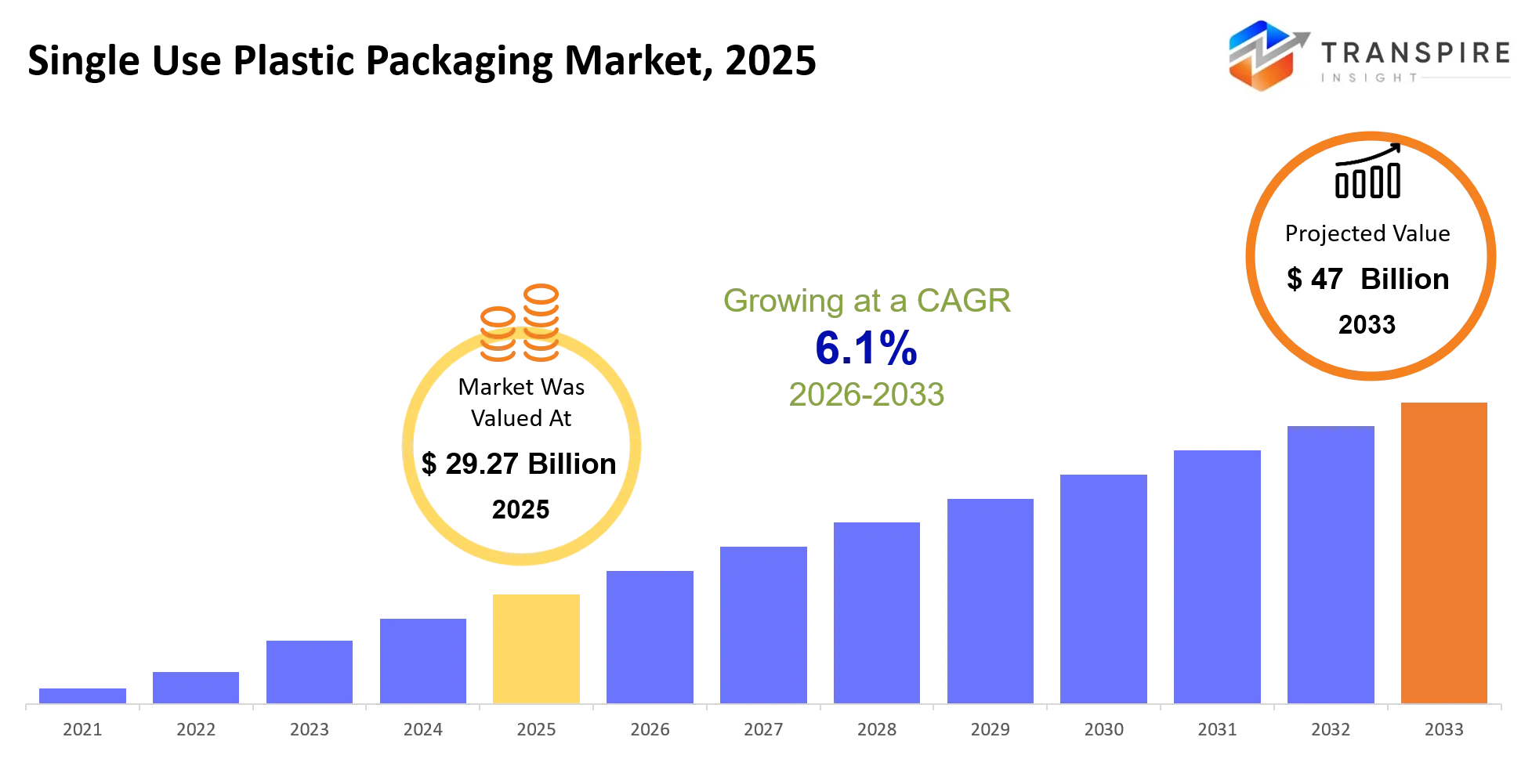
As per Transpire Insight Analysis, the Single Use Plastic Packaging Market size is estimated at USD 29.27 billion in 2025 and is anticipated to reach USD 47 billion by 2033, growing at a CAGR of 6.1% from 2026 to 2033.
The single-use plastic packaging market is changing the handling of everyday products across food, beverages, healthcare, personal care, retail and household goods. Lightweight plastic packs help protect items, keep them longer, and make shipping easier. The market has seen some changes during the last three to five years. The market trend has changed from the use of virgin plastic to lightweight packaging materials with recycled content and recyclable designs. There has been an enormous trend towards mono-material packaging and packaging with reduced materials. This trend has been caused by the fact that brands have been reacting to recycling goals and packaging regulations. On the other hand, there has been the need for stricter plastic waste policies and the adoption of extended producer responsibility programs. These two factors have put pressure on the converters and brand owners to design packaging. Despite all these concerns, the market continues to expand. This is because plastic packaging is convenient, protects products and supports logistics. The improvements of recycling and the development of bioplastics make it possible for manufacturers to meet environmental demands and maintain plastic packaging relevant.
Single Use Plastic Packaging Market Size & Forecast:
- Market Size 2025: USD 29.27 Billion
- Expected Market Value (2033): USD 47 Billion
- Forecast CAGR (2026–2033): 6.1%
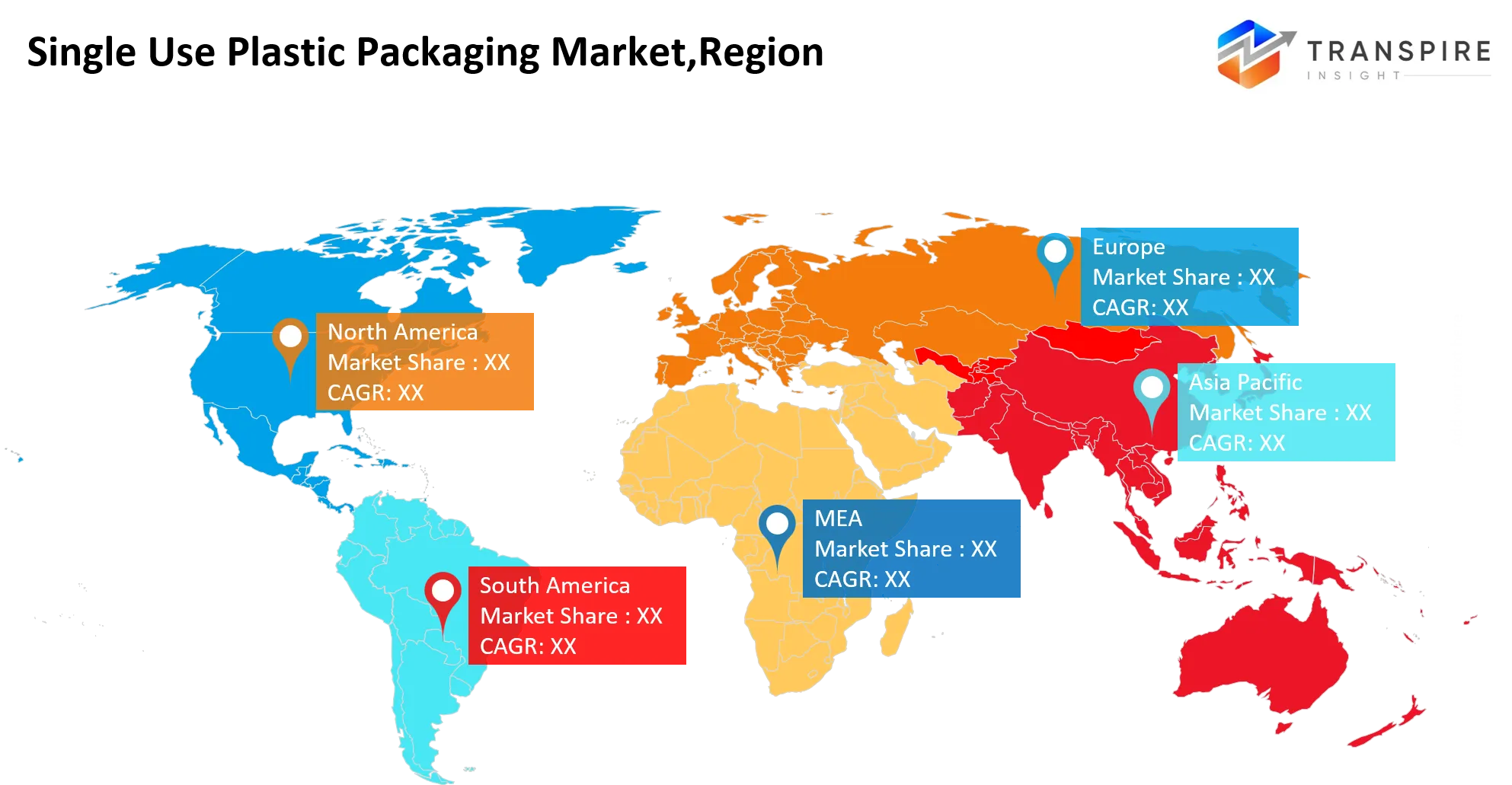
- Leading Region in 2025: Asia Pacific
- Fastest Growing Region: Middle East & Africa
- Key Company Profiles: Amcor, Berry Global, Sealed Air, Mondi, Sonoco Products, Huhtamaki, Coveris, Constantia Flexibles, Winpak, ProAmpac, Reynolds Consumer Products, Pactiv Evergreen, Novolex, Smurfit Westrock, Clondalkin Group
Key Market Insights
The market is moving towards flexible packaging, which continues to be the most dominant form in the market because lightweight structures provide convenience, efficiency in transportation, and less material usage
- Flexible packaging accounts for 58.40% of the market, driven by high demand for lightweight forms, while Amcor is expanding its range of recyclable flexible packaging solutions as brands adopt more resource-efficient packaging. Amcor
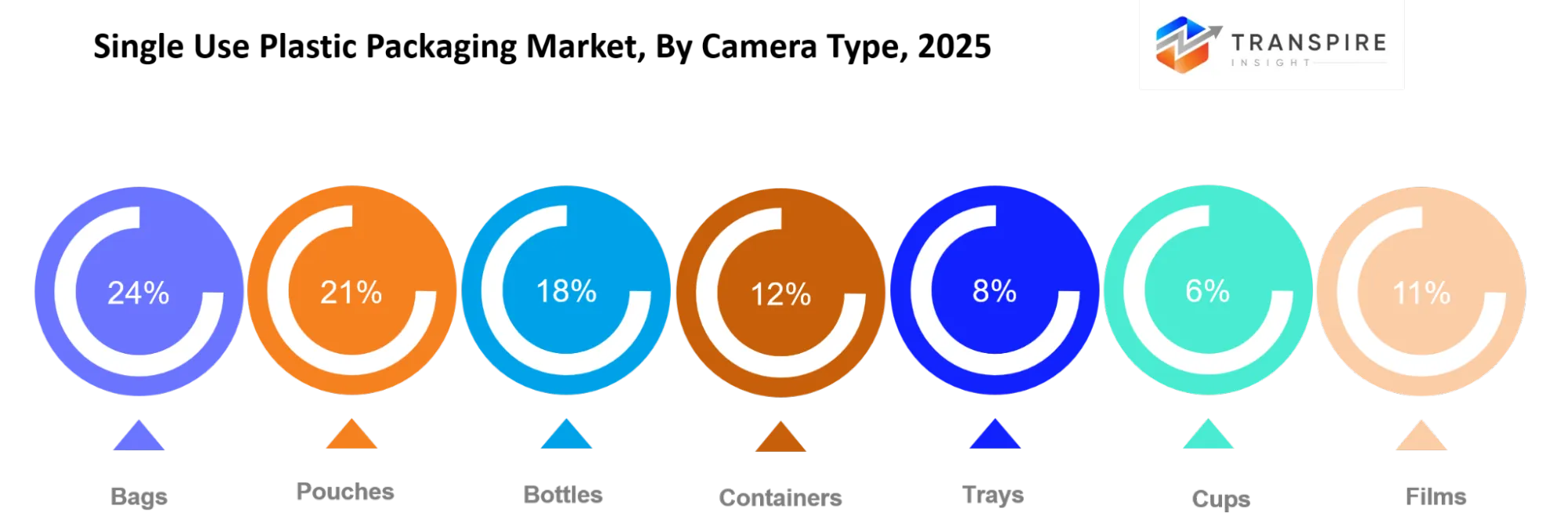
- Pouches constitute 21.00%, while resealable and space-saving packaging solutions are being developed by manufacturers in food, personal care and household categories.
- Bottles constitute 18.00%, while manufacturers are developing lighter bottles and using recycled resins in packaging production.
- Containers constitute 12.00%, while packaging manufacturers are developing recycled content and more resource-efficient solutions.
- Trays hold 8.00%, driven by food applications, while manufacturers are exploring lighter structures and recyclable materials.
- Cups constitute 6.00%, driven by foodservice and beverage companies' increased interest in recyclable and recycled-content packaging.
What are the Key Drivers, Restraints, and Opportunities in the Single-Use Plastic Packaging Market?
Drivers
The growth is driven by the benefits of lightweight plastic packs, especially those that are flexible and meant for food and beverage products and household goods. The convenience of smaller packs and transportable packs encourages the use of formats that use fewer materials and take up less space. Investment in recyclable structures and recyclable resins is improving acceptability and allows the use of plastic while still meeting environmental objectives.
Restraints
The plastic waste regulation will continue to be a structural challenge. Restrictions on certain single-use products, minimum recycled content requirements, and recycling capabilities make compliance costlier and more complicated. For smaller converters, investment is required when there are equipment changes, new resin sources, and certification requirements from different markets. Such fragmentation can delay new product introductions and increase operational costs.
Opportunities
The opportunity is in packaging that is convenient as well as made from circular materials. Bioplastics, mono-material film, high PCR packaging, and lightweight packaging can give companies access to contracts with brands looking for low environmental impact. Investment in recycling infrastructure in the regions, especially in Asia Pacific and developing countries, will enable better material recovery and increase demand for packaging designed for collection systems.
What Has the Impact of Artificial Intelligence Been on the single-use plastic packaging market?
The use of AI t on single-use plastic packaging relates to design, production planning, quality control, and recycling analysis. Packaging companies are able to employ AI technology to conduct an analysis of customer reviews, sales statistics, and visual trends in order to create new designs of packages quicker than before. Machine learning may help in optimising materials by comparing strength, weight, and other performance indicators of packaging and allowing engineers to reduce resin consumption.. Predictive analytics can be leveraged in manufacturing for identifying any abnormal equipment behaviour and conducting maintenance earlier, while computer vision systems can assist in improving the inspection of seals, shapes, labels and surface defects. AI technology is also being utilised for waste stream analysis, whereby image-based systems can help identify the packaging materials. This will help reduce the time of development, wastage of material and unexpected downtime. The adoption of AI technology is not always smooth, as there could be challenges such as a lack of clean data and digital infrastructure in old production systems, and the AI-developed designs will need to be validated by packaging engineers before utilisation. Amcor and Berry have especially emphasised AI-assisted packaging innovation and consumer insight applications.
Instance
In April 2025, Amcor worked with Greyparrot to apply AI-driven waste analytics to the monitoring of packaging in the waste and recycling chain. The technology can help identify what happens to the waste packaging and give insights that could be useful to make recycling and recovery of materials easier.
Key Market Trends:
The market trends towards the use of new forms of packaging that have low material usage, good recycling properties, and recycled material. This comes at a time when packaging companies are innovating in materials, applying technology, and customising products based on customer requirements and changes in regulations.
- From complicated structures to mono-material structures: There is growing emphasis on packages that can be recycled in current recycling streams.
- Down-gauging is gaining momentum because it helps the converter reduce the use of materials but retain the package's quality.
- From standardised packages to tailor-made formats: This involves packaging producers working directly with brand owners to create a package format for their needs.
- From traditional design to assisted design using AI: Here, AI is used to hasten the process of design and innovation of packages as well as analysing consumers.
- From discarding-focused models to a circularity approach. This means recycling is taking centre stage when creating products, using PCR material or recovering packaging.
- The digital manufacturing technology has helped companies adapt quickly to changing needs of the consumer and the product.
- Companies are increasingly trying to balance plastic reduction with package performance and recyclability of the pack, among other factors.
Single Use Plastic Packaging Market Segmentation
By product type
bags account for the highest market share individually at 24.00%, followed by pouches at 21.00% and bottles at 18.00%. Bags will continue to be significant since they offer lightweight packaging for food, retail, domestic, and industrial goods, whereas pouches have the advantage of being resealable as well as providing good storage solutions. Containers make up 12.00%, trays 8.00%, films 7.00%, cups 6.00% and sachets 4.00%. Future product innovations will include lightweight construction, recyclable materials and convenient formats.
By material
Plastics used in this market include polyethene, polypropylene, PET, PVC, polystyrene, bioplastics and others. Polyethene and polypropylene will retain their importance because of their flexibility, durability and versatility, while PET will maintain its usage in bottles and containers. Bioplastics have shown the highest growth rate of all materials segments at 12.70% CAGR due to the development of materials to tackle sustainability issues. Prospects will depend on their commercialisation, affordability and availability of recycling infrastructure.
By packaging
flexible packaging maintains a leading position with 58.40% market share thanks to its lightness, material savings, and ability to be used for consumer goods. Rigid, semi-rigid, multilayer, mono-material and laminated packaging will retain their usage in cases where mechanical or barrier properties are required. Mono-material structures will gain more importance thanks to their recyclability. This trend may prompt converters to redesign traditional multilayer packages in order to maintain barrier protection and high production efficiency.
By end user
food and beverage remains an important area of consumption due to the need for packaging to offer product protection, shelf life and transportation capabilities. Healthcare and personal care uses need reliable performance of packaging, while household goods will benefit from bottles, pouches, containers and trigger pack formats. Lightweight packaging needs will be supported by retail and e-commerce, while industrial and agricultural end users will have needs for robust packaging to cater to transport and product protection requirements. Future growth will increasingly favour suppliers who will be able to tailor their packaging to suit performance and regulation requirements in each industry sector.
By application
Food packaging and beverage packaging are still very significant applications because plastic packaging gives protection, portability and easy handling in fast moving goods. Controlled performance and protection applications include pharmaceutical and medical packaging, whereas convenience and dispensing applications are associated with cosmetics and household items packaging. Products which would need strength and resistance against transportation and storage would have industrial packaging. Applications in future would favor applications which would give protection to goods and also use less material and be recyclable.
By channel
direct selling is significant for big brands who need a partner in terms of technical cooperation and custom-made packaging solutions. Distributors and those providing packaging services ensure more extensive geographical coverage, especially for small clients, but online and retail channels allow for the purchase of standard packaging options. The wholesalers still help when dealing with fragmented markets, and OEM deliveries offer packaging manufacturers a chance to build their solutions into overall manufacturing processes. Digital procurement might speed up the procurement process, yet the existing relationships will continue to be valuable for unique packaging solutions and demands.
What are the Key Use Cases Driving the Single Use Plastic Packaging Market?
Flexible bags, pouches and films continue to be important in food and beverage packaging since they are cost-effective and ensure efficient transportation while providing product protection. Such packages are ideal for snack food, dry food, condiments, bakery products and other rapidly-moving products where sealing and portion control are essential. New uses include bottles, containers, sachets and special films for health care and personal care products such as pharmaceuticals, cosmetics, hygiene products, household chemicals, among others. E-commerce and retail businesses are good options for protective packages that will cut down on weight and handling. Recycled content packages, bio-plastics and mono-materials are new uses.
Which Regions are Driving the Single Use Plastic Packaging Market Growth?
North America
North America holds 22.00% of the share and has mature packaging manufacturing capabilities, food/beverage consumption and demand for convenience packaged goods. Moreover, there are investments made in sustainable packaging made of recycled materials. Companies have started collaborating with consumer brands to bring lightweight and recycled plastics to the market. Such conditions ensure stability of this market position in the region.
In April 2025, Amcor and Nestlé Purina PetCare jointly launched Friskies Party Mix cat treat canisters made from 100% recycled PET, except for the label and lid. The packaging is made in an effort to minimise the use of virgin plastics and is intended for release in the U.S. market. This is in line with the trend in North America towards packaging made of recycled plastic material.
Europe
Europe constitutes 24.00% of the total market and occupies a favourable position due to the fact that packaging legislation is driving material selection and recyclability in the region. Its established recycling system and strategy for brand sustainability are making investments in mono-material packaging and sustainable materials attractive. For instance, Huhtamaki is creating flexible packaging with mono-materials due to regulations. Such a market situation provides a relatively good basis for suppliers.
In May 2025,Amcor and Fedrigoni designed a recycle-ready flexible wet wipe pack using Amcor’s AmPrima Plus flow wrap and Fedrigoni’s semi-rigid label. The entire pack is capable of being processed in PE recycling streams in Europe, in line with the trend in Europe towards recyclable packaging amid changes in packaging regulations.
Asia Pacific
Asia Pacific holds the highest market share, accounting for 43.50% on account of its huge manufacturing base, growing consumer base and demand from the food, beverage, retail, and e-commerce sectors. With its large-scale production capabilities, the region provides packaging providers the opportunity to cater to larger applications through efficient and sustainable packaging methods
In February 2026, UFlex launched its F-HSS mono-material PET film at PLASTINDIA. The film was designed to facilitate mono-material PET packaging and offer high seal strength, clarity and machinability.
Who are the Key Players in the single-use plastic packaging market, and how do they compete?
In the international competition of the single-use plastic packaging market, the key differentiators will be based on efficiency of materials used, recycling, innovative formats and customised designs for customers. Amcor's competitive advantage is based on innovation and scale, offering flexible films, containers and recycled-content solutions with major consumer brands and expanding into recyclable and reduced-material products. The company's competitive strategy is focused on packaging innovation and manufacturing reach. Berry concentrates on high-volume plastic packaging, circular materials and application-specific products. The competitive advantages of the company include recycled resin technologies, lightweighting and packaging lines for food, home care, health care and industrial applications, with a broad manufacturing presence. Sealed Air concentrates on food and protective packaging with the help of material science, automation and customer solutions. Huhtamaki is improving its flexible packaging with mono-material formats and recyclable products.
Single Use Plastic Packaging Market companies
- Amcor
- Berry Global
- Sealed Air
- Mondi
- Sonoco Products
- Huhtamaki
- Coveris
- Constantia Flexibles
- Winpak
- ProAmpac
- Reynolds Consumer Products
- Pactiv Evergreen
- Novolex
- Smurfit Westrock
- Clondalkin Group
Recent Development News
In September 2026, Amcor and Dow announced a collaboration to speed up the adoption of packaging with a lower carbon footprint. This collaboration will leverage Amcor's expertise in packaging and manufacturing and Dow’s low-carbon polyethene and materials knowledge, in order to help brands reduce their Scope 3 emissions.
In April 2026, Sealed Air was acquired by funds managed by CD&R. The firm indicated that this deal would allow increased investments in innovation and capabilities, providing Sealed Air with a long-term platform for growth in food and protective packaging.
What Strategic Insights Define the Future of the Single-Use Plastic Packaging Market?
In the industry, there is a move towards a selective strategy where single-use plastic packaging will still be used in those instances where performance and convenience cannot be substituted, but where success is contingent upon material efficiency and recyclability. Flexible packaging will remain very much relevant due to the fact that it is light, has a high content ratio, and is flexible. The risk is in the form of the incapacity of the recycling facilities to cope with the increase in the amount of recyclable packaging. This creates a mismatch between package design and the end-of-life facilities available. There is a business opportunity in regional investment in collection, sorting and food-grade recycled resins. The packaging companies should develop their packages to match the regional recycling capabilities, partner with recycled resins and measure their success through recycling, not sustainable packaging.
Product Type
- Bags
- Pouches
- Bottles
- Containers
- Trays
- Cups
- Films
- Sachets
Material
- Polyethylene
- Polypropylene
- PET
- PVC
- Polystyrene
- Bioplastics
- Other Plastics
Packaging Format
- Flexible Packaging
- Rigid Packaging
- Semi-Rigid Packaging
- Multilayer Packaging
- Mono-Material Packaging
- Laminated Packaging
End User
- Food & Beverage
- Healthcare
- Personal Care
- Household Products
- Retail
- E-Commerce
- Industrial
- Agriculture
Application
- Food Packaging
- Beverage Packaging
- Pharmaceutical Packaging
- Cosmetic Packaging
- Household Packaging
- Industrial Packaging
- Medical Packaging
Distribution
- Direct Sales
- Distributors
- Packaging Suppliers
- Online Sales
- Retailers
- Wholesalers
- OEM Supply
Frequently Asked Questions
Find quick answers to common questions.
The single-use plastic packaging market size was valued at USD 29.27 Billion in 2025 and is poised to reach USD 47 Billion by 2033, expanding at a 6.1% CAGR.
Key segments for the single-use plastic packaging market are Product Type (Bags, Pouches, Bottles, Containers, Trays, Cups, Films, Sachets); Material (Polyethylene, Polypropylene, PET, PVC, Polystyrene, Bioplastics, Other Plastics); Packaging Format (Flexible Packaging, Rigid Packaging, Semi-Rigid Packaging, Multilayer Packaging, Mono-Material Packaging, Laminated Packaging); End User (Food & Beverage, Healthcare, Personal Care, Household Products, Retail, E-Commerce, Industrial, Agriculture); Application (Food Packaging, Beverage Packaging, Pharmaceutical Packaging, Cosmetic Packaging, Household Packaging, Industrial Packaging, Medical Packaging); Distribution (Direct Sales, Distributors, Packaging Suppliers, Online Sales, Retailers, Wholesalers, OEM Supply)
Growth is primarily driven by increased consumption of foods and beverages, fast-paced expansion of e-commerce, urbanization, and the use of lightweight and economical packaging.
The market is led by major manufacturers including Amcor, Berry Global, Sealed Air, Mondi, Sonoco Products, Huhtamaki, Coveris, Constantia Flexibles, Winpak, ProAmpac, Reynolds Consumer Products, Pactiv Evergreen, Novolex, Smurfit Westrock, Clondalkin Group
The Asia-Pacific region accounts for 43.50% of the worldwide single-use plastic packaging market due to factors such as rapid urbanisation, increasing consumer demands, growth of the food and beverages industry, and manufacturing capability.
The commercial opportunities are sustainable packaging, recyclable and lightweight packaging materials, intelligent packaging, and increasing demand from e-commerce, food and beverages, pharmaceutical, and personal care industries. Increasing environmental awareness is also creating opportunities for companies working on cost-effective eco-friendly packaging solutions.
- Amcor
- Berry Global
- Sealed Air
- Mondi
- Sonoco Products
- Huhtamaki
- Coveris
- Constantia Flexibles
- Winpak
- ProAmpac
- Reynolds Consumer Products
- Pactiv Evergreen
- Novolex
- Smurfit Westrock
- Clondalkin Group
About the Authors

Kartik bhong
I am Kartik Bhong, a Senior Research Analyst at Transpire Insight, specializing in the Packaging, Manufacturing, and Construction industry. My work focuses on analyzing market trends, emerging technologies, industry regulations, and competitive landscapes to deliver accurate, data-driven insights. I am passionate about transforming complex industry information into clear, practical content that helps businesses, professionals, and decision-makers stay informed and make confident strategic decisions. Through continuous research and a strong commitment to accuracy, I strive to create reliable, well-researched content that reflects the latest developments across these dynamic industries and supports the vision of Transpire Insight in delivering valuable market intelligence.

Chakradhar Khansole
Chakradhar serves as the Research Director at Transpire Insight, bringing over 8 years of experience in technology, innovation, and strategic market intelligence. He specializes in transforming complex market data into actionable business insights that enable organizations to make informed, growth-oriented decisions. Recognized for his strategic vision and analytical expertise, Chakradhar leads high-impact research initiatives, delivering comprehensive market assessments, competitive intelligence, and forward-looking industry analysis.
Recently Published Reports
-
Apr 2026
Pharmaceutical Cold Chain Packaging Market
Pharmaceutical Cold Chain Packaging Market By Material (Plastic,(Polyethylene (PE), Polypropylene (PP), Polyethylene Terephthalate (PET), Expanded Polystyrene (EPS), Polyurethane (PU),Others), Paper, Metal, Others), By Product (Small Boxes, Pallets, Large Sized Pallet Containers, Others), By End Use (Biopharmaceutical Companies, Clinical Research Organizations, Hospitals, Research Institutes, Logistics and Distribution Companies, Others)”, By Industry Analysis, Size, Share, Growth, Trends, and Forecasts 2026-2033
-
Apr 2026
Active & Intelligent Packaging Market
Active & Intelligent Packaging Market By Type (Active Packaging, Smart Packaging), By Material (Polymer-Based, Paper & Board-Based, Metal-Based, Glass-Based), By Technology (Time-Temperature Indicators, Freshness Indicators, RFID, Antimicrobial Packaging, Modified Atmosphere Packaging), By Application (Food & Beverages, Pharmaceutical, Cosmetics & Personal Care, Electronics & Consumer Goods, Others), By Industry Analysis, Size, Share, Growth, Trends, and Forecasts 2026-2033
-
Apr 2026
Biodegradable Cut Flower Packaging Market
Biodegradable Cut Flower Packaging Market By Material Type (Paper & Paperboard, Biodegradable Plastics, Natural Fibers, Molded Pulp, Others), By Product Type (Sleeves, Wraps, Boxes & Cartons, Bags & Pouches, Inserts & Holders), By Application (Roses, Carnations, Tulips, Chrysanthemums, Mixed Flowers, Others) and By Distribution Channel (Direct Sales, Distributors & Wholesalers, Online Channels), By Industry Analysis, Size, Share, Growth, Trends, and Forecasts 2026-2033
-
May 2026
Pharmaceutical Packaging Market
Pharmaceutical Packaging Market By Material Type (Plastic, Glass, Metal, Paper & Paperboard, Others), By Packaging Type (Bottles, Blister Packs, Vials, Ampoules, Pouches & Sachets, Others) and By End User (Hospitals & Clinics, Retail Pharmacies, Online Pharmacies, Pharmaceutical Manufacturers), By Industry Analysis, Size, Share, Growth, Trends, and Forecasts 2026-2033