

Respiratory Care Market Summary:
According to Transpire Insights, a detailed research report on the market reflects that the home care and respiratory therapy application segment dominates the Respiratory Care Market, accounting for a significant share of the total market worldwide. ResMed leads the market with approximately (around USD 4.2 billion) in annual revenue from respiratory and sleep care solutions and an estimated leading market position, making it a key contributor to market development, innovation, advanced respiratory care device production, expanding healthcare technology capabilities, and overall market growth dynamics.
Market Snapshot
- Market Value (2025): USD 30.8 Billion.
- Expected Market Value (2026): USD 32.4 Billion.
- Estimated Market Value (2033): USD 45.6 Billion.
- Forecast CAGR (2026-2033): 5%.
- Leading Region in 2025: North America
- Second-largest Region: Europe
- Fastest Growing Region: Asia Pacific
Introduction
In particular, technologies such as portable consoled oxygen and battery-operated nebulizers are allowing for greater independence and freedom for users who can continue to pursue active lifestyles with any respiratory illnesses. The rise in use of in-home medical care methods combined with remote monitoring systems and smart medical devices has also improved the efficiency of care provision and decreased the need for hospital visits. Use of AI and Internet of Things technologies allows for personalized and real time provision of the respiratory solution. Additionally, modern devices allowing for diagnosing respiratory diseases, detection of any diseases in time and continuous monitoring of the patient help to get better results of the treatment. A sector dealing with medications, diagnostic instruments, and other equipment which help to treat both acute and chronic respiratory diseases has been growing with a compound annual growth rate (CAGR) falling between 7% and 9%. These are products manufactured, distributed, and utilized for the diagnosis, monitoring, and treatment of respiratory problems. The rise of innovations in portability, personalization, and home treatment options has influenced the development of the respiratory care devices sector. Small device applications, which include portable oxygen concentrators and smart inhalers, are changing the ways patients suffering from COPD, asthma, and other conditions live their day-to-day lives. Remote Patient Monitoring (RPM) helps medical professionals monitor patients’ vital respiratory signs in real-time through telehealth technology and IoT. Meanwhile, the introduction of AI-based ventilators and PAP equipment made it possible to provide personalized respiratory assistance through the customization of device settings based on the needs of a patient. The growing popularity of home health care solutions is improving availability, lowering costs, and enhancing market growth.
For instance: The Asia Pacific Respiratory Care industry, the fastest-growing regional sector, rising cases of chronic obstructive pulmonary disease (COPD), and higher post-pandemic home healthcare investments are driving the rapid expansion of the worldwide respiratory care industry.

Market Highlights: -
- North America is expected to grow at a rapid CAGR in the Respiratory Care Market by holding around 40% of the share during the forecast period.
- Europe is anticipated to hold roughly 26% share of the Respiratory Care Market over the predicted timeframe.
- Asia Pacific is anticipated to hold around 20% share of the Respiratory Care Market over the predicted timeframe.
- By product type, the Oxygen Concentrators segment dominated the market and holds roughly 29% share in 2025 and is projected to grow at a substantial CAGR during the forecast period.
- By end user, the Hospitals segment dominated the market and holds roughly 30% share in 2025 and is projected to grow at a substantial CAGR during the forecast period.
- By technology, the Mechanical Systems segment dominated the market and holds roughly 42% share in 2025 and is projected to grow at a substantial CAGR during the forecast period.
- India: Government programs like the National Health Mission (NHM) and the Pradhan Mantri Ayushman Bharat Health Infrastructure Mission (PM-ABHIM) are enhancing public health infrastructure by boosting critical care services, oxygen production capacity, and emergency health services. This improvement provides increased access to medical supplies such as oxygen therapy machines, ventilators, and tracking devices that benefit the business of respiratory care devices in India. The rise of public funding towards medical readiness and care of patients suffering from respiratory illnesses creates opportunities for further development of the industry.
How is Technology Driving Growth in the Respiratory Care Market?
The introduction of advanced digital technology in the respiratory care market can be seen in the forms of smart connected devices, remote patient monitoring, portable solutions, and AI-based analytics. The emergence of smart inhalers, smart spirometers, and smart CPAP machines has enabled greater speed in data backtracking and faster clinical decision making. Continuous monitoring of patients suffering from chronic respiratory diseases such as COPD and asthma has been made possible, thanks to remote monitoring solutions thereby increasing overall safety. In addition, the development of lightweight portable oxygen concentrators and handheld nebulizers leads to better mobility and overall patient experience. Smart algorithms are being used in the field of predictive analytics for respiratory care which is capable of analyzing the breathing patterns in advanced phases and providing accurate predictive analytics.
Market Drivers
The market for respiratory care devices is seeing significant growth because of the increasing prevalence of chronic respiratory diseases including Chronic Obstructive Pulmonary Disease (COPD), asthma, and obstructive sleep apnea. Rising air pollution, urbanization, and tobacco consumption are leading to increased risks of respiratory diseases around the world. In addition, the aging population is significantly increasing the demand for advanced respiratory care products and services. Technological advancements including smart inhalers, portable oxygen devices, and non-invasive AI-based ventilators are improving treatment efficiency and compliance. Moreover, the rise in home healthcare, remote patient monitoring, and telemedicine services are minimizing the need for hospitals and boosting market growth. Innovation is driving change in the respiratory devices market. In particular, technologies such as portable consoled oxygen and battery-operated nebulizers are allowing for greater independence and freedom for users who can continue to pursue active lifestyles with any respiratory illnesses. The rise in use of in-home medical care methods combined with remote monitoring systems and smart medical devices has also improved the efficiency of care provision and decreased the need for hospital visits. Use of AI and Internet of Things technologies allows for personalized and real time provision of the respiratory solution. Additionally, modern devices allowing for diagnosing respiratory diseases, detection of any diseases in time and continuous monitoring of the patient help to get better results of the treatment.
For Instance: -
- North America is the market leader for respiratory care devices worldwide. The regional market is continuing to grow slowly due to post-pandemic tech investments, chronic illnesses including asthma and COPD, and an aging population
- Aging populations, increased prevalence of asthma and COPD, and investments in homecare technologies are the main factors driving the worldwide respiratory care industry in Europe. The quick growth of connected digital health devices, post-pandemic healthcare funding, and changing clinical preferences toward non-invasive home ventilation are some of the major market drivers.
Restrain
The Respiratory Care Market encounters barriers such as high costs of medical equipment, lack of reimbursement services, shortage of qualified respiratory specialists, and late diagnosis of pulmonary diseases. High prices of devices including ventilators, CPAP machines, and oxygen therapy equipment limit accessibility to services, while lack of education and social stigma add to difficulties in quickly diagnosing and adopting modern methods of respiratory care.
Analysis of Prices and Consumer Behaviour
Advanced respiratory care devices are primarily therapeutic respiratory devices (making up around 68% of the market, this is due to the surge of demand for more products such as ventilators, oxygen therapy devices, nebulizers, and positive airway pressure devices used both at hospitals and in homecare). The advanced respiratory care devices are expected to be around 35% more expensive than conventional devices, as they are embedded with smart monitoring technology, AI features, connectivity, and improved clinical efficiency. The sale of the respiratory care devices is primarily comprised of the sales in the home care and portable respiratory care segment making up almost 45% of activity in that market which shows an increased demand for the products amongst patients who have COPD, asthma, sleep apnea, and especially thanks to increasing popularity of home care respiratory therapy devices. Home healthcare and intensive care segments account for nearly 70% of the demand for respiratory care devices. The purchasing behavior of buyers in that industry is characterized with 55% of purchasers paying the most attention to reliability, efficiency, ease of use, and technology specifications of the devices. 33% of buyers in the market prefer to make bulk purchases or sign long-term contracts so they could keep costs low and In addition, another third of healthcare providers rely on bulk procurement agreements or long-term contracts since their goal is to secure the best possible pricing and enjoy constant supplies of equipment necessary for providing patients with respiratory care internationally.
Top Companies in the Respiratory Care Market
- ResMed
- Philips Healthcare
- Fisher & Paykel Healthcare
- Medtronic
- GE HealthCare
- Dräger
- Hamilton Medical
- Vyaire Medical
- Masimo
- Invacare
- Chart Industries
- Air Liquide
- Omron Healthcare
- DeVilbiss Healthcare
- Teleflex
Market Segmentation
The Respiratory Care Market share is divided into five categories: By product type, disease, end user, distribution channel and technology.
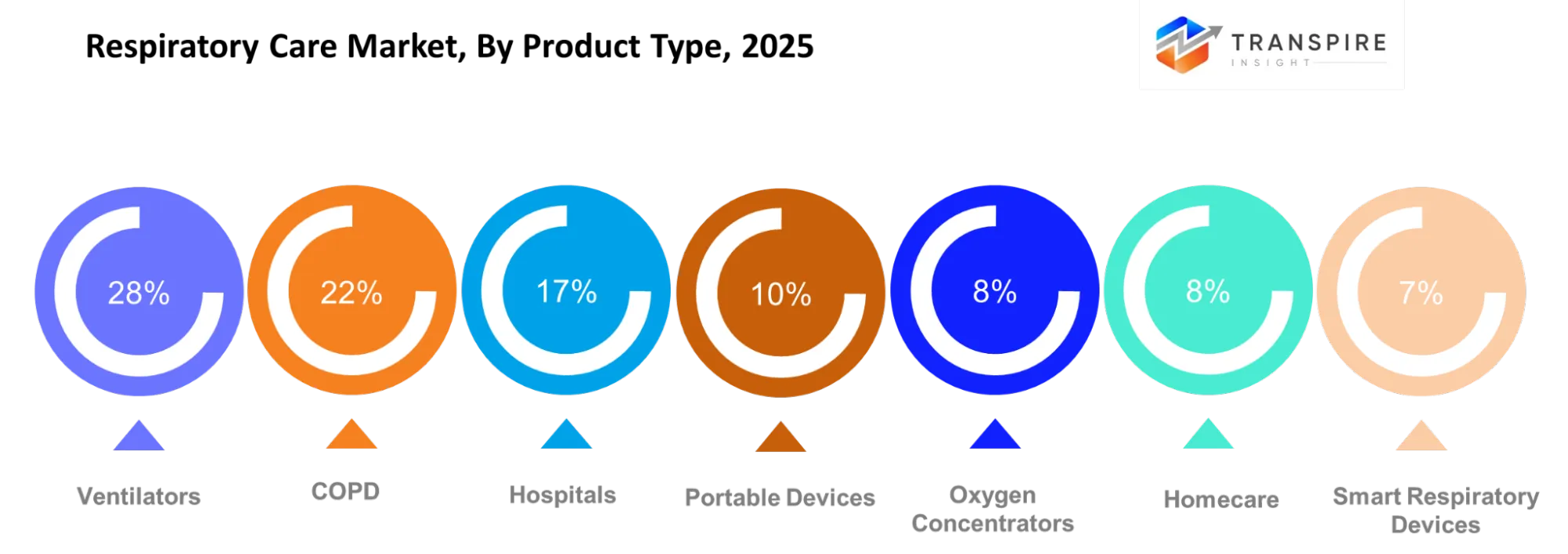
The Oxygen Concentrators dominated the market, accounting for roughly 29% in 2025 and is expected to rise at a significant CAGR during the forecast period.
The Respiratory Care Market is segmented by product type into Ventilators, Nebulizers, CPAP Devices, Oxygen Concentrators, Inhalers, Humidifiers, Spirometers, Others. Among these, the Oxygen Concentrators segment dominated the market, accounting for roughly 29% in 2025 and expected to increase at a significant CAGR during the forecast period. Among all product categories, the Oxygen Concentrators segment has emerged as the leader, possessing nearly 29% of the total market share in 2025. Respiratory illness prevalence is expected to grow with the elderly population, which may contribute to the sector's expansion during the forecast period. In addition to that, the rise of demand for oxygen therapy at home, technological advancement in the field of portable oxygen concentrators, development of healthcare infrastructure, and growing use of remote monitoring solutions will all affect the industry's advancement positively.
The Hospitals dominated the market, accounting for roughly 30% in 2025, and is expected to rise at a significant CAGR during the forecast period.
The Respiratory Care Market is segmented by end user into Hospitals, Clinics, Homecare, Ambulatory Care Centers, Emergency Care, Long-term Care Facilities, Rehabilitation Centers, Others. Among these, the Hospitals segment dominated the market, accounting for roughly 30% in 2025 and expected to increase at a significant CAGR during the forecast period. With about 30% of the worldwide market share by 2025, the Hospitals sector is the leading segment and is estimated to experience a significant growth rate during the forecast period. Some of the factors that are driving growth are the increase in hospital admissions, demand for more advanced equipment for respiratory care, improvement of infrastructure in the healthcare sector and the rising need for dependable oxygen therapy in emergency medical and critical care areas. Moreover, investment from the government in healthcare facilities will also contribute towards the growth of the market.
The Mechanical Systems dominated the market, accounting for roughly 42% in 2025 and is expected to rise at a significant CAGR during the forecast period.
The Respiratory Care Market is segmented by technology into Portable Devices, Smart Respiratory Devices, AI-enabled Monitoring, Connected Devices, Wearable Respiratory Devices, Mechanical Systems, Digital Therapeutics, Others. Among these, the Mechanical Systems segment dominated the market, accounting for roughly 42% in 2025 and expected to increase at a significant CAGR during the forecast period. The Mechanical Systems segment led the industry, representing around 42% of the total market share in 2025. This segment is expected to experience significant growth during the forecast period. This is attributed to the increased demand for reliable mechanical components, booming industrial automation, necessity for preventive maintenance, and improvement of operational efficiency. Furthermore, technological developments and modernization of mechanical systems are also boosting the market growth.
Regional Segment Analysis of the Respiratory Care Market:
- North America (U.S., Canada, Mexico)
- Europe (Germany, France, U.K., Italy, Spain, Rest of Europe)
- Asia-Pacific (China, Japan, India, Rest of APAC)
- South America (Brazil and the Rest of South America)
- The Middle East and Africa (UAE, South Africa, Rest of MEA)
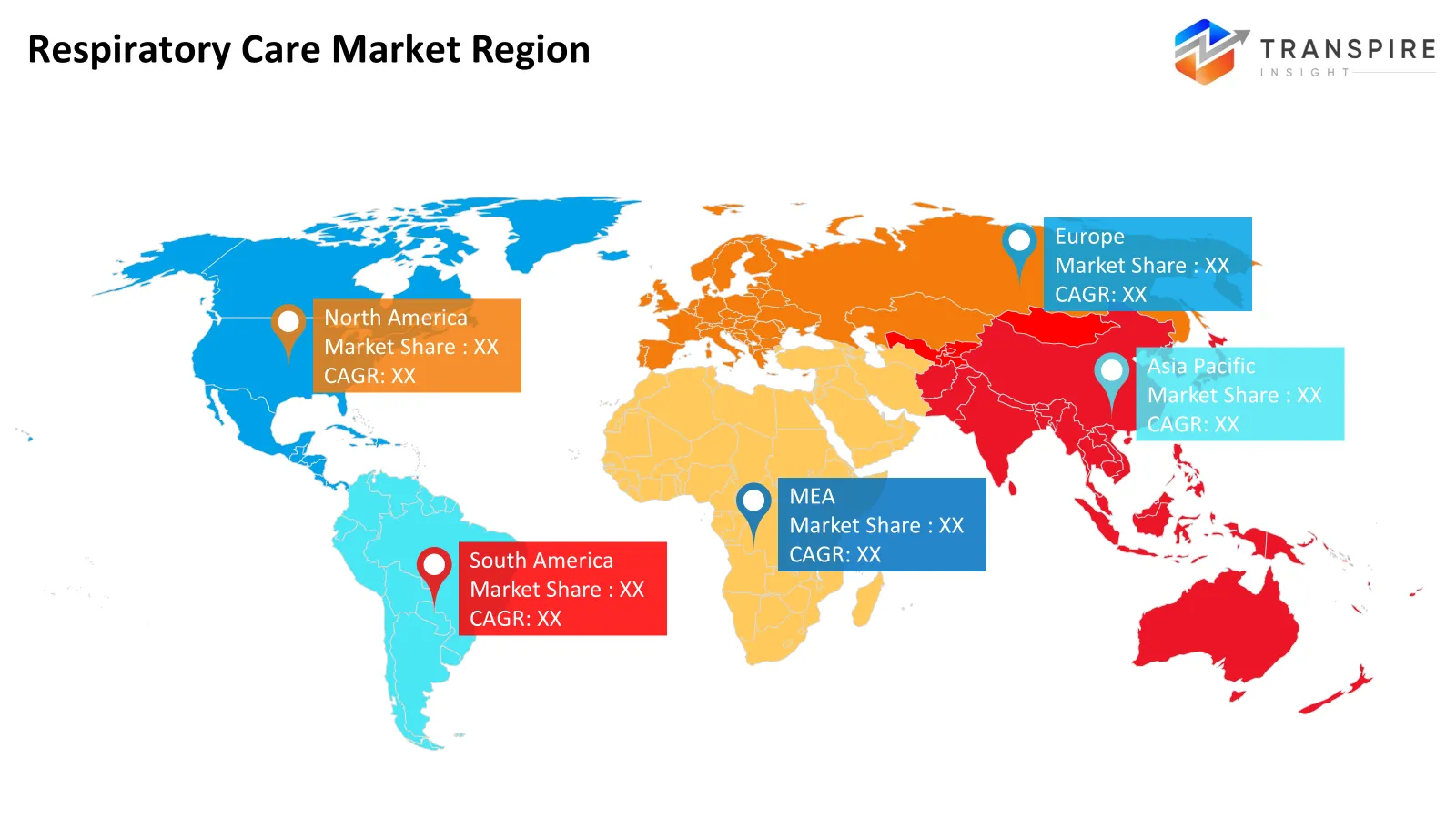
North America is the fastest-growing region in the Respiratory Care Market during the period, holding around 40% share.
North America is expected to grow at a rapid CAGR in the Respiratory Care Market holding around 40% share during the forecast period. The Mechanical Systems segment led the industry, representing around 42% of the total market share in 2025. This segment is expected to experience significant growth during the forecast period. This is attributed to the increased demand for reliable mechanical components, booming industrial automation, necessity for preventive maintenance, and improvement of operational efficiency. Furthermore, technological developments and modernization of mechanical systems are also boosting the market growth.
Europe is expected to grow at a rapid CAGR in the Respiratory Care Market, holding roughly 26% of the share during the forecast period.
Europe is expected to grow at a rapid CAGR in the Respiratory Care Market holding roughly 26% share during the forecast period. Europe is set to experience considerable increase in Respiratory Care Market, accounting for nearly 26% share in the anticipated timeframe. The rise in incidence of chronic respiratory diseases, growing number of older people, development of medical infrastructure, as well the use of home respiratory care devices altogether contribute to market progress. Besides, the local market development is also fostered by favorable laws associated with reimbursement, technological improvements, and government initiatives in the field of healthcare.
Asia Pacific is the fastest-growing region in the Respiratory Care Market during the period, holding around 20% share.
Asia Pacific is the fastest-growing region in the Respiratory Care Market during the forecast period, holding around 20% share during the forecast period. Asia Pacific is one of the most rapidly developing regions in the Respiratory Care Market with a market share of around 20% during the forecast period. Some of the key factors contributing to the growth of the region include rising cases of respiratory diseases, increasing amount of healthcare investments, growth of medical infrastructure, and growing awareness regarding advanced respiratory therapy options. Moreover, other factors which have contributed towards the growth of the market include improved access to healthcare services, government initiatives, and adoption of respiratory care devices for home care purposes.
Strategies for Market Growth in Non-Leading Regions:
Making use of innovative manufacturing technologies to ensure the manufacture of respiratory healthcare devices in underdeveloped regions will support the growth of small and midsize medical device manufacturers. The domestic manufacturing of respiratory devices such as oxygen supply and inhalation devices, ventilators, nebulizers, and respiratory control systems will help to lessen the dependence on imports and lower the overall costs of production. Building a partnership with medical facilities, healthcare organizations, specialists working in pulmonary medicine, dealers, and governments in charge of healthcare will lead to an increased market penetration by manufacturers of respiratory devices. Moreover, it will be needed to enhance knowledge in the field of respiratory disease treatment and use of devices, providing their maintenance, ensuring their efficiency, and controlling their quality and information about compliance with regulations. Additionally, effective financing options, long-term contracts for supplying and contract manufacturing will make it easier to acquire and use respiratory devices. The collaboration with healthcare programs, research organizations, and public health initiatives, as well as the employment of advanced technologies, including digital healthcare solutions and telemedicine services, will increase the accessibility of such devices in developing countries and contribute to their overall growth in the market.
Future Market Trends for the Respiratory Care Market: -
- Intelligent and Networked Devices: The introduction of smart devices through cloud technology allowing for an up-to-date monitoring of patients with various devices.
- Use of Artificial intelligence Technology: Utilization of artificial intelligence in medical devices able to adjust pressure automatically depending on the breathing patterns of each patient.
- Innovative portable devices: The increase in production of ultra-lightweight mobile oxygen concentrators which help patients lead normal and active lives.
- Artificial Intelligence Technology and Personalization: Artificial-intelligence-enabled devices such as the ResMed Air Sense 11 can modify their air pressure based on a person's breathing patterns.
- Connecting Healthcare: Wireless monitors, smart inhalers, and online platforms connect directly to mobile applications for ongoing monitoring and increased compliance with treatment.
- Innovative Ventilation: Machines such as the Puritan Bennett 980 utilize high-frequency ventilation techniques specifically designed for serious cases of acute distress syndrome.
Recent Development
- In February 2026: Allied Market Research published an updated study regarding the Market for Respiratory Care, identifying the main therapeutic segments, including ventilators and positive airway pressure (PAP) devices as contributing to the market growth. The report has mentioned an increase in demand for respiratory advanced therapy, increasing rate of respiratory disorders, and improvement and inclusion of advanced technology in medical devices used for respiratory care.
- In February 2026: Updates in reimbursement and billing regulations regarding home respiratory devices, including nebulizers and other respiratory therapy appliances, were announced by The Centers for Medicare & Medicaid Services (CMS). These updates are likely to have an impact on the practices of healthcare providers, enhance compliance with coverage requirements, and promote the usage of respiratory care devices in the Respiratory Care Market.
- In March 2026: AstraZeneca plc continued to build its respiratory portfolio through research and development projects targeting severe asthma, COPD, and the use of biological therapies. These advancements underline the growing importance of new respiratory solutions in improving outcomes for patients and finding growth avenues in the industry.
Market Segment
This study forecasts revenue at global, regional and country levels from 2020 to 2033. Transpire Insights has segmented the Respiratory Care Market based on the below-mentioned segments:
Respiratory Care Market, By Product Type
- Ventilators
- Nebulizers
- CPAP Devices
- Oxygen Concentrators
- Inhalers
- Humidifiers
- Spirometers
- Others
Respiratory Care Market, By Disease Type
- COPD
- Asthma
- Sleep Apnea
- Cystic Fibrosis
- Pneumonia
- Tuberculosis
- COVID-related Disorders
- Others
Respiratory Care Market, By End User
- Hospitals
- Clinics, Homecare
- Ambulatory Care Centers
- Emergency Care
- Long-term Care Facilities
- Rehabilitation Centers
- Others
Respiratory Care Market, By Distribution Channel
- Hospital Pharmacies
- Retail Pharmacies
- Online Pharmacies
- Medical Distributors
- Direct Sales
- Specialty Stores
- Healthcare Providers
- Others
Respiratory Care Market, By Technology
- Portable Devices
- Smart Respiratory Devices
- AI-enabled Monitoring
- Connected Devices
- Wearable Respiratory Devices
- Mechanical Systems
- Digital Therapeutics
- Others
Respiratory Care Market, By Regional Analysis
North America
- US
- Canada
- Mexico
Europe
- Germany
- UK
- France
- Italy
- Spain
- Russia
- Rest of Europe
Asia Pacific
- China
- Japan
- India
- South Korea
- Australia
- Rest of Asia Pacific
South America
- Brazil
- Argentina
- Rest of South America
Middle East & Africa
- UAE
- Saudi Arabia
- Qatar
- South Africa
- Rest of the Middle East & Africa
Frequently Asked Questions
Find quick answers to common questions.
The market is projected to reach USD 45.6 Billion by 2033, growing at a 5% CAGR from 2026-2033.
Rising respiratory diseases, aging population, pollution, home healthcare adoption, and advanced respiratory technologies drive market growth globally.
The Oxygen Concentrators segment dominates with approximately 29% market share in 2025, driven by rising oxygen therapy demand.
North America leads the market with around 40% share, supported by advanced healthcare infrastructure and technology adoption.
AI enables smart monitoring, personalized respiratory therapy, predictive analytics, and improved patient outcomes through advanced connected devices.
- ResMed
- Philips Healthcare
- Fisher & Paykel Healthcare
- Medtronic
- GE HealthCare
- Dräger
- Hamilton Medical
- Vyaire Medical
- Masimo
- Invacare
- Chart Industries
- Air Liquide
- Omron Healthcare
- DeVilbiss Healthcare
- Teleflex
About the Authors

Pankaj Ghogare Patil
I am Pankaj Ghogare Patil, a Senior Research Analyst at Transpire Insight, specializing in the Pharmaceutical, Chemicals & Materials, Healthcare IT, and Biotechnology industry. My expertise lies in conducting comprehensive market research, analyzing industry trends, evaluating competitive landscapes, and translating complex data into actionable insights. At Transpire Insight, I closely follow emerging technologies, regulatory developments, and market innovations to create accurate, well-researched, and informative content that helps businesses and professionals make informed decisions. I am committed to producing credible, evidence-based articles that reflect industry best practices while making technical topics accessible and valuable for a broad audience.

Chakradhar Khansole
Chakradhar serves as the Research Director at Transpire Insight, bringing over 8 years of experience in technology, innovation, and strategic market intelligence. He specializes in transforming complex market data into actionable business insights that enable organizations to make informed, growth-oriented decisions. Recognized for his strategic vision and analytical expertise, Chakradhar leads high-impact research initiatives, delivering comprehensive market assessments, competitive intelligence, and forward-looking industry analysis.
Recently Published Reports
-
Apr 2026
AI in Diabetic Retinopathy Market
AI in Diabetic Retinopathy Market Size, Share & Analysis Report By Type (Screening AI Systems, Diagnostic AI Systems, and Predictive AI Models), By Application Segment (Hospitals, Ophthalmology Clinics, Diagnostic Centers, and Research and Development), and Geography (North America, Europe, Asia-Pacific, Middle East and Africa, South and Central America), 2021 - 2031
-
Apr 2026
Psychometric Tests Market
Psychometric Tests Market Size, Share & Analysis Report By Type (Personality Tests, Ability/Aptitude Tests, Skill/Knowledge Tests, and Others), By Application (Talent Acquisition and Talent Management), and Geography (North America, Europe, Asia-Pacific, Middle East and Africa, South and Central America), 2021 – 2031
-
Apr 2026
Rare Biological Sample Collection Market
Rare Biological Sample Collection Market Size, Share & Analysis Report By Type (Isolation Kits & Reagent, Blood Collection Tubes, and Others), By Application (Oncology, Transcriptomics, Pharmacogenomics, and Others), and Geography (North America, Europe, Asia-Pacific, Middle East and Africa, South and Central America), 2021 – 2031
-
Jul 2026
Diabetic Retinopathy Market
Diabetic Retinopathy Market Size, Share & Analysis Report By Type (Proliferative Diabetic Retinopathy, and Diabetic Macular Edema (DME)), By Treatment Type (Anti VEGF Drug, Steroid Implants, Laser Surgeries, and Vitrectomy), and Geography (North America, Europe, Asia-Pacific, Middle East and Africa, South and Central America), 2021 – 2031
Our Clients







