

Market Summary
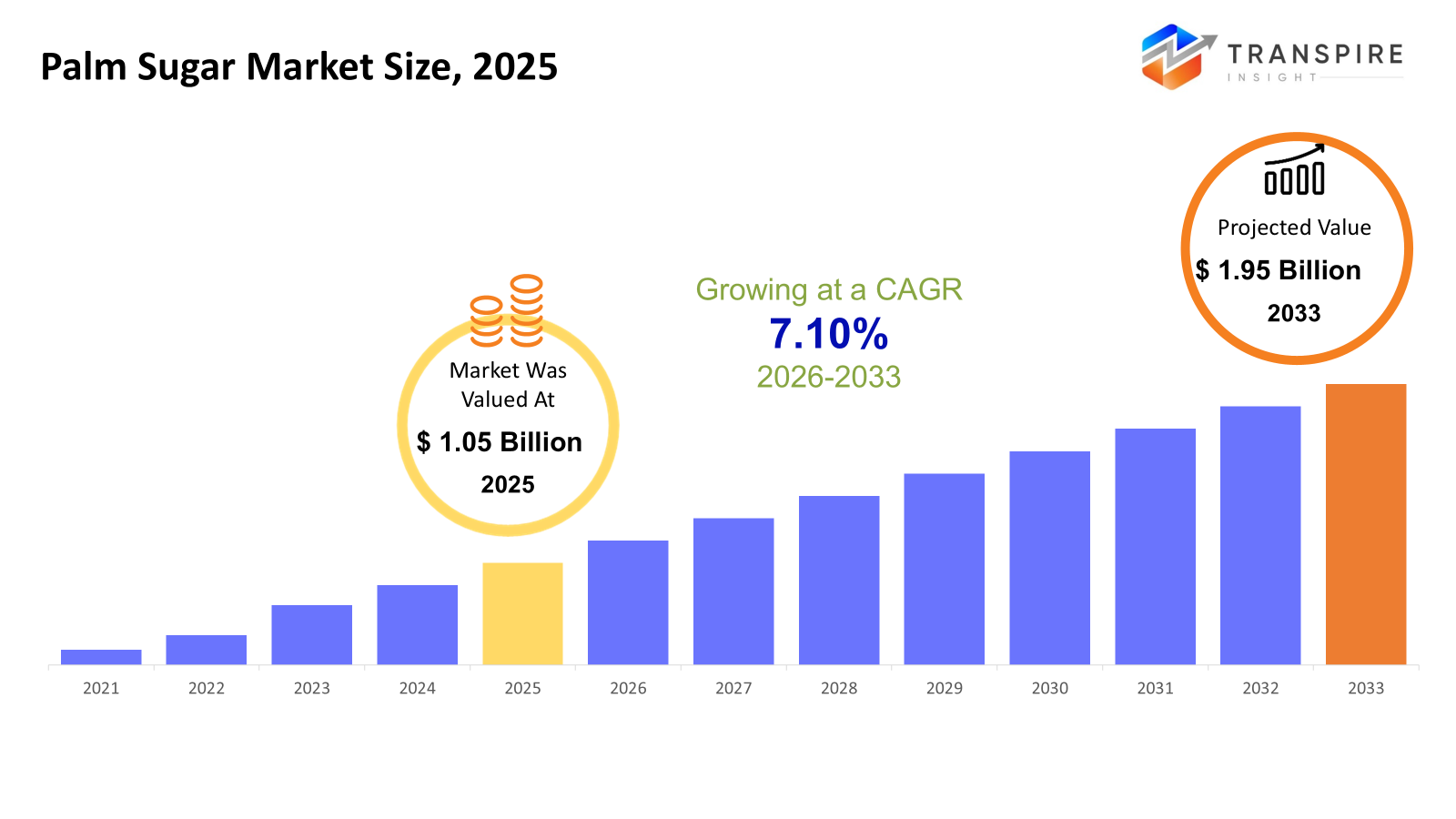
The global Palm Sugar market size was valued at USD 1.05 billion in 2025 and is projected to reach USD 1.95 billion by 2033, growing at a CAGR of 7.10% from 2026 to 2033. A growing demand for natural, unrefined, and low-glycemic sweeteners among consumers is propelling the demand for palm sugar. Its applications in the food and beverage sector, further fueled by an enhanced demand for organic and clean label, will continue to boost consumption. Better distribution, supported by modern retail and e-commerce, will further increase market access for palm sugar.
Market Size & Forecast
- 2025 Market Size: USD 1.05 Billion
- 2033 Projected Market Size: USD 1.95 Billion
- CAGR (2026-2033): 7.10%
- North America: Largest Market in 2026
- Asia Pacific: Fastest Growing Market
To learn more about this report,  Download Free Sample Report
Key Market Trends Analysis
- The region of North America is witnessing an increasing adoption of organic palm sugar owing to healthier consumer demands, and a liquid and powdered version is seeing more preference in drinks and bakery markets.
- The palm sugar market in the United States remains driven by the food and beverage industry, which has prominent retail and horeca segments, leading to rising demands in terms of organic, convenient, and sustainable products.
- The Asia Pacific continues to lead in production and consumption. This is for crystal palm sugar in traditional foods in India, Indonesia, and Thailand and liquid palm products in processed foods and beverages.
- Traditional palm sugar currently retains leadership in developing markets because of cost factors, whereas organic types experience sharper growth in luxury channels and classes linked with wellness and healthy living trends.
- The preference for powdered form is growing for baking, while the preference for the liquid form is growing for beverages and sauces, and the preference for the crystalline form is growing for retail and culinary use.
- Foods and drinks remain the leading consumer segment, while purchases in the household and retail sectors increase in line with convenience and health trends; horeca products find increasing adoption because of high culinary usage, while cosmetic products are niche and steadily rising.
So, the market for palm sugar is currently experiencing an estimated steady growth as consumers become more health-conscious and look for healthier alternatives for sweetening. The product is made from the sap of palm trees and is known to be healthier than refined sugars. Even though the market is comprised of different product varieties, including organic and conventional ones, the demand for the product is estimated to rise as more and more health-conscious consumers become aware of its health advantages. The food and beverage industry is also growing in terms of the increased use of palm sugar in the production of baked goods, confectioneries, beverages, sauces, and ready-to-eat food products. The use of palm sugar in culinary practices will also be preferred due to its natural sweetness and cultural ties in the hotel, restaurant, and cafe sectors. There is also an increased awareness of the health aspects of organic palm sugar; hence the need for increased manufacturing and distribution of the product across the globe. Emerging markets in the Asia Pacific have been the dominant producer and consumer of palm sugar, and North America and Europe are also witnessing the increasing usage of palm sugar due to wellness trends. Innovation in the form of powder, liquids, and crystal is also increasing the usage and shelf life. Emerging markets, such as the use of palm sugar in the cosmetic and health supplement industry, also boost the market.
Palm Sugar Market Segmentation
By Type
- Conventional
Conventional palm sugar remains very popular because of its low price. It is made through traditional processing and is commonly used in households as well as food production in many places, especially where people are very price-conscious.
- Organically
Organic palm sugar has also become quite popular with people concerned about their health, as clean-label food products are in demand and organic palm sugar has no added fertilizers and chemicals.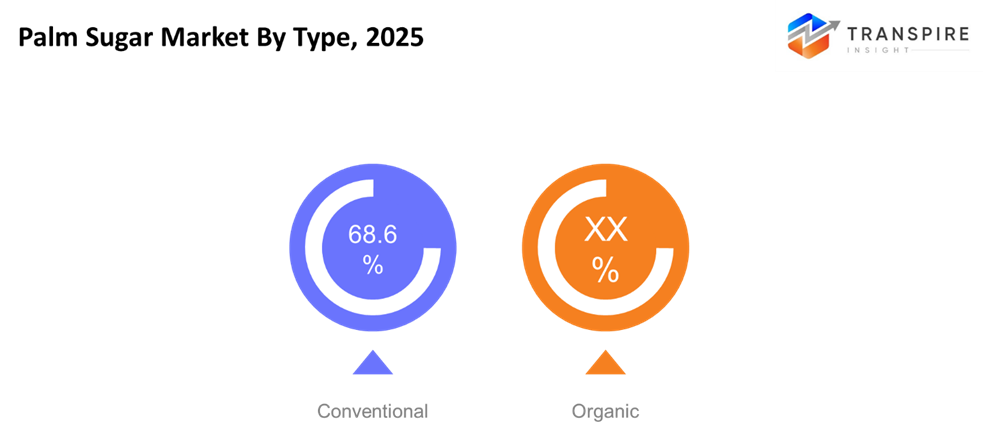
To learn more about this report, Download Free Sample Report
By Form
- Powder
Powdered palm sugar is very useful in baking and culinary preparations, as it easily blends with other components in a dish. This sugar variant is very common in the kitchen and bakeries because it provides a standardized flavor and consistency.
- Liquid
Liquid palm sugar is preferred in the beverage industry, sauces, and ready-to-drink products. Solubility in liquid palm sugar makes it an ideal food and beverage product in cafés, smoothie bars, and the horeca segment.
- Crystal
Palm sugar in its crystalline form is also enjoyed for its more traditional and longer-lasting qualities. Palm sugar is also often sold in commercial and high-quality food packaging, where it is in high demand due to its authenticity.
By End Use
- Food & Beverages:
- This is the biggest user of palm sugar and is dependent on it for their natural sweetness. Wellness trends are increasing demands for organic forms of these products.
- Household/Retail
Retail customers purchase palm sugar in various forms for domestic and alternative purposes of sweetening. Ease of convenience, packaging size, and health advantages weigh heavily in their purchasing decision.
- Horeca
The horeca industry consumes palm sugar in specialty food dishes, cocktails, and sweets. High-quality and organic products have become increasingly popular in order to appeal to the demanding clientele.
- Cosmetics & Personal Care
Other uses are in scrubs, lotions, and other personal care products owing to its natural exfoliating and moisturizing properties. Though smaller in volume, this niche also enjoys steady growth in organic offerings.
- Others
Other applications include industrial food processing, dietary supplements, and gourmet niches. These uses are on the rise as manufacturers seek functional and health-oriented sweeteners.
Regional Insights
North America is emerging as a promising market for palm sugar, with the US emerging dominant on account of wider usage in the food, beverages, retail, and hospitality sectors. Canada and Mexico also make steady contributions to the market, thanks to the popularity of healthy and organic foods. The region witnesses growth in the countries of Germany, the United Kingdom, France, Spain, and Italy, as customers opt for organic and sustainably farmed palm sugar. Slowly, the region of Rest of Europe is also adopting the product due to increased awareness of healthy sweet alternatives.
Asia Pacific leads the way in production and consumption, primarily in India, Thailand, Indonesia, Japan, China, South Korea, and Australasia. Its usage as a sweetener in food and confectionery makes it a steady consumer, and urbanization and unhealthy lifestyles drive the acceptance of the processed and organic sweetener. In South America, Brazil, Argentina, and so on - is seeing a gradual rise because of their applications in specific foods and awareness about natural sweeteners. Middle East & Africa - countries such as Saudi Arabia, UAE, and South Africa - is an evolving marketplace because of the rise of retail stores and growth of horeca channels, along with an interest in natural and organic products.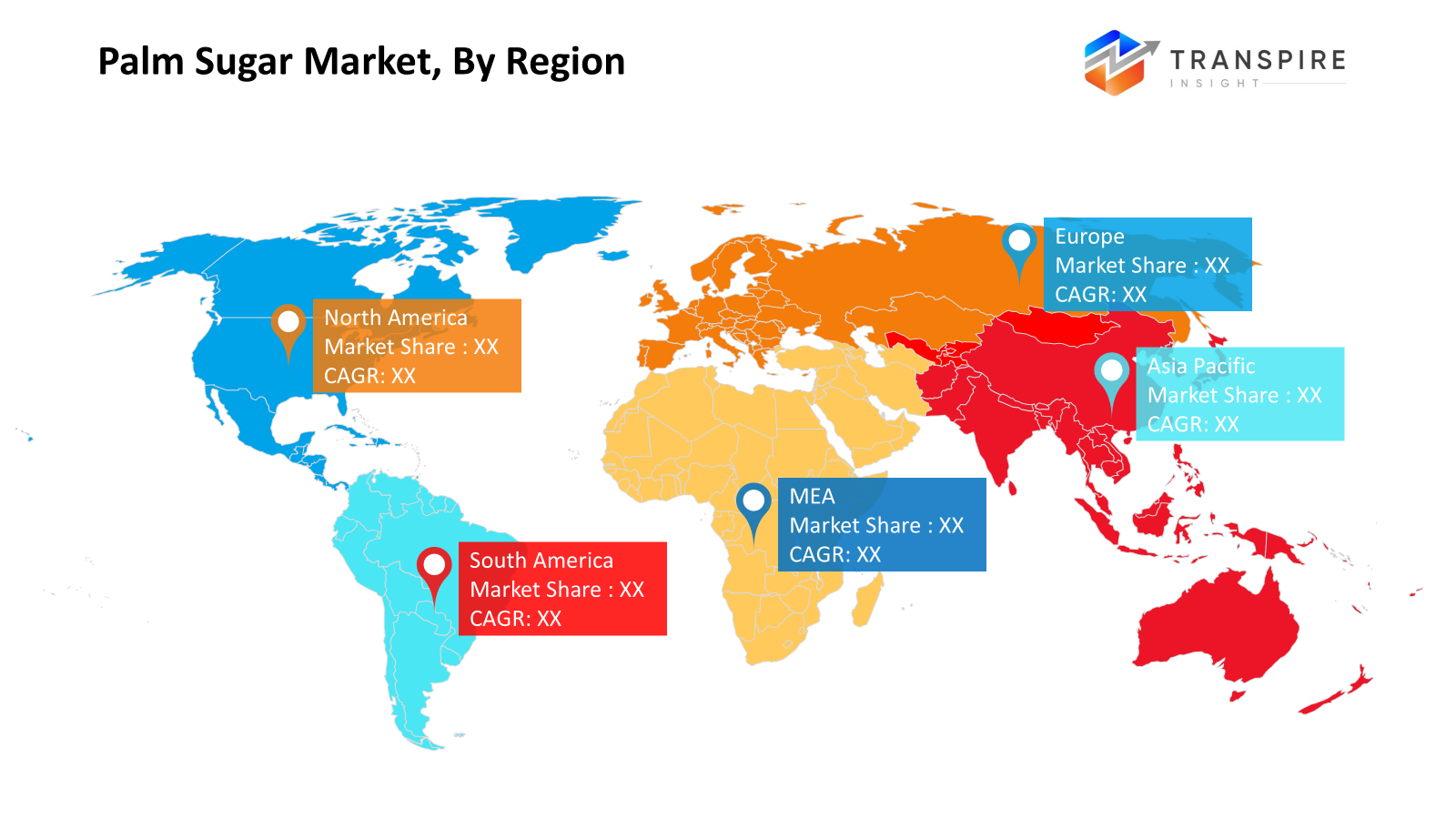
To learn more about this report, Download Free Sample Report
Recent Development News
- April 2025, The Indonesian government is cultivating an ecosystem to support the Indonesian palm sugar industry in its entire upstream and downstream process in an effort to achieve self-sufficiency. Therefore, this move will encourage sustainable activities, increase the quality of Indonesian products, and enable Indonesia to meet the growing global demand for natural sweetener products.
(Source:https://gapki.id/en/news/2025/04/11/through-greener-palm-sugar-ri-can-reach-self-sufficiency/)
- In July 2025, In India, there are new developments of various products and technologies using the palm that are being spearheaded by entrepreneurs. With the aim of adding value to products such as digestive bites and clean label products, the trends point to the diversification of products and the enhancement of the living standards of palm climbers and/or growers.
(Source:https://www.dtnext.in/news/chennai/reviving-the-era-of-palm-with-a-pinch-of-innovation-839585?)
|
Report Metrics |
Details |
|
Market size value in 2025 |
USD 1.05 Billion |
|
Market size value in 2026 |
USD 1.2 Billion |
|
Revenue forecast in 2033 |
USD 1.95 Billion |
|
Growth rate |
CAGR of 7.10% from 2026 to 2033 |
|
Base year |
2025 |
|
Historical data |
2021 – 2024 |
|
Forecast period |
2026 – 2033 |
|
Report coverage |
Revenue forecast, competitive landscape, growth factors, and trends |
|
Regional scope |
North America; Europe; Asia Pacific; Latin America; Middle East & Africa |
|
Country scope |
United States; Canada; Mexico; United Kingdom; Germany; France; Italy; Spain; Denmark; Sweden; Norway; China; Japan; India; Australia; South Korea; Thailand; Brazil; Argentina; South Africa; Saudi Arabia; United Arab Emirates |
|
Key company profiled |
Big Tree Farms, Inc.,Navitas Organics, Wholesome Sweeteners Inc.,Windmill Organics Ltd., Betterbody Foods & Nutrition LLC, American Key Food Products Inc., Asana Foods, Royal Pepper Company, Sevenhills Wholefoods, Biona Organic Foods Ltd., Palm Nectar Organics, Phalada Agro Research Foundation, Taj Agro Products, Real Raw Food, CV Bonafide Anugerah Sentosa |
|
Customization scope |
Free report customization (country, regional & segment scope). Avail customized purchase options to meet your exact research needs. |
|
Report Segmentation |
By Type (Conventional, Organic), By Form (Powder, Liquid, Crystal,), By End Use (Food & beverages, Household/Retail, Horeca, Cosmetics & personal care, Others |
Key Palm Sugar Company Insights
Big Tree Farms, Inc. is generally identified as a revolutionary and leading brand in its segment of palm sugar, specifically in the organic and sustainably sourced segment. They have already developed efficient supply chains through direct engagement with small-scale farmers in Indonesia, paving not only the way for larger scale productions but also meeting quality standards in a fair trade approach. The company’s array of palm sugar products includes granulated, powdered, and liquid varieties. Its solid presence in the markets of North America and Europe is based on its strong focus on certified organic materials.
Key Palm Sugar Companies:
- Big Tree Farms, Inc.
- Navitas Organics
- Wholesome Sweeteners Inc.
- Windmill Organics Ltd.
- Betterbody Foods & Nutrition LLC
- American Key Food Products Inc.
- Asana Foods
- Royal Pepper Company
- Sevenhills Wholefoods
- Biona Organic Foods Ltd.
- Palm Nectar Organics
- Phalada Agro Research Foundation
- Taj Agro Products
- Real Raw Food
- CV Bonafide Anugerah Sentosa
Global Palm Sugar Market Report Segmentation
By Type
- Conventional
- Organic
By Form
- Powder
- Liquid
- Crystal
By End Use
- Food & beverages
- Household/retail
- Horeca
- Cosmetics & personal care
- Others
Regional Outlook
- North America
- United States
- Canada
- Mexico
- Europe
- Germany
- United Kingdom
- France
- Spain
- Italy
- Rest of Europe
- Asia Pacific
- Japan
- China
- Australia & New Zealand
- South Korea
- India
- Rest of Asia Pacific
- South America
- Brazil
- Argentina
- Rest of South America
- Middle East & Africa
- Saudi Arabia
- United Arab Emirates
- South Africa
- Rest of the Middle East & Africa
Frequently Asked Questions
Find quick answers to common questions.
The approximate Palm Sugar Market size for the market will be USD 1.05 billion in 2033.
Key segments for the Palm Sugar Market are By Type (Conventional, Organic), By Form (Powder, Liquid, Crystal,), By End Use (Food & beverages, Household/Retail, Horeca, Cosmetics & personal care, Others).
Major Palm Sugar Market players are Big Tree Farms, Inc., Wholesome Sweeteners Inc., Navitas Organics, Windmill Organics Ltd., Royal Pepper Company.
The North America region is leading the Palm Sugar Market.
The CAGR of the Palm Sugar Market is 7.10%.
- Big Tree Farms, Inc.
- Navitas Organics
- Wholesome Sweeteners Inc.
- Windmill Organics Ltd.
- Betterbody Foods & Nutrition LLC
- American Key Food Products Inc.
- Asana Foods
- Royal Pepper Company
- Sevenhills Wholefoods
- Biona Organic Foods Ltd.
- Palm Nectar Organics
- Phalada Agro Research Foundation
- Taj Agro Products
- Real Raw Food
- CV Bonafide Anugerah Sentosa
Recently Published Reports
-
Dec 2024
Baby Infant Formula Market
Baby Infant Formula Market Size, Share & Analysis Report By ype (Infant Milk, Follow On Milk, Specialty Baby Milk, Growing-Up Milk), By Ingredient (Carbohydrate, Fat, Protein, Minerals, Vitamins, and Others), By Product Form (Powder, Liquid, and Ready-to-feed), By Distribution Channels (Supermarket/Hypermarket, Specialty Store, Pharmacies, Online Retail, and Others), and Geography (North America, Europe, Asia-Pacific, Middle East and Africa, South and Central America), 2021 - 2031
-
Jan 2025
Edible Insects for Animal Feed Market
Edible Insects for Animal Feed Market Size, Share & Analysis Report By Type (Insect Powder, Insect Meal, Insect Bar, Insect Paste, Insect Oil, and Others), By Insect Type (Beetles, Cricket, Caterpillar, Hymenoptera, Orthoptera, Tree Bugs, and Others), By Application (Livestock, Pet Food, and Aquaculture), By Livestock Type (Poultry, Swine, and Others), and Geography (North America, Europe, Asia-Pacific, Middle East and Africa, South and Central America), 2021 - 2031
-
Jan 2025
Food Industry Disinfection and Bacterial Control Market
Food Industry Disinfection and Bacterial Control Market Size, Share & Analysis Report By Type (Chemical Disinfectants, Physical Disinfectants, and Biocides and Antimicrobials), By Application (Food Processing Equipment Surface Disinfection, Food Preparation Areas Surface Disinfection, Storage Areas Surface Disinfection, Anti-microbial Coatings Food Preservation, and Preservative Solutions Food Preservation), By End User (Meat and Poultry Processing, Dairy Processing, Seafood Processing, Bakery and Confectionery, Restaurants and Commercial Kitchens, and Food Service Providers), By Sales Channel (Online, Offline), and Geography (North America, Europe, Asia-Pacific, Middle East and Africa, South and Central America), 2021 - 2031
-
Jan 2025
Freeze Dried Food Market
Freeze Dried Food Market Size, Share & Analysis Report By Product Type (Fruits, Vegetables, Freeze-Dried Dairy Products, Freeze-Dried Meat and Seafood, Freeze-Dried Pet Food, and Prepared Meal), By Nature (Organic, and Conventional), By Form (Powdered, Granules, and Diced), By End Use (Breakfast Cereals, Dairy Products, Bakery & Confectionery, Nutritional Bars & Supplements, Powdered Beverages, Snacks, and Retail (Household)), and Geography (North America, Europe, Asia-Pacific, Middle East and Africa, South and Central America), 2021 - 2031