

Organic Yeast Market Summary:
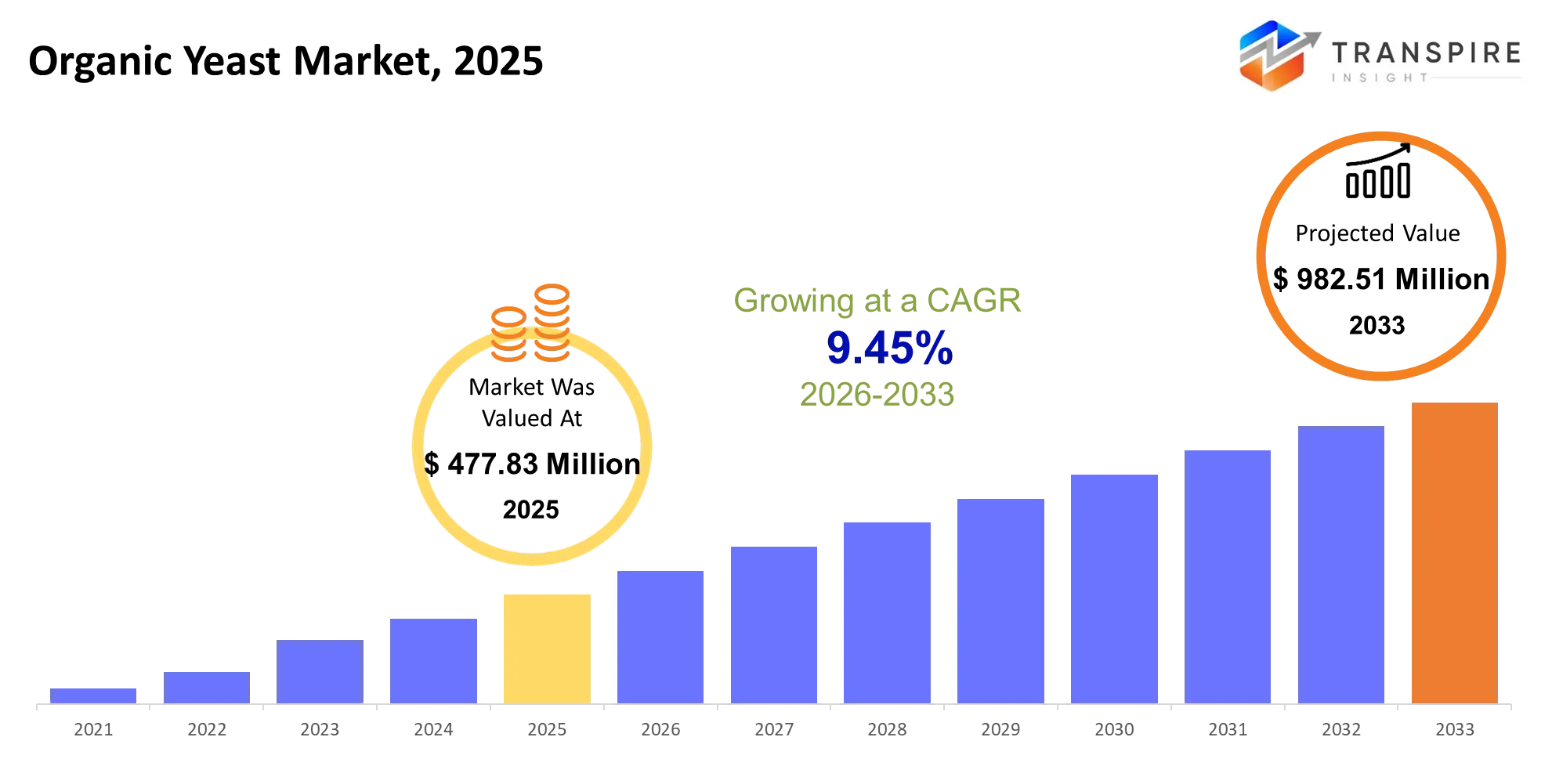
As per Transpire Insight, the Organic Yeast Market size is estimated at USD 477.83 million in 2025 and is anticipated to reach USD 982.51 million by 2033, growing at a CAGR of 9.45% from 2026 to 2033.
The organic yeast market provides food manufacturers, bakeries, beverage producers and nutrition companies that require fermentation ingredients that follow organic production standards. In the past three to five years, the market has started to go beyond traditional baking uses. Food producers are now looking at clean-label ingredients and plant-based nutrition. Naturally derived flavour enhancers. A major change in the market is the increased attention to raw materials and production methods that meet organic certification rules. Supply chain problems and changes in the cost of inputs have led many manufacturers to rethink how they source ingredients and improve their production efficiency. These shifts are opening up chances for suppliers who can keep quality while meeting certification and sustainability goals. Baker’s yeast is still a major product segment, thanks to its strong use in bakeries. At the time, specialised yeast strains are creating new possibilities in fermentation, nutrition and biotechnology. So growth in this market relies on both demand, from food applications and the development of higher-value uses.
Organic Yeast Market Size & Forecast:
- Market Size 2025: USD 477.83 million
- Expected Market Value (2033): USD 982.51 million
- Forecast CAGR (2026–2033): 9.45%
- Leading Region in 2025: Europe
- Fastest Growing Region: Asia Pacific
- Key Company Profiles: Lesaffre, Lallemand, AB Mauri, Angel Yeast, DSM-Firmenich, Biospringer, Pakmaya, Leiber, Biorigin, Chr. Hansen, Kerry Group, Alltech, Ohly, Oriental Yeast, Algist Bruggeman
Key Market Insights:
The market is moving towards existing use of baker’s yeasts and growing applications in food processing, nutrition, and industrial fermentation
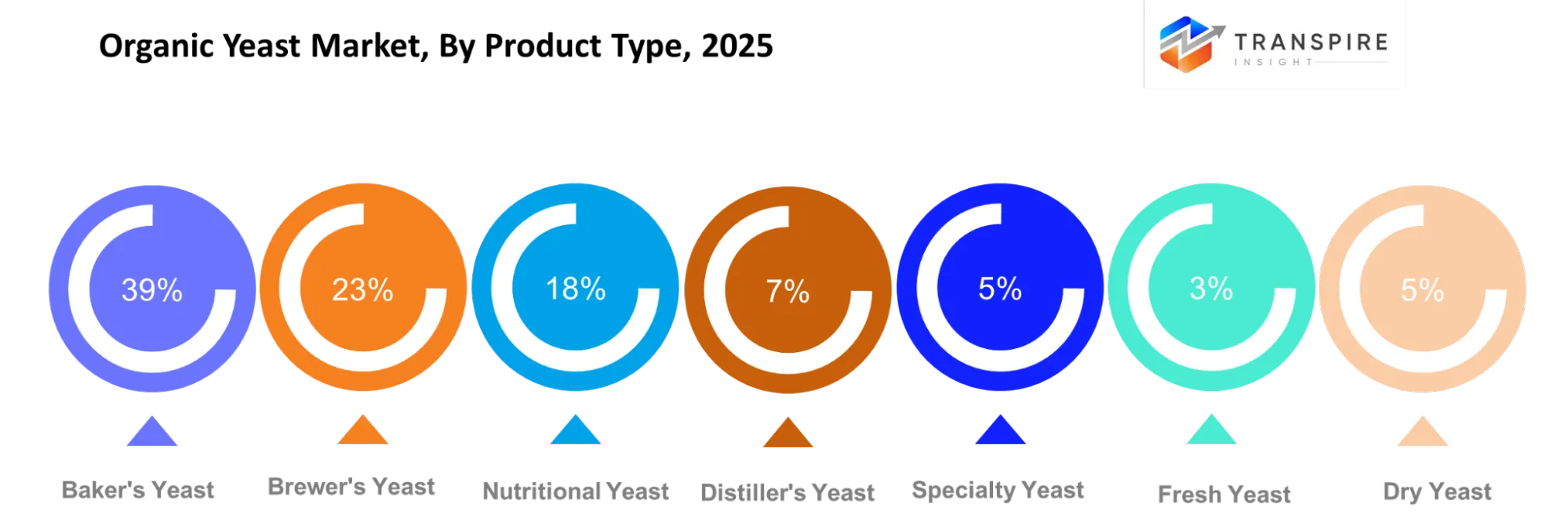
- Baker’s yeast segment constitutes 38.5% of the market due to the existing consumption and commercial use of this type in bread-making processes.
- Brewer’s yeast is another type that represents 23.0% of the total market as it has fermentation needs in brewing and beverage making processes.
- Nutrition yeasts constitute 18.0%, which creates an opportunity for producers focused on producing plant-based products and nutrition products.
- Distiller’s yeast makes up 7.0% of the total market, with demand driven by fermentation properties and production needs of distilleries.
- Specialised yeasts make up 5.0% of the market, leaving some room for specialised and differentiated products based on fermentation features.
- Fresh yeast holds 3.5% and dried yeast makes up 3.0% of the market, with storage conditions being important for producers.
What are the Key Drivers, Restraints, and Opportunities in the Organic Yeast Market?
Drivers:
Organic food processing growth provides opportunities for yeast suppliers capable of meeting certification and traceability demands. Bakeries and other packaged-food manufacturers require reliable fermentation ingredients with consistent dough quality to enhance organic positioning of the finished product. An increase in plant-based foods is also a reason for the expansion of the use of nutritional yeast as a flavouring ingredient. These markets tend to increase opportunities for producers who can provide reliable products with documented origins and specialised formulas, as well as investments in fermentation technology to optimise yields and reduce process variations.
Restraints:
Structural limitations affect organic yeast production, including availability of certified raw materials, volatility of input prices and regulation. Organic producers need to be able to trace their raw-material inputs and processing steps, and this can lead to additional administrative and processing costs. In some cases, organic producers have found it difficult to bear the costs of certification, and specialised processing and sourcing, due to low levels of demand.
Opportunities:
Opportunities for growth through new yeast strains, nutrition, and manufacturing capabilities in the region. Producers can invest in strain development, automation of fermentation, and new technology in dryers or packaging systems to improve consistency and stability of the finished goods. Asia Pacific can address fast-growing processing sectors and build a regional supply chain. Partnership with biotech and fermentation suppliers can drive innovation within the industry; however, certification as well as functionality in specific uses need to be proven first.
|
Driver |
Relative Impact on Growth (%) |
Geographic Relevance |
Impact Timeline |
Demand Strength |
Growth Mechanism |
Key Beneficiaries |
Major Constraint |
|
Rising demand for clean-label and certified organic food ingredients |
27% |
North America, Europe |
Long-term (≥4 years) |
High |
Encourages organic ingredient substitution in packaged foods |
Organic yeast producers, food processors, specialty retailers |
Higher certification and organic input procurement costs |
|
Growing consumption of organic bakery and fermented products |
23% |
Europe, North America, Asia-Pacific |
Medium-term (2–4 years) |
High |
Increases yeast consumption across organic bread and fermentation applications |
Bakeries, yeast manufacturers, organic food brands |
Price premiums limit adoption among cost-sensitive consumers |
|
Expansion of plant-based foods and nutritional yeast applications |
19% |
North America, Europe, Asia-Pacific |
Long-term (≥4 years) |
High |
Supports nutritional yeast demand for savory flavor and fortification |
Nutritional yeast suppliers, vegan food brands, ingredient distributors |
Taste preferences and limited consumer product awareness |
|
Increasing demand for organic animal feed and specialty fermentation ingredients |
17% |
Europe, North America, Asia-Pacific |
Medium-term (2–4 years) |
Medium |
Expands organic yeast use in premium feed formulations |
Feed manufacturers, livestock producers, specialty ingredient suppliers |
Limited certified feedstock availability and higher production costs |
|
Advances in fermentation efficiency, product development, and organic certification systems |
14% |
Europe, North America, Asia-Pacific |
Long-term (≥4 years) |
Medium |
Improves fermentation yields, product consistency, and scalable production |
Yeast producers, biotechnology firms, food ingredient developers |
High capital investment and strict organic compliance requirements |
|
Total |
100% |
market |
— |
— |
— |
— |
— |
What Has the Impact of Artificial Intelligence Been on the Organic Yeast Market?
The use of AI in organic yeast production assists manufacturing companies in analysing fermentation data, detecting variances and making better decisions. The process of fermentation depends on such factors as temperature, pH level, oxygen level, nutrition levels and microbial life; all these factors affect the growth rate and quality of the final product. Thus, AI-based monitoring systems can combine all of these data for detecting anomalies and suggesting improvements to the process. AI-based predictive analysis can also be applied for estimating the duration of the fermentation process, predicting maintenance needs and identifying batches requiring additional control. When combined with automated process control systems, the implementation of AI might help to save time, improve consistency between different batches and provide more efficient usage of energy and raw material resources.The implementation of these technologies requires investments in sensors, software systems, data infrastructure and employee training. Moreover, old fermentation factories may encounter integration problems, and a lack of accurate historical data may impair model precision. That is why AI should be implemented in pilot projects, and its effectiveness should be assessed in terms of production yield, product consistency, energy consumption and other criteria.
Instance:
In February 2026,Renaissance BioScience, in conjunction with Genome BC and the University of British Columbia, initiated a project to profile over 750 wild yeast strains through the use of AI and genomics. This technology will expedite the discovery of valuable traits of the yeast, facilitating developments in yeast creation and fermentation. The same technology could be applied to increase efficiency in the organic yeast industry.
Key Market Trends:
The industry is shifting in line with yeast producers managing traditional fermentation needs and changing consumer demands regarding ingredient sourcing, functionality, and efficiency in manufacturing.
- Product development goes beyond bread making through the focus on nutritional yeast as a component of meat alternatives and savoury products.
- Scientific developments in the field of fermentation are concentrated on the selection of yeast strains that would demonstrate particular properties.
- Automation and digital tracking of fermentation processes are explored to achieve consistency and detect manufacturing issues.
- Shelf-stable dry and instant forms are important to meet customers' requirements related to easier storage, transportation, and inventory of the product.
- Development of clean-label products is prompting food producers to test yeast ingredients in terms of flavour, nutrition, and formulation.
- More attention is paid to supply chain planning in relation to rising costs of agricultural inputs and availability of certified ingredients.
Organic Yeast Market Segmentation
By product type:
Baker’s yeast is the leading market player with a 38.5% share, thanks to its established use in bread, pastries and other baked goods. Brewer’s yeast makes up 23.0%, based on fermentation requirements in beverage production, while nutritional yeast comprises 18.0% due to its fortifying and savoury properties. Distiller’s yeast has 7.0%, speciality yeast takes 5.0%, fresh yeast contributes 3.5% to the market and dry yeast provides 3.0%. Other product types constitute the remaining 2.0%. Different needs related to the fermentation speed, taste, storage and performance characteristics are served by different product types. The baker’s yeast can enjoy an existing commercial demand, while nutritional and specialty products can find application-based advantages.
By species:
Saccharomyces cerevisiae is of significant commercial importance for baking and various fermentation applications following its proven industrial feasibility; Saccharomyces pastorianus for lager brewing; Kluyveromyces marxianus for specialised fermentation and bioprocessing. The latter species is the highest predicted fastest-growth segment, given at 14.5 % CAGR in the data presented. More niche food and biotech application needs are fulfilled by Candida utilis, Pichia pastoris, Hanseniaspora and Kluyveromyces lactis, with commercial viability through strain efficacy, targeted applications, safety criteria and certified production. Since individual species market share data were not given, they cannot be reliably attributed to individual factors.
By application:
Food and beverages and bakery production are major demand sectors since baker's yeast plays an active role in fermentation, texture, flavour and overall product consistency. Brewing and nutraceuticals increase beverage fermentation and customer health-product formulation demands. Animal feed applications may open up for yeast nutritional ingredients, while medicine applications require specialised production and high-quality standards. Biofuel manufacturing provides a further potential end-use for some yeast strains; however, not all end-use applications make the product organic-certified. The proportion of the various applications will be influenced by the needs of end users, production costs and any official certification standards.
By form:
The value of fresh yeast will remain high for traditional wholesalers and bakeries where the emphasis is on producing the most fermentation activity possible and following the handling routines that consumers know and understand. THE food industry: Dry and instant yeast products will be more attractive to customers that require longer shelf life and want an easy way to distribute the product. Liquid, powder, granulated and compressed types will be used to satisfy specific processing and metering needs.
By nature:
Certified organic yeast will enable producers to reach consumers who have to satisfy production standards that are applicable. The non-GMO, vegan, gluten-free, clean label, natural, and sustainable claims target other consumer preferences and do not necessarily mean that there is an organic certification. Producers should be able to justify the claim and ensure that their process claims and supporting documents satisfy the needs of their target market. Proper labeling and certified documentation will also reduce uncertainties during the purchase of the food by food processors and distributors.
By distribution:
Direct sales and industrial suppliers are suitable for bigger manufacturers requiring technical assistance, consistent orders, and sustained relationships. Distribution companies may help in accessing regional food processing plants and other commercial accounts through supermarkets and specialty stores which serve as avenues to get retail buyers. E-commerce increases accessibility and awareness of the product among smaller firms and consumers; food service distribution gets bakeries, caterers, and restaurants acquainted with the product; and retail distribution of smaller amounts will be based on order quantity, order frequency, deliveries, and product handling.
What are the Key Use Cases Driving the Organic Yeast Market?
Baking is one of the essential uses of organic yeast, where baker’s yeast is the market leader based on the provided information. It is used in commercial bakeries and packaged food manufacturing companies to help with dough fermentation and texture formation. This is because of its importance as an ingredient in food manufacturing companies that manufacture organic bread and bakery. Some of the new uses of yeast include brewing, nutritional foods, and beverage fermentation. Nutritional yeast, which accounts for is used in making savoury seasonings and plant-based food products, whereas brewer’s yeast is used in beverage fermentation. The new uses include specialised fermentation, biotechnological research, animal feed, and some biological processes. The above uses may offer chances for product differentiation by strain, depending on the method of production and application.
|
Report Metrics |
Details |
|
Market size value in 2025 |
USD 477.83 million |
|
Market size value in 2026 |
USD 522.22 million |
|
Revenue forecast in 2033 |
USD 982.51 million |
|
Growth rate |
CAGR of 9.45% from 2026 to 2033 |
|
Base year |
2025 |
|
Historical data |
2021 - 2024 |
|
Forecast period |
2026 - 2033 |
|
Report coverage |
Revenue forecast, competitive landscape, growth factors, and trends |
|
Regional scope |
United States; Canada; Mexico; United Kingdom; Germany; France; Italy; Spain; Denmark; Sweden; Norway; China; Japan; India; Australia; South Korea; Thailand; Brazil; Argentina; South Africa; Saudi Arabia; United Arab Emirates |
|
Key company profiled |
Lesaffre, Lallemand, AB Mauri, Angel Yeast, DSM-Firmenich, Biospringer, Pakmaya, Leiber, Biorigin, Chr. Hansen, Kerry Group, Alltech, Ohly, Oriental Yeast, Algist Bruggeman |
|
Customization scope |
Free report customization (country, regional & segment scope). Avail customized purchase options to meet your exact research needs. |
|
Report Segmentation |
Product Type (Baker's Yeast, Brewer's Yeast, Nutritional Yeast, Distiller's Yeast, Specialty Yeast, Fresh Yeast, Dry Yeast, Others)Species (Saccharomyces cerevisiae, Saccharomyces pastorianus, Kluyveromyces marxianus, Candida utilis, Pichia pastoris, Hanseniaspora, Kluyveromyces lactis, Others)Application (Food & Beverages, Bakery, Brewing, Nutraceuticals, Animal Feed, Pharmaceuticals, Biofuel, Others)Form (Fresh, Dry, Instant, Liquid, Powder, Granulated, Compressed, Others)Nature (Organic Certified, Non-GMO, Vegan, Gluten-Free, Clean-Label, Natural, Sustainable, Others)Distribution (Direct Sales, Distributors, Supermarkets, Specialty Stores, E-commerce, Foodservice, Industrial Suppliers, Others) |
Which Regions are Driving the Organic Yeast Market Growth?
North America:
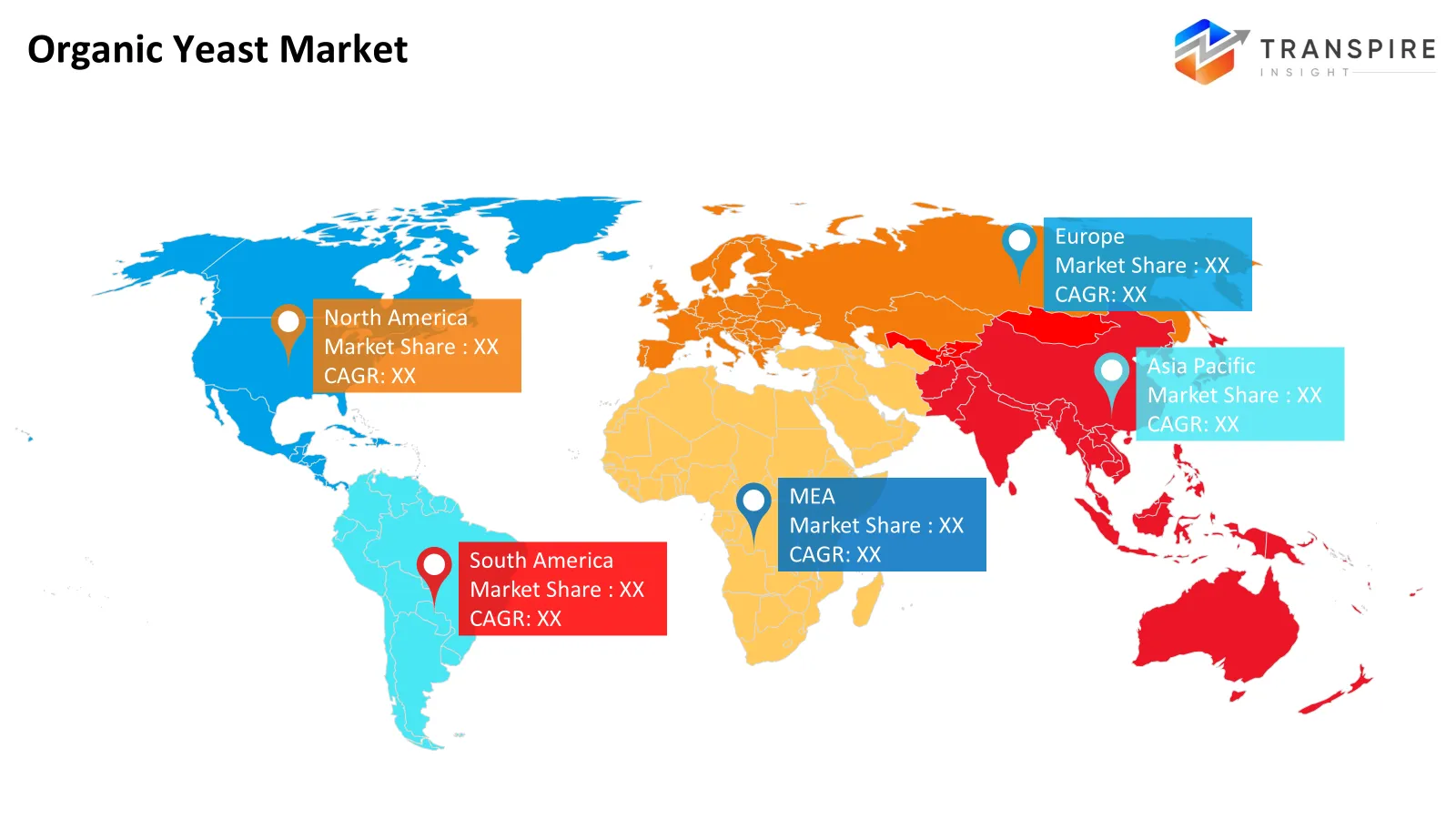
The market share in North America is 26.3%, . The demand is driven by the presence of existing packaged food manufacturing facilities, commercial bakeries, and food manufacturers producing organic/clean label ranges of products. The established distribution network of food will assist the producers in selling their products through both industrial and retail channel networks. Some of the opportunities in this region would be nutritional yeast, speciality food ingredients, and fermentation products.
In March 2025, Goldie’s Superfoods Launched Organic Nutritional Yeast: The U.S.-based brand offered an organic and non-fortified nutritional yeast targeted at those who wish to get plant protein in clean-label foods.
https://eatnoocha.com/blogs/news/march-2025-press-release-organic-nutritional-yeast
Europe:
Europe holds a 33.1% market share. This region is a dominant one owing to its existing food processing industry, organic products ecosystem, and demand for traceable ingredients. It should be kept in mind by the manufacturers serving this region that they need to follow all relevant production, labelling, and traceability requirements for organic products. The existing bakery culture, along with food manufacturers, will form the basis of recurring demand for the ingredients.
In July 2025, LAFFORT Unveiled NUTRIFLOW: A French company offering wine fermentation technologies came up with NUTRIFLOW, which is a liquid organic nutrient derived from yeast autolysate. The product is designed for large wineries and shows the use of yeast-based ingredients in fermentation and beverages.
Asia-Pacific:
Asia-Pacific represents 23.6% of the market share and is seen as the fastest-growing region, with 10.2% expected CAGR. Increasing food processing infrastructure, urbanisation, and innovation in bakery and packaged food product lines present opportunities for the companies dealing with yeast products. Investing in their own production facilities and logistics can help reduce their dependency on imports and provide better delivery times to consumers. Companies offering competitive prices coupled with quality will have an edge in meeting the demands of the region.
April 2025 - Asahi Group Made Advancements With Yeast-Based Milk in Japan: Asahi Group Holdings began selling a test batch of a new product called LIKE MILK, which is made with yeast technology. The example represents innovation with alternative food ingredients in Asia-Pacific.
https://www.asahigroup-holdings.com/en/stories/article/en_future_with_yeast_milk.html
Who are the Key Players in the Organic Yeast Market, and how do they Compete?
Organic yeast competition includes companies that specialise in fermentation, ingredient producers, and distributors focusing on particular applications in the food and biotechnology industries. Competition is based on strain development, production scale, technical expertise, product consistency, and distribution range. At the same time, involvement in the yeast industry does not necessarily imply organic certification of all the products offered by the company.The Lesaffre Group competes through fermentation know-how, research activities, and international manufacturing and customer network. The cooperation with MicroBioGen, which was announced in June 2025, shows that the company's strategy is based on the collaboration in the field of biotechnology and yeast solutions for baking, food, and biochemical applications.
The Angel Yeast Co., Ltd. competes through large-scale yeast production and product development in the fields of food, nutrition, and biotechnology. The international business activities of the company help to ensure that it can operate in different regions. AB Mauri competes through yeast and baking solutions, while the Kerry Group competes through ingredient and food formulation know-how. Leiber GmbH and Ohly are related to yeast-based ingredients and applications. In these companies, certification, traceability, supply reliability, and proven product suitability are important for entering the organic yeast category.
Organic Yeast Market Companies
- Lesaffre
- Lallemand
- AB Mauri
- Angel Yeast
- DSM-Firmenich
- Biospringer
- Pakmaya
- Leiber
- Biorigin
- Chr. Hansen
- Kerry Group
- Alltech
- Ohly
- Oriental Yeast
- Algist Bruggeman
|
Company |
Est. Revenue Share Range |
Key Offerings |
Strategic Positioning |
Geographic Strength |
Technology Focus |
|
Lesaffre Group |
Estimated 20–25% |
Organic baking yeast, yeast extracts, specialty fermentation yeast |
leadership through diversified organic yeast applications |
Europe, North America, Asia Pacific |
Controlled fermentation, organic traceability, strain optimization |
|
Lallemand Inc. |
Estimated 12–17% |
Organic yeast products, nutritional yeast, specialty baking yeast |
Specialty yeast differentiation across food and fermentation |
North America, Europe, Asia Pacific |
Strain selection, precision fermentation, process control |
|
Angel Yeast Co., Ltd. |
Estimated 7–12% |
Organic yeast where certified, nutritional yeast, yeast extracts |
Large-scale fermentation with cost-efficient production |
Asia Pacific, Europe, Latin America |
Industrial fermentation, biomass optimization, process automation |
|
AB Mauri |
Estimated 4–8% |
Organic baking yeast where available, fresh yeast, dry yeast |
Bakery-focused supply and technical customer support |
Europe, North America, Asia Pacific |
Yeast strain development, fermentation consistency, process optimization |
|
Kerry Group plc |
Estimated 3–7% |
Yeast-derived flavor ingredients, yeast extracts, savory ingredients |
Application-led differentiation in clean-label food formulations |
Europe, North America, Asia Pacific |
Flavor development, yeast extract processing, formulation technology |
|
Enartis |
Estimated 2–5% |
Organic wine yeast, fermentation nutrients, winemaking yeast solutions |
Wine-fermentation specialization with technical application support |
Europe, North America, Latin America |
Wine yeast selection, fermentation management, process reliability |
|
Leiber GmbH |
Estimated 2–5% |
Yeast derivatives, inactive yeast, yeast extracts |
Specialty ingredient expertise across food and nutrition applications |
Europe, North America, Asia Pacific |
Yeast fractionation, drying, functional ingredient processing |
|
Biorigin |
Estimated 2–4% |
Yeast extracts, inactive yeast, savory ingredients |
Natural flavor and clean-label ingredient specialization |
Latin America, North America, Europe |
Fermentation, flavor enhancement, ingredient functionality |
|
Ohly GmbH |
Estimated 1–4% |
Yeast extracts, savory ingredients, yeast-based flavor solutions |
Premium savory ingredient development for food manufacturers |
Europe, North America, Asia Pacific |
Yeast extract processing, flavor modulation, fermentation optimization |
|
Loov Organic, LLC |
Estimated 1–3% |
Organic yeast ingredients, organic nutritional yeast, specialty organic ingredients |
Organic-focused niche positioning and specialized product sourcing |
North America, Europe |
Organic sourcing, certification compliance, ingredient quality control |
Recent Development News
- In August 2026, Novonesis completes trading to acquire the outstanding shares of Micro Bio Gen in an effort to establish a stronger focus on its industrial yeast strains and biotech. The acquisition may aid further research into specialised fermentation products but its ability to directly benefit organic yeast is unproven. https://www.novonesis.com/en/news/novonesis-acquire-remaining-share-microbiogen-strengthen-yeast-capabilities
- In June 2025, Lesaffre and Micro Bio Gen forge exclusive, licensing & collaboration deal for yeast solutions in baking, food & biochemicals. Lesaffre and Micro Bio Gen announced an exclusive licensing & collaboration agreement to develop yeast solutions in baking, food, and biochemicals. By bringing together its yeast biotechnology with Micro Bio Gen's fermentation & production expertise, there are additional avenues for strain development. https://www.lesaffre.com/press-room/microbiogen-and-lesaffre-establish-exclusive-global-partnership-to-provide-innovative-yeast-solutions-for-the-global-baking-food-and-biochemicals-markets/
What Strategic Insights Define the Future of the Organic Yeast Market?
The future of the market for yeast made from organic ingredients depends on how efficiently manufacturers are able to integrate conventional fermentation uses with special strains and certified products. The base in the industry is provided by baker’s yeast, but some companies may attract additional clients by offering nutritional yeast or some other strains. One possible risk is not apparent at first. it can arise from growing consumer demand for organic ingredients and a lack of raw materials suitable for certification and cost-effective. Should any difficulties in sourcing arise, then small businesses may suffer from reduced profit margins and reliability of delivery.As for the growth area in the industry, it lies in the Asia Pacific region, where it is necessary to invest in food processing and manufacture and distribution. Rather than increasing production, companies must concentrate on developing their fermentation system and traceability, as well as special products. It is also advisable to work together with food manufacturers and biotechnology firms for testing new applications.
Key Segmentations are:
Product Type
- Baker's Yeast
- Brewer's Yeast
- Nutritional Yeast
- Distiller's Yeast
- Specialty Yeast
- Fresh Yeast
- Dry Yeast
- Others
Species
- Saccharomyces cerevisiae
- Saccharomyces pastorianus
- Kluyveromyces marxianus
- Candida utilis
- Pichia pastoris
- Hanseniaspora
- Kluyveromyces lactis
- Others
Application
- Food & Beverages
- Bakery
- Brewing
- Nutraceuticals
- Animal Feed
- Pharmaceuticals
- Biofuel
- Others
Form
- Fresh
- Dry
- Instant
- Liquid
- Powder
- Granulated
- Compressed
- Others
Nature
- Organic Certified
- Non-GMO
- Vegan
- Gluten-Free
- Clean-Label
- Natural
- Sustainable
- Others
Distribution
- Direct Sales
- Distributors
- Supermarkets
- Specialty Stores
- E-commerce
- Foodservice
- Industrial Suppliers
- Others
By Regional Analysis
North America
- US
- Canada
- Mexico
Europe
- Germany
- UK
- France
- Italy
- Spain
- Russia
- Rest of Europe
Asia Pacific
- China
- Japan
- India
- South Korea
- Australia
- Rest of Asia Pacific
South America
- Brazil
- Argentina
- Rest of South America
Middle East & Africa
- UAE
- Saudi Arabia
- Qatar
- South Africa
- Rest of the Middle East & Africa
Frequently Asked Questions
Find quick answers to common questions.
The organic yeast market size was valued at USD 477.83 million in 2025 and is poised to reach USD 982.51 million by 2033, expanding at a 9.45% CAGR.
Key segments for the organic yeast market are Product Type (Baker's Yeast, Brewer's Yeast, Nutritional Yeast, Distiller's Yeast, Specialty Yeast, Fresh Yeast, Dry Yeast, Others)Species (Saccharomyces cerevisiae, Saccharomyces pastorianus, Kluyveromyces marxianus, Candida utilis, Pichia pastoris, Hanseniaspora, Kluyveromyces lactis, Others)Application (Food & Beverages, Bakery, Brewing, Nutraceuticals, Animal Feed, Pharmaceuticals, Biofuel, Others)Form (Fresh, Dry, Instant, Liquid, Powder, Granulated, Compressed, Others)Nature (Organic Certified, Non-GMO, Vegan, Gluten-Free, Clean-Label, Natural, Sustainable, Others)Distribution (Direct Sales, Distributors, Supermarkets, Specialty Stores, E-commerce, Foodservice, Industrial Suppliers, Others).
Growth is primarily driven by increasing demand for organic food products, rising consumer preference for clean-label ingredients, expanding bakery and brewing industries, growing adoption of plant-based foods, and increasing awareness of sustainable food production practices.
The market is led by major manufacturers including Lesaffre, Lallemand, AB Mauri, Angel Yeast, DSM-Firmenich, Biospringer, Pakmaya, Leiber, Biorigin, Chr. Hansen, Kerry Group, Alltech, Ohly, Oriental Yeast, Algist Bruggeman.
Europe constitutes 33.1% of the total world market of organic yeast owing to high demand for organic food products, preference for clean label ingredients, presence of well-established bakery and brewing industry, and stringent food quality norms. Europe’s commitment towards sustainable manufacturing and certification of organic food products adds to its market strength.
Business opportunities in the worldwide organic yeast market owing to increased demand for organic baked goods, wider use in plant-based foods, increased usage of natural ingredients in food production processes, and increased consumer preference for clean label products. There are other ways in which producers could grow their business presence in the market.
- Lesaffre
- Lallemand
- AB Mauri
- Angel Yeast
- DSM-Firmenich
- Biospringer
- Pakmaya
- Leiber
- Biorigin
- Chr. Hansen
- Kerry Group
- Alltech
- Ohly
- Oriental Yeast
- Algist Bruggeman
About the Authors

Chetan Dhatrak
I’m Chetan Dhatrak, a Senior Research Analyst at Transpire Insight, specializing in the Consumer Goods, Foods and Beverages industry. I focus on analyzing market trends, consumer behavior, competitive landscapes, and industry developments to deliver accurate, data-driven insights. My research at Transpire Insight is built on credible sources and in-depth analysis, helping businesses and readers better understand market dynamics, emerging opportunities, and evolving consumer preferences. I’m committed to creating reliable, well-researched content that supports informed decision-making and reflects the latest developments in the consumer goods and food & beverage sectors.

Chakradhar Khansole
Chakradhar serves as the Research Director at Transpire Insight, bringing over 8 years of experience in technology, innovation, and strategic market intelligence. He specializes in transforming complex market data into actionable business insights that enable organizations to make informed, growth-oriented decisions. Recognized for his strategic vision and analytical expertise, Chakradhar leads high-impact research initiatives, delivering comprehensive market assessments, competitive intelligence, and forward-looking industry analysis.
Recently Published Reports
-
Apr 2026
Baby Infant Formula Market
Baby Infant Formula Market Size, Share & Analysis Report By ype (Infant Milk, Follow On Milk, Specialty Baby Milk, Growing-Up Milk), By Ingredient (Carbohydrate, Fat, Protein, Minerals, Vitamins, and Others), By Product Form (Powder, Liquid, and Ready-to-feed), By Distribution Channels (Supermarket/Hypermarket, Specialty Store, Pharmacies, Online Retail, and Others), and Geography (North America, Europe, Asia-Pacific, Middle East and Africa, South and Central America), 2021 - 2031
-
Apr 2026
Edible Insects for Animal Feed Market
Edible Insects for Animal Feed Market Size, Share & Analysis Report By Type (Insect Powder, Insect Meal, Insect Bar, Insect Paste, Insect Oil, and Others), By Insect Type (Beetles, Cricket, Caterpillar, Hymenoptera, Orthoptera, Tree Bugs, and Others), By Application (Livestock, Pet Food, and Aquaculture), By Livestock Type (Poultry, Swine, and Others), and Geography (North America, Europe, Asia-Pacific, Middle East and Africa, South and Central America), 2021 - 2031
-
Apr 2026
Food Industry Disinfection and Bacterial Control Market
Food Industry Disinfection and Bacterial Control Market Size, Share & Analysis Report By Type (Chemical Disinfectants, Physical Disinfectants, and Biocides and Antimicrobials), By Application (Food Processing Equipment Surface Disinfection, Food Preparation Areas Surface Disinfection, Storage Areas Surface Disinfection, Anti-microbial Coatings Food Preservation, and Preservative Solutions Food Preservation), By End User (Meat and Poultry Processing, Dairy Processing, Seafood Processing, Bakery and Confectionery, Restaurants and Commercial Kitchens, and Food Service Providers), By Sales Channel (Online, Offline), and Geography (North America, Europe, Asia-Pacific, Middle East and Africa, South and Central America), 2021 - 2031
-
May 2026
Freeze Dried Food Market
Freeze Dried Food Market Size, Share & Analysis Report By Product Type (Fruits, Vegetables, Freeze-Dried Dairy Products, Freeze-Dried Meat and Seafood, Freeze-Dried Pet Food, and Prepared Meal), By Nature (Organic, and Conventional), By Form (Powdered, Granules, and Diced), By End Use (Breakfast Cereals, Dairy Products, Bakery & Confectionery, Nutritional Bars & Supplements, Powdered Beverages, Snacks, and Retail (Household)), and Geography (North America, Europe, Asia-Pacific, Middle East and Africa, South and Central America), 2021 - 2031