

North America Soft Tissue Allograft Market Size & Forecast:
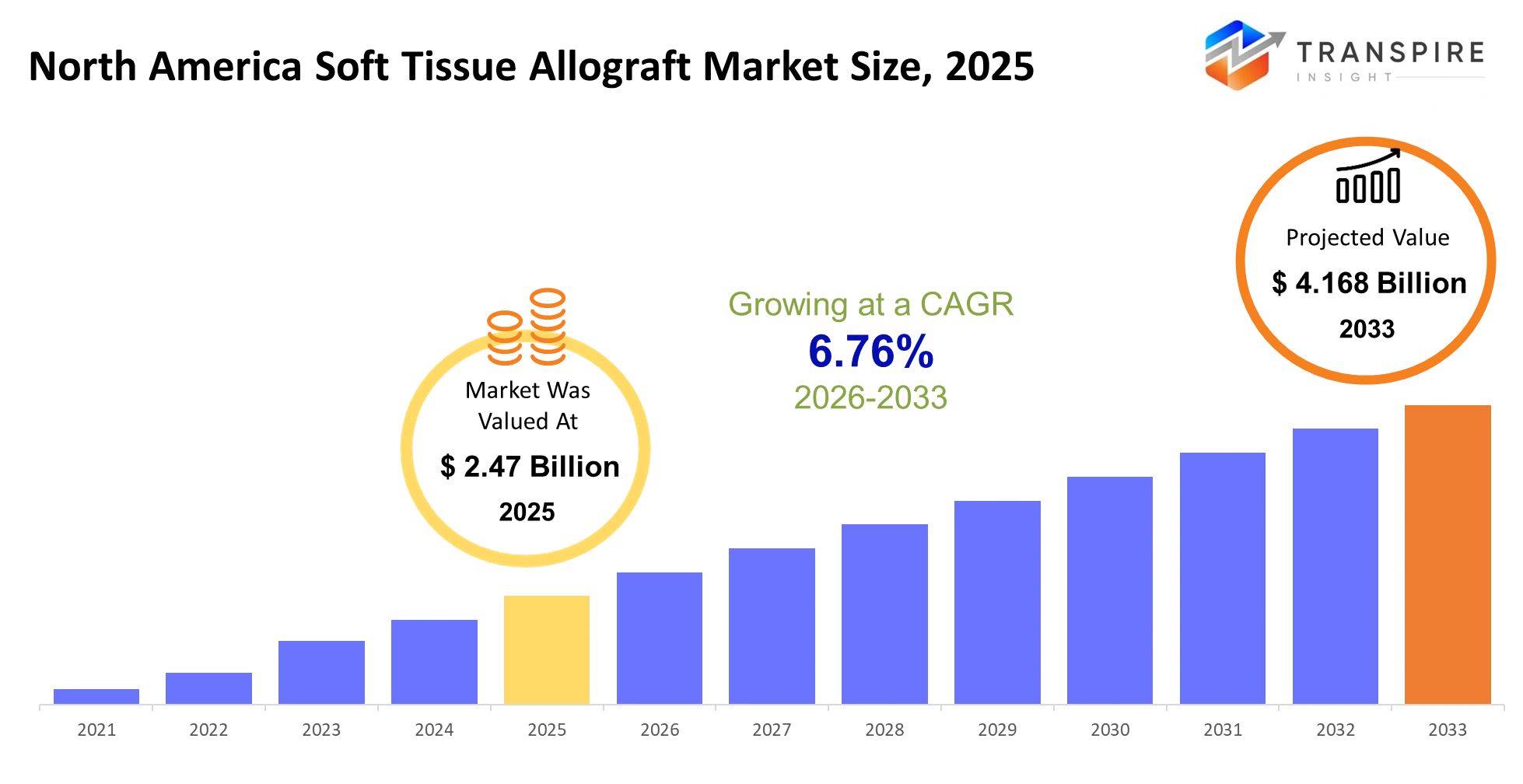
- North America Soft Tissue Allograft Market Size 2025: USD 2.47 Billion
- North America Soft Tissue Allograft Market Size 2033: USD 4.168 Billion
- North America Soft Tissue Allograft Market CAGR: 6.76%
- North America Soft Tissue Allograft Market Segments: By Product Type (Tendon Allografts, Ligament Allografts, Cartilage Allografts, Meniscus Allografts, Others), By Application (Orthopedic Surgery, Sports Medicine, Dental Surgery, Spine Surgery, Others), By End User (Hospitals, Orthopedic Clinics, Ambulatory Surgical Centers, Others), By Preservation Method (Cryopreservation, Freeze-drying, Fresh Preservation, Others).
To learn more about this report,  Download Free Sample Report
North America Soft Tissue Allograft Market Summary:
The North America Soft Tissue Allograft Market size is estimated at USD 2.47 Billion in 2025 and is anticipated to reach USD 4.168 Billion by 2033, growing at a CAGR of 6.76% from 2026 to 2033. The North America Soft Tissue Allograft Market is pretty much a key player when it comes to helping restore damaged ligaments, tendons, cartilage, and other soft tissues during orthopedic care, sports medicine, and reconstructive work. In real practice, these grafts allow surgeons to repair complicated injuries without having to harvest tissue from the patient which can cut down on operating time and also helps avoid extra surgical trauma, kind of an added ripple effect in the OR.
Over the last three to five years, the market has seen a noticeable structural shift, toward better tissue processing , sterilization, and preservation technologies. These changes are meant toward improving graft safety, making shelf life more steady, and helping with stronger clinical results, at the same time, the elective orthopaedic procedure backlog that had piled up during the COVID-19 pandemic kinda became a major trigger. Because once healthcare systems started running normally again, the procedure volumes sped up pretty fast, like really fast.
Right now, market expansion is being pushed by a stronger preference for minimally invasive orthopedic interventions and by the increasing incidence of sports related injuries plus age related musculoskeletal disorders. As clinicians get more comfort with next generation allograft products, utilization keeps spreading into a wider set of procedures. That means more adoption overall and steadier revenue growth across the regional healthcare ecosystem, even when demand shifts around year to year.
Key Market Insights
- The United States is pretty much leading the North America Soft Tissue Allograft Market, and in 2024 it pulls in more than 85% market share, mostly because the healthcare setup is more advanced and, honestly, more built out.
- Canada looks like the fastest expanding region during the forecast years, and that’s largely tied to rising orthopedic surgery volumes and extra healthcare spending, you know, the steady kind.
- Strong reimbursement rules and well established tissue banking networks keep pushing regional market momentum, and they also support broader industry size growth too.
- Tendon allografts still take the biggest share, grabbing over 40% in 2024, with use spreading across ligament reconstruction procedures everywhere.
- Ligament allografts sit in second place, driven by escalating needs for sports medicine plus trauma related treatment options.
- Cartilage allografts are projected to grow the quickest through 2032, as joint preservation procedures start getting more clinical acceptance, little by little over time.
- Orthopedic reconstruction is the main revenue driver, contributing 55%+ of total income in 2024, largely due to the high frequency of procedures performed.
- Sports medicine stays the fastest growing application area, supported by increased participation in both competitive and recreational athletic activities.
- There’s also a growing tilt toward biologic repair solutions, which backs up demand for more complicated soft tissue restoration workflows.
- Hospitals make up the largest end use portion, around 60% of total demand in 2024, mainly because surgical case volumes remain high.
- Ambulatory surgical centers are the speediest end user group, benefiting from cost efficient outpatient orthopedic procedures, in a practical way.
- Specialty orthopedic clinics are still climbing, helped by personalized treatment pathways and advanced reconstructive capabilities, kind of a tailored approach that patients can feel.
What are the Key Drivers, Restraints, and Opportunities in the North America Soft Tissue Allograft Market?
The strongest growth driver in the North America Soft Tissue Allograft Market seems to be that ongoing shift toward minimally invasive orthopedic reconstruction, plus the steady progress in tissue processing technologies. Over the last decade , better sterilization preservation and donor screening protocols have made surgeons feel more confident about allograft safety, and overall clinical performance. This kind of change has eased worries about graft failure and disease transmission . As a result, adoption is widening in anterior cruciate ligament (ACL) reconstruction, tendon repair, and a variety of sports medicine procedures. And as procedure volumes climb, hospitals are also looking for ways to shorten operating times by cutting out autograft harvesting. So allografts end up being used more often which can lift utilization and revenue across orthopedic care networks too.
One of the biggest structural limits, though, is still limited donor tissue availability. Unlike manufactured medical devices, soft tissue allografts rely on human tissue donation , so the supply is basically finite and hard to ramp up quickly. On top of that, regulatory requirements, donor eligibility rules, and long screening workflows tighten what’s actually available in inventory. When demand and supply don’t match, procurement delays can show up, product access can get constrained, and revenue chances can drop, especially for those more specialized graft categories.
A pretty major future opportunity sits in bioengineered, regenerative tissue technologies. There is real leverage in investing into decellularized scaffolds, growth-factor enhanced grafts and tissue engineered constructs, where, basically, improved healing outcomes are becoming more than just theory. As the regenerative medicine platforms mature and start to get proper clinical validation, they might broaden treatment eligibility and in turn open up new revenue channels, not only for sports medicine but also for trauma reconstruction and those complex orthopedic repair procedures.
What Has the Impact of Artificial Intelligence Been on the North America Soft Tissue Allograft Market?
Artificial intelligence and advanced digital technologies are gradually, but really visibly changing the North America Soft Tissue Allograft Market, mainly through better tissue processing, more careful inventory control, tighter donor vetting, and smarter clinical decisions. Tissue banks and processing centers are now rolling out AI based quality control systems that automate image analysis, tissue evaluation, and even the whole documentation routine. These systems cut down on how long people have to manually review samples , they also make results more consistent, and in practice allow organizations to handle higher tissue volumes without the labor expenses rising in the same proportion.
At the same time machine learning models are strengthening predictive abilities across the entire allograft value chain. By looking at donor traits, processing settings, and clinical outcome records, AI tools can flag patterns tied to graft performance and better postoperative results. Predictive analytics platforms let tissue banks allocate inventory more carefully, anticipate demand based on procedure type, and limit wastage of time sensitive biological materials. On the hospital side , surgical centers are now using digital planning tools more often , to match graft characteristics with what each patient really needs , and this kind of thing tends to back up improved procedure outcomes.
Overall, these technologies help build faster processing loops , better traceability, tighter regulatory alignment, and smoother supply chain handling . In some facilities automation has shortened documentation and quality verification tasks a lot, so product availability improves and day to day operations feel less strained. Still, one major issue remains , the shortage of large standardized clinical datasets. If tissue processing practices differ, if patient groups are not comparable, or if outcome reporting varies, the models can become less accurate and the wider adoption of AI across the allograft ecosystem tends to slow down.
Key Market Trends
- Since 2020, a lot of hospitals started choosing allografts more often than autografts in certain orthopedic procedures, partly to cut down operating time and, also to avoid donor site complications.
- From 2021 to 2025, advanced sterilization and preservation approaches really started to get traction, because they helped the graft last longer on the shelf, and that gave surgeons more confidence, like less worry overall.
- Tissue banks were investing pretty heavily in digital traceability platforms after pandemic related disruptions showed some weak points in older inventory management setups, so things could be tracked more precisely, not just in theory.
- Sports medicine also moved ahead, a lot, as organized athletics participation rebounded, which in turn led to higher use of ligament and tendon allografts.
- Clinical preferences then leaned toward minimally invasive reconstruction methods, and that kind of pushed wider adoption of preprocessed grafts, with more standardized quality profiles.
- Bigger names like MTF Biologics and LifeNet Health stepped up spending on next generation tissue processing and regenerative technologies, it wasn’t just a small adjustment.
- After 2020, regulatory attention around donor screening and tissue safety got tighter, so manufacturers had to strengthen their validation work and overall compliance programs, no way around it.
- AI enabled quality assessment tools showed up across tissue processing facilities, helping reduce how much manual inspection was needed, and making workflows more consistent, even across different shifts.
- Strategic partnerships between tissue banks, hospitals, and orthopedic device companies became more common, because everyone wanted stronger distribution networks and fewer bottlenecks.
- And interest in bioengineered grafts, along with growth factor enhanced versions, rose between 2022 and 2025, it felt like more of a pivot toward regenerative orthopedic treatment models instead of only traditional options.
North America Soft Tissue Allograft Market Segmentation
By Product Type
By product type, tendon allografts kinda keep the lead spot, mostly because they get used a lot in anterior cruciate ligament reconstruction, rotator cuff repair, and a bunch of other high-volume orthopedic work. The same kind of clinical results, plus less operating time compared with autograft harvesting, really backs up why many healthcare facilities keep adopting them, more and more. Ligament allografts are also pretty important here, they benefit from the upward trend in sports injury care and the growing demand for minimally invasive reconstructions, overall.
Cartilage and meniscus allografts are smaller in share, yet they’re growing fast as joint preservation approaches start getting wider acceptance among surgeons who want alternatives to earlier joint replacement. Other soft tissue grafts still show up for more specialized reconstructive needs, you know, cases that need a particular fit. Going forward, growth in this segment will likely lean toward products with stronger biological performance, plus standardized processing and a longer shelf life. Companies that pour effort into advanced tissue engineering and preservation technologies may improve their competitive stance, while investors seem more likely to zero in on offerings that solve unmet needs in more complex orthopedic reconstruction.
By Application
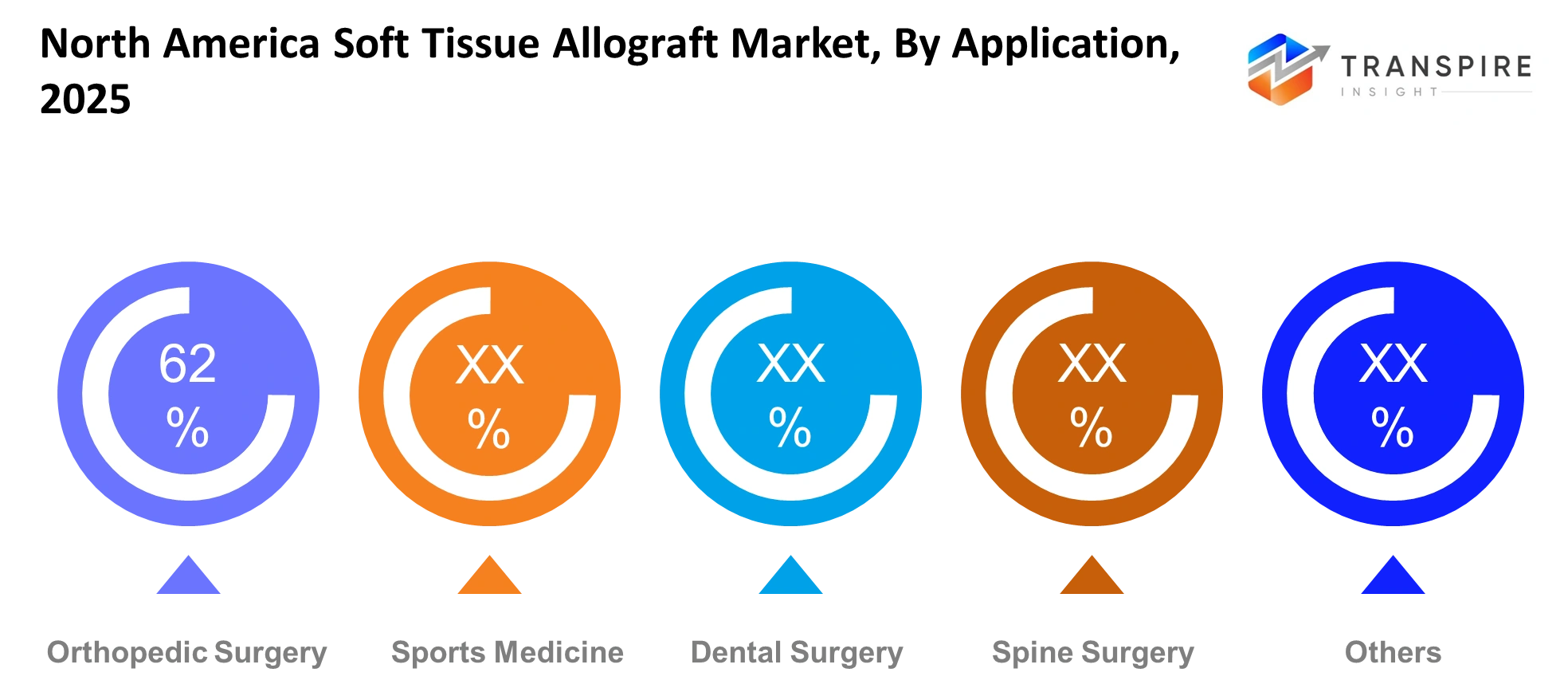
By application, orthopedic surgery is still the most important part, mostly because ligament repair, tendon reconstruction, and trauma-related actions make up a large portion of allograft usage. Sports medicine is right behind it , helped by the big number of people in recreational and professional sports, plus the rise in care for activity based injuries. Spine surgery keeps a pretty steady demand, since biologic materials are getting more and more integrated into fusion and reconstruction steps. Dental surgery is smaller, but it still matters, especially for bone augmentation and soft tissue enhancement uses.
Then you also have other applications, like reconstructive and specialty operations where tissue restoration is kind of the main point. In general, clinicians seem to lean toward procedures that reduce downtime, and also boost functional results, so that keeps influencing where demand goes. Looking ahead, new opportunities should show up from expanded indications, better clinical proof, and heavier adoption of biologic solutions across more niche surgical fields, which in turn opens broader commercial chances across the whole treatment ecosystem.
To learn more about this report, Download Free Sample Report
By End-User
For end users, hospitals capture the largest share, mainly because more complex orthopedic and reconstructive procedures usually happen inside bigger healthcare systems, with advanced surgical infrastructure and all that. Very high patient volume , plus established procurement networks and easier access to specialized surgeons, all of it tends to back hospital leadership. Orthopedic clinics also make up an important slice, since focused care for musculoskeletal conditions is still growing, and referral pathways are getting more efficient over time. Meanwhile, ambulatory surgical centers are picking up speed due to cost friendly outpatient procedures, reduced patient stays, and more payer backing for same day surgeries.
Other end users still include specialty care facilities, where tissue based solutions are needed for certain interventions. As healthcare economics keep shifting and organizations feel more pressure to improve operational efficiency, purchasing behavior is changing across essentially all end user types. Looking ahead, market growth should lean toward facilities that can blend procedural speed with strong quality outcomes , and that will push suppliers to improve distribution strategies and shape their product portfolios for different clinical environments.
By Preservation Method
Honestly, by preservation method, cryopreservation sort of dominates, because it keeps the tissue integrity and the biological characteristics more or less intact better than most other approaches. There is also a strong surgeon preference for high quality graft performance, which ends up supporting wide use of this technique in critical orthopedic settings, even when budgets are tight.
Freeze drying is gaining relevance too, because it makes storage feel easier, stretches the shelf life, and it also simplifies the transportation side of things, so it becomes pretty attractive for facilities that want more inventory flexibility. Fresh preservation is still used in certain clinical situations where immediate tissue viability is the main focus, though storage limitations kinda block broader adoption.
Other preservation approaches keep evolving, since tissue banks are continually trying to improve safety usability, and long term performance, all at once. Technological progress in preservation science is expected to turn into a major competitive differentiator over the coming years. Manufacturers that boost graft stability while reducing storage complexity might capture more market share, while healthcare providers will probably focus on options that balance clinical effectiveness with day to day operational efficiency.
What are the Key Use Cases Driving the North America Soft Tissue Allograft Market?
So, the main use of soft tissue allografts stays mostly in orthopedic ligament and tendon repair, like anterior cruciate ligament work, plus sports related injury treatment too. This particular area still drives the strongest need, mainly because allografts make the surgery feel simpler, they avoid donor site morbidity, and they help hospitals or ortho centers move through the workflow faster, like in a more efficient way.
And then there’s the expansion side, where people are starting to lean into spine reconstruction and also dental tissue augmentation. More specialized surgical centers and ambulatory facilities now use these biologic grafts as a way to add structural support , while improving tissue healing. At the same time they try to shorten procedure durations and cut down postoperative complications which honestly feels like the big selling point.
More emerging use cases are showing up in regenerative orthopedic medicine and cartilage restoration. Things like advanced tissue engineered grafts, and biologically enhanced allografts, are getting tested for joint preservation , and for tricky musculoskeletal repairs. As the clinical evidence keeps building , these uses could open new treatment routes for patients who want alternatives to joint replacement and other invasive interventions.
|
Report Metrics |
Details |
|
Market size value in 2025 |
USD 2.47 Billion |
|
Market size value in 2026 |
USD 2.637 Billion |
|
Revenue forecast in 2033 |
USD 4.168 Billion |
|
Growth rate |
CAGR of 6.76% from 2026 to 2033 |
|
Base year |
2025 |
|
Historical data |
2021 - 2024 |
|
Forecast period |
2026 - 2033 |
|
Report coverage |
Revenue forecast, competitive landscape, growth factors, and trends |
|
Country scope |
North America (Canada, The United States, and Mexico) |
|
Key company profiled |
Zimmer Biomet, Stryker, Arthrex, RTI Surgical, Organogenesis, Integra LifeSciences, AlloSource, LifeNet Health, MTF Biologics, Xtant Medical, CONMED, Smith & Nephew, Medtronic, Globus Medical, JRF Ortho. |
|
Customization scope |
Free report customization (country, regional & segment scope). Avail customized purchase options to meet your exact research needs. |
|
Report Segmentation |
By Product Type (Tendon Allografts, Ligament Allografts, Cartilage Allografts, Meniscus Allografts, Others), By Application (Orthopedic Surgery, Sports Medicine, Dental Surgery, Spine Surgery, Others), By End User (Hospitals, Orthopedic Clinics, Ambulatory Surgical Centers, Others), By Preservation Method (Cryopreservation, Freeze-drying, Fresh Preservation, Others). |
Which Regions are Driving the North America Soft Tissue Allograft Market Growth?
The United States basically shows up as the leading area in the North America soft tissue allograft market. The push behind that leadership comes from a pretty mature tissue banking network , plus reimbursement frameworks that look favorable. Also there’s a huge volume of orthopedic and sports medicine procedures happening there. On top of that, strong regulatory oversight kind of steadies everything, it really helps build trust around donor screening, and tissue processing requirements. And then you get this fairly well-developed setup across hospitals, specialty clinics, tissue banks and even orthopedic device manufacturers, which keeps the momentum going and still allows product innovation to move forward.
Canada sits in the second spot regionally, but its growth path is not exactly the same as the U.S. Universal healthcare coverage helps, and there’s also consistent funding aimed at orthopedic care which keeps adoption relatively stable. The demand is supported by an aging population, more musculoskeletal treatment needs year after year, and a gradual increase in surgical capacity. Even if the procedure numbers aren’t as high as in the United States , the predictable pattern of healthcare spending makes Canada a dependable contributor to regional revenue.
Mexico, though, is starting to look like the fastest-growing market across the region. New healthcare infrastructure investments, better access to advanced orthopedic procedures, and a widening set of private hospital networks have basically sped up the use of tissue-based reconstruction solutions. More people are participating in sports and specialized surgical services are becoming easier to find, which basically opens the door for new allograft providers. This momentum should pull in manufacturers, distributors and investors who want exposure to a market that is still underpenetrated but has strong long- term growth potential through 2033.
Who are the Key Players in the North America Soft Tissue Allograft Market and How Do They Compete?
The competitive landscape for the North America Soft Tissue Allograft Market is sort of moderately consolidated, with just a small group of big tissue banks and orthopedic technology companies making up a big slice of what’s actually supplied and also how fast it gets adopted clinically. In practice, competition doesn’t really hinge on price so much ,it’s more about tissue quality , processing technology, how easily grafts are obtained, clinical evidence, and how far distribution actually reaches. The more established organizations keep defending their market share using proprietary preservation approaches, surgeon education activities ,and those long-term hospital ties that are hard to replace. New entrants, however, run into real walls since donor sourcing ,regulatory compliance, and tissue processing infrastructure basically demand major investment and very specific know-how.
MTF Biologics goes after the market with its scale,wide donor recovery pathways, and a fairly wide range of orthopedic allografts. Having access to a large tissue supply chain keeps product availability steady, and that’s a meaningful edge when procurement feels tight. LifeNet Health tends to stand out via its more advanced tissue processing along with regenerative medicine capabilities, which are geared toward boosting graft performance while also supporting safety. Ongoing investment in biologic innovation and clinical research also helps widen treatment uses, and it tends to reinforce surgeon trust over time.
Arthrex kind of leans into a more technology focused direction, by tying allograft offerings together with surgical instruments, fixation systems, and also that physician training type of programming. It’s like an ecosystem vibe, and that tends to push more procedural adoption, while at the same time it creates switching costs so it’s harder for healthcare providers to move away. Zimmer Biomet, on the other hand, leans hard on deep relationships across orthopedic reconstruction plus joint preservation markets, and from there it opens cross-selling chances across different product categories, not just one narrow line. Stryker Corporation expands mainly via product innovation, digital surgery investments and then strategic acquisitions that reinforce their orthopedic portfolios. Overall, these players basically build a competitive advantage by blending biologic solutions with wider procedural platforms so healthcare systems can get integrated treatment solutions from one source, rather than piecing things together.
Company List
- Zimmer Biomet
- Stryker
- Arthrex
- RTI Surgical
- Organogenesis
- Integra LifeSciences
- AlloSource
- LifeNet Health
- MTF Biologics
- Xtant Medical
- CONMED
- Smith & Nephew
- Medtronic
- Globus Medical
- JRF Ortho
Recent Development News
In March 2026, LifeNet Health Received Clinical Research Award for Matrion® Allograft Study: LifeNet Health received the “Best Randomized Controlled Trial” award at the 2026 CAMPs Awards for its Matrion® diabetic foot ulcer study. The clinical trial demonstrated improved wound closure outcomes and favorable safety results, highlighting the growing role of allograft-based regenerative products in advanced wound care across North America.
Source: https://www.prnewswire.com
In January 2026, MTF Biologics and Kolosis BIO Launch Summit Matrix™ for Orthopedic and Spinal Procedures: MTF Biologics and Kolosis BIO announced the launch of Summit Matrix™, a new allograft-based solution designed for orthopedic and spinal surgeries. The product expansion reflects ongoing innovation in biologic graft technologies and strengthens MTF Biologics’ presence in the North American soft tissue and regenerative medicine market.
Source: https://www.mtfbiologics.org
What Strategic Insights Define the Future of the North America Soft Tissue Allograft Market?
North America Soft Tissue Allograft Market is quietly drifting toward a more biologically engineered, data driven future , where tissue products are no longer just “available” but actually distinguished by real clinical performance. If you look at it closely the whole thing feels like a mix of regenerative medicine, better tissue processing methods , and outcome focused healthcare models that reward surgeons and systems for procedures that shorten recovery windows and lower long term treatment expenses. In the next five to seven years, competitive advantage is probably going to shift toward companies that can blend biologic innovation with credible clinical proof and scalable sourcing networks.
There’s also a risk that is less obvious at first, but it can matter a lot, donor tissue concentration and supply vulnerability. As procedure volumes grow, relying on a narrow donor pool can turn into supply constraints that are hard to correct later, especially for niche graft types. Meanwhile, newer bioengineered scaffolds and tissue-enhanced regenerative platforms are showing up as a real opportunity. They are still pretty early today, but they are clearly being positioned to handle both supply tightness and higher expectations around performance. Market players should probably lean into investment in regenerative tissue technologies, and also expand donor networks in a strategic way, so they can protect growth over time and keep supply more resilient.
North America Soft Tissue Allograft Market Report Segmentation
By Product Type
- Tendon Allografts
- Ligament Allografts
- Cartilage Allografts
- Meniscus Allografts
- Others
By Application
- Orthopedic Surgery
- Sports Medicine
- Dental Surgery
- Spine Surgery
- Others
By End User
- Hospitals
- Orthopedic Clinics
- Ambulatory Surgical Centers
- Others
By Preservation Method
- Cryopreservation
- Freeze-drying
- Fresh Preservation
- Others
Frequently Asked Questions
Find quick answers to common questions.
The approximate North America Soft Tissue Allograft Market size for the market will be USD 4.168 Billion in 2033.
The key segments of the North America Soft Tissue Allograft Market are By Product Type (Tendon Allografts, Ligament Allografts, Cartilage Allografts, Meniscus Allografts, Others), By Application (Orthopedic Surgery, Sports Medicine, Dental Surgery, Spine Surgery, Others), By End User (Hospitals, Orthopedic Clinics, Ambulatory Surgical Centers, Others), By Preservation Method (Cryopreservation, Freeze-drying, Fresh Preservation, Others).
Major players in the North America Soft Tissue Allograft Market are Zimmer Biomet, Stryker, Arthrex, RTI Surgical, Organogenesis, Integra LifeSciences, AlloSource, LifeNet Health, MTF Biologics, Xtant Medical, CONMED, Smith & Nephew, Medtronic, Globus Medical, JRF Ortho.
The current market size of the North America Soft Tissue Allograft Market is USD 2.47 Billion in 2025.
The North America Soft Tissue Allograft Market CAGR is 6.76%.
- Zimmer Biomet
- Stryker
- Arthrex
- RTI Surgical
- Organogenesis
- Integra LifeSciences
- AlloSource
- LifeNet Health
- MTF Biologics
- Xtant Medical
- CONMED
- Smith & Nephew
- Medtronic
- Globus Medical
- JRF Ortho
About the Authors

Pankaj Ghogare Patil
I am Pankaj Ghogare Patil, a Senior Research Analyst at Transpire Insight, specializing in the Pharmaceutical, Chemicals & Materials, Healthcare IT, and Biotechnology industry. My expertise lies in conducting comprehensive market research, analyzing industry trends, evaluating competitive landscapes, and translating complex data into actionable insights. At Transpire Insight, I closely follow emerging technologies, regulatory developments, and market innovations to create accurate, well-researched, and informative content that helps businesses and professionals make informed decisions. I am committed to producing credible, evidence-based articles that reflect industry best practices while making technical topics accessible and valuable for a broad audience.

Chakradhar Khansole
Chakradhar serves as the Research Director at Transpire Insight, bringing over 8 years of experience in technology, innovation, and strategic market intelligence. He specializes in transforming complex market data into actionable business insights that enable organizations to make informed, growth-oriented decisions. Recognized for his strategic vision and analytical expertise, Chakradhar leads high-impact research initiatives, delivering comprehensive market assessments, competitive intelligence, and forward-looking industry analysis.
Recently Published Reports
-
Apr 2026
AI in Diabetic Retinopathy Market
AI in Diabetic Retinopathy Market Size, Share & Analysis Report By Type (Screening AI Systems, Diagnostic AI Systems, and Predictive AI Models), By Application Segment (Hospitals, Ophthalmology Clinics, Diagnostic Centers, and Research and Development), and Geography (North America, Europe, Asia-Pacific, Middle East and Africa, South and Central America), 2021 - 2031
-
Apr 2026
Psychometric Tests Market
Psychometric Tests Market Size, Share & Analysis Report By Type (Personality Tests, Ability/Aptitude Tests, Skill/Knowledge Tests, and Others), By Application (Talent Acquisition and Talent Management), and Geography (North America, Europe, Asia-Pacific, Middle East and Africa, South and Central America), 2021 – 2031
-
Apr 2026
Rare Biological Sample Collection Market
Rare Biological Sample Collection Market Size, Share & Analysis Report By Type (Isolation Kits & Reagent, Blood Collection Tubes, and Others), By Application (Oncology, Transcriptomics, Pharmacogenomics, and Others), and Geography (North America, Europe, Asia-Pacific, Middle East and Africa, South and Central America), 2021 – 2031
-
Jul 2026
Diabetic Retinopathy Market
Diabetic Retinopathy Market Size, Share & Analysis Report By Type (Proliferative Diabetic Retinopathy, and Diabetic Macular Edema (DME)), By Treatment Type (Anti VEGF Drug, Steroid Implants, Laser Surgeries, and Vitrectomy), and Geography (North America, Europe, Asia-Pacific, Middle East and Africa, South and Central America), 2021 – 2031
Our Clients







