

North America Single Nucleotide Polymorphism (SNP) Genotyping Market Size & Forecast:
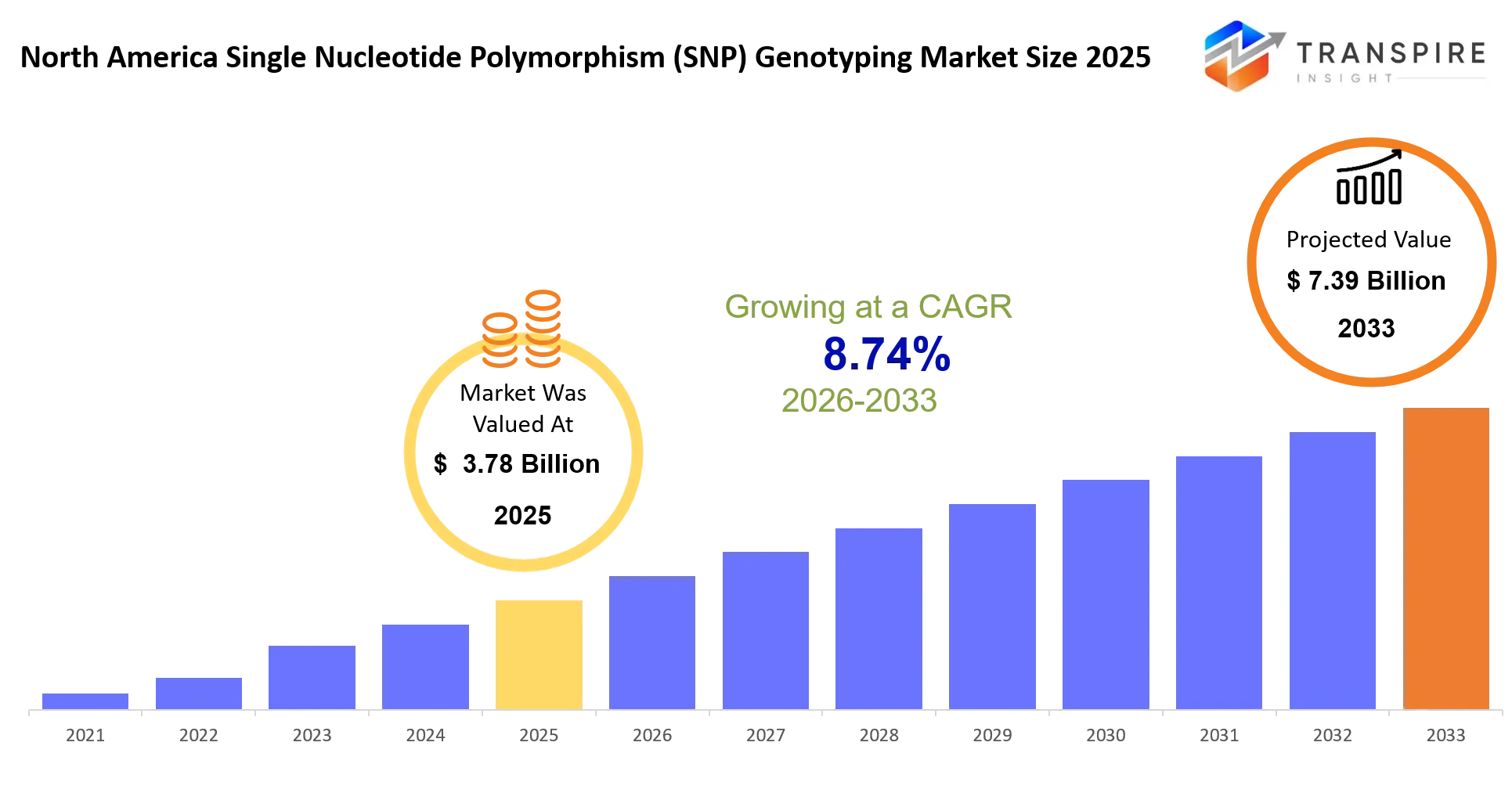
- North America Single Nucleotide Polymorphism (SNP) Genotyping Market Size 2025: USD 3.78 Billion
- North America Single Nucleotide Polymorphism (SNP) Genotyping Market Size 2033: USD 7.39 Billion
- North America Single Nucleotide Polymorphism (SNP) Genotyping Market CAGR: 8.74%
- North America Single Nucleotide Polymorphism (SNP) Genotyping Market Segments: By Product Type (Reagents & Kits, Instruments, Consumables, Software, Assay Kits, Microarrays, Sequencing Platforms, Others); By Technology (PCR-Based Genotyping, Microarray Genotyping, Next-Generation Sequencing, Mass Spectrometry, TaqMan Assays, Sanger Sequencing, Digital PCR, Others); By Application (Pharmacogenomics, Disease Diagnostics, Agricultural Genomics, Animal Genetics, Forensic Testing, Population Genetics, Research Applications, Others); By End User (Pharmaceutical Companies, Biotechnology Companies, Academic Institutes, Clinical Laboratories, CROs, Government Research Centers, Diagnostic Laboratories, Others); By Workflow (Sample Preparation, Genotyping Analysis, Bioinformatics Analysis, Variant Validation, Biomarker Discovery, Clinical Interpretation, Data Management, Others)
North America Single Nucleotide Polymorphism (SNP) Genotyping Market Summary
The North America Single Nucleotide Polymorphism (SNP) Genotyping Market was valued at USD 3.78 Billion in 2025. It is forecast to reach USD 7.39 Billion by 2033. That is a CAGR of 8.74% over the period.
North America Single Nucleotide Polymorphism (SNP) Genotyping Market lets healthcare providers, pharmaceutical firms, research groups, and even agricultural organizations find genetic variations that really help with precision medicine, better drug development, disease risk evaluation, and also trait picking. The real-world benefit is that it speeds up genomic decision-making ,while also making clinical and research results more accurate. In the last three to five years, the market kind of moved away from lone genotyping platforms and toward combined, high-throughput pipelines that mix automation , cloud based data analysis, and bioinformatics. This means labs can run more samples at once with improved efficiency. One big spark was the COVID-19 pandemic, because it led to unusual levels of spending in molecular diagnostics and lab infrastructure. That growth boosted genomic testing capabilities, pushed the uptake of automated systems, and made many organizations update their genotyping workflows ,so in the end buying decisions shifted toward solutions that are scalable, interoperable, and heavily guided by data.
Key Market Insights
- The United States really dominated the North America Single Nucleotide Polymorphism (SNP) Genotyping Market with around 88% market share in 2025, mostly backed by big scale genomic research funding and clinical sequencing infrastructure.
- Canada looks set to be the quickest mover across 2025–2032, driven by precision health initiatives, expanding biobank programs, and more investment into genomics infrastructure, not just one stream but a bunch of them.
- For the product side, reagents and consumables are out front with close to 58% market share, which makes sense since labs keep reordering, and continuous testing volumes keep ticking along in both research and clinical spaces.
- Instruments stay the second-largest product segment too. Laboratories are still swapping older platforms for automated, high-throughput genotyping systems, basically because efficiency matters.
- Software and bioinformatics solutions are forecast to grow the quickest between 2025 and 2032, supported by AI-enabled genomic analytics and cloud-based workflow integration. So yeah, the “software layer” is where a lot of the momentum sits.
- When it comes to application, research applications take the lead at about 52% market share, fueled by population genomics, pharmacogenomics, and biomarker discovery programs.
- Clinical diagnostics is projected as the fastest-growing application during the whole forecast period, because personalized treatment decisions increasingly lean on genomic profiling to guide what happens next.
- Academic and research institutes collectively account for nearly 45% market share, benefiting from steady federal grants and collaborative genomics initiatives that keep long-term work alive.
- Meanwhile, biopharmaceutical companies are emerging as the fastest-growing end-user group through 2032, as companion diagnostics and precision drug development programs keep expanding.
What are the Key Drivers, Restraints, and Opportunities in the North America Single Nucleotide Polymorphism (SNP) Genotyping Market?
Precision medicine is still the main force, sort of accelerating market expansion in a steady way. Regulatory backing for genomic medicine helps a lot, plus broader reimbursement for specific genetic tests , and then the sequencing costs keep dropping. That combo seems to trigger wider use not only in healthcare but also in pharmaceutical research. Drug developers are now more and more putting SNP analysis into clinical trial plans, and using it for biomarker discovery. As a result, patient stratification can happen faster than before, and trial efficiency gets a noticeable boost. Healthcare systems are also widening pharmacogenomic testing, to support treatment selection with more precision. In the end these changes drive stronger lab utilization , higher consumable sales, and then continued revenue for genomic technology providers.
Still, the biggest structural snag is fragmented genomic data integration , and laboratory interoperability that doesn’t quite line up. Older laboratory information systems, plus different bioinformatics standards, and then strict patient privacy requirements, all of this makes it hard to harmonize quickly across different institutions. Validation duties also stretch out the rollout, so implementation takes longer. A lot of laboratories delay platform upgrades because the migration expenses are still heavy. Together, these issues slow down adoption of newer technology, reduce the chances for steady software income , and delay commercialization of advanced genomic workflows. And based on a Transpire Insight review of regional procurement announcements and launch schedules, supply chain concentration looks like the main execution risk overall.
The next phase of expansion will probably just kind of show up out of AI driven genomic interpretation, mixed with decentralized testing networks, and yes, that seems like where things are heading. Investments in cloud bioinformatics, automated variant understanding, and multi-omics platforms are helping build research ecosystems that can scale up without too much trouble. Meanwhile, big biobanks all across the United States and Canada keep growing genomic collections, and those datasets keep backing predictive healthcare uses.
And as companion diagnostics get more and more treated as standard practice in oncology and rare disease care, the vendors that bundle integrated hardware, software, and analytics frameworks are, in practice, set up to unlock stronger commercial take up across the whole forecast window.
What Has the Impact of Artificial Intelligence Been on the North America Single Nucleotide Polymorphism (SNP) Genotyping Market?
Artificial intelligence, plus digital lab technologies, are now changing SNP genotyping workflows in a way that feels almost seamless, automating the sample tracking piece, quality control steps, genotype calling and even those compliance reports the lab has to produce. In the newer genomic platforms, AI algorithms get stitched together with laboratory information management systems, so there is less manual touching, and the whole analytical process ends up more standardized, especially when the lab is running huge volumes of tests, day after day. Then there are the machine learning models too, they help predict performance, by flagging assay anomalies, tweaking workflow scheduling, estimating reagent consumption, and suggesting when an instrument should get serviced, before a failure shows up, kinda quietly first. All of that, in practice, helps labs get better instrument utilization, reduce turnaround time delays, keep analytical consistency steadier, and lower operational costs, while also supporting bigger genomic research programs.
Across the regional genomics industry, cloud-based bioinformatics platforms speed up interpretation of complicated genetic datasets, so researchers and clinicians can process thousands of samples, with shorter reporting time windows. AI-assisted analytics further support pharmacogenomic studies, finding clinically relevant genetic variants in a more efficient way than what you’d get from conventional manual review methods. Still, the broad roll out keeps running into real-world limitations. Integration costs can be high, and interoperability between older laboratory systems is often weak, plus genomic databases are fragmented, and there is the heavy need for extensive algorithm validation, which makes deployment harder at smaller research centers. On top of that, data quality varies from institution to institution, and that variation can mess with model accuracy, so continuous refinement is necessary, before AI-driven decision support can be fully relied on during routine clinical and research use.
Key Market Trends
Since 2022, automated high-throughput genotyping platforms have replaced manual workflows across big genomics labs, and honestly that boosted processing capacity, plus operational consistency.
After 2021, cloud based bioinformatics adoption really took off, which allowed distributed genomic analysis and also made it easier for research institutions and healthcare providers to collaborate, faster.
Between 2022 and 2025, pharmaceutical companies expanded their pharmacogenomics programs, and they even started folding SNP analysis earlier into precision drug development pipelines, more than before.
After 2023, investment in multi-omics research grew across North America, mixing SNP genotyping with transcriptomics, and proteomics for more complete biomarker discovery.
Companies like Illumina, Thermo Fisher Scientific, and QIAGEN strengthened their integrated workflow offerings, through ongoing technology upgrades and software driven lab automation, basically.
From 2021 to 2025, population genomics initiatives expanded a lot, driving higher demand for scalable genotyping arrays and high-throughput consumables.
AI assisted genotype interpretation tools started gaining real commercial traction after 2023, cutting down the hours spent on manual data review, while keeping analytical consistency more steady.
Then, after pandemic related disruptions, supply chain diversification became a strategic must, with manufacturers regionalizing production and inventory management from 2022 onward.
Companion diagnostics integration picked up speed through 2024, so SNP based testing lined up with targeted oncology therapies, and with personalized treatment selection.
Cybersecurity and genomic data governance investments also got stronger after 2023, as labs leaned into cloud connected analytical platforms that manage huge patient genomic datasets, on a larger scale.
North America Single Nucleotide Polymorphism (SNP) Genotyping Market Segmentation
By Product Type :
Reagents and kits keep a leading role, because routine testing really relies on consistent and accurate laboratory supplies. The consumables side still drives repeat buying, as research programs and clinical testing activities keep widening through major labs. Instruments do stay basically essential for high-throughput work, while the software piece helps with quicker data analysis and the reporting part. Assay kits and microarrays continue to land well in research settings, where dependable and standardized testing methods are expected, not optional.
Sequencing platforms are getting more attention, since labs are blending several genomic techniques into one single workflow. With improved automation and more capable data processing, wider adoption should happen across both research and clinical environments. Then other product categories keep covering niche laboratory needs, where custom testing solutions remain kind of indispensable. Product development will concentrate on workflow efficiency, analytical precision, and lower running costs, though sometimes that’s easier said than done.
By Technology :
PCR based genotyping still kind of leads, since many labs go for speed, tight cost management, and reliable results. Microarray genotyping is also still heavily used in big population projects and biomarker work. Next-generation sequencing keeps growing because testing programs want more genetic detail from a single run, you know, one workflow. Mass spectrometry tends to show up in more specialized studies, especially when people need very high analytical accuracy and such.
TaqMan assays remain a go to choice for focused genetic testing because the whole workflow is straightforward so day to day lab operations run smoother. Sanger sequencing stays relevant for checking outcomes and doing result validation, basically to be sure the first read was right. Digital PCR adoption should rise too, as labs chase higher sensitivity for complicated genetic analysis. And the other methods keep being useful in smaller or niche situations where specific testing abilities are required.
By Application :
Research applications keep making up a big share, because universities, healthcare organizations and biotechnology companies pour resources into genomic studies, so the whole pipeline kinda keeps moving. Pharmacogenomics in particular helps with the choice of therapy by means of genetic profiling, which in turn improves how we evaluate drug response, more or less. Disease diagnostics keep widening too as genetic testing becomes a routine piece inside precision medicine programs. Meanwhile, population genetics studies also back major public health efforts and academic projects.
On the other side, agricultural genomics and animal genetics keep boosting breeding programs by finding genetic markers. Forensic testing uses SNP analysis, to strengthen identity confirmation and criminal investigations. Other uses are still emerging as genomic technologies roll out across more industries. And if broader access to advanced testing platforms grows, future application growth should follow.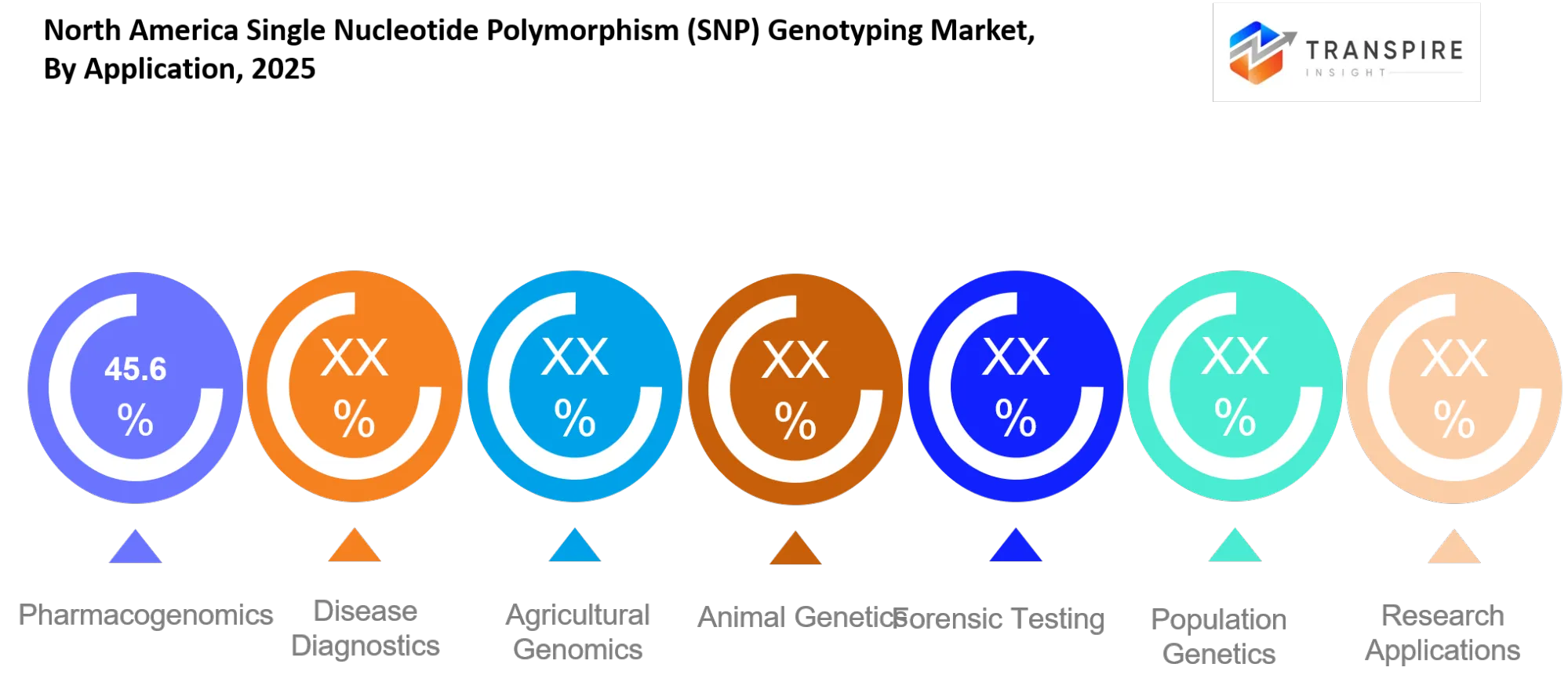
By End User :
Academic institutes stay as primary end users, mostly because big research projects need ongoing genomic work. Pharmaceutical companies keep pushing SNP genotyping tasks forward, mainly to back drug discovery and the clinical trial pipeline. Biotechnology firms persist in funding genetic studies that point toward new treatment pathways. Clinical laboratories and diagnostic labs, in parallel, beef up testing ability through automation, and more advanced analytical set ups.
Contract research organizations keep offering specialized services too, which tends to shorten the development clock for pharma and biotech customers. Government research centers also remain involved, supporting national genomic efforts alongside public health programs. A few other end users are meanwhile adopting newer technologies to boost lab output and research efficiency. Continued growth should follow investment in trained personnel plus digital laboratory systems, though it might look slow at first but it keeps moving.
By Workflow :
Sample preparation is basically the beginning step for when genomic analysis works well. The specimen quality is what directly changes the testing accuracy, like it really matters. Then you move into genotyping analysis, which is the main workflow where genetic variations are spotted using automated lab systems. After that, bioinformatics analysis takes the raw genetic data and turns it into information that can actually help scientific and clinical work. Variant validation is the checkpoint , it confirms the analytical accuracy before anything gets reported or before more research activities kick off.
Biomarker discovery still plays an ongoing role for precision medicine and for pharmaceutical development, mainly because detailed genomic analysis gives the needed clues. Clinical interpretation connects the lab results to treatment planning and to disease management decisions, so it’s not just numbers. Data management is growing even more important too, since laboratories are now handling bigger genomic datasets and also trying to meet regulatory compliance requirements more strongly. Other workflow activities keep improving operational efficiency using automation, digital integration, and standardized lab practices, even if it seems small at first.
What are the Key Use Cases Driving the North America Single Nucleotide Polymorphism (SNP) Genotyping Market?
Biggest use cases show up in research settings, where universities and academic institutes, plus government research centers, and also pharmaceutical firms buy SNP genotyping solutions for big genomic programs. With high sample volumes, repeating tests, and multi year research plans, the lab work stays pretty steady. At the same time it helps biomarker discovery , and it feeds into precision medicine work, kinda in the background but still very much there.
On the clinical side, clinical diagnostics and pharmacogenomics are still widening, across diagnostic labs and biotechnology companies. Healthcare providers lean on genetic insights for treatment choosing, while contract research organizations end up using SNP analysis to better select patients during clinical trials. That in turn strengthens study results, even as regulatory expectations keep shifting.
Earlier opportunities are also showing in forensic testing and agricultural genomics. Public safety agencies are looking at sophisticated genetic profiling to make identity verification more reliable, and agricultural research teams are turning SNP data into crop improvement , and livestock breeding support. As the forecast period continues, more digital integration plus larger genomic databases should make broader commercial adoption happen, more consistently.
|
Report Metrics |
Details |
|
Market size value in 2025 |
USD 3.78 Billion |
|
Market size value in 2026 |
USD 4.11 Billion |
|
Revenue forecast in 2033 |
USD 7.39 Billion |
|
Growth rate |
CAGR of 8.74% from 2026 to 2033 |
|
Base year |
2025 |
|
Historical data |
2021 - 2024 |
|
Forecast period |
2026 - 2033 |
|
Report coverage |
Revenue forecast, competitive landscape, growth factors, and trends |
|
Regional scope |
North America (Canada, The United States, and Mexico) |
|
Key company profiled |
Thermo Fisher Scientific, Illumina, Agilent Technologies, QIAGEN, Bio-Rad Laboratories, Danaher, Roche, Standard BioTools, PerkinElmer, Promega, LGC Biosearch Technologies, Eurofins Scientific, Beckman Coulter, Integrated DNA Technologies, Revvity |
|
Customization scope |
Free report customization (country, regional & segment scope). Avail customized purchase options to meet your exact research needs. |
|
Report Segmentation |
By Product Type (Reagents & Kits, Instruments, Consumables, Software, Assay Kits, Microarrays, Sequencing Platforms, Others); By Technology (PCR-Based Genotyping, Microarray Genotyping, Next-Generation Sequencing, Mass Spectrometry, TaqMan Assays, Sanger Sequencing, Digital PCR, Others); By Application (Pharmacogenomics, Disease Diagnostics, Agricultural Genomics, Animal Genetics, Forensic Testing, Population Genetics, Research Applications, Others); By End User (Pharmaceutical Companies, Biotechnology Companies, Academic Institutes, Clinical Laboratories, CROs, Government Research Centers, Diagnostic Laboratories, Others); By Workflow (Sample Preparation, Genotyping Analysis, Bioinformatics Analysis, Variant Validation, Biomarker Discovery, Clinical Interpretation, Data Management, Others) |
Which Regions are Driving the North America Single Nucleotide Polymorphism (SNP) Genotyping Market Growth?
The United States stays in the dominant role, with an estimated 88% market share across North America. Strong federal money for genomics, plus established regulatory routes and a mature healthcare infrastructure, keeps SNP genotyping technologies getting broad adoption. There’s also this rather dense web of biotechnology firms, pharmaceutical manufacturers, academic research hubs, and lab suppliers that basically helps product development move forward and then into commercialization. With more investment going into precision medicine programs and ongoing genomic research, the market leadership should last pretty much through the forecast period.
Canada is the second biggest region, and its setup feels a bit more coordinated. Public healthcare planning and long-term research funding form a backbone for demand. National genomics initiatives, consistent regulatory attention, and steady support for life science facilities help create reliable purchasing behaviors across research institutions and clinical labs. On top of that, joint efforts involving universities, healthcare organizations, and biotechnology companies back a calmer, more stable roll out of the technology. Because of this, the environment still offers dependable revenue potential, but without the fast, sometimes abrupt purchasing cycles you notice in the larger markets.
Canada is also expected to see the fastest growth during the 2026–2033 stretch, as expanded precision health programs and fresh funding for genomic infrastructure start speeding up technology adoption. In a way, broader support for population genomics , digital laboratory modernization, and bioinformatics capacity has helped reinforce research abilities across several provinces. Meanwhile, greater collaboration between government agencies and private organizations continues to motivate new platform installations, plus more advanced analytical workflows. With all that, the momentum should end up making fairly attractive opportunities for technology suppliers, software providers and investors who are looking for long term expansion across the regional genomics industry.
Who are the Key Players in the North America Single Nucleotide Polymorphism (SNP) Genotyping Market and How Do They Compete?
Competition still looks pretty consolidated, mostly because only a handful of global life science companies actually provide advanced instruments along with reagents, software, and those more integrated genomic workflows. In other words, the real fight is not just on price. Technology innovation, analytical precision, workflow automation, and bioinformatics expertise kind of make up the core of competition, even if people talk about costs a lot. Most well known manufacturers keep reinforcing their product suites, while smaller, more specialized companies sort of go at it with targeted applications, digital utilities, and tailored lab setups.
Thermo Fisher Scientific leans hard into integrated laboratory workflows, where instruments, consumables, and analytical software are bundled together. This helps labs simplify sourcing, and in turn, it improves day to day operational efficiency with fewer frictions. Illumina differentiates via high density microarray platforms and sequencing methods built for large scale genomic investigations, and through steady product development it keeps expanding analytical depth across precision medicine programs. QIAGEN, for its part, boosts its standing with sample preparation capabilities plus bioinformatics tools, which can reduce workflow complexity for both research labs and clinical labs.
Bio-Rad Laboratories pushes digital PCR advancements, giving high analytical sensitivity for niche genomic uses and also for laboratory validation. Agilent Technologies meanwhile invests in genomic analysis platforms and lab software aimed at raising data quality and improving how well workflows actually connect. Meanwhile, product releases, research collaborations, bigger automation powers, and investments in cloud based genomic analytics continue to reinforce competitive momentum. All of this also supports broader adoption across pharmaceutical organizations, biotechnology firms, and research institutions.
Company List
Bio-Rad Laboratories
Danaher
Roche
Standard BioTools
PerkinElmer
Promega
LGC Biosearch Technologies
Eurofins Scientific
Beckman Coulter
Integrated DNA Technologies
Revvity
Recent Development News
In April 2026, Illumina partnered with the Center for Data-Driven Discovery in Biomedicine (D3b) to integrate large-scale genomic data with scalable software for pediatric cancer and rare disease research. The collaboration strengthens genomic analysis capabilities that complement SNP genotyping workflows by accelerating variant discovery and translational genomics research. Sourcehttps://www.illumina.com/
In March 2026, Illumina expanded its collaboration with Labcorp to broaden access to precision oncology testing. The partnership extends the deployment of Illumina's genomic testing technologies, supporting wider adoption of advanced genotyping and molecular profiling platforms across North America. Sourcehttps://www.illumina.com/
What Strategic Insights Define the Future of the North America Single Nucleotide Polymorphism (SNP) Genotyping Market?
The North America Single Nucleotide Polymorphism (SNP) Genotyping Market seems to be drifting into more connected, high-throughput genomic ecosystems where SNP work is now kind of tucked inside precision medicine, population genomics, and even decentralized clinical research, a bit more than before. And you can see this shift happening because multi-omics use keeps expanding , AI assisted interpretation is becoming more common, and large scale genetic screening programs are rolling out more widely. Still there is a quieter concern too, which is that classic SNP genotyping procedures may get swapped out by broader sequencing platforms, especially as sequencing expenses keep dropping, and that could soften demand for use cases that actually need wider genomic clues rather than just the single variants. At the same time, there’s a newer chance that feels promising: pairing SNP genotyping with pharmacogenomic decision support for everyday clinical prescribing, mostly as health systems push harder toward personalized therapy paths. Players in this space should really lean into interoperable setups, like platforms that bring together genotyping plus cloud analytics and clinical summaries, and then build smart alliances with hospitals providers and research networks so uptake keeps going past the usual research setting , not just for a short trial period.
North America Single Nucleotide Polymorphism (SNP) Genotyping Market Report Segmentation
By Product Type
- Reagents & Kits
- Instruments
- Consumables
- Software
- Assay Kits
- Microarrays
- Sequencing Platforms
By Technology
- PCR-Based Genotyping
- Microarray Genotyping
- Next-Generation Sequencing
- Mass Spectrometry
- TaqMan Assays
- Sanger Sequencing
- Digital PCR
By Application
- Pharmacogenomics
- Disease Diagnostics
- Agricultural Genomics
- Animal Genetics
- Forensic Testing
- Population Genetics
- Research Applications
By End User
- Pharmaceutical Companies
- Biotechnology Companies
- Academic Institutes
- Clinical Laboratories
- CROs
- Government Research Centers
- Diagnostic Laboratories
By Workflow
- Sample Preparation
- Genotyping Analysis
- Bioinformatics Analysis
- Variant Validation
- Biomarker Discovery
- Clinical Interpretation
- Data Management
Frequently Asked Questions
Find quick answers to common questions.
The Expected North America Single Nucleotide Polymorphism (SNP) Genotyping Market size for the Market will be USD 7.39 Billion in 2033.
Key Segments for the North America Single Nucleotide Polymorphism (SNP) Genotyping Market are Type By Product Type (Reagents & Kits, Instruments, Consumables, Software, Assay Kits, Microarrays, Sequencing Platforms, Others); By Technology (PCR-Based Genotyping, Microarray Genotyping, Next-Generation Sequencing, Mass Spectrometry, TaqMan Assays, Sanger Sequencing, Digital PCR, Others); By Application (Pharmacogenomics, Disease Diagnostics, Agricultural Genomics, Animal Genetics, Forensic Testing, Population Genetics, Research Applications, Others); By End User (Pharmaceutical Companies, Biotechnology Companies, Academic Institutes, Clinical Laboratories, CROs, Government Research Centers, Diagnostic Laboratories, Others); By Workflow (Sample Preparation, Genotyping Analysis, Bioinformatics Analysis, Variant Validation, Biomarker Discovery, Clinical Interpretation, Data Management, Others).
Major North America Single Nucleotide Polymorphism (SNP) Genotyping Market players are Thermo Fisher Scientific, Illumina, Agilent Technologies, QIAGEN, Bio-Rad Laboratories, Danaher, Roche, Standard BioTools, PerkinElmer, Promega, LGC Biosearch Technologies, Eurofins Scientific, Beckman Coulter, Integrated DNA Technologies, Revvity.
The Current North America Single Nucleotide Polymorphism (SNP) Genotyping Market size is USD 3.78 Billion in 2025.
The North America Single Nucleotide Polymorphism (SNP) Genotyping Market CAGR is 8.74% from 2026 to 2033.
Thermo Fisher Scientific
Illumina
Agilent Technologies
QIAGEN
Bio-Rad Laboratories
Danaher
Roche
Standard BioTools
PerkinElmer
Promega
LGC Biosearch Technologies
Eurofins Scientific
Beckman Coulter
Integrated DNA Technologies
Revvity
About the Authors

Pankaj Ghogare Patil
I am Pankaj Ghogare Patil, a Senior Research Analyst at Transpire Insight, specializing in the Pharmaceutical, Chemicals & Materials, Healthcare IT, and Biotechnology industry. My expertise lies in conducting comprehensive market research, analyzing industry trends, evaluating competitive landscapes, and translating complex data into actionable insights. At Transpire Insight, I closely follow emerging technologies, regulatory developments, and market innovations to create accurate, well-researched, and informative content that helps businesses and professionals make informed decisions. I am committed to producing credible, evidence-based articles that reflect industry best practices while making technical topics accessible and valuable for a broad audience.

Chakradhar Khansole
Chakradhar serves as the Research Director at Transpire Insight, bringing over 8 years of experience in technology, innovation, and strategic market intelligence. He specializes in transforming complex market data into actionable business insights that enable organizations to make informed, growth-oriented decisions. Recognized for his strategic vision and analytical expertise, Chakradhar leads high-impact research initiatives, delivering comprehensive market assessments, competitive intelligence, and forward-looking industry analysis.
Recently Published Reports
-
Jul 2026
Alopecia Treatment Market
Alopecia Treatment Market Size, Share & Analysis Report By Disease Type (Alopecia Areata, Cicatricial Alopecia, Traction Alopecia, Alopecia Totalis, Androgenetic Alopecia, Alopecia Universalis, and Other Disease Types), By Treatment Type (Topical Treatments, Oral Medications, Injectable Therapies, and Hair Transplantation), By Gender (Male, and Female), By Distribution Channel (Hospitals and Clinics, Retail Pharmacies, and Online Retailers), and Geography (North America, Europe, Asia-Pacific, Middle East and Africa, South and Central America), 2021 - 2031
-
Jul 2026
Medical Ultrasound Probe Market
Medical Ultrasound Probe Market Size, Share & Analysis Report By Type (Linear Type, Convex Type, Endocavitary Probe, Phased Array/Cardiac Probe, Transesophageal (TEE) Probe, and Others), By Application (Ophthalmology, Cardiology, Musculoskeletal, Oncology, Obstetrics & Gynecology, General Imaging, and Others), By End User (Hospitals & Clinics, Diagnostic Centers, Ambulatory Surgical Centers, and Others), and Geography (North America, Europe, Asia-Pacific, Middle East and Africa, South and Central America), 2021 – 2031
-
May 2026
Biosimilars Market
Biosimilars Market By Product Type (Monoclonal Antibodies, Recombinant Hormones, Erythropoietin, G-CSF, Others), By Indication (Oncology, Autoimmune Diseases, Blood Disorders, Diabetes, Others), By Manufacturing Type (In-House Manufacturing, Contract Manufacturing), By Distribution Channel (Hospital Pharmacies, Retail Pharmacies, Online Pharmacies), By Industry Analysis, Size, Share, Growth, Trends, and Forecasts 2021-2033
-
Apr 2026
Gastrointestinal Endoscopy Market
Gastrointestinal Endoscopy Market By Type (Rigid Gastrointestinal Endoscope, Flexible Gastrointestinal Endoscopes, Disposable Gastrointestinal Endoscope), By Procedure Type (Colonoscopy, Gastroscopy, Duodenoscopy, Enteroscopy, Flexible Sigmoidoscopy, Others), By Application (Diagnosis, Treatment), By End-Users (Hospitals, Ambulatory Surgical Centers, Specialty Clinics, Laboratories, Others), By Industry Analysis, Size, Share, Growth, Trends, and Forecasts 2021-2033