

North America Recombinant Cell Culture Supplements Market Size & Forecast
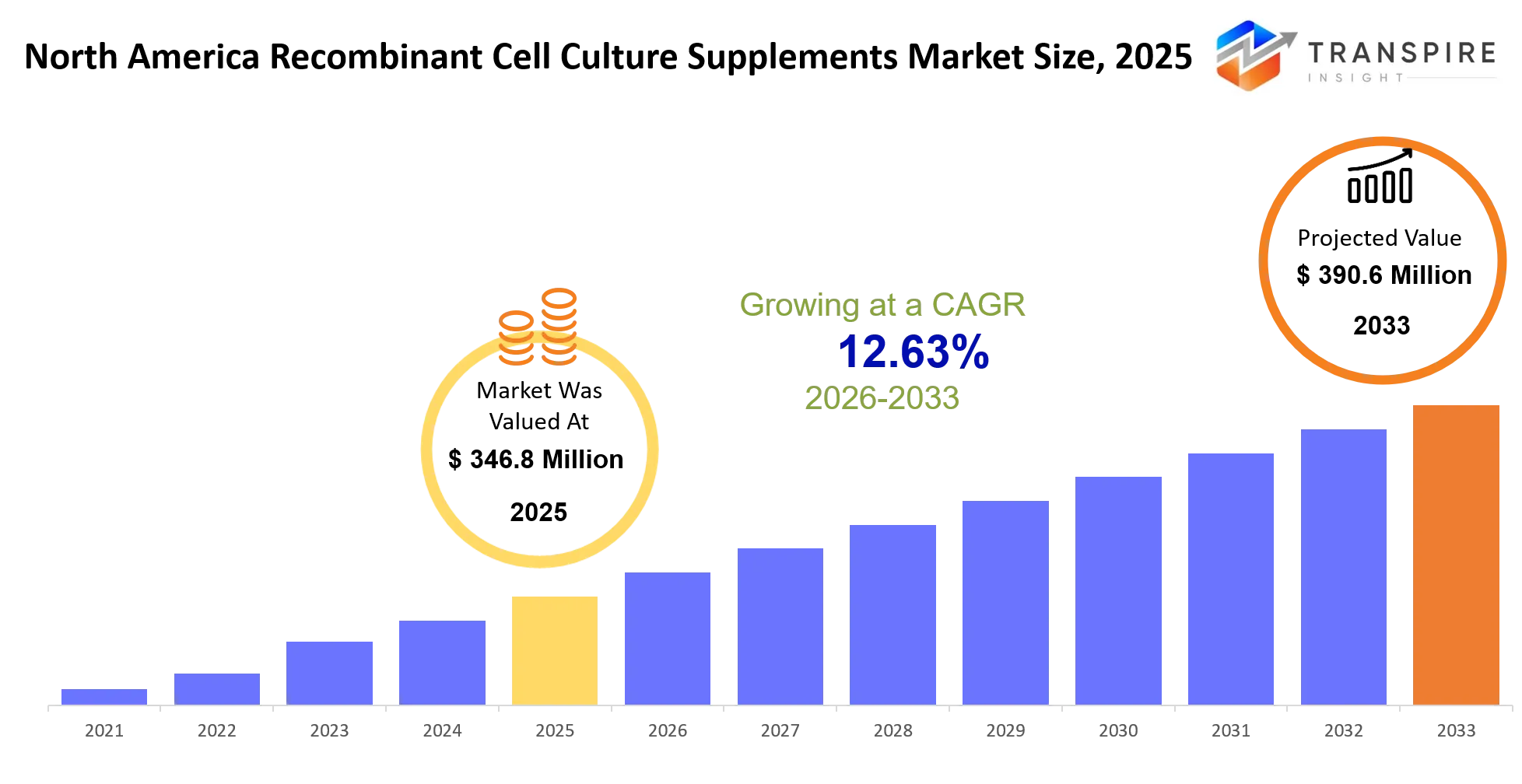
- North America Recombinant Cell Culture Supplements Market Size 2025: USD 346.8 Million
- North America Recombinant Cell Culture Supplements Market Size 2026: USD 390.6 Million
- North America Recombinant Cell Culture Supplements Market Size 2033: USD 898.3 Million
- North America Recombinant Cell Culture Supplements Market CAGR: 12.63%
- North America Recombinant Cell Culture Supplements Market Segments: By Product Type, Application, Cell Type, End User, and Form
North America Recombinant Cell Culture Supplements Market Summary
Recombinant cell culture supplements basically swap out animal-derived proteins with lab made replacements. In practice, biopharmaceutical companies, when they are mixing cell cultures for monoclonal antibody production , gene therapy teams working on growing autologous T-cell populations, and vaccine developers scaling viral propagation systems, they all still end up leaning on specialized protein supplements to keep cells healthy and multiplying. The North America market for these products, valued at USD 346.8 Million in 2025 , is expected to climb up to USD 898.3 Million by 2033.
A major change over the past five years, is how much more people accept chemically defined, animal free production systems, both from a regulatory point of view and in day to day commercial decisions. Before that, fetal bovine serum was kind of everywhere, even though it brought big variability, extra regulatory friction, and some ethical qualms. Then the FDA’s clarification in 2019 and 2020, basically said that animal free supplements can still meet quality standards for therapeutic manufacturing, and that explanation really sped up the adoption.
The immediate spark behind faster market growth is the jump in gene therapy and cell therapy clinical trials. From 2020 to 2024, the FDA approved 11 gene therapies, and 8 cell therapies, and each one needed a huge scale up of specialized supplement formulations. That regulatory approval climate then creates procurement demand right away, which then rolls through the supply chain year after year.
Key North America Recombinant Cell Culture Supplements Market Insights
- Biopharmaceutical Production sort of dominates the application segment , with about 47.3% of market revenue in 2025 , mostly due to monoclonal antibody manufacturing expansion and biosimilar production scale-up rolling out across big pharma players and contract manufacturers.
- Recombinant Growth Factors end up taking the largest product type share at around 35% of market revenue in 2025 , because manufacturers are prioritizing cost-effective , reliably consistent alternatives to animal-derived factors for large-scale culture systems.
- Chemically Defined Products are the fastest-growing product form too, expanding at a projected CAGR a bit above 16% through 2033, as regulatory compliance and bioprocess optimization needs push adoption across both academic settings and commercial laboratories.
- When it comes to cell type , Mammalian cell culture seems to be in the lead, bringing in about 52% of the market revenue during 2025—at least that’s how it reads, including CHO cells , HEK cells and hybridoma cells, all of which are used in the vast majority of therapeutic protein manufacturing.
- Biopharmaceutical companies account for roughly 41% of end user market revenue in 2025. At the same time, Biotechnology companies and Contract Manufacturing Organizations appear to be the quickest moving subsegments, and between them they hit an 18% combined CAGR, so kind of a double tailwind there.
- For form-based categories, Liquid Supplements take 58% of market revenue in 2025, and this reflects operational habits toward ready-to-use formulations that trim preparation time, and also lower variability inside manufacturing workflows.
- In North America, Thermo Fisher Scientific and Merck KGaA together control approximately 32% of the market, largely through integrated portfolios that cover everything from raw materials to bioreactors , plus production services.
- Lastly, Customized Formulations show up as the top-margin product category, growing around 14% per year, as manufacturers keep asking for personalized supplement mixes for proprietary cell lines and specialized applications.
What are the Key Drivers, Restraints, and Opportunities in the North America Recombinant Cell Culture Supplements Market?
Regulatory mandates and manufacturing scale requirements kind of push adoption forward. The FDA’s December 2022 guidance on adventitious agent testing now more or less explicitly allows chemically defined supplements to count as compliant with quality standards. So this removed one big barrier that used to quietly favor traditional serum , because serum already had a well worn regulatory route. At the same time the manufacturing scale needed for approved cell therapies has hit levels where animal derived serum just cannot be sourced in a steady way.
Clinical trials for CAR-T cell therapies typically process around 100,000 to 500,000 cells per patient, and that ends up translating to facility requirements in the range of millions of liters of cell culture media every year. The tricky part is , no single herd provides enough serum to cover that demand across all the competing manufacturers at once. This kind of bottleneck then created a more structural need for recombinant alternatives that vendors can scale “forever”, basically without running into supply walls.
Still , cost competitiveness is the main market restraint. Recombinant proteins made via fermentation and purification generally end up costing more per unit than commodity fetal bovine serum. A 500 mL bottle of a chemically defined growth factor supplement is often priced at USD 450 to USD 800, while serum based equivalents may sit around USD 200 to USD 350. For academic labs working with tight budgets , that gap delays switching even if the newer options show stronger performance. And small biotech companies, when they have to decide where to put capital—supplement quality versus hiring additional scientists— often pick the scientists, which in turn limits growth in those customer segments.
Regenerative Medicine and Tissue Engineering are basically a high-growth opportunity segment, or at least thats how the market reads. The US regenerative medicine market is projected to go past USD 45 billion by 2030, mostly because of FDA approval pathways for skin, cartilage, and bone scaffolds. Those scaffolds need specialized supplement formulations which is not exactly a plug and play situation. Manufacturers working on engineered tissue products need supplements that help differentiation and also maturation of stem cells inside three-dimensional matrices, and this ends up as a very specific product need. So in practice there’s a premium pricing angle, because vendors that can actually support those requirements tend to get selected faster.A number of startup companies founded between 2021 and 2023 are now positioning themselves as pure-play regenerative medicine supplement specialists. They are capturing market share by building products engineered for tissue engineering uses, not the usual traditional biopharmaceutical manufacturing lane.
What Has the Impact of Artificial Intelligence Been on the North America Recombinant Cell Culture Supplements Market?
Machine learning models now predict the kind of “best” supplement formulations by sifting through past batch data coming out of bioreactors, like in a long chain of previous runs. Manufacturers train neural networks on roughly 5,000 to 10,000 cultivation records, to sort out which growth factor concentrations, trace element ratios and pH buffering systems are most likely to boost cell survivability and output for a specific cell line. With that sort of prediction, the whole formulation development cycle that used to take 12 to 18 months can drop to something like 3 to 4 months, which speeds up vendor innovation loops, and it also makes customization quicker for customer specific use cases.
At the same time AI driven quality control systems watch real time bioreactor streams, and they try to catch batch weirdness before it turns into an actual production problem. Anomaly detection algorithms, trained on “normal” operating ranges can spot contamination signatures, see equipment degradation trends, or detect nutrient depletion events 24 to 48 hours ahead of when those issues become critical. The immediate payoff is fewer failed batches, and in therapeutic manufacturing that can mean something like USD 500,000 to USD 2 million per incident, in lost product plus delayed clinical schedules.
Still, the limitation is pretty clear: you need a huge pile of labeled training data. For a new cell therapy application, building a dependable predictive model typically calls for 2,000 to 3,000 historical batches, and that kind of dataset is rare for emerging therapies. Also, the deployment cost is often steep, about USD 200,000 to USD 500,000 per manufacturing site, so uptake tends to stay mostly with big biopharmaceutical companies and contract manufacturers, the ones with capital budgets that can justify the investment.
Key Market Trends
- Biopharmaceutical Production is sitting at about 47.3% of application based market revenue in 2025, and that monoclonal antibody manufacturing consolidation thing is really pushing procurement toward centralization , sort of like everyone is buying from the same place or at least trying to.
- Gene Therapy applications jumped 28% year over year from 2023 to 2024, beating conventional biopharmaceutical production by 2.2 times, and it kind of locks in that structural growth premium that keeps showing up even when the market is calm.
- Cell Therapy demand is accelerating, and the FDA approvals of allogeneic off-the-shelf therapies in 2024 helped create a recurring manufacturing appetite that basically did not exist before.
- Mammalian Cell culture still leads , representing 52% of cell type revenue in 2025, with CHO cells plus HEK cells together making up 68% of the mammalian segment demand.
- Customized formulations are the fastest moving product type, reaching 14% CAGR through 2033, since manufacturers are asking for proprietary supplement mixes for proprietary cell lines, which sounds small but it becomes a big deal in practice.
- Chemically Defined Products expanded 16% year over year in 2024, largely because regulatory acceptance improved and cost parity arrived with traditional serum based alternatives especially in high volume use cases.
- Animal-Free Products hit 23% of total market revenue in 2025, growing 18% annually as ethical sourcing mandates start nudging adoption across pharmaceutical and biotechnology companies.
- Contract Manufacturing Organizations grew market share from 16% in 2023 to 22% in 2025, which lines up with biopharmaceutical firms outsourcing manufacturing for early stage pipeline programs.
- Subscription and service models are also showing up more, because vendors are now bundling supplement supply with bioprocess consulting and production optimization services, and naturally they price that bundle at a premium.
- Regional supply chain consolidation around North America manufacturers sped up in 2024, with Lonza and Cytiva expanding US capacity to reduce dependence on European suppliers, so the whole workflow is less “wait and see” and more “ship it now”.
North America Recombinant Cell Culture Supplements Market Segmentation
By Product Type
Recombinant Growth Factors take up about 35% of product segment revenue in 2025, and kind of run the show for demand because they directly help cell proliferation and viability in both suspension and adherent cultures. Manufacturers sort through the options and choose particular growth factors based on the cell line needs, for example epidermal growth factor for epithelial cells, and fibroblast growth factor for mesenchymal stem cells. Since supply stays steady and the composition is well defined, recombinant factors tend to beat serum derived alternatives. You usually see prices from USD 300 to USD 1,200 per vial, depending on the purity, and the concentration levels that are required.
Recombinant Cytokines sit in second place, with 28% of market revenue. Interleukins, interferons, and tumor necrosis factors support specialized cell differentiation, and functional activation, especially across immune cell manufacturing as well as in cell therapy production. Here the demand is pretty concentrated in the cell therapy and gene therapy segments, so procurement cycles can look a bit volatile, often tied to how clinical trials are progressing. Cytokine formulations also carry a premium, with pricing that averages around USD 400 to USD 950 per unit volume.
Serum Replacements account for 22% of product segment revenue but they’re shrinking roughly 3% a year, as customers move toward defined growth factor and cytokine supplements. These products can feel like a transitional bridge for manufacturers who aren’t fully comfortable switching from serum based media to fully recombinant formulations right away. Pricing is competitive, ranging USD 150 to USD 350, so they look appealing for cost sensitive academic labs and emerging biotech groups but they tend to be less desirable for vendors trying to push margin expansion.
By Application
Biopharmaceutical Production somehow brings in 47.3% of application-based revenue in 2025 via monoclonal antibody manufacturing, recombinant protein production and biosimilar manufacturing. In that segment, CHO cell cultures still dominate, and they need growth factor supplements that are tuned for productivity along with product quality, no matter what. Big biopharmaceutical companies keep fairly locked in supplier ties with Thermo Fisher, Merck,and Lonza, so procurement volumes stay predictable but price maneuvering is limited since switching costs are high
Gene Therapy is growing around 28% each year, which is pushing demand for specialized supplements that back viral vector production and gene-modified cell expansion, generally. These uses lean toward small-volume but high-specification products where vendors can ask for premium pricing. Market penetration is currently 8% of total revenue, yet it’s expected to climb to 18% by 2033, mainly as FDA approvals quicken and manufacturing ramps up from pilot scale to commercial production.
Stem Cell Research, plus Regenerative Medicine, totals 15% of application revenue in 2025. Both areas require supplements made to support differentiation pathways and keep pluripotency intact, and that is pretty distinct from standard biopharmaceutical manufacturing. Academic institutions together with specialized biotech firms are the key drivers here, with greater price sensitivity, but they also show a willingness to buy specialized formulations, that aren’t really found in commodity channels.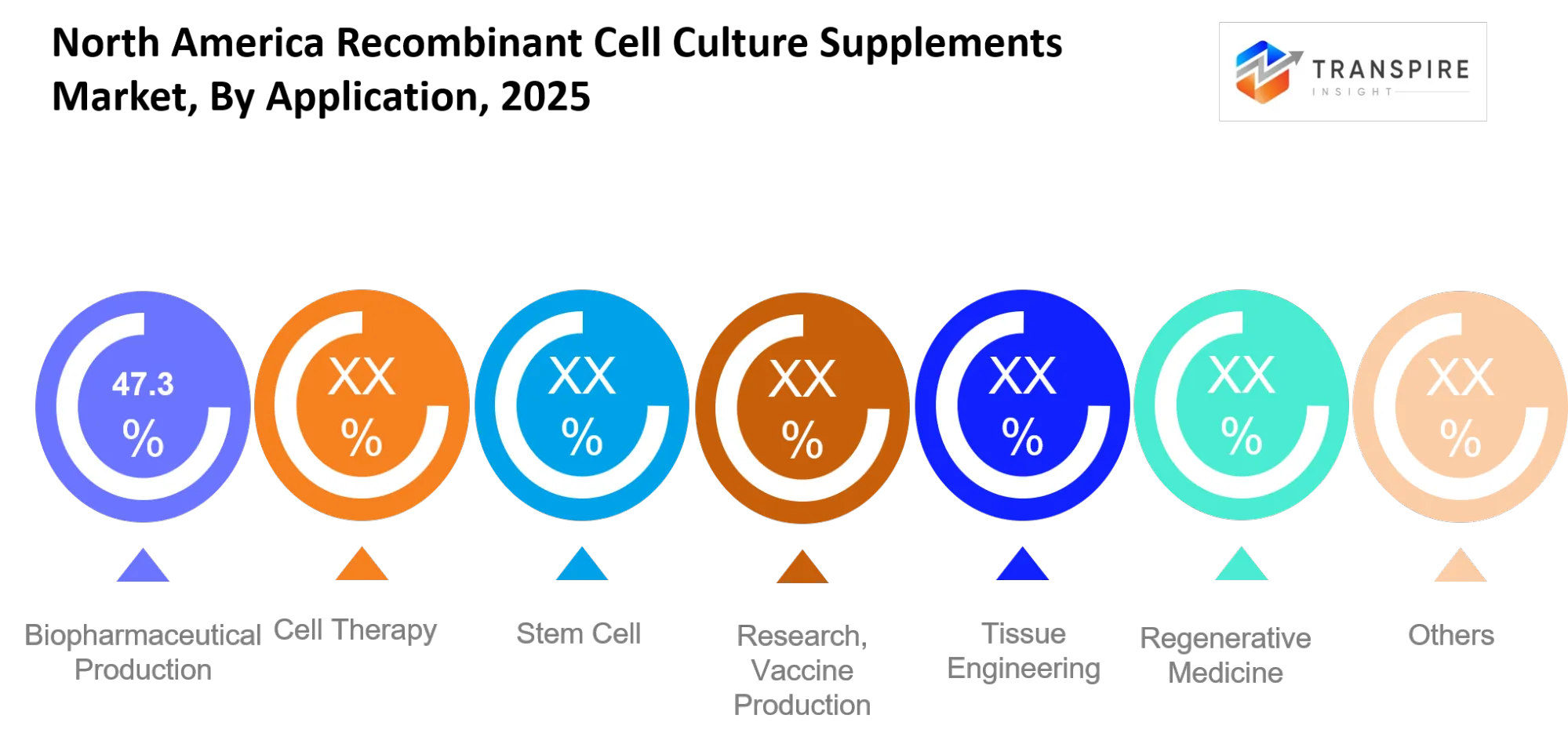
By Cell Type
In 2025 , Mammalian Cells are still the loudest cell type segment, taking about 52% of market revenue, and CHO (Chinese Hamster Ovary) cells alone are up at 31% of the mammalian slice. People tend to favor CHO cells for therapeutic protein production , because they behave well when scaled up and they also provide the post- translational changes that line up with human proteins. HEK (Human Embryonic Kidney) cells land at 18% of mammalian segment demand, mostly used for viral vector work and vaccine manufacturing, so they get attention pretty fast.
Stem Cells bring 28% of cell type market revenue into the mix, and it is split between embryonic and induced pluripotent stem cells, both of which lean on specialized supplements. Those supplements help maintain self-renewal while keeping differentiation tightly controlled. This part is expanding at roughly 16% per year, as regenerative medicine plus disease modeling work keeps widening. Also, stem cell culture supplements often cost a lot more, about 2.5 times the price of mammalian cell supplements, since the development workload is heavy and the buyer numbers are smaller, which creates a kind of premium gravity.
For the remaining chunk, Immune Cells along with Primary Cells together make 20% of cell type revenue in 2025, and they are growing around 14% annually. T-cell culture for CAR-T manufacturing is the main lever, and it needs supplements that are tuned for activation and expansion of primary lymphocytes. Primary cell applications can feel a bit unpredictable, demand spikes are more volatile, because only a limited set of therapeutic areas use them, which adds execution risk for vendors, especially when forecasts get shaky.
By End User
Biopharmaceutical Companies make up about 41% of end-user revenue in 2025, and they bring in a pretty steady recurring pull from integrated pharmaceutical companies, especially those with big biomanufacturing setups. In practice procurement tends to be centralized via strategic supplier partnerships and long term agreements, so price swings stay limited , though overall growth rates can feel a bit muted.
Biotechnology Companies account for 23% of end-user revenue, and they are expanding around 15% each year. This space includes early stage organizations running clinical trials, plus specialized cell therapy manufacturers, and regenerative medicine developers. What they really care about is consistency and dependable output as well as strong vendor support, not so much the cheapest offer. Because of that, margin positive growth is more likely.
Contract Manufacturing Organizations sit at 22% of end-user revenue, growing roughly 18% annually as biopharmaceutical firms hand off “non-core” production. CMOs usually run with slimmer margins than biopharmaceutical companies, and it shows in how they buy. Their procurement choices can be more price reactive, which ends up weighing on the overall market’s pricing power.
By Form
Liquid Supplements take about 58% of the form-based market revenue in 2025, which kinda lines up with an operational preference for ready-to-use formulations in manufacturing flows. In practice, manufacturers try to sidestep powder reconstitution steps, because those steps can bring in variability, plus extra labor costs. The shelf-life ranges around 12 to 24 months, so liquid options feel more manageable for inventory in production facilities.
Customized Formulations sit at 24% of form revenue, and they’re moving up roughly 14% each year. More and more manufacturers ask for proprietary supplement blends tuned for certain cell lines and specific production outcomes, sometimes even with a bit of bespoke tweaking. Because of that, these offerings often sell with 35 to 50% price premiums vs. standard formulations, and they tend to deliver the best margins across the vendor portfolio, overall.
Powder Supplements and Concentrates together make up 18% of form revenue, but they’re sliding by about 2% annually. The reason is pretty clear, customers are steadily shifting toward liquid and customized solutions. Vendors keep these categories around mostly to serve cost-aware academic groups and newer emerging biotech teams where profit margins are lower, yet the relationships can matter a lot for future expansion.
By Form (continued)
Ready to Use Products hit about 15% of total form revenue in 2025, and they keep expanding at roughly 12% a year. Vendors, meanwhile are bundling supplements with other bioprocess inputs kind of like integrated bundles, so customers face less procurement friction , and the margins get a lift thanks to these service add-ons. Animal Free Products are at 23% of form revenue too, and they’re growing about 18% annually. That pace seems tied to ethical sourcing mandates, those push adoption across pharmaceutical, biotechnology and academic customers. Also the regulatory acceptance of animal-free production has basically flipped the script, so the competitive disadvantage these products used to carry is now gone.
What are the Key Use Cases Driving the North America Recombinant Cell Culture Supplements Market?
Monoclonal Antibody Manufacturing is still the main use case, taking up about 38% of the whole market volume, mainly driven by therapeutic antibody production used in autoimmune disease, oncology, and infectious disease indications. Big biopharmaceutical companies keep large CHO cell bioreactors running pretty much all the time, so supplement demand stays steadier, coming from an installed base that doesn’t really rotate that fast or at all.
CAR-T Cell Therapy Manufacturing is the fastest moving one, growing around 24% every year. The process for CAR-T cells, kind of needs specialized supplements that help with T-cell activation , expansion and also cytokine production, and it has to be done at roughly 50 to 200 liters per patient treatment. So the demand ends up pretty concentrated in a small group of manufacturers, but the value per unit is high, so it matters.
Gene Therapy Viral Vector Production is showing up more clearly as its own use case, with demand increasing about 28% annually. Adeno-associated virus (AAV) and lentiviral vector manufacturing depend on supplements tuned for permissive cell transduction and for pushing viral titer upward. Because of that, vendors can often charge a premium, and they can work on proprietary formulations, which is not easy for competitors to repeat, even if they want to.
Report Overview Table
|
Report Metrics |
Details |
|
Market size value in 2025 |
USD 346.8 Million |
|
Market size value in 2026 |
USD 390.6 Million |
|
Revenue forecast in 2033 |
USD 898.3 Million |
|
Growth rate |
CAGR of 12.63% from 2026 to 2033 |
|
Base year |
2025 |
|
Historical data |
2021 - 2024 |
|
Forecast period |
2026 - 2033 |
|
Report coverage |
Revenue forecast, competitive landscape, growth factors, and trends |
|
Regional scope |
North America (United States, Canada, Mexico) |
|
Key companies profiled |
Thermo Fisher Scientific, Merck KGaA, Cytiva, Sartorius, Corning, FUJIFILM Irvine Scientific, Lonza, Bio-Techne, Repligen, Danaher, Avantor, PromoCell, Miltenyi Biotec, STEMCELL Technologies, PeproTech |
|
Customization scope |
Free report customization (country, segment scope). Avail customized purchase options to meet your exact research needs. |
|
Report Segmentation |
By Product Type (Recombinant Albumin, Recombinant Insulin, Recombinant Transferrin, Recombinant Growth Factors, Recombinant Cytokines, Recombinant Proteins, Serum Replacements), By Application (Biopharmaceutical Production, Cell Therapy, Gene Therapy, Stem Cell Research, Vaccine Production, Tissue Engineering, Regenerative Medicine), By Cell Type (Mammalian Cells, Stem Cells, CHO Cells, HEK Cells, Hybridoma Cells, Immune Cells, Primary Cells), By End User (Biopharmaceutical Companies, Biotechnology Companies, CMOs, Academic Institutes, Research Centers, Government Laboratories, CROs), By Form (Liquid Supplements, Powder Supplements, Concentrates, Customized Formulations, Ready-to-Use Products, Animal-Free Products, Chemically Defined Products) |
Which Regions are Driving the North America Recombinant Cell Culture Supplements Market Growth?
The United States pretty much dominates the North America market revenue, at roughly 82% of the total value in 2025, there’s no real surprise there. What really matters is how biopharmaceutical manufacturing capacity is clustered along the Northeast Corridor, plus California and Texas. That geographic stacking then creates local need for supplements, from Genentech, Novo Nordisk, Eli Lilly, and yes also dozens of contract manufacturers, who basically fill in the gaps.
On top of that, the US regulatory environment is pretty direct about it and it explicitly accepts chemically defined supplements, and this has sped up vendor investment in infrastructure and in customer ties, within US facilities. So it’s like everyone is building the same bridges, but faster.
Canada makes up about 14% of North America market revenue, and the demand is mostly concentrated around Montreal and Toronto biopharmaceutical clusters. Canadian manufacturers tend to enjoy cost advantages compared with the US and they’re close enough to US markets, so their positioning becomes one of those “easy to justify” locations for expanding contract manufacturing capacity, especially when companies want proximity without the full price tag.
Mexico is smaller at around 4% of market revenue, but it’s growing at 18% each year. The reason is that pharmaceutical companies are setting up manufacturing footprints for cost-sensitive applications. The growth pattern there is different from the more mature markets— in Mexico cost is the main purchase factor, which in practice limits premium product adoption, even when the product is technically stronger.
Who are the Key Players in the North America Recombinant Cell Culture Supplements Market and How Do They Compete?
Thermo Fisher Scientific along with Merck KGaA basically pull in something like 32% of market revenue via integrated portfolios that stretch from raw materials through bioreactors, and even out to services too. Thermo Fisher plays it with sheer scale , plus a one-stop-shop kind of convenience, where they bundle supplements alongside bioreactor hardware and process automation software. The idea is to make switching suppliers annoying, with higher switching costs . Merck goes a different route , leaning into technical support and bioprocess optimization services, so supplements get framed as part of a whole manufacturing setup, not just a stand alone item.
Then you have Cytiva and Sartorius, more focused on the mid-market with specialized products for cell therapy and gene therapy. They both put serious money behind regenerative medicine and gene therapy, and they build proprietary formulations that a lot of bigger commodity suppliers just don’t offer. Because of that, they can charge a premium and earn better margins compared to bulk supplement markets.
Lonza tends to operate through strategic partnerships with biopharmaceutical companies, sort of bundling supplements with contract manufacturing services. When that happens, switching costs grow, because changing supplement suppliers means operational changes across the full manufacturing relationship. And for FUJIFILM Irvine Scientific , the angle is Japanese manufacturing precision and regulatory acceptance, especially in Asian-American biopharmaceutical communities. They provide localized customer support that larger international competitors often can’t quite match.
North America Recombinant Cell Culture Supplements Market Companies
- Thermo Fisher Scientific
- Merck KGaA
- Cytiva
- Sartorius
- Corning
- FUJIFILM Irvine Scientific
- Lonza
- Bio-Techne
- Repligen
- Danaher
- Avantor
- PromoCell
- Miltenyi Biotec
- STEMCELL Technologies
- PeproTech
Recent Developments:
In December 2025, Thermo Fisher Scientific announced the launch of Advanced Therapies Suite, integrating its recombinant supplement portfolio with real-time bioprocess monitoring software and predictive analytics tools. The integrated offering targets contract manufacturers and biopharmaceutical companies running cell therapy manufacturing, enabling process optimization through data-driven decision support.https://www.thermofisher.com
In October 2025, Merck KGaA completed construction of its first dedicated animal-free supplement manufacturing facility in North Carolina. The facility is designed to produce chemically defined growth factor and cytokine supplements at scale, reducing lead times and creating local sourcing optionality for North American biopharmaceutical companies.https://www.emdgroup.com
In January 2026, Cytiva announced a partnership with a leading CAR-T manufacturing company to develop optimized supplement formulations for allogeneic T-cell therapy production. The collaboration provides Cytiva with real-world clinical production data that accelerates product development and positions the vendor as a specialized provider for cell therapy manufacturing rather than a generic supplement supplier.https://www.cytivalifesciences.com
What Strategic Insights Define the Future of the North America Recombinant Cell Culture Supplements Market?
Over the next five to seven years, the recombinant cell culture supplements market is likely to sort of split into two separate segments, one where commodity chemically defined supplements are in a race on price for large-scale biopharmaceutical production , and another where specialized, application-specific formulations get to ask for a premium, especially in advanced therapies. The main push behind this is volume concentration in older-school biopharmaceutical manufacturing , where about a dozen contract manufacturers hold around 60% of capacity and can leverage volume pricing power, which then kinda turns supplements into a commodity. At the same time, the early-stage gene therapy and regenerative medicine space is more scattered, with dozens of companies running smaller volume pilot batches and early-clinical productions, so they tend to show a willingness to pay more for formulations that are tuned for their particular use case.
What the growth storylines sometimes miss, is the technological commoditization of recombinant protein manufacturing. The cost of goods for recombinant growth factors has already fallen about 35% from 2020 to 2025, and it’s expected to drop another 30 to 40% from 2025 to 2030 as fermentation and purification capabilities keep improving. That kind of downward curve will squeeze margins for vendors selling commodity supplements, but it also makes adoption speed up, since price parity with traditional serum-based products shows up sooner than many current forecasts assume. And for vendors who still have a big legacy serum-supplement business, this margin pressure could end up forcing portfolio reshuffling and hard exit choices.
There’s also an opportunity that still isn’t fully showing up in several market analyses , namely the regulatory adoption of living cell therapies , which then calls for specialized supplement ecosystems.
-
By Product Type
- Recombinant Albumin
- Recombinant Insulin
- Recombinant Transferrin
- Recombinant Growth Factors
- Recombinant Cytokines
- Recombinant Proteins
- Serum Replacements
-
By Application
- Biopharmaceutical Production
- Cell Therapy
- Gene Therapy
- Stem Cell Research
- Vaccine Production
- Tissue Engineering
- Regenerative Medicine
-
By Cell Type
- Mammalian Cells
- Stem Cells
- CHO Cells
- HEK Cells
- Hybridoma Cells
- Immune Cells
- Primary Cells
-
By End User
- Biopharmaceutical Companies
- Biotechnology Companies
- CMOs
- Academic Institutes
- Research Centers
- Government Laboratories
- CROs
-
By Form
- Liquid Supplements
- Powder Supplements
- Concentrates
- Customized Formulations
- Ready-to-Use Products
- Animal-Free Products
- Chemically Defined Products
Frequently Asked Questions
Find quick answers to common questions.
The North America Recombinant Cell Culture Supplements Market size is expected to reach USD 898.3 Million by 2033.
The key Segments are By Product Type (Recombinant Albumin, Recombinant Insulin, Recombinant Transferrin, Recombinant Growth Factors, Recombinant Cytokines, Recombinant Proteins, Serum Replacements), By Application (Biopharmaceutical Production, Cell Therapy, Gene Therapy, Stem Cell Research, Vaccine Production, Tissue Engineering, Regenerative Medicine), By Cell Type (Mammalian Cells, Stem Cells, CHO Cells, HEK Cells, Hybridoma Cells, Immune Cells, Primary Cells), By End User (Biopharmaceutical Companies, Biotechnology Companies, CMOs, Academic Institutes, Research Centers, Government Laboratories, CROs), and By Form (Liquid Supplements, Powder Supplements, Concentrates, Customized Formulations, Ready-to-Use Products, Animal-Free Products, Chemically Defined Products).
Major Players include Thermo Fisher Scientific, Merck KGaA, Cytiva, Sartorius, Corning, FUJIFILM Irvine Scientific, Lonza, Bio-Techne, Repligen, Danaher, Avantor, PromoCell, Miltenyi Biotec, STEMCELL Technologies, and PeproTech.
The Current North America Recombinant Cell Culture Supplements Market size is USD 346.8 Million in 2025.
The North America Recombinant Cell Culture Supplements Market CAGR is 12.63% from 2026 to 2033.
- Thermo Fisher Scientific
- Merck KGaA
- Cytiva
- Sartorius
- Corning
- FUJIFILM Irvine Scientific
- Lonza
- Bio-Techne
- Repligen
- Danaher
- Avantor
- PromoCell
- Miltenyi Biotec
- STEMCELL Technologies
- PeproTech
About the Authors

Pankaj Ghogare Patil
I am Pankaj Ghogare Patil, a Senior Research Analyst at Transpire Insight, specializing in the Pharmaceutical, Chemicals & Materials, Healthcare IT, and Biotechnology industry. My expertise lies in conducting comprehensive market research, analyzing industry trends, evaluating competitive landscapes, and translating complex data into actionable insights. At Transpire Insight, I closely follow emerging technologies, regulatory developments, and market innovations to create accurate, well-researched, and informative content that helps businesses and professionals make informed decisions. I am committed to producing credible, evidence-based articles that reflect industry best practices while making technical topics accessible and valuable for a broad audience.

Chakradhar Khansole
Chakradhar serves as the Research Director at Transpire Insight, bringing over 8 years of experience in technology, innovation, and strategic market intelligence. He specializes in transforming complex market data into actionable business insights that enable organizations to make informed, growth-oriented decisions. Recognized for his strategic vision and analytical expertise, Chakradhar leads high-impact research initiatives, delivering comprehensive market assessments, competitive intelligence, and forward-looking industry analysis.
Recently Published Reports
-
Jul 2026
Alopecia Treatment Market
Alopecia Treatment Market Size, Share & Analysis Report By Disease Type (Alopecia Areata, Cicatricial Alopecia, Traction Alopecia, Alopecia Totalis, Androgenetic Alopecia, Alopecia Universalis, and Other Disease Types), By Treatment Type (Topical Treatments, Oral Medications, Injectable Therapies, and Hair Transplantation), By Gender (Male, and Female), By Distribution Channel (Hospitals and Clinics, Retail Pharmacies, and Online Retailers), and Geography (North America, Europe, Asia-Pacific, Middle East and Africa, South and Central America), 2021 - 2031
-
Jul 2026
Medical Ultrasound Probe Market
Medical Ultrasound Probe Market Size, Share & Analysis Report By Type (Linear Type, Convex Type, Endocavitary Probe, Phased Array/Cardiac Probe, Transesophageal (TEE) Probe, and Others), By Application (Ophthalmology, Cardiology, Musculoskeletal, Oncology, Obstetrics & Gynecology, General Imaging, and Others), By End User (Hospitals & Clinics, Diagnostic Centers, Ambulatory Surgical Centers, and Others), and Geography (North America, Europe, Asia-Pacific, Middle East and Africa, South and Central America), 2021 – 2031
-
May 2026
Biosimilars Market
Biosimilars Market By Product Type (Monoclonal Antibodies, Recombinant Hormones, Erythropoietin, G-CSF, Others), By Indication (Oncology, Autoimmune Diseases, Blood Disorders, Diabetes, Others), By Manufacturing Type (In-House Manufacturing, Contract Manufacturing), By Distribution Channel (Hospital Pharmacies, Retail Pharmacies, Online Pharmacies), By Industry Analysis, Size, Share, Growth, Trends, and Forecasts 2021-2033
-
Apr 2026
Gastrointestinal Endoscopy Market
Gastrointestinal Endoscopy Market By Type (Rigid Gastrointestinal Endoscope, Flexible Gastrointestinal Endoscopes, Disposable Gastrointestinal Endoscope), By Procedure Type (Colonoscopy, Gastroscopy, Duodenoscopy, Enteroscopy, Flexible Sigmoidoscopy, Others), By Application (Diagnosis, Treatment), By End-Users (Hospitals, Ambulatory Surgical Centers, Specialty Clinics, Laboratories, Others), By Industry Analysis, Size, Share, Growth, Trends, and Forecasts 2021-2033