North America Preoperative Skin Preparation Market Size & Forecast:
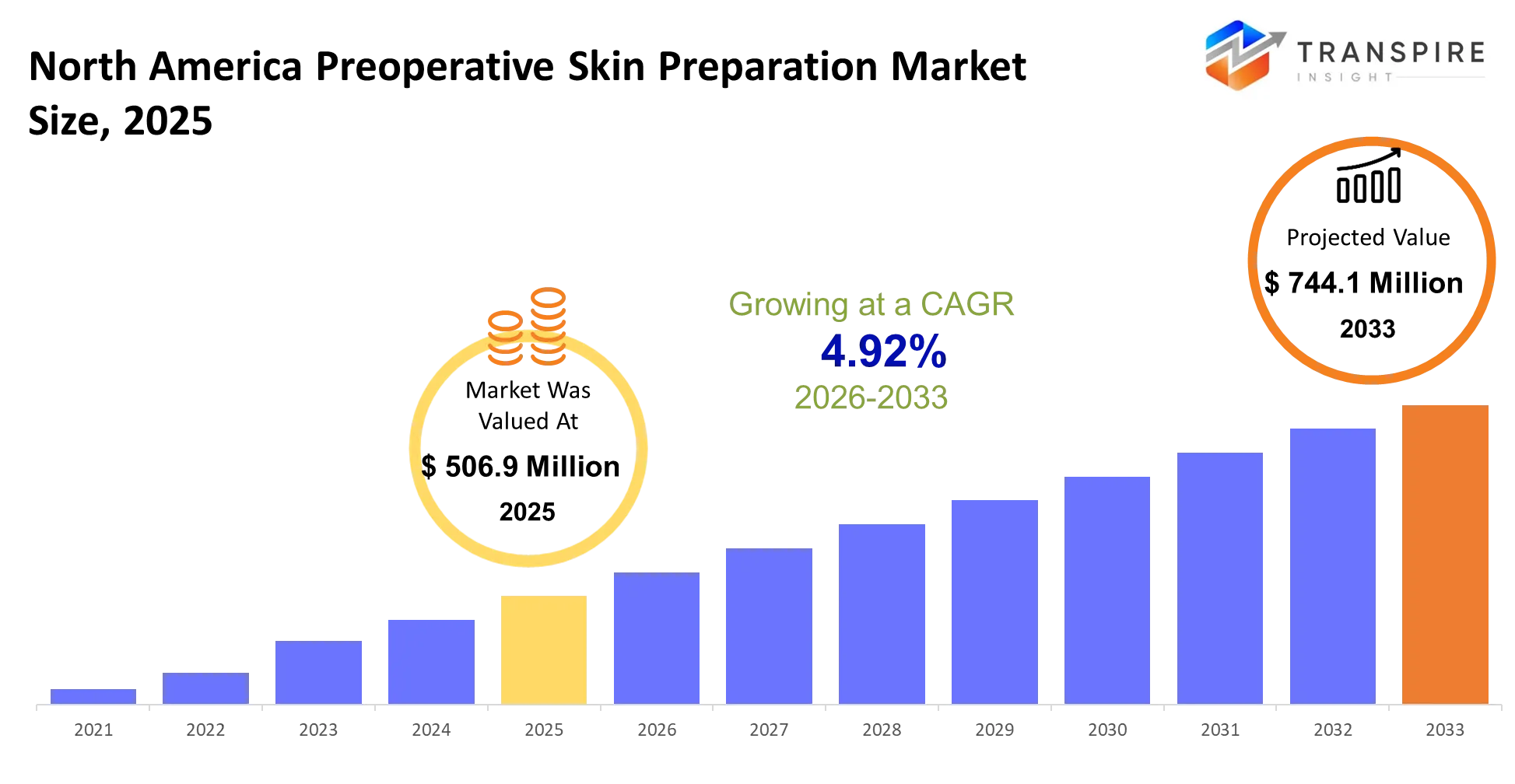
- North America Preoperative Skin Preparation Market Size 2025: USD 506.9 Million
- North America Preoperative Skin Preparation Market Size 2033: USD 744.1 Million
- North America Preoperative Skin Preparation Market CAGR: 4.92%
- North America Preoperative Skin Preparation Market Segments: By Type (Antiseptic Solutions, Scrubs, Applicators, Wipes, Others); By Application (Surgery Prep, Infection Prevention, Diagnostics, Others); By End-User (Hospitals, Clinics, Surgical Centers, Others); By Form (Liquid, Foam, Gel, Others)
To learn more about this report,  Download Free Sample Report
North America Preoperative Skin Preparation Market Summary
The North America Preoperative Skin Preparation Market was valued at USD 506.9 Million in 2025. It is forecast to reach USD 744.1 Million by 2033. That is a CAGR of 4.92% over the period.
The North America Preoperative Skin Preparation Market plays a critical role in cutting down surgical site infections , since the patient’s skin should be properly disinfected before invasive procedures, you know. Hospitals, ambulatory surgery centres, and specialty clinics lean on antiseptic solutions, applicators, and sterile prep systems to lower contamination risks during orthopaedic, cardiovascular, cosmetic, and general surgeries. Over the last five years the market has kind of moved away from clean, simple antiseptic procurement, toward more integrated infection-prevention workflows that bundle standardized prep routines, digital compliance monitoring, and single-use delivery systems all together.
One big reason for that shift was the post-pandemic tightening of infection-control standards across North American healthcare facilities. Around the same time, Medicare-linked reimbursement penalties tied to preventable surgical infections kinda nudged hospitals to switch over to clinically validated chlorhexidine-alcohol formulations, and also to procedure specific prep kits. Then, 2020–2022 supply chain disruptions showed pretty clearly how some providers had been relying on imported medical consumables, so manufacturers started bolstering regional production and distribution capacities too. Taken together, these shifts increased recurring procurement cycles, helped speed up outpatient surgical adoption and built stronger demand for workflow-efficient compliance oriented skin preparation technologies that, honestly, need to slide right into hectic clinical routines.
Key Market Insights
In 2025, the United States kind of dominated the North America Preoperative Skin Preparation Market with something like over 78% share, really because surgical procedure volumes are high and ongoing.
Canada showed up as the fastest-growing regional contributor between 2026 and 2033, mainly from centralized healthcare procurement and perioperative standardization efforts—more consistent protocols, you know.
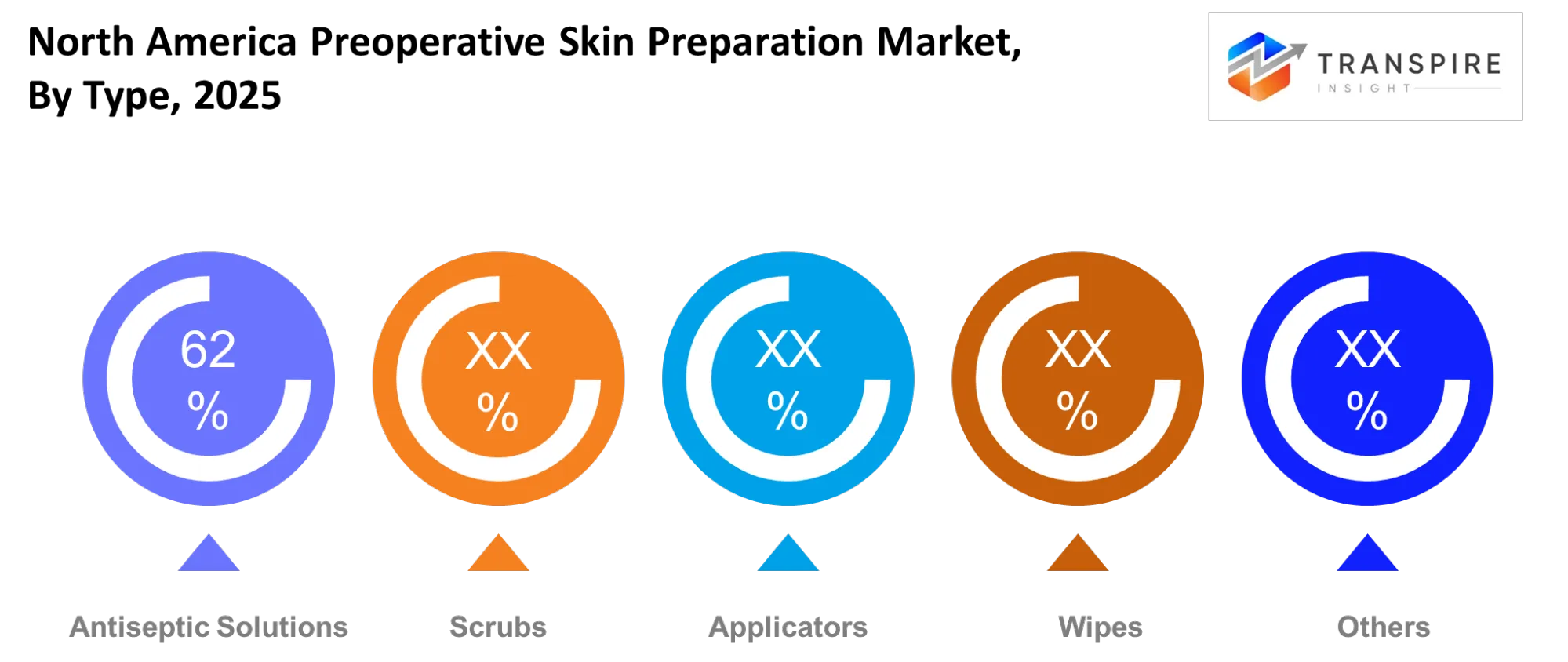
Antiseptic solutions accounted for nearly 45% of the industry in 2025, as hospitals leaned heavily toward chlorhexidine-alcohol formulations with clinically backed antimicrobial staying power for longer.
Meanwhile, applicators hung on as the second-largest segment, while surgical centers began purchasing single-use, contamination resistant delivery systems a bit more after 2023, not just sporadically, you know.
Gel-based formulations also tracked the fastest-growing demand curve through 2033, as they provide a controlled application process, which is helpful for minimally invasive procedures.
Surgery preparation accounted for more than 60% of total market demand in 2025, mainly because operating rooms need standardized pre-incision antiseptic protocols for every procedure that happens there.
Diagnostic and catheterization labs increased the uptake of rapid-drying skin preparation products as outpatient interventions expanded across North American healthcare facilities.
Also, ambulatory surgery centers moved faster in buying prepackaged prep kits after 2024, to cut patient turnaround times, and to keep workflow more uniform.
On the end-user side, hospitals stayed out front with about 65% market share, because big surgical departments need continuous antiseptic product replenishment.
Ambulatory surgical centers turned into the fastest-growing end-user category, as same-day orthopaedic and cosmetic procedures grew quickly after the pandemic recovery years.
What are the Key Drivers, Restraints, and Opportunities in the North America Preoperative Skin Preparation Market?
The strongest driver shaping the market is the tightening connection between surgical site infection rates and hospital reimbursement performance , kinda like it’s all tied together more now than before. Healthcare systems across the United States increasingly face financial penalties for preventable postoperative infections under value-based care frameworks established by Medicare and several private insurers. Because of that shift, hospitals started standardizing preoperative antiseptic protocols, and they also ramped up procurement of clinically validated chlorhexidine-alcohol products , plus single use applicators and procedure-specific prep kits. With higher surgical volumes in orthopedic and cardiovascular procedures, the same demand pattern gets amplified , so suppliers with strong infection-control portfolios end up seeing steadier revenue expansion .
The biggest restraint stays the structural complexity of hospital procurement and product validation processes though, it’s not small. Large healthcare networks often require long clinical evaluations, compatibility testing, and infection-control committee approvals before they’ll switch from existing skin preparation products . That slows adoption of new formulations and it can limit market entry for smaller manufacturers even when the technology actually improves. On top of that, reliance on long-term group purchasing contracts suppresses pricing flexibility , and it delays competitive penetration into major hospital systems.
A meaningful future opportunity is starting to show up in outpatient and ambulatory surgical environments , where providers want faster workflow efficiency and lower procedural turnaround times. Demand for digitally traceable, prepackaged prep systems is rising as surgical centers expand minimally invasive surgeries and same-day procedures.Companies that enter smart applicators, add integrated compliance tracking, and use compact antiseptic delivery systems seem set to gain from this transition sometime between 2026 and 2033.
What Has the Impact of Artificial Intelligence Been on the North America Preoperative Skin Preparation Market?
Artificial intelligence and newer digital tools are starting to change the way preoperative skin prep gets done, sorta by nudging inventory control, compliance oversight, and perioperative efficiency in ways that are showing up across many North American health systems. More hospitals and surgical centers now lean on AI enabled supply chain platforms, to track antiseptic applicators, prep kits, and other sterile consumables across operating rooms in a more automatic manner. Medline and Cardinal Health, for example, have been building out digital inventory systems that look at procedure scheduling patterns as well as usage rates, so they can reduce stockouts and also cut down on excess product waste. There are also automated compliance platforms that plug into electronic health records, and they make it easier for clinicians to confirm whether the skin antisepsis steps were actually finished before surgery, which helps close documentation gaps, and, honestly it lowers some infection-control audit anxiety.
Meanwhile, machine learning models are also giving perioperative teams more predictive operational planning support. Many systems use predictive analytics to estimate future surgical supply needs, coordinate staffing, and flag procedure groups that tend to carry higher infection risk exposure. Some hospital networks said they saw fewer operating room hold ups and better surgical throughput once they rolled out AI assisted workflow coordination tools somewhere between 2024 and 2026. On top of that, digital traceability systems, especially those tied to barcode enabled applicators, are improving procedural accountability, and they help hospitals keep accreditation requirements more in line. Still, wider AI adoption doesn’t happen cleanly for everyone, because the costs to integrate can be high, the hospital IT landscape is often fragmented, and interoperability between surgical workflow software and older procurement systems can be inconsistent.
Key Market Trends
- Since 2022, ambulatory surgery centers have been adopting single-use chlorhexidine applicators more, to cut down on prep time and for regulatory compliance that feels more consistent , too.
- After 2023, hospitals shifted their procurement habits toward bundled infection-prevention contracts with Steris, Ecolab, and Medline, rather than buying standalone antiseptic products.
- The demand for alcohol-based chlorhexidine formulations increased significantly between 2021 and 2025, largely because surgical site infection penalties began to shape reimbursement structures.
- By 2025, some U.S. healthcare systems had started rolling out digital perioperative tracking tools, to log skin preparation compliance and lower procedural liability exposure.
- Manufacturers also began moving portions of antiseptic packaging and applicator production into North America after pandemic-era supply chain disruptions, which basically revealed an import dependence problem that could not be ignored.
- Since 2024, outpatient orthopedic and cosmetic procedure volume has been growing faster, and that helped accelerate purchases of fast-drying preparation solutions, designed for same-day discharge workflows that dont like delays.
- Becton Dickinson and 3M put more emphasis on clinically validated formulations, because hospitals were asking for stronger evidence regarding antimicrobial persistence, and patient safety outcomes.
- After 2025, environmental scrutiny—especially chemical waste and sterilization emissions—pushed suppliers to develop lower-residue antiseptic formulations, and more recyclable applicator packaging, like seriously.
- In Canada , healthcare systems gradually increased their preference for standardized perioperative prep kits between 2023 and 2026, mainly to simplify procurement across multi-hospital networks.
- And lately, AI-enabled inventory systems emerging from Medline and bigger distributors have improved forecasting accuracy for surgical consumables, which reduces stockout risks in high-volume facilities, overall.
North America Preoperative Skin Preparation Market Segmentation
By Type
Antiseptic solutions take up the largest share of market revenue, honestly because surgical protocols in hospitals as well as ambulatory centers rely pretty hard on chlorhexidine-alcohol and povidone-iodine formulations before invasive procedures. There’s also strong clinical evidence backing rapid microbial reduction, plus longer protection that keeps the interest alive across orthopedic, cardiovascular, and general surgeries. On top of that, high procedural volumes and recurring consumption patterns help keep the procurement cycle steady for liquid antiseptic products, so supply planning stays predictable.
Scrubs and wipes keep a fairly steady adoption rate in settings where routine infection-control and pre-procedure cleansing efficiency really matters. Applicators are getting more traction too, since single-use delivery helps lower contamination risks and makes the dosage more consistent during busy surgical preparation. Product teams are increasingly putting money into integrated applicator technologies that pair antiseptic agents with ergonomic dispensing systems, which sounds simple but it changes the daily workflow. In the near future, competition inside this segment will probably revolve around easier handling, less waste, and how well the products fit outpatient surgical workflows.
To learn more about this report, Download Free Sample Report
By Application
Surgery preparation still looks like the dominant application segment , mainly because healthcare facilities keep pushing surgical site infection reduction while following strict perioperative compliance rules. Demand stays especially high in large hospitals, where infection-control targets can affect reimbursement models and also patient outcome metrics . Procedural frequency across orthopedic, gastrointestinal, and cardiovascular surgeries also supports this position, and it’s not slowing down.
Infection prevention applications outside the traditional operating rooms keep growing in diagnostic centers , catheterization labs, and outpatient intervention facilities. The increased adoption of minimally invasive procedures has really raised the need for quick-drying antiseptic solutions that help shorten patient turnaround times . Diagnostic use is also becoming more popular as healthcare systems tighten cross contamination protocols for imaging-guided procedures and for specimen collection environments . Over the forecast period , companies that focus on procedure specific prep systems and faster antimicrobial action are expected to gain more institutional pull.
By End User
Hospitals take the highest revenue share, mostly because big surgical departments constantly buy antiseptic solutions , sterile wipes, and disposable applicators. Long term supply ties get reinforced too , when hospitals use integrated purchasing agreements with infection prevention suppliers across major healthcare systems. Strict accreditation rules , plus the growing attention to surgical quality metrics , keep product usage steady across inpatient settings.
Surgical centers and specialty clinics are showing up as key growth contributors, driven by rising outpatient procedure counts and pressure to run operations more efficiently. Ambulatory facilities more and more favor prepackaged skin preparation kits, since they cut preparation time and make regulatory alignment easier. Smaller clinics are also moving toward compact , single-use products, which can reduce storage needs, and limit product waste.Future market expansion within this segment will push suppliers to come up with cost-efficient , workflow-oriented solutions for decentralized healthcare delivery models, sort of tailored to how care is actually delivered on the ground.
By Form
Liquid formulations still hold the top share, mainly because healthcare providers want broad-area coverage, quick antimicrobial action, and the ability to work across multiple surgical specialties. Chlorhexidine-based liquid solutions remain the default choice for preoperative preparation, since there’s strong clinical acceptance , and it’s usually straightforward to apply. Consistent purchasing patterns across hospitals and surgical centers keeps that segment in a leading stance, basically.
Foam and gel formulations are picking up momentum for procedures where controlled application really matters, and where dripping during skin preparation should be minimized. Gel-based products are especially useful in specific surgical zones where accuracy and a longer contact window help antiseptic performance. Foam products are also being adopted more often in outpatient and emergency settings because they’re easier to manage and tend to reduce product runoff. In the coming years, product innovation in these alternative formulations is expected to focus on reducing skin sensitivity, speeding drying time, and improving compatibility with more modern applicator systems, so overall usage feels more efficient.
What are the Key Use Cases Driving the North America Preoperative Skin Preparation Market?
Hospital based surgical procedures still kind of stay the main thing driving demand for preoperative skin preparation products across North America. You see orthopedic, cardiovascular, and general surgeries create especially high use, mostly because infection prevention rules demand a standardized antiseptic application before each invasive procedure .
Ambulatory surgery centers are turning into a more important secondary growth spot as outpatient procedures keep rising in the United States and Canada. Cosmetic surgery clinics , and same-day orthopaedic facilities are also increasingly going for single-use prep applicators and fast-drying chlorhexidine formulations, not just for speed in workflow but for regulatory compliance too.
There are also emerging use cases in home-based postoperative care and mobile surgical programs that support minimally invasive procedures outside the usual hospital setting. At the same time manufacturers are looking at sensor-enabled applicators and digitally tracked prep systems, aimed to strengthen procedural documentation in high volume perioperative environments in the next decade.
|
Report Metrics |
Details |
|
Market size value in 2025 |
USD 506.9 Million |
|
Market size value in 2026 |
USD 531.8 Million |
|
Revenue forecast in 2033 |
USD 744.1 Million |
|
Growth rate |
CAGR of 4.92% from 2026 to 2033 |
|
Base year |
2025 |
|
Historical data |
2021 - 2024 |
|
Forecast period |
2026 - 2033 |
|
Report coverage |
Revenue forecast, competitive landscape, growth factors, and trends |
|
Regional scope |
North America (Canada, The United States, and Mexico) |
|
Key company profiled |
3M, Becton Dickinson, Cardinal Health, Medline, Ecolab, Johnson & Johnson, Sage Products, Molnlycke, ConvaTec, Steris, Getinge, Schulke & Mayr, Paul Hartmann, Lohmann & Rauscher, Dynarex |
|
Customization scope |
Free report customization (country, regional & segment scope). Avail customized purchase options to meet your exact research needs. |
|
Report Segmentation |
By Type (Antiseptic Solutions, Scrubs, Applicators, Wipes, Others); By Application (Surgery Prep, Infection Prevention, Diagnostics, Others); By End-User (Hospitals, Clinics, Surgical Centers, Others); By Form (Liquid, Foam, Gel, Others) |
Which Regions are Driving the North America Preoperative Skin Preparation Market Growth?
North America still kind of leads the preoperative skin preparation market, mainly because surgical protocols are highly standardized, infection prevention regulations are quite strict and the whole healthcare infrastructure is way more advanced than elsewhere. The United States really pulls the most regional demand forward with big volumes of surgeries, strong compliance expectations tied to groups like the CDC and Joint Commission, and lots of hospitals plus ambulatory surgical centers using chlorhexidine alcohol formulations in everyday practice. On top of that, large group purchasing organizations push market concentration, because they lean toward suppliers that show proven clinical results, can manufacture at scale and also deliver nationwide. In practice this whole setup keeps getting reinforced by ongoing hospital spending on perioperative efficiency, electronic compliance monitoring , and infection-control programs that are more integrated than before, so the recurring need for premium skin antiseptic products stays in place.
Europe comes next as the second largest regional contributor, however the way it behaves is different from North America, procurement choices there are guided more by public healthcare budgeting and long term regulatory consistency. In Germany, France, and the United Kingdom, demand stays relatively steady thanks to centralized hospital systems that prefer clinically validated antiseptic options that are also environmentally aligned. Instead of chasing rapid product turnover, many European providers focus on supplier reliability, sustainable packaging, and keeping pace with evolving biocide regulations. That combination turns into a more predictable revenue environment where established companies can hold on to longer contracts, then grow slowly via localized manufacturing, and distribution partnerships that make sense locally.
Asia Pacific seems to be coming up as the fastest growing region, thanks to a bunch of things happening at once, like healthcare infrastructure expansion that keeps moving quickly, more surgical volumes overall, and infection prevention mandates that got stronger after the pandemic period. In the meantime, China and India are putting real money into hospital modernization, plus they are building out ambulatory surgical capacity, while several Southeast Asian countries are increasing their procurement of standardized preoperative antiseptic kits for both public and private healthcare. On top of that, medical tourism is kind of acting like fuel too, it is nudging hospitals to match perioperative hygiene standards with international accreditation requirements, and that alignment is not always small effort. So between 2026 and 2033, this push should generate meaningful opportunities for manufacturers who can bring cost effective formulations, regional manufacturing flexibility and regulatory support that is tuned to the emerging healthcare systems.
Who are the Key Players in the North America Preoperative Skin Preparation Market and How Do They Compete?
The North America preoperative skin preparation market stays somewhat consolidated, like, not totally but still, with large multinational infection prevention firms holding a big chunk via hospital purchasing contracts, regulatory certifications, and these integrated surgical portfolios. The competition is less about price, and more about actual clinical efficacy, how well they keep to infection-control protocols, and whether supplies arrive reliably, on time, again and again. Incumbents keep defending their share through proprietary antiseptic formulations and bundled perioperative solutions, while the smaller players mostly go after ambulatory surgery centers, using simplified procedure-focused prep systems. At the same time, hospitals are leaning toward vendors that can pair skin antisepsis products with sterilization services, surgical drapes, and even workflow support, so yeah service integration turns into a pretty big competitive advantage.
3M competes by leaning on formulation science, plus procedural standardization, especially with iodine and chlorhexidine-based prep systems that are built for rapid antimicrobial persistence. Its edge is the tight integration with hospital surgical routines, and also the fact that clinicians already know the brand, broadly, across North American operating rooms. Becton Dickinson differentiates with the BD ChloraPrep platform, which has strong clinical validation behind it and it lines up well with regulatory expectations, including the constantly shifting aseptic guidelines. The company keeps expanding using evidence driven infection prevention programs that connect back to hospital quality metrics.
Steris and Ecolab go head to head by plugging preoperative skin preparation into wider infection prevention ecosystems. Steris, for example, combines sterilization equipment, surgical consumables, and operating room services, so healthcare systems can consolidate procurement with one main vendor, which makes buying simpler, and often less chaotic. Ecolab relies on its infection-prevention analytics and hospital hygiene infrastructure to strengthen customer retention and cross-sell perioperative antiseptic products. Medline, meanwhile, focuses on distribution efficiency and private-label expansion, using supply chain scale and direct hospital relationships to increase penetration in cost-sensitive surgical centers.
Company List
- 3M
- Becton Dickinson
- Cardinal Health
- Medline
- Ecolab
- Johnson & Johnson
- Sage Products
- Molnlycke
- ConvaTec
- Steris
- Getinge
- Schulke & Mayr
- Paul Hartmann
- Lohmann & Rauscher
- Dynarex
Recent Development News
“In April 2026, Steris launched the VHP™ LTS60 Low Temperature Sterilizer in North America. The new vaporized hydrogen peroxide sterilization system expanded STERIS’s infection prevention portfolio for heat-sensitive surgical materials, strengthening its position in the preoperative sterilization and skin preparation ecosystem.http://www.sterislifesciences.com
“In July 2025, Becton Dickinson announced that its BD ChloraPrep™ Skin Preparation product met the newly released United States Pharmacopeia (USP) Monograph standard. The certification reinforced BD’s leadership in sterile preoperative skin antiseptic solutions and supported broader adoption of compliant chlorhexidine-alcohol skin prep products across North American healthcare facilities.http://news.bd.com
What Strategic Insights Define the Future of the North America Preoperative Skin Preparation Market?
North America preoperative skin preparation market is sorta moving away from just standalone antiseptic products, and toward more integrated infection-prevention ecosystems. That shift is being pushed by tighter hospital acquired infection benchmarks , plus value based reimbursement models, and also the fast growing uptake of outpatient surgical procedures. In the next five to seven years, “winning” isn’t as much about commodity like product sameness it’s more about clinically validated results, digital traceability, and whether the prep system actually fits automated perioperative workflows in real life.
There’s also a quieter concern. The market is still pretty dependent on chlorhexidine and isopropyl alcohol supply chains. If regulatory scrutiny increases around chemical safety, sterilization emissions, or raw material sourcing, it could mess with production economics and make hospital procurement less predictable. At the same time there’s an opening that looks promising—single use sensor enabled preoperative prep systems, made for ambulatory surgery centers and even home based surgical recovery pathways.
For market participants, a practical focus is partnerships with surgical workflow technology providers, and investing in antimicrobial formulations that are evidence backed, and they should match the infection control compliance standards that keep evolving.
North America Preoperative Skin Preparation Market Report Segmentation
By Type
- Antiseptic Solutions
- Scrubs
- Applicators
- Wipes
- Others
By Application
- Surgery Prep
- Infection Prevention
- Diagnostics
- Others
By End-User
- Hospitals
- Clinics
- Surgical Centers
- Others
By Form
- Liquid
- Foam
- Gel
- Others
Frequently Asked Questions
Find quick answers to common questions.
The expected North America Preoperative Skin Preparation Market size is USD 744.1 Million in 2033.
Key segments for the North America Preoperative Skin Preparation Market are By Type (Antiseptic Solutions, Scrubs, Applicators, Wipes, Others); By Application (Surgery Prep, Infection Prevention, Diagnostics, Others); By End-User (Hospitals, Clinics, Surgical Centers, Others); By Form (Liquid, Foam, Gel, Others).
Major North America Preoperative Skin Preparation Market players are 3M, Becton Dickinson, Cardinal Health, Medline, Ecolab, Johnson & Johnson, Sage Products, Molnlycke, ConvaTec, Steris, Getinge, Schulke & Mayr, Paul Hartmann, Lohmann & Rauscher, Dynarex.
The North America Preoperative Skin Preparation Market size is USD 506.9 Million in 2025.
The North America Preoperative Skin Preparation Market CAGR is 4.92% from 2026 to 2033.
- 3M
- Becton Dickinson
- Cardinal Health
- Medline
- Ecolab
- Johnson & Johnson
- Sage Products
- Molnlycke
- ConvaTec
- Steris
- Getinge
- Schulke & Mayr
- Paul Hartmann
- Lohmann & Rauscher
- Dynarex
Recently Published Reports
-
Apr 2026
AI in Diabetic Retinopathy Market
AI in Diabetic Retinopathy Market Size, Share & Analysis Report By Type (Screening AI Systems, Diagnostic AI Systems, and Predictive AI Models), By Application Segment (Hospitals, Ophthalmology Clinics, Diagnostic Centers, and Research and Development), and Geography (North America, Europe, Asia-Pacific, Middle East and Africa, South and Central America), 2021 - 2031
-
Apr 2026
Psychometric Tests Market
Psychometric Tests Market Size, Share & Analysis Report By Type (Personality Tests, Ability/Aptitude Tests, Skill/Knowledge Tests, and Others), By Application (Talent Acquisition and Talent Management), and Geography (North America, Europe, Asia-Pacific, Middle East and Africa, South and Central America), 2021 – 2031
-
Apr 2026
Rare Biological Sample Collection Market
Rare Biological Sample Collection Market Size, Share & Analysis Report By Type (Isolation Kits & Reagent, Blood Collection Tubes, and Others), By Application (Oncology, Transcriptomics, Pharmacogenomics, and Others), and Geography (North America, Europe, Asia-Pacific, Middle East and Africa, South and Central America), 2021 – 2031
-
May 2026
Patient Lift Pendant Market
Patient Lift Pendant Market By Product Type (Wired Pendants, Wireless, Programmable), By Operation Type(Manual, Electric), By End-Users (Healthcare Professionals, Patients), By Application (Hospitals, Homecare, Rehabilitation Centers, Others), By Industry Analysis, Size, Share, Growth, Trends, and Forecasts 2021-2033
Our Clients
.jpg)