

North America Particle Therapy Market Size & Forecast:
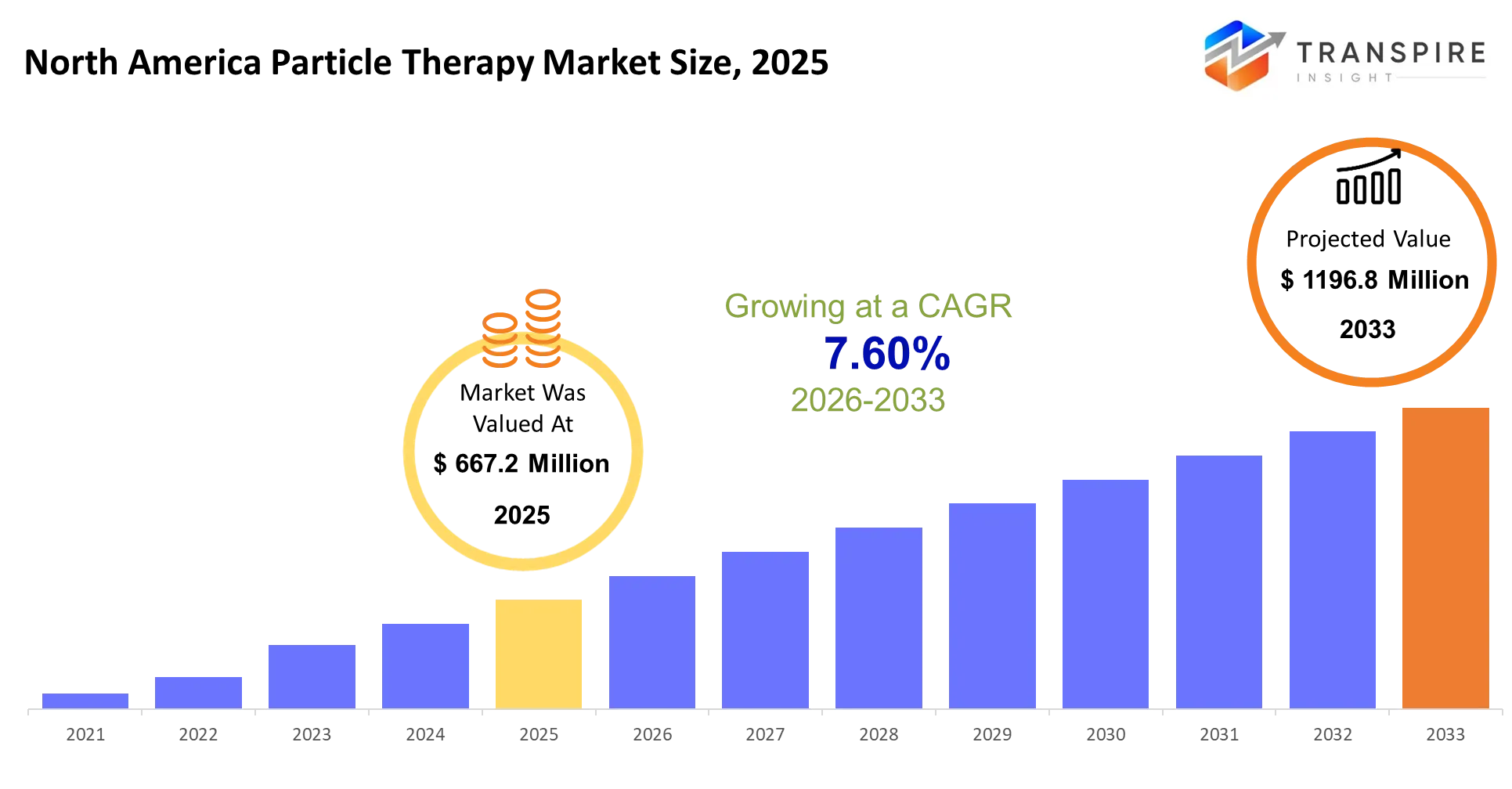
- North America Particle Therapy Market Size 2025: USD 667.2 Million
- North America Particle Therapy Market Size 2033: USD 1196.8 Million
- North America Particle Therapy Market CAGR: 7.60%
- North America Particle Therapy Market Segments: By Type (Proton Therapy, Heavy Ion Therapy, Cyclotrons, Synchrotrons, Others), By Application (Cancer Treatment, Research, Pediatric Oncology, Brain Tumors, Others), By End-User (Hospitals, Cancer Centers, Research Institutes, Others), By Component (Accelerators, Beam Delivery Systems, Software, Imaging, Others).
To learn more about this report,  Download Free Sample Report
North America Particle Therapy Market Summary:
The North America Particle Therapy Market size is estimated at USD 667.2 Million in 2025 and is anticipated to reach USD 1196.8 Million by 2033, growing at a CAGR of 7.60% from 2026 to 2033. The North America Particle Therapy Market is gaining strong momentum as advanced cancer treatment technologies become more widely adopted across the region.
Particle therapy provides its main benefit through proton and heavy ion therapy which achieves precise tumor targeting while protecting healthy tissue areas. This advantage is driving increased preference among healthcare providers and patients, especially for complex and pediatric cancers. The market forecast remains positive because hospitals increase their oncology infrastructure investments and patients become more aware of non-invasive treatment methods.
The North America Particle Therapy Market receives another major boost because research institutions and hospitals and technology providers work together to improve treatment results and increase patient access. The U.S. system provides beneficial reimbursement policies which help hospitals adopt new clinical developments. The existing cancer crisis along with rising need for personalized medicine drives healthcare systems to adopt particle therapy as standard oncology practice which will result in permanent market expansion.
What Has the Impact of Artificial Intelligence Been on the North America Particle Therapy Market?
Artificial intelligence is rapidly transforming the North America Particle Therapy Market which leads to new ways for stakeholders to analyze data and predict demand and discover growth opportunities. North American Particle Therapy Market research uses AI technology to enable researchers to analyze extensive clinical datasets with greater speed which results in better accuracy of market trends and predictive analytics.
Advanced machine learning models help forecast patient volumes and treatment adoption rates and investment flows which enable providers to make data-driven decisions. Artificial intelligence creates North America Particle Therapy Market strategies which enhance competitive advantages for companies while decreasing their uncertainty about future developments.
The North America Particle Therapy Market experiences major operational efficiency enhancements through AI-powered smart automation technologies. AI technology enables treatment planning systems and supply chain operations to achieve cost savings while improving therapy delivery accuracy. Healthcare providers are using machine learning to develop customized treatment plans which result in better patient outcomes and increased treatment adoption.
AI enables real-time monitoring and adaptive therapy techniques which support innovation and drive market growth. The North America Particle Therapy Market demonstrates technological progress through this advancement which allows AI to create operational efficiency and expandable business capacity and enduring market dominance.
Key Market Trends & Insights:
- The United States controls the entire North American particle therapy market because its healthcare system operates at advanced levels which enable it to achieve 85% market share in 2024.
- Canada will experience the highest growth rate because its market will grow at more than 9% annual rate between 2025 and 2030.
- Proton therapy systems lead the market with more than 70% share because hospitals adopted them widely and their treatment results proved effective.
- The services segment operates as the second most significant business unit because patient numbers keep growing and operational activities continue to develop.
- Heavy ion therapy expands as the most rapidly developing market sector because it offers exceptional accuracy and there is increasing need for this technology which will develop until 2030.
- North America particle therapy market experiences its highest market share from oncology treatments which account for almost 90% of the market because cancer cases keep increasing.
- Pediatric cancer treatment has grown into the most popular application because people want therapies that use non-invasive methods and have minimal side effects.
- Hospitals operate as the primary market force because they control more than 65% of the market share in 2024 through their substantial funding and their establishment of unified cancer treatment facilities.
- Specialized cancer treatment centers represent the fastest-growing market segment because they rapidly develop their advanced treatment capabilities.
North America Particle Therapy Market Segmentation
By Type
The ability of proton therapy to deliver precise radiation while causing minimal harm to surrounding tissues assures its status as the most popular treatment method in medicine. Heavy ion therapy will gain attention for treating complex and resistant tumors, offering higher biological effectiveness. The primary technologies for particle treatment will be developed through cyclotrons and synchrotrons which create and speed up particles. The systems will enable medical facilities to deliver radiation beams with high precision throughout their operations.
Healthcare providers will demand advanced systems because they want better treatment results and more versatile treatment options. The installation of proton systems will become the main choice for medical facilities whereas specialized centers will gradually start using heavy ion systems. Medical facilities will choose cyclotrons for their smaller treatment areas while synchrotrons will handle operations in larger multi-room treatment spaces. The system will achieve better performance and customization through the use of various technologies.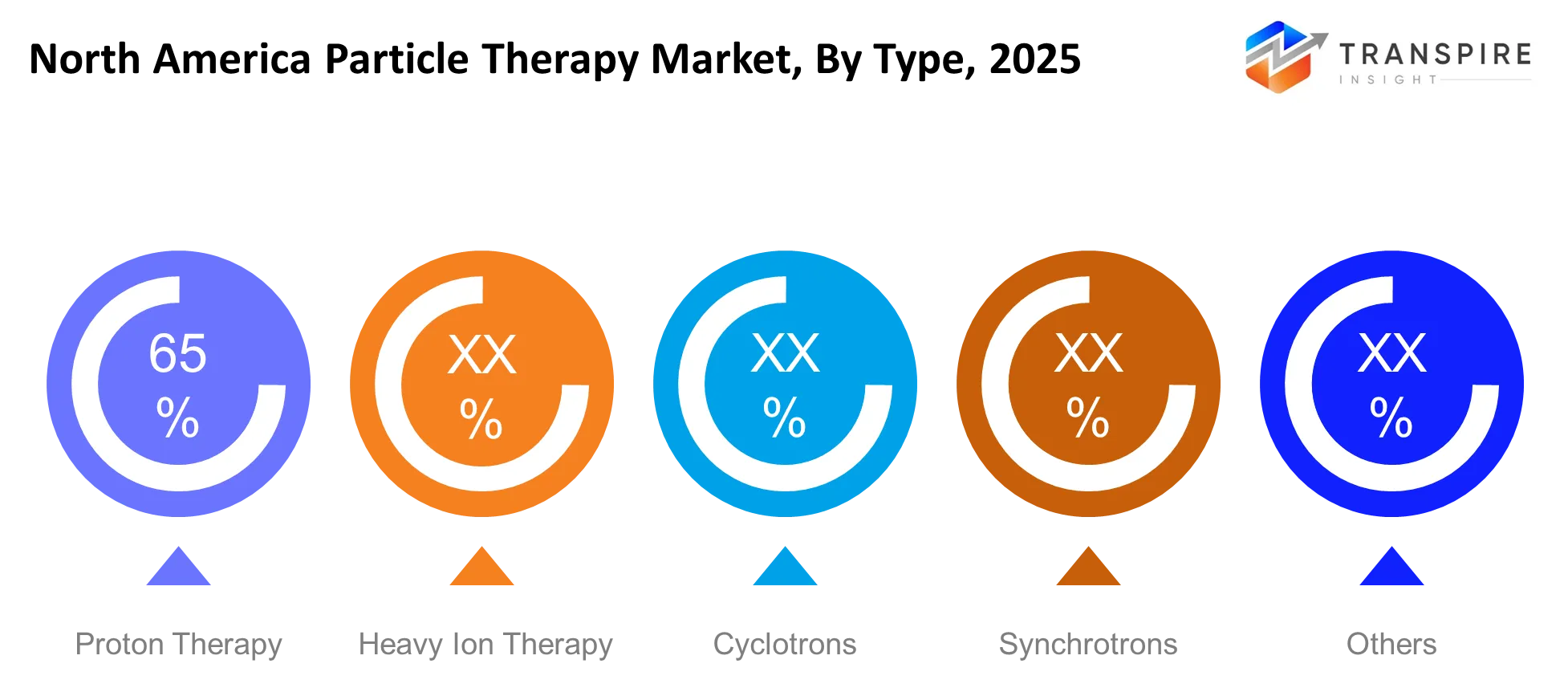
To learn more about this report, Download Free Sample Report
By Application
The biggest part of cancer treatment will go to particle therapy which delivers precise treatment methods that cause fewer side effects than standard radiation methods. Pediatric oncology will experience steady growth because safer treatment options need to be developed for children whose health risks need to be reduced. Brain tumor treatment will use exact targeting methods to protect essential brain areas from harm. Institutions will increase their research activities because they will study new therapeutic methods and their resulting outcomes.
The need for medical services will increase because clinical studies keep demonstrating treatment methods which deliver safe and effective results. The pediatric and brain tumor categories of patients will receive major focus because their medical results have improved. The research will create new treatment methods which will broaden current medical practices and develop new application areas. The development of new applications will happen because both technological progress and better accessibility become available.
By End-User
The strong infrastructure of hospitals together with their funding abilities and their skilled workforce will drive technology adoption in the healthcare sector. The specialized treatment services of cancer centers together with their advanced therapy options will establish them as fundamental institutions in the healthcare system. Research institutes will contribute through their clinical trials which lead to new treatment methods and their innovative research activities. The end users of the system will include smaller healthcare facilities which are testing their new oncology solutions.
The growth of treatment centers will establish more particle therapy access points which will serve different areas. Hospitals will keep spending money on modern technologies which will help them deliver better services to their patients. Cancer centers will provide their patients with special medical procedures together with custom built treatment plans. The research institutes will create future growth opportunities through their ongoing process of creating new products and services.
By Component
The main component of particle therapy systems will be accelerators because they produce high-energy particles which doctors need for medical treatments. The beam delivery systems will create precise tumor targeting which leads to better treatment results and safer procedures. The software program will enable therapy centers to handle treatment planning and data evaluation and operational process management. The imaging systems will improve diagnostic capabilities while directing precise radiation treatment.
Technological advances will enhance system performance by cutting down expenses throughout all system parts. The rising demand for data-based decision-making will make software and imaging solutions more essential. The evolution of beam delivery systems will continue because developers seek to enhance system performance through improved operational methods. The system will achieve enhanced performance through additional components which enable better system integration capabilities.
What are the Main Challenges for the North America Particle Therapy Market Growth?
The North American particle therapy market encounters multiple technical challenges together with operational obstacles which result in decreased system performance and restricted system expansion capabilities. The complex system design together with its high maintenance requirements and performance consistency problems create difficulties which prevent systems from being used throughout the industry.
The project delays and cost increases stem from supply chain restrictions which affect essential components including accelerators and beam delivery systems. The installation process in North America particle therapy market operations faces multiple challenges which decrease operational speed and restrict treatment capabilities. The North America particle therapy market faces two main obstacles which prevent market expansion through manufacturing and commercialization.
Particle therapy systems require specialized engineering expertise together with compliance to regulatory requirements and adherence to quality standards which resemble GMP guidelines for their production process. The need for substantial financial backing together with extended product development times creates obstacles which prevent new technologies from entering the market. The growth barriers which exist in the market force smaller companies to restrict their operations which results in diminished technological advancement and delayed product market entry.
The North America particle therapy market faces adoption challenges because of its existing infrastructure limitations and exceptionally high equipment installation expenses. The majority of healthcare facilities do not have enough money and technical knowledge to set up and run these systems. The implementation process faces difficulties because there is a lack of skilled workers who can handle daily operations. The market constraints limit system access and create obstacles which make it harder for people to adopt the technology especially in areas without access to major urban healthcare facilities.
Country Insights
The north america particle therapy market shows steady progress, but several challenges will continue to limit faster expansion. The system faces multiple challenges because its installation costs are high and its design needs specialized experts who are hard to find. Hospitals and cancer centers will face two challenges because they must compete with treatment technologies that provide cheaper options. The market will experience slow growth because strong clinical benefits will not be able to counteract these two market penetration obstacles.
The development of advanced therapy centers will face two major obstacles which are infrastructure gaps and extended equipment installation times. Many healthcare facilities will struggle with funding requirements needed for installation and maintenance. The process of commercialization will experience additional delays because regulatory approvals and safety standards must be followed. Development of medical facilities will keep existing practices in developed urban areas with complete medical systems.
The United States will lead the north america particle therapy market because it has developed healthcare infrastructure and can spend more money on healthcare services. Large cancer treatment centers and research institutions will support early adoption of advanced particle therapy systems. Government and private funding will further strengthen installation of new treatment facilities. The market will maintain its leading position because patients have high awareness about cancer treatment needs.
The north america particle therapy market in Canada will experience gradual growth because healthcare modernization efforts continue to increase. The development of specialized oncology centers will provide better access to advanced treatment solutions. The development of facilities will experience slow progress because high expenses and facility shortages exist.
Recent Development News
In April 2026, Stanford Medicine Launches Ultra-Compact Proton Therapy System to Expand Cancer Treatment Access in the U.S.: Stanford Medicine has introduced a next-generation ultra-compact proton therapy system aimed at improving access to precise cancer treatment in the United States. The system significantly reduces facility size requirements and installation barriers, making advanced radiation therapy more widely available. This development strengthens innovation in the North American particle therapy market by improving treatment accessibility for complex cancers.
Source: https://med.stanford.edu
In April 2026, Stanford Cancer Center begins deployment of compact proton therapy technology for tumour precision treatment: A new compact proton therapy system is being launched at Stanford Medicine Cancer Center in California, marking a shift toward smaller and more flexible cancer treatment facilities. The technology improves targeting accuracy while reducing damage to healthy tissue, supporting better patient outcomes. This advancement reflects growing clinical demand within the North America Particle Therapy Market for precision oncology solutions.
Source: https://abc7news.com
|
Report Metrics |
Details |
|
Market size value in 2025 |
USD 667.2 Million |
|
Market size value in 2026 |
USD 716.6 Million |
|
Revenue forecast in 2033 |
USD 1196.8 Million |
|
Growth rate |
CAGR of 7.60% from 2026 to 2033 |
|
Base year |
2025 |
|
Historical data |
2021 – 2024 |
|
Forecast period |
2026 – 2033 |
|
Report coverage |
Revenue forecast, competitive landscape, growth factors, and trends |
|
Country scope |
North America (Canada, The United States, and Mexico) |
|
Key company profiled |
Hitachi, Varian Medical Systems, IBA Worldwide, Mevion Medical Systems, Sumitomo Heavy Industries, Toshiba, Mitsubishi Electric, ProNova, Danfysik, Ion Beam Applications, Siemens Healthineers, GE Healthcare, Philips, Elekta, Canon Medical |
|
Customization scope |
Free report customization (country, regional & segment scope). Avail customized purchase options to meet your exact research needs. |
|
Report Segmentation |
By Type (Proton Therapy, Heavy Ion Therapy, Cyclotrons, Synchrotrons, Others), By Application (Cancer Treatment, Research, Pediatric Oncology, Brain Tumors, Others), By End-User (Hospitals, Cancer Centers, Research Institutes, Others), By Component (Accelerators, Beam Delivery Systems, Software, Imaging, Others). |
How Can New Companies Establish a Strong Foothold in the North America Particle Therapy Market?
The particle therapy market in North America provides new companies with opportunities to gain market share through their advanced research capacity and their ability to deliver solutions for current medical treatment needs. The business entry process needs organizations to create affordable compact systems which hospital systems can easily implement without major installation challenges. The development of AI-based treatment planning solutions will help companies achieve better results because these solutions will simplify their operational processes.
The compact proton therapy systems developed by Mevion Medical Systems and ProTom International enable hospitals to reach more patients because these systems deliver effective treatment through portable equipment, which boosts their particle therapy capabilities for North American markets. The North American particle therapy market needs strategic partnerships which will help companies develop market credibility while they build their business operations. The validation of the technology by new companies will proceed through their established partnerships with hospitals and cancer research institutes and medical universities.
The combination of joint development initiatives with clinical trial testing will lead to expedited regulatory processes and commercial launch times. Companies that deliver healthcare providers accurate solutions which maintain safety and reduce expenses will achieve better market results in this competitive environment. The main strategy requires organizations to develop their unique identity through their use of cutting-edge technological systems.
The North American particle therapy market provides new market players with three main technology areas which include intelligent automation and real-time imaging and machine learning treatment optimization systems. The new technologies will lead to better results for patients while hospitals experience lower operational expenses. The new market players will develop sustainable business operations through their ability to solve critical issues which include expensive setup processes and difficult operational procedures.
Key North America Particle Therapy Market Company Insights
The North America particle therapy market shows competitive intelligence through its emphasis on developing innovative solutions while managing costs and pushing technological progress. The companies in this market will compete by delivering compact yet effective and cost-effective solutions which cancer treatment centers need. The market demands precision-based oncology solutions which lead companies to enhance their productivity while decreasing their operational challenges. The market will experience heightened competition when new companies introduce their digital solutions which use artificial intelligence technology.
The North America particle therapy market major players include Mevion Medical Systems IBA Worldwide Varian Medical Systems Siemens Healthineers Hitachi Ltd and ProTom International. The companies will develop advanced proton therapy systems while expanding their installation networks to multiple hospitals. The partnerships will enable research institutions to validate products which will help them reach clinical adoption. The company will maintain its market leadership through continuous innovation efforts.
The North America particle therapy market will see competitive strategies which use smart automation and AI integration together with better imaging technology. The companies will allocate resources to develop smaller systems which require less installation space to make their products available to mid-sized healthcare facilities. The company plans to expand its operations through entry into emerging hospital networks and dedicated cancer treatment facilities. The strategies will enable businesses to enhance their market presence while establishing long-term usage patterns throughout the healthcare industry.
Company List
- Hitachi
- Varian Medical Systems
- IBA Worldwide
- Mevion Medical Systems
- Sumitomo Heavy Industries
- Toshiba
- Mitsubishi Electric
- ProNova
- Danfysik
- Ion Beam Applications
- Siemens Healthineers
- GE Healthcare
- Philips
- Elekta
- Canon Medical
What are the Key Use-Cases Driving the Growth of the North America Particle Therapy Market?
The north america particle therapy market is expanding because hospitals use advanced cancer treatments which need to locate tumors exactly while keeping adjacent tissues safe. The medical community will start using this method to handle difficult medical situations which include treating head and neck cancers and lung cancers. The medical field will continue to adopt new radiation techniques because there is increasing demand for radiation methods which provide higher safety and better treatment outcomes.
The north america particle therapy market uses pediatric oncology as its primary application because doctors need treatment methods which minimize side effects to protect their patients. The medical field will use particle therapy for brain tumor treatments because it allows doctors to identify sensitive brain regions with extreme precision. Research organizations will use this innovation in their clinical studies to develop new treatment methods while creating more medical proof which supports broader use of their findings.
Another important driver for the north america particle therapy market is integration into advanced hospital networks and specialized cancer treatment centers. These facilities will use particle therapy to enhance personalized treatment planning and improve patient outcomes. The medical field will see better results from precision medicine and data-driven oncology which will transform current practices into modern cancer treatment solutions.
The north america particle therapy market will expand because new healthcare facilities open and hospitals invest in advanced radiation treatment systems. The medical field will adopt new testing methods which use multiple cancer disciplines to increase their clinical application. The ongoing improvements in imaging systems and treatment methods together with system operations will create more efficient healthcare applications which sustain growth potential throughout medical facilities.
North America Particle Therapy Market Report Segmentation
By Type
- Proton Therapy
- Heavy Ion Therapy
- Cyclotrons
- Synchrotrons
- Others
By Application
- Cancer Treatment
- Research
- Pediatric Oncology
- Brain Tumors
- Others
By End-User
- Hospitals
- Cancer Centers
- Research Institutes
- Others
By Component
- Accelerators
- Beam Delivery Systems
- Software
- Imaging
- Others
Frequently Asked Questions
Find quick answers to common questions.
The Approximate North America Particle Therapy Market size for the Market will be USD 1196.8 Million in 2033.
The key segments of the North America Particle Therapy Market are By Type (Proton Therapy, Heavy Ion Therapy, Cyclotrons, Synchrotrons, Others), By Application (Cancer Treatment, Research, Pediatric Oncology, Brain Tumors, Others), By End-User (Hospitals, Cancer Centers, Research Institutes, Others), By Component (Accelerators, Beam Delivery Systems, Software, Imaging, Others).
Major Players in the North America Particle Therapy Market are Hitachi, Varian Medical Systems, IBA Worldwide, Mevion Medical Systems, Sumitomo Heavy Industries, Toshiba, Mitsubishi Electric, ProNova, Danfysik, Ion Beam Applications, Siemens Healthineers, GE Healthcare, Philips, Elekta, Canon Medical.
The Current Market size of the North America Particle Therapy Market is USD 667.2 Million in 2025.
The North America Particle Therapy Market CAGR is 7.60%.
- Hitachi
- Varian Medical Systems
- IBA Worldwide
- Mevion Medical Systems
- Sumitomo Heavy Industries
- Toshiba
- Mitsubishi Electric
- ProNova
- Danfysik
- Ion Beam Applications
- Siemens Healthineers
- GE Healthcare
- Philips
- Elekta
- Canon Medical
Recently Published Reports
-
Apr 2026
Biosimilars Market
Biosimilars Market By Product Type (Monoclonal Antibodies, Recombinant Hormones, Erythropoietin, G-CSF, Others), By Indication (Oncology, Autoimmune Diseases, Blood Disorders, Diabetes, Others), By Manufacturing Type (In-House Manufacturing, Contract Manufacturing), By Distribution Channel (Hospital Pharmacies, Retail Pharmacies, Online Pharmacies), By Industry Analysis, Size, Share, Growth, Trends, and Forecasts 2021-2033
-
Apr 2026
Gastrointestinal Endoscopy Market
Gastrointestinal Endoscopy Market By Type (Rigid Gastrointestinal Endoscope, Flexible Gastrointestinal Endoscopes, Disposable Gastrointestinal Endoscope), By Procedure Type (Colonoscopy, Gastroscopy, Duodenoscopy, Enteroscopy, Flexible Sigmoidoscopy, Others), By Application (Diagnosis, Treatment), By End-Users (Hospitals, Ambulatory Surgical Centers, Specialty Clinics, Laboratories, Others), By Industry Analysis, Size, Share, Growth, Trends, and Forecasts 2021-2033
-
Apr 2026
Rare Inherited Metabolic Disorder Drug Market
Rare Inherited Metabolic Disorder Drug Market By Drug Class (Enzyme Replacement Drugs, Gene Therapy Drugs, Substrate Reduction Drugs, Small Module Drugs, Protein Drugs), By Route of Administration(Parenteral, Oral, Intrathecal), By Clinical Development (Marketed Drugs, Late Stage Clinical Phase III, Early Stage Clinical Phase I-II, Preclinical Candidates), By Indication (Lysosomal Storage Disorders, Urea Cycle Disorders, Amino Acid Metabolic Disorders, organic Acidemias, Peroximal Disorders), By Industry Analysis, Size, Share, Growth, Trends, and Forecasts 2021-2033
-
Jan 2026
Pharmaceutical Cleanroom Technology Market
Pharmaceutical Cleanroom Technology Market By Product (Equipment, Consumables, Services); By Cleanroom Type (Standard Cleanrooms, Modular Cleanrooms); By End Use (Pharmaceutical Companies, Biotechnology Companies), By Industry Analysis, Size, Share, Growth, Trends, and Forecasts 2021-2033