
North America Fixed-Dose Combination Diabetes Drugs Market Summary
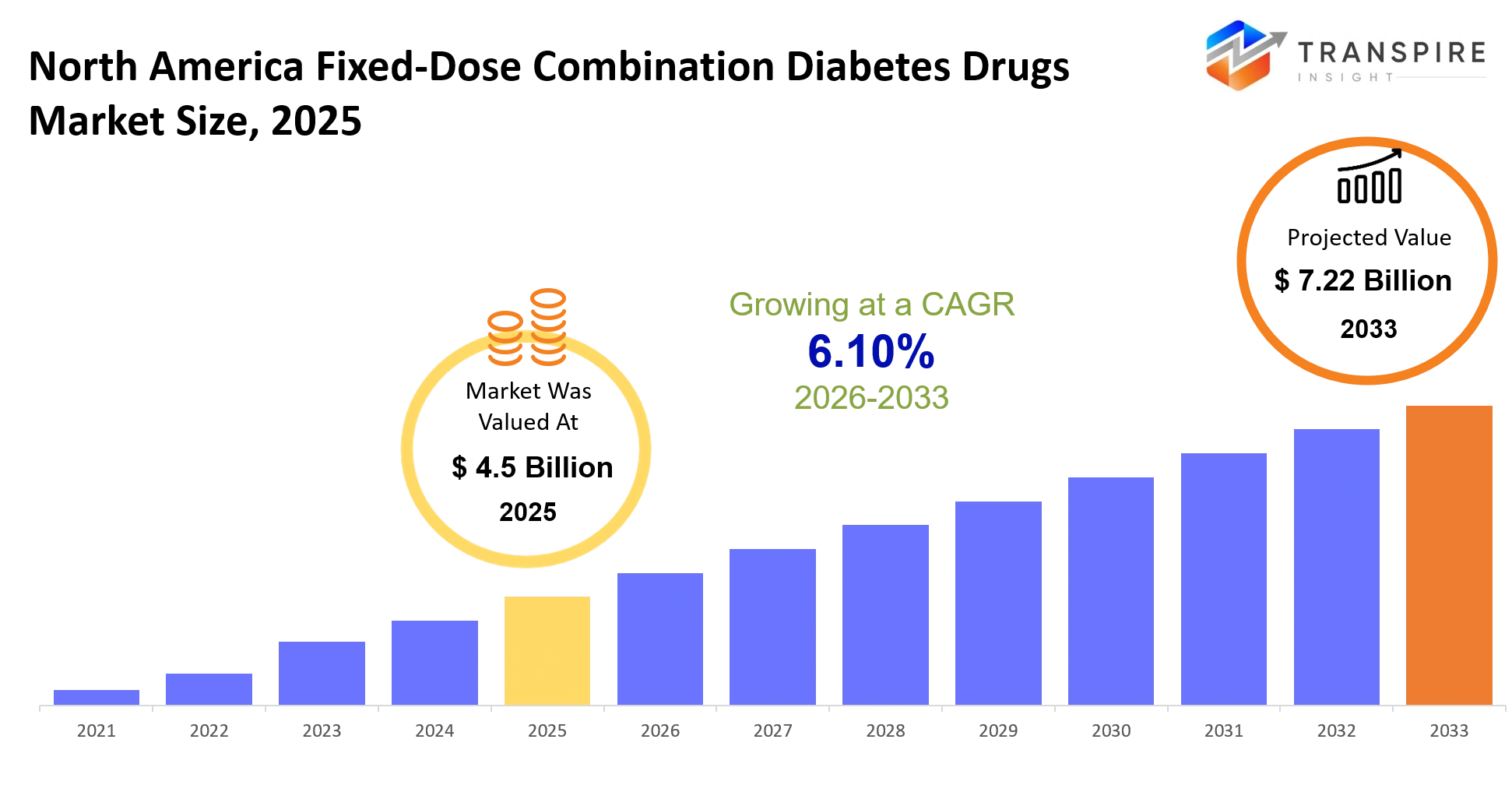
As per Transpire Insight Analysis the North America Fixed-Dose Combination Diabetes Drugs Market size is estimated at USD 4.5 Billion in 2025 and is anticipated to reach USD 7.22 Billion by 2033, growing at a CAGR of 6.10% from 2026 to 2033.
Fixed-dose combo diabetes drugs make the whole thing a little easier, because they mix two or more glucose-lowering medicines into one formulation, so patients can handle blood sugar with less daily pill burden , and (in many cases) better adherence. In North America, healthcare providers are using these options more and more often, mainly to cut down on the number of meds, but still keep long-term glycemic control on track for people living with Type 2 diabetes. Over the last five years, real-world clinical practice has moved toward combination therapies that use complementary mechanisms of action rather than just doing one medicine at a time , then switching later. Newer guidance from major diabetes organizations, plus the big uptake of SGLT-2 inhibitors and GLP-1 receptor agonists, has helped speed up this shift. The COVID-19 period also made it clearer why continuous chronic disease care matters, especially when simplified medication regimens and telehealth services became more common. Because of all that , pharmaceutical companies have been pushing out newer fixed-dose combinations, which leads to wider product lineups, higher prescription volumes, and continued revenue growth within the regional pharmaceutical market.
North America Fixed-Dose Combination Diabetes Drugs Market Size & Forecast:
- North America Fixed-Dose Combination Diabetes Drugs Market Size 2025: USD 4.5 Billion
- Expected Market Value 2033: USD 7.22 Billion
- Forecast CAGR: 6.10%
- Leading region in 2025:United States
- Fastest Growing region:Canada
- Key Profile: Novo Nordisk, Eli Lilly, AstraZeneca, Boehringer Ingelheim, Merck & Co., Sanofi, Pfizer, Novartis, Viatris, Teva Pharmaceutical Industries, Sun Pharmaceutical, Dr. Reddy's Laboratories, Bayer, Abbott, Johnson & Johnson.
Key Market Insights
- North America Fixed-Dose Combination Diabetes Drugs Market is still kind of runnin… led by the United States, which holds roughly 84% market share in 2025, and Canada is expected to show the fastest regional expansion through 2033, despite everything.
- Metformin combinations stay on top, taking up nearly 38% market share, mainly due to guideline-aligned first-line care, plus very common physician habits when it comes to prescribing.
- SGLT-2 inhibitor combinations sit in the second spot. Their uptake keeps getting a boost as cardiovascular and kidney outcome data continues to strengthen clinician certainty, and that really matters in day to day decisions.
- GLP-1 combination therapies are projected to be the fastest mover through 2033, because the metabolic results look stronger, and reimbursement access keeps expanding, bit by bit over time.
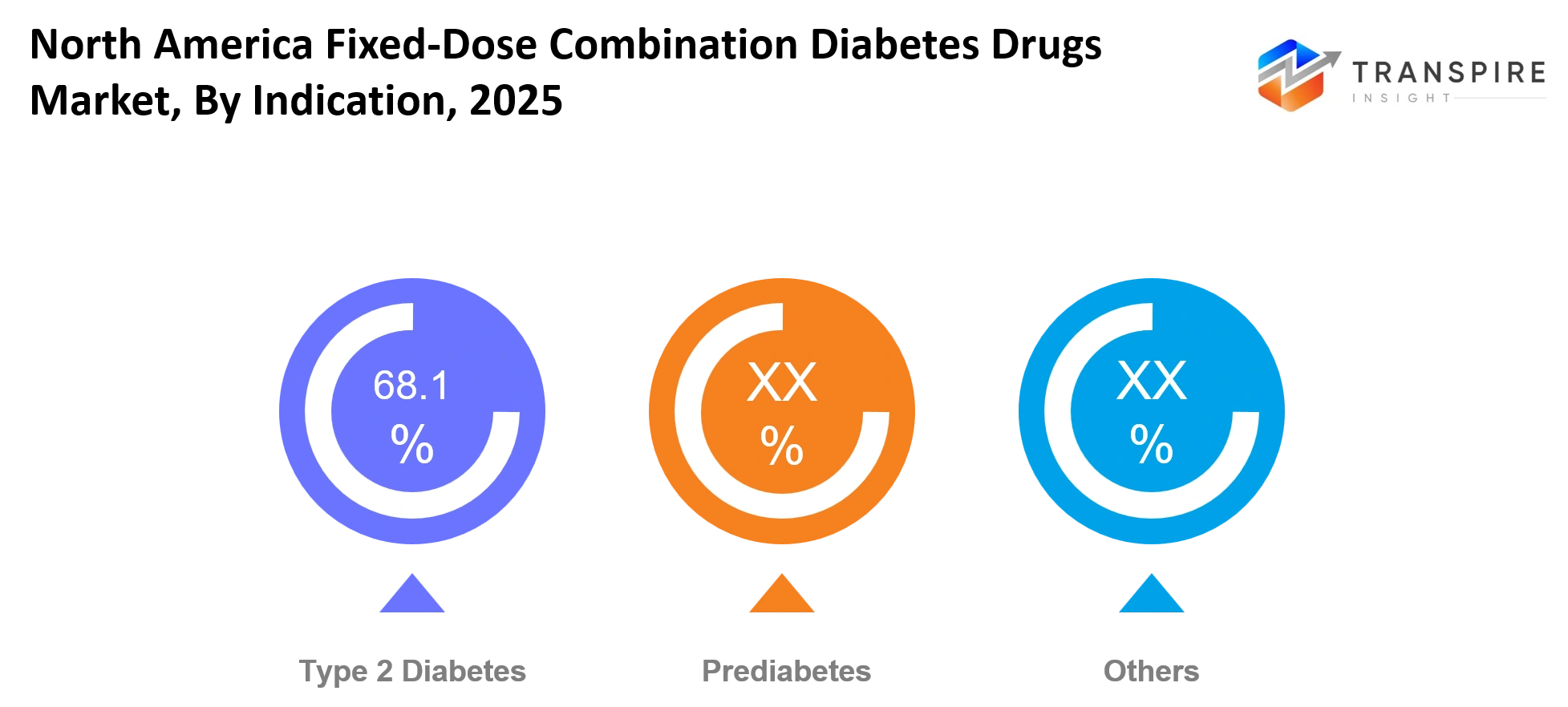
- Type 2 diabetes represents around 90% of treatment applications so it’s the dominant therapeutic indication across the region, basically everywhere patients are being treated.
- When it comes to distribution, hospital pharmacies still lead with about 42% share, meanwhile online pharmacies are steadily ramping up, especially as digital prescription processing becomes more routine.
- On the end-user side, hospitals remain the biggest group with nearly 45% share, supported by integrated diabetes management programs and access to specialist care.
- Homecare settings are growing the quickest, sort of, as remote monitoring tools get better and help improve longer term disease management outcomes too.
- Key players like Novo Nordisk, Eli Lilly, AstraZeneca, Boehringer Ingelheim, Merck & Co. and Sanofi just keep putting money toward lifecycle management, and these newer combination therapies too, plus the next wave kinds of options that try to match different patient needs.
- Overall though, strategic partnerships helped expand manufacturing capacity , add digital patient support tools , and push the next generation combination products, which all in turn reinforce the competitive positioning across North America’s diabetes therapeutics landscape.
What are the Key Drivers, Restraints, and Opportunities in the North America Fixed-Dose Combination Diabetes Drugs Market?
The main push for expanding markets seems to be that shift toward guideline supported combo care for Type 2 diabetes. Newer guidance from groups like the American Diabetes Association, keeps leaning toward regimens that cover heart, kidney, and blood sugar endpoints all at once, not just do the usual step by step escalation. In response, pharma has rolled out fixed dose products that fold together complementary mechanisms in a single tablet, or an injectable option. This, in practice, has helped with better adherence, fewer “manage this prescription then that one” moments, and in turn better clinical results. Physicians seem more confident, so prescription numbers go up, and commercial results look stronger.
Still, a notable brake is the steep price tag of branded combo therapies, plus reimbursement is honestly kinda tangled across public and private insurers. Patent protection for new products keeps generics at bay, and formulary rules can delay actual patient access. On top of that, clinicians run into prior authorization, which can slow down treatment start times. All of those reimbursement and structure issues reduce uptake among eligible patients and cap the revenue upside, even when the clinical data is pretty convincing.
On the opportunity side, there’s room to build next generation combinations that blend GLP 1 receptor agonists with other diabetes approaches that fit precision medicine ideas and digital disease management tools. Manufacturers keep putting money into clinical research not just for diabetes, but also for obesity, cardiovascular disease, and chronic kidney disease as well ,with the idea that these wider and related outcomes will carry on or translate through somehow.
What Has the Impact of Artificial Intelligence Been on the North America Fixed-Dose Combination Diabetes Drugs Market?
Artificial intelligence is kinda changing how pharmaceutical companies design, assess, and then commercialize fixed-dose combination diabetes therapies. Machine learning algorithms sift through clinical trial data sets, to spot better drug pairings, guess how patients might respond, and even tidy up study design before anything big starts in large scale clinical development. AI supported analytics also lets manufacturers tune their production timing, keep an eye on manufacturing quality, and estimate inventory needs across more tangled pharmaceutical supply chains. In healthcare , providers are increasingly leaning on predictive analytics that live inside electronic health records, to sort out people who might do better with combo treatments, based on how their disease is progressing, the level of cardiovascular risk, renal condition, and what happened during their prior therapy.
On top of that, advanced digital tools keep moving commercial results ahead, through AI enabled patient engagement platforms that monitor medication consistency, glucose movement patterns, and refill routines.. These setups back personalized treatment suggestions while also helping healthcare organizations lower preventable complications and unnecessary hospital visits. Pharmaceutical companies also, lean on predictive demand forecasting in order to improve product availability and reduce distribution inefficiencies. Even so full AI rollout is kind of held back by those pretty high integration costs, fragmented healthcare data, privacy rules that are not so flexible, and the interoperability headaches that pop up between electronic medical record systems. So yeah, even with clear gains in operational efficiency and clinical decision support, these obstacles keep delaying complete deployment.
Key Market Trends
- Since 2021, clinical guidelines have been leaning more and more toward early combined therapy for Type 2 diabetes, so doctors are kind of pushed to start fixed-dose formulations sooner, in the treatment pathway.
- At the same time, pharmaceutical companies have moved a big share of their research investment into combinations involving SGLT-2 inhibitors and GLP-1 receptor agonists, mainly after several favorable cardiovascular and renal outcome studies came out.
- On the care side, digital health platforms are now woven more tightly into diabetes programs, which makes it easier to keep track of medication adherence, do remote check-ins, and manage the therapy in a more tailored way across various healthcare systems.
- Meanwhile, hospital systems have broadened value based diabetes care approaches, so providers tend to favor options that lower the likelihood of long term complications and also cut down hospital readmissions.
- After patent timelines end, generic manufacturers have gradually entered certain combination drug areas, which ramps up pricing competition, and it also helps widen access within many regional healthcare markets.
- On top of that, big pharma has sped up strategic licensing deals and co-development collaborations, aiming to strengthen product pipelines, and compress the time to market for new combination therapies.
- Also, online pharmacy use has risen fairly steadily since 2020, helped by electronic prescribing, home delivery options, and more widespread insurance acceptance for chronic disease medications.
- Regulators, for their part, have placed more weight on real-world evidence plus longer-term cardiovascular safety data, so manufacturers are encouraged to build out fuller post-marketing clinical proof, rather than stopping earlier.
North America Fixed-Dose Combination Diabetes Drugs Market Segmentation
By Drug Class
Metformin combinations still kind of take the top spot, mainly because most clinical guidelines treat metformin as the initial approach for the majority of people with Type 2 diabetes. Fixed dose formulations that mix metformin with a DPP-4 inhibitor or an SGLT-2 inhibitor tend to help improve glucose numbers while also trimming down the pill count. Doctors and clinics also seem to like these options since their safety background is already well established, and the patient fit is fairly wide. On top of that, solid reimbursement backing helps keep prescription activity steady.
SGLT-2 inhibitor combinations end up as the second biggest grouping, largely due to evidence showing cardiovascular and kidney protection that goes further than glucose control alone. GLP-1 combination therapies are seeing the quickest growth, because weight management for obesity and cardiovascular advantages are getting more spotlight in recent care pathways. Sulfonylurea combinations keep playing a role in more price sensitive care environments, and the other combination classes also cover specific patient needs, widening therapeutic choices across the local or regional pharmaceutical market.
By Route of Administration
Oral formulations make up the biggest portion, because tablets feel practical, help long haul adherence, and blend into routine outpatient diabetes care, kind of seamlessly. Most established fixed-dose regimens still come as oral options, so prescribing stays pretty straightforward for clinicians and generally more acceptable for patients too. The retail dispensing setup also boosts availability across North America without much fuss. Plus ongoing product refinements keep reinforcing that market-leading position over time.
Injectable treatments, meanwhile, keep on growing, especially with more advanced GLP-1 receptor agonist combinations that provide better glucose control along with weight management advantages. Clinicians are also leaning more often toward injections for people who need stronger metabolic results after trying oral therapy first. Other routes of administration are still pretty narrow in scope, and tend to mainly serve specialized treatment pathways rather than everyday diabetes management.
By Distribution Channel
Hospital pharmacies bring in the biggest revenue by far ,mostly because patients who just got diagnosed , complex diabetes situations and inpatient treatment programs often start their therapy right inside the hospital. When doctors and pharmacists stay closely aligned , medicine selection tends to be more appropriate, and it really helps treatment continuity after someone leaves. On top of that, strong procurement systems matter too, since they help keep products available without a lot of interruption. In the end these benefits keep hospital pharmacies in the leadership position across regional healthcare networks.
Retail pharmacies are still number two, mainly because they sit right in the community and they handle long-term refills , over and over. Online pharmacies keep growing too, using electronic prescribing, home delivery services and digital healthcare platforms. Specialty pharmacies back advanced injectable therapies, which means they often need extra patient coaching and education. Meanwhile, the other channels contribute smaller amounts through more localized distribution models within healthcare, like smaller regional supply routes.
By End User
Hospitals still sit at the top as the leading end-user, since multidisciplinary diabetes management teams, sort of, oversee the start of treatment , tune medications, and handle patients that have multiple chronic conditions at once. Having access to endocrinologists, cardiologists, and diabetes educators helps with broad care planning and not just the immediate visit. Integrated clinical services, in practice, also make it easier for providers to adopt more advanced combination therapies, so it makes sense that hospital-based prescribing keeps driving a lot of pharmaceutical revenue.
Clinics, meanwhile, handle routine diabetes management and ongoing follow-ups for big patient groups across city and suburban areas. Homecare keeps showing the quickest growth, because remote monitoring technologies plus telehealth services keep getting better for long-term disease management. Specialty diabetes centers tend to concentrate on intricate metabolic disorders, while other healthcare facilities add value through more localized chronic disease treatment services.
By Indication
Type 2 diabetes stands as the main indication because fixed dose combination therapies mostly get aimed at patients who need more than one glucose lowering mechanism, to reach their targets. It also lines up with long disease duration and the very high patient prevalence. On top of that, updated clinical guidance keeps nudging clinicians toward continued prescribing momentum. Plus, combination products tend to help with medication adherence , by cutting down on day to day therapeutic complexity. So overall, these elements keep them in a leading position across the regional treatment scene.
Prediabetes is getting more clinical spotlight, since many healthcare providers want to slow down the move toward established diabetes using early intervention plans. Lifestyle changes are still the primary path, though certain high risk groups might be treated pharmacologically when it makes sense clinically. The remaining indications cover a relatively small portion, and they mostly deal with specialized metabolic disorders, rather than the usual diabetes management approach.
What are the Key Use Cases Driving the North America Fixed-Dose Combination Diabetes Drugs Market?
The main use case is basically long-term management of Type 2 diabetes, where fixed dose combination therapies help patients reach steadier blood glucose control with fewer meds each day. Hospitals, and endocrinology clinics tend to prefer these kinds of treatments because simplified care pathways help with adherence, make prescription stuff less messy, and generally back better clinical results during the usual day to day management of the disease.
Adoption is also getting broader in homecare settings and in specialty diabetes centers, where digital glucose monitoring plus telehealth programs let clinicians tweak combination therapies, with less need for unnecessary in person visits. Retail pharmacies, and online pharmacies too are helping this movement along by making it easier to get prescriptions, and keeping medication continuity in place for people who are managing chronic conditions at home.
Newer directions include combination therapies that are tuned for Type 2 diabetes patients who also have cardiovascular disease or chronic kidney disease, because integrated treatment tactics can improve several health outcomes at once. At the same time, pharmaceutical companies are pushing toward more tailored combination medicines, guided by clinical data and digital health platforms, which opens a path for more precise therapy selection across the forecast window.
|
Report Metrics |
Details |
|
Market size value in 2025 |
USD 4.5 Billion |
|
Market size value in 2026 |
USD 4.77 Billion |
|
Revenue forecast in 2033 |
USD 7.22 Billion |
|
Growth rate |
CAGR of 6.10% from 2026 to 2033 |
|
Base year |
2025 |
|
Historical data |
2021 - 2024 |
|
Forecast period |
2026 - 2033 |
|
Report coverage |
Revenue forecast, competitive landscape, growth factors, and trends |
|
Regional scope |
North America (Canada, The United States, and Mexico) |
|
Key company profiled |
Novo Nordisk, Eli Lilly, AstraZeneca, Boehringer Ingelheim, Merck & Co., Sanofi, Pfizer, Novartis, Viatris, Teva Pharmaceutical Industries, Sun Pharmaceutical, Dr. Reddy's Laboratories, Bayer, Abbott, Johnson & Johnson. |
|
Customization scope |
Free report customization (country, regional & segment scope). Avail customized purchase options to meet your exact research needs. |
|
Report Segmentation |
By Drug Class (DPP-4 Inhibitor Combinations, SGLT-2 Inhibitor Combinations, GLP-1 Combination Therapies, Metformin Combinations, Sulfonylurea Combinations, Others); By Route of Administration (Oral, Injectable, Others); By Distribution Channel (Hospital Pharmacies, Retail Pharmacies, Online Pharmacies, Specialty Pharmacies, Others); By End User (Hospitals, Clinics, Homecare, Specialty Diabetes Centers, Others); By Indication (Type 2 Diabetes, Prediabetes, Others). |
Which Regions are Driving the North America Fixed-Dose Combination Diabetes Drugs Market Growth?
The United States is still basically the main regional market, thanks to its advanced pharmaceutical research ecosystem , wide insurance coverage for new diabetes therapies, and a solid regulatory structure guided by the U.S. Food and Drug Administration. The high Type 2 diabetes prevalence, the huge amount of clinical trial activity, and the steady rhythm of product launches make fixed-dose combination therapies easier to take up quickly. Big investments in biotechnology , digital health, and precision medicine also keep opening commercialization pathways for global pharmaceutical companies. And there’s this mature mesh of academic medical centers, specialty diabetes clinics, contract research organizations, plus pharmaceutical manufacturers that helps sustain long term leadership.
Canada sits as the second-largest regional contributor, even if the growth behaves a little differently than in the United States. The country’s public healthcare coverage , structured health technology assessments, and evidence-based reimbursement choices create a fairly calm setting for rolling out combination diabetes medicines. Provincial healthcare systems tend to focus on long term disease management and preventive care, so prescriptions stay steady rather than turning over at a fast pace. Plus, the collaboration between healthcare providers, research institutions, and pharmaceutical companies helps keep the market expanding reliably, even with a smaller patient base.
Mexico is projected to show the fastest growth over 2026–2033 , mainly because healthcare investment keeps rising, diabetes screening programs are expanding, and access to innovative medicines continues to improve. Government actions aimed at strengthening chronic disease management and enlarging pharmaceutical distribution networks have sped up the adoption of modern diabetes therapies.
Who are the Key Players in the North America Fixed-Dose Combination Diabetes Drugs Market and How Do They Compete?
Competition is still pretty well consolidated, mostly because only a handful of multinational pharmaceutical players really control most of the most innovative fixed-dose combination therapies. So the “edge” isn’t so much about pricing, it’s more about clinical proof and clear differentiation, meaning the drug combinations themselves, plus cardiovascular and renal outcome data, regulatory clearances, and honestly product lifecycle management too. The established manufacturers keep pushing back on share loss using big, ongoing research pipelines. Meanwhile the generic side can move in after certain patent expirations, and then they compete with more affordable options.
Novo Nordisk sort of stands out via a metabolic disease focus, and it has a strong pipeline built around GLP-1 and related combination therapies. It’s also continuing to expand its innovation approach by putting money into oral delivery technologies, artificial intelligence, and next generation metabolic medicines— all that to support long-term competitiveness. Eli Lilly, on the other hand, leans into breakthrough incretin therapies, backed by large scale cardiovascular outcome studies and digital patient support programs. Its bet on oral diabetes medicines adds broader treatment options and helps it keep strengthening its metabolic disease portfolio.
AstraZeneca stays ahead with SGLT-2 inhibitor therapies, and these are supported by deep cardiovascular and kidney disease evidence, which helps more physicians adopt them beyond glycemic control alone. Boehringer Ingelheim continues to build up its diabetes portfolio with strategic research collaborations and combo products that blend complementary mechanisms of action, so it’s not just one-track.
Company List
- Novo Nordisk
- Eli Lilly
- AstraZeneca
- Boehringer Ingelheim
- Merck & Co.
- Sanofi
- Pfizer
- Novartis
- Viatris
- Teva Pharmaceutical Industries
- Sun Pharmaceutical
- Dr. Reddy's Laboratories
- Bayer
- Abbott
- Johnson & Johnson
Recent Development News
In April 2026, Novo Nordisk announced a strategic partnership with OpenAI. The collaboration applies advanced artificial intelligence across drug discovery, clinical development, and commercial operations to accelerate innovation in diabetes and metabolic medicines.
Source: http://www.novonordisk.com
What Strategic Insights Define the Future of the North America Fixed-Dose Combination Diabetes Drugs Market?
The market is moving toward pretty integrated metabolic care that kind of ties glucose control with cardiovascular, renal, and weight management benefits all in one therapy. That push seems backed by stronger clinical evidence, more broad adoption of precision medicine, and ongoing investment in the next generation GLP-1 and SGLT-2 combination products. There’s also a quieter risk, maybe overlooked, and it’s the increasing concentration of innovation among a small set of multinational pharmaceutical companies, this could crank up pricing pressure and potentially narrow treatment accessibility if alternative competitors stay kinda limited.
On the other hand, there’s an emerging opportunity that feels a bit more exciting: using artificial intelligence alongside real world clinical data to spot patient groups most likely to benefit from customized or “tailored” combination therapies. Firms that go in early on digital health platforms, build value based reimbursement collaborations, and maintain differentiated combination drug pipelines should end up better positioned to capture future prescription growth, and also strengthen long-term market share across North America.
North America Fixed-Dose Combination Diabetes Drugs Market Report Segmentation
By Drug Class
- DPP-4 Inhibitor Combinations
- SGLT-2 Inhibitor Combinations
- GLP-1 Combination Therapies
- Metformin Combinations
- Sulfonylurea Combinations
- Others
By Route of Administration
- Oral
- Injectable
- Others
By Distribution Channel
- Hospital Pharmacies
- Retail Pharmacies
- Online Pharmacies
- Specialty Pharmacies
- Others
By End User
- Hospitals
- Clinics
- Homecare
- Specialty Diabetes Centers
- Others
By Indication
- Type 2 Diabetes
- Prediabetes
- Others
Frequently Asked Questions
Find quick answers to common questions.
The expected North America Fixed-Dose Combination Diabetes Drugs Market size for the market will be USD 7.22 Billion in 2033.
Key segments for the North America Fixed-Dose Combination Diabetes Drugs Market are By Drug Class (DPP-4 Inhibitor Combinations, SGLT-2 Inhibitor Combinations, GLP-1 Combination Therapies, Metformin Combinations, Sulfonylurea Combinations, Others); By Route of Administration (Oral, Injectable, Others); By Distribution Channel (Hospital Pharmacies, Retail Pharmacies, Online Pharmacies, Specialty Pharmacies, Others); By End User (Hospitals, Clinics, Homecare, Specialty Diabetes Centers, Others); By Indication (Type 2 Diabetes, Prediabetes, Others).
Major North America Fixed-Dose Combination Diabetes Drugs Market players are Novo Nordisk, Eli Lilly, AstraZeneca, Boehringer Ingelheim, Merck & Co., Sanofi, Pfizer, Novartis, Viatris, Teva Pharmaceutical Industries, Sun Pharmaceutical, Dr. Reddy's Laboratories, Bayer, Abbott, Johnson & Johnson.
The North America Fixed-Dose Combination Diabetes Drugs Market size is USD 4.5 Billion in 2025.
The North America Fixed-Dose Combination Diabetes Drugs Market CAGR is 6.10% from 2026 to 2033.
- Novo Nordisk
- Eli Lilly
- AstraZeneca
- Boehringer Ingelheim
- Merck & Co.
- Sanofi
- Pfizer
- Novartis
- Viatris
- Teva Pharmaceutical Industries
- Sun Pharmaceutical
- Dr. Reddy's Laboratories
- Bayer
- Abbott
- Johnson & Johnson
About the Authors

Pankaj Ghogare Patil
I am Pankaj Ghogare Patil, a Senior Research Analyst at Transpire Insight, specializing in the Pharmaceutical, Chemicals & Materials, Healthcare IT, and Biotechnology industry. My expertise lies in conducting comprehensive market research, analyzing industry trends, evaluating competitive landscapes, and translating complex data into actionable insights. At Transpire Insight, I closely follow emerging technologies, regulatory developments, and market innovations to create accurate, well-researched, and informative content that helps businesses and professionals make informed decisions. I am committed to producing credible, evidence-based articles that reflect industry best practices while making technical topics accessible and valuable for a broad audience.

Chakradhar Khansole
Chakradhar serves as the Research Director at Transpire Insight, bringing over 8 years of experience in technology, innovation, and strategic market intelligence. He specializes in transforming complex market data into actionable business insights that enable organizations to make informed, growth-oriented decisions. Recognized for his strategic vision and analytical expertise, Chakradhar leads high-impact research initiatives, delivering comprehensive market assessments, competitive intelligence, and forward-looking industry analysis.
Recently Published Reports
-
Jul 2026
Alopecia Treatment Market
Alopecia Treatment Market Size, Share & Analysis Report By Disease Type (Alopecia Areata, Cicatricial Alopecia, Traction Alopecia, Alopecia Totalis, Androgenetic Alopecia, Alopecia Universalis, and Other Disease Types), By Treatment Type (Topical Treatments, Oral Medications, Injectable Therapies, and Hair Transplantation), By Gender (Male, and Female), By Distribution Channel (Hospitals and Clinics, Retail Pharmacies, and Online Retailers), and Geography (North America, Europe, Asia-Pacific, Middle East and Africa, South and Central America), 2021 - 2031
-
Jul 2026
Medical Ultrasound Probe Market
Medical Ultrasound Probe Market Size, Share & Analysis Report By Type (Linear Type, Convex Type, Endocavitary Probe, Phased Array/Cardiac Probe, Transesophageal (TEE) Probe, and Others), By Application (Ophthalmology, Cardiology, Musculoskeletal, Oncology, Obstetrics & Gynecology, General Imaging, and Others), By End User (Hospitals & Clinics, Diagnostic Centers, Ambulatory Surgical Centers, and Others), and Geography (North America, Europe, Asia-Pacific, Middle East and Africa, South and Central America), 2021 – 2031
-
May 2026
Biosimilars Market
Biosimilars Market By Product Type (Monoclonal Antibodies, Recombinant Hormones, Erythropoietin, G-CSF, Others), By Indication (Oncology, Autoimmune Diseases, Blood Disorders, Diabetes, Others), By Manufacturing Type (In-House Manufacturing, Contract Manufacturing), By Distribution Channel (Hospital Pharmacies, Retail Pharmacies, Online Pharmacies), By Industry Analysis, Size, Share, Growth, Trends, and Forecasts 2021-2033
-
Apr 2026
Gastrointestinal Endoscopy Market
Gastrointestinal Endoscopy Market By Type (Rigid Gastrointestinal Endoscope, Flexible Gastrointestinal Endoscopes, Disposable Gastrointestinal Endoscope), By Procedure Type (Colonoscopy, Gastroscopy, Duodenoscopy, Enteroscopy, Flexible Sigmoidoscopy, Others), By Application (Diagnosis, Treatment), By End-Users (Hospitals, Ambulatory Surgical Centers, Specialty Clinics, Laboratories, Others), By Industry Analysis, Size, Share, Growth, Trends, and Forecasts 2021-2033