

North America Desalting Buffer Exchange Market Size & Forecast:
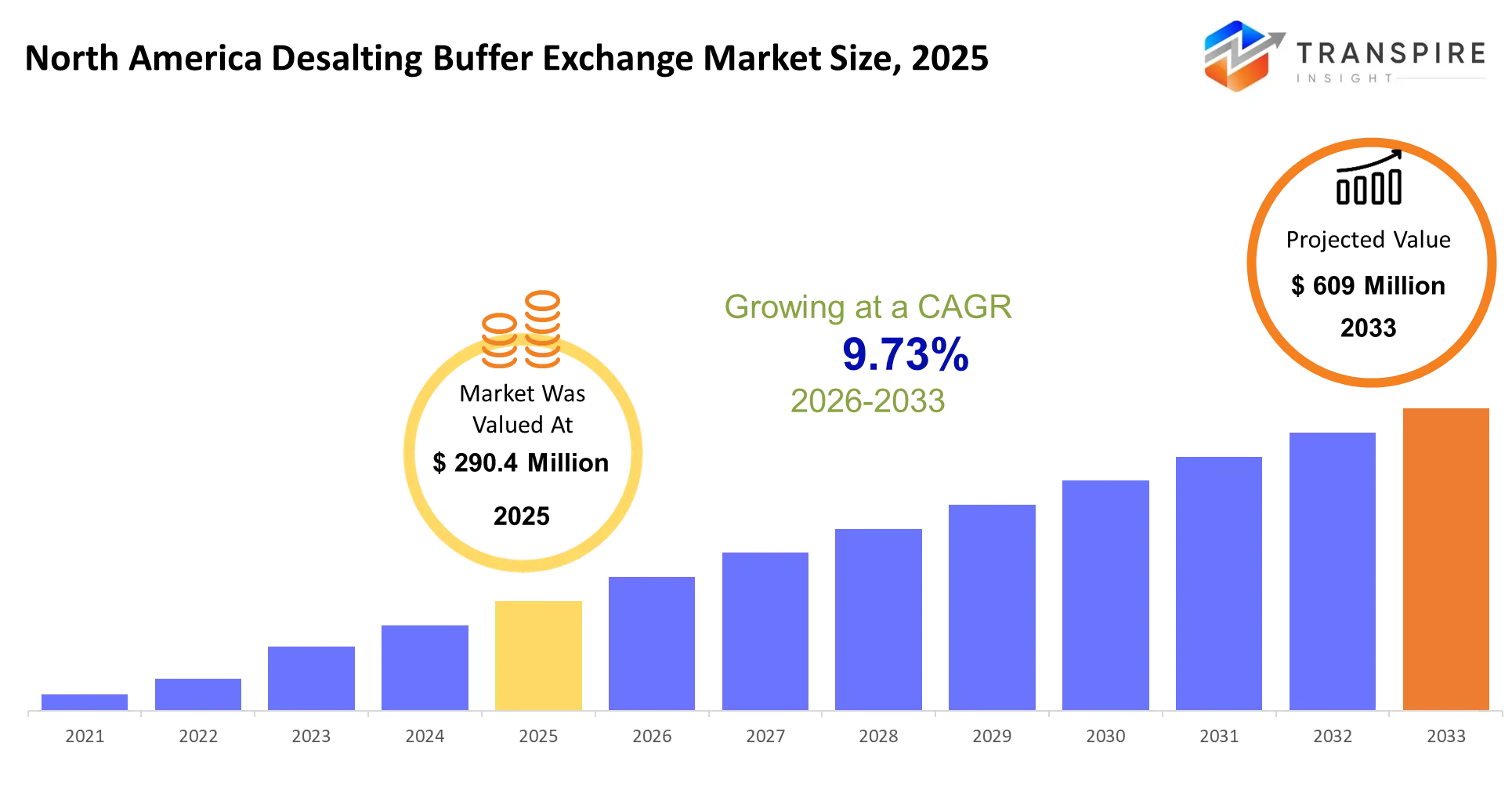
- North America Desalting Buffer Exchange Market Size 2025: USD 290.4 Million
- North America Desalting Buffer Exchange Market Size 2033: USD 609 Million
- North America Desalting Buffer Exchange Market CAGR: 9.73%
- North America Desalting Buffer Exchange Market Segments: By Type (Spin Columns, Dialysis, Ultrafiltration, Chromatography, Others); By Application (Protein Purification, Sample Prep, Drug Development, Research, Others); By End-User (Pharma, Biotech, Labs, Research Institutes, Others); By Technique (Manual, Automated, Hybrid, Others).
To learn more about this report,  Download Free Sample Report
North America Desalting Buffer Exchange Market Summary:
The North America Desalting Buffer Exchange Market size is estimated at USD 290.4 Million in 2025 and is anticipated to reach USD 609 Million by 2033, growing at a CAGR of 9.73% from 2026 to 2033. The North America Desalting Buffer Exchange Market plays a critical role in biopharmaceutical manufacturing, proteomics , and clinical research by stripping salts and swapping incompatible buffers before any sensitive analytical or purification step. in practice these setups let labs and biologics manufacturers keep protein stability intact, raise the precision of downstream processing, and lower contamination hazards during drug development , plus biomolecular analysis. As biologic therapies and cell based research pipelines expanded across North America, desalting and buffer exchange moved from something almost low key in many laboratories to a process efficiency requirement that’s tightly linked to production yield and regulatory consistency.
Over the last 3–5 years, the market has shifted in a more structural way toward automated, high throughput platforms, often tied into continuous bioprocessing workflows. This shift sped up after COVID-19 highlighted operational bottlenecks in biologics manufacturing capacity and also lab turnaround times. The quick scale up of mRNA vaccines, monoclonal antibodies, and advanced therapeutics made manufacturers invest in faster sample preparation, plus purification systems. So vendors with scalable, automation compatible desalting technologies are now capturing more durable recurring revenue from pharmaceutical production, contract research, and precision medicine use cases.
Key Market Insights
- The United States pretty much leads the North America Desalting Buffer Exchange Market, taking around 78% share in 2025, mostly because its biopharma infrastructure is so much more advanced and ready.
- Canada looks like the fastest mover through 2032, driven by more investments in biologics research and the usual push toward precision medicine initiatives, that kind of thing.
- Across Massachusetts and California, strong pharmaceutical manufacturing ecosystems keep pulling regional revenue together and they also help with faster tech adoption, overall.
- With government backed life sciences support programs in the mix, desalting and buffer exchange tech is getting rolled out quicker inside North American research labs.
- Chromatography based desalting equipment is still the biggest chunk, contributing more than 40% to the industry size in 2025, generally speaking.
- Membrane filtration products sit in the #2 position, helped by the fact they scale well for commercial bioprocessing settings.
- Automated buffer exchange platforms are growing the quickest between 2025 and 2032, and this lines up with continuous manufacturing being adopted more steadily.
- Disposable, single use consumables are grabbing notable momentum too, since biopharmaceutical firms focus hard on contamination control plus operational flexibility.
- High throughput desalting cartridges are starting to see newer demand too, especially from genomics and monoclonal antibody development labs.
- Biopharmaceutical manufacturing stays as the main application area, nearly 48% market share in 2025 across North America, in plain terms.
- Proteomics and biomarker discovery use cases are the fastest growing corners, because personalized medicine research programs keep expanding, year after year.
What are the Key Drivers, Restraints, and Opportunities in the North America Desalting Buffer Exchange Market?
The strongest grow-th driver in the North America Desalting Buffer Exchange Market is mostly the rapid expansion of biologics and cell therapy manufacturing. This kind of shift kinda sped up after the COVID-19 vaccine scale-up showed some inefficiencies across upstream and downstream bioprocessing workflows, like it was not as smooth as expected. So pharmaceutical manufacturers started putting more money into automated purification, along with sample preparation systems so they can reduce batch variability and also cut down production timelines. Desalting and buffer exchange technologies then became more or less essential, since biologic drugs demand tight control for protein stabilization and also impurity removal steps. As monoclonal antibodies, mRNA therapeutics, and recombinant proteins push into commercial scale manufacturing, labs and manufacturers are increasing capital spending on high-throughput and continuous processing systems. That’s really what boosts recurring consumables revenue and also makes instrument adoption rise in a more direct way.
Meanwhile, the market’s biggest structural restraint is the high operational complexity you get when you try to integrate automated desalting systems into regulated biopharmaceutical workflows. A lot of legacy laboratories still run with fragmented purification infrastructure, and it cannot easily line up with continuous processing platforms. Any upgrade tends to need substantial capital funding, skilled personnel, validation steps, plus compliance documentation and it’s not quick. This barrier tends to slow adoption for mid-sized biotechnology firms and even academic laboratories, especially when budgets are tied to grant cycles, or when production volumes are limited. The end result is that modernization gets delayed, and the penetration of advanced automated systems is slower across smaller end-user segments.
A big future opportunity kind of sits in the expansion of decentralized biologics manufacturing, and this also includes precision medicine facilities across North America. You can see that emerging modular bioprocessing facilities are moving toward compact, single-use buffer exchange approaches that reduce contamination risk and boost operational flexibility a bit more. Meanwhile, the investment momentum around regional cell and gene therapy hubs, especially in Canada and the U.S. Midwest , is creating pretty good conditions for portable, and scalable desalting platforms. These are meant for smaller batch production environments too, where people need speed and scale without the heavy footprint, all the time.
What Has the Impact of Artificial Intelligence Been on the North America Desalting Buffer Exchange Market?
Artificial intelligence and advanced digital technologies are kind of reshaping the North America Desalting Buffer Exchange Market , mostly by boosting process consistency, speeding up laboratory automation, and improving bioprocessing efficiency. A lot of biopharmaceutical makers are now folding AI based monitoring platforms into desalting and buffer exchange routines , so that protein purification steps can be automated, conductivity levels can be watched more or less continuously, and buffer replacement cycles can be tuned in real time. The result is fewer hands-on moments during sample preparation, plus laboratories can keep tighter process control across those high-throughput biologics production lines.
Then there’s machine learning too, it’s being used to forecast membrane fouling, column wear, and process deviations before they actually interrupt anything major. In practice, predictive analytics platforms chew through historical purification records, flow rate behavior, and buffer composition patterns , and they can surface maintenance needs earlier. That tends to lower the odds of unplanned downtime. Several biologics firms have also reported clear, though somewhat directional, gains in batch consistency, reduced reagent waste, and shorter turnaround periods after bringing in digitally connected purification setups. Automated process optimization can also help with regulatory expectations , since traceability improves and variability in protein processing workflows goes down.
Still, AI adoption has a meaningful snag, because many research labs run on scattered legacy infrastructure that doesn’t really have standardized data architecture. When teams try to drop advanced analytics platforms into older purification environments, they often end up facing costly software upgrades, extra process validation steps, and specialized technical support. All of that slows uptake among mid sized biotechnology companies and academic facilities, even when the benefits sound promising.
Key Market Trends
- Since 2021, biopharma manufacturers have gradually swapped manual desalting workflows for automated systems, partly to cut down protein processing variability and also to limit operator dependent mistakes, that kind of stuff.
- The uptake of continuous bioprocessing really ramped up after COVID-19 vaccine production revealed purification bottlenecks at multiple North American biologics sites.
- Thermo Fisher Scientific and Sartorius AG broadened their single use purification catalog, between 2022 and 2025, to catch that shifting flexible manufacturing demand, without too much commitment.
- CDMOs started increasing capital outlays for scalable buffer exchange platforms, especially as smaller biotechnology firms outsourced more complex biologics production after 2020, because doing it in-house was just harder.
- AI enabled monitoring tools rolled out across purification workflows, helping manufacturers foresee membrane fouling and therefore reduce those unplanned maintenance pauses that derail schedules.
- Since 2023, regulators have tightened attention on biologics consistency, so laboratories moved toward digitally traceable purification systems, with built in process analytics features, that connect the dots.
- High throughput proteomics labs also leaned more into disposable desalting consumables, to lower cross contamination risks and get sample turnaround times moving sooner.
- Canadian life sciences investment programs, basically strengthened regional biologics infrastructure, which then created new demand for smaller buffer exchange technologies in precision medicine facilities.
- From 2021 to 2025, mid sized biotech firms started adopting modular purification systems more often, instead of relying on huge fixed bioprocessing installations, to keep the financial flexibility.
- Also, strategic partnerships between purification technology providers and pharmaceutical manufacturers intensified, as companies aimed for quicker monoclonal antibody commercialization timelines, and needed cleaner execution cycles.
North America Desalting Buffer Exchange Market Segmentation
By Type
Chromatography systems kind of keep the top role in this category because pharmaceutical manufacturers lean on high purification accuracy and workflow that can scale for protein processing, or something close. Spin columns are still widely used in research labs, mostly for the shorter processing time and because they’re simple to manage with small sample volumes, even when people are busy. Ultrafiltration tech keeps picking up momentum in commercial biologics manufacturing because plants want quicker concentration plus reliable desalting performance during continuous production, it’s like a two-in-one routine.
Dialysis products stay relevant in academic spaces and smaller-scale research settings where budget limits still matter more than raw throughput speed, at least in a lot of cases. Meanwhile other styles, like disposable cartridges and membrane-based devices, are growing steadily as contamination-control expectations get stricter inside biologics processing facilities. Demand now seems to tilt toward automation-friendly consumables that cut down on operator involvement and make batch reproducibility better, in practice. In the near future, competition in this category will probably revolve around scalable single-use formats, integrated purification platforms and also systems that can handle high-throughput biologics work without risking regulatory compliance or anything similar.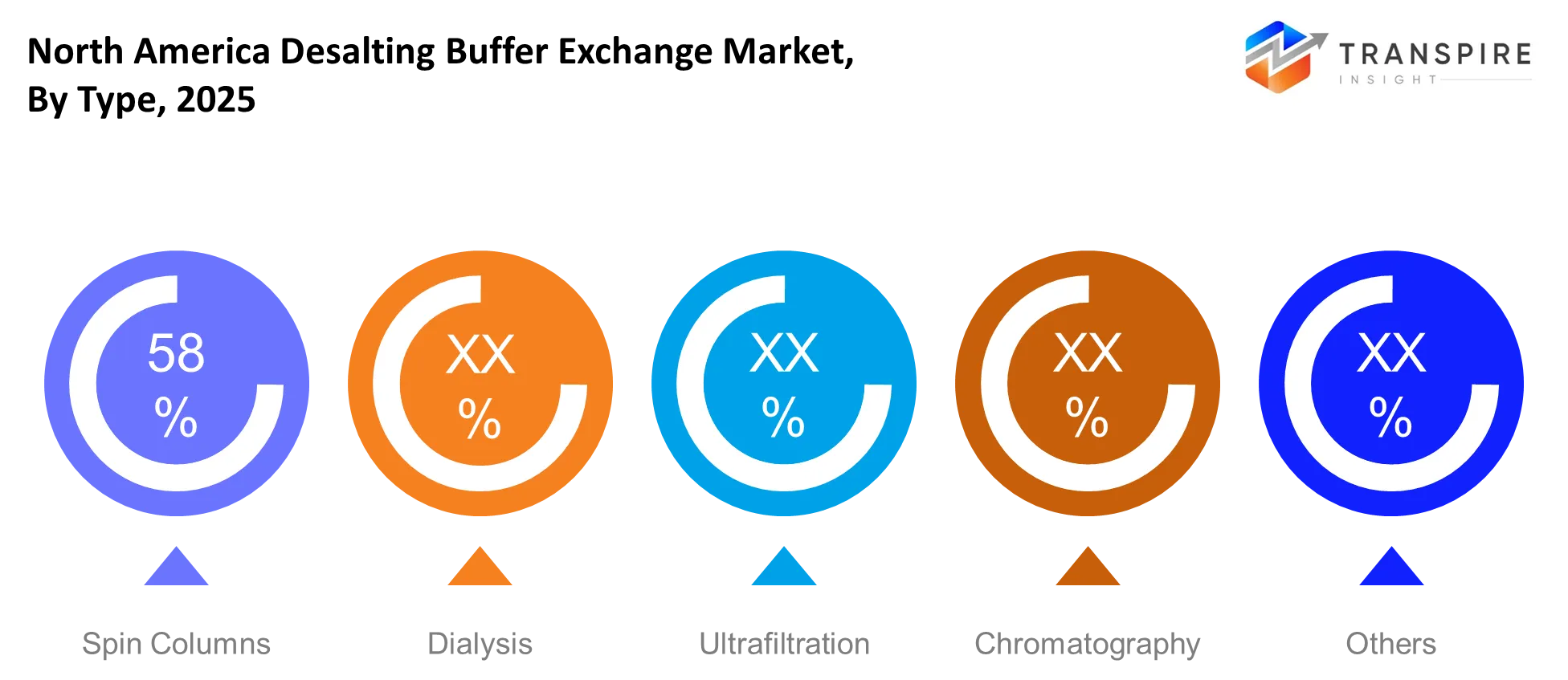
To learn more about this report, Download Free Sample Report
By Application
Protein purification keeps being the leading application segment, mostly because monoclonal antibodies, recombinant proteins, and cell based therapeutics need super controlled buffer exchange , plus impurity removal stuff. Drug development has been expanding quickly too, since many pharmaceutical companies pushed their biologics pipelines right after pandemic related vaccine manufacturing investments. Sample preparation also stays pretty stable in adoption across clinical diagnostics and proteomics labs, where downstream results depend on biomolecules that are actually free from contaminants.
Research applications keep moving the market forward via university grants and government funded life sciences programs, so it kinda keeps a steady momentum. There are also other uses, like biomarker discovery and genomics workflows, that are generating extra demand for compact automated purification units. The market situation is slowly tilting toward applications tied to precision medicine and personalized therapeutics, because real production workflows need better process consistency and full traceability. Manufacturers now seem to concentrate on workflow integration and software enabled purification tools , which help shorten processing cycles while lifting lab productivity and analytical reliability a bit more.
By End-User
Pharmaceutical companies tend to look like the biggest end user segment, mostly because large scale biologics manufacturing needs advanced purification infrastructure and this sort of continuous process tuning, you know. Biotechnology firms keep lifting their adoption rate, since newer therapeutic developers often outsource production while still keeping very strict quality control rules in place, all the while. Contract research organizations and specialized labs also grew more visible, not only through broader clinical testing but also because they offer sample preparation along with biologics support services.
Research institutes stay relatively consistent in buying behavior, driven by ongoing proteomics and molecular biology projects, funded through federal programs across North America, so it kind of keeps rolling. Smaller laboratory operators still feel boxed in by the high upfront capital costs, especially around automated purification systems and the whole validation requirement side. In terms of demand behavior, it is starting to show a move away from fixed large scale infrastructure, and more toward outsourced manufacturing and flexible processing surroundings. Looking ahead, investment patterns seem to point to stronger purchasing activity from mid sized biotechnology firms and regional CDMOs, who are basically hunting for scalable purification technologies that can handle lower volume biologics manufacturing, with less day to day operational complexity.
By Technique
Automated techniques really dominate the technique segment, mostly because biologics manufacturers are trying to push high-throughput production, keep things reproducible, and avoid manual slip ups during the purification workflows. Still, manual methods do keep showing up in smaller laboratories, and in academic research settings where volumes are lower, and where capex budgets kinda limit the ability to buy full automation. You can also see hybrid systems becoming kind of a transitional in-between category, since many sites run mixed infrastructure. They do manual prep steps, but then switch into partially automated purification platforms.
Automated processing got a big push after vaccine production bottlenecks highlighted inefficiencies in older sample handling and protein purification workflows, you know, those more hands-on cycles. More and more market demand is leaning toward digitally connected setups that can do real-time monitoring, predictive maintenance, and integrated process analytics without much delay. Hybrid adoption also makes practical sense practically, because going fully automated usually means lots of validation paperwork and a facility redesign, which can be a headache. Looking ahead, growth in this technique segment will likely hinge on modular automation platforms, AI-assisted process optimization, and purification systems that scale well for decentralized biologics production, plus precision medicine manufacturing environments.
What are the Key Use Cases Driving the North America Desalting Buffer Exchange Market?
Biopharmaceutical manufacturing still feels like the main use case pushing adoption of desalting and buffer exchange technologies throughout North America. Monoclonal antibody production, and recombinant protein purification they both need buffer replacement that is highly controlled , so product stability , purity and regulatory compliance stay intact during those commercial scale runs.
On the other side, proteomics research plus clinical diagnostics are becoming a notable secondary direction. This is especially noticeable among contract research organizations and more specialized lab networks. Lately, high throughput sample preparation workflows lean harder on automated desalting systems—mostly to boost analytical accuracy , and also cut down turnaround time across precision medicine programs.
Then there is cell and gene therapy manufacturing. That one is growing quickly, with serious long-term upside. In the United States and Canada, regional biologics hubs are funding compact single use purification platforms, aimed at smaller batch processing, decentralized manufacturing setups, and kind of personalized therapeutic production environments.
|
Report Metrics |
Details |
|
Market size value in 2025 |
USD 290.4 Million |
|
Market size value in 2026 |
USD 318 Million |
|
Revenue forecast in 2033 |
USD 609 Million |
|
Growth rate |
CAGR of 9.73% from 2026 to 2033 |
|
Base year |
2025 |
|
Historical data |
2021 - 2024 |
|
Forecast period |
2026 - 2033 |
|
Report coverage |
Revenue forecast, competitive landscape, growth factors, and trends |
|
Country scope |
North America (Canada, The United States, and Mexico) |
|
Key company profiled |
Thermo Fisher, Merck KGaA, Bio-Rad, Agilent, Sartorius, GE Healthcare, Danaher, Promega, Qiagen, PerkinElmer, Lonza, Corning, Repligen, Cytiva, Pall Corporation |
|
Customization scope |
Free report customization (country, regional & segment scope). Avail customized purchase options to meet your exact research needs. |
|
Report Segmentation |
By Type (Spin Columns, Dialysis, Ultrafiltration, Chromatography, Others); By Application (Protein Purification, Sample Prep, Drug Development, Research, Others); By End-User (Pharma, Biotech, Labs, Research Institutes, Others); By Technique (Manual, Automated, Hybrid, Others) |
Which Regions are Driving the North America Desalting Buffer Exchange Market Growth?
The United States kind of leads the North America Desalting Buffer Exchange Market, because the big biologics production facilities are still mostly packed within major pharmaceutical and biotechnology clusters. Federal funding for advanced therapeutics, close FDA regulatory attention , and the quick take up of continuous bioprocessing tools keep pushing domestic appetite for automated purification systems. States like Massachusetts, California, and North Carolina, they hold pretty dense webs of biopharma manufacturers, research universities, and contract development organizations. Those groups basically sustain ongoing earnings from tools, consumables, and all that routine throughput. On top of that, strong venture capital momentum, plus homegrown commercial biologics capacity, helps vendors roll out new purification platforms faster than what you typically see across nearby markets.
Canada holds a smaller yet very dependable role due to its consistent public spending for life sciences research and its long range expansion of precision medicine initiatives. Unlike the United States, Canada's growth leans less on large commercial biologics manufacturing and more on research led adoption across universities and regional biotechnology circles. Government backed innovation grants and healthcare research collaborations keep funding lab upgrades and better protein examination capabilities. With stable rules and predictable healthcare budgets, Canada remains a trustworthy contributor to long term market earnings, even if the overall manufacturing scale stays lower.
Mexico is coming up as one of the quickest-growing regional markets, partly because expanding pharmaceutical manufacturing investment and more cross-border biologics production activity are starting to ramp up. In the past bit, the pace got even faster after multinational drug makers leaned into nearshoring approaches to lower supply chain exposure , while also trying to strengthen regional production resilience. A lot of the momentum is also tied to new lab infrastructure projects , plus the modernization of pharmaceutical production facilities, which is generating new needs for scalable desalting and buffer exchange technologies. For the 2026–2033 window, this overall trend should open an appealing room for equipment suppliers , contract manufacturers, and investors looking for lower-cost expansion destinations with better technical abilities.
Who are the Key Players in the North America Desalting Buffer Exchange Market and How Do They Compete?
The competitive landscape of the North America Desalting Buffer Exchange Market stays, kind of moderately consolidated, with big life sciences providers holding a meaningful chunk of the higher value bioprocessing and lab purification workflows. What’s interesting is that rivalry is leaning more toward automation ability, purification efficiency, end-to-end workflow integration, and consumables compatibility, than it is about pricing by itself. Established players keep defending their share with integrated bioprocessing platforms , basically combining desalting, filtration, analytics and even software monitoring into one kind of lab ecosystem. Meanwhile, smaller specialized firms are sliding into narrower spaces like single-use purification cartridges, compact membrane systems, and AI-driven process monitoring tools aimed at decentralized biologics production settings.
Thermo Fisher Scientific goes after advantage via broad workflow integration and a wide distribution footprint spanning both pharmaceutical manufacturing and research laboratories. The company tends to differentiate by bundling purification consumables, automated processing systems, analytical software, and regulatory support services into one operating platform, so it feels pretty seamless. Danaher Corporation improves its competitive stance through its Cytiva portfolio, which is strongly oriented toward scalable biologics manufacturing technologies and continuous bioprocessing systems. Through targeted acquisitions and investments in digital bioprocess monitoring tools, Danaher can also grow recurring consumables revenue while still backing large-scale commercial biologics production.
Sartorius AG really focuses on single use purification tech, that cuts down the contamination risk and also makes the equipment turnaround faster, especially in flexible manufacturing setups. There’s been strong adoption among CDMOs and mid sized biotech firms which gives Sartorius a bit of a edge in modular biologics production settings. Bio-Rad Laboratories, on the other hand, stands out with specialized proteomics and sample preparation product lines, for research heavy workflows that demand high analytical precision, basically the full accuracy thing. Merck KGaA keeps pushing forward too, via advanced membrane technologies and through strategic partnerships with pharmaceutical manufacturers who want better purification efficiency and lower process variability, across commercial therapeutic production lines.
Company List
- Thermo Fisher
- Merck KGaA
- Bio-Rad
- Agilent
- Sartorius
- GE Healthcare
- Danaher
- Promega
- Qiagen
- PerkinElmer
- Lonza
- Corning
- Repligen
- Cytiva
- Pall Corporation
Recent Development News
In April 2026, Thermo Fisher Expands U.S. Bioprocessing Capabilities with New Design Center: Thermo Fisher Scientific opened a flagship Bioprocess Design Center in Massachusetts to support biologics scale-up and advanced downstream processing workflows. The expansion strengthens North America’s bioprocess infrastructure, including technologies closely tied to desalting and buffer exchange applications used in biologics manufacturing.
Source: https://www.businesswire.com
In April 2026, Thermo Fisher Posts Higher Q1 2026 Revenue on Life Sciences Growth: Thermo Fisher announced a 6% year-over-year revenue increase in Q1 2026, supported by continued growth across life sciences and biopharma services. The company highlighted ongoing investments in laboratory and biologics manufacturing technologies that support purification and sample preparation operations across North America.
Source: https://www.biospace.com
What Strategic Insights Define the Future of the North America Desalting Buffer Exchange Market?
Over the next five to seven years, the North America Desalting Buffer Exchange Market is, kind of, structurally shifting toward fully integrated and digitally managed bioprocessing ecosystems instead of standalone purification tools, or at least that’s what the direction suggests. The core driver behind this movement is basically the commercialization of complex biologics, cell therapies, and personalized medicines that really need continuous processing, tighter batch reproducibility, and real time analytical control. As manufacturing moves toward smaller decentralized sites, the demand pattern will lean harder on compact, automation compatible purification technologies, ones that can handle flexible batch volumes and quick changeovers without too much fuss.
There’s also a less obvious risk, market concentration around a small set of higher end bioprocessing suppliers. Big pharma manufacturers are getting more and more dependent on integrated proprietary platforms, which could bring pricing pressure, supply fragility, and a kind of reduced interoperability across purification workflows. Still, at the same time an opportunity is showing up around AI assisted purification optimization for decentralized cell and gene therapy facilities, especially across secondary biotechnology hubs in Canada and the U.S. Midwest. New entrants in this area should probably focus on modular, software enabled systems with open platform compatibility, because buyers increasingly seem to prefer flexibility over locked in infrastructure ecosystems that don’t bend easily.
North America Desalting Buffer Exchange Market Report Segmentation
By Type
- Spin Columns
- Dialysis
- Ultrafiltration
- Chromatography
- Others
By Application
- Protein Purification
- Sample Prep
- Drug Development
- Research
- Others
By End-User
- Pharma
- Biotech
- Labs
- Research Institutes
- Others
By Technique
- Manual
- Automated
- Hybrid
- Others
Frequently Asked Questions
Find quick answers to common questions.
The Approximate North America Desalting Buffer Exchange Market size for the Market will be USD 609 Million in 2033.
The key Segments of the North America Desalting Buffer Exchange Market are By Type (Spin Columns, Dialysis, Ultrafiltration, Chromatography, Others); By Application (Protein Purification, Sample Prep, Drug Development, Research, Others); By End-User (Pharma, Biotech, Labs, Research Institutes, Others); By Technique (Manual, Automated, Hybrid, Others).
Major Players in the North America Desalting Buffer Exchange Market are Thermo Fisher, Merck KGaA, Bio-Rad, Agilent, Sartorius, GE Healthcare, Danaher, Promega, Qiagen, PerkinElmer, Lonza, Corning, Repligen, Cytiva, Pall Corporation.
The Current Market size of the North America Desalting Buffer Exchange Market is USD 290.4 Million in 2025.
The North America Desalting Buffer Exchange Market CAGR is 9.73%.
- Thermo Fisher
- Merck KGaA
- Bio-Rad
- Agilent
- Sartorius
- GE Healthcare
- Danaher
- Promega
- Qiagen
- PerkinElmer
- Lonza
- Corning
- Repligen
- Cytiva
- Pall Corporation
Recently Published Reports
-
Apr 2026
Cord Blood Banking Services Market
Cord Blood Banking Services Market Size, Share & Analysis Report By Type of Service (Collection, Processing, Storage), By Bank Type (Private Banks, Public Banks, and Hybrid Banks), By Component (Cord Blood, and Cord Tissue), By End User (Hospitals, Research Institutions, Biotechnology Companies, and Others) and Geography (North America, Europe, Asia-Pacific, Middle East and Africa, South and Central America), 2021 - 2031
-
Apr 2026
ELISA Processors Market
ELISA Processors Market Size, Share & Analysis Report By Type (Optical Filter ELISA Analyzer, and Optical Grating ELISA Analyzers), By Mode (Automated ELISA Analyzers, and Semi-Automated ELISA Analyzers), By Applications (Immunology, Vaccine development, Drug Monitoring, and Others), By End Users (Biotechnology Companies, Pharmaceutical Companies, Contract Research Organization, and Diagnostic Laboratories) and Geography (North America, Europe, Asia-Pacific, Middle East and Africa, South and Central America), 2021 - 2031
-
May 2026
Microscope Slide Scanner Market
Microscope Slide Scanner Market Size, Share & Analysis Report By Type (Portable Microscope Slide Scanner, and Desktop Microscope Slide Scanner), By Application (Biological Research, Medicine, Veterinary, and Other) and Geography (North America, Europe, Asia-Pacific, Middle East and Africa, South and Central America), 2021 - 2031
-
Apr 2026
Microwave Cookware Market
Microwave Cookware Market Size, Share & Analysis Report By Material Type (Plastic, Glass, Ceramic, Silicone, and Metal), By Application (Cooking, Reheating, and Defrosting), By End User (Household, Commercial (Restaurants, Hotels, and Cafes), and Food Service Industry), By Sales Channel (Online Retail, Offline Retail (Supermarkets, Hypermarkets, Specialty Stores), and Direct Sales (Company Outlets)) and Geography (North America, Europe, Asia-Pacific, Middle East and Africa, South and Central America), 2021 - 2031