

North America Autologous Fat Grafting Market Size & Forecast:
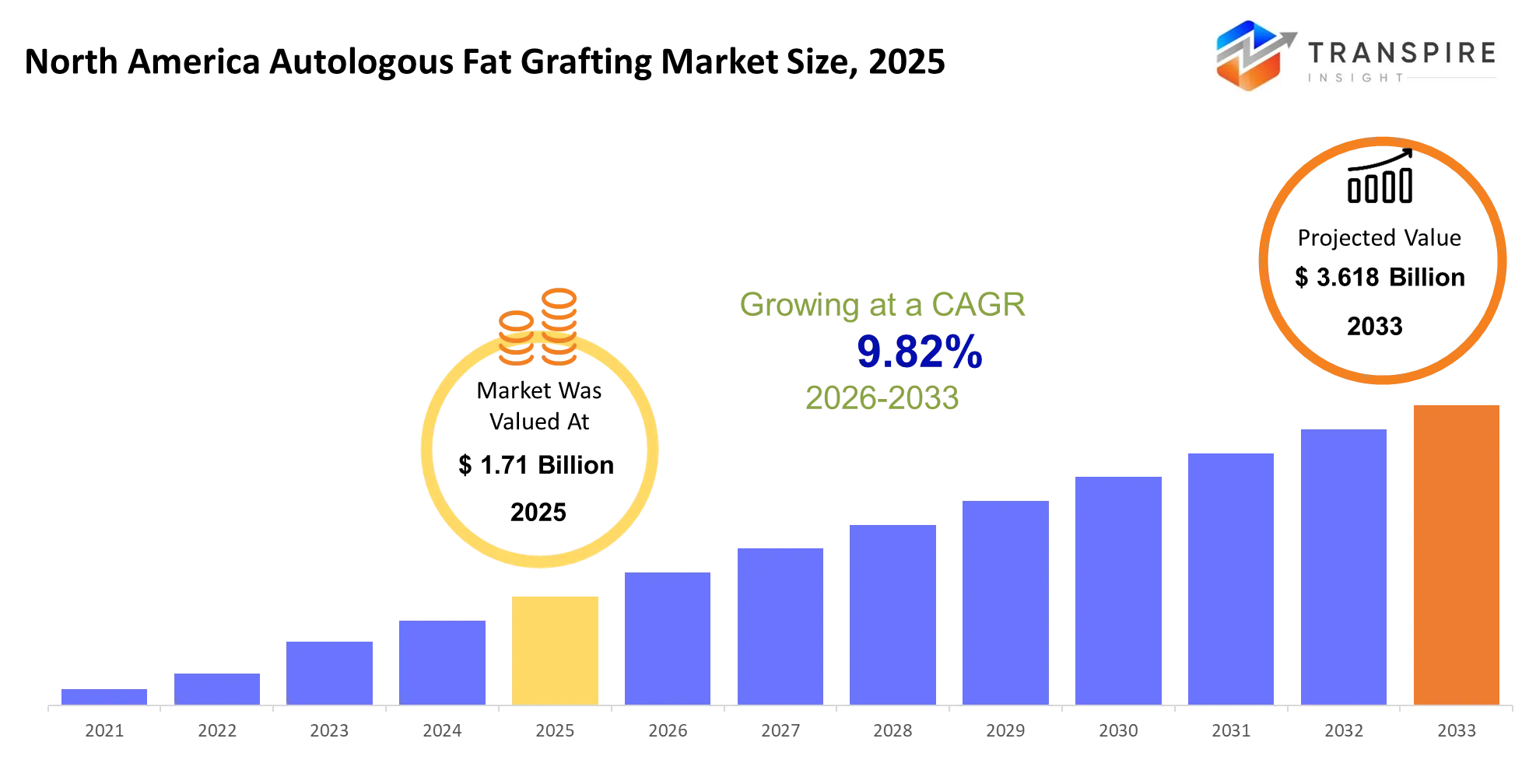
- North America Autologous Fat Grafting Market Size 2025: USD 1.71 Billion
- North America Autologous Fat Grafting Market Size 2033: USD 3.618 Billion
- North America Autologous Fat Grafting Market CAGR: 9.82%
- North America Autologous Fat Grafting Market Segments: By Procedure Type (Breast Augmentation, Facial Rejuvenation, Buttock Augmentation, Scar Treatment, Hand Rejuvenation, Others), By Application (Cosmetic Surgery, Reconstructive Surgery, Dermatology, Orthopedic Treatments, Others), By End User (Hospitals, Cosmetic Clinics, Ambulatory Surgical Centers, Others), By Technology (Centrifugation Systems, Filtration Systems, Washing Systems, Others).
To learn more about this report,  Download Free Sample Report
North America Autologous Fat Grafting Market Summary:
The North America Autologous Fat Grafting Market size is estimated at USD 1.71 Billion in 2025 and is anticipated to reach USD 3.618 Billion by 2033, growing at a CAGR of 9.82% from 2026 to 2033. North America Autologous Fat Grafting Market is dealing with a pretty practical issue in reconstructive and aesthetic medicine, like how do you bring back soft tissue volume in a way that feels natural, and doesn’t rely on synthetic fillers, or implants. In short, surgeons lean on the patient’s own fat rather than something manufactured. These procedures show up in breast reconstruction , facial shaping correction, scar repair , and post-trauma rebuilding, mostly because the fat tends to blend in more seamlessly with nearby tissue and, as reported, it helps lower the chance of rejection related complications. Because of that, it’s become more and more important in both upscale cosmetic clinics and hospital-based reconstructive programs, even when budgets and schedules are tight.
In the past three to five years, the market has moved away from purely conventional manual fat transfer methods. Instead, more providers are using cell assisted approaches, plus precision processing systems, which can boost fat retention and make results more predictable during follow ups. This shift picked up speed after the pandemic backlog, when many practices started prioritizing minimally invasive outpatient workflows , since patients often want shorter recovery. Meanwhile, progress in regenerative medicine research made physicians more confident about using fat derived stem cell concepts. With clinical outcomes getting steadier over time, providers also broadened their treatment menus , so they could charge higher fees per session and generate more revenue per patient within specialized surgical centers.
Key Market Insights
- The North America Autologous Fat Grafting Market is expected to see strong forecast growth, mostly backed by higher procedural success rates and the more common switch toward outpatient surgical workflows, so clinics don’t need big in patient stays as often.
- Meanwhile, advanced liposuction harvesting systems really helped fat retention efficiency, jumping by nearly 20% from 2020 to 2025, and that seems to have pushed overall industry expansion in size.
- Regenerative aesthetics is showing up as a pretty major demand driver, because clinics are starting to mix fat grafting with stem-cell enriched therapies, kind of as a combo approach for facial rejuvenation.
- Also, more post-mastectomy reconstruction procedures, kind of boosted revenue generation for the North America Autologous Fat Grafting Market across hospital networks and specialty surgical channels, not just one lane.
- In the United States, the market leads with over 82% share in 2025, mainly due to more advanced cosmetic surgery infrastructure and consistently high procedure volumes.
- Canada looks like it will be the fastest grower through 2030, driven by medical aesthetics clinics spreading out more and investments rising in reconstructive surgery.
- On segmentation, facial fat grafting takes the leading slice at nearly 38% in 2025, largely because patients prefer natural volumizing options, not the louder alternatives.
- Breast reconstruction stays second-largest, as providers increasingly choose autologous tissue restoration over synthetic implant dependency, even if it’s a more hands on path.
- Stem cell-assisted fat grafting is projected to grow the quickest between 2025 and 2030, largely because graft survival outcomes are improving.
- When you look at end use, cosmetic and aesthetic applications dominate at about 61% market share, supported by the ongoing demand for minimally invasive facial contouring.
- Reconstructive surgery applications are expected to log the fastest growth rate over the whole forecast period, mainly because trauma cases and oncology related procedures keep adding to demand.
What are the Key Drivers, Restraints, and Opportunities in the North America Autologous Fat Grafting Market?
The biggest driving force behind the North America Autologous Fat Grafting Market, is this quick turn toward minimally invasive reconstructive as well as cosmetic approaches, supported by more refined fat-processing technology. Over the last five years, automated purification along with closed loop harvesting configurations, has helped boost graft retention levels and reduce procedural inconsistency , pretty noticeably. That all means surgeons can land with outcomes that feel more predictable. And this tech change kind of lined up with the post-pandemic recovery in elective care, where patients seem to favor shorter recovery windows and lower implant related risks. As confidence grew, specialty clinics expanded their premium facial rejuvenation and breast reconstruction offerings too, which raised both procedure counts and revenue per patient.
Still, the market’s biggest structural obstacle is the lack of standardized reimbursement structures for aesthetic and regenerative fat grafting procedures. A lot of these treatments remain outside broad insurance support, especially when the use is cosmetic, so patients end up paying from their own pockets. This isn’t really a quick fix either, since reimbursement rules rely on long clinical validation steps and regulatory review timelines. Because of that, adoption gets uneven across income levels and different healthcare systems, and that dampens wider procedural penetration. In turn, it also caps recurring revenue streams for providers, which is kind of a long ripple effect.
Stem cell enriched fat grafting is kinda the most clear path for long term growth opportunity. The research spending on adipose derived regenerative cell therapies is really ramping up fast across North American academic hospitals plus some biotechnology partnerships. Meanwhile clinics that are starting to fold regenerative uses into scar revision, or after oncology reconstruction programs, are already getting ready for more profitable specialized care offerings, which feels like a win, frankly.
What Has the Impact of Artificial Intelligence Been on the North America Autologous Fat Grafting Market?
Artificial intelligence and advanced digital technologies are starting to sort of reshape the North America Autologous Fat Grafting Market , mainly by improving surgical planning, fat-processing accuracy, and even the ability to forecast post-procedure outcomes. More and more clinics, and reconstructive surgery centers, are using AI assisted imaging platforms to do automated facial mapping, volumetric analysis, and donor-site assessment before anything really begins. In practice, these systems help surgeons figure out the best fat harvesting zones and estimate graft volume requirements with higher precision. As a result, procedural variability gets dialed down, and aesthetic symmetry tends to look more consistent.
At the same time, machine learning models are also feeding predictive capabilities across regenerative medicine use cases. Advanced analytics platforms look at patient specific variables , like tissue quality, metabolic factors, and graft absorption behaviors, then they try to estimate long-term fat retention. That kind of insight enables physicians to fine tune injection strategies and reduce the need for later revision procedures. A few North American surgical centers have mentioned shorter planning timelines, and better patient follow-up retention, after they added 3D imaging plus AI guided simulation tools into their consultation routines, sort of like a faster back-and-forth.
On the operational side, digital fat-processing systems with automated purification controls are improving graft viability and cutting down manual handling mistakes in outpatient settings. These tools also support faster surgical turnover and more consistent procedural output, which can indirectly help clinic profitability. Still, AI adoption has a big wall to climb : there is a lack of large, standardized clinical datasets for autologous fat grafting outcomes. Differences in surgical technique, patient biology, and follow up documentation keep algorithm performance constrained. So even though tools improve, broader standardization across the market.
Key Market Trends
- Since 2021, outpatient aesthetic centers started to adopt closed loop fat purification systems more often, which helped lower contamination risks and, at the same time, seemed to speed up the average time for procedure prep.
- Breast reconstruction programs kind of moved away from implant only methods after post mastectomy patients, between 2020 and 2024, increasingly asked for more natural tissue restoration instead of the earlier approach, even when schedules got tight.
- After 2022, AI assisted 3D imaging platforms showed up across North American clinics , these tools helped surgeons get better volumetric planning, and that apparently also cut down the number of revision procedures.
- Companies like Allergan Aesthetics and Becton Dickinson expanded their funding in regenerative aesthetics technologies, aiming to make it easier for physicians to adopt the workflow , and also to keep procedural standards more consistent.
- In Canada, aesthetic surgery networks accelerated their rollout after 2023 as private investment grew, which then improved access to advanced outpatient reconstructive treatment facilities.
- From 2020 to 2025, facial fat grafting procedures got stronger patient favor because longer lasting outcomes reduced the need for repeated dermal filler sessions , like over and over.
- Hospitals leaned into partnerships with biotechnology firms after regenerative medicine trials suggested improved graft retention rates, especially when adipose derived stem cell enrichment methods were used.
- During the pandemic, supply chain disruptions made clinics rethink things and after 2021 they pushed to prioritize locally sourced disposable surgical kits, plus automated fat processing consumables.
- Regulatory scrutiny around stem cell manipulation increased after 2022, and that pushed manufacturers to create more standardized processing protocols , along with stronger clinical validation frameworks.
North America Autologous Fat Grafting Market Segmentation
By Procedure Type
In terms of procedure type, facial rejuvenation kind of stays in the leading spot, mainly because cosmetic clinics keep seeing solid procedural demand from mid age and older patient groups, who are looking for outcomes that feel more natural and also for that gentle volumizing effect. Breast augmentation along with reconstruction still keeps a big slice of the market, partly due to higher post mastectomy reconstruction rates , and also because more patients are leaning toward autologous tissue transfer rather than synthetic implants. Buttock augmentation has been rising at a steady pace after social media body contouring trends made these treatments much more visible, especially within urban surgical centers. Scar treatment plus hand rejuvenation are comparatively smaller categories, though they are developing quickly, since regenerative fat grafting methods increasingly get used for tissue repair and for improving skin quality.
The growth pattern looks a bit different from one procedure to another, because facial applications often need repeat refinement sessions , whereas breast and body contouring typically bring in higher average revenue per case. Going forward, the market direction seems to lean toward personalized graft retention strategies. That, in turn, will push manufacturers toward more advanced processing systems and will also motivate providers to broaden their specialized aesthetic treatment lineups.
By Application
In general, by application cosmetic surgery kinda takes the lead in industry revenue because minimally invasive facial contouring and body enhancement procedures keep bringing in solid outpatient procedural volumes across the United States and Canada. Reconstructive surgery still sits as the second biggest application, largely from how breast reconstruction is getting more used , plus trauma repair and post-oncology tissue restoration programs.
Dermatology applications also picked up momentum once regenerative medicine research got stronger, people started showing more interest in scar revision and skin rejuvenation treatments that use adipose-derived regenerative cells. Orthopedic treatments feel more like a developing niche, but sports medicine clinics are increasingly assessing fat-derived cell therapies for soft tissue recovery uses.
Different application areas seem to follow different economic patterns too, since cosmetic procedures rely a lot on discretionary consumer spending, while reconstructive care is helped by broader hospital integration and selective reimbursement support. Going forward, growth will probably tilt toward combined regenerative therapies that blend aesthetic enhancement with tissue healing capabilities, and that could open up opportunities for biotechnology partnerships and more advanced clinical treatment platforms.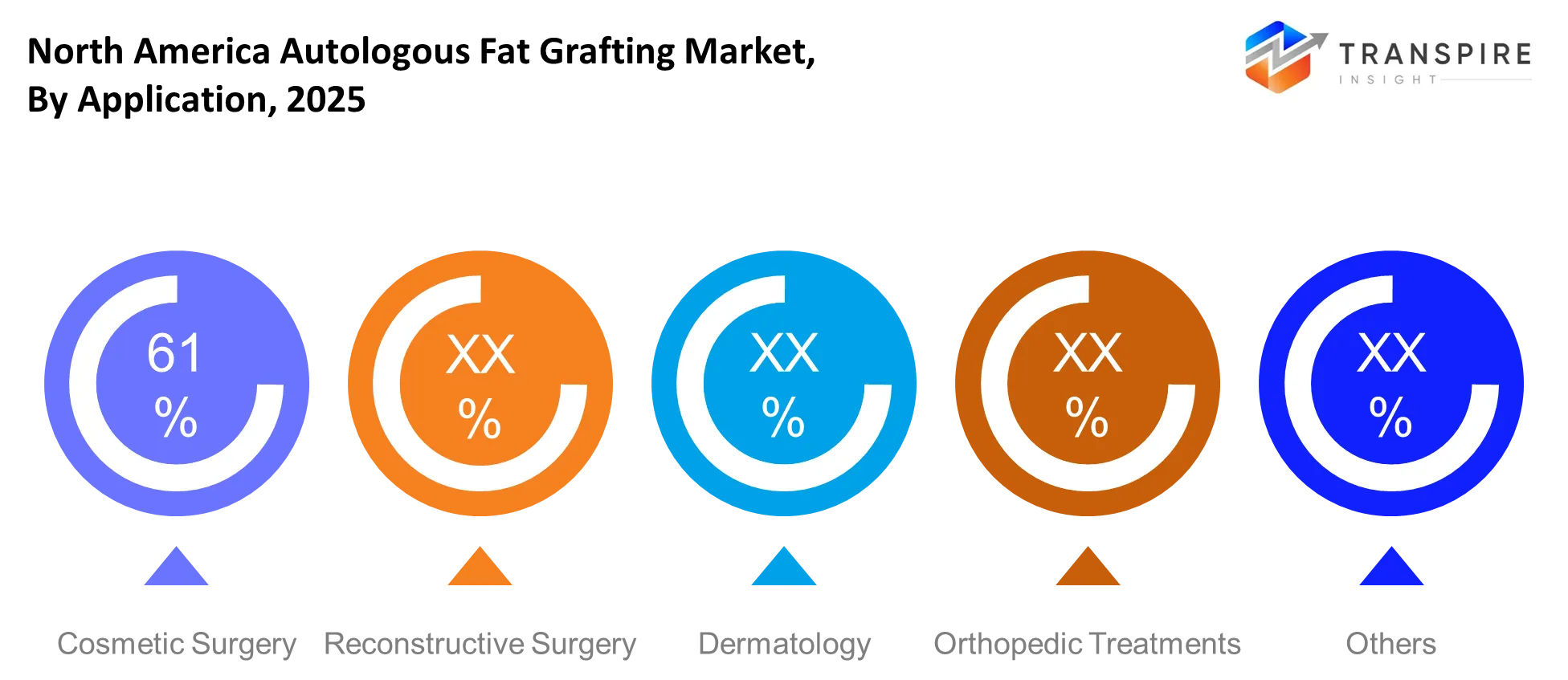
To learn more about this report, Download Free Sample Report
By End-User
End users, like cosmetic clinics, take up the largest procedural share , because outpatient facilities offer quicker scheduling, a kind of more refined aesthetic know-how, and premium treatment bundles that are aimed at higher income patient groups. At the same time, hospitals still hold a solid spot in reconstructive and trauma related work, mainly since multidisciplinary surgical support and post operative care infrastructure are still kinda non negotiable there. Ambulatory surgical centers grew pretty steadily during the past five years, as healthcare systems leaned more toward cost efficient same day procedures, and also quicker recovery timelines. Meanwhile smaller specialty centers and physician owned practices keep popping up in big metropolitan areas, where the demand for minimally invasive aesthetic procedures is mostly concentrated.
The operational differences matter a lot for adoption patterns, hospitals tend to emphasize clinical safety and reconstructive complexity , while private clinics usually focus on procedural volume and patient experience, in a more direct way. Looking ahead, competitive dynamics will likely tilt toward integrated outpatient networks that can tie together digital consultation platforms, regenerative medicine know-how, and automated fat processing technologies , just to boost operational efficiency and also improve long term patient retention.
By Technology
Technology, centrifugation systems kinda dominate these days because most clinicians already know them, fat separation comes out reliably, and they work well with high volume cosmetic work. Filtration systems have seen better adoption in outpatient environments , mainly since the workflow is simpler so you lose less time, and there is less manual handling during minimally invasive steps. Washing systems still feel like the emerging part of the market , especially within more advanced reconstructive programs that want stronger purification quality and better graft viability. In practice, picking the right technology is starting to feel less about the old processing routes and more about balancing graft survival, procedural speed, and the operating costs.
Automated closed-loop systems really expanded after 2021 , because clinics wanted tighter contamination control and more standardized results once quality expectations got more strict. Manufacturers are competing now with software integration, disposable kit compatibility, and precision processing features that support longer term graft retention. Going forward, investment will probably swing toward AI assisted processing platforms and regenerative cell enrichment approaches, which opens up new opportunities for premium equipment suppliers and niche surgical providers trying to differentiate via procedural consistency.
What are the Key Use Cases Driving the North America Autologous Fat Grafting Market?
Facial rejuvenation is still the main reason people adopt these approaches, even though it’s not always said that plainly, because cosmetic clinics keep leaning toward natural-looking contour restoration instead of relying too much on synthetic fillers. There’s also steady pressure from older patient groups, plus the fact that outpatient recovery is shorter, so you still see high procedural volumes across a lot of urban aesthetic surgery centers, day after day, more or less.
Breast reconstruction and scar revision are starting to move faster too, especially inside hospitals and ambulatory surgical centers that handle post-oncology care and trauma patients. On top of that dermatology clinics expanded use of fat grafting for acne scar correction and overall skin texture improvement, mostly as regenerative treatment protocols became more accepted in real clinical practice, not just theory.
Newer directions are showing up as orthopedic soft tissue repair plus stem cell-enriched regenerative therapies aimed at chronic wound healing. Academic hospitals and biotechnology partnerships are starting to judge adipose-derived cell treatments more often for sports injuries and tissue regeneration, which could turn into longer-term opportunities for specialty surgical and regenerative medicine providers.
|
Report Metrics |
Details |
|
Market size value in 2025 |
USD 1.71 Billion |
|
Market size value in 2026 |
USD 1.878 Billion |
|
Revenue forecast in 2033 |
USD 3.618 Billion |
|
Growth rate |
CAGR of 9.82% from 2026 to 2033 |
|
Base year |
2025 |
|
Historical data |
2021 - 2024 |
|
Forecast period |
2026 - 2033 |
|
Report coverage |
Revenue forecast, competitive landscape, growth factors, and trends |
|
Country scope |
North America (Canada, The United States, and Mexico) |
|
Key company profiled |
Allergan Aesthetics, Mentor Worldwide, Cytori Therapeutics, Genesis Biosystems, Human Med AG, Tulip Medical, MicroAire Surgical Instruments, Becton Dickinson, Sientra, Alma Lasers, Merz Pharma, Polytech Health, Revolve System, InMode, Establishment Labs |
|
Customization scope |
Free report customization (country, regional & segment scope). Avail customized purchase options to meet your exact research needs. |
|
Report Segmentation |
By Procedure Type (Breast Augmentation, Facial Rejuvenation, Buttock Augmentation, Scar Treatment, Hand Rejuvenation, Others), By Application (Cosmetic Surgery, Reconstructive Surgery, Dermatology, Orthopedic Treatments, Others), By End User (Hospitals, Cosmetic Clinics, Ambulatory Surgical Centers, Others), By Technology (Centrifugation Systems, Filtration Systems, Washing Systems, Others) |
Which Regions are Driving the North America Autologous Fat Grafting Market Growth?
The United States pretty much stays ahead in the regional scene because advanced cosmetic surgery infrastructure and high healthcare spending keep backing big procedural counts . There is also a strong weaving between aesthetic clinics , reconstructive hospitals and regenerative medicine research centers , which ends up feeling like a fully built treatment ecosystem . On top of that, favorable reimbursement support for certain reconstructive procedures helps keep hospitals involved in breast restoration and trauma related applications . Big city hubs like New York, Los Angeles, and Miami keep things steady, mainly through dense networks of board certified plastic surgeons and upscale outpatient facilities.
Canada comes in next as the second-largest regional contributor, but the market behaves differently than the United States . In Canada , growth hinges more on procedural steadiness rather than aggressive expansion, you know? Public healthcare integration along with carefully staged regulatory oversight creates a more measured adoption setting for advanced fat grafting technologies . Canadian providers keep putting money into outpatient surgical infrastructure, especially around Toronto, Vancouver , and Montreal where cosmetic and reconstructive procedures keep a reliable pace of patients . Solid physician training standards and continuous investment in minimally invasive treatment platforms also support long term market resilience even if the procedural volumes are lower than in the United States.
Mexico is sort of emerging as the fastest-growing regional market because of expanding medical tourism and the quick buildup of private cosmetic surgery infrastructure. Over the last five years , lower treatment costs and more incoming international patients, made a lot of clinics modernize their surgical rooms and start using more advanced fat-processing technologies. Cross-border demand from United States patients who are looking for cost-efficient aesthetic procedures, sped up the procedural volumes in places like Tijuana, Cancun,and Mexico City. In the bigger view, this growth path is opening up attractive chances for equipment manufacturers, regenerative medicine players , and outpatient clinic operators aiming to expand across Latin American healthcare networks, between 2026 and 2033.
Who are the Key Players in the North America Autologous Fat Grafting Market and How Do They Compete?
The competitive landscape in the North America Autologous Fat Grafting Market is still kind of moderately fragmented, with rivalry that leans more toward procedural technology and clinical results not so much price alone. Bigger medical technology firms keep trying to hold onto share, using automated fat-processing systems and physician training networks, while more niche regenerative medicine players are bringing in cell enrichment platforms that sort of push against the usual grafting approach. Increasingly, advantage comes down to how well the graft actually stays, how fast and smoothly the procedure runs, and whether regenerative uses can be woven into reconstructive as well as aesthetic daily workflows. Even outpatient cosmetic clinics matter here too, since they often choose equipment providers that make same day work simpler and reduce how much time is spent in the operating room.
Allergan Aesthetics stands out via a wide aesthetics ecosystem that blends injectables , body contouring capabilities , and physician education platforms. They help raise adoption by framing fat grafting together with related facial rejuvenation services inside high-volume cosmetic clinics. MicroAire Surgical Instruments, on the other hand, is centered on precision harvesting systems meant to support fat viability during extraction. The company also has strong relationships with plastic surgeons and reconstructive specialists, which becomes a real edge in premium surgical environments, where procedural consistency really shapes longer-term results.
Cytori Therapeutics, it competes via stem cell-enriched adipose processing technologies, aimed at reconstructive and regenerative uses not really just cosmetic enhancement. They, the company differentiates itself by putting extra focus on adipose-derived regenerative cell research for tissue healing and also post-oncology reconstruction programs. Meanwhile Becton Dickinson leans on big scale clinical distribution muscle plus sterile processing know how to back hospital based surgical programs across North America. Genesis Biosystems expands with minimally invasive aesthetic platforms, made for outpatient clinics wanting quicker procedure turnover and a more streamlined workflow integration.
Company List
- Allergan Aesthetics
- Mentor Worldwide
- Cytori Therapeutics
- Genesis Biosystems
- Human Med AG
- Tulip Medical
- MicroAire Surgical Instruments
- Becton Dickinson
- Sientra
- Alma Lasers
- Merz Pharma
- Polytech Health
- Revolve System
- InMode
- Establishment Labs
Recent Development News
In March 2026, AbbVie Highlights Regenerative Aesthetics Research at AMWC 2026: Allergan Aesthetics, an AbbVie company, presented multiple evidence-based studies and scientific posters at the Aesthetic & Anti-Aging Medicine World Congress (AMWC). The presentations reinforced the company's strategy of expanding evidence generation across aesthetic and regenerative procedures that complement fat-grafting and body-contouring treatments. This reflects continued investment in physician education and clinical validation within the aesthetic surgery ecosystem.
Source: https://news.abbvie.com
In January 2026, Tiger Aesthetics Sees Rising Demand for AlloClae Fat-Based Injectable Platform: Reports highlighted growing adoption of AlloClae, a fat-derived injectable developed by Tiger Aesthetics. Plastic surgeons across the U.S. reported increasing demand for body contouring and breast enhancement procedures using the company's off-the-shelf adipose-based technology. The development is significant because it expands options within the broader fat-transfer and soft-tissue augmentation segment.
Source: https://nypost.com
What Strategic Insights Define the Future of the North America Autologous Fat Grafting Market?
Over the next five to seven years , the North America Autologous Fat Grafting Market seems to be drifting toward regenerative and more data-driven procedural models , not just the usual volume restoration stuff. The core change is kind of coming together from a few directions at once, stem cell research, AI-assisted surgical planning, plus patients who are increasingly asking for biologically integrated treatments with outcomes that stick around longer. As the clinical proof for adipose-derived regenerative cells gets stronger, hospitals and specialty clinics will probably start framing fat grafting as a piece of larger tissue restoration and anti-aging pathways , not as a lone cosmetic move.
There is also this less talked about risk, regulatory scrutiny is getting tighter around stem cell manipulation and biologic processing standards. If the oversight keeps increasing , compliance costs can climb and commercialization timelines might get pushed back , especially for smaller regenerative medicine firms that do not have the scale or large clinical validation capacity. But, at the same time, there is a real opportunity forming in orthopedic use cases and chronic wound healing, mostly when biotechnology companies team up with academic medical centers. Market players should start investing early in standardized processing platforms and in long-term clinical outcome databases , because in the future competitive advantage may depend more on consistent, measurable treatment results than on procedural volume alone .
North America Autologous Fat Grafting Market Report Segmentation
By Procedure Type
- Breast Augmentation
- Facial Rejuvenation
- Buttock Augmentation
- Scar Treatment
- Hand Rejuvenation
- Others
By Application
- Cosmetic Surgery
- Reconstructive Surgery
- Dermatology
- Orthopedic Treatments
- Others
By End User
- Hospitals
- Cosmetic Clinics
- Ambulatory Surgical Centers
- Others
By Technology
- Centrifugation Systems
- Filtration Systems
- Washing Systems
- Others
Frequently Asked Questions
Find quick answers to common questions.
The Approximate North America Autologous Fat Grafting Market size for the Market will be USD 3.618 Billion in 2033.
The key Segments of the North America Autologous Fat Grafting Market are By Procedure Type (Breast Augmentation, Facial Rejuvenation, Buttock Augmentation, Scar Treatment, Hand Rejuvenation, Others), By Application (Cosmetic Surgery, Reconstructive Surgery, Dermatology, Orthopedic Treatments, Others), By End User (Hospitals, Cosmetic Clinics, Ambulatory Surgical Centers, Others), By Technology (Centrifugation Systems, Filtration Systems, Washing Systems, Others).
Major Players in the North America Autologous Fat Grafting Market are Allergan Aesthetics, Mentor Worldwide, Cytori Therapeutics, Genesis Biosystems, Human Med AG, Tulip Medical, MicroAire Surgical Instruments, Becton Dickinson, Sientra, Alma Lasers, Merz Pharma, Polytech Health, Revolve System, InMode, Establishment Labs.
The Current Market size of the North America Autologous Fat Grafting Market is USD 1.71 Billion in 2025.
The North America Autologous Fat Grafting Market CAGR is 9.82%.
- Allergan Aesthetics
- Mentor Worldwide
- Cytori Therapeutics
- Genesis Biosystems
- Human Med AG
- Tulip Medical
- MicroAire Surgical Instruments
- Becton Dickinson
- Sientra
- Alma Lasers
- Merz Pharma
- Polytech Health
- Revolve System
- InMode
- Establishment Labs
About the Authors

Pankaj Ghogare Patil
I am Pankaj Ghogare Patil, a Senior Research Analyst at Transpire Insight, specializing in the Pharmaceutical, Chemicals & Materials, Healthcare IT, and Biotechnology industry. My expertise lies in conducting comprehensive market research, analyzing industry trends, evaluating competitive landscapes, and translating complex data into actionable insights. At Transpire Insight, I closely follow emerging technologies, regulatory developments, and market innovations to create accurate, well-researched, and informative content that helps businesses and professionals make informed decisions. I am committed to producing credible, evidence-based articles that reflect industry best practices while making technical topics accessible and valuable for a broad audience.

Chakradhar Khansole
Chakradhar serves as the Research Director at Transpire Insight, bringing over 8 years of experience in technology, innovation, and strategic market intelligence. He specializes in transforming complex market data into actionable business insights that enable organizations to make informed, growth-oriented decisions. Recognized for his strategic vision and analytical expertise, Chakradhar leads high-impact research initiatives, delivering comprehensive market assessments, competitive intelligence, and forward-looking industry analysis.
Recently Published Reports
-
Jul 2026
Alopecia Treatment Market
Alopecia Treatment Market Size, Share & Analysis Report By Disease Type (Alopecia Areata, Cicatricial Alopecia, Traction Alopecia, Alopecia Totalis, Androgenetic Alopecia, Alopecia Universalis, and Other Disease Types), By Treatment Type (Topical Treatments, Oral Medications, Injectable Therapies, and Hair Transplantation), By Gender (Male, and Female), By Distribution Channel (Hospitals and Clinics, Retail Pharmacies, and Online Retailers), and Geography (North America, Europe, Asia-Pacific, Middle East and Africa, South and Central America), 2021 - 2031
-
Jul 2026
Medical Ultrasound Probe Market
Medical Ultrasound Probe Market Size, Share & Analysis Report By Type (Linear Type, Convex Type, Endocavitary Probe, Phased Array/Cardiac Probe, Transesophageal (TEE) Probe, and Others), By Application (Ophthalmology, Cardiology, Musculoskeletal, Oncology, Obstetrics & Gynecology, General Imaging, and Others), By End User (Hospitals & Clinics, Diagnostic Centers, Ambulatory Surgical Centers, and Others), and Geography (North America, Europe, Asia-Pacific, Middle East and Africa, South and Central America), 2021 – 2031
-
May 2026
Biosimilars Market
Biosimilars Market By Product Type (Monoclonal Antibodies, Recombinant Hormones, Erythropoietin, G-CSF, Others), By Indication (Oncology, Autoimmune Diseases, Blood Disorders, Diabetes, Others), By Manufacturing Type (In-House Manufacturing, Contract Manufacturing), By Distribution Channel (Hospital Pharmacies, Retail Pharmacies, Online Pharmacies), By Industry Analysis, Size, Share, Growth, Trends, and Forecasts 2021-2033
-
Apr 2026
Gastrointestinal Endoscopy Market
Gastrointestinal Endoscopy Market By Type (Rigid Gastrointestinal Endoscope, Flexible Gastrointestinal Endoscopes, Disposable Gastrointestinal Endoscope), By Procedure Type (Colonoscopy, Gastroscopy, Duodenoscopy, Enteroscopy, Flexible Sigmoidoscopy, Others), By Application (Diagnosis, Treatment), By End-Users (Hospitals, Ambulatory Surgical Centers, Specialty Clinics, Laboratories, Others), By Industry Analysis, Size, Share, Growth, Trends, and Forecasts 2021-2033