

North America Articaine Hydrochloride Market Size & Forecast:
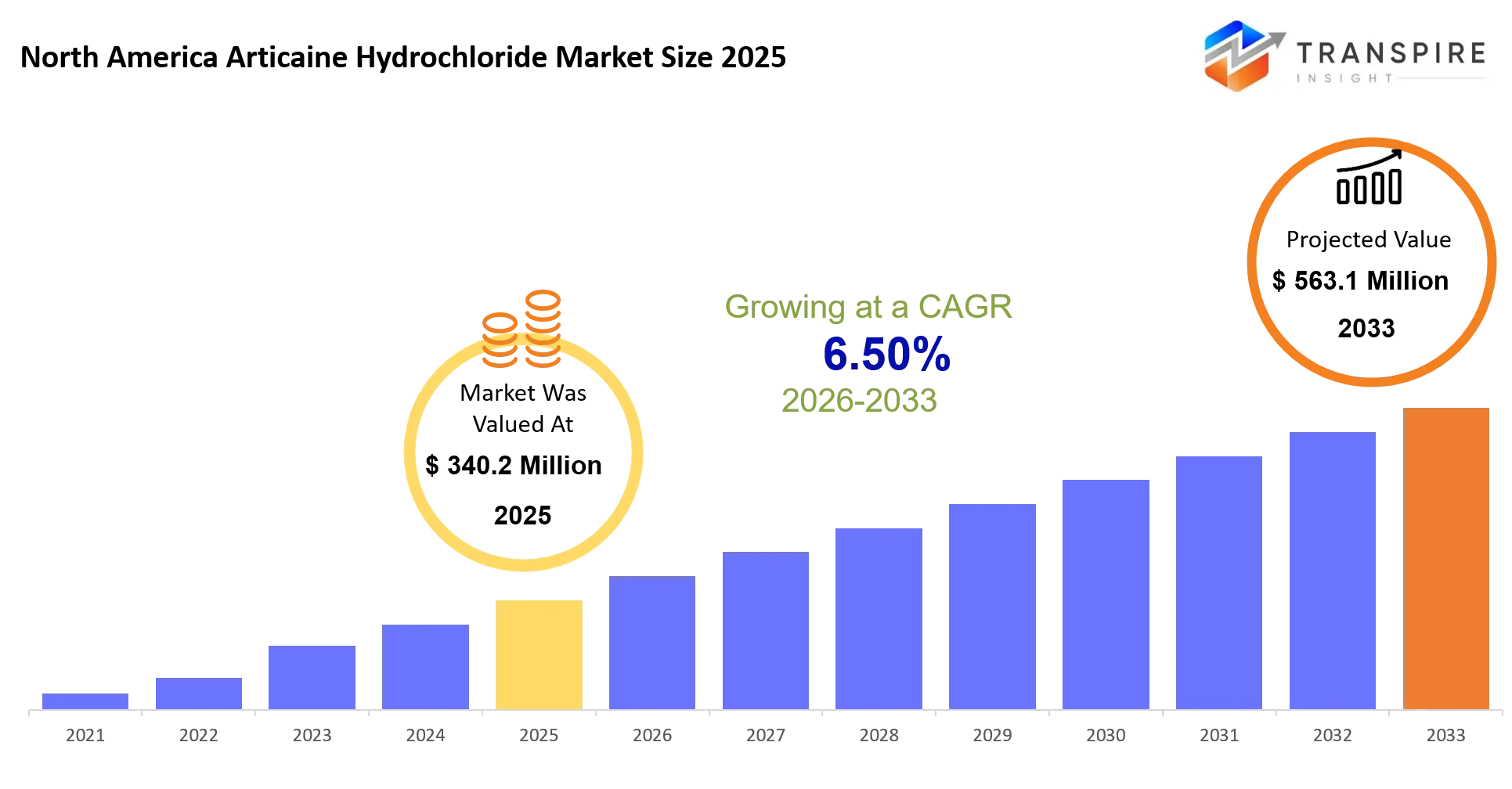
- North America Articaine Hydrochloride Market Size 2025: USD 340.2 Million
- North America Articaine Hydrochloride Market Size 2033: USD 563.1 Million
- North America Articaine Hydrochloride Market CAGR: 6.50%
- North America Articaine Hydrochloride Market Segments: By Product Type (Articaine with Epinephrine 1:100,000, Articaine with Epinephrine 1:200,000, Generic Articaine, Branded Articaine, Preservative-Free Formulations, Injectable Cartridges, Multi-Dose Formulations, Others); By Application (Dental Surgery, Tooth Extraction, Restorative Dentistry, Endodontics, Periodontal Procedures, Pediatric Dentistry, Oral & Maxillofacial Surgery, Others); By End User (Dental Clinics, Hospitals, Academic Dental Centers, Specialty Dental Hospitals, Ambulatory Surgical Centers, Government Dental Programs, Others); By Distribution Channel (Hospital Pharmacies, Retail Pharmacies, Dental Supply Distributors, Online Pharmacies, Direct Sales, Specialty Dealers, Others); By Patient Group (Adults, Pediatric Patients, Geriatric Patients, High-Risk Patients, Outpatients, Inpatients, Emergency Cases, Others)
North America Articaine Hydrochloride Market Summary
The North America Articaine Hydrochloride Market was valued at USD 340.2 Million in 2025. It is forecast to reach USD 563.1 Million by 2033. That is a CAGR of 6.50% over the period.
The North America Articaine Hydrochloride Market supports dental professionals by providing a fast acting local anesthetic , which helps enable pain controlled restorative procedures, oral surgeries, periodontal treatments and endodontic interventions while also improving procedural efficiency and patient comfort. In the past three to five years the market has kind of tilted toward broader use of premium anesthetic formulations, guided by updated clinical preferences that tend to favor agents with quick onset and dependable tissue penetration, especially for tricky outpatient dental procedures.
One big outside pressure point was the global pharmaceutical supply chain disruption after the COVID-19 pandemic , it revealed weak spots in active pharmaceutical ingredient sourcing and also cartridge availability. So, in response distributors , dental service organizations, and manufacturers diversified their purchasing routes, expanded regional inventory buffers and tightened supplier qualification procedures, which collectively pushed a stronger focus on supply resilience product readiness, and longer term procurement partnerships across the North American dental care ecosystem.
Key Market Insights
- In 2025 the United States pretty much dominated the North America Articaine Hydrochloride Market , taking around 87% market share, and that was largely backed by its huge dental procedure volume plus a well-set reimbursement setup.
- Canada meanwhile is set to grow the quickest across the 2025 to 2032 window , largely because dental coverage keeps expanding and procedural use keeps ticking up.
- When it comes to product, 4% articaine with epinephrine 1:100,000 stayed on top , holding roughly 58% market share in 2025 due to a broad clinical preference.
- The 4% articaine with epinephrine 1:200,000 option landed as the second-largest segment too, mainly supported by more common use in routine restorative work and periodontal procedures.
- Looking ahead, preservative-optimized and specialty articaine formulations are expected to grow the fastest between 2025 and 2032 , helped by continual product portfolio expansion, and yeah that sort of thing matters.
- On the application side , routine restorative dentistry led in 2025 with nearly 46% market share , basically because outpatient treatment volumes stay consistently high.
- Implantology and complex oral surgery are forecast to become the fastest-growing application segment by 2032 as advanced dental procedures keep expanding across practices.
- As for end users, dental clinics remained the top group with about 74% market share in 2025, mainly from high patient throughput and procedural specialization.
- And dental service organizations are likely to be the fastest-growing end-user category during 2025–2032 , as network consolidation ramps up procurement efficiency.
What are the Key Drivers, Restraints, and Opportunities in the North America Articaine Hydrochloride Market?
The main force that s like accelerating market expansion is basically the ongoing rise in outpatient dental procedures plus a wider embrace of premium local anesthetics. With refreshed clinical guidance now stressing quick onset, dependable anesthesia, and smoother procedural workflow, many practitioners are leaning more toward articaine based formulations. At the same time dental service organizations have been standardizing procurement across multiple sites, so purchasing stays more consistent. All of this seems to have boosted manufacturer revenues, mostly by shifting toward higher value product mixes, while also pushing greater use in implantology, endodontics, and periodontal care, in general.
The biggest structural hurdle is the way pharmaceutical supply chains are concentrated around active pharmaceutical ingredients and the sterile cartridge manufacturing side of things. Production capacity cannot just ramp up fast, because regulatory validation, quality audits, and manufacturing qualification take a lot of time and money. From a Transpire Insight look at regional procurement announcements and launch timing, it still looks like supply chain concentration is the main execution risk. So when disruptions happen, you tend to see delayed product availability, longer procurement cycles and honestly, lost commercial momentum for those periods too.
One major opportunity is tied to digitally integrated dental practice networks, especially those using predictive inventory management and centralized procurement platforms. Cloud based inventory analytics, automated reorder routines, and manufacturer investment in regional distribution hubs can lower stock fluctuations while improving product availability. With these capabilities in place, North America is positioned for stronger adoption of premium anesthetic formulations across both independent clinics and growing dental service organizations.
What Has the Impact of Artificial Intelligence Been on the North America Articaine Hydrochloride Market?
Artificial intelligence and digital technologies are, in a practical way, pushing operational performance forward across the North American dental anesthetic industry. This is happening by shoring up manufacturing quality control, tightening regulatory compliance, and making inventory management a lot more responsive. For example AI-enabled vision systems can check sterile cartridges for packaging defects with more repeatability than usual manual inspection, sort of more steady, less human variance. At the same time automated compliance platforms speed up the paperwork and records needed for pharmaceutical quality standards, so the documentation is not always late or scattered.
Machine learning models are also getting better at demand forecasting by looking at procedure volumes, distributor inventories and seasonal treatment patterns. That helps manufacturers and distributors tune production timing, and it can reduce the chances of stockouts that happen when schedules drift. Meanwhile digital supply chain platforms improve inventory visibility across regional warehouses, which shortens replenishment cycles and trims the costs that show up when emergency procurement kicks in.
Advanced analytics even help with predictive maintenance for pharmaceutical production equipment. That reduces unplanned downtime and boosts manufacturing utilization. Overall these upgrades tend to deliver higher production efficiency, stronger regulatory compliance, and better service levels for dental providers.
Still, the bigger roll-out of AI is not fully smooth because widespread deployment is constrained by high integration costs and fragmented operational data across manufacturing plants, distributors, and independent dental practices. Interoperability issues between older enterprise systems and newer analytics platforms also drag down forecasting accuracy and slow the return on investment, especially for mid-sized manufacturers that operate across multiple regulatory jurisdictions.
Key Market Trends
- Since 2021 , manufacturers have been kinda expanding regional inventory buffers after pharmaceutical supply disruptions, which has made product availability better across North American dental distributors.
- Between 2022 and 2025 , multi-site dental service organizations also increased centralized purchasing, so they could lock in longer-term supplier agreements , and that improved purchasing efficiency a lot.
- Premium articaine formulations gained a bigger share of the procedural mix, after updated clinical preferences leaned more toward quick onset and dependable tissue penetration.
- From 2023 to 2025 , pharmaceutical companies put more money into automated sterile manufacturing lines, aiming to keep quality consistent and meet regulatory compliance without too many surprises.
- AI-driven demand forecasting tools have lowered inventory volatility at major distributors , mainly by improving replenishment scheduling and regional stock allocation.
- After 2022 , Septodont and a few other manufacturers expanded clinical education programs, in order to strengthen practitioner confidence with advanced local anesthetic protocols.
- Manufacturers also diversified active pharmaceutical ingredient sourcing following pandemic-related disruptions, which reduces reliance on a single-region supply network.
- Canada has seen faster uptake of advanced dental technologies after broader public and private oral healthcare initiatives supported procedural modernization .
- Digital procurement platforms have basically become the norm among larger dental organizations since 2023, shortening purchasing cycles and boosting supply chain transparency , overall.
North America Articaine Hydrochloride Market Segmentation
By Product Type :
Articaine with Epinephrine 1:100,000 basically takes the biggest share, since a lot of dental procedures need dependable anesthesia , plus decent bleeding control. That solid clinical acceptance keeps it pretty stable across restorative work , oral surgery , and periodontal care too. Then Articaine with Epinephrine 1:200,000 comes next, it still gets used broadly in everyday procedures where a lower epinephrine level is kind of preferred.
Generic Articaine keeps getting more attention, mainly because cost management is a big deal for clinics , and for healthcare networks as well. Branded Articaine stays in a strong spot due to proven product quality and long-term clinical trust. Preservative-Free Formulations also pull interest, especially for certain patient groups with specific, sometimes particular treatment needs. Injectable cartridges remain the usual delivery method, because the setup time stays low while you’re in the chair. Multi-Dose formulations and other specialty products cover narrower use cases, but they matter when clinicians need more flexibility , and better operational efficiency , at the same time.
By Application :
Restorative Dentistry takes up a big part of the product use, since fillings, crowns, and sort of similar work happens pretty much every day at dental practices, all across the board. Dental Surgery plus Tooth Extraction also show up as major application zones, mostly because the procedure numbers stay steady. Endodontics leans hard on effective local anesthesia , to keep the treatment accurate and the patient comfort actually good. Periodontal Procedures keep growing , with more widespread uptake of preventive measures and corrective dental care.
Pediatric Dentistry meanwhile relies on carefully chosen anesthetic options to help improve the overall treatment quality for younger patients, not just speed. Oral & Maxillofacial Surgery needs dependable anesthesia for the more complex steps, typically done in specialized facilities. There are other dental applications too, they add to market activity through routine outpatient visits and everyday care. Clinical preference keeps backing products that deliver rapid onset and dependable performance, across multiple treatment environments.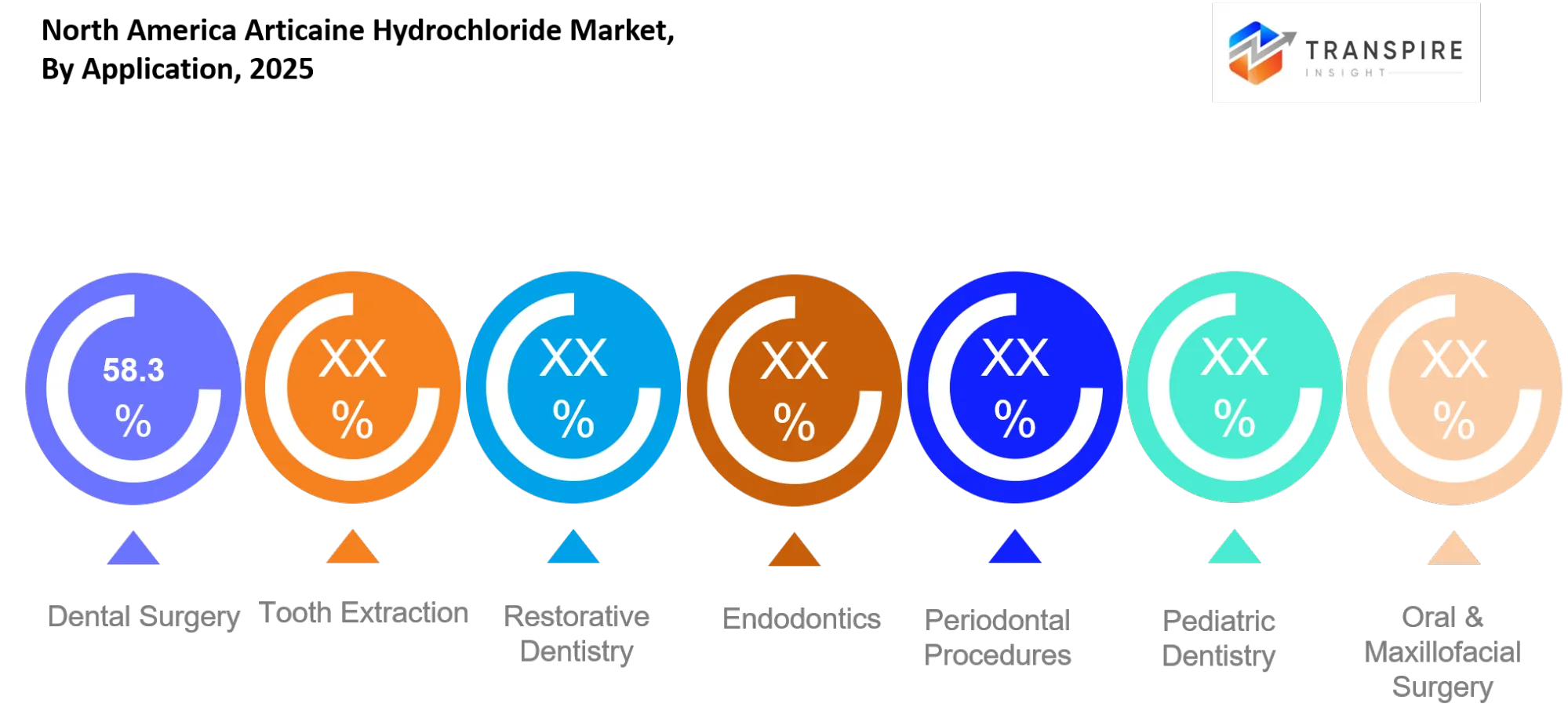
By End User :
Dental Clinics show up as the leading end-user segment, mostly because everyday dental work tends to happen in private clinics and group practices. There is usually a steady flow of patients, plus the care plans are kind of regular, so buying activity stays stable too. Hospitals, by comparison, get involved mainly when it gets more complicated like oral surgery cases or urgent dental situations, where multidisciplinary support is needed. Academic Dental Centers also play a role, not just in treatment but through education, hands-on clinical training, and research, often tied to modern anesthetic practices.
Specialty Dental Hospitals keep pushing product usage for advanced work and more focused patient care. Ambulatory Surgical Centers usually benefit from outpatient care models that run efficiently, with quicker return-to-normal recovery periods. Government Dental Programs help maintain access to essential dental services for qualifying groups. Then, other healthcare facilities add extra demand through community-based programs and more specialized oral care services, even when it’s not as visible day to day.
By Distribution Channel :
Dental Supply Distributors keep a solid, kind of leading role because their distribution networks give dependable delivery, keep inventory support in place, and also offer technical assistance for dental practices, yeah. Hospital Pharmacies still matter a lot as suppliers for institutional healthcare facilities, especially those doing surgical procedures. Retail Pharmacies back up prescription based access, where local buying options remain pretty workable. Online Pharmacies continue to push deeper into the market using digital ordering and some better purchasing convenience, which kinda helps everyone.
Direct Sales channels let manufacturers form tighter bonds with big healthcare organizations and dental service groups. Specialty Dealers tend to concentrate on premium products plus tailored service for specialized practices. Other distribution channels offer extra flexibility across regional healthcare systems. Meanwhile, broader digital procurement systems keep improving inventory planning and overall purchasing efficiency, slowly but surely.
By Patient Group :
Adults are the biggest chunk of patients because routine restorative care, aesthetic procedures , and oral surgery keep showing up through adult populations. For Pediatric Patients, they matter a lot too, mostly because preventive care gets used early and dental treatment starts sooner. Then Geriatric Patients usually need dental procedures tied to growing older populations and that long term oral health management part. High-Risk Patients often need extra thought, careful case planning, and close clinical monitoring when anesthetic is being administered.
Outpatients end up with the highest procedural volume since most dental work happens without overnight admission. Inpatients are a smaller slice, mainly for complicated surgical cases that really need hospital based care. Emergency Cases are different, they need immediate pain relief and urgent dental intervention, but only in certain situations. Other patient groups add more treatment possibilities, like across specialized dental services and community health programs.
What are the Key Use Cases Driving the North America Articaine Hydrochloride Market?
The biggest use case kind of comes from restorative dentistry, where dependable local anesthesia kind of keeps fillings , crowns, and other usual procedures going smoothly, you know every day . Dental clinics buy articaine hydrochloride products in high volumes because fast onset consistent anesthesia , and an efficient patient flow helps the schedule stay full while still supporting outcomes that are more predictable in practice.
Other use cases also keep widening in endodontic treatment and periodontal work. Specialty dental hospitals , plus academic dental centers are leaning on these products more often for tough procedures that need accurate pain control , and a dependable anesthetic performance. Broader adoption of implant related treatments has additionally reinforced purchasing across larger dental networks.
Newer opportunities are showing up in advanced outpatient oral surgery and specialized pediatric dental programs. Healthcare providers are reviewing optimized formulations that support a more customized treatment method , and clinical protocols that keep evolving over time. Regulatory attention on pharmaceutical quality , uninterrupted supply, and manufacturing standards will likely push adoption of updated anesthetic products during the forecast period.
|
Report Metrics |
Details |
|
Market size value in 2025 |
USD 340.2 Million |
|
Market size value in 2026 |
USD 362.3 Million |
|
Revenue forecast in 2033 |
USD 563.1 Million |
|
Growth rate |
CAGR of 6.50% from 2026 to 2033 |
|
Base year |
2025 |
|
Historical data |
2021 - 2024 |
|
Forecast period |
2026 - 2033 |
|
Report coverage |
Revenue forecast, competitive landscape, growth factors, and trends |
|
Regional scope |
North America (Canada, The United States, and Mexico) |
|
Key company profiled |
Septodont, Dentsply Sirona, Pierrel Pharma, Henry Schein, Patterson Companies, Fresenius Kabi, Hikma Pharmaceuticals, Aspen Pharmacare, Pfizer, B. Braun, Aurobindo Pharma, Sagent Pharmaceuticals, Mylan, Viatris, Laboratorios Inibsa |
|
Customization scope |
Free report customization (country, regional & segment scope). Avail customized purchase options to meet your exact research needs. |
|
Report Segmentation |
By Product Type (Articaine with Epinephrine 1:100,000, Articaine with Epinephrine 1:200,000, Generic Articaine, Branded Articaine, Preservative-Free Formulations, Injectable Cartridges, Multi-Dose Formulations, Others); By Application (Dental Surgery, Tooth Extraction, Restorative Dentistry, Endodontics, Periodontal Procedures, Pediatric Dentistry, Oral & Maxillofacial Surgery, Others); By End User (Dental Clinics, Hospitals, Academic Dental Centers, Specialty Dental Hospitals, Ambulatory Surgical Centers, Government Dental Programs, Others); By Distribution Channel (Hospital Pharmacies, Retail Pharmacies, Dental Supply Distributors, Online Pharmacies, Direct Sales, Specialty Dealers, Others); By Patient Group (Adults, Pediatric Patients, Geriatric Patients, High-Risk Patients, Outpatients, Inpatients, Emergency Cases, Others) |
Which Regions are Driving the North America Articaine Hydrochloride Market Growth?
The United States makes up about 87% of the regional revenue, and so it ends up the main country across North America. Strict pharmaceutical rules, fairly advanced dental infrastructure, and wide insurance coverage for plenty dental services help keep product adoption steady. Big manufacturers , national distributors, dental service organizations, and focused logistics networks put together a dependable supply setup that makes sure products stay on shelves without much interruption. Going forward, continued spending in outpatient dental care, expanded manufacturing capacity, and even digital procurement systems will help preserve this edge through the 2026–2033 forecast window.
Canada is also expected to see the fastest kind of growth during the 2026–2033 period, kind of after the wider dental coverage pushes, and with more modernization of outpatient oral healthcare services. Lately, investments in digital dental practices, centralized purchasing mechanisms, and broader availability of preventive treatment have helped product take up, across several care settings. Manufacturers in general gain too , from smoother distribution routes and closer collaboration with organized dental groups. This whole momentum should set up nice chances for brand new suppliers, regional alliances, and even premium product launches, for the duration of the forecast period.
Who are the Key Players in the North America Articaine Hydrochloride Market and How Do They Compete?
Competition across the North America Articaine Hydrochloride Market stays somewhat consolidated, but really it comes down to only a handful of pharmaceutical manufacturers supplying most branded and generic products,so there’s not a huge spread of players. In most cases product quality , regulatory compliance, dependable supply, and distribution strength end up as the real competitive levers, more so than price alone. The established manufacturers keep guarding their market position via portfolio expansion, while a few regional suppliers try to push back by giving cost-efficient alternatives and more specialized formulations.
Septodont kind of stands out with a wide dental anesthetic lineup, ongoing product development, and strong ties with dental professionals, backed by clinical education initiatives. Pierrel leans into specialized dental anesthesia products and then stretches regional coverage using distribution partnerships that make product availability smoother across North America. Laboratorios India on the other hand blends pharmaceutical manufacturing know-how with a diverse anesthesia portfolio and it keeps reinforcing international commercial partnerships as well.
Dentsply Sirona, aims for competitive advantage by meshing dental products with digital workflow solutions , and professional training, so customer relationships stay strong past just pharmaceutical type selling. Henry Schein also keeps widening access, using a broad distribution network and integrated procurement services, plus digital ordering platforms that make buying easier for dental practices, a kind of smoother purchasing. Patterson Companies helps lock in long-term customer retention, it blends product distribution with equipment, technology, and practice support services, which adds more value than the usual “just supply the goods” approach.
Company List
Patterson Companies
Fresenius Kabi
Hikma Pharmaceuticals
Aspen Pharmacare
Pfizer
Braun
Aurobindo Pharma
Sagent Pharmaceuticals
Mylan
Viatris
Laboratorios Inibsa
Recent Development News
In June 2026, Septodont entered a global development and commercialization partnership with Dentroid to advance non-invasive pain management technologies for dentistry. The partnership expands Septodont's dental anesthesia portfolio beyond injectable products and supports future innovation relevant to the North American dental anesthetics market.
Source https://www.septodontusa.com/
In May 2025, Septodont appointed Karim Khadr as Chief Executive Officer while Olivier Schiller transitioned to Chairman of the Board. The leadership change supports continued investment in dental anesthesia, manufacturing expansion, and commercialization strategies that influence the North American market. Sourcehttps://en.wikipedia.org/
What Strategic Insights Define the Future of the North America Articaine Hydrochloride Market?
The North America Articaine Hydrochloride Market is kind of shifting, into a more resilient and quality focused setup over the next five to seven years, mainly from outpatient dentistry work increasing, dental service organizations consolidating more, and overall stronger pharmaceutical manufacturing standards. Market success won’t rely on product availability alone, so much, but instead on supply stability, regulatory compliance, and that integrated distribution know how. There’s also a quieter danger thats easy to overlook, the ongoing reliance on a relatively small group of active pharmaceutical ingredient providers and sterile manufacturing sites, where even small disruptions, in specific areas could ripple into regional availability and pricing.
At the same time there’s a growing opportunity, the use of AI supported inventory planning and digitally connected procurement platforms within organized dental networks, which lets suppliers raise forecast precision and improve service levels. So manufacturers and distributors should spread sourcing options while also putting money into regional production capacity and digital supply chain capabilities, to stay competitive longer and lower operational exposure.
North America Articaine Hydrochloride Market Report Segmentation
By Product Type
- Articaine with Epinephrine 1:100,000
- Articaine with Epinephrine 1:200,000
- Generic Articaine
- Branded Articaine
- Preservative-Free Formulations
- Injectable Cartridges
- Multi-Dose Formulations
By Application
- Dental Surgery
- Tooth Extraction
- Restorative Dentistry
- Endodontics
- Periodontal Procedures
- Pediatric Dentistry
- Oral & Maxillofacial Surgery
By End User
- Dental Clinics
- Hospitals
- Academic Dental Centers
- Specialty Dental Hospitals
- Ambulatory Surgical Centers
- Government Dental Programs
By Distribution Channel
- Hospital Pharmacies
- Retail Pharmacies
- Dental Supply Distributors
- Online Pharmacies
- Direct Sales
- Specialty Dealers
By Patient Group
- Adults
- Pediatric Patients
- Geriatric Patients
- High-Risk Patients
- Outpatients
- Inpatients
- Emergency Cases
Frequently Asked Questions
Find quick answers to common questions.
The Expected North America Articaine Hydrochloride Market size for the Market will be USD 563.1 Million in 2033.
Key Segments for the North America Articaine Hydrochloride Market are Type By Product Type (Articaine with Epinephrine 1:100,000, Articaine with Epinephrine 1:200,000, Generic Articaine, Branded Articaine, Preservative-Free Formulations, Injectable Cartridges, Multi-Dose Formulations, Others); By Application (Dental Surgery, Tooth Extraction, Restorative Dentistry, Endodontics, Periodontal Procedures, Pediatric Dentistry, Oral & Maxillofacial Surgery, Others); By End User (Dental Clinics, Hospitals, Academic Dental Centers, Specialty Dental Hospitals, Ambulatory Surgical Centers, Government Dental Programs, Others); By Distribution Channel (Hospital Pharmacies, Retail Pharmacies, Dental Supply Distributors, Online Pharmacies, Direct Sales, Specialty Dealers, Others); By Patient Group (Adults, Pediatric Patients, Geriatric Patients, High-Risk Patients, Outpatients, Inpatients, Emergency Cases, Others) .
Major North America Articaine Hydrochloride Market Players are Septodont, Dentsply Sirona, Pierrel Pharma, Henry Schein, Patterson Companies, Fresenius Kabi, Hikma Pharmaceuticals, Aspen Pharmacare, Pfizer, B. Braun, Aurobindo Pharma, Sagent Pharmaceuticals, Mylan, Viatris, Laboratorios Inibsa.
The Current North America Articaine Hydrochloride Market size is USD 340.2 Million in 2025.
The North America Articaine Hydrochloride Market CAGR is 6.50% from 2026 to 2033.
Septodont
Dentsply Sirona
Pierrel Pharma
Henry Schein
Patterson Companies
Fresenius Kabi
Hikma Pharmaceuticals
Aspen Pharmacare
Pfizer
Braun
Aurobindo Pharma
Sagent Pharmaceuticals
Mylan
Viatris
Laboratorios Inibsa
About the Authors

Pankaj Ghogare Patil
I am Pankaj Ghogare Patil, a Senior Research Analyst at Transpire Insight, specializing in the Pharmaceutical, Chemicals & Materials, Healthcare IT, and Biotechnology industry. My expertise lies in conducting comprehensive market research, analyzing industry trends, evaluating competitive landscapes, and translating complex data into actionable insights. At Transpire Insight, I closely follow emerging technologies, regulatory developments, and market innovations to create accurate, well-researched, and informative content that helps businesses and professionals make informed decisions. I am committed to producing credible, evidence-based articles that reflect industry best practices while making technical topics accessible and valuable for a broad audience.

Chakradhar Khansole
Chakradhar serves as the Research Director at Transpire Insight, bringing over 8 years of experience in technology, innovation, and strategic market intelligence. He specializes in transforming complex market data into actionable business insights that enable organizations to make informed, growth-oriented decisions. Recognized for his strategic vision and analytical expertise, Chakradhar leads high-impact research initiatives, delivering comprehensive market assessments, competitive intelligence, and forward-looking industry analysis.
Recently Published Reports
-
Jul 2026
Alopecia Treatment Market
Alopecia Treatment Market Size, Share & Analysis Report By Disease Type (Alopecia Areata, Cicatricial Alopecia, Traction Alopecia, Alopecia Totalis, Androgenetic Alopecia, Alopecia Universalis, and Other Disease Types), By Treatment Type (Topical Treatments, Oral Medications, Injectable Therapies, and Hair Transplantation), By Gender (Male, and Female), By Distribution Channel (Hospitals and Clinics, Retail Pharmacies, and Online Retailers), and Geography (North America, Europe, Asia-Pacific, Middle East and Africa, South and Central America), 2021 - 2031
-
Jul 2026
Medical Ultrasound Probe Market
Medical Ultrasound Probe Market Size, Share & Analysis Report By Type (Linear Type, Convex Type, Endocavitary Probe, Phased Array/Cardiac Probe, Transesophageal (TEE) Probe, and Others), By Application (Ophthalmology, Cardiology, Musculoskeletal, Oncology, Obstetrics & Gynecology, General Imaging, and Others), By End User (Hospitals & Clinics, Diagnostic Centers, Ambulatory Surgical Centers, and Others), and Geography (North America, Europe, Asia-Pacific, Middle East and Africa, South and Central America), 2021 – 2031
-
May 2026
Biosimilars Market
Biosimilars Market By Product Type (Monoclonal Antibodies, Recombinant Hormones, Erythropoietin, G-CSF, Others), By Indication (Oncology, Autoimmune Diseases, Blood Disorders, Diabetes, Others), By Manufacturing Type (In-House Manufacturing, Contract Manufacturing), By Distribution Channel (Hospital Pharmacies, Retail Pharmacies, Online Pharmacies), By Industry Analysis, Size, Share, Growth, Trends, and Forecasts 2021-2033
-
Apr 2026
Gastrointestinal Endoscopy Market
Gastrointestinal Endoscopy Market By Type (Rigid Gastrointestinal Endoscope, Flexible Gastrointestinal Endoscopes, Disposable Gastrointestinal Endoscope), By Procedure Type (Colonoscopy, Gastroscopy, Duodenoscopy, Enteroscopy, Flexible Sigmoidoscopy, Others), By Application (Diagnosis, Treatment), By End-Users (Hospitals, Ambulatory Surgical Centers, Specialty Clinics, Laboratories, Others), By Industry Analysis, Size, Share, Growth, Trends, and Forecasts 2021-2033