Europe U.S. Dental Anesthesia Market Size & Forecast:
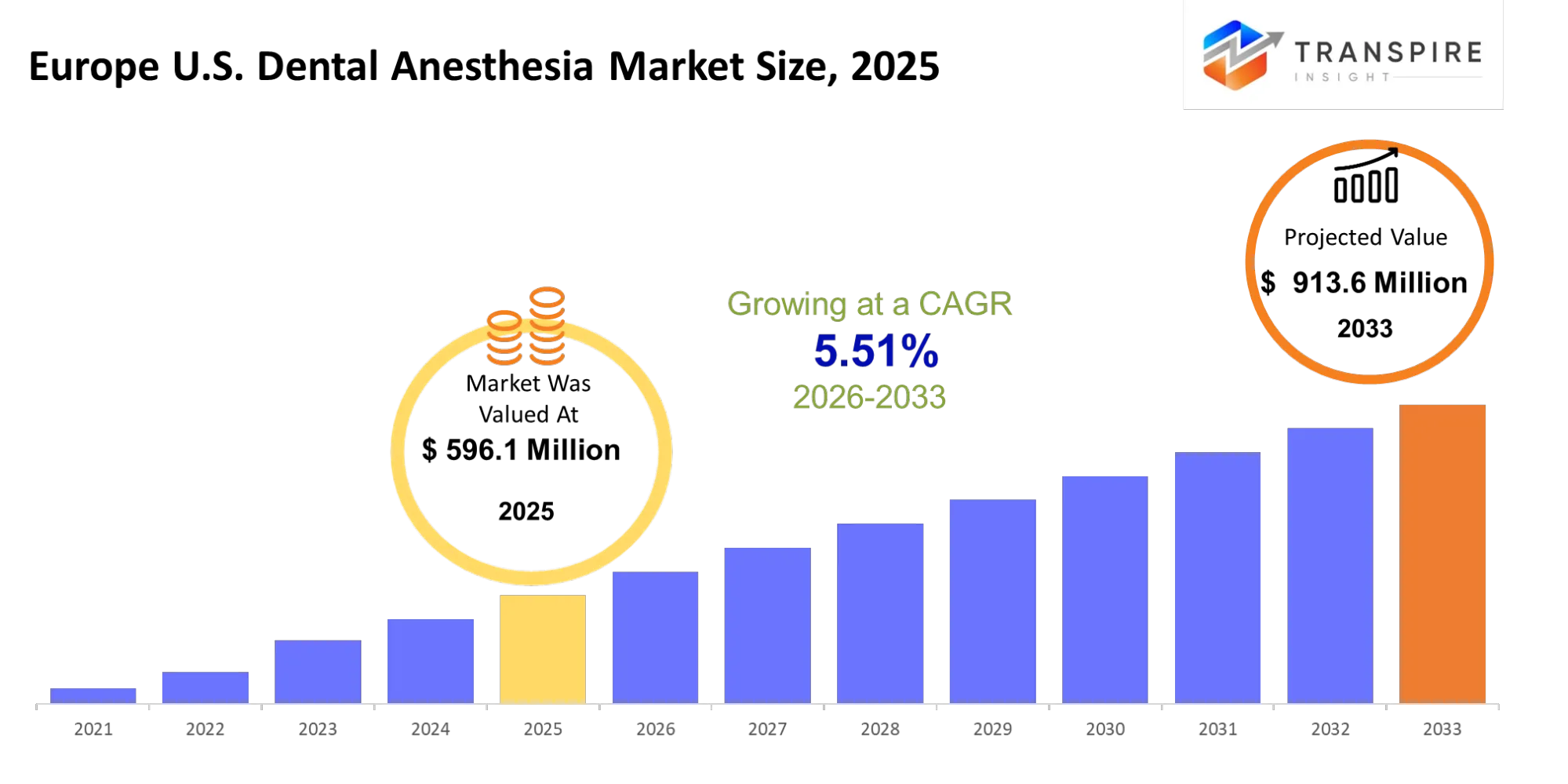
- Europe U.S. Dental Anesthesia Market Size 2025: USD 596.1 Million
- Europe U.S. Dental Anesthesia Market Size 2033: USD 913.6 Million
- Europe U.S. Dental Anesthesia Market CAGR: 5.51%
- Europe U.S. Dental Anesthesia Market Segments: By Type (Local Anesthesia, General Anesthesia, Sedation Anesthesia, Topical Anesthesia, Others), By Application (Tooth Extraction, Root Canal, Periodontal Procedures, Cosmetic Dentistry, Others), By End-User (Hospitals, Dental Clinics, Ambulatory Centers, Others), By Drug Type
- (Lidocaine, Articaine, Bupivacaine, Others).
To learn more about this report,  Download Free Sample Report
Europe U.S. Dental Anesthesia Market Summary:
The Europe U.S. Dental Anesthesia Market size is estimated at USD 596.1 Million in 2025 and is anticipated to reach USD 913.6 Million by 2033, growing at a CAGR of 5.51% from 2026 to 2033. The Europe U.S. Dental Anesthesia Market maintains essential functions which enable dental practices to provide pain-free treatments for their patients who need oral surgical procedures, dental implants, and dental restorative work, and pediatric dentistry. The clinics and hospitals use these products to conduct extended surgical procedures which require multiple treatment sessions while their patients remain compliant and their operational efficiency improves.
The market has developed in the past five years because people now prefer digitally assisted delivery systems which use buffered formulations to achieve faster onset and reduced post-procedure pain. The rapid expansion of cosmetic and implant dentistry through private clinics has maintained this trend. The COVID-19 backlog created a major trigger when it required providers to process delayed procedures at a faster rate while they maintained patient safety standards.
The dental chains which operated through consolidation used their increased procedure volumes to purchase anesthesia systems which created better workflow control and reduced patient anxiety during dental work. European dental networks have started to use advanced anesthetic technologies because their main operational activities directly lead to better product usage and higher pricing potential and wider customer base.
Key Market Insights
- The European U.S. Dental Anesthesia Market in 2025 was primarily controlled by Western Europe which held 42% of the total market.
- Germany had the highest revenue in the region because the country performed many implant surgeries and provided good insurance coverage for advanced dental procedures.
- Southern Europe has become the fastest developing regional area which will continue until 2031 because of its increasing number of cosmetic dentistry clinics and its investments in dental tourism.
- The Nordic countries are starting to develop a market for computer-controlled local anesthetic delivery systems which they need in their efficient outpatient dental centers.
- The industry size distribution was controlled by local injectable anesthetics which held 58% market share in 2025 because they were used during both restorative work and surgical treatments.
- Articaine formulations achieved second position in market share because their formulas enable quicker effects and better treatment results.
- Buffered dental anesthetics will become the most rapidly expanding market category between 2026 and 2031 as clinics choose these products to enhance patient comfort and minimize recovery durations.
- Premium dental practices are adopting computer-assisted anesthesia delivery devices because these technologies help them manage their operations better and deliver accurate medication amounts.
- Tooth extraction and oral surgery applications generated approximately 36% of the revenue from the European U.S. Dental Anesthesia Market in 2025.
- The aging population and increased demand for cosmetic dental procedures is driving the growth of dental implantology as the most popular application area.
- Pediatric dentistry requires needle-free anesthesia systems because these systems help patients follow treatment and decrease their anxiety during procedures.
What are the Key Drivers, Restraints, and Opportunities in the Europe U.S. Dental Anesthesia Market?
The rapid growth of implantology and outpatient oral surgery which dental networks operate has become the primary factor driving growth in the Dental Anesthesia Market between Europe and the United States. The situation escalated because the pandemic resulted in dental clinics needing to enhance their operational efficiency while treating patients who had postponed their dental appointments. Digital imaging and CAD/CAM dentistry enabled mid-sized clinics to perform complex restorative procedures which previously required specialized hospitals. The new medical procedure required hospitals to adopt advanced local anesthetics and buffered formulations together with computer-assisted systems which deliver anesthetics faster while increasing patient treatment capacity. The increasing demand for high-value treatments has transformed anesthesia products from basic purchases into essential components which drive ongoing revenue for clinics.
The market faces its deepest structural challenge from the existing division of European healthcare systems which creates diverse regulatory requirements. Dental anesthesia products must comply with different procurement frameworks, reimbursement models, and clinical approval pathways across countries. Smaller manufacturing companies face difficulties when they attempt to expand their business operations into multiple countries because they must pay for international distribution and compliance with local regulations. The current situation prevents healthcare systems from introducing new delivery methods while they also restrict their ability to establish price control mechanisms particularly within public healthcare systems. The resulting pattern shows that technology requires extended time periods for adoption while market presence varies throughout Eastern and Southern Europe.
The next major growth opportunity in anesthesia delivery systems will come from AI-enabled platforms which combine artificial intelligence with their existing systems. Premium dental chains in Germany France and the Nordic region have begun to invest in smart delivery systems which enable tracking of medication accuracy and individual patient response. The technologies assist multi-clinic operators who use standardized treatment protocols to decrease treatment variations while enhancing patient retention and operational effectiveness.
What Has the Impact of Artificial Intelligence Been on the Europe U.S. Dental Anesthesia Market?
The Europe U.S. Dental Anesthesia Market experiences transformation through artificial intelligence and digital technologies which enhance accuracy and automate workflows and enable dentists to handle patient care in their busy dental offices. Anesthesia delivery systems which use AI technology help doctors to manage injection speed and dosage calibration and tissue pressure measurements during implant and oral surgery procedures. Digital chairside platforms which connect with patient records enable clinics to automate anesthesia selection through medical history assessments and allergy risk evaluations and treatment complexity analysis which results in lower manual errors and faster preparation processes.
Machine learning models are increasingly used to predict anesthetic response patterns and optimize treatment planning for multi-procedure appointments. Predictive analytics has become a key tool for advanced dental networks which use it to predict recovery times and assess adverse reaction risks and enhance their scheduling processes. The systems enable clinics to treat more patients each day while they minimize treatment delays and complications which occur after procedures. Practitioners use digitally assisted anesthesia workflows to meet European clinical documentation standards while maintaining operational consistency throughout their multiple dental practice locations.
Mid-sized clinics encounter difficulties with AI adoption because they need to pay high costs for system integration. The lack of standard digital systems and the insufficient patient data needed to create accurate predictive models prevent many dental practices from implementing their operations across various European dental markets which have scattered locations.
Key Market Trends
- The clinics experience better patient recovery times and improved chairside procedure efficiency because they now use buffered anesthetic formulas which have become more popular since 2022.
- The premium clinics in Germany and France started to use computer-controlled local anesthetic delivery systems because they wanted to see better results from their pain-reduction technologies during implant procedures.
- The dental chains established joint purchasing systems between 2021 and 2025 which resulted in greater volume commitments from manufacturers including Septodont and Dentsply Sirona.
- The dental networks implemented AI-assisted anesthesia platforms after 2023 to create standardized dosage systems which decreased operational differences between their different clinics.
- The pandemic treatment backlogs resulted in buyers preferring anesthetics which take effect more quickly because these products enable clinics to handle increased daily patient procedures without needing more staff.
- The European regulators established stricter medical device documentation requirements after 2022 which increased compliance expenses for small manufacturers of anesthesia delivery equipment.
- The expansion of cosmetic dentistry throughout Southern Europe brought changes to anesthesia purchasing practices because clinics since 2021 have started to buy more expensive comfort-based products.
- Needle-free anesthesia technologies began to enter adult dental practices after younger adults started requesting treatment options which would help them experience less anxiety during their dental visits in urban clinics.
- Manufacturers expanded their warehousing facilities across different regions between 2022 and 2025 because supply chain interruptions showed them the need to move away from relying on centralized distribution centers for pharmaceutical products.
- The dental software providers and anesthesia device manufacturers formed strategic partnerships which sped up the adoption of integrated treatment workflows in Nordic outpatient dental networks.
Europe U.S. Dental Anesthesia Market Segmentation
By Type
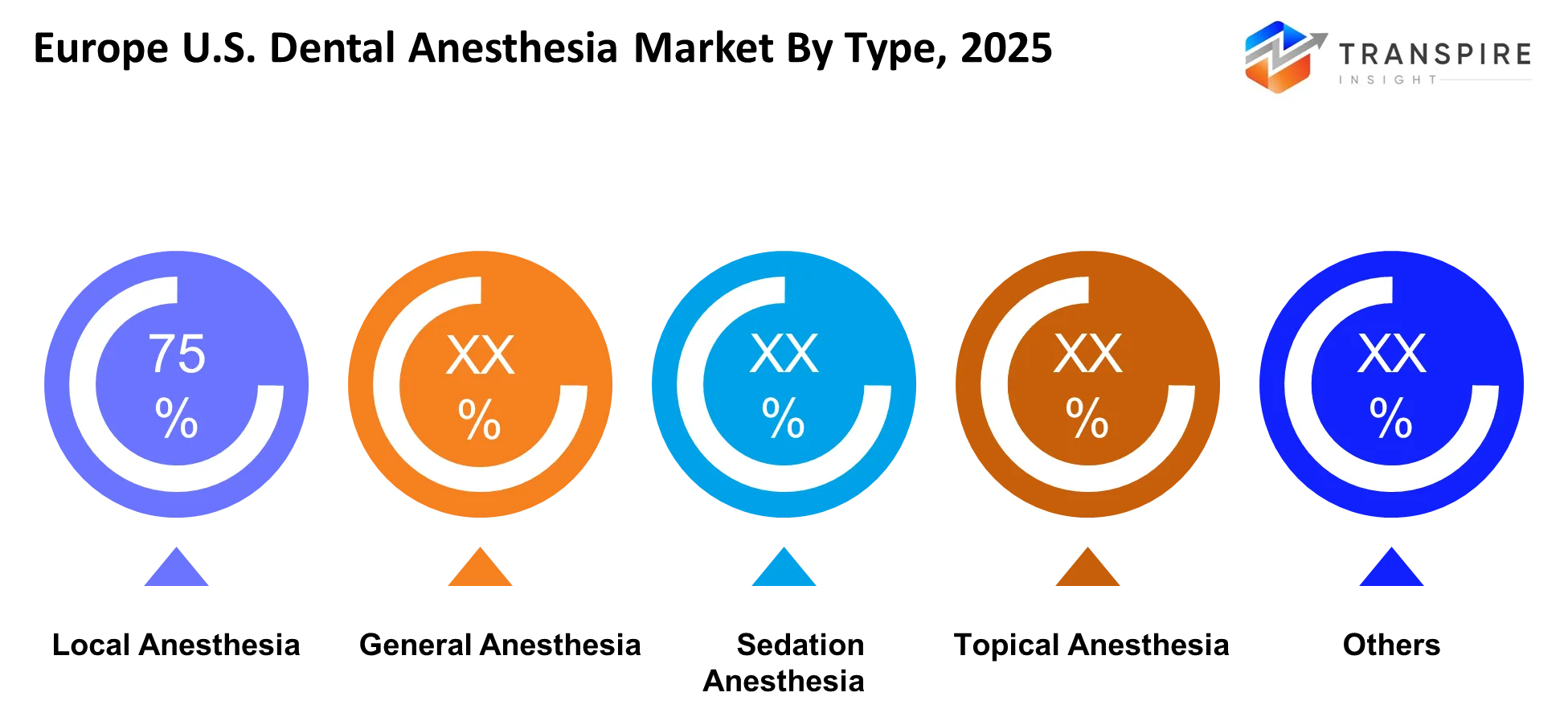
The market maintains its leading position through local anesthesia because dental practitioners need fast and cost-effective solutions for pain management which they use during restorative work and implant procedures and tooth removal operations. Dental clinics across Germany and France and Italy increasingly adopt local anesthetics because these medications enable faster patient recovery which results in improved clinic efficiency while minimizing operational risks that accompany general anesthesia. Dental clinics have adopted sedation anesthesia as the primary method for cosmetic dentistry and pediatric procedures because patients want treatments that minimize anxiety and stress.
Topical anesthesia has experienced steady growth through its implementation in preventive and orthodontic procedures which require pain-free treatment options that customers prioritize. General anesthesia maintains a smaller but stable share because it gets used only in hospital settings during advanced dental operations that need special patient monitoring equipment. The market will experience growth through two main product categories which include digitally assisted local delivery systems and buffered formulations that create better opportunities for companies developing precision administration systems and programs to enhance outpatient procedures.
To learn more about this report, Download Free Sample Report
By Application
The tooth extraction procedure remains the main treatment option because dentists perform it frequently across both public and private dental facilities which leads to steady demand for anesthetic supplies. The root canal treatment generates substantial income for dental practices because elderly patients now favor advanced restorative dental solutions to keep their natural teeth instead of getting dental implants. Since 2021, periodontal treatments have seen increased demand because dental offices in urban areas now focus more on both preventive dental care and treatment options for gum disease.
The most rapidly growing market segment for cosmetic dentistry services operates at high speed because younger customers and middle-income consumers increasingly request dental veneers and implants and smile correction treatments. The medical procedures require specialized anesthetic products which enhance patient comfort while decreasing sensitivity that occurs after the treatment. Hospital systems need specialized products which continue to be used for other medical procedures that include maxillofacial surgery and orthodontic interventions. The market trends indicate that manufacturers will focus on creating anesthetics with fast onset times together with artificial intelligence systems that help deliver treatments at implantology and cosmetic treatment facilities which need to improve their productivity.
By End-User
The dental clinics maintain their dominant market position because most anesthetic-supported procedures take place in outpatient centers instead of hospitals. Private dental chains across Western Europe increasingly invest in advanced delivery systems that reduce treatment time and improve patient retention. Hospitals play a vital role in handling complex oral surgery and trauma reconstruction and medically sensitive procedures which need anesthesia monitoring that smaller facilities cannot provide. Urban areas experience rapid growth in ambulatory centers because same-day dental surgery models continue to expand with increasing procedural demand. Ambulatory facilities attract inspection from insurers and healthcare providers because they offer reduced infrastructure expenses and their patients require shorter hospitalization durations.
The demand for advanced anesthetic solutions needed in training and specialized procedures is fulfilled by academic institutions and specialty oral surgery centers which serve as additional end users. Future business growth will focus on integrated outpatient care systems which will drive suppliers to create portable digital anesthesia devices that are specifically designed for dental networks operating at multiple locations.
By Drug Type
The market remains at its highest point because lidocaine provides widespread dental treatment through its established clinical usage and its extensive medical approvals and its affordable costs. Articaine has gained substantial momentum during the last five years because faster diffusion and improved procedural performance make the drug particularly effective for implantology and surgical extractions. Many private clinics increasingly favor articaine formulations for high-value restorative procedures where treatment precision and reduced onset time directly affect workflow efficiency.Bupivacaine occupies a smaller but important niche in prolonged oral surgeries that require extended postoperative pain management.
Anesthetic drugs maintain their function to support particular medical situations which arise from patient allergies and complicated medical procedures and regional regulatory requirements.Future segment development will likely shift toward combination formulations and buffered anesthetics that improve comfort while reducing recovery time. Pharmaceutical manufacturers who develop products with rapid onset and low discomfort will obtain better market advantages because outpatient dental practices now focus on enhancing patient satisfaction and improving their work efficiency.
What are the Key Use Cases Driving the Europe U.S. Dental Anesthesia Market?
European dental clinics use anesthetics mainly for routine tooth extraction and restorative dentistry procedures. The combination of high patient volumes and same-day procedures together with increasing implant treatment rates results in continuous need for rapid-acting local anesthetics that enable effective outpatient treatment operations.
Private dental chains and ambulatory surgery centers are expanding their application areas of cosmetic dentistry and periodontal treatments. Dental procedures such as veneers and gum contouring and multi-implant procedures increasingly use buffered and digitally controlled anesthesia systems which enhance patient comfort while minimizing breaks in treatment.
Upcoming use cases of AI technology showcase its role in premium urban clinics for anesthesia delivery and its application in pediatric dentistry through needle-free anesthetic solutions. Specialty oral surgery centers are testing personalized dosing systems which use digital patient records to create future opportunities for precision-focused anesthesia manufacturers.
|
Report Metrics |
Details |
|
Market size value in 2025 |
USD 596.1 Million |
|
Market size value in 2026 |
USD 627.7 Million |
|
Revenue forecast in 2033 |
USD 913.6 Million |
|
Growth rate |
CAGR of 5.51% from 2026 to 2033 |
|
Base year |
2025 |
|
Historical data |
2021 - 2024 |
|
Forecast period |
2026 - 2033 |
|
Report coverage |
Revenue forecast, competitive landscape, growth factors, and trends |
|
Regional scope |
Europe (Germany, United Kingdom, France, Italy, Spain and Rest of Europe) |
|
Key company profiled |
Dentsply Sirona, Septodont, 3M, Henry Schein, Patterson Companies, Danaher, Ivoclar Vivadent, Zimmer Biomet, GC Corporation, Carestream Dental, Planmeca, Coltene, Kulzer, Ultradent, Kerr Corporation |
|
Customization scope |
Free report customization (country, regional & segment scope). Avail customized purchase options to meet your exact research needs. |
|
Report Segmentation |
By Type (Local Anesthesia, General Anesthesia, Sedation Anesthesia, Topical Anesthesia, Others), By Application (Tooth Extraction, Root Canal, Periodontal Procedures, Cosmetic Dentistry, Others), By End-User (Hospitals, Dental Clinics, Ambulatory Centers, Others), By Drug Type (Lidocaine, Articaine, Bupivacaine, Others) |
Which Regions are Driving the Europe U.S. Dental Anesthesia Market Growth?
Western Europe dominates the market because Germany, France, and the United Kingdom operate advanced dental systems which receive backing from effective reimbursement systems and their development of outpatient treatment facilities. Private dental chains make ongoing investments into digital anesthesia delivery systems and high-quality anesthesia products which lead to better efficiency during dental procedures. European Union regulations on medical device compliance create an environment that promotes early adoption of new technologies developed by existing manufacturers. The existing network of dental laboratories and implantology centers and pharmaceutical distributors and training institutions enables the region to maintain its market position while promoting long-term product development
North America maintains steady revenue streams which differ from Western European market growth because private insurance systems and cosmetic dentistry treatments drive market demand. Private dental clinics and specialty oral surgery centers in the United States provide strong financial resources which enable them to continuously update their treatment technologies. Continuous funding for AI-based treatment planning and digital anesthesia systems results in ongoing product updates. The healthcare industry maintains its stability through the presence of international manufacturers and their established research centers which endure financial difficulties.
The private dental tourism facilities in Southern and Eastern Europe together with their infrastructure development efforts which started after 2022 create the fastest expanding regional development. The countries of Poland, Hungary and Spain established more funding for their implantology centers and ambulatory dental surgery centers to attract international patients who wanted cheaper dental treatments. The increasing use of cosmetic dentistry together with instant dental restoration solutions created a higher demand for quick-acting anesthetics and systems that use computers to deliver these products. From 2026 to 2033 dental treatment providers who focus on underserved outpatient markets will find their businesses growing because of this momentum.
Who are the Key Players in the Europe U.S. Dental Anesthesia Market and How Do They Compete?
The market displays moderate consolidation because multinational dental pharmaceutical companies and equipment manufacturers hold significant control over critical clinical accounts which operate throughout Europe and the United States. Modern competition requires companies to integrate technology while achieving better operational processes and providing improved experiences for patients instead of competing on pricing. Companies that operate in established markets use digital anesthesia delivery systems and rapid-onset formulations and their partnerships with private dental chains to maintain their market presence. Smaller niche manufacturers enter the market to develop specialized products which include buffered anesthetics and needle-free delivery devices and AI-assisted treatment platforms that target premium outpatient clinics.
Septodont establishes its unique market position through its deep expertise in dental anesthetic pharmaceuticals which extends to all European outpatient dental networks. The company develops articaine-based products which enable faster onset of effects during dental implant and surgical extraction procedures. Dentsply Sirona offers integrated digital dentistry systems that combine imaging and treatment planning with anesthesia delivery to create a unified operational process. Multi-site dental chains can achieve better operational efficiency through standardized procedures which enable them to treat more patients at their facilities.
3M uses its material science knowledge to improve the performance of anesthesia-related consumables and procedural support products which are essential for restorative dentistry procedures. The company maintains its market advantage by offering extensive clinical training programs and building procurement partnerships with hospitals and dental practices.
Company List
- Dentsply Sirona
- Septodont
- 3M
- Henry Schein
- Patterson Companies
- Danaher
- Ivoclar Vivadent
- Zimmer Biomet
- GC Corporation
- Carestream Dental
- Planmeca
- Coltene
- Kulzer
- Ultradent
- Kerr Corporation
Recent Development News
In May 2026, Dentsply Sirona Reports Q1 2026 Results and Expands European AI Dental Portfolio: Dentsply Sirona announced its Q1 2026 financial results and highlighted the European CE-mark expansion of its AI-enabled diagnostic platform. The development strengthens the company’s digital dentistry ecosystem across Europe, supporting dental procedure planning and anesthesia-related workflows in clinics. The update also reflected continued investment in European dental infrastructure and advanced treatment technologies.
Source: https://investor.dentsplysirona.com
In March 2026, Dentsply Sirona Launches “Workflows On Tour 2026” Starting in Milan: Dentsply Sirona launched its European “Workflows On Tour 2026” program beginning in Milan, Italy. The initiative focused on integrated digital dentistry solutions, clinical workflow optimization, and procedural efficiency relevant to restorative and anesthetic dental treatments across Europe. The event demonstrated the company’s continued commercial expansion in the European dental market.
Source: https://it.dental-tribune.com
What Strategic Insights Define the Future of the Europe U.S. Dental Anesthesia Market?
The market will develop toward digitally integrated anesthesia ecosystems which use precise drug delivery systems and AI-powered treatment planning and automated workflows throughout outpatient dental facilities during the upcoming five to seven years. The operational demands which force clinics to perform more procedures while delivering better patient care and maintaining treatment consistency drive this evolution. The growing demand for implantology and cosmetic dentistry and same-day restorative procedures will lead to increased use of anesthesia systems as productivity instruments which perform beyond their original function as pharmaceutical products.
The healthcare industry faces a hidden danger because it relies too much on specific pharmaceutical component manufacturers and particular medical device producers. The risk of supply concentration will affect both clinics and distributors because they will face two threats: rising costs and extended regulatory processes and manufacturing problems which will not be factored into existing growth predictions. The development of personalized anesthesia systems that connect with digital patient records creates a new business opportunity which particularly benefits Northern and Western European markets because they already possess mature dental IT systems.
The market needs to establish partnerships between anesthesia equipment manufacturers and dental software companies and multi-clinic operational networks because these relationships will enable successful long-term integration within standard treatment systems before upcoming interoperability regulations become more stringent.
Europe U.S. Dental Anesthesia Market Report Segmentation
By Type
- Local Anesthesia
- General Anesthesia
- Sedation Anesthesia
- Topical Anesthesia
- Others
By Application
- Tooth Extraction
- Root Canal
- Periodontal Procedures
- Cosmetic Dentistry
- Others
By End-User
- Hospitals
- Dental Clinics
- Ambulatory Centers
- Others
By Drug Type
- Lidocaine
- Articaine
- Bupivacaine
- Others
Frequently Asked Questions
Find quick answers to common questions.
The approximate Europe U.S. Dental Anesthesia Market size for the market will be USD 913.6 Million in 2033.
The key segments of the Europe U.S. Dental Anesthesia Market are By Type (Local Anesthesia, General Anesthesia, Sedation Anesthesia, Topical Anesthesia, Others), By Application (Tooth Extraction, Root Canal, Periodontal Procedures, Cosmetic Dentistry, Others), By End-User (Hospitals, Dental Clinics, Ambulatory Centers, Others), By Drug Type (Lidocaine, Articaine, Bupivacaine, Others).
Major players in the Europe U.S. Dental Anesthesia Market are Dentsply Sirona, Septodont, 3M, Henry Schein, Patterson Companies, Danaher, Ivoclar Vivadent, Zimmer Biomet, GC Corporation, Carestream Dental, Planmeca, Coltene, Kulzer, Ultradent, Kerr Corporation.
The current market size of the Europe U.S. Dental Anesthesia Market is USD 596.1 Million in 2025.
The Europe U.S. Dental Anesthesia Market CAGR is 5.51%.
- Dentsply Sirona
- Septodont
- 3M
- Henry Schein
- Patterson Companies
- Danaher
- Ivoclar Vivadent
- Zimmer Biomet
- GC Corporation
- Carestream Dental
- Planmeca
- Coltene
- Kulzer
- Ultradent
- Kerr Corporation
Recently Published Reports
-
Apr 2026
AI in Diabetic Retinopathy Market
AI in Diabetic Retinopathy Market Size, Share & Analysis Report By Type (Screening AI Systems, Diagnostic AI Systems, and Predictive AI Models), By Application Segment (Hospitals, Ophthalmology Clinics, Diagnostic Centers, and Research and Development), and Geography (North America, Europe, Asia-Pacific, Middle East and Africa, South and Central America), 2021 - 2031
-
Apr 2026
Psychometric Tests Market
Psychometric Tests Market Size, Share & Analysis Report By Type (Personality Tests, Ability/Aptitude Tests, Skill/Knowledge Tests, and Others), By Application (Talent Acquisition and Talent Management), and Geography (North America, Europe, Asia-Pacific, Middle East and Africa, South and Central America), 2021 – 2031
-
Apr 2026
Rare Biological Sample Collection Market
Rare Biological Sample Collection Market Size, Share & Analysis Report By Type (Isolation Kits & Reagent, Blood Collection Tubes, and Others), By Application (Oncology, Transcriptomics, Pharmacogenomics, and Others), and Geography (North America, Europe, Asia-Pacific, Middle East and Africa, South and Central America), 2021 – 2031
-
Apr 2026
Patient Lift Pendant Market
Patient Lift Pendant Market By Product Type (Wired Pendants, Wireless, Programmable), By Operation Type(Manual, Electric), By End-Users (Healthcare Professionals, Patients), By Application (Hospitals, Homecare, Rehabilitation Centers, Others), By Industry Analysis, Size, Share, Growth, Trends, and Forecasts 2021-2033
Our Clients
.jpg)