
Middle East and Africa Whey Protein Market Size & Forecast:
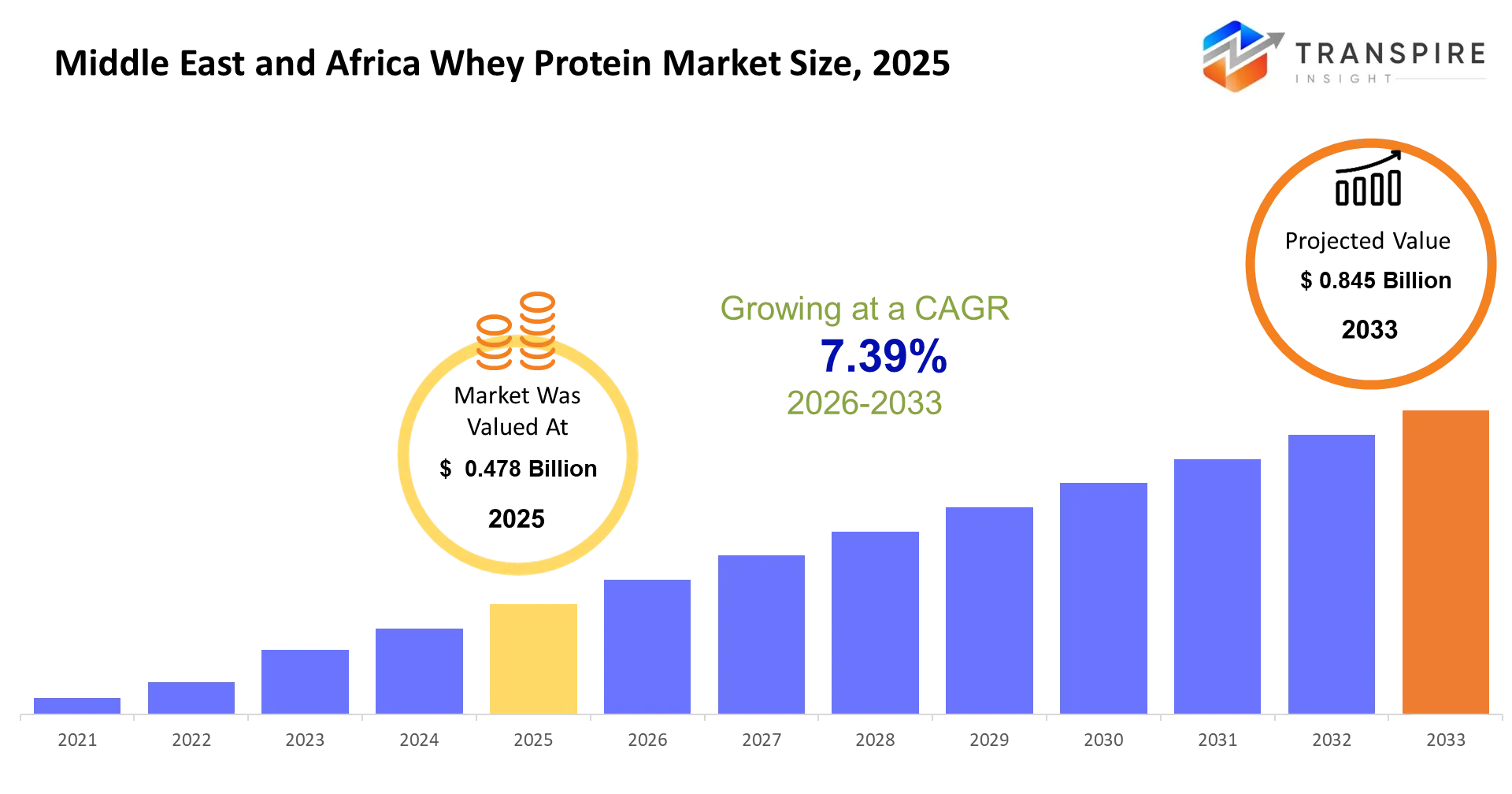
- Middle East and Africa Whey Protein Market Size 2025: USD 0.478 Billion
- Middle East and Africa Whey Protein Market Size 2033: USD 0.845 Billion
- Middle East and Africa Whey Protein Market CAGR: 7.39%
- Middle East and Africa Whey Protein Market Segments: By Type (Whey Protein Concentrate, Isolate, Hydrolysate, Others); By Application (Sports Nutrition, Functional Foods, Infant Nutrition, Clinical Nutrition, Others); By End-User (Athletes, Fitness Enthusiasts, Healthcare Sector, Food Industry, Consumers, Others); By Form (Powder, Liquid, Bars, Others)
To learn more about this report,  Download Free Sample Report
Middle East and Africa Whey Protein Market Summary
The Middle East and Africa Whey Protein Market was valued at USD 0.478 Billion in 2025. It is forecast to reach USD 0.845 Billion by 2033. That is a CAGR of 7.39% over the period.
The Middle East and Africa whey protein market kindof works like a core supply loop for high protein nutrition products, used in sports supplement s, fortified foods, and clinical recovery mixes. It helps manufacturers turn dairy byproducts into concentrated protein inputs that assist muscle repair, metabolic well-being, and therapeutic nutrition, both through retail routes and healthcare corridors. Basically, the market acts like a connecting hallway between international dairy processing centers and the local consumer appetite for affordable yet also premium protein enriched goods.
Over the last five years, the whole space has moved away from concentrate-heavy recipes, and more toward higher value isolate and hydrolysate take-up. This happened because quality expectations tightened for functional foods as well as clinical nutrition. One big trigger was the post-2020 global supply chain disruption, it revealed how much buyers relied on European and Oceanian whey shipments. So regional purchasers started to diversify sources and lock in longer term agreements, even if costs or negotiations were a bit uncomfortable. That in turn pushed manufacturers to build localized partnerships and insist on halal-certified production streams. So the pricing influence, it kind of moved toward suppliers that have integrated dairy processing along with advanced filtration capability. This directly boosted revenue focus among the larger multinational players , while at the same time reshaping procurement habits across the region.
Key Market Insights
- The Gulf Cooperation Council ends up dominating the Middle East and Africa Whey Protein Market, with a roughly 42% share in 2025. This is largely because premium fitness intake keeps rising and, well, the protein supply chain leans on imports more than others, so it kind of flows into the shelves.
- North Africa looks like the fastest-growing area, projected around 7.8% CAGR through 2033. The push is coming from food processing growth plus affordable protein demand , which is not small at all.
- For the product breakdown, whey protein concentrate takes the lead with more than 48% share. The reason is pretty straightforward: it is cost efficient and it is used everywhere in mass-market supplements, so manufacturers keep returning to it.
- After that, whey protein isolate sits as the second-largest segment. It is gaining momentum in premium nutrition and also clinical settings, mainly where high purity is needed.
- Meanwhile, the hydrolysate segment is expected to grow the quickest over 2026–2033. That trend is tied to demand for quicker digestion, especially in medical recovery nutrition products , where absorption speed matters.
- When you look at applications, sports nutrition stays on top with nearly 46% share. Gym culture expansion plays a role, alongside performance-minded dietary changes that people actually follow.
- Functional foods also stand out as the fastest-growing application. Since 2024, whey is getting mixed into dairy beverages and protein-enriched bakery items, so the uptake has accelerated.
- In end-users, athletes are still the top group. But the healthcare sector is showing the fastest expansion because preventive nutrition ideas are being adopted more across hospitals and related care pathways.
- On the company side, Glanbia is expanding whey isolate capacity. The aim is to reinforce supply chain dominance and keep fueling sports nutrition innovation across export markets.
- FrieslandCampina, for its part, is focusing on clinical-grade whey proteins and infant nutrition formulations, backed by advanced traceability systems that help with tighter oversight.
What are the Key Drivers, Restraints, and Opportunities in the Middle East and Africa Whey Protein Market?
The main thing speeding up whey protein demand across the Middle East and Africa is the fast growth, of performance nutrition and preventive healthcare habits among city people. More and more obesity rates , diabetes prevalence, and everyday lifestyle health worries pushed governments , clinicians, and regular consumers toward higher-protein eating solutions. This direction got even stronger after 2022 as Gulf nations poured money into fitness facilities, wellness pushes, and private healthcare expansion , you know. In response , sports nutrition companies and dairy ingredient suppliers increased ready-to-drink protein beverages , moved harder into clinical nutrition lines, and broadened the use of fortified dairy for brands. As a result, revenue pathways got broader across both retail shelves and healthcare procurement channels.
Still, the biggest drag is that the region leans heavily on imported dairy proteins and it has only small local whey processing capability. A lot of countries across Africa and the Gulf keep sourcing high-purity whey ingredients from Europe and Oceania, so manufacturers get exposed to currency swings, shipping problems, and even uneven milk production seasons. Because of this setup, production cost becomes heavier, and commercialization timelines slip, especially for smaller regional food makers that don’t have much buying power when negotiating supply contracts.
At the same time , a noticeable opportunity is showing up via localized functional food production in North and East Africa. Places like Egypt and Kenya are investing in food-processing capacity and cold-chain logistics so domestic nutrition industries can scale. This change opens up good conditions for joint ventures, halal-certified ingredient manufacturing, and cheaper protein-enriched food products made for a growing mid-income consumer group that’s expanding pretty quickly
What Has the Impact of Artificial Intelligence Been on the Middle East and Africa Whey Protein Market?
Artificial intelligence and advanced digital technologies are now, sort of, gradually transforming whey protein production as well as supply chain management across the Middle East and Africa. Dairy ingredient manufacturers are rolling out AI enabled automation setups, to sort of tweak filtration , spray drying, and protein standardization, so the plants can keep a steady product quality while also cutting energy and water usage. In addition, smart monitoring platforms—linked to industrial IoT sensors—are watching temperature steadiness moisture levels and how efficiently the equipment runs in real time, which makes it easier for processors to lower operational downtime and boost batch accuracy. A number of multinational dairy companies have also put machine learning models into demand forecasting workflows, meaning whey output volumes can be matched more closely with shifting nutrition product demand across Gulf and African retail shelves.
On the operations side, predictive analytics tools are helping maintenance get planned more wisely for membrane filtration and evaporation units, so that unplanned shutdowns happen less often and the equipment life cycle can stretch out. Automated quality inspection systems, powered by computer vision, are further assisting manufacturers with compliance for food safety as well as halal certification requirements. Taken together, these approaches can speed up production cycles, reduce material waste, and increase inventory management effectiveness. That said, AI adoption is still constrained, mainly by the high integration costs, uneven digital infrastructure, and the fact that localized production data is limited in several African processing facilities. This can lower model accuracy and also slow down broad scale rollout, even when the technology itself is ready.
Key Market Trends
- Between 2021 and 2026, people across the Gulf sort of moved away from basic protein powders, toward isolate oriented ready-to-drink options, with cleaner labeling and less sugar overall. And yeah there were also changes in shopping habits, like more grab and go stuff not just tubs, or at least not only tubs.
- Then FrieslandCampina and Glanbia, around 2025 to 2026, put more money into whey protein capacity. This happened partly because the global supply situation felt tighter, and partly because clinical nutrition demand kept climbing, step by step.
- Saudi Arabia and the UAE also widened their modern retail and e commerce nutrition routes. That basically sped up direct-to-consumer whey supplement sales after 2023, like a steady push that never really stopped.
- Meanwhile hospitals and healthcare teams started leaning on whey based recovery nutrition products more often. The reason was preventive healthcare spending kept rising across Gulf health systems, starting around 2024, even if budgets were uneven.
- Food manufacturers also began using whey protein in everyday foods, not only sports supplements. So it started showing up in protein enriched yogurt, bakery products, and dairy drinks that are aimed at mainstream city customers, without the heavy “athlete” vibe.
- Halal-certified whey ingredients became more commercially important after regional distributors emphasized regulatory clarity, and traceable sourcing partnerships during 2025. It was not only a marketing story, it was practical and usable in day to day procurement.
- And in South Africa, buyers seemed to favor more affordable whey concentrate blend products. Inflation squeezed budgets there, and that reduced interest in imported premium isolate offerings, pretty noticeably.
- Kenya and Egypt started getting new nutrition product launches in the wake of investments in food processing infrastructure, which made regional manufacturing feel more ready and also improved cold chain distribution, capabilities.
- Kerry Group and Arla Foods, kind of pushed their formulation partnerships with local beverage and dairy brands, aiming to speed up functional nutrition product development after 2024 and so on.
- Meanwhile, manufacturers were also taking up localized packaging and even smaller serving formats since 2025, not just to be “different” but to keep things affordable across price sensitive African consumer markets.
Middle East and Africa Whey Protein Market Segmentation
By Type
Whey protein concentrate takes the biggest share because it’s used everywhere in sports nutrition, fortified dairy items , and affordable protein supplements. Lower processing costs and a pretty even protein mix help keep demand steady among everyday shoppers plus regional food makers. Fitness centers, retail supplement brands, and beverage producers still lean toward concentrate formulations because the pricing stays reachable in many developing economies. Plus , its presence in regular nutrition products helps the volume grow in a more consistent way than the premium protein lanes.
Whey protein isolate is picking up speed , mainly in premium sports nutrition and medical nutrition uses where people want higher purity and also less fat plus less lactose. In cities, consumers with more disposable income are more willing to choose isolate-based options for weight management and lean muscle work. Hydrolysate stays a smaller slice in market share but it still draws attention in clinical nutrition and specialized recovery supplements, since it’s known for quicker absorption. Looking ahead, expansion across isolate and hydrolysate categories should push new ingredient ideas, halal-certified processing investments, and improved filtration methods across regional manufacturing networks.
By Application
Sports nutrition is, sort of, the main application segment because more people are joining the gym and awareness of active living keeps getting louder, which keeps pushing demand for protein powders, recovery beverages and performance supplements. Younger buyers across the Gulf states and South Africa keep leaning into whey-based nutrition products via e commerce websites and specialty shops. The pull stays especially high for ready-to-mix protein options, made for convenience and quick consumption, which makes sense because people do not always have time. Also, fitness culture plus social media influence continues to reinforce deeper product adoption over time, mostly among urban crowds.
Meanwhile functional foods and clinical nutrition are moving ahead steadily as food manufacturers blend whey proteins into yogurt, bakery items , and protein enriched drinks. Healthcare organizations are helping too, with a rising preference for whey protein ingredients in elderly meal plans, rehab oriented products, and after surgery dietary formulations. Infant nutrition stays a bit smaller in comparison, but it has long term promise due to the growing focus on pediatric nutritional quality and the push for fortified food development. Looking ahead, growth across these areas may boost more collaboration between dairy ingredient suppliers and regional food processing companies, they are often hunting for differentiated health centered offerings.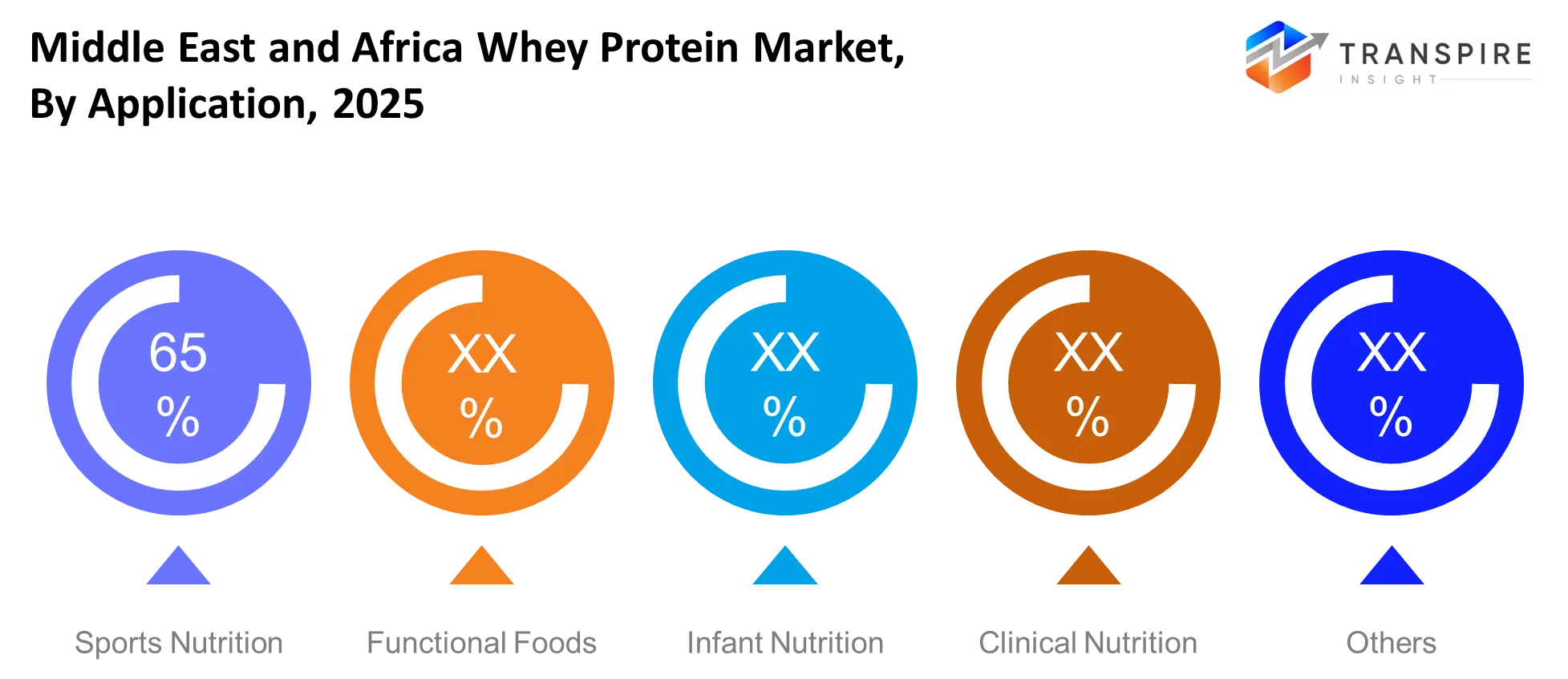
To learn more about this report, Download Free Sample Report
By End-User
Athletes , fitness enthusiasts and people who do regular training are taking the biggest end- user share because ongoing protein intake is still a sort of backbone for muscle repair, endurance routines and overall body make-up. In parallel , commercial gyms, sports clubs, and nutrition retailers are pushing broader availability of whey based supplements throughout major metro areas. There is also a noticeable pull from fitness influencers , plus digital wellness platforms that nudge younger buyers toward repeat orders. As long as consumer engagement stays steady , this group remains commercially appealing for both global and local supplement brands.
Healthcare institutions and food industry manufacturers are showing up as increasingly meaningful end users too, mainly because preventive nutrition is getting more attention inside hospitals and in packaged food production. Clinical nutrition providers are blending whey proteins into therapeutic meals that target older adults, and into recovery oriented plans meant for everyday clinical use. Food manufacturers are also taking whey ingredients to lift protein levels and adjust mouthfeel in mainstream packaged items. With demand continuing to spread across different settings, the market is likely to lean less on sports nutrition only, while opening up wider commercial uses and longer term investment prospects.
By Form
Powder based whey protein products sort of dominate the market, mostly because powder formulations tend to last longer on shelves , are easier to ship around, and usually cost less to store across economies that depend on imports. People buying sports nutrition also lean toward powder, since the servings feel more adjustable, and it fits pretty well with shakes, smoothies, or even meal replacement routines. On top of that , manufacturers get practical advantages from packaging efficiency and a broader distribution footprint through supermarkets, online marketplaces, and specialty nutrition retailers. And there’s also this product familiarity factor, which keeps reinforcing powder’s leadership across both premium and mass market categories.
At the same time, liquid whey protein products along with protein bars are picking up speed with consumers who want convenient nutrition for nonstop urban schedules. Ready to drink beverages are pulling in office workers and younger buyers, mainly because they’re portable and don’t require much prep time. Protein bars are spreading too through convenience stores and fitness focused retail channels, where shoppers tend to go for “grab and go” consumption habits. Looking ahead, growth in these mobile , portable nutrition styles is expected to push investment in better flavor innovation, shelf stable packaging methods, and localized manufacturing options that match regional tastes and consumption habits.
What are the Key Use Cases Driving the Middle East and Africa Whey Protein Market?
Sports nutrition is still the main use case that keeps pushing whey protein demand across the Middle East and Africa, and it looks mostly driven by protein powders, ready to drink beverages, plus performance supplements that people grab at gyms, pharmacies and also via online retail. More people are getting into fitness, and shoppers are paying closer attention to muscle recovery and weight management, so it’s no surprise that whey protein isolates and concentrates keep selling in big volumes.
Functional food and beverage ideas are moving forward as well , particularly dairy drinks, protein-enriched yogurt, and fortified bakery items aimed at urban middle-income consumers. Clinical nutrition is starting to matter more too, since hospitals and healthcare providers are increasingly choosing whey based formulations for elderly nutrition, and for post surgical recovery products
On top of that, you can see emerging routes, like whey protein being mixed into low cost pediatric nutrition products , or personalized nutrition solutions that are supported by digital health platforms. Demand is also beginning to rise for clean label and halal certified whey ingredients, made for premium wellness brands across the Gulf markets.
|
Report Metrics |
Details |
|
Market size value in 2025 |
USD 0.478 Billion |
|
Market size value in 2026 |
USD 0.513 Billion |
|
Revenue forecast in 2033 |
USD 0.845 Billion |
|
Growth rate |
CAGR of 7.39% from 2026 to 2033 |
|
Base year |
2025 |
|
Historical data |
2021 - 2024 |
|
Forecast period |
2026 - 2033 |
|
Report coverage |
Revenue forecast, competitive landscape, growth factors, and trends |
|
Regional scope |
Middle East and Africa (Saudi Arabia, United Arab Emirates, South Africa, Rest of Middle East and Africa) |
|
Key company profiled |
Glanbia, Fonterra, Arla Foods, Lactalis, FrieslandCampina, Kerry Group, Hilmar Cheese, Saputo, Agropur, Leprino Foods, AMCO Proteins, Milk Specialties, Davisco, Nestle, Danone |
|
Customization scope |
Free report customization (country, regional & segment scope). Avail customized purchase options to meet your exact research needs. |
|
Report Segmentation |
By Type (Whey Protein Concentrate, Isolate, Hydrolysate, Others); By Application (Sports Nutrition, Functional Foods, Infant Nutrition, Clinical Nutrition, Others); By End-User (Athletes, Fitness Enthusiasts, Healthcare Sector, Food Industry, Consumers, Others); By Form (Powder, Liquid, Bars, Others) |
Which Regions are Driving the Middle East and Africa Whey Protein Market Growth?
The Gulf Cooperation Council region is at the moment leading the Middle East and Africa whey protein market, mostly because people spend a lot on health and wellness items, there is a more sophisticated retail setup, and companies rely heavily on imported premium nutrition inputs. In places like Saudi Arabia and the United Arab Emirates, firms can use advanced cold-chain logistics, modern food processing know-how, and they keep tightening regulatory frameworks for functional foods, also for dietary supplements. Beyond that, the region has a tight network of fitness chains, clinical nutrition providers, and e-commerce sites which help new products get into stores faster especially in major cities. Because of this, international dairy ingredient suppliers keep looking at the Gulf first, since the existing distribution networks and smoother import routes lower the commercialization risks that usually come with premium whey protein products.
South Africa still counts as the next biggest regional contributor, but the way it moves is not exactly like the Gulf economies, growth there is more tied to domestic food manufacturing and steady long term retail conditions rather than luxury wellness consumption. The country has a dairy processing industry that is fairly mature, solid supermarket coverage, and a wide group of middle-income shoppers who want protein additions at a price they can manage. Steady backing from multinational food companies has helped keep demand stable for whey protein ingredients across sports nutrition, bakery uses, and fortified beverage products. Even if growth is not especially fast, South Africa offers more dependable revenue visibility, since shopping behavior is less locked to sudden premium supplement hype cycles.
The most rapid growth momentum is starting to show up across North and East Africa, mostly in Egypt and Kenya, where urban nutrition awareness and local food manufacturing investments seem to have accelerated quite sharply over the last few years . At the same time, governments alongside private investors have pushed forward food processing infrastructure. Meanwhile, newer modern retail chains and digital commerce platforms have improved access to protein enriched products , not just in the big metropolitan centers, but also in surrounding areas. On top of that, more people are getting into fitness culture and preventive healthcare programs , which is lifting demand for reasonably priced functional nutrition products that use whey protein concentrates. All of this together makes for a meaningful market window for entrants between 2026 and 2033, particularly for companies that can offer lower cost formulations, build localized partnerships, and keep distribution strategies flexible for consumer markets that keep changing quickly .
Who are the Key Players in the Middle East and Africa Whey Protein Market and How Do They Compete?
The Middle East and Africa whey protein market still looks moderately consolidated, like a few bigger players kinda hold the cards, with multinational dairy ingredient companies controlling a big portion of premium whey protein supply via integrated sourcing and processing networks. What feels most competitive now isn’t just price, it’s more about ingredient purity, functional performance, halal compliance, and the reliability of the supply chain, you know, the whole thing. Global incumbents keep defending their market slice using capacity expansion and application specific formulations, while regional nutrition brands are putting extra pressure on them by selling affordable protein blends, tuned to local consumer preferences. Firms that already have strong distribution partnerships across the Gulf Cooperation Council countries and South Africa tend to have a structural edge, because import logistics and regulatory approvals are still kind of hard entry barriers for new entrants.
Glanbia competes using advanced whey protein isolate technologies and customized nutrition solutions for sports, also functional beverage brands. Its vertically integrated dairy network helps keep raw material supply steady, and newer investments in whey protein isolate expansion improve its ability to export into high growth nutrition markets. FrieslandCampina stands out with specialized medical and infant nutrition proteins, backed by strict traceability standards and European quality certifications. It’s also expanding production capacity to cover the rising demand for premium clinical nutrition products, especially through Gulf healthcare channels.
Fonterra is all about high protein ingredient innovation, for those ready to drink nutrition things, and they lean on long term distributor relationships across the Middle East . Kerry Group on the other hand competes by using deep formulation know how, mixing whey proteins with flavor systems and texture structures that help regional food manufacturers move faster on new product launches , almost like it is frictionless. Then Arla Foods has pushed its position further via clean label and high purity protein inputs, made for health conscious people who want nutrition that is minimally processed.
Company List
- Glanbia
- Fonterra
- Arla Foods
- Lactalis
- FrieslandCampina
- Kerry Group
- Hilmar Cheese
- Saputo
- Agropur
- Leprino Foods
- AMCO Proteins
- Milk Specialties
- Davisco
- Nestle
- Danone
Recent Development News
In May 2026, FrieslandCampina announced an investment of more than €90 million to expand and upgrade whey protein production capacity across its Bedum, Veghel, and Workum facilities in the Netherlands. The expansion is aimed at increasing output of high-value whey proteins for sports, medical, and early-life nutrition applications, strengthening the company’s supply position in growing Middle East and Africa nutrition markets. https://www.nutraingredients.com
In January 2026, Glanbia confirmed expansion of its whey protein isolate production through a joint venture investment with Southwest Cheese in New Mexico. The additional 10 million pounds of WPI capacity is expected to support rising global demand for high-protein beverages and sports nutrition products, including distribution opportunities across the Middle East and Africa region. https://www.foodnavigator.com
What Strategic Insights Define the Future of the Middle East and Africa Whey Protein Market?
The Middle East and Africa whey protein market is kinda moving, structurally, from this niche sports nutrition thing toward a wider preventive health, and kind of functional nutrition ecosystem, even if it sounds like a mouthful. This shift is being pushed by rising urbanization , lifestyle related disorders, and also the growing middle-class appetite for high-protein meals and drinks. Over the next five to seven years , growth might speed up, mostly through fortified foods, clinical nutrition , and ready-to-drink formats, not just the older bodybuilding supplements alone. Still there is a quieter risk, less visible but important , because the region relies a lot on imported dairy inputs. That makes manufacturers sensitive to currency swings, trade hiccups , and unpredictable global milk supply situations, and that can squeeze margins even while demand stays strong.
At the same time, there’s an opening that’s starting to show up. Think about putting whey protein into affordable medical nutrition products across the Gulf and throughout African healthcare systems, especially as governments roll out preventive healthcare programs. Market players should lean into local processing collaborations and product ideas that fit each region, so the supply chain exposure is reduced , while demand from everyday health-minded consumers can be captured more directly.
Middle East and Africa Whey Protein Market Report Segmentation
By Type
- Whey Protein Concentrate
- Isolate
- Hydrolysate
- Others
By Application
- Sports Nutrition
- Functional Foods
- Infant Nutrition
- Clinical Nutrition
- Others
By End-User
- Athletes
- Fitness Enthusiasts
- Healthcare Sector
- Food Industry
- Consumers
- Others
By Form
- Powder
- Liquid
- Bars
- Others
Frequently Asked Questions
Find quick answers to common questions.
The Estimated Middle East and Africa Whey Protein Market size will be USD 0.845 Billion in 2033.
Key Segments for the Middle East and Africa Whey Protein Market are By Type (Whey Protein Concentrate, Isolate, Hydrolysate, Others); By Application (Sports Nutrition, Functional Foods, Infant Nutrition, Clinical Nutrition, Others); By End-User (Athletes, Fitness Enthusiasts, Healthcare Sector, Food Industry, Consumers, Others); By Form (Powder, Liquid, Bars, Others).
Major Middle East and Africa Whey Protein Market Players are Glanbia, Fonterra, Arla Foods, Lactalis, FrieslandCampina, Kerry Group, Hilmar Cheese, Saputo, Agropur, Leprino Foods, AMCO Proteins, Milk Specialties, Davisco, Nestle, Danone.
The Current Middle East and Africa Whey Protein Market size is USD 0.478 Billion in 2025.
The Middle East and Africa Whey Protein Market CAGR is 7.39% from 2026 to 2033.
- Glanbia
- Fonterra
- Arla Foods
- Lactalis
- FrieslandCampina
- Kerry Group
- Hilmar Cheese
- Saputo
- Agropur
- Leprino Foods
- AMCO Proteins
- Milk Specialties
- Davisco
- Nestle
- Danone
Recently Published Reports
-
Apr 2026
Baby Infant Formula Market
Baby Infant Formula Market Size, Share & Analysis Report By ype (Infant Milk, Follow On Milk, Specialty Baby Milk, Growing-Up Milk), By Ingredient (Carbohydrate, Fat, Protein, Minerals, Vitamins, and Others), By Product Form (Powder, Liquid, and Ready-to-feed), By Distribution Channels (Supermarket/Hypermarket, Specialty Store, Pharmacies, Online Retail, and Others), and Geography (North America, Europe, Asia-Pacific, Middle East and Africa, South and Central America), 2021 - 2031
-
Apr 2026
Edible Insects for Animal Feed Market
Edible Insects for Animal Feed Market Size, Share & Analysis Report By Type (Insect Powder, Insect Meal, Insect Bar, Insect Paste, Insect Oil, and Others), By Insect Type (Beetles, Cricket, Caterpillar, Hymenoptera, Orthoptera, Tree Bugs, and Others), By Application (Livestock, Pet Food, and Aquaculture), By Livestock Type (Poultry, Swine, and Others), and Geography (North America, Europe, Asia-Pacific, Middle East and Africa, South and Central America), 2021 - 2031
-
Apr 2026
Food Industry Disinfection and Bacterial Control Market
Food Industry Disinfection and Bacterial Control Market Size, Share & Analysis Report By Type (Chemical Disinfectants, Physical Disinfectants, and Biocides and Antimicrobials), By Application (Food Processing Equipment Surface Disinfection, Food Preparation Areas Surface Disinfection, Storage Areas Surface Disinfection, Anti-microbial Coatings Food Preservation, and Preservative Solutions Food Preservation), By End User (Meat and Poultry Processing, Dairy Processing, Seafood Processing, Bakery and Confectionery, Restaurants and Commercial Kitchens, and Food Service Providers), By Sales Channel (Online, Offline), and Geography (North America, Europe, Asia-Pacific, Middle East and Africa, South and Central America), 2021 - 2031
-
Apr 2026
Freeze Dried Food Market
Freeze Dried Food Market Size, Share & Analysis Report By Product Type (Fruits, Vegetables, Freeze-Dried Dairy Products, Freeze-Dried Meat and Seafood, Freeze-Dried Pet Food, and Prepared Meal), By Nature (Organic, and Conventional), By Form (Powdered, Granules, and Diced), By End Use (Breakfast Cereals, Dairy Products, Bakery & Confectionery, Nutritional Bars & Supplements, Powdered Beverages, Snacks, and Retail (Household)), and Geography (North America, Europe, Asia-Pacific, Middle East and Africa, South and Central America), 2021 - 2031