
Middle East and Africa Ready To Drink Mocktails Market Size & Forecast:
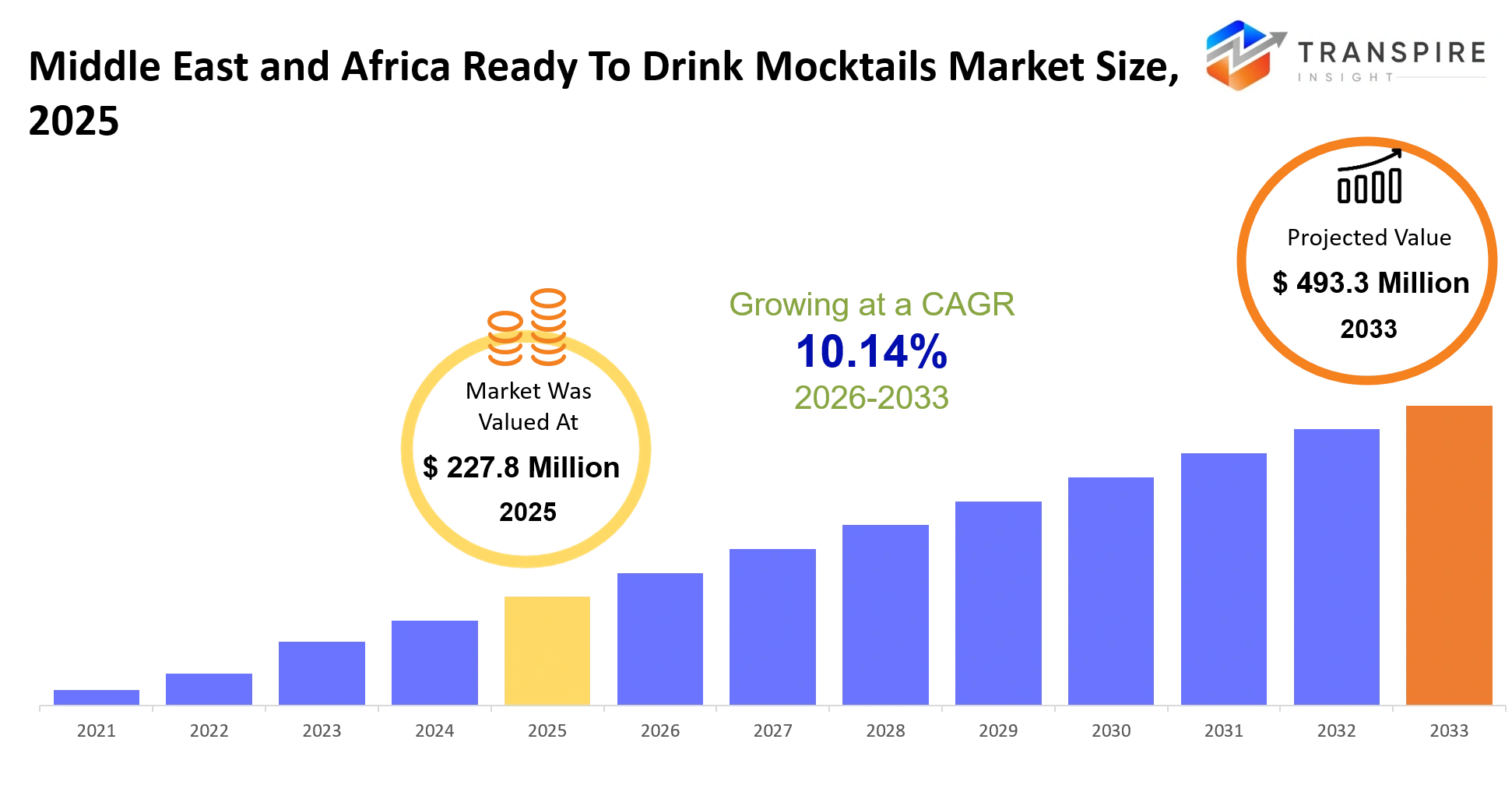
- Middle East and Africa Ready To Drink Mocktails Market Size 2025: USD 227.8 Million
- Middle East and Africa Ready To Drink Mocktails Market Size 2033: USD 493.3 Million
- Middle East and Africa Ready To Drink Mocktails Market CAGR: 10.14%
- Middle East and Africa Ready To Drink Mocktails Market Segments: By Product Type (Fruit-Based, Herbal, Sparkling, Functional, Premium, Organic, Botanical, Others); By Packaging (Bottles, Cans, Cartons, Pouches, Glass Bottles, Multipacks, Others); By Distribution Channel (Supermarkets, Convenience Stores, Online Retail, Hotels, Restaurants, Cafes, Others); By End User (Adults, Millennials, Gen Z, Health-Conscious Consumers, Professionals, Others).
Middle East and Africa Ready To Drink Mocktails Market Summary
The Middle East and Africa Ready To Drink Mocktails Market was valued at USD 227.8 Million in 2025. It is forecast to reach USD 493.3 Million by 2033. That is a CAGR of 10.14% over the period.
The ready-to-drink mocktails industry kind of serves people who want a more “grown up” beverage experience but without alcohol, so they can still join in, you know, for social events, hospitality locations, corporate meetups, and just everyday drinking. At the same time these products help beverage manufacturers , retailers, restaurants and hotels deal with changing drinking preferences while still protecting premium beverage margins, and widening the customer base.
In the past five years, the market has changed a lot, moving away from small, niche alcohol-free options toward more premium, functional, and botanical-based formulations. One big structural shift was that well known beverage companies and premium mixer brands have stepped into the alcohol-free space, giving the category stronger distribution routes and more product creativity. Another push came along after the pandemic, when daily routines changed a bit, and more people started buying to drink at home, so folks began hunting for better, basically ready-to-consume beverages. Once the overall product quality got a notch higher, and the retail shelf space kept expanding, acceptance moved past the usual abstainers, and that was kind of it.That shift drives repeat buys, builds stronger loyalty to brands, and creates fresh revenue sources across retail and foodservice channels too, which supports continued market expansion across the Middle East and Africa.
Key Market Insights
- In 2025 Gulf Cooperation Council countries account for around 42% of the regional revenue, so the Middle East pretty much stays as the big dominant contributor .
- Meanwhile Africa is showing the fastest growth as a regional market through 2033, backed by modern retail expansion and those ongoing urban beverage consumption trends.
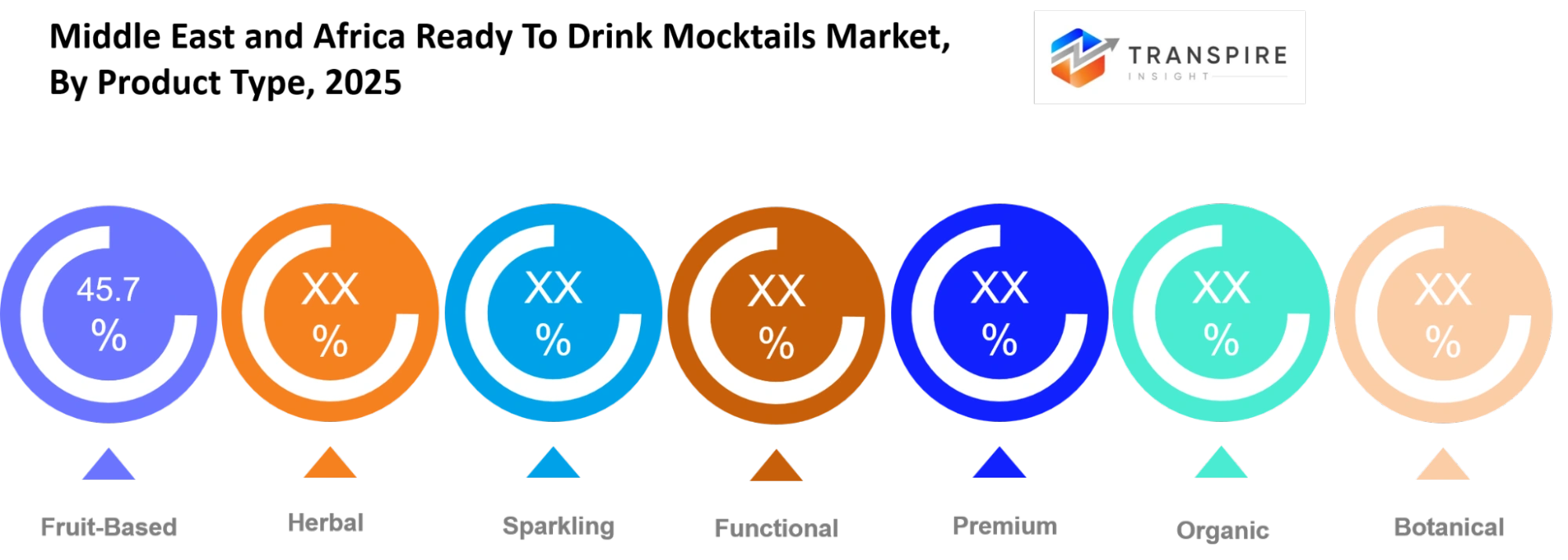
- When it comes to product types , fruit-based mocktails hold close to 32% market share in 2025, mostly because consumers already feel comfortable with the flavors and the overall concept.
- Functional mocktails are moving even quicker, basically ranking as the fastest-growing product category, mainly tied to the demand for vitamins, botanicals and wellness oriented ingredients.
- For packaging, bottles take roughly 38% of packaging demand , while cans keep gaining share thanks to convenience and portability advantages.
- On distribution, supermarkets stay the largest channel , with more than 35% share, helped by premium beverage merchandising strategies.
- Online retail is also accelerating, growing by over 20% each year since 2022, which makes direct-to-consumer beverage access a lot stronger.
- In terms of end users, Millennials are the largest contributor, and Gen Z seems to be adopting premium alcohol-free beverage formats the fastest.
- Product innovation from PepsiCo, Coca-Cola, Fever-Tree, Lyre's, MONIN, and Britvic keeps reshaping the competitive landscape in a pretty noticeable way .
- Overall , strategic expansion , premium ingredients , and hospitality partnerships still work as the main differentiators across the Middle East and Africa Ready To Drink Mocktails Market.
What are the Key Drivers, Restraints, and Opportunities in the Middle East and Africa Ready To Drink Mocktails Market?
The strongest growth catalyst comes from that kinda changing how people drink beverages across urban centers, and also in hospitality venues. Hotels, restaurants, cafés, premium retail chains too, have been widening their alcohol-free drink menus just to reach a broader crowd, sometimes even more than before. This momentum really picked up when big beverage manufacturers rolled out premium botanical blends, fruit infusions, and functional inputs. When product quality gets better, and the availability goes wider, it helps boost purchase frequency and category revenue, especially in Gulf countries where alcohol-free options fit local consumption habits fairly neatly
Still , premium pricing is the big structural problem, and it shows up over and over. A lot of these offerings depend on imported botanical extracts , natural flavor systems, specialized packaging, and more advanced processing methods. Those cost pressures can’t be eased fast, since the supply chains are kind of concentrated among a small set of ingredient suppliers. So, in several African markets, price-conscious customers often fall back to conventional soft drinks, which keeps penetration limited, and slows down the wider adoption
Looking ahead, the biggest opportunity sits in functional, wellness-driven mocktails, think adaptogens, vitamins, electrolytes, and botanical extracts combined. Investment in health-focused beverage segments keeps accelerating globally. Places like Saudi Arabia, the UAE, and South Africa look especially promising because premium retail infrastructure keeps expanding, and consumers are growing more open to trying wellness drinks. If companies can marry functional benefits with a really premium taste profile then they can tap into new customer groups, and keep revenue growth steadier over the long run
What Has the Impact of Artificial Intelligence Been on the Middle East and Africa Ready To Drink Mocktails Market?
Artificial intelligence is, kind of, more and more affecting beverage manufacturing, how supply chains move, and even consumer engagement across the ready-to-drink mocktail industry, you know. Beverage producers often run machine learning models to predict demand curves, line up production timing, and cut down on inventory waste. With AI-based analytics, manufacturers can notice liking patterns for flavors, guess seasonal purchase habits, and track regional consumption movement, which then supports quicker product development and more precise promotion choices.
Also, newer digital setups tend to boost day-to-day efficiency through automated quality checks and packaging inspection. Computer vision systems spot uneven filling, labeling issues, and packing errors before the products ever see distribution channels. On top of that, predictive maintenance tools kinda keep watch over manufacturing equipment, and they flag likely malfunctions ahead of sudden downtime, so plants get more complete uptime and, in a way, maintenance budgets stay calmer, not as jumpy.
When AI is used for demand forecasting, distribution planning turns more efficient, which usually leads to fewer stock gaps and better shelf visibility in supermarkets, convenience stores, and hospitality venues, too. Some beverage makers even say they see inventory optimization gains of more than 15% after adopting more advanced forecasting, which sounds bold but they do report it.
Still, adoption is not always smooth, because the integration costs can be high, data systems are often fragmented, and getting reliable, well-labeled consumer datasets is limited in some regional markets. Smaller beverage companies often struggle to justify the investment required for large-scale AI deployment, and then the whole process moves slower, a little, than expected.
Key Market Trends
- From 2021, premium botanical formulations have grown by over 25% , which sort of nudged competition toward more refined flavor craft and ingredient visibility.
- Functional drinks with vitamins alongside adaptogenic ingredients also started taking up more shelf space, especially through modern retail channels, in the window from 2022 to 2025.
- In several Gulf markets, online sales for beverages more than doubled after retailers improved their direct-to-consumer delivery options, and yeah, that change really mattered.
- At the same time, hospitality operators began swapping out the usual soft drink lineup for premium mocktail menus, trying to lift margins and also the overall guest feeling.
- Beverage brands rolled out smaller can formats and multipack choices as well, aligning with that convenience-minded buying habit.
- Fruit-based products stayed out in front, but herbal and botanical versions actually moved faster after 2023.
- Premium mixer brands like Fever-Tree and Lyre’s pushed broader alcohol-free ranges, aiming to match the way consumer tastes are shifting.
- Distribution partnerships became a big competitive play, helping companies get better market reach and more noticeable retail placement.
- Innovation then leaned harder toward low-calorie blends, with natural ingredients and fewer artificial additives, more or less.
- And Gen Z purchasing habits started shaping product launches, the packaging layout, and even how brands choose to invest in digital marketing.
Middle East and Africa Ready To Drink Mocktails Market Segmentation
By Product Type
Fruit-Based products hold a notable place because people kinda trust familiar flavors, and the wider audience tends to accept them pretty well. Citrus , berry, tropical fruit, and mixed fruit options keep moving through retail shelves and also show up often in hospitality spaces. Meanwhile herbal products are still getting more attention as beverage makers start adding things that feel “refreshing” and bring a distinctive taste profile. Sparkling styles bring more texture and a sort of premium drinking moment, so these are easy to spot at social gatherings, plus in foodservice too.
Functional products, on the other hand, help keep the demand alive for beverages with vitamins, minerals, electrolytes, or botanical extracts inside. Premium choices usually lean into sophisticated formulations , solid ingredient quality, and a polished look that suits upscale retail as well as hospitality. Organic variants appeal to consumers who want drinks made using certified ingredients and minimal processing approach. Botanical products use herbs, spices and plant based extracts to craft unusual, almost layered flavor pairings. And there are also the other kinds, like experimental flavors, regional specialties, and limited edition batches, they help push category diversity and pull in smaller, niche consumer groups.
By Packaging
Bottles still seem widely preferred for convenience, product visibility, and how they fit both individual and family consumption, I mean honestly. Cans keep spreading through urban markets, mostly because they’re easy to carry, more durable, and they match the whole on-the-go lifestyle thing. Cartons help with efficient storage and transportation while also giving practical ways to handle multi-serving beverage formats. Pouches get extra attention in a few selected markets where lightweight packaging plus cost efficiency matters more, and people notice.
Glass Bottles remain fairly relevant in premium product categories, partly due to their visual appeal, and the way consumers tend to associate them with better product quality. Multipacks support household purchasing habits and can push higher-volume sales via supermarkets, plus large retail outlets. Others cover newer packaging formats that are designed to improve shelf differentiation, make everyday use easier, and strengthen distribution efficiency. Packaging innovation will remain important too, because manufacturers try to achieve stronger brand visibility and a better customer experience across competitive retail environments.
By Distribution Channel
Supermarkets make up a large chunk of product sales, mostly because of their huge shelf space, strong product visibility, and their ability to reach big groups of consumers at once. Convenience stores tend to do well with impulse buys and faster checkouts, especially in city areas , near transportation hubs. Online retail keeps growing too, as digital commerce platforms get better at making items findable, and as home delivery keeps getting smoother. Hotels also matter a lot, mainly through premium beverage offerings aimed at leisure travelers and hospitality guests, it feels more curated there.
Restaurants are now also adding alcohol free beverage options, mostly to follow shifts in dining habits and to widen what they serve. Cafes support category growth with specialty drink menus and, in general, higher end consumption experiences. Others cover entertainment venues, corporate cafeterias, event locations , and specialty stores that open up more sales channels. Distribution networks keep shifting as manufacturers try to keep the classic retail footprint but also lean into digital commerce plus hospitality collaborations.
By End User
Adults are still the biggest consumer group, basically because ready-to-drink mocktails feel like a convenient replacement for a lot of moments , like social meet ups, going out to dine, and also just regular everyday drinking. Millennials really show up strong too , they seem drawn to premium drinks, new flavor combinations, and a more lifestyle focused way of purchasing. Gen Z also nudges product development pretty directly , they’re into packaging that looks good at a glance, uncommon ingredient choices, and digital brand interaction, not just plain advertising. Then there are the health-conscious buyers , they keep pushing demand for drinks with lower sugar, functional additives, and clean-label style formulas.
Professionals drive steady demand via office meetups, business events ,and premium convenience buys. Formats that are easy to carry and basically ready to consume match busy calendars and modern habits. Other end users include tourists, occasional drinkers, family oriented shoppers, and people who want a different option than classic carbonated beverages. With all these mixed preferences, companies get room to keep tweaking products, and that helps the category grow over the whole region for longer term.
What are the Key Use Cases Driving the Middle East and Africa Ready To Drink Mocktails Market?
The biggest use case kinda shows up in hospitality, and foodservice environments, especially restaurants, hotels, and cafés. Premium alcohol-free drinks let venues sort of widen their menu options, raise customer satisfaction, and pull in stronger beverage revenue without depending only on classic soft drinks. In particular, fruit-based blends and premium formulations take up a big chunk of what people consume in this area, basically.
More adoption is also happening during corporate events, conferences, retail entertainment venues, and family oriented gatherings. Millennials and working professionals often choose ready-to-drink mocktails as a practical alternative when they’re out socializing, or at workplace functions, or when they want that more elevated, premium dining vibe. At the same time online retail plus supermarket channels make it easier to get these products as the use cases keep expanding.
What’s starting to appear next includes wellness centered drinking moments, and functional beverage situations. Drinks with botanical ingredients, vitamins, and hydration driven formulations are slowly gaining momentum with health-minded consumers. Also, luxury tourism spots and premium lifestyle destinations might be pretty interesting going forward, since demand is rising for more refined alcohol-free beverage experiences across the region.
|
Report Metrics |
Details |
|
Market size value in 2025 |
USD 227.8 Million |
|
Market size value in 2026 |
USD 250.9 Million |
|
Revenue forecast in 2033 |
USD 493.3 Million |
|
Growth rate |
CAGR of 10.14% from 2026 to 2033 |
|
Base year |
2025 |
|
Historical data |
2021 - 2024 |
|
Forecast period |
2026 - 2033 |
|
Report coverage |
Revenue forecast, competitive landscape, growth factors, and trends |
|
Regional scope |
United States; Canada; Mexico; United Kingdom; Germany; France; Italy; Spain; Denmark; Sweden; Norway; China; Japan; India; Australia; South Korea; Thailand; Brazil; Argentina; South Africa; Saudi Arabia; United Arab Emirates |
|
Key company profiled |
PepsiCo, Coca-Cola, Fever-Tree, Schweppes, Mocktail Club, Seedlip, Lyre's, Ritual, MONIN, Britvic, Keurig Dr Pepper, Nestle, Diageo, AB InBev, Asahi. |
|
Customization scope |
Free report customization (country, regional & segment scope). Avail customized purchase options to meet your exact research needs. |
|
Report Segmentation |
By Product Type (Fruit-Based, Herbal, Sparkling, Functional, Premium, Organic, Botanical, Others); By Packaging (Bottles, Cans, Cartons, Pouches, Glass Bottles, Multipacks, Others); By Distribution Channel (Supermarkets, Convenience Stores, Online Retail, Hotels, Restaurants, Cafes, Others); By End User (Adults, Millennials, Gen Z, Health-Conscious Consumers, Professionals, Others). |
Which Regions are Driving the Middle East and Africa Ready To Drink Mocktails Market Growth?
The Middle East kind of represents the largest regional market , because of strong hospitality activity premium beverage consumption, and well aligned cultural fit with alcohol-free products . Countries like Saudi Arabia and the United Arab Emirates back category expansion by pouring money into tourism projects, building luxury hotels, and growing modern retail networks. International beverage brands keep launching premium mocktail ranges across supermarkets , restaurants and entertainment venues. A well developed distribution ecosystem , plus high consumer spending power, helps sustain regional leadership and also supports regular product innovation.
South Africa ranks as the second-largest contributor , but it feels different from the Middle East due to a more diversified retail structure and an established beverage manufacturing base. Market growth depends on economic resilience , strong supermarket penetration, and steady investment from beverage producers. Local brands and international brands both maintain consistent product availability through nationwide retail networks and foodservice channels. This stable operating environment then creates reliable revenue generation , and it also supports long-term category development.
The Rest of Africa is expected to record the fastest growth through 2033, mainly because urbanization, modern retail expansion, and higher disposable incomes are reshaping how people consume beverages. Investments in shopping centers, convenience retail, and e commerce platforms have improved access for consumers to premium non-alcoholic beverages . Several multinational beverage companies have increased their regional distribution activities and added new product portfolios over the last few years.
Who are the Key Players in the Middle East and Africa Ready To Drink Mocktails Market and How Do They Compete?
Competition is still kinda moderately fragmented, with multinational beverage companies going head to head alongside more specialized alcohol-free beverage brands. In practice, product quality, flavor innovation, distribution reach and that premium positioning really drive the competition. Big beverage manufacturers defend their market share using broad retail networks, lots of marketing resources, and pretty entrenched visibility, while newer brands tend to lean into unusual formulations and those more specific consumer tastes. Overall, competition keeps moving away from the usual soft drink alternatives and toward premium, functional mocktail experiences , at least that’s how it feels in the market.
PepsiCo and Coca-Cola benefit a lot from their extensive regional distribution systems, which means faster market access across supermarkets, convenience stores, and hospitality channels. Fever-Tree differentiates through premium mixers and more sophisticated flavor profiles, aimed at consumers who want an upscale alcohol-free drink. Schweppes leans on long-standing brand recognition plus a broad retail presence, so it stays visible across multiple consumer segments. MONIN on the other hand emphasizes flavor know-how and solid relationships in foodservice, which helps adoption across hotels, restaurants, and cafés.
Lyre’s has carved out a strong position by doing alcohol-free beverage specialization and maintaining a premium brand identity. Seedlip highlights botanical ingredients and refined formulations for consumers who want distinctive flavor experiences. Britvic expands via product innovation and strategic retail partnerships, basically reinforcing shelf presence, and that matters. Nestlé and Asahi keep investing in premium beverage categories, using manufacturing scale and regional expansion moves to catch emerging opportunities across those growing consumer markets.
Company List
- PepsiCo
- Coca-Cola
- Fever-Tree
- Schweppes
- Mocktail Club
- Seedlip
- Lyre's
- Ritual
- MONIN
- Britvic
- Keurig Dr Pepper
- Nestlé
- Diageo
- AB InBev
- Asahi Group Holdings
Recent Development News
In January 2026, Lyre's expanded its alcohol-free beverage portfolio and highlighted ready-to-drink mocktails as a major strategic growth category. The initiative strengthened product availability and reinforced premium positioning within the fast-growing alcohol-free beverage segment.
Source: https://www.beveragedaily.com
In January 2025, Fever-Tree entered a strategic partnership with Molson Coors Beverage Company. The agreement granted Molson Coors exclusive commercialization rights for Fever-Tree products in the United States and expanded distribution capabilities for premium non-alcoholic beverages.
Source: http://ir.molsoncoors.com
In May 2025, Fever-Tree launched Mediterranean G&T and Italian Spritz non-alcoholic canned beverages. The launch expanded the company's ready-to-drink alcohol-free portfolio and strengthened competition within premium mocktail offerings across international markets.
Source: https://www.thegrocer.co.uk
What Strategic Insights Define the Future of the Middle East and Africa Ready To Drink Mocktails Market?
The market is drifting toward premium, health focused, and experience driven drinking habits, kind of backed by better retail setups and more hospitality involvement. Product differentiation will get more and more tied to functional components, botanical mixes, and premium branding, not just the usual flavor rivalry.
There is also a risk that feels quieter, ingredient sourcing concentration. A bunch of these higher end recipes lean on specialized botanical extracts and natural flavor systems from only a handful of producers. If there is any interruption in how ingredients show up, or even pricing swings, margins could get squeezed and affordability might take a hit .
At the same time, there is a real chance that is starting to look bigger : functional mocktails that blend hydration needs, wellness oriented ingredients, and a more premium tasting moment. Gulf countries and big African cities are setting up useful conditions for these products, largely because modern retail keeps growing and premium consumption patterns are becoming more common.
Market players should push localized product development, and also build deliberate relationships with hospitality operators plus modern retail chains . Businesses that can pair reliable distribution reach with standout premium formulations should be the ones most likely to catch the next wave of expansion.
Middle East and Africa Ready To Drink Mocktails Market Report Segmentation
By Product Type
- Fruit-Based
- Herbal
- Sparkling
- Functional
- Premium
- Organic
- Botanical
- Others
By Packaging
- Bottles
- Cans
- Cartons
- Pouches
- Glass Bottles
- Multipacks
- Others
By Distribution Channel
- Supermarkets
- Convenience Stores
- Online Retail
- Hotels
- Restaurants
- Cafes
- Others
By End User
- Adults
- Millennials
- Gen Z
- Health-Conscious Consumers
- Professionals
- Others
Frequently Asked Questions
Find quick answers to common questions.
The expected Middle East and Africa Ready To Drink Mocktails Market size for the market will be USD 493.3 Million in 2033.
Key segments for the Middle East and Africa Ready To Drink Mocktails Market are By Product Type (Fruit-Based, Herbal, Sparkling, Functional, Premium, Organic, Botanical, Others); By Packaging (Bottles, Cans, Cartons, Pouches, Glass Bottles, Multipacks, Others); By Distribution Channel (Supermarkets, Convenience Stores, Online Retail, Hotels, Restaurants, Cafes, Others); By End User (Adults, Millennials, Gen Z, Health-Conscious Consumers, Professionals, Others).
Major Middle East and Africa Ready To Drink Mocktails Market players are PepsiCo, Coca-Cola, Fever-Tree, Schweppes, Mocktail Club, Seedlip, Lyre's, Ritual, MONIN, Britvic, Keurig Dr Pepper, Nestle, Diageo, AB InBev, Asahi.
The Middle East and Africa Ready To Drink Mocktails Market size is USD 227.8 Million in 2025.
The Middle East and Africa Ready To Drink Mocktails Market CAGR is 10.14% from 2026 to 2033.
- PepsiCo
- Coca-Cola
- Fever-Tree
- Schweppes
- Mocktail Club
- Seedlip
- Lyre's
- Ritual
- MONIN
- Britvic
- Keurig Dr Pepper
- Nestlé
- Diageo
- AB InBev
- Asahi Group Holdings
About the Authors

Chetan Dhatrak
I’m Chetan Dhatrak, a Senior Research Analyst at Transpire Insight, specializing in the Consumer Goods, Foods and Beverages industry. I focus on analyzing market trends, consumer behavior, competitive landscapes, and industry developments to deliver accurate, data-driven insights. My research at Transpire Insight is built on credible sources and in-depth analysis, helping businesses and readers better understand market dynamics, emerging opportunities, and evolving consumer preferences. I’m committed to creating reliable, well-researched content that supports informed decision-making and reflects the latest developments in the consumer goods and food & beverage sectors.

Chakradhar Khansole
Chakradhar serves as the Research Director at Transpire Insight, bringing over 8 years of experience in technology, innovation, and strategic market intelligence. He specializes in transforming complex market data into actionable business insights that enable organizations to make informed, growth-oriented decisions. Recognized for his strategic vision and analytical expertise, Chakradhar leads high-impact research initiatives, delivering comprehensive market assessments, competitive intelligence, and forward-looking industry analysis.
Recently Published Reports
-
Apr 2026
Baby Infant Formula Market
Baby Infant Formula Market Size, Share & Analysis Report By ype (Infant Milk, Follow On Milk, Specialty Baby Milk, Growing-Up Milk), By Ingredient (Carbohydrate, Fat, Protein, Minerals, Vitamins, and Others), By Product Form (Powder, Liquid, and Ready-to-feed), By Distribution Channels (Supermarket/Hypermarket, Specialty Store, Pharmacies, Online Retail, and Others), and Geography (North America, Europe, Asia-Pacific, Middle East and Africa, South and Central America), 2021 - 2031
-
Apr 2026
Edible Insects for Animal Feed Market
Edible Insects for Animal Feed Market Size, Share & Analysis Report By Type (Insect Powder, Insect Meal, Insect Bar, Insect Paste, Insect Oil, and Others), By Insect Type (Beetles, Cricket, Caterpillar, Hymenoptera, Orthoptera, Tree Bugs, and Others), By Application (Livestock, Pet Food, and Aquaculture), By Livestock Type (Poultry, Swine, and Others), and Geography (North America, Europe, Asia-Pacific, Middle East and Africa, South and Central America), 2021 - 2031
-
Apr 2026
Food Industry Disinfection and Bacterial Control Market
Food Industry Disinfection and Bacterial Control Market Size, Share & Analysis Report By Type (Chemical Disinfectants, Physical Disinfectants, and Biocides and Antimicrobials), By Application (Food Processing Equipment Surface Disinfection, Food Preparation Areas Surface Disinfection, Storage Areas Surface Disinfection, Anti-microbial Coatings Food Preservation, and Preservative Solutions Food Preservation), By End User (Meat and Poultry Processing, Dairy Processing, Seafood Processing, Bakery and Confectionery, Restaurants and Commercial Kitchens, and Food Service Providers), By Sales Channel (Online, Offline), and Geography (North America, Europe, Asia-Pacific, Middle East and Africa, South and Central America), 2021 - 2031
-
May 2026
Freeze Dried Food Market
Freeze Dried Food Market Size, Share & Analysis Report By Product Type (Fruits, Vegetables, Freeze-Dried Dairy Products, Freeze-Dried Meat and Seafood, Freeze-Dried Pet Food, and Prepared Meal), By Nature (Organic, and Conventional), By Form (Powdered, Granules, and Diced), By End Use (Breakfast Cereals, Dairy Products, Bakery & Confectionery, Nutritional Bars & Supplements, Powdered Beverages, Snacks, and Retail (Household)), and Geography (North America, Europe, Asia-Pacific, Middle East and Africa, South and Central America), 2021 - 2031