

United States Foodservice Disposables Market Size & Forecast:
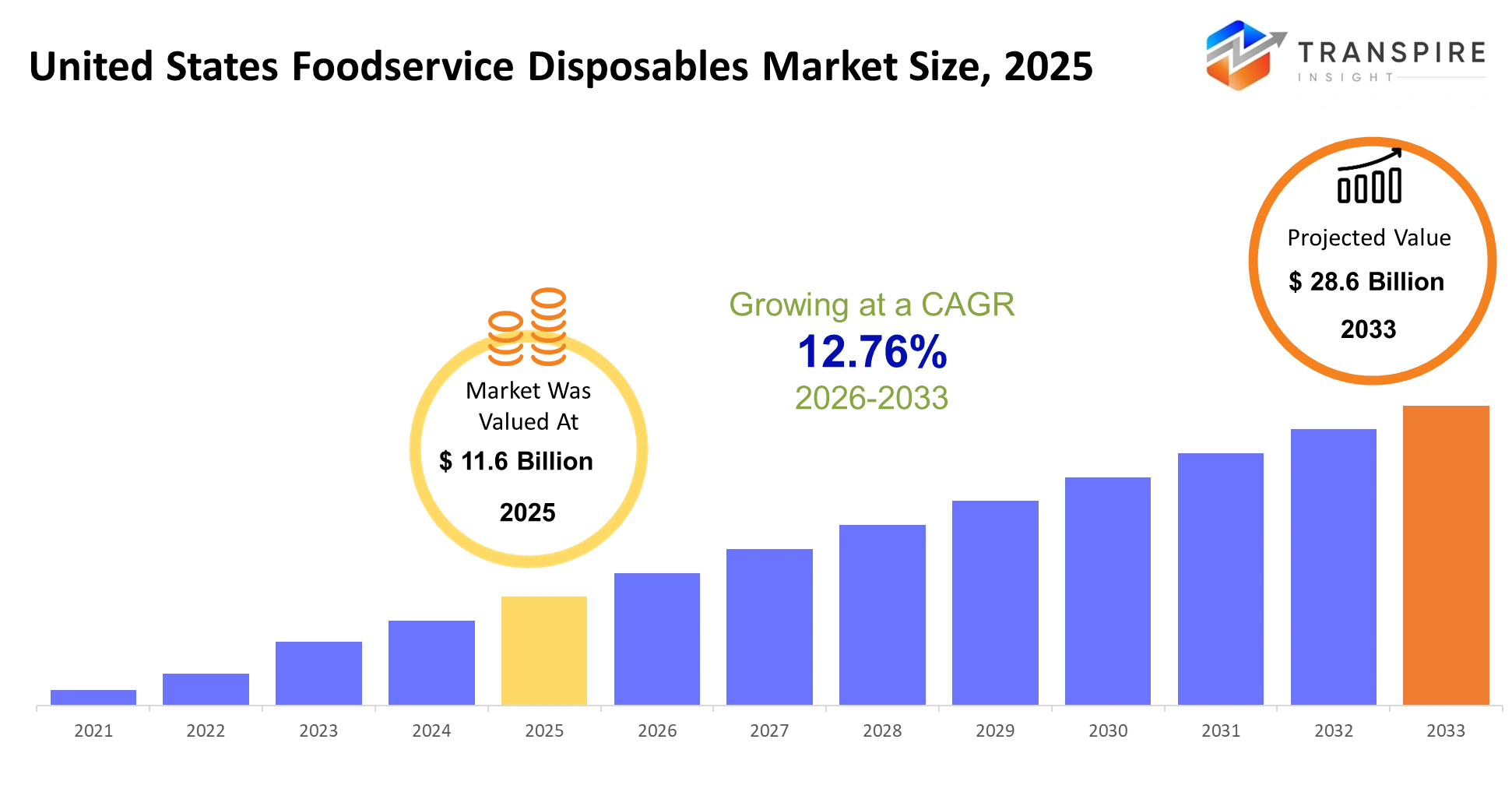
- United States Foodservice Disposables Market Size 2025: USD 11.6 Billion
- United States Foodservice Disposables Market Size 2033: USD 28.6 Billion
- United States Foodservice Disposables Market CAGR: 12.76%
- United States Foodservice Disposables Market Segments:By Product Type (Plates, Cups, Trays, Cutlery, Containers), By Material (Paper, Plastic, Aluminum, Biodegradable Materials), By End User (Restaurants, Cafes, Catering Services).
To learn more about this report,  Download Free Sample Report
United States Foodservice Disposables Market Summary:
The United States Foodservice Disposables market size is estimated at USD 11.6 billion in 2025 and is anticipated to reach USD 28.6 billion by 2033, growing at a CAGR of 12.76% from 2026 to 2033. The United States foodservice disposables market is undergoing rapid changes because of two main factors which are consumer behavior shifts and the need for sustainable solutions. Customers now require single-use products that provide them with convenient solutions because takeout and delivery services plus quick-service dining have become permanent dining options. Businesses now create sustainable packaging solutions through their adoption of biodegradable and compostable materials which help them meet both regulatory requirements and customer preferences. The current foodservice industry relies on disposable products which manufacturers are developing through new design approaches and material advancements that help brands achieve their operational goals while maintaining environmentally friendly practices.
Key Market Trends & Insights:
- The use of conventional plastic disposable products has been restricted by multiple state and local laws. Manufacturers are now required to create new products which meet regulations while being environmentally friendly.
- Companies create user-friendly products by developing designs that protect against leaks and withstand high temperatures while maintaining their structural integrity. The system enables food to remain fresh during delivery because it provides better performance.
- Restaurants nowadays use personalized disposable products because they help establish their brand identity and strengthen their connections with customers. The printed packaging system enables brands to increase their visibility while delivering a distinctive dining experience.
- The production costs of materials for paper and plastic and alternative materials will change because their prices vary at different times. Manufacturers face difficulties in setting competitive prices because of this situation.
- The post-pandemic period has increased awareness about hygiene which has resulted in higher demand for single-use products that offer perceived sanitary advantages. Consumers consider both safety and cleanliness when selecting food packaging materials.
United States Foodservice Disposables Market Segmentation
By Product Type
- Plates: Across foodservice establishments disposable plates serve as essential dining equipment which handles fast food service and event catering needs. Customers now prefer sustainable products which offer greater strength and environmental benefits through their paper and plant-based fiber construction. The product serves as a perfect solution for restaurants because customers can use it to eat at the restaurant or take their food home.
- Cups: Cafes and restaurants and events all use disposable cups to serve hot and cold drinks. The new insulation system together with the new leak-proof technology provides customers with an improved experience. The segment now moves toward recyclable and compostable materials as businesses try to create sustainable solutions that meet their operational needs.
- Trays: Quick-service restaurants and cafeterias depend on trays because they provide an efficient solution for serving multiple food items. People now prefer product designs which combine light weight characteristics with high durability standards. Eco-friendly tray options have entered the market because manufacturers want to achieve their sustainability targets while producing trays that offer easy operation.
- Cutlery: People keep using disposable cutlery because it provides them with hygienic food service options that they can dispose of after use. People now prefer wooden and biodegradable products over plastic items. The new market segment development requires customers to select products based on their product strength and usability and their environmentally friendly features.
- Containers: Food containers play a critical role in takeout and delivery services because they help maintain food freshness while keeping food secure during transit. Customers now demand products which prevent leaks and maintain internal temperatures. Sustainable materials have become the preferred choice for businesses because they need to comply with environmental regulations and meet customer needs.

To learn more about this report, Download Free Sample Report
By Material
- Paper: The use of paper-based disposables is increasing because these products can be both recycled and biodegraded. The material serves common purposes as plates and cups and packaging. Businesses select paper because it helps them achieve environmentally friendly goals while they work to develop products which can withstand water and heat and maintain their strength.
- Plastic: People continue to use plastic materials because they remain strong and flexible and affordable. People now face restrictions on plastic usage because of rising environmental issues and new regulations. To maintain their market position companies now develop recyclable plastic products while decreasing their total plastic usage.
- Aluminum: Aluminum disposables are preferred by catering services because their strong material and ability to maintain heat make them suitable for serving food to customers at remote locations. The product becomes more attractive because it can be recycled. The product provides baking operations with special benefits because its high-quality design and long-lasting properties make it perfect for certain food service needs.
- Biodegradable Materials: The adoption of biodegradable materials as eco-friendly options for disposable products has increased their market presence. The products decompose through natural processes because they contain plant-based materials which include bagasse and cornstarch. The market segment has grown because both businesses and consumers now prefer environmentally friendly products that still provide necessary operational capabilities.
By End User
- Restaurants: Restaurants operate all their takeout and delivery operations using disposable products which number among their most essential items. The restaurants search for solutions which combine cost efficiency with product durability to preserve their food safety standards. The restaurant industry has now adopted sustainable disposable solutions because this method enables them to comply with environmental regulations while enhancing their brand image among environmentally conscious customers.
- Cafes: Cafes use disposable cups and lids and cutlery as their main serving materials for beverages and snacks. The popularity of coffee has increased which has resulted in higher demand for coffee products. The majority of cafes are moving towards recyclable and compostable materials because they want to attract customers who care about the environment while decreasing their environmental impact.
- Catering Services: Catering services use disposable products at their large events because their work needs both convenient items and efficient tools. The business requires products which can endure multiple food types while maintaining both strength and visual appeal. The clients want sustainable products which meet their aesthetic requirements and environmental standards so they choose eco-friendly disposables.
Country Insights
The United States foodservice disposables market shows a constant combination of three elements which include convenience and innovative products and sustainable solutions. The country maintains high demand for single-use products because its people have established a strong dining culture which includes eating out and ordering takeaway and using food delivery services. Urban areas exhibit higher consumption rates because their residents live active lifestyles whereas suburban regions show increasing consumption through their expanding quick-service restaurants and online delivery services.
The market landscape undergoes transformation because people become more environmentally conscious. States across the country enacted laws which restrict single-use plastic items so businesses will start using environmentally friendly paper and biodegradable products. Consumers choose to support brands which practice sustainability in their operations.
Continuous development of packaging products through new design methods and advanced durability features and reduced manufacturing costs allows companies to maintain their market position. The United States market development proceeds toward achieving an equilibrium between three factors which include customer convenience and product functionality and sustainable environmental practices.
Recent Development News
In July 2025, Rising Concerns Over Single-Use Plastics in Food Delivery: People in the United States need to find better ways of producing and using disposable packaging because they have increased their environmental awareness. The public is starting to notice reusable container pilot programs which provide a better solution than standard disposable products.
In October 2025, Sysco Maintained Growth Outlook Amid Market Shifts: The U.S. foodservice supply chain keeps changing its operations because of rising prices and new consumer dining patterns. Higher-income consumers maintain their restaurant dining activities which results in consistent growth for disposable product usage.
|
Report Metrics |
Details |
|
Market size value in 2025 |
USD 11.6 Billion |
|
Market size value in 2026 |
USD 12.34 Billion |
|
Revenue forecast in 2033 |
USD 28.6 Billion |
|
Growth rate |
CAGR of 12.76% from 2026 to 2033 |
|
Base year |
2025 |
|
Historical data |
2021 – 2024 |
|
Forecast period |
2026 – 2033 |
|
Report coverage |
Revenue forecast, competitive landscape, growth factors, and trends |
|
Country scope |
United States |
|
Key company profiled |
Dart Container Corporation, Huhtamaki Oyj, Georgia-Pacific LLC, Berry Global Inc., Pactiv Evergreen Inc., International Paper Company, Genpak LLC, Duni Group, Sabert Corporation, Vegware Ltd., BioPak Pty Ltd., Eco-Products Inc., Novolex Holdings LLC, Reynolds Consumer Products Inc., Amcor PLC. |
|
Customization scope |
Free report customization (country, regional & segment scope). Avail customized purchase options to meet your exact research needs. |
|
Report Segmentation |
By Product Type (Plates, Cups, Trays, Cutlery, Containers), By Material (Paper, Plastic, Aluminum, Biodegradable Materials), By End User (Restaurants, Cafes, Catering Services). |
Key United States Foodservice Disposables Company Insights
The United States foodservice disposables market operates as a competitive environment where businesses attempt to differentiate themselves through their innovations and sustainability efforts and their ability to maintain low operational costs. The major industry players make investments in environmentally friendly materials which include biodegradable and compostable products to meet the emerging regulatory requirements and changing consumer demands. Companies are improving their product durability through design enhancements which will help them achieve better results in takeaway and delivery operations. The combination of strategic restaurant partnerships and food chain alliances enables companies to strengthen their market position while their research and development activities sustain industry growth through product innovation.
Company List
- Dart Container Corporation
- Huhtamaki Oyj
- Georgia-Pacific LLC
- Berry Global Inc.
- Pactiv Evergreen Inc.
- International Paper Company
- Genpak LLC
- Duni Group
- Sabert Corporation
- Vegware Ltd.
- BioPak Pty Ltd.
- Eco-Products Inc.
- Novolex Holdings LLC
- Reynolds Consumer Products Inc.
- Amcor PLC.
United States Foodservice Disposables Market Report Segmentation
By Product Type
- Plates
- Cups
- Trays
- Cutlery
- Containers
By Material
- Paper
- Plastic
- Aluminum
- Biodegradable Materials
By End User
- Restaurants
- Cafes
- Catering Services
Frequently Asked Questions
Find quick answers to common questions.
The Approximate United States Foodservice Disposables Market size for the Market will be USD 28.6 Billion in 2033.
The key Segments of the United States Foodservice Disposables Market are By Product Type (Plates, Cups, Trays, Cutlery, Containers), By Material (Paper, Plastic, Aluminum, Biodegradable Materials), By End User (Restaurants, Cafes, Catering Services).
Major Players in the United States Foodservice Disposables Market are Dart Container Corporation, Huhtamaki Oyj, Georgia-Pacific LLC, Berry Global Inc., Pactiv Evergreen Inc., International Paper Company, Genpak LLC, Duni Group, Sabert Corporation, Vegware Ltd., BioPak Pty Ltd., Eco-Products Inc., Novolex Holdings LLC, Reynolds Consumer Products Inc., Amcor PLC.
The Current Market Size of the United States Foodservice Disposables Market is USD 11.6 Billion in 2025.
The United States Foodservice Disposables Market CAGR is 12.76%.
- Dart Container Corporation
- Huhtamaki Oyj
- Georgia-Pacific LLC
- Berry Global Inc.
- Pactiv Evergreen Inc.
- International Paper Company
- Genpak LLC
- Duni Group
- Sabert Corporation
- Vegware Ltd.
- BioPak Pty Ltd.
- Eco-Products Inc.
- Novolex Holdings LLC
- Reynolds Consumer Products Inc.
- Amcor PLC.
Recently Published Reports
-
Apr 2026
Bottled Water Market
Bottled Water Market Size, Share & Analysis Report By Product Type (Still Bottled Water, Carbonated Bottled Water, Functional Bottled Water, and Others), By Packaging (PET, Cans, and Others), By Sales Channel (Supermarkets/Hypermarkets, Convenience Stores/Drug Stores, Grocery Stores/Club Stores, Foodservice, and Others) and Geography (North America, Europe, Asia-Pacific, Middle East and Africa, South and Central America), 2021 - 2032
-
Apr 2026
Color Cosmetic Packaging Market
Color Cosmetic Packaging Market Size, Share & Analysis Report By Application (Mascara Packaging, Liquid Packaging, and Liquid Face), By Type (Tubes & Bottles, Pens & Markers, Compacts & Containers, and Droppers & Pumps), and Geography (North America, Europe, Asia-Pacific, Middle East and Africa, South and Central America), 2021 - 2031
-
Apr 2026
External Microphone For Camera Market
External Microphone For Camera Market Size, Share & Analysis Report By Type (Shotgun Microphone, Lavalier Microphone, and Others), By Application (Digital Camera, Professional Video Camera, and Others), and Geography (North America, Europe, Asia-Pacific, Middle East and Africa, South and Central America), 2021 - 2031
-
Apr 2026
Foot Orthotic Insoles Market
Foot Orthotic Insoles Market Size, Share & Analysis Report By Type (Pre-fabricated, and Custom-made), By Material (Thermoplastic, Composite Carbon Fiber, and Others), By Distribution Channel (Drug Stores, Hospitals & Clinics, and Others), and Geography (North America, Europe, Asia-Pacific, Middle East and Africa, South and Central America), 2021 - 2031