
Middle East and Africa Medicated Shampoo Market Size & Forecast:
- Middle East and Africa Medicated Shampoo Market Size 2025: USD 564.3 Million
- Middle East and Africa Medicated Shampoo Market Size 2033: USD 828.8 Million
- Middle East and Africa Medicated Shampoo Market CAGR: 4.96%
- Middle East and Africa Medicated Shampoo Market Segments: By Product Type (Anti-Dandruff Shampoo, Anti-Fungal Shampoo, Anti-Hair Loss Shampoo, Psoriasis Treatment Shampoo, Herbal Medicated Shampoo, Others); By Ingredient (Ketoconazole, Zinc Pyrithione, Coal Tar, Salicylic Acid, Selenium Sulfide, Others); By Distribution Channel (Pharmacies, Online Retail, Supermarkets, Specialty Stores, Others); By End User (Men, Women, Children, Others)
To learn more about this report,  Download Free Sample Report
Middle East and Africa Medicated Shampoo Market Summary
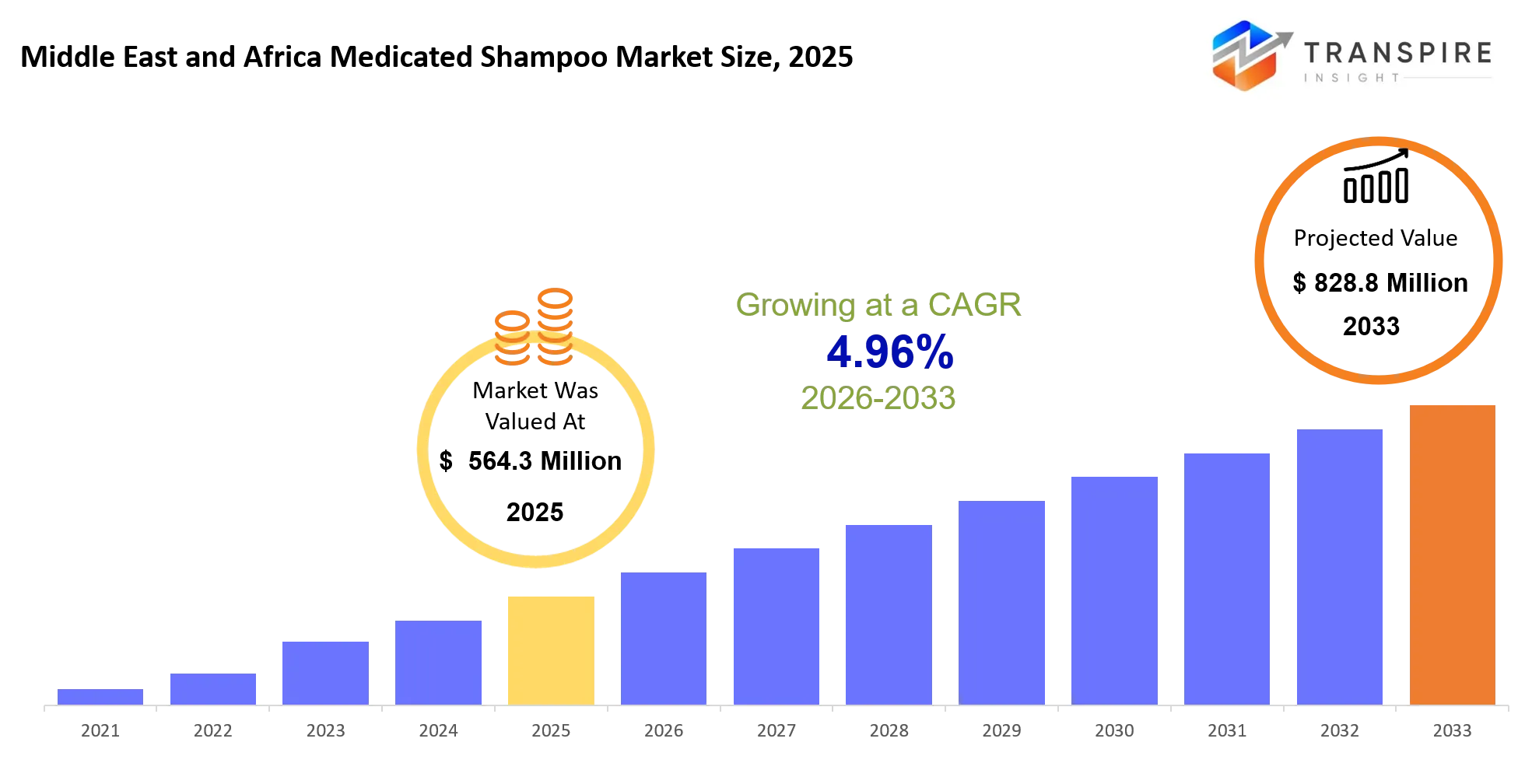
The Middle East and Africa Medicated Shampoo Market was valued at USD 564.3 Million in 2025. It is forecast to reach USD 828.8 Million by 2033. That is a CAGR of 4.96%over the period.
The Middle East and Africa medicated shampoo market sort of does a practical health- minded job, mainly by treating scalp issues like dandruff, seborrheic dermatitis, fungal infections, psoriasis, and that annoying, ongoing scalp irritation. In other words, these shampoos let consumers handle recurring problems that regular everyday shampoos often don’t really fix, so they turn into a key piece of dermatology-led hair care and also a routine for over the counter treatment.
In the last five years, things have moved away from plain anti dandruff mixes and toward solutions that are clinically validated for scalp care, with ingredients like ketoconazole, selenium sulfide, salicylic acid, and piroctone olamine showing up more often. One big reason for this was the fast growth of pharmacy e-commerce plus digital health channels during , and then after the COVID 19 period which made access easier to therapeutic hair care products across the region. Customers are now a bit more tuned to targeted treatment, not only “cosmetic” hair care, so manufacturers seem to be putting more energy into dermatologically tested formulations and wider premium scalp health ranges. This whole shift is, in practice boosting product penetration, also helping push higher average selling prices , and it opens new revenue routes via pharmacies, online retail, and specialist healthcare outlets too.
Key Market Insights
- So, the Middle East and Africa Medicated Shampoo market is expected to grow—kinda steadily—from USD 564.3 million in 2025 to USD 828.8 million by 2033.
- Meanwhile Saudi Arabia, UAE, and South Africa together contribute an estimated 45%+ of the regional market revenue, mostly because retail plus pharmacy infrastructure is more developed there , yes a bit stronger than elsewhere.
- Looking closer at what people actually use, the dandruff and seborrheic dermatitis slice is still the biggest one, holding over 50% market share.
- This is largely supported by the broad adoption of ketoconazole and zinc-based formulations, which are kind of the go-to for many consumers and pharmacies.
- On the channel side, online and e-pharmacy routes have expanded by more than 20% since 2021, so access to dermatologist-recommended products gets easier, especially across urban areas, and that matters.
- Even with that growth, pharmacy and drugstore distribution is staying in front as the leading sales channel, bringing in around 40% of regional medicated shampoo revenue.
- At the same time psoriasis-focused treatment shampoos are the fastest-moving product category through 2033 , largely as diagnosis rates keep improving.
- Adults are nearly 70% of consumption, mainly due to a higher incidence of recurring scalp issues and pollution-related irritation.
- And between 2022 and 2025, premium scalp-care products featuring salicylic acid, piroctone olamine, and botanical actives picked up a lot of extra traction in the market.
- Some of the major participants—Johnson & Johnson, GSK, Sanofi, Unilever, and Procter & Gamble—are leaning into clinically validated formulations plus regional expansion.
- They’re also building strategic partnerships with dermatologists, digital pharmacies, and healthcare retailers, which is becoming, pretty quickly, a key competitive edge across the Middle East and Africa Medicated Shampoo Market.
What are the Key Drivers, Restraints, and Opportunities in the Middle East and Africa Medicated Shampoo Market?
The main driver behind market growth is basically the rising clinical care for scalp problems via over-the-counter therapeutic products. In the past ten years, healthcare providers across Gulf nations and big African economies have pushed wider access to dermatology, so more people are getting diagnosed with dandruff, seborrheic dermatitis, fungal infections, and psoriasis. Since customers are looking for answers that actually show medical efficacy, sales of ketoconazole-based and selenium sulfide-based items keep beating regular cosmetic shampoos. That pattern also feeds into higher shelf prices and stronger pharmacy channel revenue, which is kind of a direct effect.
Still, the biggest restraint stays the same, which is the relatively high cost of premium medicated formulations when you compare them with everyday hair care products. This is not just a random issue either, it’s more structural, because active pharmaceutical ingredients, regulatory compliance needs, and clinical testing requirements add up and raise production costs. In several African markets, healthcare spending is limited, and disposable incomes are lower, so many consumers don’t fully adopt premium therapeutic options. As a result, market penetration stays weaker, and revenue growth gets delayed.
On the opportunity side, there’s a clear convergence happening between dermatology and personalized scalp care. Manufacturers are rolling out scalp health products that are kinda more or less tuned to specific conditions , different hair types, and yes even the environmental vibe. Along the way, digital consults , online pharmacies, and AI assisted scalp diagnostic tools are opening up new routes for these personalized treatment suggestions that people can actually use. Saudi Arabia, the UAE , and South Africa are building stronger digital health ecosystems, and it could really set the scene for next generation therapeutic hair care solutions, as well as better take up of premium products through 2033 .
What Has the Impact of Artificial Intelligence Been on the Middle East and Africa Medicated Shampoo Market?
Artificial intelligence is slowly, and kinda quietly, changing the way medicated shampoo manufacturers work, from how they develop new formulations, to how they handle supply chains and sort of talk with consumers. More and more companies are leaning on AI driven analytics to see what shoppers actually buy , catch fresh scalp wellness problems early, and tweak their product lineup faster than before. With machine learning in the mix, they can sift through big piles of data from online reviews, pharmacy sales, and even dermatology consults, so they can spot gaps in what’s currently being treated and then refine formulation development in a more targeted way.
AI also helps behind the scenes, especially when it comes to keeping operations running smoothly across manufacturing plants. Predictive maintenance tools watch production equipment in real time, which means less unexpected downtime and, in turn, better overall manufacturing performance. Then in research and development, advanced analytics support faster evaluation of ingredient mixtures, helping teams test options sooner. That can shorten the product development timeline and also lower formulation costs, which is usually a big deal for teams under budget pressure.
From a commercial angle, AI scalp analysis features are becoming more common through mobile apps and digital consultation platforms. Instead of broad recommendations, these tools can deliver more personalized product suggestions based on what they detect. As a result, treatment matching tends to improve, and consumers often feel more understood, which can raise satisfaction. Over time, that can support repeat purchases and, in many cases,stronger brand loyalty.
Still, AI adoption has its limits. A lot of regional manufacturers don’t yet have the digital infrastructure, the large consumer datasets, or the specialized technical know-how needed to deploy advanced AI effectively. Also the integration costs can stay high, especially for smaller companies operating across developing African markets, which slows widespread rollout even though the technology may have a strong long term upside.
Key Market Trends
- Since 2021, pharmacy e-commerce sales have gone up quite a bit, and honestly it’s been messing with the way consumers get to medicated scalp care products.
- From 2022 onward, products that include ketoconazole plus salicylic acid seem to have gained more than 15% extra shelf presence across the bigger retail chains, kind of like they suddenly showed up everywhere, sooner than expected.
- Dermatologist-endorsed formulations also started taking a larger slice of the premium product launches between 2021 and 2025. \
- At the same time, online scalp health consultations expanded across the Gulf countries, which has helped improve conversion rates for therapeutic hair care purchases, even if some people still browse around first.
- Manufacturers meanwhile increased their spending on sulfate-free medicated shampoos by roughly 20% compared with the pre pandemic product lineups.
- And natural actives, like tea tree oil and neem, shifted from being kind of niche to more mainstream treatment formulations.
- There’s also this trend where companies combine anti-dandruff effectiveness with hair strengthening perks, to encourage repeat users, not just one time trials.
- Retailers have been expanding dedicated scalp care sections too, making premium treatment products easier to spot in most urban markets.
- After 2023, strategic partnerships between dermatologists and consumer brands became more common, which seems to boost clinical credibility.
- Finally, regional companies started pushing stronger product localization strategies to handle climate linked scalp issues that show up often in arid Middle Eastern environments.
Middle East and Africa Medicated Shampoo Market Segmentation
By Product Type
The product type segment sort of shows the different therapeutic shampoo categories people use to handle scalp issues and keep long term scalp well-being. Anti-Dandruff Shampoo takes a major spot, mostly because recurring dandruff is still one of the most common problems on scalps across the region, you know. With regular use, flakes get under control , along with itching and that general discomfort, so this category ends up being the go-to option in both pharmacy and retail settings.
Anti-Fungal Shampoo sees strong demand because it works well against fungal scalp infections that really do need a more targeted approach. Anti-Hair Loss Shampoo also draws attention from consumers who want something that supports hair retention while also giving the scalp a better conditioning feel. Psoriasis Treatment Shampoo stays relevant for symptom management tied to long term scalp disorders, and Herbal Medicated Shampoo benefits from the increased curiosity around plant based formulations plus those traditional ingredients. There are also others, like specialized treatment products created for specific scalp concerns, and dermatological needs that need careful handling.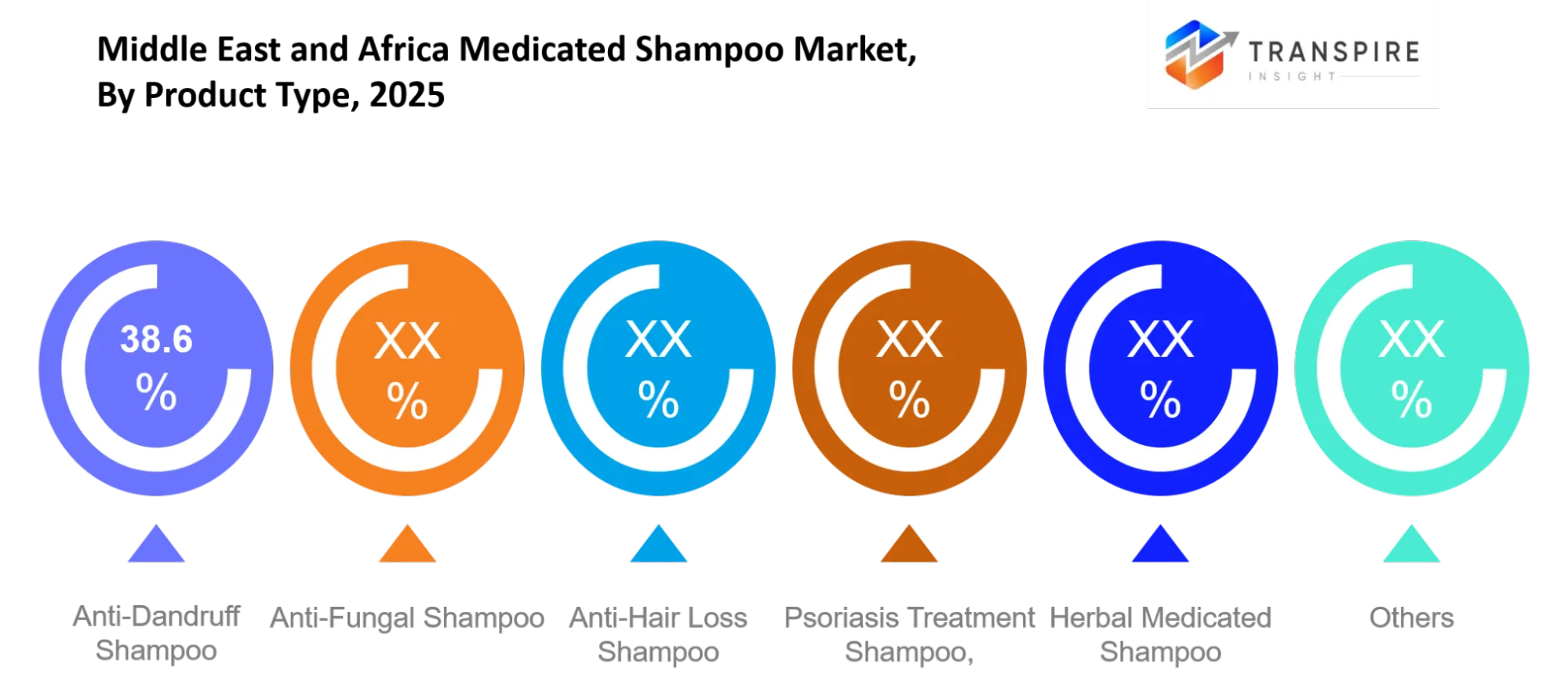
To learn more about this report, Download Free Sample Report
By Ingredient
The ingredient part really shows the active components that are used to deliver therapy benefits and, somehow, improve treatment outcomes. Ketoconazole still keeps a solid share because its strong antifungal properties do a lot , helping with dandruff and different scalp infections. Also, the steady recommendations from healthcare professionals keep supporting broad adoption across several treatment categories.
Zinc Pyrithione is still a commonly picked ingredient, mainly for how it works to control dandruff related symptoms and help keep scalp balance. Coal Tar keeps going for people dealing with chronic scalp issues that need longer term symptom control, basically. Salicylic Acid helps with exfoliation and clears away the extra scalp buildup. Meanwhile Selenium Sulfide stays valuable for keeping fungal activity in check and lowering scalp irritation. Other options include newer active ingredients and mixed formulations meant to improve treatment performance and make the whole user experience feel better.
By Distribution Channel
The distribution channel segment kind of shows how people reach therapeutic scalp-care products in different buying situations. Pharmacies are still the leading channel , because professional guidance , credible branding, and hands-on treatment focused solutions tend to shape what consumers decide on. Strong pharmacy networks keep helping with visibility too, and they add a sense of trust.
Online retail keeps expanding , since digital platforms make it easier to access a broader assortment of therapeutic hair-care products. Supermarkets stay relevant in this mix by giving accessibility and routine purchasing chances during normal day to day shopping. Specialty stores also pull in shoppers who are looking for premium formulations, plus more precise product recommendations. Other options include independent retailers , healthcare outlets, and alternative sales avenues, all of which help keep product availability steady for diverse consumer groups.
By End User
The end user segment is basically about the wider consumer groups that end up using medicated shampoos , both for actual scalp treatment and for ongoing maintenance stuff. Men are a big chunk of this because they tend to use therapeutic products pretty often, especially when it comes to dandruff management, scalp irritation, and yeah hair thinning concerns. At the same time, product innovation that keeps speaking to male grooming needs helps keep consumption moving steadily in this slice
Women also take a meaningful portion , since scalp health is being folded into everyday personal care routines more and more. Children need specialized formulations that are made to handle scalp conditions but still keep a gentle approach for younger users. And then you have others , like consumers with unusual dermatological requirements , or more specialized treatment needs. If product diversification keeps going, it should help broader adoption across all these end user categories, without too much friction.
What are the Key Use Cases Driving the Middle East and Africa Medicated Shampoo Market?
The main, dominant use case is the treatment of dandruff and seborrheic dermatitis , kinda , because these issues are widespread. Together they end up driving the largest part of overall product consumption, most people need ongoing management not really a one-time fix. Pharmacy recommended, medicated shampoos basically stay the go-to option for recurring symptoms , and most consumers stick with that solution.
Past dandruff management, medicated shampoos are also showing up more often for fungal scalp infections, psoriasis, and long-term scalp inflammation. You can see hospitals, dermatology clinics, and specialist healthcare providers frequently suggesting these products as part of wider treatment regimens, especially across urban healthcare markets where access is higher.
What’s starting to emerge next includes preventive scalp-health management and personalized treatment programs, helped along by digital diagnostics. Premium consumers are also leaning into scalp-care routines meant to cut down irritation, preserve microbiome balance , and deal with environmental stressors like heat, humidity , and pollution , which opens up some new growth avenues during the forecast period.
|
Report Metrics |
Details |
|
Market size value in 2025 |
USD 564.3 Million |
|
Market size value in 2026 |
USD 590.5 Million |
|
Revenue forecast in 2033 |
USD 828.8 Million |
|
Growth rate |
CAGR of 4.96% from 2026 to 2033 |
|
Base year |
2025 |
|
Historical data |
2021 - 2024 |
|
Forecast period |
2026 - 2033 |
|
Report coverage |
Revenue forecast, competitive landscape, growth factors, and trends |
|
Regional scope |
Middle East and Africa (Saudi Arabia, United Arab Emirates, South Africa, Rest of Middle East and Africa) |
|
Key company profiled |
Johnson & Johnson, GSK, Sanofi, Perrigo, Himalaya, Cipla, Sebapharma, Procter & Gamble, Unilever, L'Oréal, Beiersdorf, Amway, Dabur, Reckitt, Church & Dwight |
|
Customization scope |
Free report customization (country, regional & segment scope). Avail customized purchase options to meet your exact research needs. |
|
Report Segmentation |
By Product Type (Anti-Dandruff Shampoo, Anti-Fungal Shampoo, Anti-Hair Loss Shampoo, Psoriasis Treatment Shampoo, Herbal Medicated Shampoo, Others); By Ingredient (Ketoconazole, Zinc Pyrithione, Coal Tar, Salicylic Acid, Selenium Sulfide, Others); By Distribution Channel (Pharmacies, Online Retail, Supermarkets, Specialty Stores, Others); By End User (Men, Women, Children, Others) |
Which Regions are Driving the Middle East and Africa Medicated Shampoo Market Growth?
The Gulf Cooperation Council area is basically leading the market, while Saudi Arabia and the UAE make up a pretty substantial part of regional revenue. There are strong pharmacy networks, higher health-care spending, and a lot of premium healthcare products that are easy to find, which all kind of keeps the momentum. People in these places are also more inclined to grab dermatologist-recommended scalp treatments rather than sticking with more conventional hair-care options. And the advanced retail setups combined with expanding e pharmacy services, really do reinforce that regional dominance, even when the market gets crowded.
South Africa comes in as the second-largest contributor to market revenue. But unlike the Gulf, here growth is driven by a mature retail landscape and a firmly rooted consumer healthcare scene, not only by premiumization. Pharmacy penetration is strong and there is consistent demand for therapeutic personal care products, so the market stays steady. Also, South Africa works as an important distribution hub for nearby African markets, so the influence stretches out beyond just its borders.
The rest of Africa is expected to show the fastest growth through 2033. Healthcare access is getting better, urbanization is increasing, and digital retail infrastructure is improving, so more consumers can reach medicated hair-care products. Since 2022, several countries have seen rapid expansion in pharmacy chains and online health platforms. For investors and new entrants, these changes are basically openings to build brand presence early, before the market matures and competition intensity climbs up.
Who are the Key Players in the Middle East and Africa Medicated Shampoo Market and How Do They Compete?
Market competition is kind of moderately concentrated, like a few multinational healthcare and consumer goods players control a large chunk of the regional sales. In practice, companies tend to go head to head using clinical effectiveness, dermatologist endorsements, how far they can distribute, and how fast they innovate their products. The biggest and strongest brands often do this mix well: they bring pharmaceutical credibility along with huge retail and pharmacy networks, so they can catch both prescription buyers and over the counter consumers.
Johnson & Johnson sort of stands out with healthcare-led branding, and products that are backed by clinical research. It also leans on solid relationships with healthcare professionals which helps translate those medical recommendations into actual retail sales. Sanofi, on the other hand, leans more into therapeutic formulations and uses its pharmaceutical knowledge to build consumer confidence in treatment centered products. Cipla gets an edge from broad distribution in pharma, plus pricing strategies that stay competitive in emerging markets.
Unilever puts a lot of weight on scalp science innovation, and it uses a premium product stance with brands aimed at dandruff management. Procter & Gamble competes with deep retail reach, strong brand recognition, and ongoing investment in clinically tested active ingredients. Himalaya differentiates by working with herbal formulations, blending therapeutic impact with natural ingredient positioning, so it appeals to people who want alternatives to the more conventional pharmaceutical route.
Company List
- Johnson & Johnson
- GSK
- Sanofi
- Perrigo
- Himalaya
- Cipla
- Sebapharma
- Procter & Gamble
- Unilever
- L'Oréal
- Beiersdorf
- Amway
- Dabur
- Reckitt
- Church & Dwight
Recent Development News
In April 2026, L'Oréal launched Vichy Dercos in Malaysia and Singapore. The dermatology-led scalp care range targets dandruff and scalp health concerns, strengthening L'Oréal's presence in the therapeutic shampoo segment and expanding its medical haircare portfolio in emerging markets.http://www.bernama.com
In January 2026, CLEAR (Unilever) entered a global partnership with Oracle Red Bull Racing. The collaboration positions CLEAR as the team's first Official Haircare Partner and enhances brand visibility for its advanced anti-dandruff and scalp-care products across international markets.https://en.prnasia.com
What Strategic Insights Define the Future of the Middle East and Africa Medicated Shampoo Market?
The market is moving, kind of, toward a hybrid healthcare and personal-care model where scalp treatment products sit in that middle space between dermatological therapy and everyday grooming. The real driver behind all of this is the growing preference for clinically validated solutions, things that show measurable treatment outcomes rather than looking good for a day or two. Over the next five to seven years, firms that can actually blend therapeutic effectiveness with personalized scalp-health management are set to grab a disproportionate amount of value.
Still, there is one risk people sometimes overlook: the increasing dependence on a small number of pharmaceutical active ingredients. If regulators change the rules around compounds like ketoconazole or selenium sulfide, companies may end up with costly reformulations and, basically, a disrupted lineup that they were counting on. At the same time though, digital scalp diagnostics and AI-supported treatment suggestions are showing up as an opportunity, and it is still mostly untapped across the region, even though everyone talks about innovation.
Market participants should lean into partnerships with dermatologists, digital health providers, and pharmacy platforms. The organizations that manage to combine clinical credibility, personalized treatment pathways and strong omnichannel distribution will probably be the ones that expand market share most effectively through 2033.
Middle East and Africa Medicated Shampoo Market Report Segmentation
By Product Type
- Anti-Dandruff Shampoo
- Anti-Fungal Shampoo
- Anti-Hair Loss Shampoo
- Psoriasis Treatment Shampoo
- Herbal Medicated Shampoo
- Others
By Ingredient
- Ketoconazole
- Zinc Pyrithione
- Coal Tar
- Salicylic Acid
- Selenium Sulfide
- Others
By Distribution Channel
- Pharmacies
- Online Retail
- Supermarkets
- Specialty Stores
- Others
By End User
- Men
- Women
- Children
- Others
Frequently Asked Questions
Find quick answers to common questions.
The Expected Middle East and Africa Medicated Shampoo Market size for the Market will be USD 828.8 Million in 2033.
Key Segments for the Middle East and Africa Medicated Shampoo Market are By Product Type (Anti-Dandruff Shampoo, Anti-Fungal Shampoo, Anti-Hair Loss Shampoo, Psoriasis Treatment Shampoo, Herbal Medicated Shampoo, Others); By Ingredient (Ketoconazole, Zinc Pyrithione, Coal Tar, Salicylic Acid, Selenium Sulfide, Others); By Distribution Channel (Pharmacies, Online Retail, Supermarkets, Specialty Stores, Others); By End User (Men, Women, Children, Others).
Major Middle East and Africa Medicated Shampoo Market players are Johnson & Johnson, GSK, Sanofi, Perrigo, Himalaya, Cipla, Sebapharma, Procter & Gamble, Unilever, L'Oréal, Beiersdorf, Amway, Dabur, Reckitt, Church & Dwight.
The Current Middle East and Africa Medicated Shampoo Market size is USD 564.3 Million in 2025.
The Middle East and Africa Medicated Shampoo Market CAGR is 4.96% from 2026 to 2033.
- Johnson & Johnson
- GSK
- Sanofi
- Perrigo
- Himalaya
- Cipla
- Sebapharma
- Procter & Gamble
- Unilever
- L'Oréal
- Beiersdorf
- Amway
- Dabur
- Reckitt
- Church & Dwight
About the Authors

Chetan Dhatrak
I’m Chetan Dhatrak, a Senior Research Analyst at Transpire Insight, specializing in the Consumer Goods, Foods and Beverages industry. I focus on analyzing market trends, consumer behavior, competitive landscapes, and industry developments to deliver accurate, data-driven insights. My research at Transpire Insight is built on credible sources and in-depth analysis, helping businesses and readers better understand market dynamics, emerging opportunities, and evolving consumer preferences. I’m committed to creating reliable, well-researched content that supports informed decision-making and reflects the latest developments in the consumer goods and food & beverage sectors.

Chakradhar Khansole
Chakradhar serves as the Research Director at Transpire Insight, bringing over 8 years of experience in technology, innovation, and strategic market intelligence. He specializes in transforming complex market data into actionable business insights that enable organizations to make informed, growth-oriented decisions. Recognized for his strategic vision and analytical expertise, Chakradhar leads high-impact research initiatives, delivering comprehensive market assessments, competitive intelligence, and forward-looking industry analysis.
Recently Published Reports
-
Apr 2026
Bottled Water Market
Bottled Water Market Size, Share & Analysis Report By Product Type (Still Bottled Water, Carbonated Bottled Water, Functional Bottled Water, and Others), By Packaging (PET, Cans, and Others), By Sales Channel (Supermarkets/Hypermarkets, Convenience Stores/Drug Stores, Grocery Stores/Club Stores, Foodservice, and Others) and Geography (North America, Europe, Asia-Pacific, Middle East and Africa, South and Central America), 2021 - 2032
-
Apr 2026
Color Cosmetic Packaging Market
Color Cosmetic Packaging Market Size, Share & Analysis Report By Application (Mascara Packaging, Liquid Packaging, and Liquid Face), By Type (Tubes & Bottles, Pens & Markers, Compacts & Containers, and Droppers & Pumps), and Geography (North America, Europe, Asia-Pacific, Middle East and Africa, South and Central America), 2021 - 2031
-
Apr 2026
External Microphone For Camera Market
External Microphone For Camera Market Size, Share & Analysis Report By Type (Shotgun Microphone, Lavalier Microphone, and Others), By Application (Digital Camera, Professional Video Camera, and Others), and Geography (North America, Europe, Asia-Pacific, Middle East and Africa, South and Central America), 2021 - 2031
-
Apr 2026
Foot Orthotic Insoles Market
Foot Orthotic Insoles Market Size, Share & Analysis Report By Type (Pre-fabricated, and Custom-made), By Material (Thermoplastic, Composite Carbon Fiber, and Others), By Distribution Channel (Drug Stores, Hospitals & Clinics, and Others), and Geography (North America, Europe, Asia-Pacific, Middle East and Africa, South and Central America), 2021 - 2031