
Middle East and Africa Measurement While Drilling Market Size & Forecast:
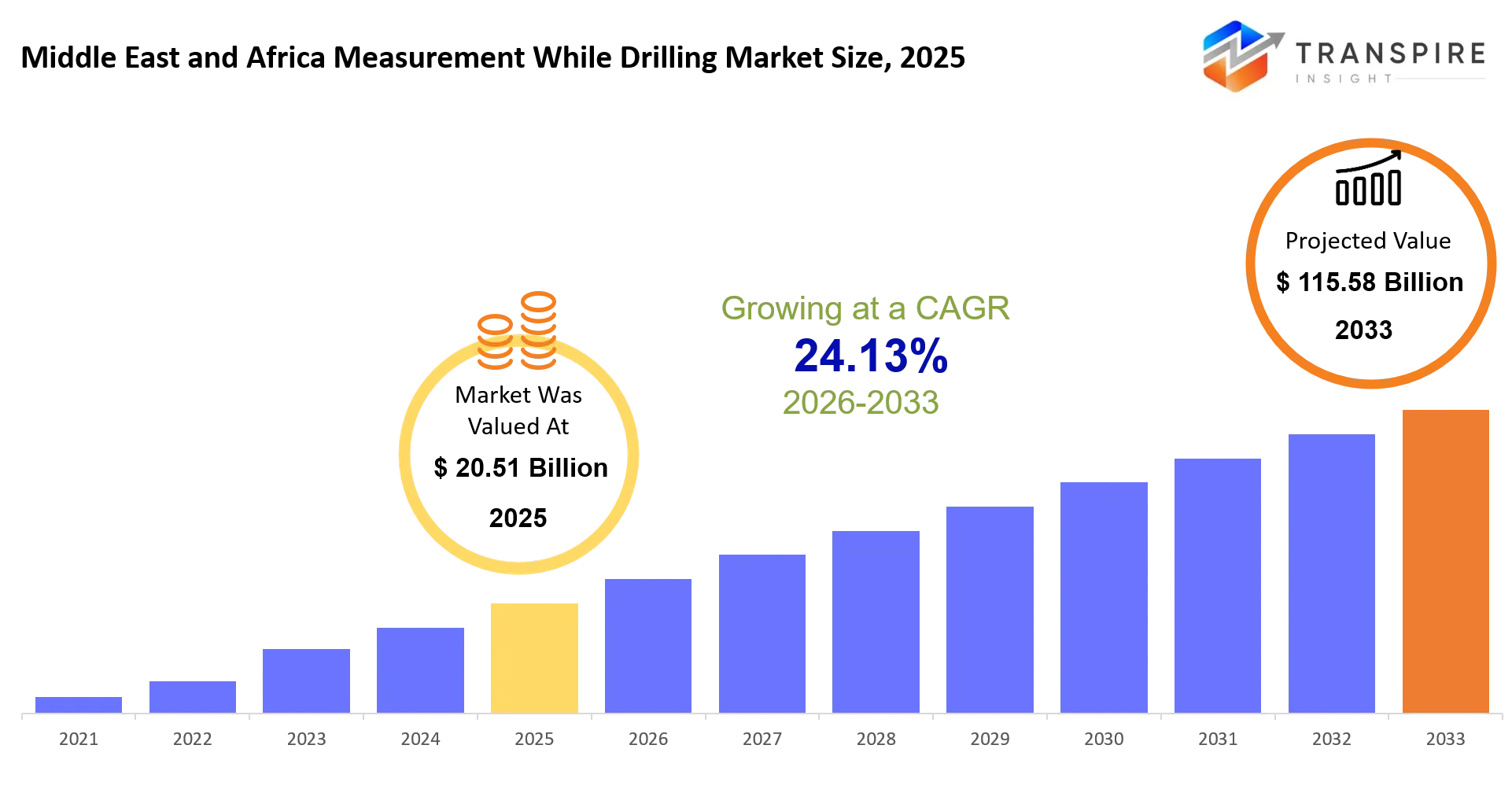
- Middle East and Africa Measurement While Drilling Market Size 2025: USD 20.51 Billion
- Middle East and Africa Measurement While Drilling Market Size 2033: USD 115.58 Billion
- Middle East and Africa Measurement While Drilling Market CAGR: 24.13%
- Middle East and Africa Measurement While Drilling Market Segments: By Tool Type (MWD Tools, LWD Tools, Rotary Steerable Systems, Mud Pulse Systems, Others); By Application (Onshore Drilling, Offshore Drilling, Directional Drilling, Others); By End User (Oil Companies, Service Providers, Others); By Technology (Telemetry Systems, Sensors, Software, Others)
To learn more about this report,  Download Free Sample Report
Middle East and Africa Measurement While Drilling Market Summary
The Middle East and Africa Measurement While Drilling Market was valued at USD 20.51 Billion in 2025. It is forecast to reach USD 115.58 Billion by 2033. That is a CAGR of 24.13% over the period.
In the Middle East and Africa Measurement While Drilling Market, drilling crews depend on in the moment subsurface intel to guide the well with pretty good accuracy while the drill bit is still chewing through rock. That kind of real-time capability lowers drilling uncertainty, helps avoid those expensive dry well scenarios, and boosts reservoir contact inside complicated geological setups like deep offshore basins, and also tight onshore shale plays. Over the last 3–5 years , the market has been moving toward digital downhole telemetry setups, so the older mechanical measurement methods are getting swapped out by sensor heavy, high speed data transmission tools. One big structural shift is the integration of automated drilling analytics directly into day to day field operations, so operators can tune drilling parameters on the fly, without waiting around. The Russia-Ukraine geopolitical disruption also lit up energy security worries, and that pushed producers across the Middle East and Africa to speed up domestic exploration and offshore expansion. So today, many operators are basically prioritizing precision drilling technologies to cut operational risk, and to raise well output, which ends up reinforcing broader commercial uptake among both national oil companies and service contractors, too
Key Market Insights
- The Middle East and Africa Measurement While Drilling market (while drilling) shows strongest adoption mostly in offshore drilling, and it contributes nearly 38% share during 2025 operations.
- In practice, Saudi Arabia and the UAE lead regional activity because they’re seeing high-value offshore rigs coming in, plus national upstream expansion programs rolling forward, kinda consistently.
- Offshore drilling is still the top application segment, but directional drilling is the one that’s growing fastest through 2033, at least that’s how the trend line looks.
- Measurement While Drilling, or MWD tools, keep a solid share since they’re widely used inside high-pressure reservoir navigation systems, and that use stays pretty steady.
- Rotary steerable systems also get picked up quicker over time, with an efficiency lift around 18–22% in complex directional wells, which is a big deal for operators.
- On the demand side, oil companies take more than 55% share, driven by national energy security priorities plus production optimization targets.
- Service providers are expanding footprint via integrated drilling-as-a-service contracts across parts of Africa and the GCC regions, so they’re not only selling tools but also managing outcomes.
- Baker Hughes, Schlumberger, and Halliburton further reinforce dominance using AI-enabled drilling automation platforms, and they keep scaling those capabilities.
- Meanwhile, telemetry systems are gaining traction too, because real-time data transmission supports better drilling accuracy and helps cut non-productive time.
- Overall the Middle East and Africa Measurement While Drilling Market also benefits from deeper water exploration investment that exceeds USD 12 billion each year, so funding keeps arriving and drilling intensity keeps rising.
What are the Key Drivers, Restraints, and Opportunities in the Middle East and Africa Measurement While Drilling Market?
The main driver behind the Middle East and Africa Measurement While Drilling market is basically the fast buildup of tricky offshore and deep onshore drilling programs, across Saudi Arabia UAE and West Africa. National oil companies have been boosting their capital spend on precise drilling systems, partly because they’ve seen repeated cost overruns in high pressure reservoirs. And this change gets a further push from real-time telemetry, along with automated directional control setups which really cut down drilling time and also reduce dry-well risk. As operators focus more on reservoir optimization, Measurement While Drilling technology ends up feeling kind of unavoidable for improving production efficiency and getting stronger asset utilization.
A notable constraint, though, is the expensive deployment and integration of advanced downhole sensor packages, especially for smaller independent operators around Africa. These systems need ongoing calibration, people with solid technical know how and also rig infrastructure that can actually support them. Unfortunately many older drilling fleets do not, so the whole thing becomes awkward. That structural issue then drags out replacement cycles, and slows adoption across the board, most visibly in low margin exploration projects where capital discipline is non-negotiable.
On the other hand there’s an emerging opportunity in digital oilfield transformation efforts across the Gulf Cooperation Council, plus offshore West Africa. When AI assisted drilling analytics gets paired with Measurement While Drilling, it supports predictive trajectory correction and reservoir mapping in real time. For instance, service providers are starting to bundle MWD tools with cloud based drilling optimization platforms, and that opens up new recurring revenue ideas plus longer term service contracts.
What Has the Impact of Artificial Intelligence Been on the Middle East and Africa Measurement While Drilling Market?
Artificial intelligence is kind of reshaping the Middle East and Africa Measurement While Drilling market by taking raw downhole sensor data and turning it into usable drilling intelligence, you know, the kind operators can actually act on. These days operators are relying more on machine learning models to automate adjustments to drilling parameters like weight on bit and rotational speed, which ends up lowering the amount of manual effort during those high-risk drilling phases. In offshore fields, AI driven setups also help with automated well trajectory correction, so the well can stay on track and maintain the right reservoir contact even when geology gets complicated.
Predictive analytics is being rolled out a lot too, to foresee tool failure and align maintenance tasks for downhole equipment. That approach has helped cut non productive drilling time, mostly by making uptime more consistent and by reducing sudden, unplanned tool swaps. In multiple offshore drilling activities, AI based optimization has lifted drilling efficiency by an estimated 12–18%, especially in high pressure wells where downtime really hurts.
That said, widespread adoption is not totally smooth. It is constrained by patchy connectivity on remote offshore rigs and by harsh desert surroundings, where real time data transmission can suffer from latency issues. There is also the integration bill, it stays high, because older drilling rigs often need major retrofitting before they can run advanced analytics platforms properly. Still, firms such as Schlumberger and Baker Hughes keep putting money into digital drilling ecosystems, blending Measurement While Drilling systems with cloud based predictive intelligence, and that helps push the sector’s long term transformation forward.
Key Market Trends
- Between 2023 and 2026 , offshore drilling modernization sort of pushed up the need for real time MWD systems across Gulf deepwater projects a lot more than before.
- In the same stretch directional drilling adoption also rose hard, mostly because operators are chasing more intricate reservoirs in Nigeria and Saudi offshore basins.
- Rotary steerable systems reportedly improved drilling accuracy by around 20 percent, which means less deviation risk when you’re dealing with high pressure formations, and that’s not a small thing.
- Meanwhile Baker Hughes and Halliburton rolled out broader digital drilling platforms , with AI based well trajectory control built in across the 2025 project slate.
- On top of that , telemetry upgrades replaced older mud pulse setups in about 30% of new rigs that came out after the 2024 modernization cycles.
- A bunch of national oil companies also boosted funding for automated drilling systems, aiming to cut non productive time across offshore assets, even if the schedule looks tight.
- Even sensor miniaturization helped here, since smaller tools supported deeper well monitoring and made real time formation evaluation more precise across MEA fields.
- At the same time service based drilling contracts became more common, so operators leaned toward outsourced Measurement While Drilling services instead of owning the assets themselves.
- And finally, equipment upgrades sped up with West African offshore investments, especially in Nigeria’s deepwater drilling programs following the 2024 reforms.
Middle East and Africa Measurement While Drilling Market Segmentation
By Tool Type
MWD Tools pretty much dominate the usage because they track real time drilling parameters and they are adopted everywhere, especially on offshore rigs throughout the Middle East and Africa Measurement While Drilling Market. In practice these tools help with directional control, and they also cut down drilling uncertainty when you are dealing with high pressure reservoirs. On the other hand, LWD Tools kind of provide formation evaluation while drilling, and that tends to boost reservoir mapping precision during exploration work.
Then there are Rotary Steerable Systems they keep continuous directional control, which improves efficiency when the well trajectory gets complicated. As a result you often see less drilling time overall. And Mud Pulse Systems still stay widely used, mostly because they’re a cost effective way to push telemetry transmission in conventional rigs.
There are also other advanced options such as hybrid sensor setups and integrated drilling modules. These things combine measurement plus control functions in the same workflow, sort of streamline it. That can raise drilling efficiency and data accuracy especially in deepwater operations and unconventional wells.
Overall, the Middle East and Africa Measurement While Drilling Market keeps moving toward more digital tool integration, supporting automated drilling workflows and all that.
By Application
Offshore drilling leads in the market mainly due to high investment going into deepwater oilfields, across Saudi Arabia, UAE, and West Africa. In those areas, the whole operation feels like it needs careful navigation systems, because complex geological formations are not really forgiving, and the drilling risks are high. Meanwhile onshore drilling stays pretty steady, especially in North African oilfields where the infrastructure is already mature and working. Directional drilling is also growing, in a noticeable way , as operators aim at non-vertical reservoirs and try to squeeze out better hydrocarbon recovery efficiency.
Then there are other uses too, like extended reach drilling, plus unconventional shale exploration. Those activities lean on real-time measurement systems a lot, to keep drilling accuracy on track and lower operational risk. Overall, the Middle East and Africa Measurement While Drilling market keeps expanding, even as application diversity keeps widening across different exploration environments.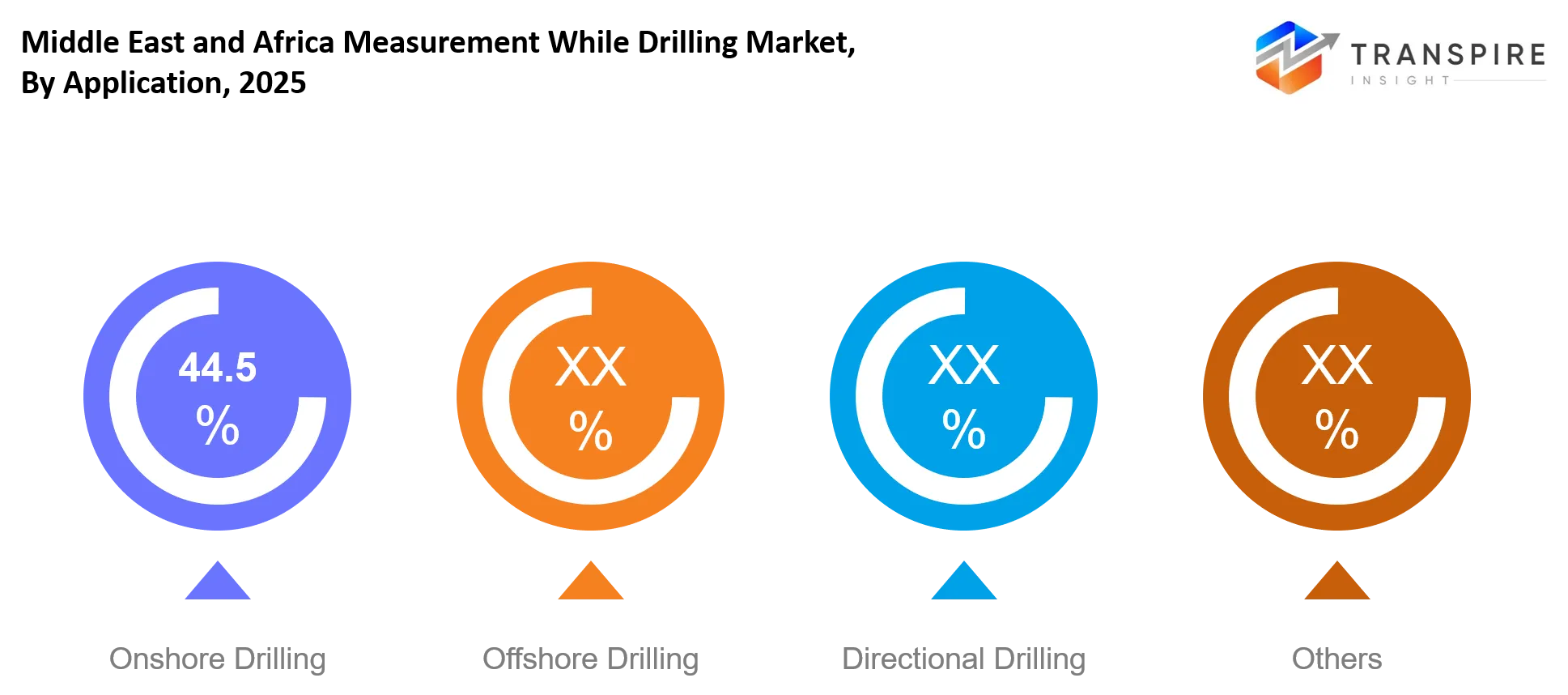
To learn more about this report, Download Free Sample Report
By End User
Oil companies kinda dominate overall demand, mostly because they keep putting serious money into upstream projects and also run national output optimization programs, so demand kind of follows that. They focus on better and more advanced drilling technologies, to raise the recovery rates, and in the same breath, to cut down operational costs too. Meanwhile, service providers are becoming a bigger slice of the picture since many operators start outsourcing drilling services, which helps them to squeeze the capex spend a bit. Those providers then bundle everything into integrated drilling solutions, with tools in the mix plus telemetry, and also analytics sort of all in one.
Beyond that, you have other end users like independent exploration firms, plus subcontracted drilling contractors. These entities are adopting modular Measurement While Drilling systems more and more, mainly so they get more operational flexibility. And the Middle East and Africa Measurement While Drilling Market is getting a lift from growing collaboration between operators and service providers, even when the approaches differ a little.
By Technology
Telemetry Systems lead, mostly because they need real time data handoff in offshore drilling areas. The sensors keep giving continuous downhole readings, and that helps a lot with directional drilling precision, in the day to day run. The software side supports drilling optimization, predictive maintenance too, and also real time decision guidance, when things shift.
Besides that, there are other approaches like cloud based analytics and hybrid control platforms. These upgrades improve operational efficiency ,and they also cut back on nonproductive time in these more complicated drilling setups. Meanwhile, the Middle East and Africa Measurement While Drilling Market keeps moving toward a fully digital drilling ecosystem, gradually.
What are the Key Use Cases Driving the Middle East and Africa Measurement While Drilling Market?
Primary demand in the Middle East and Africa Measurement While Drilling Market kind of comes from offshore directional drilling, where operators need real-time navigation control, especially in deepwater reservoirs. In practice this scenario helps keep well placement accurate, and it also lowers drilling risk when the geology is messy, like in complex strata . Secondary applications show up too, for instance extended reach drilling in onshore desert fields, plus wellbore stability monitoring for national oil companies that are stuck with long-running, mature assets. All of this tends to boost production efficiency, while also trimming operational downtime in the field.
On the emerging side, you can see automated geosteering systems, and AI-assisted reservoir mapping, where drilling choices shift dynamically based on live subsurface signals. Service providers are starting to weave these features into bundled drilling contracts, mostly so performance outcomes can look better across the board.
|
Report Metrics |
Details |
|
Market size value in 2025 |
USD 20.51 Billion |
|
Market size value in 2026 |
USD 25.46 Billion |
|
Revenue forecast in 2033 |
USD 115.58 Billion |
|
Growth rate |
CAGR of 24.13% from 2026 to 2033 |
|
Base year |
2025 |
|
Historical data |
2021 - 2024 |
|
Forecast period |
2026 - 2033 |
|
Report coverage |
Revenue forecast, competitive landscape, growth factors, and trends |
|
Regional scope |
Middle East and Africa (Saudi Arabia, United Arab Emirates, South Africa, Rest of Middle East and Africa) |
|
Key company profiled |
Schlumberger, Halliburton, Baker Hughes, Weatherford, NOV, Nabors, Archer, Expro, APS Technology, Scientific Drilling, Gyrodata, Cathedral Energy, Phoenix Technology, Jindal Drilling, Cougar Drilling |
|
Customization scope |
Free report customization (country, regional & segment scope). Avail customized purchase options to meet your exact research needs. |
|
Report Segmentation |
By Tool Type (MWD Tools, LWD Tools, Rotary Steerable Systems, Mud Pulse Systems, Others); By Application (Onshore Drilling, Offshore Drilling, Directional Drilling, Others); By End User (Oil Companies, Service Providers, Others); By Technology (Telemetry Systems, Sensors, Software, Others) |
Which Regions are Driving the Middle East and Africa Measurement While Drilling Market Growth?
Saudi Arabia and the United Arab Emirates really, kinda lead the Middle East and Africa Measurement While Drilling Market , mostly because of the huge offshore drilling infrastructure, plus really solid national energy investment programs. With upstream work at large scale, backed by national oil companies, it keeps pushing continuous deployment of more advanced drilling tech . Regulatory rules then step in, encouraging precision drilling systems so reservoir recovery efficiency can be pushed higher. On top of that, there is a well built service ecosystem, with global oilfield technology providers, and it helps lock in the regional edge.
Nigeria and Angola sit as a pretty steady secondary region, supported by ongoing offshore oil production and long-term foreign investment alliances. Instead of the Gulf region’s more high capex expansion style, these markets often depend on steady field optimization and smaller incremental drilling upgrades. In practice, oil companies here tend to favor cost-effective Measurement While Drilling solutions, just to keep production running from mature offshore assets . That whole approach forms a stable demand foundation for service providers and equipment suppliers, across years.
Meanwhile West Africa is showing the quickest growth pull, driven by newer offshore discoveries and higher foreign direct investment flowing into exploration programs. New regulatory reforms, along with licensing rounds, have sped up drilling operations in deepwater basins. Also, improvements to port infrastructure and offshore logistics make it easier to actually operate advanced drilling technologies. This fast expansion, honestly, suggests strong entry openings for technology providers during the 2026–2033 period.
Who are the Key Players in the Middle East and Africa Measurement While Drilling Market and How Do They Compete?
The Middle East and Africa Measurement While Drilling Market is sort of moderately consolidated, with the bigger global oilfield service players taking most high-value contracts , while regional contractors still push hard in more cost-sensitive drilling jobs. The fight really comes down to how good the technology performs, how accurate the real-time data is, and how well everything fits into digital drilling platforms not just price by itself.
Schlumberger and Baker Hughes go after their rivals using advanced digital drilling ecosystems. They tie Measurement While Drilling toolsets to AI based reservoir analytics, so operators get more than just a basic readout. Their focus tends to be high-end offshore work, where precision and reliability turn into better contract outcomes. On top of that, their push into West African deepwater projects keeps their regional presence more locked in.
Halliburton leans on an integrated drilling offering, where MWD systems are bundled into broader services. This is aimed at operators who want less operational hassle, and fewer moving pieces on the rig. Their edge is basically scalable service agreements across both onshore and offshore rigs, depending on what the customer needs.
Weatherford meanwhile differentiates with cost efficient directional drilling solutions, especially for mid-tier operators across Africa. NOV, on the other hand, concentrates on rig equipment integration, making sure the drilling hardware and Measurement While Drilling systems work together cleanly. Across the board, these companies tend to grow via regional partnerships, plus technology collaborations with national oil companies, even when the projects look similar on paper.
Company List
- Schlumberger (SLB)
- Halliburton
- Baker Hughes
- Weatherford International
- National Oilwell Varco (NOV)
- Nabors Industries
- Archer Limited
- Expro Group
- APS Technology
- Scientific Drilling International
- Gyrodata
- Cathedral Energy Services
- Phoenix Technology Services
- Jindal Drilling & Industries
- Cougar Drilling Solutions
Recent Development News
In November 2025, ADNOC Drilling announced the acquisition of an 80% stake in MB Petroleum Services. The transaction expands its rig fleet across Oman, Kuwait, Saudi Arabia, and Bahrain, strengthening regional drilling capacity and indirectly increasing demand for Measurement While Drilling systems used in integrated offshore and onshore operations.https://www.reuters.com
What Strategic Insights Define the Future of the Middle East and Africa Measurement While Drilling Market?
The Middle East and Africa Measurement While Drilling Market is sort of moving, not just gradually, toward fully integrated digital drilling ecosystems where real-time telemetry automation and predictive analytics end up shaping operational efficiency in a very direct way. Growth seems to be anchored more and more in offshore deepwater expansion plus national energy security programs , and those programs often push for precision drilling rather than the old volume-based exploration approach.
There’s also a less obvious risk that can quietly build up, technology concentration. In other words, if operators lean too hard on a small number of global service providers then pricing pressure and supply constraints could show up fast during geopolitical disruptions, even when demand is steady. Still, an emerging opportunity is taking shape around AI-enabled geosteering platforms in West Africa, because new offshore discoveries are basically demanding advanced reservoir navigation tools.
Market participants should pay attention to modular retrofit-friendly Measurement While Drilling systems. These would plug into legacy rigs with less hassle, supporting quicker adoption in regions where budgets are tight , while also helping capture longer-term service revenue from the whole digital drilling transformation wave.
Middle East and Africa Measurement While Drilling Market Report Segmentation
By Tool Type
- MWD Tools
- LWD Tools
- Rotary Steerable Systems
- Mud Pulse Systems
- Others
By Application
- Onshore Drilling
- Offshore Drilling
- Directional Drilling
- Others
By End User
- Oil Companies
- Service Providers
- Others
By Technology
- Telemetry Systems
- Sensors
- Software
- Others
Frequently Asked Questions
Find quick answers to common questions.
The Expected Middle East and Africa Measurement While Drilling Market size for the Market will be USD 115.58 Billion in 2033.
Key Segments for the Middle East and Africa Measurement While Drilling Market are By Tool Type (MWD Tools, LWD Tools, Rotary Steerable Systems, Mud Pulse Systems, Others); By Application (Onshore Drilling, Offshore Drilling, Directional Drilling, Others); By End User (Oil Companies, Service Providers, Others); By Technology (Telemetry Systems, Sensors, Software, Others).
Major Middle East and Africa Measurement While Drilling Market Players are Schlumberger, Halliburton, Baker Hughes, Weatherford, NOV, Nabors, Archer, Expro, APS Technology, Scientific Drilling, Gyrodata, Cathedral Energy, Phoenix Technology, Jindal Drilling, Cougar Drilling.
The Current Middle East and Africa Measurement While Drilling Market size is USD 20.51 Billion in 2025.
The Middle East and Africa Measurement While Drilling Market CAGR is 24.13% from 2026 to 2033.
- Schlumberger (SLB)
- Halliburton
- Baker Hughes
- Weatherford International
- National Oilwell Varco (NOV)
- Nabors Industries
- Archer Limited
- Expro Group
- APS Technology
- Scientific Drilling International
- Gyrodata
- Cathedral Energy Services
- Phoenix Technology Services
- Jindal Drilling & Industries
- Cougar Drilling Solutions
About the Authors

Avinash Kumar
I’m Avinash Kumar, a Senior Research Analyst at Transpire Insight, with expertise in the Electronics and Semiconductor and Energy & Power industry. My work focuses on analyzing emerging technologies, market trends, industry developments, and innovation across these sectors. I specialize in transforming complex technical and market insights into clear, research-backed content that helps professionals, businesses, and decision-makers stay informed. Through continuous industry research and data-driven analysis, I strive to deliver accurate, reliable, and practical perspectives on the latest advancements shaping the semiconductor and energy landscape.

Chakradhar Khansole
Chakradhar serves as the Research Director at Transpire Insight, bringing over 8 years of experience in technology, innovation, and strategic market intelligence. He specializes in transforming complex market data into actionable business insights that enable organizations to make informed, growth-oriented decisions. Recognized for his strategic vision and analytical expertise, Chakradhar leads high-impact research initiatives, delivering comprehensive market assessments, competitive intelligence, and forward-looking industry analysis.
Recently Published Reports
-
Apr 2026
Active Power Filter Market
Active Power Filter Market Size, Share & Analysis Report By Type (Shunt Active Power Filters, Series Active Power Filter, Hybrid Active Power Filter), By Application (Harmonics Mitigation, Reactive Power Compensation, Voltage Regulation, Power Factor Correction), By Phase (Single Phase, Three Phase), By End-User Industry (Manufacturing, Healthcare, Commercial, Automotive, Oil and Gas, Others), and Geography (North America, Europe, Asia-Pacific, Middle East and Africa, South and Central America), 2021 - 2031
-
Apr 2026
Electrical Transformer Market
Electrical Transformer Market Size, Share & Analysis Report By Core (Closed, Shell, and Berry), By Insulation (Gas, Oil, Solid, Air, and Other), By Phase (Single, and Three), By Rating (100 MVA to 500 MVA, 501 MVA to 800 MVA, and 801 MVA to 1200 MVA), and Geography (North America, Europe, Asia-Pacific, Middle East and Africa, South and Central America), 2021 – 2031
-
Apr 2026
Hydraulic Piston Pumps Market
Hydraulic Piston Pumps Market Size, Share & Analysis Report By Type (Axial Piston Pumps, Radial Piston Pumps), By Operating Pressure (Low Pressure, Medium Pressure, High Pressure), By Application (Construction, Mining, Agriculture, Automotive, Oil & Gas, Industrial Machinery, Others), By End-User (OEMs, Aftermarket), and Geography (North America, Europe, Asia-Pacific, Middle East and Africa, South and Central America), 2021 – 2031
-
Apr 2026
Laboratory Gas Generators Market
Laboratory Gas Generators Market Size, Share & Analysis Report By Product (Nitrogen Gas Generator, Hydrogen Gas Generator, Zero Air Gas Generator, Purge Gas Generator, TOC Gas Generators, Others), By Application (Gas Chromatography, Liquid Chromatography-mass Spectrometry (LC-MS), Gas Analyzers, Others), By End-user (Life Science, Chemical & Petrochemical, Food & Beverage, Others), and Geography (North America, Europe, Asia-Pacific, Middle East and Africa, South and Central America), 2021 – 2031