
Middle East and Africa Healthcare Mobile Application Market Size & Forecast:
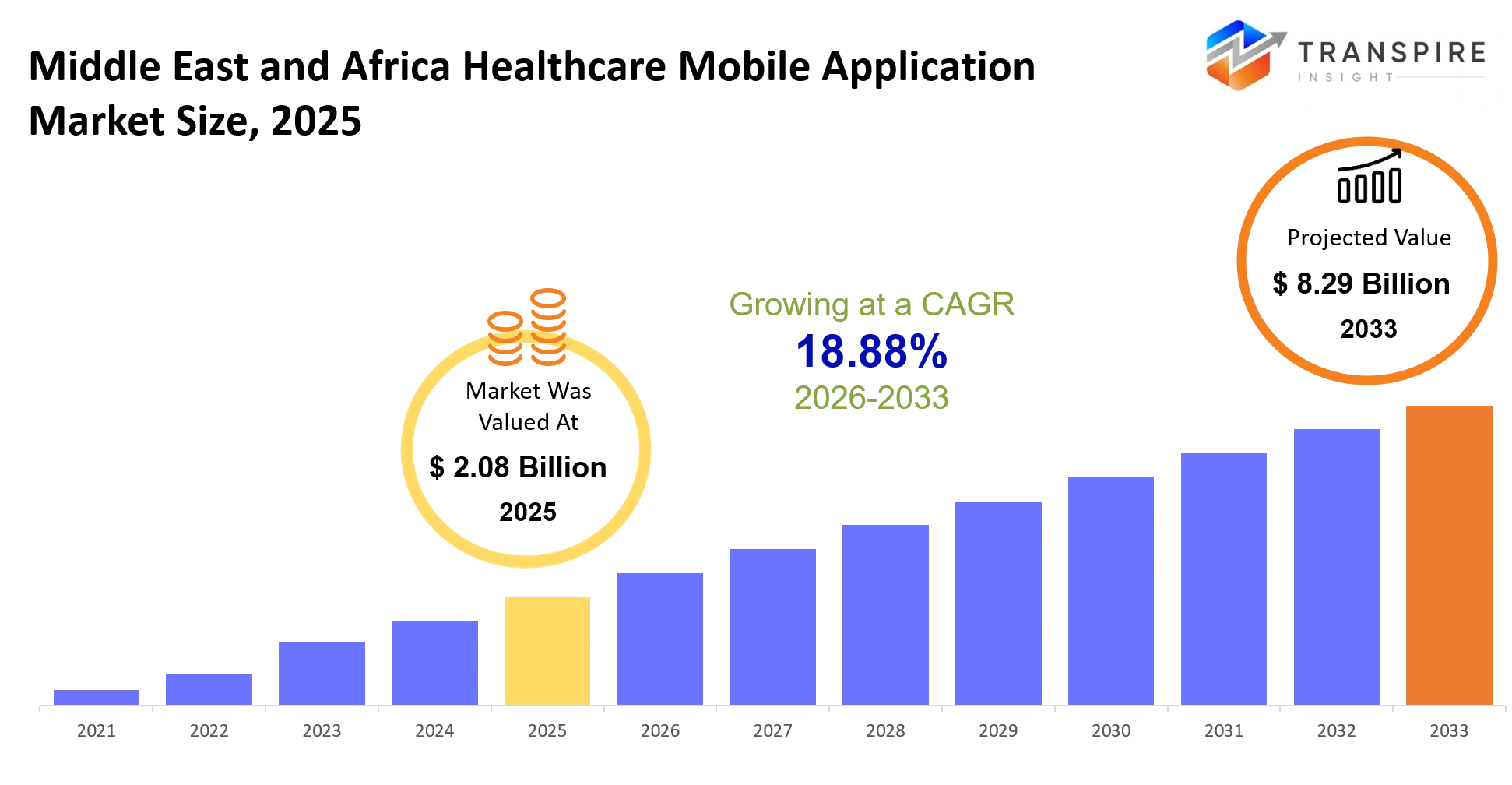
- Middle East and Africa Healthcare Mobile Application Market Size 2025: USD 2.08 Billion
- Middle East and Africa Healthcare Mobile Application Market Size 2033: USD 8.29 Billion
- Middle East and Africa Healthcare Mobile Application Market CAGR: 18.88%
- Middle East and Africa Healthcare Mobile Application Market Segments: By App Type (Telemedicine Apps, Fitness Apps, Medication Management Apps, Wellness Apps, Diagnostic Apps, Mental Health Apps, Pregnancy Apps, Others); By Platform (Android, iOS, Web-Based, Hybrid Platforms, Wearables Integration, Cloud Platforms, Cross-Platform Apps, Others); By Function (Consultation, Monitoring, Scheduling, EHR Access, Prescription Management, Health Tracking, Emergency Assistance, Others); By End User (Patients, Hospitals, Clinics, Physicians, Diagnostic Centers, Insurance Providers, Healthcare Organizations, Others).
Middle East and Africa Healthcare Mobile Application Market Summary
The Middle East and Africa Healthcare Mobile Application Market was valued at USD 2.08 Billion in 2025. It is forecast to reach USD 8.29 Billion by 2033. That is a CAGR of 18.88% over the period.
The Middle East and Africa Healthcare Mobile Application Market kinda plays a practical role in bridging patients, healthcare providers, pharmacies, and diagnostic services, all through smartphones and connected devices. In general these applications help cut down access hurdles, support remote discussions and check-ins, improve medication follow-through and enable continuous health monitoring in areas where healthcare infrastructure is still a bit uneven. Mobile health platforms have turned into a kind of extension of the usual healthcare delivery, especially when we look at underserved, and rural communities.
Over the last five years, the market has moved away from basic things like appointment setting and fitness tracking, toward more complete digital health ecosystems. Those ecosystems blend telemedicine, electronic health records, wearable connectivity, and AI assisted health insights together . The COVID-19 pandemic was a big push here too, kind of a catalyst, it accelerated regulatory backing for virtual care and digital consultations across several countries in the Middle East and Africa. Because of that shift, user engagement increased, and healthcare providers started putting more effort and money into mobile-first patient services. With smartphone adoption increasing and governments promoting digital health strategies, healthcare mobile applications are slowly becoming central to how care gets delivered, and yes they also open up new revenue paths, through subscriptions, virtual consultations remote monitoring, and integrated healthcare services.
Key Market Insights
- Gulf Cooperation Council countries are about 42% of the regional revenue in 2025, like, backed by national digital healthcare initiatives that keep moving forward.
- Sub-Saharan Africa, though, is the fastest-moving regional market through 2033, because of mobile-first healthcare adoption, plus internet access that is still expanding, steadily.
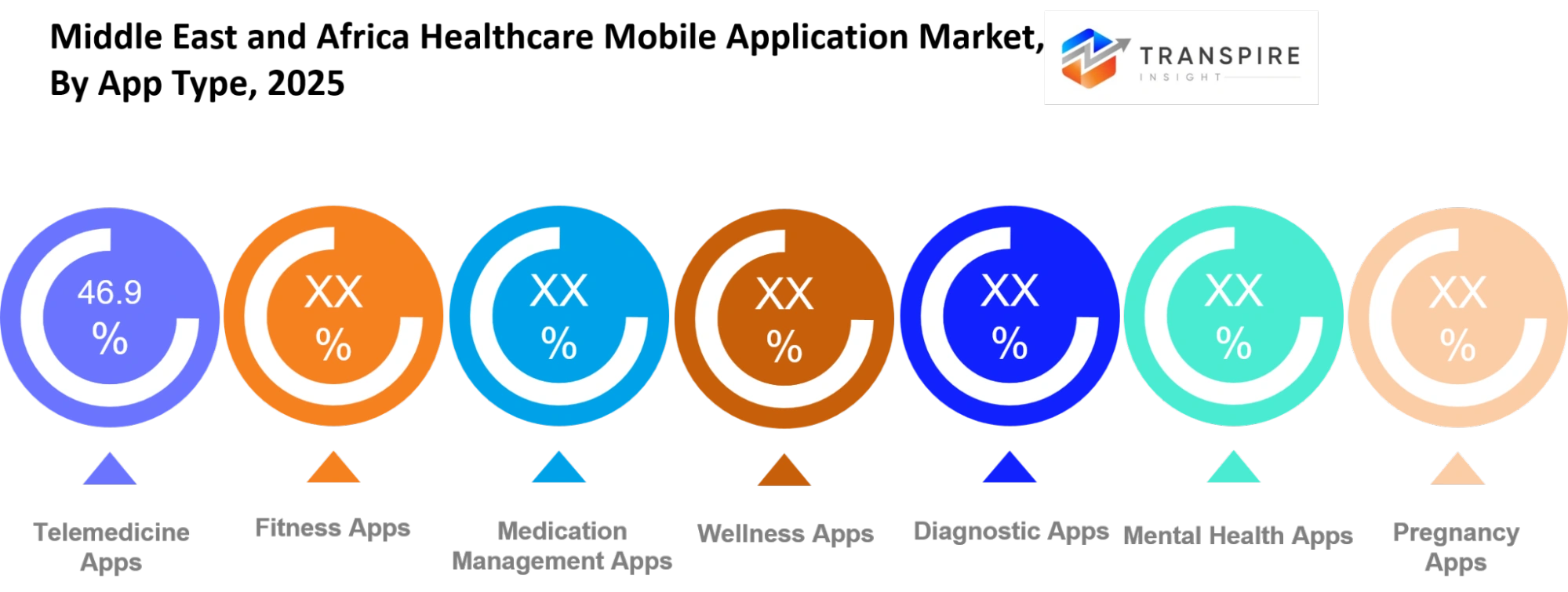
- In the Middle East and Africa Healthcare Mobile Application Market, telemedicine apps pretty much lead the pack with almost 30% market share in 2025. Fitness applications, meanwhile, sit in the second place, driven by more people using wearable devices and also preventive health programs that seem to be gaining traction.
- Mental health applications are projected to grow more than 20% per year throughout the forecast period, and, honestly, that part looks pretty consistent.
- Remote consultation services generate over 28% of application-based healthcare interactions across the whole region. Also, patient users contribute more than 55% of total application utilization, so they are basically the main end-user segment.
- AI-enabled symptom assessment and digital triage tools have increased by more than 35% since 2022 across the major healthcare platforms.
- Companies like Teladoc Health, Practo, Ada Health, Apple, and Samsung Electronics are pushing digital health ecosystems forward through AI and wearable integration, not in a small way.
- And the strategic partnerships between healthcare providers and app developers, well, those have accelerated regional market penetration since 2023, more or less.
What are the Key Drivers, Restraints, and Opportunities in the Middle East and Africa Healthcare Mobile Application Market?
The most powerful growth driver is the fast digitalization of healthcare delivery, kind of backed by government-supported digital health programs and also the broader smartphone reach. In practice, Countries like Saudi Arabia, the UAE, and South Africa have pushed bigger spending into telehealth infrastructure, electronic medical records, and digital patient engagement systems. That change lets healthcare providers reach wider patient groups, while cutting down on day-to-day costs tied to face to face consultations. So, mobile health applications tend to build higher user stickiness and recurring money via virtual consultations, continuous monitoring services, and subscription based healthcare offerings.
Still, data privacy worries, plus uneven digital infrastructure, remain the key obstacles blocking market growth. A lot of African markets are still stuck with connectivity limits, uneven regulatory setups, and different cybersecurity expectations. And honestly, these issues are structural, because health data safeguarding needs steady investment in legislation, secure cloud environments, and healthcare IT know how. The end effect is slower uptake from both hospitals and patients, which then reduces revenue chances, and delays the wider digital healthcare blend.
A major chance shows up in AI-enabled remote patient monitoring, and in chronic disease management platforms. Diabetes, cardiovascular disease, and hypertension levels keep climbing across the region, so demand for ongoing monitoring keeps coming. Mobile applications linked with wearable devices can deliver near real-time health signals, auto alerts, and even predictive risk views.
What Has the Impact of Artificial Intelligence Been on the Middle East and Africa Healthcare Mobile Application Market?
Artificial intelligence is, in a way, reshaping healthcare mobile apps throughout the Middle East and Africa, mainly by boosting clinical decision support, patient interaction, and operational effectiveness. These days AI‑powered chatbots, along with virtual assistants kind of take over appointment scheduling, symptom screening, and routine patient questions, so healthcare staff get less of the paperwork load. At the same time, digital health platforms are using natural language processing more and more, helping people move toward the right care routes and making services feel more reachable.
Machine learning models are also feeding predictive healthcare applications. In practice, they look at patient histories, wearable device readings, medication adherence behaviors, and biometric signals to spot possible health risks before things slide into clinical deterioration. That predictive analytics angle lets clinicians step in earlier, which can improve treatment results while also easing down hospitalization rates. On top of that, AI‑driven recommendation systems personalize wellness plans, medication reminders, and preventive care routines, sometimes in surprisingly practical ways.
Then there is the part about advanced analytics, which has improved how healthcare resources are used, patient retention, and the overall performance of remote monitoring. A number of organizations say they’re seeing better patient engagement and quicker clinical responses after introducing AI-enabled mobile platforms. Still, the adoption picture is not perfect because high implementation costs slow progress, healthcare data systems are fragmented, and there isn’t always access to rich, high-quality localized datasets. And without steady clinical data plus regulatory baselines, AI models may hit accuracy limitations across the many different care settings found in the region.
Key Market Trends
- Telemedicine use went up a lot after 2020 , as healthcare systems pushed harder into virtual consult infrastructure, so yeah it kinda grew fast.
- Wearable connected health applications also jumped by over 30% from 2022 to 2025 across the big regional markets.
- AI based symptom assessment tools moved out of the pilot stage and into regular, mainstream healthcare use since 2023.
- Cloud hosted healthcare platforms then took more than 40% of brand new digital health deployments in 2025, basically becoming the default choice for a lot of teams.
- Mobile prescription management solutions expanded too, especially once pharmacies started integrating digital fulfillment services, almost like it became expected.
- Healthcare providers increasingly leaned toward hybrid care models, blending remote check ins with in person visits , not fully one or the other.
- Digital mental health platforms gained real momentum, because healthcare systems broadened access to behavioral health , and that made a difference.
- Apple Health and Samsung Health strengthened their ecosystem partnerships with healthcare providers and insurers , and that helped them stick around longer.
- Cross platform application development rose as developers tried to reach more people across Android and iOS devices.
- Finally, government backed digital health initiatives sped up interoperability and electronic health record integration programs.
Middle East and Africa Healthcare Mobile Application Market Segmentation
By App Type
Telemedicine apps make up a big chunk of digital health services, since remote consults let patients reach healthcare professionals without actually traveling, or all the hassle that comes with it. Fitness applications keep drawing in people via activity tracking, exercise planning, and wellness checkins. Medication management apps also keep going, mostly because they help with treatment continuity using reminders, prescription logging, and dosage watching. Wellness applications, at the core, tend to steer people toward prevention, nutrition coaching, habit upgrades, and coping with stress.
Then there are diagnostic applications, which help someone sort through symptoms, keep track of certain conditions and also get that early, preliminary kind of health assessment. Mental health applications bring counseling access, meditation aids, emotional well-being programs, plus behavioral assistance services. Pregnancy applications assist with prenatal monitoring, pregnancy tracking, maternal education, and then postnatal guidance too. Beyond that, other apps can include disease-focused management tools, rehabilitation support systems, healthcare education platforms, and specialized clinical solutions, depending on what’s needed.
By Platform
Android is still the most widely used platform really, because smartphone penetration is broad and the prices stay affordable across several regional markets. iOS keeps a strong standing, especially among premium healthcare users and higher income consumer groups, you know that kind of segment. Web-based platforms keep showing up for healthcare organizations that want broader access, mainly through desktop setups and browser environments. Hybrid platforms let developers push a consistent feel across many operating systems, while also helping control development costs and all that.
Wearable integration is getting more and more critical now, since healthcare apps connect with smartwatches, and also fitness trackers in the mix. Cloud platforms back secure data storage, remote accessibility and scalable healthcare services. Cross-platform applications help providers reach larger audiences without dropping functionality across different devices. Other options exist too, like specialized enterprise healthcare systems, and newer digital health interfaces that are starting to appear in more places.
By Function
Consultation functions kind of count as a big category since virtual healthcare exchanges are still the main thing people use as a practical use case. Monitoring functions, help with chronic disease oversight , patient observation and remote care delivery too. Scheduling capabilities are there to make it easier for appointment booking provider coordination and day to day healthcare workflow management. Electronic health record access on the other hand, makes information more available for patients as well as healthcare professionals.
Prescription management functions support medication tracking, renewals, and coordination with the pharmacy. Health tracking features keep an eye on fitness levels biometric indicators and general wellness metrics. Emergency assistance functions, handle quick communication and urgent healthcare response moments. There are also other functions like patient education, insurance integration diagnostic support, and healthcare administration services.
By End User
Patients are the biggest user crowd, mainly because mobile healthcare apps sort of, directly aid personal healthcare handling and make services easier to reach. Hospitals, more and more, roll out mobile solutions to boost patient participation, make operations run smoother, and strengthen healthcare delivery. Clinics lean on healthcare applications for scheduling visits, day to day communication, and follow-up care services too, kind of like the whole workflow is kept together. Physicians also get real benefits from mobile platforms since they can do remote check ins and keep an eye on patient progress.
Diagnostic centers apply digital tools so they can arrange testing times, send results in a timely way, and stay in touch with patients during the process. Insurance providers, in turn, bring healthcare applications onboard to help with claims management, wellness programs, and to keep policyholders actively involved. Healthcare organizations deploy these mobile solutions to improve service coordination and healthcare accessibility, without too much friction. Beyond that, other end users include employers, government health agencies, academic institutions, and community healthcare providers, all using the same general idea but for different needs.
What are the Key Use Cases Driving the Middle East and Africa Healthcare Mobile Application Market?
Remote consultation services still seem to be the main thing driving adoption, like that is what most people are using first. Healthcare providers use mobile platforms to link up with patients in city areas and also in more rural settings, so travel needs go down a bit and healthcare access feels better overall. This application keeps pulling in a lot of interest because virtual care can bring patients in sooner while also cutting down the day to day operating expenses.
Medication adherence and chronic disease oversight are also picking up momentum across many healthcare systems. Hospitals, clinics, and physicians are starting to lean more on mobile applications to follow treatment plans, send reminders, and watch patient progress. Remote monitoring solutions additionally help with diabetes care and cardiovascular disease support, you could say.
More new or emerging use cases include AI assisted health screening, digital mental wellness support, and wearable connected preventive healthcare programs. These kinds of apps are still kind of early in their adoption, but they carry strong long term value as digital health ecosystems become more mature across the region.
|
Report Metrics |
Details |
|
Market size value in 2025 |
USD 2.08 Billion |
|
Market size value in 2026 |
USD 2.47 Billion |
|
Revenue forecast in 2033 |
USD 8.29 Billion |
|
Growth rate |
CAGR of 18.88% from 2026 to 2033 |
|
Base year |
2025 |
|
Historical data |
2021 - 2024 |
|
Forecast period |
2026 - 2033 |
|
Report coverage |
Revenue forecast, competitive landscape, growth factors, and trends |
|
Regional scope |
United States; Canada; Mexico; United Kingdom; Germany; France; Italy; Spain; Denmark; Sweden; Norway; China; Japan; India; Australia; South Korea; Thailand; Brazil; Argentina; South Africa; Saudi Arabia; United Arab Emirates |
|
Key company profiled |
Teladoc Health, Practo, Babylon Health, Ada Health, Medisafe, Fitbit, Apple Health, Samsung Health, WebMD, Amwell, Doctolib, Halodoc, HealthifyMe, Ping An Good Doctor, MyChart. |
|
Customization scope |
Free report customization (country, regional & segment scope). Avail customized purchase options to meet your exact research needs. |
|
Report Segmentation |
By App Type (Telemedicine Apps, Fitness Apps, Medication Management Apps, Wellness Apps, Diagnostic Apps, Mental Health Apps, Pregnancy Apps, Others); By Platform (Android, iOS, Web-Based, Hybrid Platforms, Wearables Integration, Cloud Platforms, Cross-Platform Apps, Others); By Function (Consultation, Monitoring, Scheduling, EHR Access, Prescription Management, Health Tracking, Emergency Assistance, Others); By End User (Patients, Hospitals, Clinics, Physicians, Diagnostic Centers, Insurance Providers, Healthcare Organizations, Others). |
Which Regions are Driving the Middle East and Africa Healthcare Mobile Application Market Growth?
The Gulf region is basically at the front of market growth because of heavy healthcare spending, pretty advanced digital infrastructure, and government-backed efforts to modernize healthcare. Like, in places such as Saudi Arabia and the UAE, they keep pouring money into telemedicine, electronic health records, and smart health platforms. Basically, national digital health strategies nudge healthcare providers to actually use mobile technologies, not just talk about it. Strong connectivity infrastructure plus supportive regulation is what really helps keep the Gulf leading.
South Africa is the second biggest contributor, and it feels different from Gulf markets due to a mix of private healthcare investment and already established healthcare technology ecosystems. Ongoing support for healthcare modernization keeps the market more stable over the long run. Meanwhile healthcare organizations continue weaving digital patient engagement tools into the current ways care is delivered. That sort of steady balance supports steady revenue, without big swings.
Then Sub-Saharan Africa shows the strongest growth momentum. More people have mobile internet access, fintech is pushing digital adoption, and the usual healthcare accessibility problems have made mobile-first models more practical. More recent investments in telecommunications infrastructure, along with digital healthcare startup activity, have opened up faster market opportunities. So overall, it creates appealing conditions for technology providers and investors who want long-term expansion from 2026 through 2033.
Who are the Key Players in the Middle East and Africa Healthcare Mobile Application Market and How Do They Compete?
Competition still looks kind of fragmented, like there are global digital health players in the mix, but also regional healthcare technology companies, all going at it somewhat differently. The main battlegrounds usually are technology innovation, AI integration, user experience quality, healthcare partnerships and, also ecosystem building. Lately, firms seem to stand out less by just having broad application portfolios alone, and more by offering specialized healthcare services, in a more targeted way that actually resonates.
Teladoc Health keeps its focus on virtual healthcare delivery, plus remote patient management. Its advantage feels tied to a large telemedicine infrastructure, and integrated healthcare services that work together in practice. Practo, on the other hand, differentiates itself through healthcare provider networks, appointment management solutions, and patient engagement tools, which aim to support healthcare accessibility across multiple markets.
Ada Health competes with AI driven symptom assessment tools, using advanced capabilities to help with patient triage and self care guidance. Meanwhile, Apple tends to strengthen its position by leaning heavily on ecosystem integration, connecting health applications, wearable devices, and health data management. Samsung Electronics uses smartwatch connectivity, and biometric monitoring features to widen its digital health services footprint.
Even with all of that, these companies are still pushing investments in partnerships, AI technologies, wearable integration and regional expansion initiatives to reinforce competitive positioning and keep user engagement up, at least in the markets where they operate.
Company List
- Babylon Health
- Fitbit
- Apple Health
- Samsung Health
- WebMD
- Amwell
- Doctolib
- Halodoc
- HealthifyMe
- Ping An Good Doctor
- MyChart
Recent Development News
In March 2026, Teladoc Health launched enhanced AI-powered virtual care and patient navigation capabilities. The update improved patient triage efficiency and personalized healthcare recommendations across digital care pathways.
Source: https://www.teladochealth.com/newsroom/ (Teladoc Health)
In January 2026, Samsung Health expanded connected health monitoring features across wearable devices and mobile health platforms. The development strengthened continuous health tracking and preventive care capabilities for digital health users.
Source: https://news.samsung.com/global (Samsung Newsroom)
In October 2025, Apple introduced expanded health monitoring and wellness capabilities through updates to Apple Health and connected devices. The launch enhanced health data integration and personalized wellness management across digital healthcare ecosystems.
Source: https://www.apple.com/newsroom/ (Apple Newsroom)
What Strategic Insights Define the Future of the Middle East and Africa Healthcare Mobile Application Market?
The market is kind of moving, toward integrated digital health ecosystems where mobile apps become the main “front door” for healthcare access instead of just being supplementary gadgets. Telemedicine keeps expanding, AI based health analytics is getting more common, and wearable connectivity along with digital patient engagement platforms will keep shaping the direction over the long haul. At the same time, government digital health strategies plus wider healthcare modernization programs will stay as important structural drivers, even if people talk about other things more loudly.
There is also a risk that is less visible, more quiet. Fragmentation can show up across healthcare regulations, interoperability standards, and data privacy frameworks. If national healthcare systems keep differing, it can slow the regional scaling of platforms and push up compliance costs for the technology providers. And, market concentration among the bigger digital ecosystem providers may create competitive pressure on smaller participants, like they get squeezed in a not so obvious way.
For an emerging opportunity, though, something substantial is forming around AI enabled chronic disease management solutions that link with wearable devices and remote monitoring networks. The organizations that invest early in localized AI capabilities and interoperable healthcare platforms could end up taking most of the future value. Market participants should really prioritize partnerships with healthcare providers, insurers, and government health agencies, to build integrated healthcare ecosystems that can support long-term growth.
Middle East and Africa Healthcare Mobile Application Market Report Segmentation
By App Type
- Telemedicine Apps
- Fitness Apps
- Medication Management Apps
- Wellness Apps
- Diagnostic Apps
- Mental Health Apps
- Pregnancy Apps
- Others
By Platform
- Android
- iOS
- Web-Based
- Hybrid Platforms
- Wearables Integration
- Cloud Platforms
- Cross-Platform Apps
- Others
By Function
- Consultation
- Monitoring
- Scheduling
- EHR Access
- Prescription Management
- Health Tracking
- Emergency Assistance
- Others
By End User
- Patients
- Hospitals
- Clinics
- Physicians
- Diagnostic Centers
- Insurance Providers
- Healthcare Organizations
- Others
Frequently Asked Questions
Find quick answers to common questions.
The expected Middle East and Africa Healthcare Mobile Application Market size for the market will be USD 8.29 Billion in 2033.
Key segments for the Middle East and Africa Healthcare Mobile Application Market are By App Type (Telemedicine Apps, Fitness Apps, Medication Management Apps, Wellness Apps, Diagnostic Apps, Mental Health Apps, Pregnancy Apps, Others); By Platform (Android, iOS, Web-Based, Hybrid Platforms, Wearables Integration, Cloud Platforms, Cross-Platform Apps, Others); By Function (Consultation, Monitoring, Scheduling, EHR Access, Prescription Management, Health Tracking, Emergency Assistance, Others); By End User (Patients, Hospitals, Clinics, Physicians, Diagnostic Centers, Insurance Providers, Healthcare Organizations, Others).
Major Middle East and Africa Healthcare Mobile Application Market players are Teladoc Health, Practo, Babylon Health, Ada Health, Medisafe, Fitbit, Apple Health, Samsung Health, WebMD, Amwell, Doctolib, Halodoc, HealthifyMe, Ping An Good Doctor, MyChart.
The Middle East and Africa Healthcare Mobile Application Market size is USD 2.08 Billion in 2025.
The Middle East and Africa Healthcare Mobile Application Market CAGR is 18.88% from 2026 to 2033.
- Teladoc Health
- Practo
- Babylon Health
- Ada Health
- Medisafe
- Fitbit
- Apple Health
- Samsung Health
- WebMD
- Amwell
- Doctolib
- Halodoc
- HealthifyMe
- Ping An Good Doctor
- MyChart
About the Authors

Pankaj Ghogare Patil
I am Pankaj Ghogare Patil, a Senior Research Analyst at Transpire Insight, specializing in the Pharmaceutical, Chemicals & Materials, Healthcare IT, and Biotechnology industry. My expertise lies in conducting comprehensive market research, analyzing industry trends, evaluating competitive landscapes, and translating complex data into actionable insights. At Transpire Insight, I closely follow emerging technologies, regulatory developments, and market innovations to create accurate, well-researched, and informative content that helps businesses and professionals make informed decisions. I am committed to producing credible, evidence-based articles that reflect industry best practices while making technical topics accessible and valuable for a broad audience.

Chakradhar Khansole
Chakradhar serves as the Research Director at Transpire Insight, bringing over 8 years of experience in technology, innovation, and strategic market intelligence. He specializes in transforming complex market data into actionable business insights that enable organizations to make informed, growth-oriented decisions. Recognized for his strategic vision and analytical expertise, Chakradhar leads high-impact research initiatives, delivering comprehensive market assessments, competitive intelligence, and forward-looking industry analysis.
Recently Published Reports
-
Apr 2026
AI in Diabetic Retinopathy Market
AI in Diabetic Retinopathy Market Size, Share & Analysis Report By Type (Screening AI Systems, Diagnostic AI Systems, and Predictive AI Models), By Application Segment (Hospitals, Ophthalmology Clinics, Diagnostic Centers, and Research and Development), and Geography (North America, Europe, Asia-Pacific, Middle East and Africa, South and Central America), 2021 - 2031
-
Apr 2026
Psychometric Tests Market
Psychometric Tests Market Size, Share & Analysis Report By Type (Personality Tests, Ability/Aptitude Tests, Skill/Knowledge Tests, and Others), By Application (Talent Acquisition and Talent Management), and Geography (North America, Europe, Asia-Pacific, Middle East and Africa, South and Central America), 2021 – 2031
-
Apr 2026
Rare Biological Sample Collection Market
Rare Biological Sample Collection Market Size, Share & Analysis Report By Type (Isolation Kits & Reagent, Blood Collection Tubes, and Others), By Application (Oncology, Transcriptomics, Pharmacogenomics, and Others), and Geography (North America, Europe, Asia-Pacific, Middle East and Africa, South and Central America), 2021 – 2031
-
Jul 2026
Diabetic Retinopathy Market
Diabetic Retinopathy Market Size, Share & Analysis Report By Type (Proliferative Diabetic Retinopathy, and Diabetic Macular Edema (DME)), By Treatment Type (Anti VEGF Drug, Steroid Implants, Laser Surgeries, and Vitrectomy), and Geography (North America, Europe, Asia-Pacific, Middle East and Africa, South and Central America), 2021 – 2031
Our Clients







