
Middle East and Africa Dredging Equipment Market Size & Forecast:
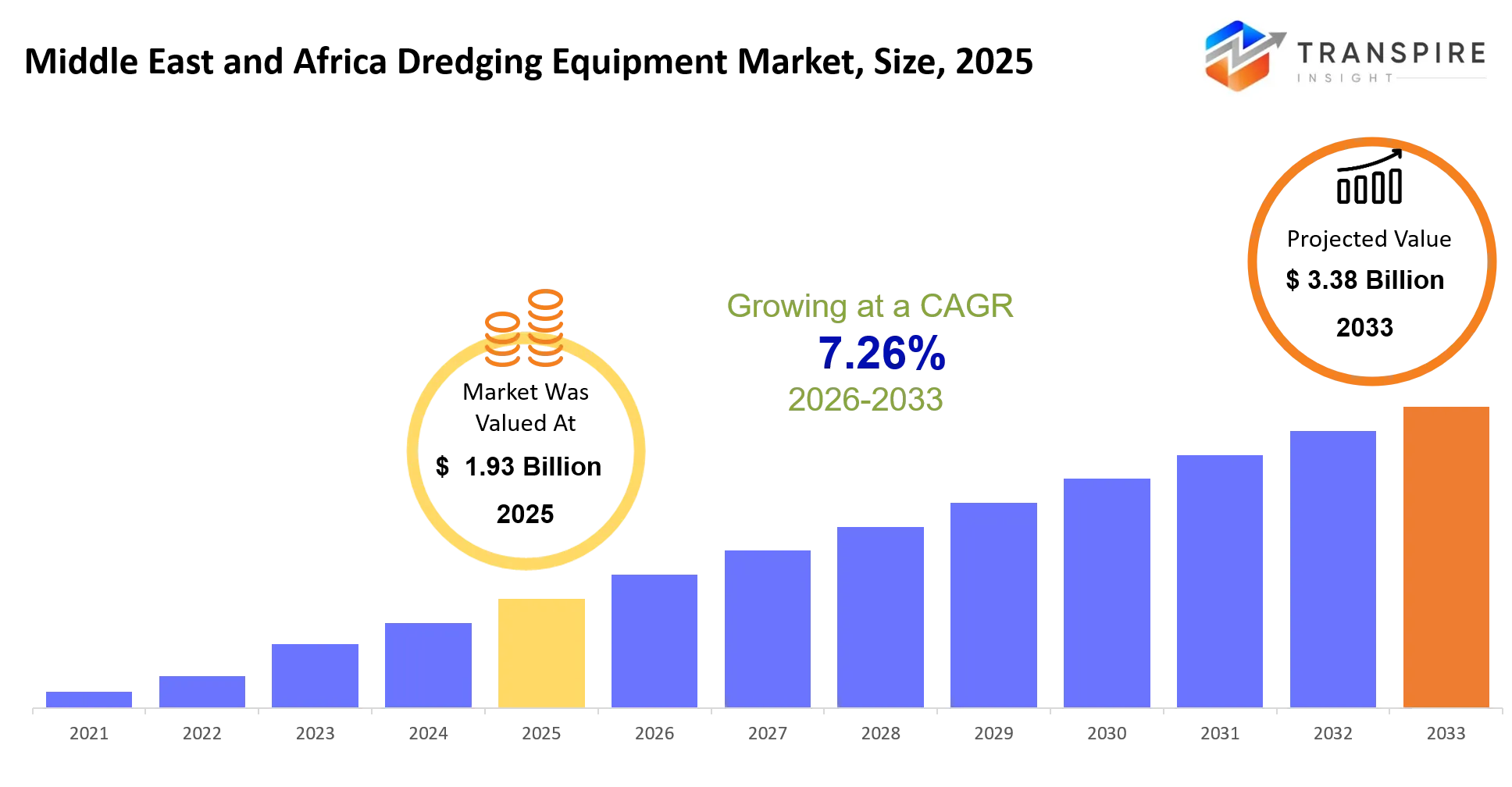
- Middle East and Africa Dredging Equipment Market Size 2025: USD 1.93 Billion
- Middle East and Africa Dredging Equipment Market Size 2033: USD 3.38 Billion
- Middle East and Africa Dredging Equipment Market CAGR: 7.26%
- Middle East and Africa Dredging Equipment Market Segments: By Equipment Type (Cutter Suction Dredgers, Trailing Suction Hopper Dredgers, Excavator Dredgers, Grab Dredgers, Others); By Application (Port Development, Mining, Land Reclamation, Waterway Maintenance, Others); By End User (Government, Marine Contractors, Mining Companies, Others); By Capacity (Small, Medium, Large, Others)
Middle East and Africa Dredging Equipment Market Summary
The Middle East and Africa Dredging Equipment Market was valued at USD 1.93 Billion in 2025. It is forecast to reach USD 3.38 Billion by 2033. That is a CAGR of 7.26% over the period.
The Middle East and Africa Dredging Equipment Market basically sits in the background but it’s still pretty critical for keeping ports running, expanding coastal infrastructure, reclaiming land , maintaining navigation channels, and frankly supporting mining activities too. If dredging equipment wasn’t there, a lot of commercial ports would hit depth limits that slow down, or even limit, how vessels can move, it also tends to cut cargo throughput and pushes logistics costs higher. Over the last five years, the market has moved away from mostly conventional, maintenance heavy work, and it’s leaned more toward big infrastructure builds and coastal development projects. In the Gulf and in some parts of Africa, governments have been putting more money into port modernization, industrial zones, and waterfront upgrades. That shift is what keeps demand for newer dredging fleets pretty steady.
Another thing, a big trigger happened when supply chains got messy and trade routes started getting re-aligned after wider global logistics bottlenecks. That forced countries to focus harder on port capacity and maritime resilience, not just short term fixes. Now, as trade volumes keep climbing, and coastal development projects keep expanding, contractors end up needing larger, faster, and more efficient dredgers. This whole change, in turn, helps equipment utilization rates go up, encourages fleet growth, and supports stronger revenue flow across the regional dredging ecosystem.
Key Market Insights
- The Middle East and Africa Dredging Equipment Market kinda benefits from Gulf port expansion projects, where the GCC alone is expected to hold something like 45%+ of the regional market share in 2025.
- And after 2022, Middle East infrastructure spending sped up a lot, so procurement moved toward high-capacity cutter suction and hopper dredgers, quickly.
- In terms of what’s being bought most, trailing suction hopper dredgers are still leading the pack, roughly 35% market share, mostly because ports keep needing serious maintenance, well, all the time.
- Meanwhile cutter suction dredgers sit in the second place, they’re broadly used for land reclamation efforts and coastal development work too.
- Bigger dredging equipment, like large-capacity systems, should show the quickest growth through 2033, mainly because mega-projects need deeper excavation capability that smaller units can’t really match.
- For applications, port development stays on top and contributes around 40% of equipment demand across regional maritime infrastructure programs, give or take.
- Land reclamation meanwhile is the fastest-growing application segment, especially across Saudi Arabia and the UAE, even if the mix can shift year to year.
- Also, government agencies are responsible for more than 38% of equipment procurement, backed by public infrastructure funding and coastal protection budgets.
- On the competitive side, players such as Royal IHC, Damen, Jan De Nul, Boskalis, and Ellicott Dredges are investing in fuel-efficient dredging solutions, plus digitally connected systems, because clients want better control and less downtime.
- In the end, strategic expansion, automation technologies, predictive maintenance systems, and regional partnerships, they’re increasingly the things that shape competitive positioning within the Middle East and Africa Dredging Equipment Market.
What are the Key Drivers, Restraints, and Opportunities in the Middle East and Africa Dredging Equipment Market?
Large-scale maritime infrastructure investment still looks like the strongest engine of growth. In Saudi Arabia , the UAE , Egypt and South Africa, governments have sort of already committed to port expansion, logistics corridors, industrial zones , plus coastal development programs. So these efforts usually need channel deepening, berth building , and land reclamation work. And yes, all of that leans on more advanced dredging fleets, the kind that can handle the full, on- site requirements. When bigger ships start using regional trade routes more regularly, ports then have to keep navigation channels deeper, which ends up pushing equipment utilization up. That naturally raises procurement spending too. The result is a steady infrastructure cycle, so demand comes back again for new dredgers and for fleet upgrades .
The biggest, most stubborn structural issue is capital intensity. Modern cutter suction dredgers and trailing suction hopper dredgers don’t just cost a lot to buy, they also cost a lot to run. There is acquisition, maintenance, operating expenses, plus specialized crews and dry-docking schedules. On top of that there are compliance obligations tied to environmental regulations, which adds more to ownership cost. Smaller contractors often can’t easily arrange the financing needed for big equipment purchases, and that basically slows fleet growth. Since these financial constraints are connected to asset intensity and the underlying industry economics, they don’t really unwind quickly, and they keep capping possible market revenue.
Coastal protection and climate adaptation work is shaping up as a major future opportunity. Public budgets are moving toward shoreline reinforcement, beach nourishment, and flood mitigation programs. Dredging technologies that can support environmental restoration and sediment management will likely see a benefit from these programs. Saudi Arabia’s coastal development push and the expanding waterfront projects across the Gulf region show how climate resilience alongside economic development
What Has the Impact of Artificial Intelligence Been on the Middle East and Africa Dredging Equipment Market?
Artificial intelligence and more advanced digital tech are, step by step, changing dredging work across the Middle East and Africa. Newer dredgers are starting to plug in AI enabled monitoring setups that look at how the vessel runs, fuel use, pump performance, and how productive the dredging is, all in real time. At the same time automated control systems let crews tune excavation depth, sediment removal speed, and even the navigation routes while also lowering day to day operational swings.
Then there’s machine learning, it kind of quietly supports predictive maintenance programs. Sensors on engines, pumps, cutters, and hydraulic components keep collecting operating signals , and the algorithms use that information to flag possible malfunctions before they actually turn into breakdowns. With that, fleet availability tends to rise, unexpected maintenance spending often drops, and equipment life tends to last longer. A few operators say they can see real reductions in downtime and fuel burn after switching to data driven fleet management habits.
AI backed planning tools also help projects move along better. They can model seabed conditions, sediment motion, and dredging sequences, so contractors can choose a workable order of operations. In practice this supports finishing projects faster, while still complying with environmental rules and regulatory requirements, which is kind of the hard part.
Still, adoption is not fully everywhere, mainly because integration expenses are high and data quality or availability stays uneven. Many older dredgers in local fleets do not have the digital foundation needed for advanced analytics. Because of that, large scale rollout of AI driven operational systems can get slowed down quite a bit.
Key Market Trends
- Since 2021, Gulf coastal development programs have been pulling up the need for big capacity dredgers,like over 20% more demand across main infrastructure jobs.
- Between 2022 and 2026, digital fleet management got adopted in a steady sort of way, and it helped with better equipment utilization plus more sensible maintenance planning,even if not always perfectly timed.
- More and more port authorities are leaning toward multi-purpose dredging vessels that can juggle maintenance and reclamation work at the same time.
- After 2023, land reclamation momentum really picked up, especially in Saudi Arabia and the UAE, and that in turn backstopped long term equipment buying decisions.
- At the same time, equipment manufacturers pushed faster on low emission systems, because the environmental requirements on many projects tightened up.
- Contractors also started shifting toward predictive maintenance platforms, cutting unexpected downtime by roughly 10%–15% in more advanced fleets.
- Damen signed on a contract for an advanced dredger design in 2026, where energy storage is part of the package and the environmental performance is improved.
- In addition, fully electric dredging concepts started showing up in commercial deployment talks during 2026, sort of underscoring how the industry is moving toward decarbonization.
- Regional buyers too, are increasingly weighing lifecycle operating costs, rather than staring only at the purchase price.
- And since 2024, strategic partnerships between contractors, shipyards, and technology providers have become common, like they are turning into a normal pattern.
Middle East and Africa Dredging Equipment Market Segmentation
By Equipment Type
Cutter Suction Dredgers have this big role in major excavation and land development, because a strong cutting ability makes it easier to pull out, basically compact stuff fast. Trailing Suction Hopper Dredgers are often used for port deepening and channel upkeep, where a steady collection of sediment and then moving it along really boosts overall project efficiency. Excavator dredgers bring a certain flexibility for nearshore use , and also for work in tighter areas, so this kind of dredging plant ends up being right for construction as well as maintenance tasks in restricted spaces.
Grab Dredgers fit well when a project needs more careful removal of material close to structures, terminals , and waterways. There are also other equipment types that handle specialized duties, in cases where unusual operating conditions mean you need a tailored approach. Choosing the equipment depends on how big the project is, what the materials are like, the water depth, and what the day-to-day operational demands actually look like. Ongoing investment in coastal infrastructure and maritime projects will keep demand steady across all categories of dredging equipment and, at the same time, push better efficiency and improved operational performance forward.
By Application
Port Development is probably the largest application zone, since growing trade networks really do need deeper channels, bigger berths, and easier access for commercial work. Ongoing investment in maritime infrastructure then keeps regular dredging in motion, mostly to preserve day to day efficiency and to make room for larger ships. For Mining applications, dredging equipment is used for sediment removal, supporting mineral extraction, and for overseeing water based extraction processes, where material handling stays, honestly , very necessary.
Land Reclamation adds a lot of demand too, because coastal development programs create fresh industrial, residential, and commercial areas. Waterway Maintenance is still crucial, not only to protect navigation routes, but also to manage sediment build up, so safe transportation can continue. Besides that, there are environmental restoration needs, flood control concerns, and coastal protection schemes. If these areas keep expanding, it should drive wider equipment utilization and open paths for more specialized dredging solutions.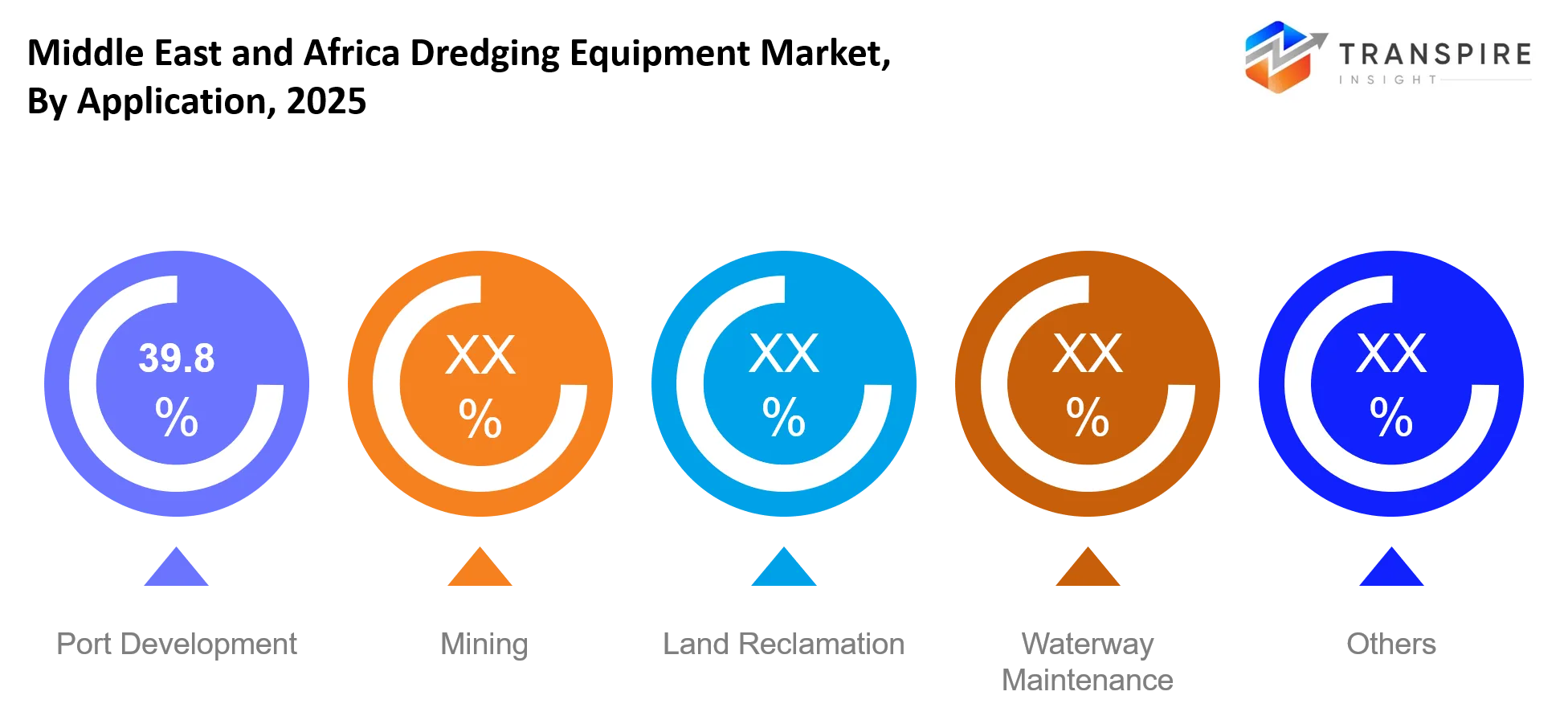
By End User
Government organizations pretty much take up a big portion of the equipment utilization, because public authorities are in charge of port expansion, coastal protection, navigation upkeep, and also broader infrastructure development . When long term investment programs and national development plans kick in they tend to make steady project pipelines, which then need dependable dredging resources , all the time. Marine Contractors basically fill the gap by bringing in specialized equipment, technical know-how, and the ability to actually carry out project execution across a large set of marine construction tasks.
Mining Companies use dredging systems to help with extraction activities, sediment handling, plus keeping water resources in check inside mining sites . There are other end users too , like industrial operators, environmental agencies and infrastructure developers , and they often need dredging services for their specific project requirements. Ongoing collaboration between public and private stakeholders will keep backing equipment deployment. On top of that, because the end users are diverse, manufacturers get pushed toward flexible solutions that are more application focused, rather than one-size-fits-all.
By Capacity
Small-capacity equipment is for localized projects, upkeep tasks, and day to day operations where mobility plus maneuverability stay pretty crucial. These compact designs help with quick deployment in canals, smaller waterways and pretty tight work areas. Medium-capacity equipment sort of balances operational power and cost effectiveness , so it can work for a wide variety of commercial, infrastructure and maintenance use cases.
Large-capacity equipment, on the other hand, supports big port expansions, land reclamation, and large scale excavation jobs where you really need strong material handling capacity. The high throughput levels make this group appealing for long running, capital intensive developments. There are also other capacity types that cover specialized operational needs, some of which don’t quite fit the usual categories. In practice, project complexity, excavation volume, and operational timetables will keep nudging capacity selection across the market, depending on what each site requires.
What are the Key Use Cases Driving the Middle East and Africa Dredging Equipment Market?
Port development is still, honestly, the most important use case. For commercial ports, they need regular channel deepening and berth expansion to handle bigger cargo vessels, and to keep up with trade volumes that keep growing. All of this tends to create a real steady need for high-capacity dredging fleets, plus the related support equipment, you know the kind of machinery that has to go along with it.
Meanwhile land reclamation and mining applications are getting more traction across the region. In coastal development, dredging equipment is used to carve out or build new industrial areas, tourism locations, and all that waterfront infrastructure. On the mining side, companies rely on dredging systems for mineral extraction, and also for sediment management, though it’s usually in selected inland as well as coastal operations, depending on the site.
And then there are the newer openings, like shoreline protection and climate adaptation programs. Governments are putting more money into beach nourishment, coastal defense structures, and flood mitigation projects. These uses are generally smaller than traditional port work, but they still look pretty promising over the long run as climate resilience is becoming a bigger infrastructure priority, day by day, year by year.
|
Report Metrics |
Details |
|
Market size value in 2025 |
USD 1.93 Billion |
|
Market size value in 2026 |
USD 2.07 Billion |
|
Revenue forecast in 2033 |
USD 3.38 Billion |
|
Growth rate |
CAGR of 7.26%from 2026 to 2033 |
|
Base year |
2025 |
|
Historical data |
2021 - 2024 |
|
Forecast period |
2026 - 2033 |
|
Report coverage |
Revenue forecast, competitive landscape, growth factors, and trends |
|
Regional scope |
United States; Canada; Mexico; United Kingdom; Germany; France; Italy; Spain; Denmark; Sweden; Norway; China; Japan; India; Australia; South Korea; Thailand; Brazil; Argentina; South Africa; Saudi Arabia; United Arab Emirates |
|
Key company profiled |
Royal IHC, Damen, Ellicott Dredges, DSC Dredge, Jan De Nul, Boskalis, Great Lakes Dredge & Dock, Vosta LMG, Bell Dredging, Rohr-Idreco, Mud Cat, HID Dredger, IMS Dredges, Keppel, Liebherr |
|
Customization scope |
Free report customization (country, regional & segment scope). Avail customized purchase options to meet your exact research needs. |
|
Report Segmentation |
By Equipment Type (Cutter Suction Dredgers, Trailing Suction Hopper Dredgers, Excavator Dredgers, Grab Dredgers, Others); By Application (Port Development, Mining, Land Reclamation, Waterway Maintenance, Others); By End User (Government, Marine Contractors, Mining Companies, Others); By Capacity (Small, Medium, Large, Others) |
Which Regions are Driving the Middle East and Africa Dredging Equipment Market Growth?
The Gulf Cooperation Council region kinda leads the market due to big investments in port infrastructure, industrial diversification programs, and coastal development projects. Saudi Arabia and the United Arab Emirates keep funding major maritime initiatives that need a lot of dredging work. There’s strong government support , and advanced logistics networks, plus large scale reclamation undertakings, that help keep regional dominance. Also established contractor ecosystems and easier access to financing just further lock in the leadership position.
South Africa sits as the second-largest contributor, and it’s a bit different from the Gulf region mainly because it focuses more on keeping existing maritime infrastructure working properly. Port modernization programs, trade corridor development, and ongoing maintenance dredging activities generate steady equipment demand. Economic diversification efforts, along with continued maritime trade, support stable project pipelines. Over time, long-term infrastructure planning makes procurement feel more predictable.
The fastest growth is expected across emerging African coastal markets, especially East Africa. New port builds, logistics corridor investments, and international trade initiatives have basically sped up project activity. A number of governments have rolled out infrastructure modernization plans that call for navigation channel expansion and coastal engineering tasks. That momentum means attractive openings for equipment suppliers, contractors, and investors across the whole forecast period.
Who are the Key Players in the Middle East and Africa Dredging Equipment Market and How Do They Compete?
Competition stays pretty moderately concentrated among global equipment makers and specialized dredging contractors, you know the usual stuff. What really matters for winning tends to be technology know-how, fleet performance, how well projects get executed, plus lifecycle service support. Bigger established players keep their ground via strong engineering capability and also by having a huge mix of vessels. At the same time, more specialized manufacturers often play it different, they go for niche solutions, and they offer custom equipment setups that fit the job.
Royal IHC, for example, kind of stands out with advanced engineering for dredging vessels, plus project-specific equipment designs that are tailored on purpose. Damen leans into modular vessel construction, fuel-efficient systems, and flexible dredger configurations. This approach tends to suit contractors that handle multiple types of projects, back to back. Ellicott Dredges highlights portable as well as customized dredging solutions for infrastructure, mining and environmental use cases.
Jan De Nul relies on operational experience and also on one of the most sophisticated dredging fleets in the space, which helps them take on complicated reclamation and marine infrastructure work. Boskalis keeps putting money into next-generation dredging assets and fleet modernization, to boost both efficiency and overall capacity. Liebherr meanwhile supports market growth by focusing on heavy-duty excavation equipment and specialized dredging support machinery.
Overall, these firms are investing more and more in automation, digital monitoring, predictive maintenance technologies, and regional partnerships. The idea is to sharpen competitiveness and lock in long-term project contracts.
Company List
- Royal IHC
- Damen
- Ellicott Dredges
- DSC Dredge
- Jan De Nul
- Boskalis
- Great Lakes Dredge & Dock
- Vista LMG
- Bell Dredging
- Rohr-Idreco
- Mud Cat
- HID Dredger
- IMS Dredges
- Keppel
- Liebherr
Recent Development News
In January 2026, NMDC Group announced the construction of an AED 618 million self-propelled cutter suction dredger. The investment expands fleet capacity and supports major coastal, port, and offshore infrastructure projects across multiple markets.https://nmdc-group.com
In April 2026, Damen entered a contract with UK Dredging for a new advanced Trailing Suction Hopper Dredger. The vessel incorporates energy storage technology and enhanced environmental systems, strengthening next-generation dredging capabilities.https://www.damen.com/
In January 2026, NMDC Group expanded its international dredging capacity through the addition of a high-powered 148-meter dredger with 30,440 kW installed power. The project supports growing project backlogs and regional infrastructure development activities.https://english.mubasher.info/
What Strategic Insights Define the Future of the Middle East and Africa Dredging Equipment Market?
The market is drifting toward bigger, digitally enabled, and more environmentally tuned dredging fleets that can really back complex infrastructure and coastal development work. Under the hood, the push for this shift comes from a mix of maritime commerce expansion, coastal city growth, and those longer-term infrastructure modernization efforts rolling out across the Middle East, and parts of Africa. How well the equipment gets used is going to lean more on operational efficiency, automation, and lifecycle cost results, rather than just counting fleet size.
There is also a kind of less seen risk, tied to project concentration. A meaningful share of the regional activity is still linked to a short list of major, large-scale infrastructure programs. If any of those deals get delayed, or funding gets reshaped, or policy changes appear, you could end up with a temporary equipment overhang and that, in turn, can squeeze contractor margins.
On the upside, an emerging opportunity is showing up around climate adaptation and coastal resilience agendas. Things like beach nourishment, shoreline stabilization and flood protection may form a fresh demand stream, beyond the usual port development track.
For market players, it looks like a priority should be digital fleet management investments, plus predictive maintenance systems. Alongside that, vessel designs that are less harmful to the environment should also matter. Firms that connect their technology strengths with long-range infrastructure needs and coastal protection programs will likely be the ones capturing the next round of growth.
Middle East and Africa Dredging Equipment Market Report Segmentation
-
By Equipment Type
Cutter Suction Dredgers
Trailing Suction Hopper Dredgers
Excavator Dredgers
Grab Dredgers
Others -
By Application
Port Development
Mining
Land Reclamation
Waterway Maintenance
Others -
By End User
Government
Marine Contractors
Mining Companies
Others -
By Capacity
Small
Medium
Large
Others
Frequently Asked Questions
Find quick answers to common questions.
The Expected Middle East and Africa Dredging Equipment Market size for the Market will be USD 3.38 Billion in 2033.
Key Segments for the Middle East and Africa Dredging Equipment Market are By Equipment Type (Cutter Suction Dredgers, Trailing Suction Hopper Dredgers, Excavator Dredgers, Grab Dredgers, Others); By Application (Port Development, Mining, Land Reclamation, Waterway Maintenance, Others); By End User (Government, Marine Contractors, Mining Companies, Others); By Capacity (Small, Medium, Large, Others).
Major Middle East and Africa Dredging Equipment Market Players are Royal IHC, Damen, Ellicott Dredges, DSC Dredge, Jan De Nul, Boskalis, Great Lakes Dredge & Dock, Vosta LMG, Bell Dredging, Rohr-Idreco, Mud Cat, HID Dredger, IMS Dredges, Keppel, Liebherr.
The Current Middle East and Africa Dredging Equipment Market size is USD 1.93 Billion in 2025.
The Middle East and Africa Dredging Equipment Market CAGR is 7.26% from 2026 to 2033.
- Royal IHC
- Damen
- Ellicott Dredges
- DSC Dredge
- Jan De Nul
- Boskalis
- Great Lakes Dredge & Dock
- Vista LMG
- Bell Dredging
- Rohr-Idreco
- Mud Cat
- HID Dredger
- IMS Dredges
- Keppel
- Liebherr
About the Authors

Kartik bhong
I am Kartik Bhong, a Senior Research Analyst at Transpire Insight, specializing in the Packaging, Manufacturing, and Construction industry. My work focuses on analyzing market trends, emerging technologies, industry regulations, and competitive landscapes to deliver accurate, data-driven insights. I am passionate about transforming complex industry information into clear, practical content that helps businesses, professionals, and decision-makers stay informed and make confident strategic decisions. Through continuous research and a strong commitment to accuracy, I strive to create reliable, well-researched content that reflects the latest developments across these dynamic industries and supports the vision of Transpire Insight in delivering valuable market intelligence.

Chakradhar Khansole
Chakradhar serves as the Research Director at Transpire Insight, bringing over 8 years of experience in technology, innovation, and strategic market intelligence. He specializes in transforming complex market data into actionable business insights that enable organizations to make informed, growth-oriented decisions. Recognized for his strategic vision and analytical expertise, Chakradhar leads high-impact research initiatives, delivering comprehensive market assessments, competitive intelligence, and forward-looking industry analysis.
Recently Published Reports
-
Apr 2026
Handling and Lifting Equipment Market
Handling and Lifting Equipment Market Size, Share & Analysis Report By Product (Cranes and Hoists, Forklifts, Conveyor Systems, Aerial Work Platforms, Others), By Application (E-Commerce, Automotive and Railway, Food and Beverages, Aviation, Others), and Geography (North America, Europe, Asia-Pacific, Middle East and Africa, South and Central America), 2021 - 2031
-
Apr 2026
HVAC Equipment Market
HVAC Equipment Market Size, Share & Analysis Report By Heating Equipment Type (Boilers and Furnaces, Heat Pumps, and Unitary Heaters), By Ventilation Equipment (Air Handling Units, Humidifiers and Dehumidifiers, Air Filters, and Fan Coiling Units), By Air Conditioning Equipment (Unitary Air Conditioners, Room Air Conditioners, Packaged Terminal Air Conditioners, and Chillers), By End User (Commercial, Residential, Industrial, and others), and Geography (North America, Europe, Asia-Pacific, Middle East and Africa, South and Central America), 2021 – 2031
-
Apr 2026
Refrigeration Valves Market
Refrigeration Valves Market Size, Share & Analysis Report By Type (Solenoid Valves, Expansion Valves, Check Valves, Service Valves, Others), By Application (Commercial Refrigeration, Industrial Refrigeration, Transport Refrigeration, Residential Refrigeration, Air Conditioning Systems), By End User (Food and Beverage Industry, Pharmaceutical Industry, HVAC Industry, Chemical Industry, Others), and Geography (North America, Europe, Asia-Pacific, Middle East and Africa, South and Central America), 2021 – 2031
-
Apr 2026
E-Commerce Packaging Materials Market
E-Commerce Packaging Materials Market By Material Type (Corrugated Boxes, Paper & Paperboard, Foam & Cushioning Materials, Plastic Packaging, Flexible Packaging, Protective Packaging, Others), By Product(Primary Packaging, Secondary Packaging, Tertiary Packaging), By Packaging Function (Protective Packaging, Branding & Presentation Packaging, Transit & Logistic Packaging, Sustainable Packaging, Tamper Evidence Packaging), By End-User (Retail & Consumer Goods, Electronic Appliances, Food & Beverages, Healthcare & Pharmaceutical, Fashion & Apparel, Home & Furnishing, Others); By Industry Analysis, Size, Share, Growth, Trends, and Forecasts 2021-2033