
Middle East and Africa Cocoa Beans Market Size & Forecast:
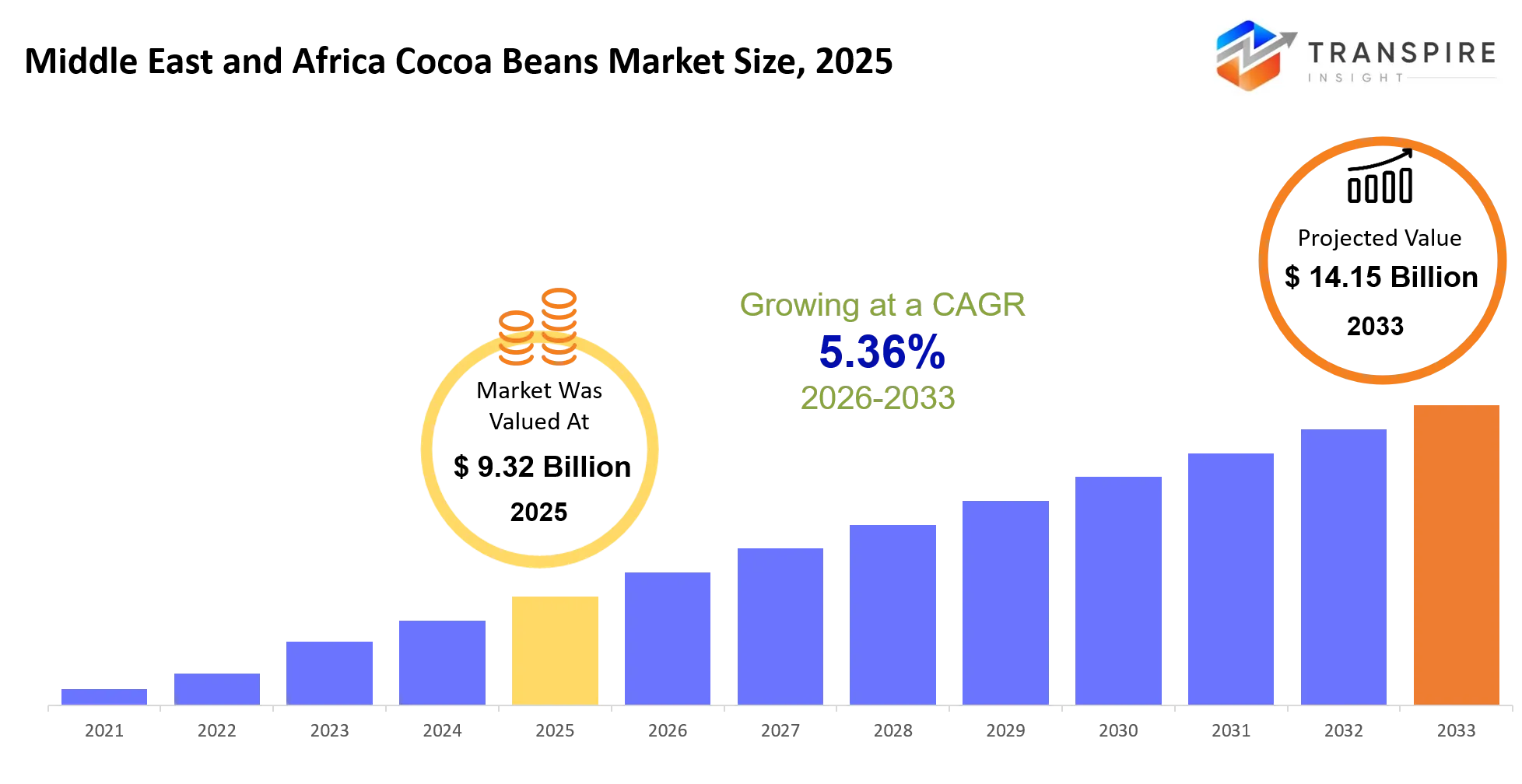
- Middle East and Africa Cocoa Beans Market Size 2025: USD 9.32 Billion
- Middle East and Africa Cocoa Beans Market Size 2033: USD 14.15 Billion
- Middle East and Africa Cocoa Beans Market CAGR: 5.36%
- Middle East and Africa Cocoa Beans Market Segments: By Product Type (Forastero Cocoa Beans, Criollo Cocoa Beans, Trinitario Cocoa Beans, Organic Cocoa Beans, Conventional Cocoa Beans, Premium Cocoa Beans, Others); By Processing Type (Raw Beans, Fermented Beans, Dried Beans, Roasted Beans, Cocoa Nibs, Cocoa Liquor, Others); By Application (Chocolate Manufacturing, Confectionery, Bakery Products, Beverages, Cosmetics, Pharmaceuticals, Others); By Distribution Channel (Direct Sales, Commodity Traders, Cooperatives, Retail Distribution, Online Platforms, Others)
To learn more about this report,  Download Free Sample Report
Middle East and Africa Cocoa Beans Market Summary
The Middle East and Africa Cocoa Beans Market was valued at USD 9.32 Billion in 2025. It is forecast to reach USD 14.15 Billion by 2033. That is a CAGR of 5.36% over the period.
In practice, the Middle East and Africa Cocoa Beans Market really works as a main supply base for chocolate manufacturing, confectionery production, and cocoa-based food ingredients, used across global supply chains. It sort of operates like a sourcing network that connects African farming regions with processing plants, and export routes serving Europe, Asia and also the Middle East. This steady flow of cocoa beans helps keep large-scale food production moving smoothly, by making sure there is a continuous supply of basic raw material for manufacturers. Most of the volume comes from African production hubs, while trading and logistics systems then move these beans through ports, and into processing centers. Overall the whole thing relies on coordinated movement between farmers, traders and processors to protect quality, and keep the same consistency, each cycle.
Over the last few years the whole market setup has shifted a lot because traceability rules got stricter, and buyers are now asking more frequently for confirmed origin records so they can keep the quality steady, plus satisfy ethical sourcing responsibilities. A noticeable disruption surfaced when climate variability kept returning across West Africa, and at the same time pandemic-era logistics bottlenecks were still hanging around, which really exposed weak spots in export routing, and storage capacity too . That whole situation then pushed firms to invest more in centralized aggregation, and in digital tracking across the chain, not just locally but end to end. So now procurement plans have shifted toward long-term supply agreements, along with more vertically integrated trading arrangements, helping stabilize exporter revenue and making trade channels more organized across the region.
Key Market Insights
- West Africa kind of dominates the supply side, it has over 70% share, mostly because Ivory Coast and Ghana are so concentrated in cocoa production systems. You can see this in the way their export patterns align closely with the main farming regions.
- Ghana and Ivory Coast also lead the export volumes going to the Middle East and within Africa cocoa beans market, partly since they built strong plantation infrastructure already.
- Europe, meanwhile, stays the largest destination for demand, taking in more than 55% of regional cocoa bean exports each year, without much change.
- After 2022, digital traceability adoption rose in a noticeable way, helping firms meet compliance requirements tied to sustainability certification frameworks.
- Still, climate volatility across 2023–2025 messed with yield consistency, so companies started leaning toward diversified sourcing strategies, a bit more than before.
- On the corporate side, Cargill expanded cocoa procurement networks across West Africa, aiming to keep raw material flows steadier.
- Barry Callebaut also strengthened vertical integration across African sourcing plus European processing units, rather aggressively.
- Olam International invested in digital farm monitoring systems too, to improve yield predictability. The premium cocoa segment is the fastest-growing, because more buyers want certified sustainable beans when they sign export contracts.
- Processing-grade cocoa beans remain the biggest segment, mainly due to the steady bulk demand from industrial chocolate manufacturers.
What are the Key Drivers, Restraints, and Opportunities in the Middle East and Africa Cocoa Beans Market?
In the Middle East and Africa Cocoa Beans Market, the main growth driver seems to be the widening of vertically integrated global chocolate manufacturing networks. Big processors and trading firms have been pushing for closer direct sourcing deals with African producers, to lower supply uncertainty and keep the quality more consistent, which is maybe the whole point here. This movement was kicked off by repeated disruptions along global shipping routes and the sort of volatility you see in spot commodity prices. Once that happened, long term contracts started looking more financially steady. So exporters usually get more predictable revenue streams while buyers can manage traceability and certification compliance more tightly, and overall transaction efficiency across the value chain feels better.
Now for the big constraint, there is this persistent productivity gap. It comes from aging plantations and limited mechanization on smallholder farms, and it’s not just one small issue. It’s structural, so it cant be fixed fast, because cocoa farming is still very labor-dependent. Also capital-intensive upgrades need long investment cycles, which slows everything down. The outcome is inconsistent yield output and higher exposure to climatic swings, so export volumes drop during worse seasons. Even if global demand stays strong, revenue scalability stays constrained, which then shows up as volatility in supplier earnings.
But there is a meaningful opportunity too, mainly around certified sustainable cocoa production, backed by digital farm monitoring and climate-resilient cultivation programs. Some pilot projects in Ghana and Ivory Coast are rolling out satellite based crop tracking, plus AI assisted yield forecasting for more practical productivity planning. If those efforts scale, they can help unlock premium pricing in export markets, especially where buyers care about verified sustainable sourcing contracts more than usual.
What Has the Impact of Artificial Intelligence Been on the Middle East and Africa Cocoa Beans Market?
Artificial intelligence is quietly, and a bit relentlessly, changing how operations run across the cocoa supply chain in the Middle East and Africa Cocoa Beans Market by nudging farm level decision-making as well as post harvest logistics coordination. In practice, machine learning models are now used to read weather signals, soil conditions, and crop health records, so growers can time harvests better and cut down on those losses that happen after picking. That forecasting ability also boosts yield predictions, so exporters and traders can structure procurement cycles more smoothly and, in turn, lower their exposure to annoying price swings.
On the logistics and quality side, AI driven sorting, plus grading systems, help classify beans more precisely. This reduces the need for as much manual checking and it supports faster processing inside export facilities.With more stable, repeatable export grade batchings, shipments tend to meet the overseas buyers expectations more reliably, and contract compliance can climb.
Even so uptake is still sort of slowed by connectivity gaps in rural areas, plus the overall cost of weaving AI tools into fragmented smallholder networks. A lot of producers still don’t have dependable digital infrastructure so real time data capture gets inconsistent, and then model performance can slip when real world conditions don’t line up with what the system expects.
Key Market Trends
- After 2023, export traceability systems kind of expanded quickly, and they started to improve compliance with global certification standards, faster than before.
- Meanwhile, West African supply concentration added more pressure on diversification tactics across emerging African cocoa regions, which is not a small deal.
- Climate variability across 2022–2025 made yield stability worse and in turn it accelerated investment in more resilient crop varieties, even where returns were unclear.
- Cargill also scaled digital sourcing tools, to push supply chain transparency further along. At the same time premium cocoa demand kept rising, mainly because global confectionery brands moved toward certified sustainable sourcing contracts, rather than older setups. Long term procurement contracts replaced spot buying models too, to cut back on exposure to price volatility, and honestly that shift was pretty noticeable.
- In Europe, processing hubs increased their dependence on African-origin beans so industrial chocolate manufacturing could stay more stable.
- Barry Callebaut then expanded sustainability linked sourcing partnerships with African cooperatives, trying to align incentives all around. Smallholder farmer digitization grew, but adoption is still uneven, mostly due to infrastructure gaps that show up too often.
- Finally, trade financing models evolved in a way that supports early stage procurement, while also reducing exporter liquidity constraints.
Middle East and Africa Cocoa Beans Market Segmentation
By Product Type
In the Middle East and Africa Cocoa Beans Market, you see a pretty strong segmentation across different cocoa varieties, and the product demand kinda follows the flavor vibe, the yield results, and how well each type fits processing. Forastero Cocoa Beans basically stay in the lead, mainly because they have a high yield capacity and they’re quite resilient to climatic swings in many African growing areas. Criollo Cocoa Beans still sit in a narrower lane, mostly for premium chocolate makers, where a mild flavor character matters, plus availability stays limited so it feels a bit less easy to source. Trinitario Cocoa Beans bring a hybrid kind of strength with a more balanced flavor profile, so adoption trends look moderate and often show up in specialty uses. Organic Cocoa Beans are gaining ground too, through structured sourcing programs and procurement that’s tied to certification. Meanwhile conventional cocoa beans still support the big, volume-heavy trade side for industrial buyers. And then premium cocoa beans target the higher value chocolate manufacturing space where quality consistency is non-negotiable.
Market movement seems tied to tighter alignment between global buyers and African sourcing networks. This is helped along by structured procurement contracts and better traceability systems. As a result, demand patterns are shifting toward more quality differentiation, with premium and organic categories getting stronger export preference. Also, processing compatibility, yeah that part influences how manufacturers choose among varieties, depending on what their units can handle efficiently. Finally, supply stability keeps acting as a major driver, shaping how the product mix gets distributed across international trade flows, over time.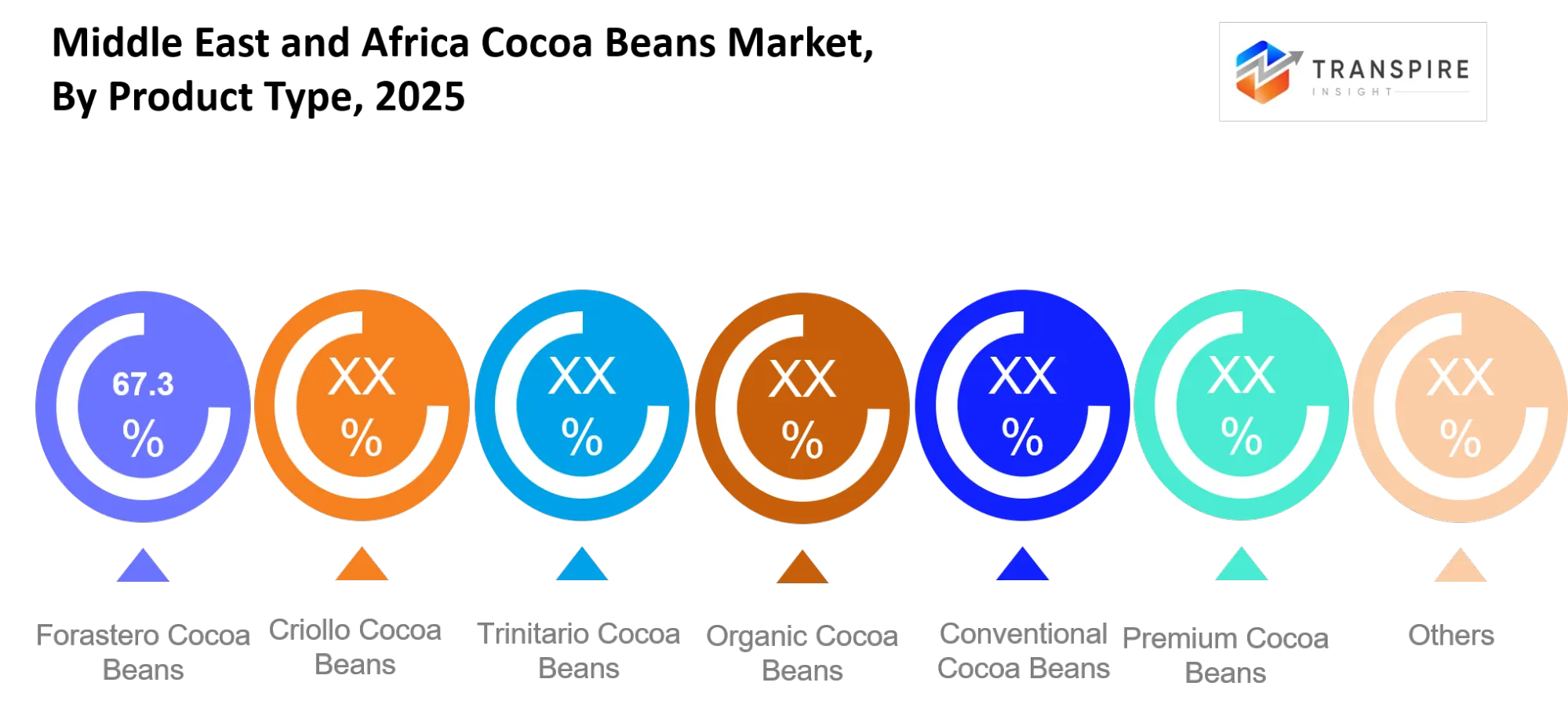
To learn more about this report, Download Free Sample Report
By Processing Type
Processing Type segmentation kind of shows how cocoa beans get from harvest, to actual industrial usability, via a chain of transformation stages. Raw Beans work as the main input material for exporters and traders who run through bulk commodity channels. Fermented Beans start to matter more, mainly because flavor development is needed to match chocolate manufacturing standards, and well, you know, that kind of thing. Dried Beans usually take over in the export preparation stage where moisture control really does keep long-term storage stability in place. Roasted Beans then fit into advanced processing pipelines where flavor enhancement becomes basically necessary for premium use cases.
Cocoa Nibs are an intermediate processed output, used inside confectionery and bakery formulations. Cocoa Liquor is critical for chocolate production, since it acts like a semi-finished ingredient supporting large-scale manufacturing systems. Others include specialized processing outputs that are tailored toward more niche industrial requirements. Processing demand keeps matching quality consistency expectations, while structured supply chains improve efficiency across post-harvest handling systems. There is a strong emphasis on standardized processing, so export readiness gets better, and quality variation across shipment batches can be reduced, even if the logistics are not always perfect.
By Application
The application structure of cocoa beans kind of spreads across several industrial sectors, while chocolate manufacturing stays as the main consumption channel. Chocolate manufacturing is usually what drives the biggest demand, because global confectionery production keeps going nonstop and the processing needs are on a large scale. Confectionery applications grow step by step as demand rises for flavored and filled products across global retail spaces. Bakery products also pull on cocoa inputs for flavor sharpening in cakes, biscuits, and other processed food items. Beverages meanwhile use cocoa based components in drinks that are flavored, and in nutritional formulations.
Cosmetics applications use cocoa derivatives in skincare blends, mainly because of moisturizing effects and that “natural ingredient” positioning people prefer. Pharmaceutical applications lean on cocoa compounds too, especially in some therapeutic and nutraceutical mixes. Others include industrial food processing uses, where cocoa ingredients back diversified product design. Overall, the growth of applications matches the increasing embedding of cocoa across both food and non-food industries. There are also strong export flows from African production areas that help maintain steady supply for global manufacturing networks.
By Distribution Channel
Channel segmentation for cocoa beans, sort of highlights how structured routes work, from origin markets to buyers worldwide, often via several trade pathways at once. Direct Sales usually means long term deals between producers and major manufacturers, and that tends to keep supply steadier plus makes pricing patterns more predictable, at least in principle. Commodity Traders sit in the middle, they aggregate produce from many regions, then pass it on through international channels. Cooperatives help smallholders show up more clearly by pooling their production, and then boosting bargaining power inside the export system. Retail Distribution stays fairly narrow but it still supports smaller niche movements for cocoa and specialty product types.
Online Platforms also expand digital purchasing, which improves transparency, and helps global buyers reach producers with less friction. There are also other arrangements, like specialized procurement setups meant for institutional customers, or sourcing that is contract based. Overall distribution efficiency keeps improving, mostly because logistics infrastructure grows stronger and because traceability systems get better across the supply routes. Market integration helps deepen the ties between African producers and global chocolate manufacturers. When distribution networks are more structured, they can lower the risk of supply disruption, and the quality consistency improves across the repeating international trade cycles.
What are the Key Use Cases Driving the Middle East and Africa Cocoa Beans Market?
In the Middle East and Africa Cocoa Beans Market, the core use case is really about bulk sourcing for industrial chocolate manufacturing, you know where big processors need steady export-grade cocoa beans so production doesn’t get interrupted. This part tends to pull the most demand, mainly because it’s tied into global confectionery supply chains and those long-term procurement contracts.
Also, the expanding side is premium chocolate production, and cocoa butter extraction that ends up in cosmetics and food flavoring. These moves are usually powered by multinational food processors as well as specialty ingredient manufacturers, they want better bean grades, and they’re also looking for certification compliance, so it stays audit-friendly.
There are newer use cases too, like blockchain-based traceability verification, plus carbon credit-linked cocoa farming initiatives. They’re still kind of in the early stage, but they’re slowly gaining traction, especially with sustainability-focused buyers and climate-financing platforms.
|
Report Metrics |
Details |
|
Market size value in 2025 |
USD 9.32 Billion |
|
Market size value in 2026 |
USD 9.82 Billion |
|
Revenue forecast in 2033 |
USD 14.15 Billion |
|
Growth rate |
CAGR of 5.36%from 2026 to 2033 |
|
Base year |
2025 |
|
Historical data |
2021 - 2024 |
|
Forecast period |
2026 - 2033 |
|
Report coverage |
Revenue forecast, competitive landscape, growth factors, and trends |
|
Regional scope |
Middle East and Africa (Saudi Arabia, United Arab Emirates, South Africa, Rest of Middle East and Africa) |
|
Key company profiled |
Barry Callebaut, Olam Group, Cargill, ECOM Agroindustrial, Touton, Blommer Chocolate, Guan Chong Berhad, Cemoi Group, Nestlé, Mondelez International, Ferrero, Mars Inc., JB Foods, Plot Enterprise, Cargill Cocoa & Chocolate |
|
Customization scope |
Free report customization (country, regional & segment scope). Avail customized purchase options to meet your exact research needs. |
|
Report Segmentation |
By Product Type (Forastero Cocoa Beans, Criollo Cocoa Beans, Trinitario Cocoa Beans, Organic Cocoa Beans, Conventional Cocoa Beans, Premium Cocoa Beans, Others); By Processing Type (Raw Beans, Fermented Beans, Dried Beans, Roasted Beans, Cocoa Nibs, Cocoa Liquor, Others); By Application (Chocolate Manufacturing, Confectionery, Bakery Products, Beverages, Cosmetics, Pharmaceuticals, Others); By Distribution Channel (Direct Sales, Commodity Traders, Cooperatives, Retail Distribution, Online Platforms, Others) |
Which Regions are Driving the Middle East and Africa Cocoa Beans Market Growth?
West Africa is still the most important area within the Middle East and Africa Cocoa Beans Market, mainly because it has a well set production base in Ivory Coast and Ghana. There are strong plantation eco systems there, plus export focused agricultural rules that keep that lead in place. And yes, the ports are pretty solid too, so high volume shipments can move out smoothly toward Europe and Asia. Because of that, the supply network feels tightly meshed, and it basically becomes the anchor for how global cocoa trade flows happen.
Central and Eastern Africa add a more stable, but smaller slice of the market. They benefit from steady farm output and a slow yet clear build up of farming infrastructure. Still, it does not work the same as West Africa. Instead of big export dominance, these regions seem to lean on incremental productivity upgrades. Government led agricultural modernization efforts are also strengthening farm durability, while opening up better paths to markets. So overall, it turns into a steady contributor for long term supply steadiness.
The quickest growing momentum looks like it’s coming from diversification efforts across parts of Africa that are non-traditional cocoa producing regions. In recent years, new investments in climate resilient cultivation and seed refinement are helping open up fresh growing areas. Meanwhile upgrades in transport plus storage are cutting down post harvest losses, and making exports more ready. Over 2026–2033, this change is expected to widen supply resilience and lower the market’s over reliance on the classic production hubs.
Who are the Key Players in the Middle East and Africa Cocoa Beans Market and How Do They Compete?
The Middle East and Africa Cocoa Beans market is, kinda moderately consolidated, with big global trading firms and processors taking a meaningful piece of procurement and export flows. What most matters is not just pure pricing but sourcing efficiency, supply chain integration, and how strong they are on certification stuff. The established players keep the upper hand via long-term farmer ties and vertically integrated processing systems, but newer entrants tend to lean on more niche sustainable sourcing approaches and regional aggregation networks, you know.
Cargill plays it strong through large scale sourcing networks and integrated logistics systems across West Africa, so global buyers get steadier supply continuity.Barry Callebaut differentiates with vertical integration, meaning it manages sourcing and chocolate manufacturing too, which ends up giving better pricing control, plus more consistent quality.Olam International leans into digital farm monitoring and traceable sourcing systems that raise yield predictability and make compliance reporting feel more manageable.
Mondelez International builds advantage through direct sustainability partnerships with African cooperatives, helping stabilize long term supply. Nestlé invests in farmer training programs and regenerative agriculture initiatives to improve supply resilience and also tighten ethical sourcing standards.
Company List
- Barry Callebaut
- Olam Group
- Cargill
- ECOM Agroindustrial
- Touton
- Blommer Chocolate
- Guan Chong Berhad
- Cemoi Group
- Nestlé
- Mondelez International
- Ferrero
- Mars Inc.
- JB Foods
- Plot Enterprise
- Cargill Cocoa & Chocolate
Recent Development News
In April 2026, Lacasa acquired a 22.3% stake in KKO International and entered a Côte d’Ivoire joint venture. The move strengthens localized chocolate production in West Africa, reducing dependence on raw bean exports and improving upstream–downstream integration across the cocoa value chain.http://www.foodbusinessmea.com
In March 2026, Sunbeth Global Concepts secured a US$145 million commercial paper programme. The financing supports cocoa export working capital in Nigeria, improving liquidity for procurement and enabling smoother export execution across volatile trading cycles.http://www.foodbusinessmea.com
In April 2026, Hartree Partners completed the acquisition of Touton SAS. The deal expands Hartree’s control over cocoa trading and supply chain operations in Africa, increasing consolidation in origin-to-destination cocoa flows and strengthening global sourcing influence.http://finance.yahoo.com
What Strategic Insights Define the Future of the Middle East and Africa Cocoa Beans Market?
The Middle East and Africa Cocoa Beans Market is sort of sliding toward a more structurally integrated supply model, where traceability, sustainability certification, and climate resilience kinda become the real positioning factors. In the next 5–7 years, control over digitally verified sourcing networks will, in many cases, beat the older volume based advantages, and it will change how exporters lock in those longer term contracts.
There’s also a risk that’s a little less obvious, like increasing concentration among global trading firms, which could shrink pricing flexibility for smallholder producers,and at the same time create dependency cycles inside sourcing regions. But alongside that, a pretty clear opportunity is popping up too: climate smart cocoa farming, backed by satellite analytics and regenerative agriculture financing, especially across Ghana and Ivory Coast.
Market players that start early with data driven sourcing ecosystems plus farmer level productivity tools will likely get more margin stability and steadier contract access, whereas everyone leaning on fragmented procurement models might see their competitiveness drop in premium export segments, even if their volumes look fine.
Middle East and Africa Cocoa Beans Market Report Segmentation
By Product Type
- Forastero Cocoa Beans
- Criollo Cocoa Beans
- Trinitario Cocoa Beans
- Organic Cocoa Beans
- Conventional Cocoa Beans
- Premium Cocoa Beans
- Others
By Processing Type
- Raw Beans
- Fermented Beans
- Dried Beans
- Roasted Beans
- Cocoa Nibs
- Cocoa Liquor
- Others
By Application
- Chocolate Manufacturing
- Confectionery
- Bakery Products
- Beverages
- Cosmetics
- Pharmaceuticals
- Others
By Distribution Channel
- Direct Sales
- Commodity Traders
- Cooperatives
- Retail Distribution
- Online Platforms
- Others
Frequently Asked Questions
Find quick answers to common questions.
The Expected Middle East and Africa Cocoa Beans Market size for the Market will be USD 14.15 Billion in 2033.
Key Segments for the Middle East and Africa Cocoa Beans Market are By Product Type (Forastero Cocoa Beans, Criollo Cocoa Beans, Trinitario Cocoa Beans, Organic Cocoa Beans, Conventional Cocoa Beans, Premium Cocoa Beans, Others); By Processing Type (Raw Beans, Fermented Beans, Dried Beans, Roasted Beans, Cocoa Nibs, Cocoa Liquor, Others); By Application (Chocolate Manufacturing, Confectionery, Bakery Products, Beverages, Cosmetics, Pharmaceuticals, Others); By Distribution Channel (Direct Sales, Commodity Traders, Cooperatives, Retail Distribution, Online Platforms, Others.
Major Middle East and Africa Cocoa Beans Market Players are Barry Callebaut, Olam Group, Cargill, ECOM Agroindustrial, Touton, Blommer Chocolate, Guan Chong Berhad, Cemoi Group, Nestlé, Mondelez International, Ferrero, Mars Inc., JB Foods, Plot Enterprise, Cargill Cocoa & Chocolate.
The Current Middle East and Africa Cocoa Beans Market size is USD 9.32 Billion in 2025.
The Middle East and Africa Cocoa Beans Market CAGR is 5.36% from 2026 to 2033.
- Barry Callebaut
- Olam Group
- Cargill
- ECOM Agroindustrial
- Touton
- Blommer Chocolate
- Guan Chong Berhad
- Cemoi Group
- Nestlé
- Mondelez International
- Ferrero
- Mars Inc.
- JB Foods
- Plot Enterprise
- Cargill Cocoa & Chocolate
About the Authors

Chetan Dhatrak
I’m Chetan Dhatrak, a Senior Research Analyst at Transpire Insight, specializing in the Consumer Goods, Foods and Beverages industry. I focus on analyzing market trends, consumer behavior, competitive landscapes, and industry developments to deliver accurate, data-driven insights. My research at Transpire Insight is built on credible sources and in-depth analysis, helping businesses and readers better understand market dynamics, emerging opportunities, and evolving consumer preferences. I’m committed to creating reliable, well-researched content that supports informed decision-making and reflects the latest developments in the consumer goods and food & beverage sectors.

Chakradhar Khansole
Chakradhar serves as the Research Director at Transpire Insight, bringing over 8 years of experience in technology, innovation, and strategic market intelligence. He specializes in transforming complex market data into actionable business insights that enable organizations to make informed, growth-oriented decisions. Recognized for his strategic vision and analytical expertise, Chakradhar leads high-impact research initiatives, delivering comprehensive market assessments, competitive intelligence, and forward-looking industry analysis.
Recently Published Reports
-
Apr 2026
Baby Infant Formula Market
Baby Infant Formula Market Size, Share & Analysis Report By ype (Infant Milk, Follow On Milk, Specialty Baby Milk, Growing-Up Milk), By Ingredient (Carbohydrate, Fat, Protein, Minerals, Vitamins, and Others), By Product Form (Powder, Liquid, and Ready-to-feed), By Distribution Channels (Supermarket/Hypermarket, Specialty Store, Pharmacies, Online Retail, and Others), and Geography (North America, Europe, Asia-Pacific, Middle East and Africa, South and Central America), 2021 - 2031
-
Apr 2026
Edible Insects for Animal Feed Market
Edible Insects for Animal Feed Market Size, Share & Analysis Report By Type (Insect Powder, Insect Meal, Insect Bar, Insect Paste, Insect Oil, and Others), By Insect Type (Beetles, Cricket, Caterpillar, Hymenoptera, Orthoptera, Tree Bugs, and Others), By Application (Livestock, Pet Food, and Aquaculture), By Livestock Type (Poultry, Swine, and Others), and Geography (North America, Europe, Asia-Pacific, Middle East and Africa, South and Central America), 2021 - 2031
-
Apr 2026
Food Industry Disinfection and Bacterial Control Market
Food Industry Disinfection and Bacterial Control Market Size, Share & Analysis Report By Type (Chemical Disinfectants, Physical Disinfectants, and Biocides and Antimicrobials), By Application (Food Processing Equipment Surface Disinfection, Food Preparation Areas Surface Disinfection, Storage Areas Surface Disinfection, Anti-microbial Coatings Food Preservation, and Preservative Solutions Food Preservation), By End User (Meat and Poultry Processing, Dairy Processing, Seafood Processing, Bakery and Confectionery, Restaurants and Commercial Kitchens, and Food Service Providers), By Sales Channel (Online, Offline), and Geography (North America, Europe, Asia-Pacific, Middle East and Africa, South and Central America), 2021 - 2031
-
May 2026
Freeze Dried Food Market
Freeze Dried Food Market Size, Share & Analysis Report By Product Type (Fruits, Vegetables, Freeze-Dried Dairy Products, Freeze-Dried Meat and Seafood, Freeze-Dried Pet Food, and Prepared Meal), By Nature (Organic, and Conventional), By Form (Powdered, Granules, and Diced), By End Use (Breakfast Cereals, Dairy Products, Bakery & Confectionery, Nutritional Bars & Supplements, Powdered Beverages, Snacks, and Retail (Household)), and Geography (North America, Europe, Asia-Pacific, Middle East and Africa, South and Central America), 2021 - 2031