

Middle East and Africa Archery Equipment Market Size & Forecast:
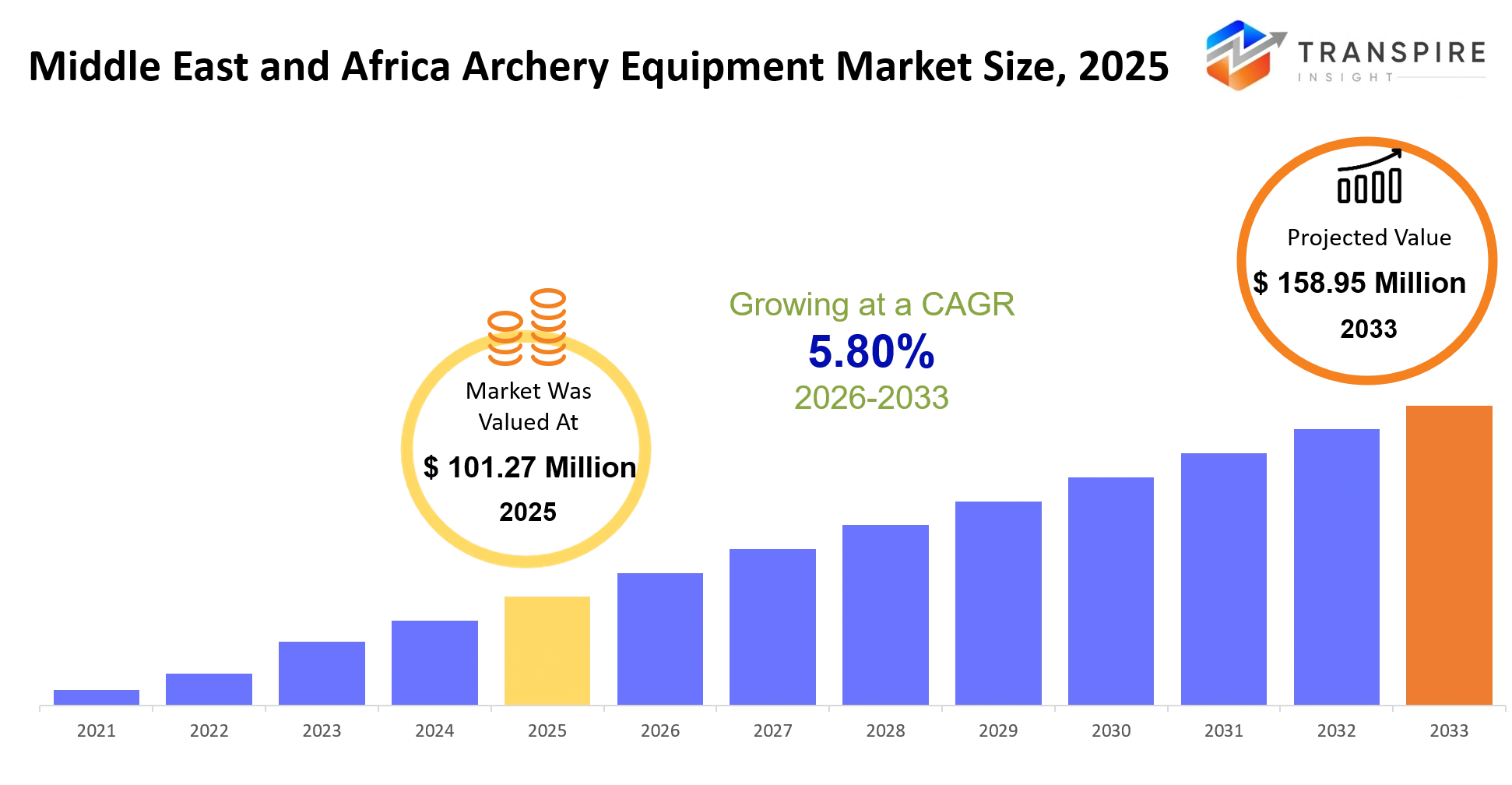
- Middle East and Africa Archery Equipment Market Size 2025: USD 101.27 Million
- Middle East and Africa Archery Equipment Market Size 2033: USD 158.95 Million
- Middle East and Africa Archery Equipment Market CAGR: 5.80%
- Middle East and Africa Archery Equipment Market Segments: By Product Type (Bows, Arrows, Targets, Protective Gear, Accessories, Sights, Quivers, Others); By Bow Type (Recurve, Compound, Longbows, Crossbows, Traditional Bows, Others); By Distribution Channel (Sporting Goods Stores, Online Retail, Specialty Stores, Clubs, Others); By End User (Professional Archers, Recreational Users, Sports Clubs, Schools, Others).
Middle East and Africa Archery Equipment Market Summary
The Middle East and Africa Archery Equipment Market was valued at USD 101.27 Million in 2025. It is forecast to reach USD 158.95 Million by 2033. That is a CAGR of 5.80% over the period.
Archery equipment ends up being pretty practical for competitive sports, recreational shooting programs, youth coaching efforts, hunting activities in certain markets, and the kind of institutional sports development that schools or clubs talk about. Things like bows, arrows, protective gear and smaller accessories allow athletes, clubs , schools, and casual participants to join in organized archery sessions while also backing accuracy, safety, and overall performance progress. On top of that, the market tends to tie into tourism related sporting events, plus national training programs running through a number of Middle Eastern and African countries.
In the past five years, the market moved away from buying “just traditional gear” and toward more performance driven products, with carbon composites, lighter materials, and precision tuning systems. One big catalyst behind this change is that spending on sports infrastructure is getting higher, plus broader participation programs that basically slot into national sports diversification strategies, especially across the Gulf. As competitions keep expanding, school sport initiatives get more attention, and archery clubs grow in size, the demand looks like it tilts more toward premium bows, upgraded sights, and customized accessories. That shift, kind of in return, lifts average selling prices and also opens up stronger aftermarket sales chances.So manufacturers, distributors, and specialty retailers get a wider revenue base across the region, even if their customer mix can vary a bit.
Key Market Insights
- The Middle East and Africa Archery Equipment Market is moving, sort of, toward carbon-fiber bows and more precise accessories, which is helping performance a lot and also pushing up the average spend on equipment, a bit more than before.
- In 2025, Gulf countries were estimated to hold around 38%–42% market share, backed by sports development efforts and modern training spaces.
- The forecast suggests Sub-Saharan Africa will keep growing faster through 2033, mainly because youth sports involvement is expanding in schools and other educational institutions, kind of steadily.
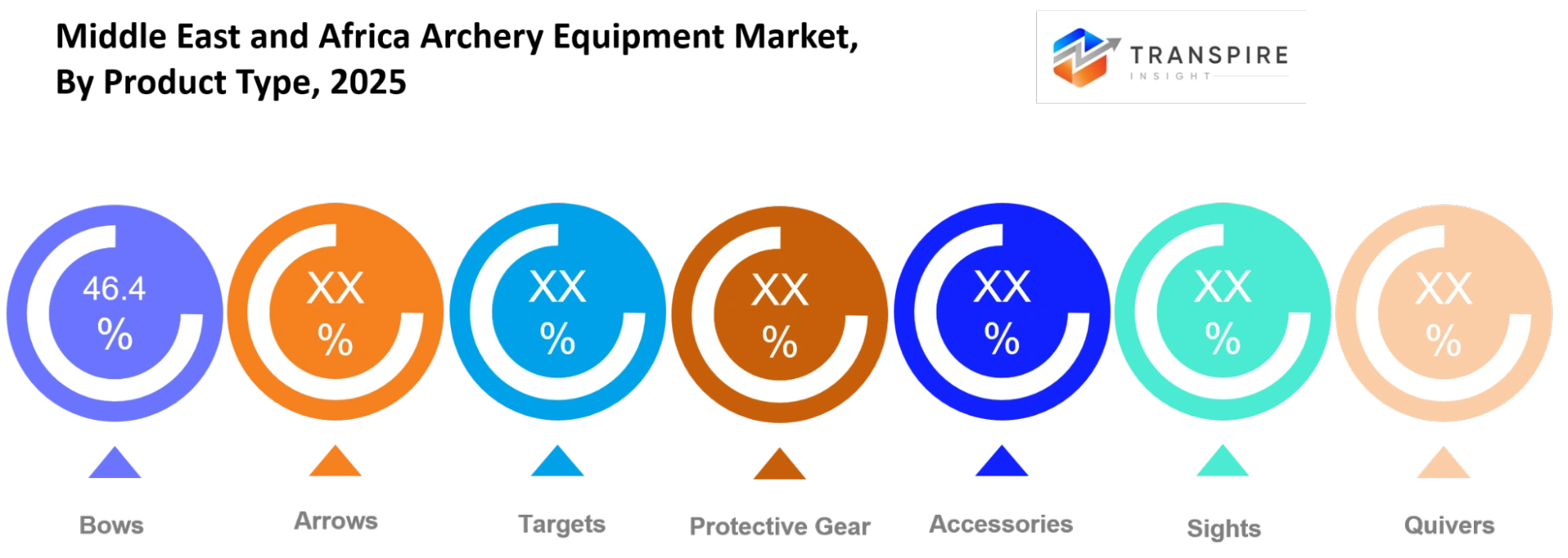
- In 2025, bows led the market with roughly 34% share, because they stay at the center of both competitive archery and casual, recreational sessions.
- Arrows made up the next biggest segment, driven by routine replacement cycles and a rising preference for carbon composite products.
- Compound bows are expected to grow the quickest by 2033, since serious archers are giving more weight to accuracy, plus customization options, over time.
- Recreational users accounted for nearly 45% of overall demand in 2025, supported by sports clubs tourism related activities and beginner coaching programs, all together.
- Professional archery participation has picked up across regional tournaments, which in turn encourages buying premium sights, stabilizers, and other performance add-ons.
- Major brands such as Easton, Hoyt, Mathews, Bowtech, PSE, and Win&Win are also expanding their offerings through new product ideas, and updates.
- Strategic expansion is leaning more toward specialized coaching centers, distributor relationships, and tech-forward bow platforms that are built for competitive results.
What are the Key Drivers, Restraints, and Opportunities in the Middle East and Africa Archery Equipment Market?
The main growth driver seems to come from government supported sports development programs and also from more institutional backing for Olympic and target sports. A number of Middle Eastern countries have been pushing wider investments into sports academies, neighborhood facilities, and youth participation programs, as part of bigger economic diversification plans. In practice, this money turns into a rather straightforward route toward new equipment buys by schools, clubs federations, and also by individual competitors. Premium equipment categories tend to gain the most, because serious participants are now looking for better precision, longer life, and more tailored setups.
Still, the biggest brake is that archery infrastructure is, in many African markets, limited in a pretty obvious way. Building dedicated ranges, establishing coaching networks, setting up certification schemes, and supporting specialized retail channels takes real long term funding. And unlike some mainstream sports, archery relies on controlled practice spaces and a level of technical know how that is not casual. Because of those structural needs, it becomes harder to enter quickly, plus equipment turnover stays slower , which ends up holding back revenue growth across multiple countries.
A key opening could be the merging of digital coaching tools and performance analytics into everyday training environments. Smart targets, sensor assisted bows, and mobile apps for tracking progress are getting more affordable and easier to access. The Gulf region, where sports technology adoption is picking up speed, may be especially friendly for these kinds of solutions. When federations and clubs start prioritizing measurable improvements, tech enabled training systems could generate new income sources beyond the usual equipment sales, and in turn open up the next stage of market development.
What Has the Impact of Artificial Intelligence Been on the Middle East and Africa Archery Equipment Market?
Artificial intelligence is gradually reshaping equipment design, athlete training and inventory management across the regional archery ecosystem, in a way that feels almost unnoticed at first. Manufacturers are increasingly leaning on AI-assisted simulation tools to test bow geometry material stress distribution and even aerodynamic arrow performance before anyone goes hands-on with physical prototyping. In practice this shortens development cycles, and it also tends to boost product precision.
Inside training settings, computer vision systems together with machine learning algorithms are starting to read shooting posture release timing bow alignment, and those arrow grouping patterns that people swear they can “just see”. Coaches then get performance insights that can surface technical inconsistencies quicker than traditional observation methods. A few advanced training centers now run sensor-based shooting analytics too, so athlete development gets more structured support and competition readiness feels less like a guesswork thing.
On the sales and distribution side, AI powered demand forecasting is making it easier for distributors to dial in inventory levels and to avoid stock imbalances during seasonal purchasing cycles. At the retail layer, digital recommendation engines help pair equipment configurations with user skill levels, which supports customer satisfaction and often reduces product returns.
Still, AI adoption doesn’t move freely everywhere. Implementation costs remain a real limitation, and there’s also the issue of limited access to big regional performance datasets. Many clubs and training centers simply do not have the infrastructure needed for advanced analytics platforms. But as technology costs keep slipping down, and as digital sports ecosystems mature, broader use of AI-driven performance solutions is expected to improve operational efficiency, and to enhance athlete development outcomes during the forecast period.
Key Market Trends
- Between 2021 and 2025 carbon composite bows sort of got major momentum, boosting durability while also cutting down overall gear mass.
- In that same stretch, competitive archery participation reportedly grew around 15%–20% across big Gulf sports programs, over the last five years, give or take.
- Manufacturers began rolling out more advanced tuning technologies which helped reduce the setup hassle, and kept shooting consistency a lot steadier.
- On the premium compound bow side, new launches picked up speed in 2024 and 2025, with brands leaning hard into customization plus performance optimization, not just basic specs.
- Schools and youth sports programs have been weaving archery into more organized extracurricular schedules in several regional markets, sort of quietly but steadily.
- At the same time online retail channels widened the market footprint, so specialized products could reach customer groups that were previously underserved, more efficiently than before.
- Meanwhile high-performance arrow technologies improved both speed and accuracy, which helped drive stronger adoption among serious competitors.
- More manufacturers put extra investment into lightweight materials and aerodynamic engineering, aiming for better target precision and improved user comfort.
- Sports tourism initiatives and regional competitions also helped lift demand for premium add-ons, training equipment, and replacement items that people actually need on the regular.
- Buyers are increasingly leaning toward an equipment ecosystem, where the bow, sights, stabilizers, and accessories fit together like one performance system rather than separate pieces.
Middle East and Africa Archery Equipment Market Segmentation
By Product Type
Bows are basically the central equipment category and they take a big slice of the overall industry revenue. In product development, more and more attention is being put into lightweight carbon materials, better balance, and even extra tuning features, which really helps both competitive folks and casual recreation. Premium compound and recurve models end up pulling in more spending, because performance gains plus customization options make them feel more “worth it” in the moment.
Arrows create repeat income, mainly because frequent replacement is needed during training sessions and in competitions, especially when things get repetitive. Targets are used by clubs , schools , and pro facilities, so there’s steady demand across different kinds of places. Protective gear, meanwhile, helps with safety and it gives users more confidence to stay active and participate. Accessories, sights and quivers keep climbing in value too, since archers want fine performance tuning and some level of equipment personalization. The “other” group covers maintenance tools, stabilizers, release aids and training gear, all of which rounds out the whole shooting experience, sort of like the small stuff that still matters.
By Bow Type
Recurve bows keep up strong demand, mostly because they're used a lot in Olympic competitions and in institutional training programs. Sports federations, educational organizations, and early-level participants often choose recurve platforms due to how easy they are to access, and because competition requirements tend to be standardized.
Compound bows pull in more performance driven users with better accuracy, plus advanced adjustment features. Longbows and traditional bows still hold a smaller but steady demand, tied to heritage sports and recreational shooting. Crossbows also get attention in very specific user groups, but only where regulations allow it. Other bow categories include hybrid and customized designs that are built for particular training routines or sporting applications.
By Distribution Channel
Sporting goods retailers still stay a major sales channel, because customers often want to touch, see, and check the actual product before they decide. In-store demonstrations, plus equipment fitting services helps people feel confident with their purchase, mainly when it comes to expensive gear. You know , the sort where one choice can really matter.
At the same time, online retail channels have been growing fast, largely because they give a wider product range and competitive price levels. Specialty stores pull in serious archers who are looking not just for items but also for technical guidance, and of course premium equipment. Clubs also often make it easier for members to buy through training programs and member recommendations. Beyond that, there are other routes like sporting events and tournaments , plus institutional procurement networks too.
By End User
Professional archers are kind of an essential premium customer set, because winning so often rests on how good the equipment is and how steady it performs, not just once but repeatedly. This group regularly funnels money into sophisticated bows, precise arrow shafts and then add on customized add-ons , that sort of thing.
Recreational users make up a big chunk of the total equipment volume since more people take part than you’d expect. Sports clubs keep buying because they run training sessions, plus organized competition schedules. Schools add momentum too, through youth outreach efforts and sport development plans. Then there are other end users, such as local community groups , tourism companies, and specialized coaching academies that use archery equipment in a mix of teaching and leisure activities.
What are the Key Use Cases Driving the Middle East and Africa Archery Equipment Market?
Competitive target archery still seems to be the biggest thing across the region , like the main use case by far. The National federations, sports academies, and professional athletes drive a lot of the demand for precision bows , arrows, sights, and all sorts of performance add ons. Because competitions are structured, and people have to keep their gear updated, it turns into a pretty steady revenue stream too
At the same time training and recreational participation keep growing across clubs, educational institutions and community sports programs. Youth development initiatives are also folding archery in as a more organized activity, which supports the need for beginner gear and training solutions, not just the more advanced items.
There are also a few emerging use cases. For example sports tourism experiences are showing up more, and some technology assisted coaching programs are starting to appear. A number of advanced training centers are starting to use performance analytics and digital feedback systems, and that opens the door for more premium equipment, plus specialized accessories, during the forecast period.
|
Report Metrics |
Details |
|
Market size value in 2025 |
USD 101.27 Million |
|
Market size value in 2026 |
USD 107.14 Million |
|
Revenue forecast in 2033 |
USD 158.95 Million |
|
Growth rate |
CAGR of 5.80% from 2026 to 2033 |
|
Base year |
2025 |
|
Historical data |
2021 - 2024 |
|
Forecast period |
2026 - 2033 |
|
Report coverage |
Revenue forecast, competitive landscape, growth factors, and trends |
|
Regional scope |
Middle East and Africa (Saudi Arabia, United Arab Emirates, South Africa, Rest of Middle East and Africa) |
|
Key company profiled |
Easton, Hoyt, Mathews, Bowtech, Win&Win, PSE, Bear Archery, Elite Archery, Carbon Express, Gold Tip, Fivics, Samick, Cartel, Avalon, Beman. |
|
Customization scope |
Free report customization (country, regional & segment scope). Avail customized purchase options to meet your exact research needs. |
|
Report Segmentation |
By Product Type (Bows, Arrows, Targets, Protective Gear, Accessories, Sights, Quivers, Others); By Bow Type (Recurve, Compound, Longbows, Crossbows, Traditional Bows, Others); By Distribution Channel (Sporting Goods Stores, Online Retail, Specialty Stores, Clubs, Others); By End User (Professional Archers, Recreational Users, Sports Clubs, Schools, Others). |
Which Regions are Driving the Middle East and Africa Archery Equipment Market Growth?
The Middle East looks like the biggest regional market, mainly because there is sustained investment in sports infrastructure, athlete development programs ,and also those international sporting events. The government backed diversification pushes people to join in across Olympic sports, archery included. New training facilities, professional coaching networks, and well organized competitions all help push equipment demand. So, overall a mature sports ecosystem kind of keeps market leadership going.
South Africa still matters a lot thanks to a stable sporting culture and an established archery community. But the growth rhythm there is a bit different from Gulf markets, because participation seems to be driven more by club networks, recreational involvement, and steady day to day consumer spending habits. Plus, strong retail distribution channels make equipment easier to find. Together these elements create a pretty dependable revenue base for suppliers.
As for the rest of Africa, it is expected to see the fastest expansion through 2033. More investment in youth sports programs, education focused initiatives, and community sporting infrastructure has improved access to organized archery activities. In several countries, participation pathways have expanded via school and club networks. This momentum basically opens appealing opportunities for manufacturers, distributors, and investors who want longer term market expansion.
Who are the Key Players in the Middle East and Africa Archery Equipment Market and How Do They Compete?
Competition is still kind of moderately fragmented, with international makers going head to head using tech innovation, product quality, and overall brand reputation. In practice the main fight is around performance upgrades, equipment customization, and product reliability. Businesses keep rolling out advanced materials and tuning systems, just to stand out with slightly different offerings.
Hoyt seems to put a lot of weight on engineering innovation and premium bow platforms meant for both competitive and hunting use cases. In their newer releases they highlight better stability, more compact builds, and a set of advanced performance traits, that clearly try to catch the attention of experienced users.
Mathews differentiates using its own tuning technologies, plus an integrated accessory ecosystem. The recent launches mention Limb Shift Technology, and also add more customization options, which ends up boosting the appeal with performance focused archers.
Easton keeps a solid position thanks to advanced arrow technologies and continuous material innovation. Their latest development efforts aim at boosting velocity, improving impact efficiency, and keeping tuning consistency steadier over time.
Bowtech and PSE basically compete with wide product lines and performance minded solutions, aimed at both professional users and casual recreational buyers. At the same time Win&Win leans on know how in high performance recurve gear, the kind that is often preferred in international competition settings.
Company List
- Easton
- Hoyt
- Mathews
- Bowtech
- Win&Win
- PSE Archery
- Bear Archery
- Elite Archery
- Carbon Express
- Gold Tip
- Fivics
- Samick
- Cartel
- Avalon Archery
- Beman Archery Products
Recent Development News
In January 2025, Easton launched the new 5mm FMJ Max Arrow. The product introduced a redesigned carbon-aluminum construction aimed at improving velocity, momentum, and tuning performance for competitive and hunting archers.
Source: https://www.archerybusiness.com
In November 2024, Mathews launched its 2025 LIFT X hunting bow platform. The release introduced Limb Shift Technology and expanded customization features, strengthening innovation across premium archery equipment categories.
Source: https://www.theoutdoorwire.com
In November 2024, Hoyt launched the 2025 Alpha AX-2 and RX-9 bow series. The new product range expanded performance options with updated designs, compact configurations, and enhanced user-focused engineering.
Source: https://www.bowhunting.com
What Strategic Insights Define the Future of the Middle East and Africa Archery Equipment Market?
The market seems to be moving, kind of structurally, toward premiumization and technology integration, with more institutional folks getting involved too. At the same time, sports diversification programs , plus more expanded training infrastructure and a widening competition ecosystem, keep nudging demand away from basic entry-level items and toward higher-value equipment categories. So even if participation growth stays only moderate, the way things are evolving still helps with stronger revenue generation overall.
There’s also a risk that’s a bit less obvious, but it matters. It’s this concentration around imported premium equipment and specialized materials. If there’s a supply disruption, say for carbon composites or those advanced manufacturing components, distributors across the region could see pricing pressure together with inventory shortages , and that combination can really hurt.
On the opportunity side, one emerging angle is smart archery ecosystems: sensor-enabled gear, performance analytics, and digital coaching platforms in one, more connected setup. Adoption right now is still limited, but the Gulf markets have decent conditions for commercialization. Market participants should probably prioritize partnerships with sports academies, schools, and technology providers, so they can build integrated solutions that stretch revenue beyond just traditional equipment sales , and also create longer-term competitive differentiation.
Middle East and Africa Archery Equipment Market Report Segmentation
By Product Type
- Bows
- Arrows
- Targets
- Protective Gear
- Accessories
- Sights
- Quivers
- Others
By Bow Type
- Recurve Bows
- Compound Bows
- Longbows
- Crossbows
- Traditional Bows
- Others
By Distribution Channel
- Sporting Goods Stores
- Online Retail
- Specialty Stores
- Clubs
- Others
By End User
- Professional Archers
- Recreational Users
- Sports Clubs
- Schools
- Others
Frequently Asked Questions
Find quick answers to common questions.
The expected Middle East and Africa Archery Equipment Market size for the market will be USD 158.95 Million in 2033.
Key segments for the Middle East and Africa Archery Equipment Market are By Product Type (Bows, Arrows, Targets, Protective Gear, Accessories, Sights, Quivers, Others); By Bow Type (Recurve, Compound, Longbows, Crossbows, Traditional Bows, Others); By Distribution Channel (Sporting Goods Stores, Online Retail, Specialty Stores, Clubs, Others); By End User (Professional Archers, Recreational Users, Sports Clubs, Schools, Others).
Major Middle East and Africa Archery Equipment Market players are Easton, Hoyt, Mathews, Bowtech, Win&Win, PSE, Bear Archery, Elite Archery, Carbon Express, Gold Tip, Fivics, Samick, Cartel, Avalon, Beman.
The Middle East and Africa Archery Equipment Market size is USD 101.27 Million in 2025.
The Middle East and Africa Archery Equipment Market CAGR is 5.80% from 2026 to 2033.
- Easton
- Hoyt
- Mathews
- Bowtech
- Win&Win
- PSE Archery
- Bear Archery
- Elite Archery
- Carbon Express
- Gold Tip
- Fivics
- Samick
- Cartel
- Avalon Archery
- Beman Archery Products
About the Authors

Chetan Dhatrak
I’m Chetan Dhatrak, a Senior Research Analyst at Transpire Insight, specializing in the Consumer Goods, Foods and Beverages industry. I focus on analyzing market trends, consumer behavior, competitive landscapes, and industry developments to deliver accurate, data-driven insights. My research at Transpire Insight is built on credible sources and in-depth analysis, helping businesses and readers better understand market dynamics, emerging opportunities, and evolving consumer preferences. I’m committed to creating reliable, well-researched content that supports informed decision-making and reflects the latest developments in the consumer goods and food & beverage sectors.

Chakradhar Khansole
Chakradhar serves as the Research Director at Transpire Insight, bringing over 8 years of experience in technology, innovation, and strategic market intelligence. He specializes in transforming complex market data into actionable business insights that enable organizations to make informed, growth-oriented decisions. Recognized for his strategic vision and analytical expertise, Chakradhar leads high-impact research initiatives, delivering comprehensive market assessments, competitive intelligence, and forward-looking industry analysis.
Recently Published Reports
-
Apr 2026
Bottled Water Market
Bottled Water Market Size, Share & Analysis Report By Product Type (Still Bottled Water, Carbonated Bottled Water, Functional Bottled Water, and Others), By Packaging (PET, Cans, and Others), By Sales Channel (Supermarkets/Hypermarkets, Convenience Stores/Drug Stores, Grocery Stores/Club Stores, Foodservice, and Others) and Geography (North America, Europe, Asia-Pacific, Middle East and Africa, South and Central America), 2021 - 2032
-
Apr 2026
Color Cosmetic Packaging Market
Color Cosmetic Packaging Market Size, Share & Analysis Report By Application (Mascara Packaging, Liquid Packaging, and Liquid Face), By Type (Tubes & Bottles, Pens & Markers, Compacts & Containers, and Droppers & Pumps), and Geography (North America, Europe, Asia-Pacific, Middle East and Africa, South and Central America), 2021 - 2031
-
Apr 2026
External Microphone For Camera Market
External Microphone For Camera Market Size, Share & Analysis Report By Type (Shotgun Microphone, Lavalier Microphone, and Others), By Application (Digital Camera, Professional Video Camera, and Others), and Geography (North America, Europe, Asia-Pacific, Middle East and Africa, South and Central America), 2021 - 2031
-
Apr 2026
Foot Orthotic Insoles Market
Foot Orthotic Insoles Market Size, Share & Analysis Report By Type (Pre-fabricated, and Custom-made), By Material (Thermoplastic, Composite Carbon Fiber, and Others), By Distribution Channel (Drug Stores, Hospitals & Clinics, and Others), and Geography (North America, Europe, Asia-Pacific, Middle East and Africa, South and Central America), 2021 - 2031