

Microbial Culture Market Summary:
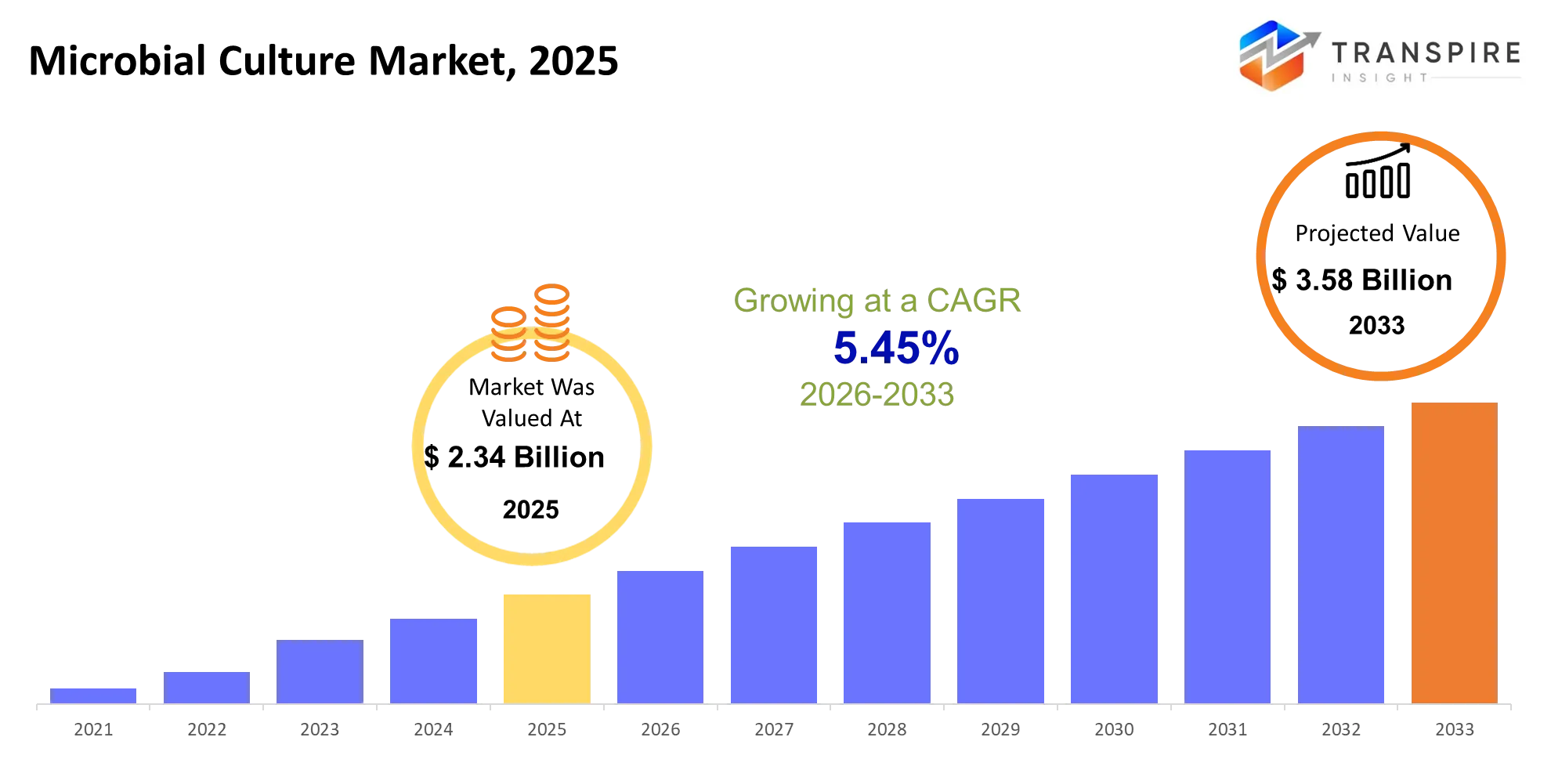
As per Transpire Insight, The Microbial Culture Market size is estimated at USD 2.34 billion in 2025 and is anticipated to reach USD 3.58 billion by 2033, growing at a CAGR of 5.45% from 2026 to 2033.
The microbial culture market comprises the select microorganisms used in fermenting foods, producing probiotics, manufacturing pharma, and facilitating industrial biotech. Food manufacturers use them to control flavour, texture, shelf life, and batch-to-batch consistency. Pharma and biotech manufacturers use them for research and manufacturing. Over the past three to five years, this market has shifted away from traditional fermentation to strain-specific formulations, precision fermentation, and more precise microbial production. Innovations in sequencing, automation of screening, and lyophilisation are helping manufacturers safeguard performance while scaling production more effectively. An important driver of this change is the food industry's trend to reformulate products with improved shelf stability and without chemical preservatives, leading to investment in functional starter cultures and protective microorganisms. At the same time, quality and traceability requirements are growing, making validated cultures more valuable but costing more to produce and demanding greater strain stability.
Microbial Culture Market Size & Forecast:
- Market Size 2025: USD 2.34 Billion
- Expected Market Value (2033): USD 3.58 Billion
- Forecast CAGR (2026–2033): 5.45%
- Leading Region in 2025: Europe
- Fastest Growing Region: Asia-Pacific
- Key Company Profiles: Chr. Hansen, Novonesis, DSM-Firmenich, Kerry Group, DuPont, Lactina, Lesaffre, Sacco System, AngelYeast, Lallemand, CSK Food Enrichment, Döhler Group, Corbion, ADM, IFF.
Key Microbial Culture Market Insights:
The market is moving towards the use of application-specific microbial strains, and commercial value is becoming more dependent on consistent performance, documented functionality, and reliable storage. Strain innovation is no longer enough to differentiate the product, but must be complemented by scalable fermentation, preservation technology, and product formulation.
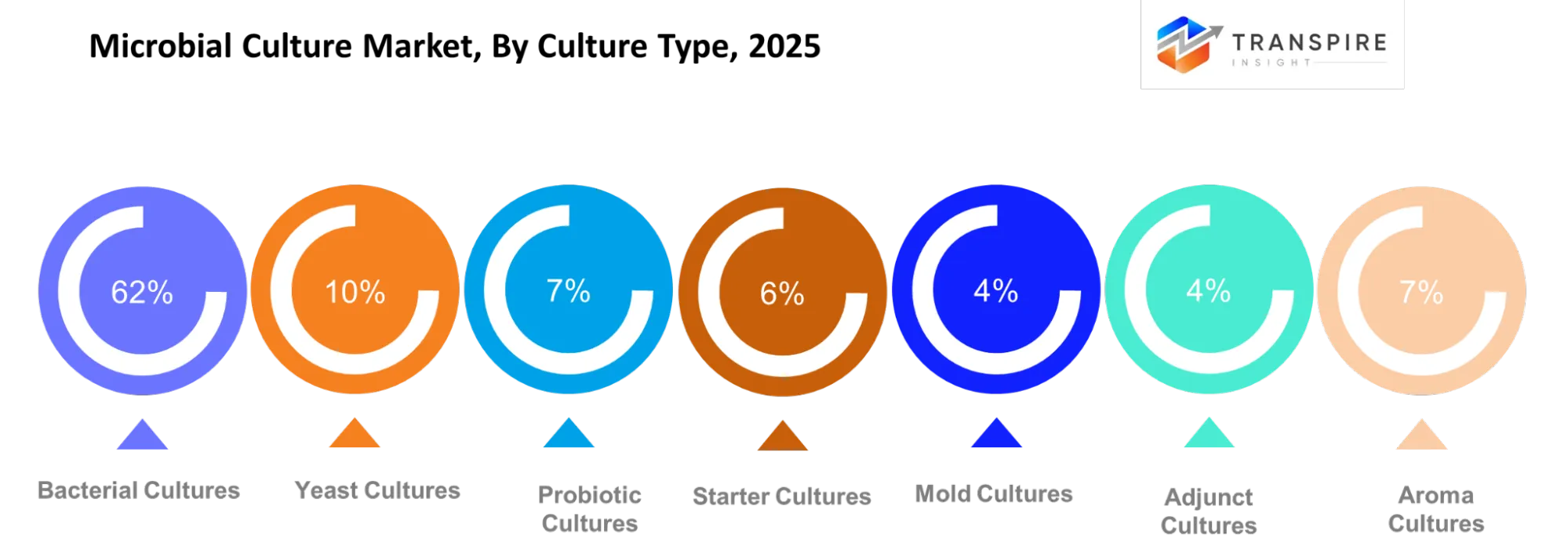
- Bacterial cultures accounted for 62.35% of the market, with Novonesis seeing a 66% increase in North American dairy-culture fermentation capacity due to demand for yield, process control, and shelf-life improvement.
- Industrial fermentation users have seen bakery, brewing, and bioethanol-oriented yeast platforms led by yeast cultures such as Yeast Culture (10.00% CAGR), Lesaffre (10.00% CAGR), and AngelYeast (9.38% CAGR).
- Probiotic cultures are growing at 7.00% CAGR; Novonesis has a library of over 100,000 microbial strains and a model called Strain to Solution to create more targeted health formulations.
- Starter cultures make up 6.00%, and Sacco System and Lactina are competitive through strain customisation for dairy-specific products, which aids the cheesemaker in achieving consistent texture, acidity and ripening results.
- Speciality cultures are being introduced by Mould Cultures (4.00%) as well as by DSM-Firmenich and IFF for cheese ripening, enzyme production and differentiated flavour development.
- Adjunct cultures contain 3.50%; Kerry Group and Döhler specialize in clean-label taste, texture and preservation systems for beverage, dairy and plant-based manufacturers.
- Aroma cultures: 2.00% of suppliers are employing these cultures to produce high-quality sensory profiles without the use of artificial flavours, in line with minimal-ingredient product development.
- Europe accounts for 31.65% of the revenue, and Asia-Pacific is expected to register a CAGR of 5.74% during the forecast period; suppliers are shifting towards localising production and freeze-dried formats to address cold chain constraints.
- For companies like Lallemand and Kerry, freeze-dried and microencapsulated formats cost 60%–80% more than frozen concentrates, but they provide access to export markets that have less robust cold chains.
What are the Key Drivers, Restraints, and Opportunities in the Microbial Culture Market?
Driver:
Growth is being driven by the industrialization of fermentation-based manufacturing. Precision fermentation, biopharmaceutical production, and functional-food development require reproducible strains that perform consistently at commercial scale. The trigger is the expansion of alternative proteins, probiotic foods, and biologics pipelines, which has turned culture supply into a critical quality-control and production dependency. Manufacturers are therefore purchasing higher-value defined strains, ready-to-use media, and traceability services, increasing revenue per customer rather than merely expanding volumes. Food companies are also adopting protective cultures to replace synthetic preservatives, creating recurring demand from dairy, beverage, meat, and plant-based producers.
Restraint:
Scale-up remains difficult because microbial behaviour changes with temperature, pH, substrate composition, and contamination exposure. This constraint persists because many food and biotechnology producers still operate fragmented facilities with inconsistent validation practices, making it costly to transfer a laboratory-proven culture into stable industrial production. Regulatory documentation and contamination-control requirements further raise entry costs for smaller suppliers.
Opportunity:
Precision fermentation, automated strain screening, and microbial biopreservation create opportunities beyond conventional dairy production. Suppliers can develop cultures tailored to plant-based foods, specialised nutrition, animal feed, and industrial biotechnology. AI-enabled screening can identify strains with improved productivity or stress tolerance, reducing experimental cycles. Investment in scalable fermentation facilities, improved drying technologies, and regional production capabilities could also reduce logistics risks and improve access to emerging markets, particularly across Asia-Pacific.
What Has the Impact of Artificial Intelligence Been on the Microbial Culture Market?
Artificial intelligence changes the microbial-culture workflow from observation-based to data-based production. Machine-vision tools automate colony counting, morphology classification, and contamination detection, all of which reduce plate reading time and improve results' consistency. Automated colony-picking tools, the handful of systems introduced to microbial screening and synthetic biology labs to date, give high-volume labs traceability, while predictive models are used for growth behaviour prediction, strain-performance trend discovery, and organism selection for various fermentation conditions.
Artificial intelligence tools also support biopharmaceutical and antibiotic research by mapping microbe-drug interactions, discovering new antibiotics, optimising fermentation conditions, and scoring candidate organisms in microbiome projects, shortening design-to-test timelines. Cloud-connected microbial data management and IoT-based environmental monitoring systems help producers visualise incubation conditions, batch records, and end-of-project quality results, allowing for faster feedback and corrective action to deliver higher-quality, more predictable results. The biggest drawback is that artificial intelligence tools require digitised, standardised historical data, validated imaging techniques, and costly lab tools, meaning low-capitalisation food and diagnostics labs may still need to do everything manually.
In July 2026, Molecular Devices launched the QPix FLEX Microbial Colony Picking System, a compact automation platform designed to fit directly on lab benches or inside anaerobic chambers. This development removes traditional manual bottlenecks in synthetic biology, protein engineering, and microbiome workflows.
https://lifesciences.danaher.com/us/en/news/qpix-flex-automated-microbial-colony-picker-launch.html
Key Microbial Culture Market Trends:
The market is shifting from commodity cultures to strain-specific solutions that provide measurable performance, stability, and functional benefits. Microbial data, preservation technology, and the ability to reproduce data at an industrial scale are becoming more and more critical to the competitive advantage.
- Manual colony counting is being replaced with automated imaging using AI to boost throughput and operator independence.
- More prepared culture formats and pre-poured culture formats are stealing market share as companies look to reduce preparation labour and increase batch uniformity.
- Precision fermentation is driving suppliers to create high-purity, scalable strains for alternative-protein and ingredient production.
- Bioprotective cultures are being used by food producers to increase shelf life and meet clean label demands.
- Probiotic product development is now moving towards specific strains, and companies are promoting clinically proven strains instead of generic cultures.
- Biopharmaceutical companies are growing their need for contamination-controlled cultures for use in biologics and vaccine-related processes.
- Culture workflows are being automated and connected to laboratory information systems by automated colony-picking and sample-tracking systems.
- The introduction of regional production and cold-chain capability is a trend that suppliers are investing in to support the growing hubs of fermentation activity.
- Pressure from sustainability is driving the shift towards cultures that minimise the use of chemicals, water, and production waste.
- Culture suppliers are shifting to a subscription licensing, technical support, and performance guarantee model.
Microbial Culture Market Segmentation
Application:
Food and beverages remain the commercial centre because bacterial, yeast, starter, and probiotic cultures determine texture, flavour, shelf life, and safety in dairy, bakery, beverages, and fermented foods. Dietary supplements are expanding as consumers seek targeted digestive and immune benefits, while pharmaceuticals and biotechnology use cultures for antibiotic development, biologics, and quality testing. Agriculture, animal feed, and environmental applications remain smaller but strategically important, supporting soil health, livestock productivity, and biological waste treatment.
Culture Type:
Bacterial culture dominates by share at 62.35% due to its uses in dairy fermentation, preservation, diagnostics, and industrial biotechnology. Yeast culture CAGR at 10.00% is used for beverage fermentation, bakery applications, and bioethanol production. Probiotic culture CAGR at 7.00% is used for preventive health. Starter culture CAGR at 6.00% is used for cheese, yoghurt, and other fermented foods production. Mould culture CAGR at 4.00% is used for cheese ripening and enzyme production. Adjunct culture CAGR at 3.50% is used to modify flavour and texture; aroma culture CAGR at 2.00% is used for special sensory differentiation.
Form:
Liquid and frozen cultures serve high-volume industrial fermentation, where rapid inoculation and controlled handling are important. Freeze-dried, powdered, and granulated formats are gaining adoption because they simplify storage, transport, dosing, and distribution. Concentrated formulations also appeal to biopharmaceutical and precision-fermentation producers seeking consistent inoculation and lower logistics costs. Future adoption will depend on improved microbial viability, moisture control, packaging performance, and rehydration characteristics, particularly for sensitive strains used in specialised manufacturing processes.
End Use:
Dairy remains the anchor application because cheese, yoghurt, and fermented milk production depend on reliable microbial activity. Bakery and confectionery, beverages, meat and seafood, and fruits and vegetables use cultures to improve flavour, consistency, and preservation. Pharmaceutical applications require stringent purity, traceability, and reproducibility, supporting demand for specialised formulations. Animal nutrition offers additional opportunities through microbial feed additives that support digestion and feed efficiency. Growth will depend on validated performance, regulatory compliance, and cost-effective commercial production.
Source:
Bacteria and lactic acid bacteria remain essential because they support fermentation, acidification, and natural preservation across food applications. Yeast contributes to baking, beverages, and industrial bioprocessing, while fungi support specialised fermentation and enzyme production. Algae and mixed cultures offer potential in functional ingredients, biotechnology, and environmental applications. Probiotic strains are gaining attention as manufacturers develop targeted nutritional products. Commercial success will depend on strain safety, functional evidence, stable cultivation, and the ability to scale production without compromising microbial quality or consistency.
What are the Key Use Cases Driving the Microbial Culture Market?
The core use case is food and beverage fermentation, particularly dairy products, cheese, yoghurt, bakery goods, and fermented beverages. Bacterial cultures, representing 62.35% of the market by culture type, support controlled acidification, flavour development, texture formation, and preservation. Manufacturers benefit from predictable production cycles and more consistent product quality.
Expanding applications include dietary supplements, pharmaceuticals, animal nutrition, and plant-based foods. Probiotic strains support specialised nutritional formulations, while selected cultures contribute to pharmaceutical manufacturing and feed applications. These uses require stronger strain validation and controlled handling.
Emerging use cases include precision fermentation, microbial production of valuable biochemicals, biological crop inputs, and wastewater treatment. AI-assisted strain screening and improved preservation methods could help manufacturers scale these applications while reducing development time and production variability.
|
Report Metrics |
Details |
|
Market size value in 2025 |
USD 2.34 Billion |
|
Market size value in 2026 |
USD 2.47 Billion |
|
Revenue forecast in 2033 |
USD 3.58 Billion |
|
Growth rate |
CAGR of 5.45% from 2026 to 2033 |
|
Base year |
2025 |
|
Historical data |
2021 - 2024 |
|
Forecast period |
2026 - 2033 |
|
Report coverage |
Revenue forecast, competitive landscape, growth factors, and trends |
|
Regional scope |
United States; Canada; Mexico; United Kingdom; Germany; France; Italy; Spain; Denmark; Sweden; Norway; China; Japan; India; Australia; South Korea; Thailand; Brazil; Argentina; South Africa; Saudi Arabia; United Arab Emirates |
|
Key companies profiled |
Chr. Hansen, Novonesis, DSM-Firmenich, Kerry Group, DuPont, Lactina, Lesaffre, Sacco System, AngelYeast, Lallemand, CSK Food Enrichment, Döhler Group, Corbion, ADM, IFF |
|
Customization scope |
Free report customization (country, regional & segment scope). Available customized purchase options to meet your exact research needs. |
|
Report Segmentation |
Application (Food & Beverages, Dietary Supplements, Pharmaceuticals, Biotechnology, Agriculture, Animal Feed, Environmental Applications, Others); Culture Type (Bacterial Cultures, Yeast Cultures, Mold Cultures, Probiotic Cultures, Starter Cultures, Adjunct Cultures, Aroma Cultures, Others); Form (Liquid, Dry, Frozen, Freeze-Dried, Granulated, Powdered, Concentrated, Others); End Use (Dairy, Bakery & Confectionery, Beverages, Meat & Seafood, Fruits & Vegetables, Pharmaceuticals, Animal Nutrition, Others); Source (Bacteria, Yeast, Fungi, Algae, Mixed Cultures, Lactic Acid Bacteria, Probiotic Strains, Others). |
Which Regions are Driving the Microbial Culture Market Growth?
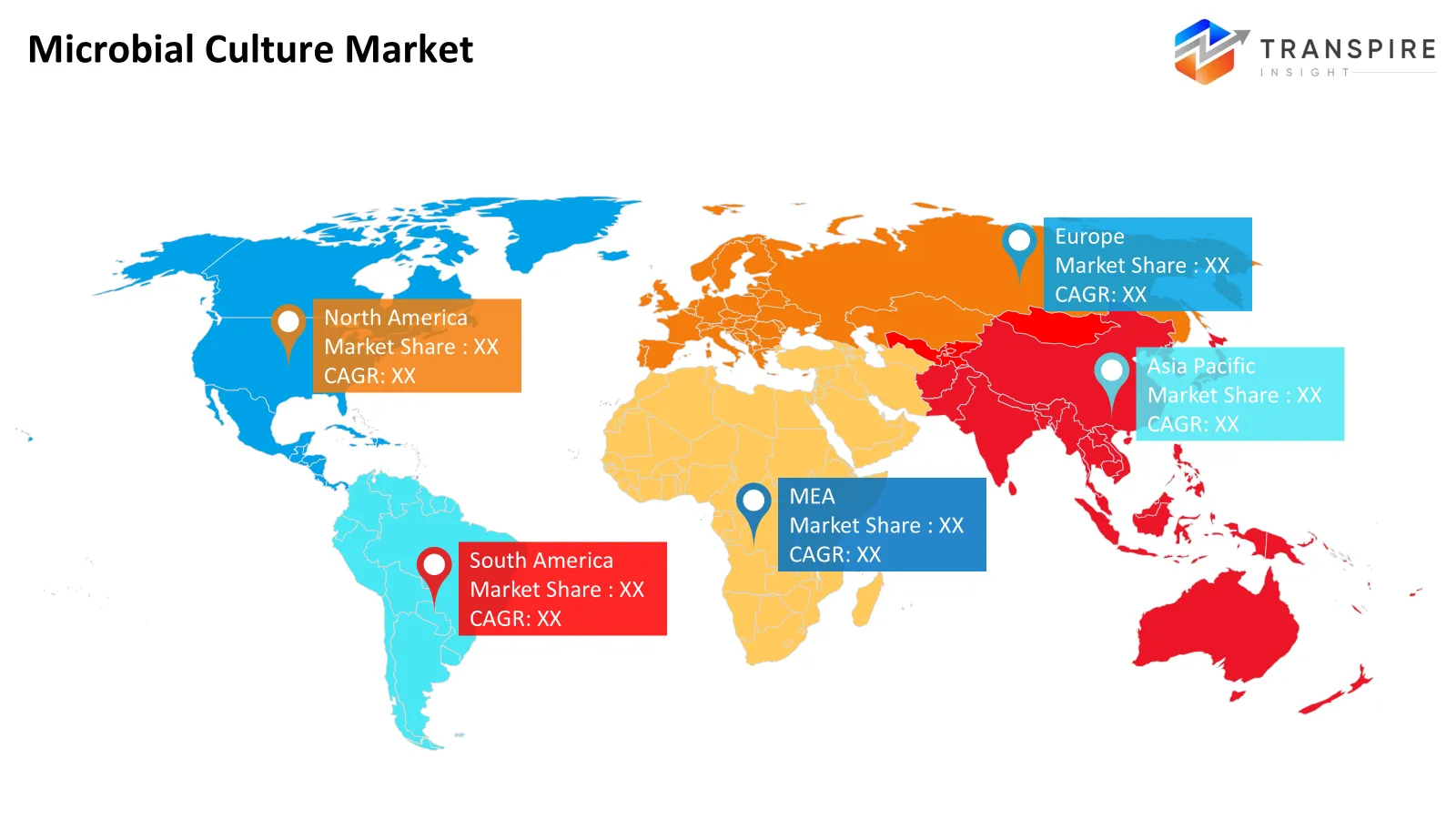
Europe remains in first place with a market share of 31.65%. Due to the region's strong dairy, cheese, bakery, and fermented-beverage sectors that rely on the use of stable and safe starter, adjunct, aroma, and bioprotective cultures, together with strong regulatory conditions, strict food safety standards, and a broad network of culture producers, dairy processors, and research organisations, there is a solid, high-quality supply chain. Natural preservation of food and probiotic products, as well as clean-label and high-quality culture solutions, are favoured by consumers.
In April 2026, PrecisionBiotics® (part of Novonesis) signed a renewed strategic agreement with Biocodex. This action will further strengthen their long-standing collaboration in advancing microbiome science and delivering clinically proven biotic solutions to consumers.
North America makes up 29.00% of the market; probiotic demand is largely centred around major dairy, meat, beverage, and biopharma applications, which limits expansion to a more traditional fermented-food market in the region. North America is also poised to benefit from strong investments in probiotics and functional nutrition, established cold-chain infrastructure, and the potential for new capacity additions that improve supply security, exemplified by Novonesis's 66% increase in North American dairy-culture fermentation capacity.
In October 2026, Novonesis launched the second phase of a $100 million-plus project to double the fermentation capacity of its West Allis plant in Wisconsin. This action directly scales up production to meet the intensifying North American demand for dairy cultures, reinforcing supply security and local biomanufacturing infrastructure.
The Asia-Pacific region is growing at the fastest rate of 5.74% CAGR, representing 25.00% of the market due to the increased production of fermented beverages from China, growing investments in probiotic dairy from India, and regional manufacturers developing localised cultures and reducing reliance on imports. In the future, affordable freeze-dried formats, regional fermentation facilities, and cultures for tropical hot climates and emerging protein sources such as plant-based foods and animals will create additional opportunities in the region. Latin America (8.00%) and the Middle East & Africa (6.35%) will have a slower rate of adoption due to less mature dairy processing and cold-chain infrastructure.
In June 2026, Yakult Honsha launched its upgraded functional probiotic line—Yakult 400 Immune Gut Care and Yakult 400 LT Immune Gut Care—to accelerate high-density gut-health adoption across Asian retail channels. This rollout elevated daily functional dosage standards and reinforced regional brand value.
Who are the Key Players in the Microbial Culture Market, and how do they compete?
Innovation and scale remain key competitive factors in the microbial culture market, which is defined by strain mix, fermentation consistency, application-specific performance, and technical support. Companies compete by product innovation, scale of production, and solutions for overcoming contaminants or improving batch-to-batch consistency. Industry dynamics continue to shape the mix of participants; Novonesis, for example, was formed by a merger of the former Chr. Hansen and Novozymes cultures business, thereby offering an end-to-end biosolutions range.
Novozymes and Chr. Hansen compete on research and technical credentials, while DSM-Firmenich emphasises the presence of niche specialist cultures, flavour release, and bioprotection in its Dairy Safe culture range for cheese producers. DuPont and IFF compete on ingredient science and application development; Kerry Group and Döhler Group operate on end-to-end food systems; Sacco System and CSK Food Enrichment are specialists in dairy-specific cultures; while Lesaffre, Lallemand, and Angel Yeast have applied their fermentation expertise to baking, food, and industrial applications. Corbion and ADM are extending their competitive reach into preservation and ingredient system development, and Lactina has focused on niche specialist cultures. Expansion potential is driven by technology collaborations, territorial distribution, commercially targeted development, and reliable results.
Key Players are:
- Chr. Hansen
- Novonesis
- DSM-Firmenich
- Kerry Group
- DuPont
- Lactina
- Lesaffre
- Sacco System
- AngelYeast
- Lallemand
- CSK Food Enrichment
- Döhler Group
- Corbion
- ADM
- IFF
Recent Development News
- In August 2026, Astorg completed its acquisition of Thermo Fisher Scientific’s microbiology business for approximately US$1.075 billion, establishing an independent diagnostics platform serving clinical, pharmaceutical, and food safety markets. The transaction strengthens the business’s ability to pursue growth and innovation across culture media, microbiological testing, and diagnostic consumables. https://ir.thermofisher.com/investors/news-events/news/news-details/2026/Thermo-Fisher-Scientific-Completes-Sale-of-its-Microbiology-Business-to-Astorg/default.aspx
- In September 2026,dsm-firmenich launched four new all-in-one Dairy Safe culture rotations engineered for hard and semi-hard cheese manufacturing. This introduction provided processors with advanced phage resistance and temperature stability, allowing clean-label formulations that naturally prevent spoilage without chemical additives. https://fei-online.com/dsm-firmenich-unveils-enhanced-dairy-safe-cultures-for-improved-cheese-bioprotection/
What Strategic Insights Define the Future of the Microbial Culture Market?
The market is shifting to application-driven culture platforms where value will be derived from strain performance, formulation support and reproducible scale-up rather than from the amount of culture. An unassailable risk that remains is the variability of raw materials and cold chains - contamination, recall risk, and logistics inconsistencies could destabilise even technically sound culture products, especially in emerging markets. A developing opportunity is for digital-enabled strain selection and regional fermentation capacity, where culture providers can prepare climate/ substrate adapted cultures for regions like APAC, LATAM, or plant-based food producers. The strategic takeaway for culture providers is to shift from product focus to performance partnership, providing validated strains, digital traceability, technical support, and guaranteed process outcomes. This increases switching costs, protects margins, and prevents being replaced with a commodity ingredient from a third party.
Key Segmentations are:
Application
- Food & Beverages
- Dietary Supplements
- Pharmaceuticals
- Biotechnology
- Agriculture
- Animal Feed
- Environmental Applications
- Others
Culture Type
- Bacterial Cultures
- Yeast Cultures
- Mold Cultures
- Probiotic Cultures
- Starter Cultures
- Adjunct Cultures
- Aroma Cultures
- Others
Form
- Liquid
- Dry
- Frozen
- Freeze-Dried
- Granulated
- Powdered
- Concentrated
- Others
End Use
- Dairy
- Bakery & Confectionery
- Beverages
- Meat & Seafood
- Fruits & Vegetables
- Pharmaceuticals
- Animal Nutrition
- Others
Source
- Bacteria
- Yeast
- Fungi
- Algae
- Mixed Cultures
- Lactic Acid Bacteria
- Probiotic Strains
- Others
By Regional Analysis
North America
- US
- Canada
- Mexico
Europe
- Germany
- UK
- France
- Italy
- Spain
- Russia
- Rest of Europe
Asia Pacific
- China
- Japan
- India
- South Korea
- Australia
- Rest of Asia Pacific
South America
- Brazil
- Argentina
- Rest of South America
Middle East & Africa
- UAE
- Saudi Arabia
- Qatar
- South Africa
- Rest of the Middle East & Africa
Frequently Asked Questions
Find quick answers to common questions.
The microbial culture market size was valued at USD 2.34 billion in 2025 and is poised to reach USD 3.58 billion by 2033, expanding at a 5.45% CAGR.
Key segments for the microbial culture market are Application (Food & Beverages, Dietary Supplements, Pharmaceuticals, Biotechnology, Agriculture, Animal Feed, Environmental Applications, Others); Culture Type (Bacterial Cultures, Yeast Cultures, Mold Cultures, Probiotic Cultures, Starter Cultures, Adjunct Cultures, Aroma Cultures, Others); Form (Liquid, Dry, Frozen, Freeze-Dried, Granulated, Powdered, Concentrated, Others); End Use (Dairy, Bakery & Confectionery, Beverages, Meat & Seafood, Fruits & Vegetables, Pharmaceuticals, Animal Nutrition, Others); Source (Bacteria, Yeast, Fungi, Algae, Mixed Cultures, Lactic Acid Bacteria, Probiotic Strains, Others).
Growth is primarily driven by clean-label food preservation, expansion of probiotic products, demand for controlled fermentation, and advances in strain development and microbial biotechnology.
The microbial culture market is led by major manufacturers, including Chr. Hansen, Novonesis, DSM-Firmenich, Kerry Group, DuPont, Lactina, Lesaffre, Sacco System, AngelYeast, Lallemand, CSK Food Enrichment, Döhler Group, Corbion, ADM, and IFF.
Europe holds 31.65% of the market, supported by established dairy industries, specialised fermentation expertise, strong food-quality standards, and investment in microbial innovation.
Opportunities include precision fermentation, AI-assisted strain development, plant-based food cultures, specialised probiotics, improved freeze-dried formulations, and expanding Asia-Pacific production capabilities.
- Chr. Hansen
- Novonesis
- DSM-Firmenich
- Kerry Group
- DuPont
- Lactina
- Lesaffre
- Sacco System
- AngelYeast
- Lallemand
- CSK Food Enrichment
- Döhler Group
- Corbion
- ADM
- IFF
About the Authors

Chetan Dhatrak
I’m Chetan Dhatrak, a Senior Research Analyst at Transpire Insight, specializing in the Consumer Goods, Foods and Beverages industry. I focus on analyzing market trends, consumer behavior, competitive landscapes, and industry developments to deliver accurate, data-driven insights. My research at Transpire Insight is built on credible sources and in-depth analysis, helping businesses and readers better understand market dynamics, emerging opportunities, and evolving consumer preferences. I’m committed to creating reliable, well-researched content that supports informed decision-making and reflects the latest developments in the consumer goods and food & beverage sectors.

Chakradhar Khansole
Chakradhar serves as the Research Director at Transpire Insight, bringing over 8 years of experience in technology, innovation, and strategic market intelligence. He specializes in transforming complex market data into actionable business insights that enable organizations to make informed, growth-oriented decisions. Recognized for his strategic vision and analytical expertise, Chakradhar leads high-impact research initiatives, delivering comprehensive market assessments, competitive intelligence, and forward-looking industry analysis.
Recently Published Reports
-
Apr 2026
Baby Infant Formula Market
Baby Infant Formula Market Size, Share & Analysis Report By ype (Infant Milk, Follow On Milk, Specialty Baby Milk, Growing-Up Milk), By Ingredient (Carbohydrate, Fat, Protein, Minerals, Vitamins, and Others), By Product Form (Powder, Liquid, and Ready-to-feed), By Distribution Channels (Supermarket/Hypermarket, Specialty Store, Pharmacies, Online Retail, and Others), and Geography (North America, Europe, Asia-Pacific, Middle East and Africa, South and Central America), 2021 - 2031
-
Apr 2026
Edible Insects for Animal Feed Market
Edible Insects for Animal Feed Market Size, Share & Analysis Report By Type (Insect Powder, Insect Meal, Insect Bar, Insect Paste, Insect Oil, and Others), By Insect Type (Beetles, Cricket, Caterpillar, Hymenoptera, Orthoptera, Tree Bugs, and Others), By Application (Livestock, Pet Food, and Aquaculture), By Livestock Type (Poultry, Swine, and Others), and Geography (North America, Europe, Asia-Pacific, Middle East and Africa, South and Central America), 2021 - 2031
-
Apr 2026
Food Industry Disinfection and Bacterial Control Market
Food Industry Disinfection and Bacterial Control Market Size, Share & Analysis Report By Type (Chemical Disinfectants, Physical Disinfectants, and Biocides and Antimicrobials), By Application (Food Processing Equipment Surface Disinfection, Food Preparation Areas Surface Disinfection, Storage Areas Surface Disinfection, Anti-microbial Coatings Food Preservation, and Preservative Solutions Food Preservation), By End User (Meat and Poultry Processing, Dairy Processing, Seafood Processing, Bakery and Confectionery, Restaurants and Commercial Kitchens, and Food Service Providers), By Sales Channel (Online, Offline), and Geography (North America, Europe, Asia-Pacific, Middle East and Africa, South and Central America), 2021 - 2031
-
May 2026
Freeze Dried Food Market
Freeze Dried Food Market Size, Share & Analysis Report By Product Type (Fruits, Vegetables, Freeze-Dried Dairy Products, Freeze-Dried Meat and Seafood, Freeze-Dried Pet Food, and Prepared Meal), By Nature (Organic, and Conventional), By Form (Powdered, Granules, and Diced), By End Use (Breakfast Cereals, Dairy Products, Bakery & Confectionery, Nutritional Bars & Supplements, Powdered Beverages, Snacks, and Retail (Household)), and Geography (North America, Europe, Asia-Pacific, Middle East and Africa, South and Central America), 2021 - 2031